Welcome back to Post Performance Report—a series where we compile and analyze social media posts and campaigns inspiring us, and break down what makes them so genius. We don’t just examine the flawless creative execution of every post or campaign, but the brand impact, too.
This time, we’re deep-diving into the top influencer marketing campaigns of the year. According to a Q1 2025 Sprout Pulse Survey, most marketers say influencer content out-performs brand content in terms of reach, engagement and conversion, and another 65% are very confident in their team’s ability to demonstrate the ROI of influencer efforts.

When we scroll our feeds, it’s clear how many brands are betting on influencer marketing. It’s become the de facto advertising tactic on social—and even traditional marketing channels. But many of our favorite campaigns are led by micro-creators and the latest internet darlings, not the biggest influencers. Consumers crave relatability and normcore (with a healthy dose of aspiration), and are losing their appetite for over-hyped products, massive hauls and polished content.
Let’s dissect the campaign creative, performance metrics and points-of-view from the practitioners behind the brand handle, starting with Staples and the “Staples Baddie.”
Staples x The Staples Baddie: Let employees create
“The Staples Baddie”—aka creator Oblivion (@blivxx), who goes by Kaeden day-to-day—is a real employee of an East Coast Staples. She started posting about the brand’s capabilities on TikTok, videos that have amassed more than 10 million views.
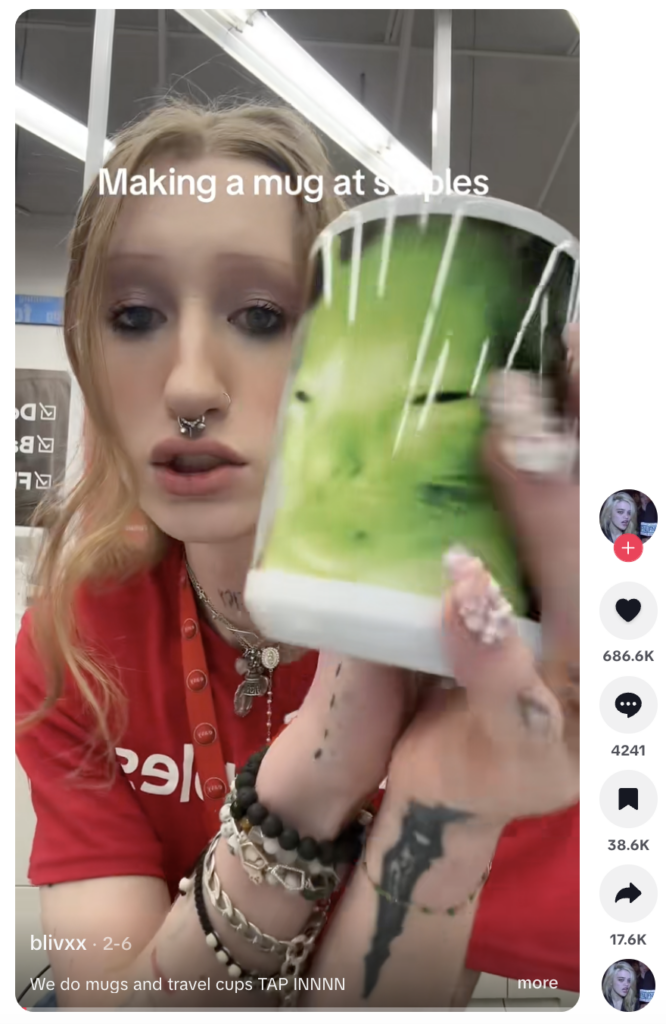
Oblivion demonstrates how customers can create everything from custom stamps to printed mugs—while saving a lot of time and money. Commenters on her videos frequently say she has opened their eyes to a wide array of Staples products they never knew existed. According to Influencer Marketing by Sprout Social, Oblivion has an engagement rate of 23.4%—an impressive 23% higher than similar creators.
To be clear, the content she produces is employee-generated. But when Staples saw her going viral, they were quick to encourage her to keep posting, commenting on her posts, sending her a custom care package and speaking publicly about how much they love her content. The brand just announced their partnership, after her fans begged the brand to make it official.
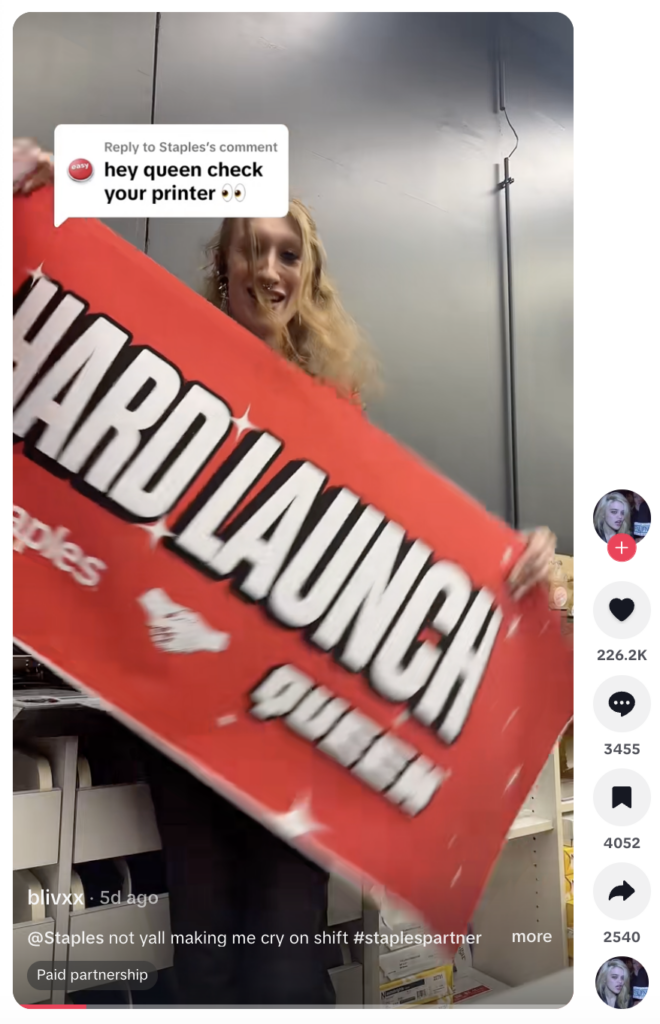
As Bob Sherwin, Staples’ CMO, told the New York Times, “[It’s] been incredible to watch Kaeden’s content resonate so widely…[The company has seen] measurable increases in store traffic and meaningful lifts in categories featured in viral posts, including custom mugs and specialty print products.”
The play: The Staples Baddie is a potent reminder that employees can be influencers, too. Employees creators have influence in the communities they’re a part of online, and can be a vital part of your employee advocacy program.
While brands shouldn’t take a completely hands-off approach to employee creator content, they should give their employees space to express themselves naturally, like Staples did for Oblivion. When employees are given creative freedom and permission to build their personal brand, they bring diverse experiences, personalities and expertise to your brand content.
Midi Health x @JustBeingMelani: Promote your best influencer content
Midi Health is a telehealth organization that provides specialized care to women in midlife—a chapter the medical field hasn’t always treated with care or nuance. As a disruptor in the healthcare space, the brand has taken a social-first, digital approach to increasing awareness, which includes partnering with creators. Their most successful partnership to date is with Melani Sanders, known online as @JustBeingMelani.
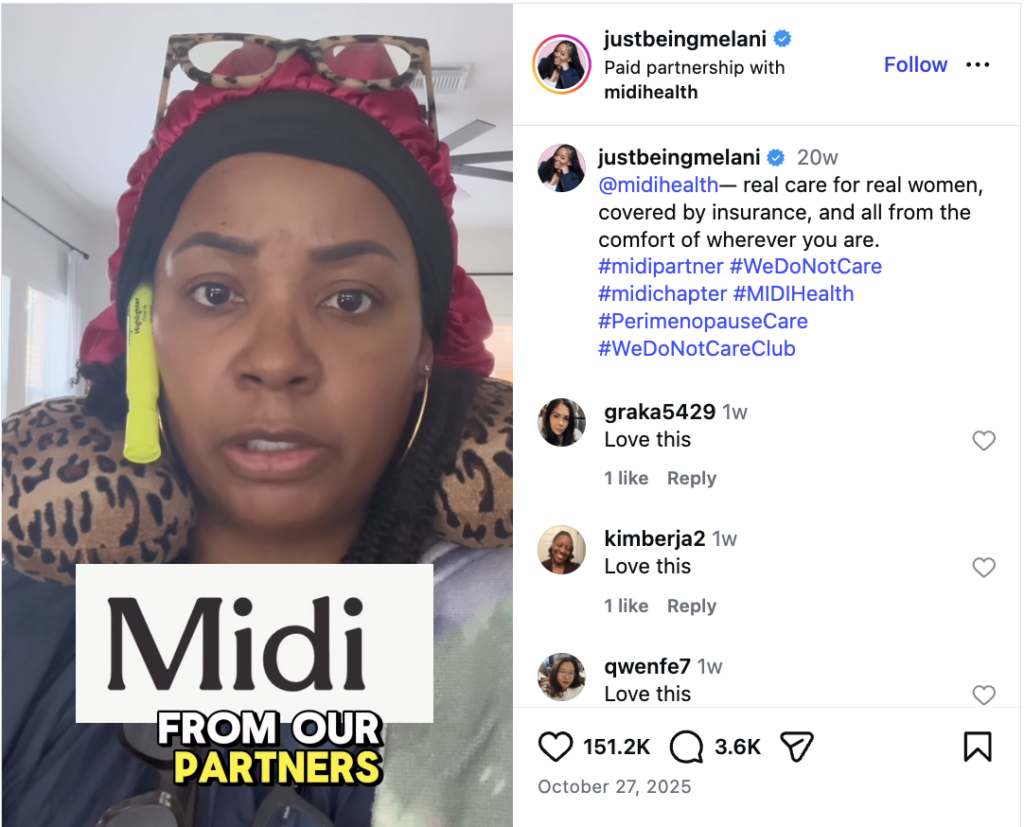
The author and influencer describes herself as the “founder of the Do Not Care Club™,” which encourages women in perimenopause, menopause and postmenopause to give themselves more grace. She even wrote a book of the same name.
In her top post for Midi Health, Melani follows her standard post format, listing off all of the things women in the Do Not Care Club™ do not care about. The sponsored version of the post amassed over 150,000 engagements to date, and is how we came across the post earlier this year. The video outperformed the brand’s top Instagram content by tens of thousands. Per Sprout Influencer Marketing, the post engagement rate was 3.2% (higher than Melani’s average engagement rate of 2.1%) and the earned media value was nearly $362,000.
This success comes at a time when over a quarter of social users actively seek out wellness and self improvement advice on social, per the Q3 2025 Sprout Pulse Survey.
The play: As our algorithms become more niche, it’s important to build long-term influencer partnerships with those who already have credibility in your audience’s corner of the internet. Source influencers by researching topics they talk about—not just traits like audience size or location. And when an influencer post performs well, put additional paid spend behind it (with the influencer’s permission, of course). Magic happens when paid ads feel organic.
DoorDash x Rob Rausch: Tap into internet culture and fandoms
Rob Rausch is a snake wrangler, reality star and a budding influencer. After rising to fame on shows Love Island and Traitors, Rausch received offers for a variety of brand deals. DoorDash was among the first to snag a partnership, taking an unconventional approach. Users have commented in disbelief that the official DoorDash account is posting this content. Needless to say, the brand prioritized earning goodwill over pushing their service.
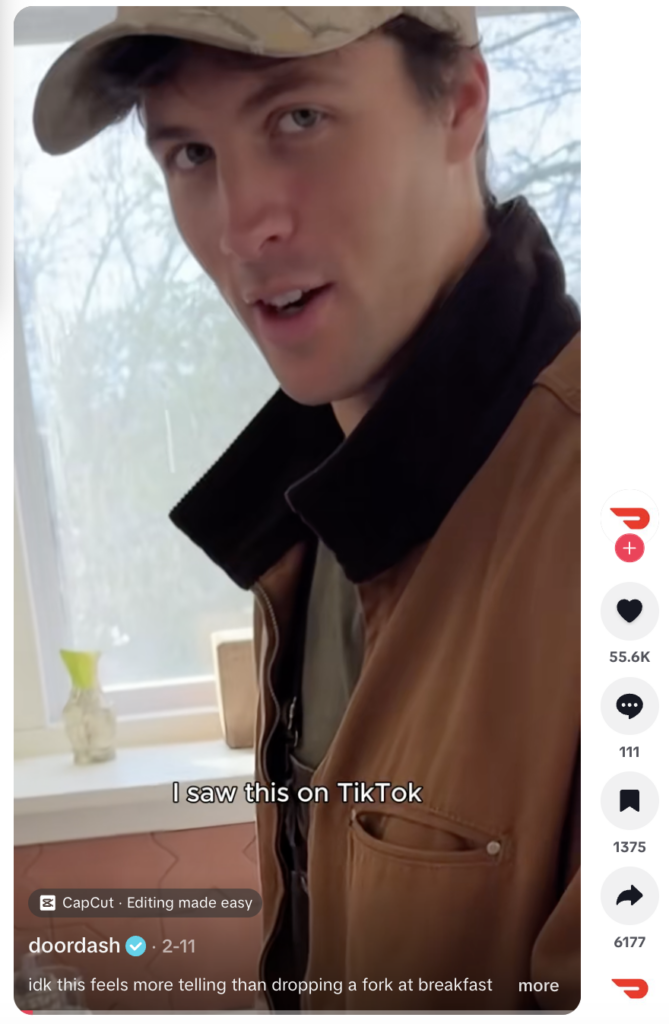
The strategy is led by Zaria Parvez, Head of Social. She told the Wall Street Journal the social-first genius behind it: “[The] traditional advertising world will prioritize a hero video, and then everything is extra if it happens. But the way that our team operates is these people are known to be on social and what the fans are excited about is if you give them something that they understand through the Easter egg lens, but it’s also a new piece of content. For Rob Rausch, it’s what is he going to say now? Or a new shirtless pic. We always build in six to seven ancillary pieces of content. That, to me, is actually more important than rights to a linear asset, for example.”
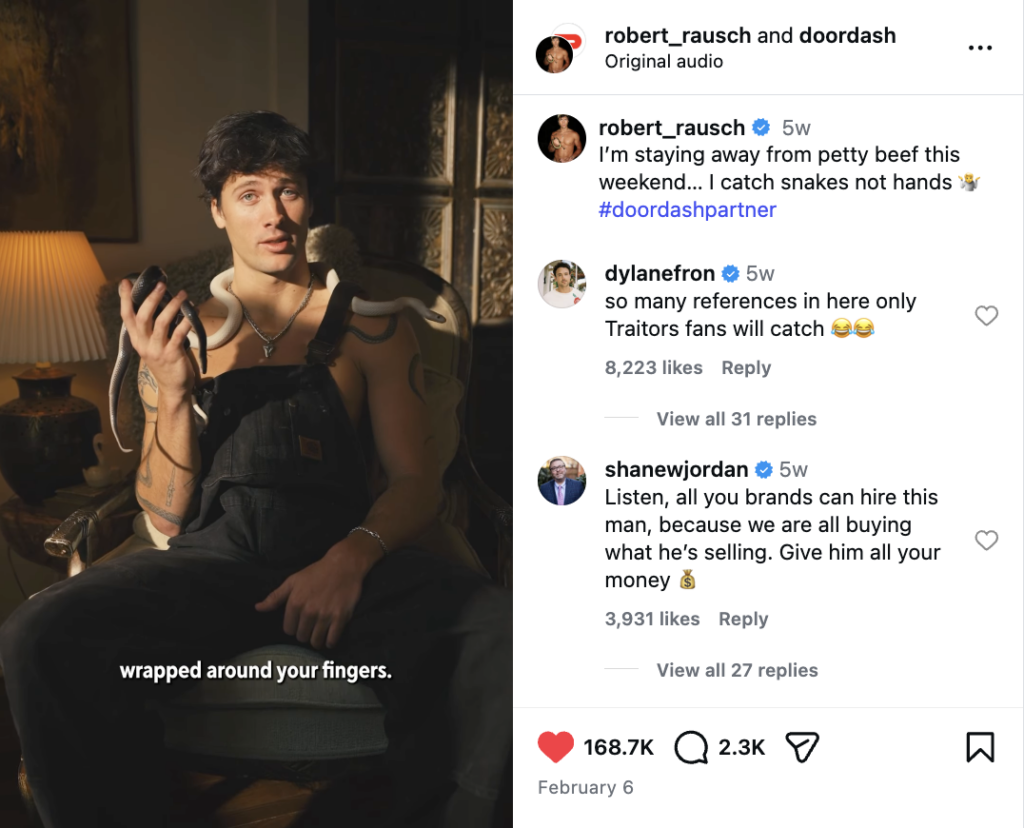
The non-linear approach has worked especially well for this partnership. According to Sprout Influencer Marketing, the top video from the campaign drove an 18% engagement rate on TikTok—a 50x engagement lift.
The play: Social has changed the way we consume TV, and because of that, the reality-star-to-influencer pipeline is well-established. For brands focused on building cultural relevancy, it’s critical to be part of fandom conversations happening on social. When partnering with these influencers, create internet moments, not glorified commercials.
KFC x @TurnUpTwinsTV: Co-create your brand identity
The TurnUp Twins, Minnie and Mattie, are the original brand jingle creators—going viral for creating an unprompted Crumbl Cookie jingle back in 2024, a video with 80+ million views to date on TikTok.
The sisters lent their infectious joy, harmony and sweet lyrics to a recent KFC collaboration to reintroduce the chicken fast food brand’s Twister Wrap. The video received over 15,000 engagements on TikTok and Instagram. According to Sprout Influencer Marketing, the video also received a 4% engagement rate when posted to the brand account—a significantly higher rate than the average engagement rate of similar brands (0.25%).
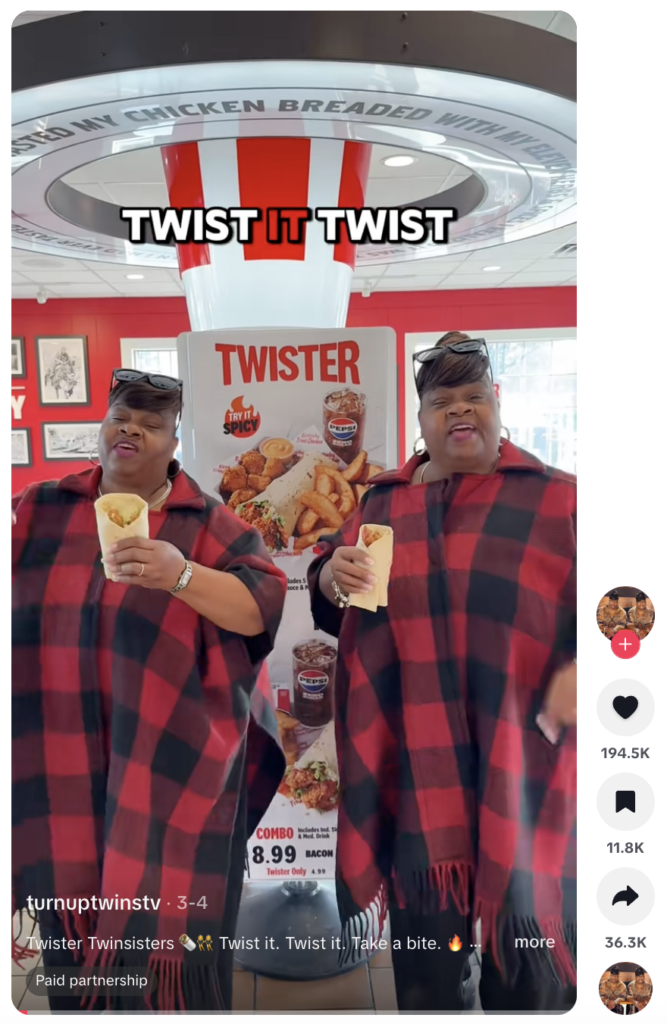
The TurnUp Twins’ video style has the same flavor of jingles in the early days of marketing. The nostalgia plays well for KFC, as the Twister Wrap was a 90s favorite.
The song has already become associated with KFC. In the comments section on TikTok, users wrote “Twist it! Twist it!” and pleaded for the tune to be turned into a commercial.
The play: Fast food companies, like many, are all competing for attention when it comes to releases. Instead of creating flash-in-the-pan moments, use influencer marketing to celebrate major milestones and build on your existing brand story.
Strava x local LA creators: Host IRL events
During the 2026 LA Marathon, activity tracking app Strava hosted an exclusive invite-only panel. The intimate event started with a two-mile shakeout run followed by breakfast, and was attended by athletes, creators and run club founders.
The panel itself was led by local creators, including Danielle Burnett, founder of size-inclusive run club Big Girls Who Run; Maya Leppard, creator of Bad at Running, a virtual club for new runners; Mariah Dyson, a Nike athlete and founder of female-focused GirlGangCrazy run club; and Marvin Garcia, founder of one of L.A.’s largest run clubs, Good Vibes Track Club.
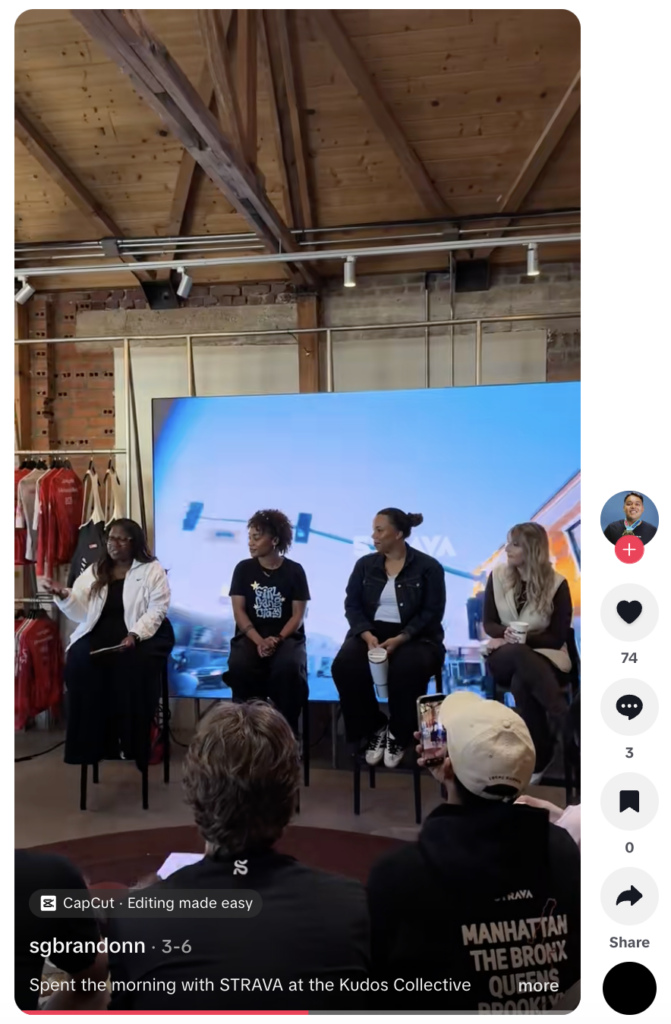
The event was the latest in a series of pop-ups and meet-ups the brand calls “Kudos Collective,” a nod to the kudos feature in the app that allows you to cheer on other athletes. The brand knows that community is a top reason people use their platform, which is why they prioritize community-centered events over flashy sponsorships and campaigns.
As Melanie Jarrett, Director of Partnerships at Strava, told Glossy, “We specifically choose not to directly sponsor races [so we can continue to be] brand and platform agnostic. Part of what makes [our meetups] such a hot ticket is [many influential runners and run club founders] are actually never all in the same room together, because some [partner with] Hoka, and this one’s with Nike, and this one does Lululemon stuff—so there’s a certain magic where you see [influential runners] recognize each other, meet for the first time and share best practices around how they’re each growing their running communities in their local cities.”
The play: According to The State of Influencer Marketing Report, 80% of consumers are more willing to buy from brands that partner with influencers beyond social media content. Take a cue from Strava and build your community event (or event series) centered around meaningful connections, not just likes and engagements.
Cultivate creator-led community
That concludes this installment of PPR. Stay tuned for our next edition, and in the meantime, remember these key takeaways:
Post Performance Report Takeaways
- Genuine creators often outperform polished campaigns. Instead of over-directing, marketers should support influencers without stripping away the personality that makes them successful.
- Credibility within niche communities matters more than reach. Marketers should prioritize topic alignment and audience credibility over follower count, and amplify top-performing creator content with paid support to extend its reach.
- Cultural relevance comes from participating in the conversation. Rather than treating creator partnerships like traditional ads, marketers should focus on producing content that feels native to social platforms and expands the story across multiple posts, formats and inside jokes.
- Influencer marketing works best when it extends beyond the feed. Brands that involve influencers in real-world experiences, events or community initiatives can deepen audience relationships and drive stronger loyalty.
Read next: Delve into our guide that breaks down the top trends defining the future of influencer marketing.
And if you see a social post or campaign that deserves to be highlighted, tag @sproutsocial and use #PostPerformanceReport to have your idea included in a future article.
The post PPR special edition: The best influencer marketing campaigns of 2026 (so far) appeared first on Sprout Social.
from Sprout Social https://ift.tt/6cOK5X0
via IFTTT

No comments:
Post a Comment