Halloween candy is still on the shelves, but holiday shoppers are making wish lists and hunting for deals months before the holidays arrive.
But as the shopping season gets longer, budgets are getting tighter. For brands, that means more chances to get in front of consumers, but also more competition for every dollar shoppers spend.
Data from Sprout Social’s Q3 2026 Pulse Survey points to three factors that will define the holiday season: campaign timing, price sensitivity and meeting shoppers where they’re increasingly discovering gifts—on social.
Consumers don’t want earlier holiday campaigns, except when they do
Consumers have mixed feelings about how early holiday marketing should start.
According to Sprout’s Q3 2026 pulse survey, nearly half (49%) say campaigns launched as early as August make them more likely to buy, including 19% who say they’re much more likely. Just 11% say an early start makes them less likely to purchase.
But ask consumers when brands should launch their holiday campaigns and the story changes. Half point to October or November as the ideal window, compared to 21% who prefer August or September. Another 12% say brands should wait until December.
Those findings may seem contradictory, but they point to a distinction between when consumers want holiday marketing to dominate their feeds and when they’re open to discovering seasonal products. Shoppers can be receptive to gift ideas, new products and seasonal inspiration well before they want brands to go all-in on holiday messaging. In other words, an earlier presence can influence what they eventually buy without making it feel like the holiday season starts in late summer.
The sweet spot: Show up early without going all-in. Use August and September to build awareness and consideration, then ramp up your holiday campaign in October and November.
Get gift-worthy products on shoppers’ radar: Introduce products consumers might want to add to their lists before they’re ready to buy.
Start publishing seasonal content: Share gift inspiration and other useful holiday content that gives shoppers a reason to engage early.
Starting earlier gives you more room to test what resonates before peak shopping begins. Then you can put more support behind the products, messages and offers gaining traction.
Brands are already putting this approach into practice. Fenty Beauty, for example, launched its limited-edition holiday collection in September, giving shoppers an early look at its seasonal products. As of writing, the TikTok has received over 100K views and over 5K likes.
Timing also depends on who you’re trying to reach. Younger consumers are especially receptive to an early start: 66% of Gen Z consumers say campaigns launching as early as August make them more likely to buy, compared to 49% of consumers overall.
Tariffs and price pressure are reshaping purchase patterns
Many consumers see shopping earlier as a way to get ahead of rising prices. More than a third (36%) say they’re starting their holiday shopping earlier specifically to avoid tariff-related price increases. Another 27% aren’t shopping earlier yet but are concerned about prices.
In total, 63% of holiday shoppers are thinking about the impact of higher prices.
Those concerns are also affecting how much consumers plan to spend. More than half (56%) expect to reduce their holiday spending this year because of economic conditions like tariffs and the cost of living. Only 30% say they don’t plan to cut back.
Price sensitivity doesn’t mean every brand needs to compete on having the lowest price. Shoppers may be looking more closely at what they get for their money, so holiday content should make value clear. Highlight product quality, versatility or other details that make a purchase feel worthwhile.
Discounts can also tip the scales: Promo codes shared by brands or influencers are the top purchase driver, cited by 30% of consumers. Lastly, brands with products at multiple price points can also organize gift recommendations by budget, making it easier for shoppers to find options that work for them.
For example, last holiday season, REI shared a roundup of expert picks under $50 on Instagram, with a CTA to check out their larger holiday gift guide.
Consumers are discovering gifts on social this year
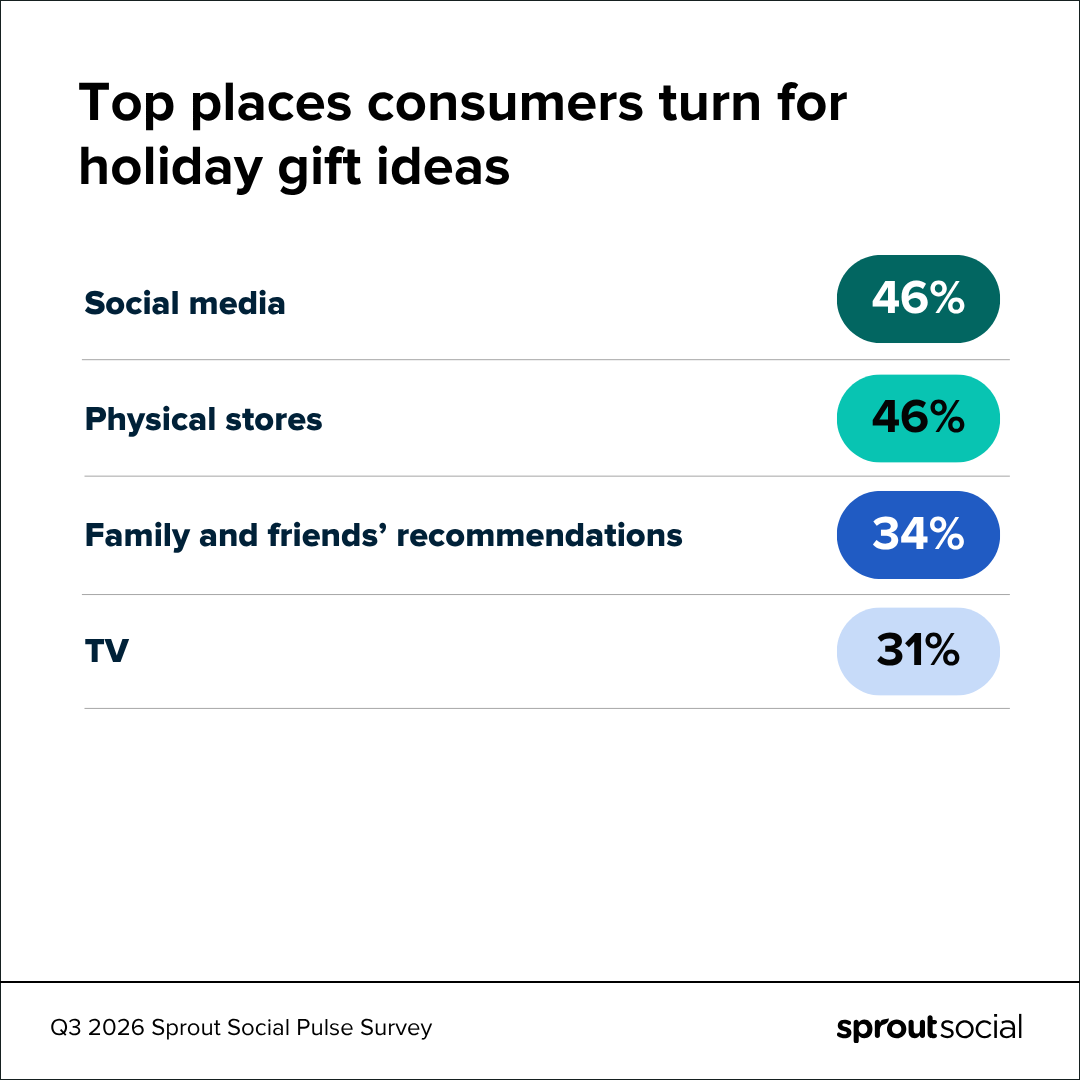
Social media now rivals in-store shopping for holiday gift discovery. This year, 46% of consumers say they’ll turn to social for gift ideas and product discovery—the same percentage who plan to browse physical stores.
Where consumers turn for holiday gift ideas:
Social media: 46%
Physical stores: 46%
Recommendations from friends and family: 34%
TV: 31%
Review sites: 23%
AI chatbots: 15%
And social’s influence is still growing. Compared to the 2025 holiday season, 28% of consumers plan to use social more to find gifts this year, while another 50% expect their usage to stay about the same.
That creates an opportunity to reach shoppers before they know exactly what they want to buy.
Think about how easily someone encountering your brand for the first time can understand what you sell, who your products are for and why they’re worth considering. Content organized around recipients, interests, occasions or price points can make that discovery process easier and give shoppers a reason to explore your products further.
Bookshop.org, for example, used Instagram to promote its 2025 holiday gift guide, which curated hundreds of recommendations for different types of readers and paired them with a limited-time discount.
What drives a purchase on social?
Discovery is only the first step. Once shoppers find a product on social, the content surrounding it can influence whether they buy.
According to the Q3 2026 pulse survey, promo codes shared by brands or influencers are the top social-specific purchase trigger at 30%, followed closely by brand posts showing products in action at 28%. Original holiday content from brands influences 26% of consumers, while 22% point to content from non-influencer users.
Taken together, these findings show that shoppers respond to a mix of incentives, brand content and recommendations from other people. Holiday content plans should reflect that variety. A steady stream of promotional posts may capture shoppers looking for deals, but product education, original seasonal content and posts from customers or creators can give others the context they need before buying.
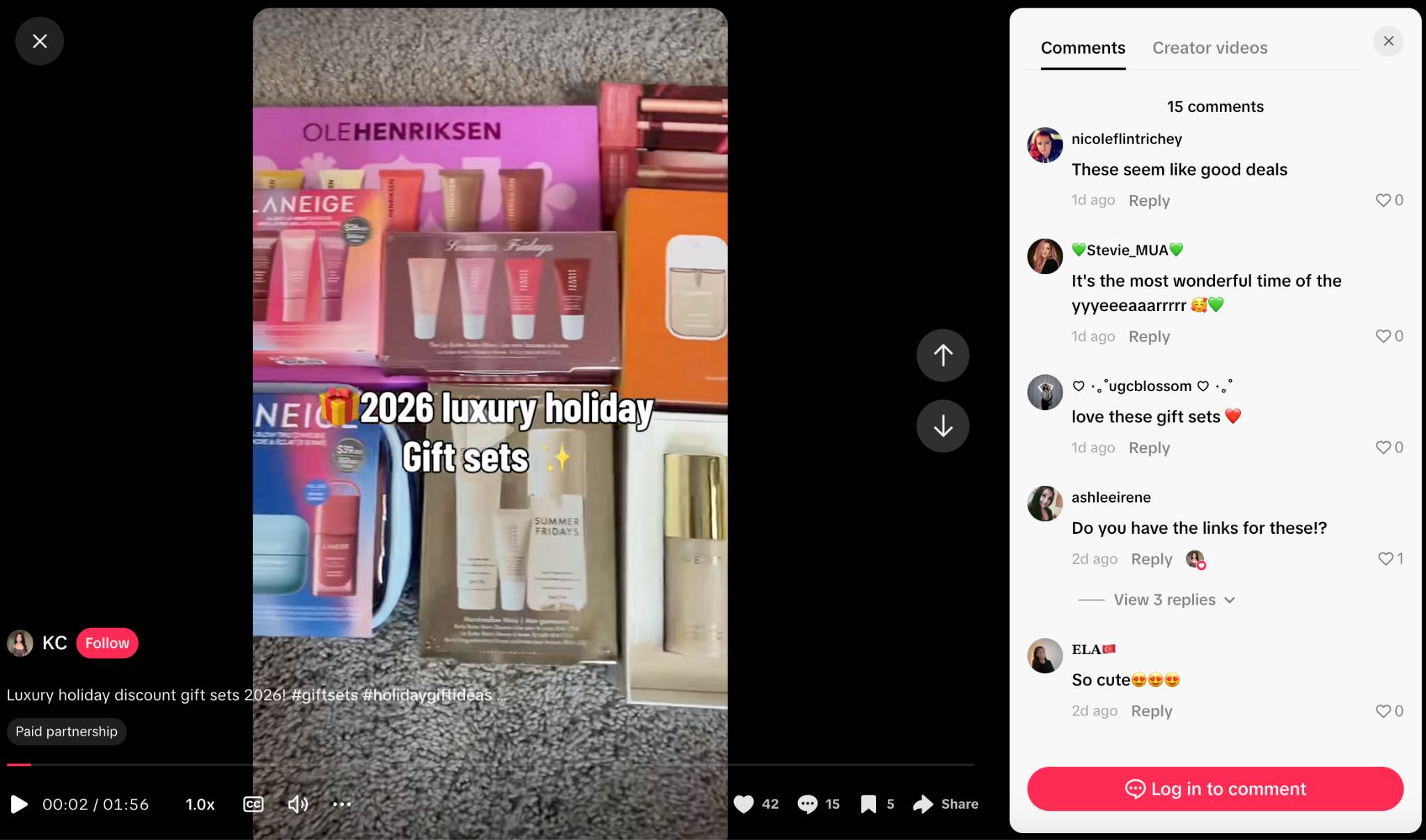
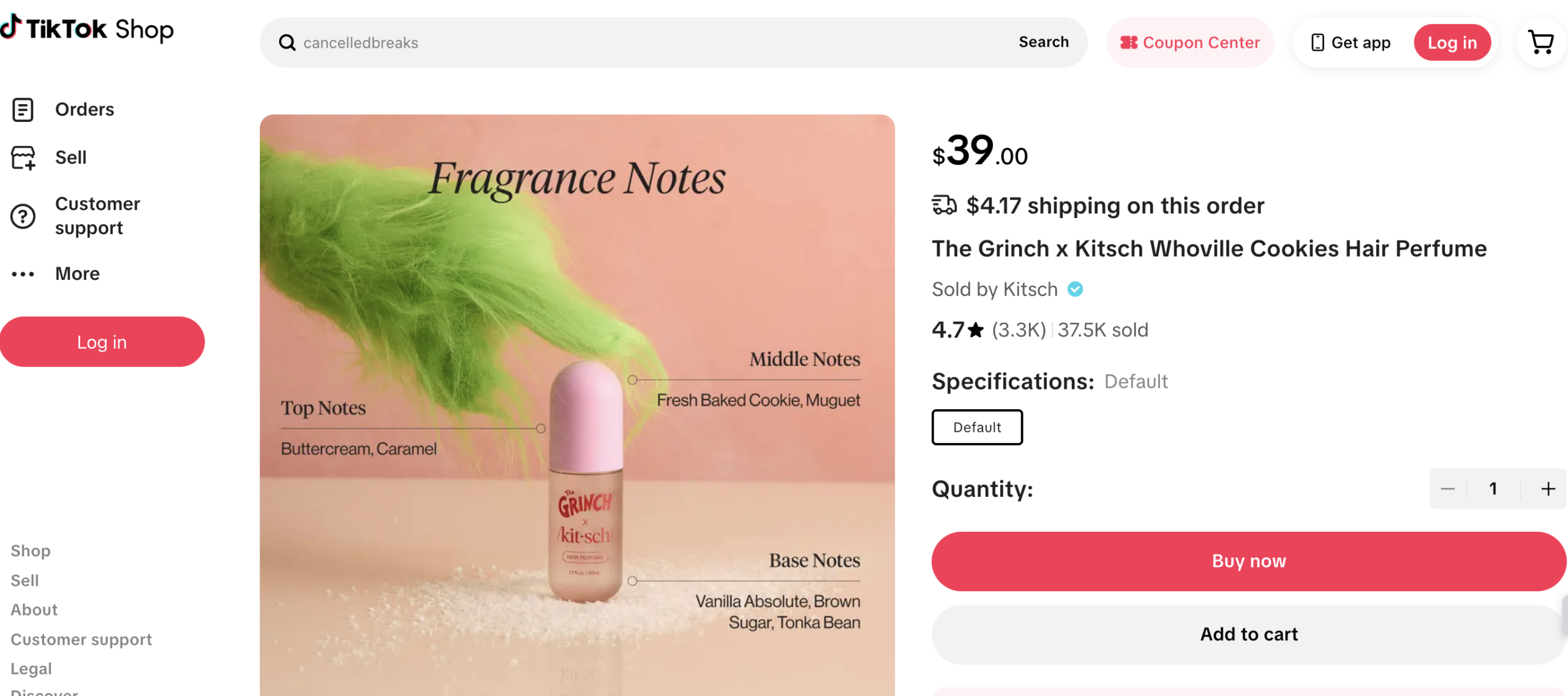
Creator partnerships in particular can give shoppers more context as they weigh their options. In this paid TikTok partnership, creator KC walks viewers through luxury holiday gift sets, giving them a closer look at several products in one video.
Build that variety into your holiday content strategy:
Make products tangible. Show how they look, work or fit into someone’s life so shoppers have more context before purchasing. This also extends the campaign’s shelf life beyond the holiday season.
Give shoppers an incentive to act. Make promo codes easy to find, use and share across brand and influencer content.
Create for the season. Give holiday creative its own identity rather than relying on generic “shop now” messaging. Also consider using a holiday hashtag calendar to plan around relevant moments throughout the season.
Social commerce and social customer care will play a bigger role this holiday season
Finding the perfect gift can lead to an immediate purchase—or a question about shipping, sizing or availability. This holiday season, consumers increasingly expect brands to handle both directly on social.
Make the path from discovery to purchase seamless
More than half (57%) of consumers are open to completing a purchase directly within a social app this holiday season. That includes 38% who have purchased this way before and plan to do so again, plus 19% who are ready to try it for the first time.
As more purchases happen directly on social, brands need to remove as much friction as possible. Review your social commerce strategy before holiday traffic picks up, keep product information current and make key details like availability, shipping timelines and return policies easy to find.
Prepare your social inbox for more customer questions
More than a quarter (27%) of consumers expect to use social more for holiday customer service than they did in 2025, while another 59% expect their usage to stay about the same.
Commerce and customer care increasingly overlap on social. A question about sizing, inventory or delivery might be the last thing standing between a shopper and a purchase. Plan for holiday-level service volume throughout Q4, not just during Black Friday and Cyber Monday.
Clear workflows, adequate coverage and quick access to order and product information can help social teams keep up as purchase and service activity increases.
What this means for your 2026 holiday strategy
Holiday shopping habits are changing, but the data gives marketers a clearer picture of how to adapt. As you finalize your 2026 holiday strategy, focus on three priorities:
Give yourself a longer runway. If your holiday campaign is already underway, use October and November to ramp up promotional activity. Then take what you learn this season into 2027, when you can start building awareness as early as Q3.
Compete on value, not just urgency. Price-conscious shoppers will be paying close attention to what they’re getting for their money, so make pricing, promotions and value clear.
Plan beyond social awareness. Consumers are finding gifts, making purchases and seeking customer service on social. Your holiday strategy should account for the entire journey.
Use these findings to benchmark your current holiday content plan and identify where you may need to adjust your timing, messaging or channel strategy. Then explore our holiday marketing strategies for more ideas to turn those priorities into campaigns that connect with shoppers this season.
Engagement is up. Your brand is seeing a spike in mentions. Sentiment is trending positive. People are sharing a hack about one of your new products. They’re all positive signs, but if you can’t translate what they mean to the business, those numbers stay trapped and nothing changes off the back of that good momentum.
That’s where social teams find themselves stuck. The data they have access to is often the freshest, most unfiltered view of what the market is actually saying, filled with unprompted takes and reactions from the world’s largest focus group. But according to the 2026 Social Intelligence Report, only 36% of organizations are able to use those insights to regularly inform decisions outside of marketing.
That’s when a data problem becomes a storytelling problem. Building a narrative around the data and helping people understand why it matters, and what it means to them, is crucial to help insights from social have an actual business impact.
So what makes a story land? How do you visualize data and shape it into something that drives a recommendation? Below, we’ll cover what data storytelling means for social teams specifically, the building blocks of how to make those stories resonate and a step-by-step framework for putting one together, as well as what to avoid.
What is data storytelling?
Data storytelling is the practice of merging data science, narrative and visualization to give life to the insights in a dashboard, honing in on what they mean and why decision-makers should care. In short, it’s translating the numbers in a spreadsheet into a compelling story, which ultimately leads to a decision being made.
Social is a prime source for this kind of data storytelling, as it offers market intelligence for the business. Every other data source (including CRM records, support tickets, pipeline reports, etc.) reflects what customers do once they’re already actively engaged with you in some way. Social captures live reactions from a much wider audience, with unprompted takes that show up there before anywhere else. A spike in comments questioning a pricing decision or a wave of praise for a feature being deprecated is a story that should be told across the business, not sitting in a dashboard.
Social listening and other tactics can help you find those signals, but shaping them into a story that makes the rest of the business sit up and take notice is where data storytelling comes in.
Why data storytelling matters more than ever
Being able to translate insights into something people can take into their decision making is a key skill for teams that work cross functionally, like the social team. Though the same data is the basis for every narrative, each team wants it packaged differently, as a story that’s relevant to them, and being able to act as that translation layer increases any team’s influence.
For example, executives naturally lean on quantitative data because there’s an easy map to the bottom line. So show them how audience growth or engagement correlates with pipeline, or how improved response time correlates with retention. That’s the basis of the story they want to hear. But qualitative data also matters, whether that’s comments, screenshots or customer feedback. This adds color to the story and helps build it into a narrative that backs up the numbers.
This is important because 86% of organizations say they’ve missed real business opportunities in the past two years because insights from social were delayed, siloed or underused. Some of that might be a data problem, but much of it is a governance problem. The insight exists but isn’t getting to other teams, or it was never shaped into a narrative a decision-maker could act on before it was too late.
That’s why data storytelling is so important. It’s more than a visualization of data, it’s the narrative that helps define how to improve the business.
The building blocks of a strong data story
Like any good story, a data story needs to be built with the audience in mind. That starts with knowing who’s going to be receiving it, then selecting the right data to highlight and translating it into language they already use.
Executives and leadership want to understand business impact. Translate social metrics into revenue, retention or risk, with charts they can understand at a glance.
Product and R&D want signals distilled from qualitative feedback. Show them examples of what customers are asking for or struggling with, highlighting the voice of the customer.
Customer care wants to see impact. Frame the story around volume, response time and improvements to process.
Once you know the audience, you can go about building the narrative.
Ground your insights in contextual data
Numbers without context leave more questions than answers. Contextualize the change within your wider industry and competitors. Pair quantitative data that shows what happened with qualitative data that shows why it happened. Don’t just report a number, show why the number changed and what it means for the business.
Visualize with intent
Every visual should make your story easier to grasp, not just fill space. Keep a few rules in mind:
Choose colors that support your message and avoid distracting from it.
Design for readability first; a chart should communicate at a glance.
Avoid complexity. If a visual needs a long explanation, simplify it or split it in two.
Match the format to how it’s being received. A dense report table works fine in a document; it will rarely land in a live presentation.
Give it a narrative arc
The most memorable data stories follow a familiar shape: set the scene, introduce the obstacle, hit the climax and land on a resolution. Applied to a social report, that might look like: here’s where we started, here’s what changed and why, here’s the turning point in the data, and here’s what it means going forward. That structure is what makes people remember the story after they leave the room—and repeat it accurately when they explain it to someone else.
A step-by-step framework for building a data story
To make sure your data story demonstrates value, follow these steps before sharing your insights.
1. Identify the most interesting points
Put on your author cap and ideate the structure of your data story.
Have a main objective in mind, whether it’s relaying campaign status or justifying a bigger budget. What pieces of quantitative and qualitative data best support the main idea you want to convey? What data points directly contradict what you thought was going to happen?
2. Lead with your second most interesting piece of data
Don’t show your whole hand, but do command attention right at the beginning. For instance, you might say something like, “As you already know, sales are up this quarter. What you may not have seen is that this trend correlates with our increase in traffic from social.” Include any other interesting points after this, but don’t share your best one just yet.
3. Use visual aids as you share
Let those visuals we discussed earlier shine. An example: “As you may already know, sales are up this quarter,” (graph of this quarter’s sales appears). “What you may not have seen is that this trend correlates with our increase in social media traffic,” (the second graph of traffic by social networks appears as an overlay to the first graph). The visuals here add context to your data storytelling.
4. Predict questions or challenges
Naturally, your audience will analyze what they are seeing. In the example we’ve used so far, they may ask something like, “How do we know sales are up because social traffic is up, and not the other way around?” Incorporate slides or bullet points that answer the questions you expect your audience to ask. Questions are a good thing: They keep your audience engaged as you get ready to deliver your grand finale of data insight.
5. Save your best point for last
Leave your audience with takeaways they’ll remember by sharing your most interesting piece of data last. For instance, you could say, “We considered that correlation might not indicate causation, so we dug a little deeper and looked at the shares, social referrals and conversions. We were able to trace 33% of our new customers this quarter to one particular influencer’s post,” (screenshot of post here) “in which she raved about how our product helped her. She has over 700,000 followers, many of whom also shared the post and clicked through to our site from it.”
Notice how this example answers the question from the audience while providing quantitative and qualitative data. This sweet spot is what will make your data storytelling memorable and impactful.
6. Close with the “so what”
Data storytelling in marketing should always aim to answer the question “so what?” Round out your presentation with why this story matters to your overall social media and business goals. Then share how you’ll use this data to inform new ideas moving forward. For example, because this one influencer post did so well, you’re looking to partner with other influencers who have similar audiences.
This flexible format can be repeated as needed and applied to just about any medium, from presentations to reports and emails.
You may have lots of data to comb through to find the right points to cover. That’s why the first step is picking out the most interesting ones. It’s up to you to gather the data that best illustrates your main plot point and use it to focus your audience on the key message.
7. What to avoid when creating your data story
Social data in action is a beautiful thing, but there are a few things to avoid when developing your data story:
Ignoring your audience’s priorities
Overloading the story with too many metrics
Leaving out qualitative context
Using visuals that distract instead of clarify
Skipping visuals altogether
Leaning on text formatting instead of a real visual
Presenting a weak result with no context or path forward
Examples of effective storytelling with data
Get inspired with these data storytelling examples:
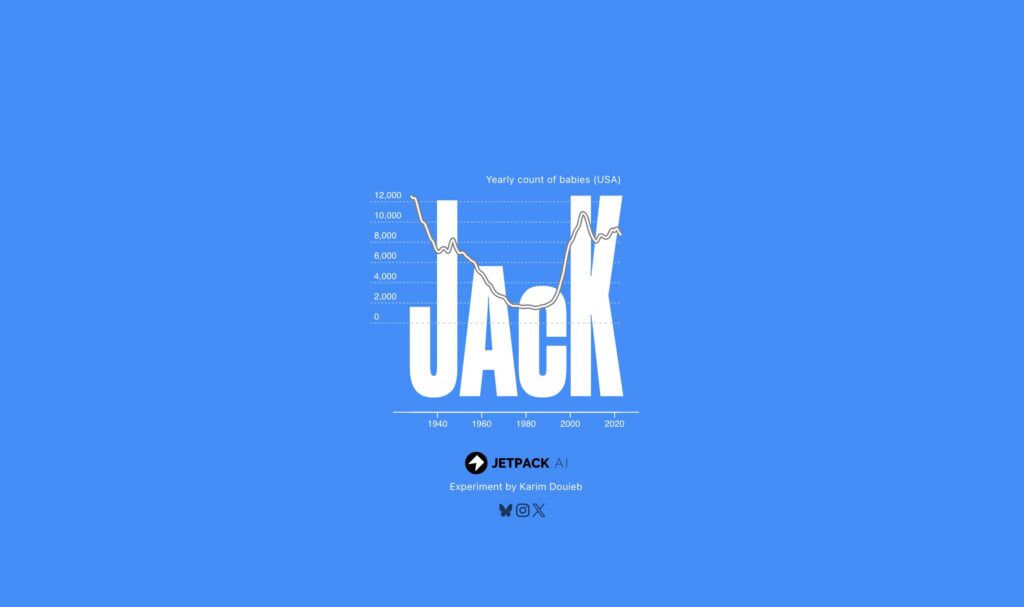
1. Jetpack AI
Jetpack AI shows that data storytelling doesn’t need to be complicated to be compelling. Their baby names visualization allows users to input any baby name and see how it has changed popularity in the US, shown as a line graph and changing letter sizes.
There’s a gamification element to this, where users are invited to submit their own, encouraging learning and active participation from the recipient.
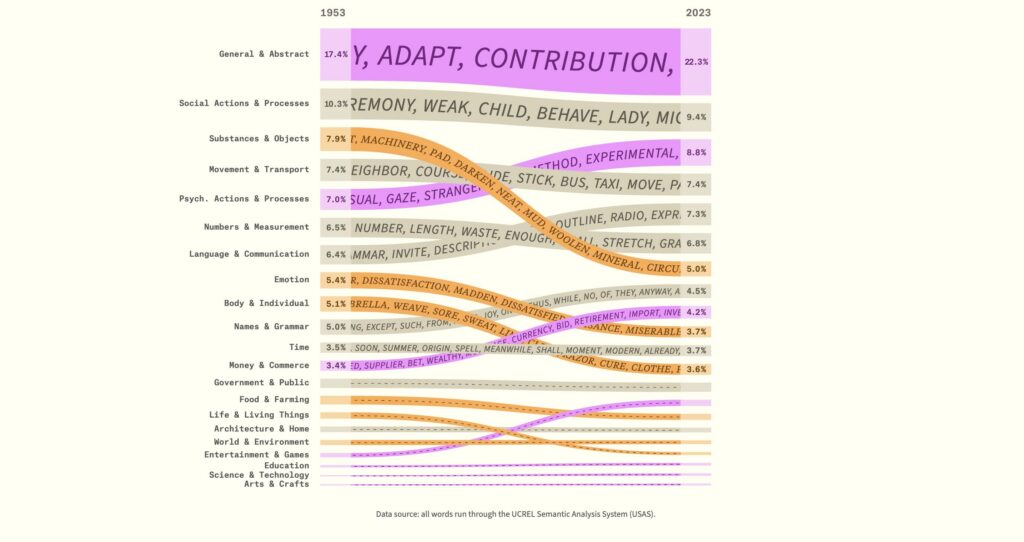
2. The Pudding
The Pudding is well known among fans of data journalism, consistently setting the standard for visual storytelling.
One of their recent pieces looks at the popularity of English words over time. Interactive elements keep the user hooked, and offer clear explanations that contextualize the data points they’re highlighting.
3. Sprout Social
Sprout has some excellent data storytelling as well. Our data reports, like the 2026 Influencer Marketing Report, feature digestible narratives and visual aids.
Remember: Your visuals don’t have to be graphs and charts. You can use a graphic to emphasize a stand-out data point. The data gives context and suggests an action for the reader to take off the back of the data.
Craft a story that travels
A good data story earns attention in the room where you present it. A great one gets picked up and repeated in the rooms you’re not in, quoted back to you by an executive or referenced by product as the reason a feature made the roadmap.
Getting there takes more than just a chart. It takes knowing your audience, pairing your numbers with the context that makes them mean something and closing every story with a clear next step. Download our social intelligence metrics analysis template to start organizing your data into a story worth telling.
Holiday shoppers no longer line up outside big-box stores for the best deals. Instead, they’re turning to social media to find, research and buy gifts. And when their shopping experience falls short, social is where they go to ask questions and share their frustrations.
Sprout Social’s Q3 2026 Pulse Survey shows that this holiday season, 86% of consumers plan to use social media for customer service as much (59%) or more (27%) than they did in 2025. As the peak shopping season approaches, social customer service volumes are likely to rise along with holiday demand.
To keep things running smoothly, customer care teams must make the most of all available resources. Luckily, Sprout Social is equipped with tools designed to alleviate the holiday rush while strengthening customer relationships—a gift that keeps on giving well after the holiday season.
‘Tis the season to bolster your customer care strategy. Keep reading to shape your strategy and to find out which Sprout features will set your team and customers up for success during this crucial holiday period.
Why social needs to be at the center of holiday customer service
Answering customer questions on social sits firmly in the center of the social media and customer care Venn diagram.
Social media is a direct line to your customers. And during the busy holiday season, their outreach will inevitably increase, further cementing social’s role in the entire customer journey.
Let’s look at three key ways social media must be central to your holiday customer service.
Social is the home of product discovery
“TikTok made me buy it” is more than a catchy phrase. It’s a reflection of the influence social media has on buying behavior—on TikTok and beyond.
Social media is a virtual mall designed for product discovery, social proof and purchasing all in one place—and its popularity is only growing. In the Q3 2026 Sprout Social Pulse Survey, social media tied with retail stores as the #1 resource for gift ideas and product discovery, with 46% of respondents saying they plan to use social media to find gifts.
Compared to last year, 28% of all consumers plan to use social more to find holiday gift ideas, and 50% plan to use it just as much.
These figures are even higher among Millennials and Gen Z. Specifically, 85% of Millennials plan to use social as much or more for gift research in 2026. And the vast majority of Gen Z (88%) fall into the same boat.
To stay relevant during the holiday season, customer service must prioritize social media, meeting shoppers at the heart of their gift search. Outfitting your team with the training and social media customer care tools they need boosts customer satisfaction by resolving issues where they’re most active.
Customer outreach on social will surge during the holiday season
Many brands, especially those in hospitality and retail, can expect to see an increase in customer queries and requests throughout the festive season. And knowing where and how those messages will come in is critical to your seasonal success.
Per the Q3 2026 pulse survey, users who contact brands on social media still overwhelmingly prefer direct messaging, with 55% of participants naming it as their channel of choice when reaching out to a brand on social media. Other popular communication methods include posting comments, tagging a company publicly or replying to a story.
This spike in outreach could be linked to the fact that consumers are increasingly using social platforms’ built-in shopping capabilities. Some of the most popular include TikTok Shop, Instagram Checkout and Facebook Marketplace. When asked if they plan to make a purchase directly within a social media app this festive season, more than half (57%) of participants said yes. Of that, 38% said they have already done so and 19% said they would try it for the first time.
Having visibility and access to social is crucial for delivering strong customer service. If customer care teams are only reviewing and responding to email, phone and web form requests, they’re not getting the full picture of holiday-time customer service needs.
Consumers reach out on social during every step of their shopping journey
From inquiring about restocks to posting reviews, customers engage with social media at every stage of their shopping journey.
And when it comes to contacting brands, consumers have network preferences. The top channels and the proportion of consumers likely to use them are as follows:
TikTok – 50%
Facebook – 46%
Instagram – 44%
Bluesky – 36%
Signal – 35%
X – 28%
Snapchat – 26%
With this data in mind, your team needs access to, and if necessary, training on engaging through these channels.
Remember: A stellar holiday customer service strategy doesn’t just resolve issues—it can turn casual shoppers into loyal customers and enthusiastic advocates. At the same time, a strategy that doesn’t account for social has the power to do the opposite.
10 tips to improve your customer service during the holidays
With the right toolkit and strategic processes, you can take the holiday season from stressful to streamlined.
If you want to revisit and revise your procedures before the rush hits, here are 10 tips for enhancing your holiday customer service strategy. Plus, we’ll explore some ways Sprout can help along the way.
1. Plan ahead
The holidays feel like they start earlier every year. If you’re not planning for the holiday shopping surge—by organizing your team, prepping for a Black Friday social media campaign and solidifying influencer partnerships—you’re risking the chaos of last-minute adjustments.
This year, avoid the scramble of catching up in a busy season. Plan to ensure smooth sailing before the ‘season’s greetings’ decor goes up.
Consider the other milestones your agents should align with—think: key dates for holiday marketing, like Black Friday and Cyber Monday sales or the last shipping days for guaranteed holiday delivery, that may lead to a spike in messages.
Teams should also be conscious of the challenges consumers face this time of year. For instance, the 2025 Deloitte Holiday Retail Survey found that 58% of people consider holiday shopping to be stressful. Financial strain is a key contributor for consumers this year, too, with the Q3 2026 pulse survey finding that 56% of consumers plan to reduce spending.
Although a well-oiled customer care process may not solve these problems, it can relieve stress on already overwhelmed shoppers.
2. Create holiday-specific FAQs
Add holiday-specific FAQs to your site, chatbots (more on that below) or even post captions so customers can find answers themselves. No matter how many FAQs you provide, you’ll always get repeat questions.
Brands like Educational Testing Service (ETS) are proof of how valuable proactive FAQ creation can be, no matter the season. Using Sprout, ETS—a nonprofit backing testing brands like GRE (graduate school entrance exam) and TOEFL (test of English as a foreign language)—monitored recurring customer questions and saw a 126% spike in queries before testing—their version of a holiday surge. The organization noticed recurring themes around topics like registration, score reporting, testing locations and at-home testing.
The brand then translated this data into clear, accessible resources to reduce friction for prospective testers and lighten the load on support agents. With these FAQs in place, the ETS team had more capacity to enhance their overall customer service, even reducing corporate response time from 2 hours to 1 hour 20 minutes.
Another tool for decreasing response times is pre-drafted replies. And creating one source of truth for these quick responses ensures consistency. For example, using the Sprout Asset Library, you can quickly search for and select pre-written answer templates as you respond to a question on social.
And if you want to limit or expand permissions, you can easily adjust who can access the Asset Library within Sprout.
3. Staff up
The majority of social media users expect brands to respond to them when they reach out on social media. And according to The 2025 Sprout Social Index™, quality is of utmost importance; 70% of consumers expect to receive personalized responses.
Consumers also have growing expectations around how brands respond to public queries (e.g. @-mentions or comments). The Q3 2026 pulse survey found that a third (33%) of consumers expect both an initial public response followed by a private conversation. On the other hand, 28% are satisfied with just a public response and 22% prefer a private reply only.
To meet those expectations—especially amid a busy festive season—you need extra hands on deck. Consider hiring temp or additional staff. For example, Al’s Sporting Goods hires seasonal customer service staff to handle holiday demand and ensure they maintain service quality.
Speed is key. The quicker your new staff can hit the ground running, the smoother your holiday season will be. Ensure you provide training and tools that make onboarding a breeze.
For example, Sprout has earned industry recognition as a platform with high ease of use, setup and admin—crucial elements when you need to get new staff into a tool fast. And with features like Cases and Case Management, you can assign and triage messages so your team can respond to every incoming message, without duplicating efforts or losing meaningful customer context in the process. With robust customer service case management strategies and tools, you can further streamline collaboration even as your team scales.
4. Tackle the highest-priority customer questions
Ensuring the highest-priority messages are sorted and answered quickly is crucial. Think: complex issues, urgent product inquiries, complaints or even valuable positive feedback needing acknowledgment.
Sprout’s Sentiment for Messages capability lets you identify and sort messages based on whether they’re positive, negative or neutral and create separate inboxes based on these sentiments. And with Message Intent, a machine-learning model determines if messages received in the Smart Inbox or Reviews fall into one of the following categories: Customer Love, Customer Support, High Brand Risk or Unclassified.
Once you identify the sentiment, you can respond appropriately and strategically. For example, positive messages are silver-platter opportunities for proactive engagement. Shark Beauty regularly replies to favorable comments on its Instagram accounts, enabling the brand to build deeper audience connections.
Teams managing a high volume of inbound messages should also consider a sophisticated triaging tool, like Sprout Social’s Case Management solution. Its smart automation capabilities remove the manual effort and monotony from assigning and creating cases, ensuring that your care teams can get to work quickly, provide the right level of care and avoid disruptions.
Inbound message tagging is another way to get the most out of Sprout’s Smart Inbox and Case Management solution. An organized tagging strategy helps you create tailored inbox views, ensuring quicker responses and improving your ability to analyze customer interactions once the holiday rush is over.
For Josh Martin, Director of Social Media and Brand Management at Papa Johns, the tool has streamlined the brand’s entire customer care process: “As a result of the Smart Inbox feature, response time has been cut in half since switching over to Sprout, as the team is able to move through the inbox much faster than before. The team is managing 600+ cases a week and saving 2 days worth of work each week—over 830 hours a year.”
Make sure all your customer care agents—seasonal or otherwise—are up to speed on your strategy with thorough documentation. If you’re not tagging messages in Sprout already, here are potential use cases to consider:
Tag by urgency: If your agents are divided by support tiers, tagging messages by urgency can help ensure customers are connected to the right representative quickly.
Tag by customer concern: Understanding trends in customer questions and complaints (e.g., in relation to specific themes or products) can better prepare you for next year’s holiday season. Use the Cross-Network Tag Performance report (which analyzes recurring themes across customer inquiries) to report on questions by internal Tag.
Tag by response need: Some messages aren’t actionable. For example, if someone promotes their own services in your replies, you’re better off ignoring it. Tagging non-actionable messages lets your team focus on important customer interactions and helps you more accurately measure your agents’ time to first-response (TTFR) rates.
Use these tagging strategies individually or in combination to streamline customer service response and reporting efforts. By proactively tagging inbound messages and Cases, your team can provide excellent customer service no matter how many messages you receive this holiday season.
5. Protect customer data
The holiday season is prime time for cyberscams, phishing attempts and other digital threats. According to the Internet Crime Complaint Center’s (IC3) 2025 report, non-payment and non-delivery scams—where you ship goods or services but never receive payment, and where you pay for goods or services but never receive them, respectively—cost people more than $503 million that year.
The more audiences research and shop for gifts online (and on social), the more brands bear a responsibility to help protect customers’ private information.
As a best practice, you should never ask for sensitive data like credit card numbers in public forums like the comment section. If a customer does ask a specific order question in a comment or @-mention, respond swiftly to shift the conversation to a private message.
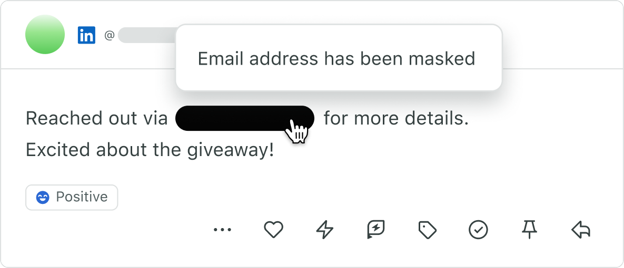
For brands in regulated industries, Guardian by Sprout Social offers data masking, which automatically hides sensitive data (such as credit card and Social Security numbers) sent via direct message. Guardian users can also tap into Secure Forms, a PCI-compliant way to collect this data without leaving the social conversation. Capabilities like these can be a holiday season boon for financial services brands, who often face an uptick in credit card fraud inquiries and other emergencies during the ‘ber months.
6. Use automation and AI
An impressive 81% of marketers say AI has already had a positive impact on their work, according to the Index. And it’s undoubtedly front-of-mind for teams wanting to ensure customer service efficiency this holiday season. When you can’t get an extra headcount to lessen the burden on your team, there are ways you can use AI as an assistant during busy seasons.
Here are three stand-out areas where automation and AI customer service tools can make a difference:
Faster responses
As mentioned, social users expect personalized responses from brands on social media. But quality alone isn’t enough; companies need to deliver on speed, too.
Our Q3 2026 pulse survey results reveal that 32% of social users anticipate a response on the same day. Others expect even prompter replies; 24% wish to hear back within 1-2 hours and 14% expect a reply within minutes.
In fact, consumers’ need for speed is so significant they’re willing to let AI do the work, despite an overarching skepticism toward AI-generated content. Specifically, 44% of Pulse Survey respondents said they feel somewhat comfortable with companies using AI (e.g. chatbots) to deliver quicker customer service. Additionally, 26% said they feel very comfortable with the idea.
Sprout’s Enhance by AI Assist, for example, uses generative AI to improve your responses to social comments and DMs–tailoring replies by length or the tone you want to convey, like friendly or professional, to ensure responses align with your brand voice.
Lean on chatbots
If you’re not already using chatbots to lighten your team’s load, this is your sign to start. And if you are, this is your sign to update them with holiday FAQs like order deadlines and promotional offers to keep responses accurate and reduce wait times as customer inquiries increase.
To address basic holiday customer service questions faster, we recommend using Sprout’s Bot Builder. Sprout’s Bot Builder lets you easily customize rule-based chatbots to handle a variety of holiday inquiries, from order tracking to shipping deadlines.
These rule-based chatbots also manage common questions that come through Meta’s Messenger or X (formerly known as Twitter) Direct Messages.
To start, determine what conversations you want your chatbot to handle. If you need help, Sprout comes equipped with a customer care-specific Bot Template, which you can tailor to handle holiday-specific questions, like return policies or gift card information.
Expedite administrative tasks
Especially during the hectic holiday months, your care team’s #1 priority should be addressing customer needs—not drowning in administrative cleanup work. Sprout offers a variety of tools to keep agents’ inboxes focused, including:
Case Auto Close: This lets Care Managers set a threshold of inactivity for cases. When that threshold is reached, the case is automatically closed. This ensures cases that no longer need attention are closed efficiently, while still maintaining accurate metrics in reporting.
Complete private messages handled by third-party platforms: To reduce inbox clutter and duplicative work, this setting ensures messages processed by third-party systems (e.g., bots, click-to-Messenger ads) are automatically marked complete.
7. Give agents the context they need to succeed
To set your team up for success through the holidays, you must provide them with the right information and tools. This also means giving agents the customer context they need, such as recent interactions and order history, to provide personalized service.
If your team has to juggle multiple tools just to handle a single customer message, you’re slowing down response times and frustrating both your team and your customers. Plus, your team may miss important customer history.
Sprout supports social CRM integrations with tools like Salesforce, eliminating the need to bounce between systems. You can access details from each platform in a single interface, so you can get a better understanding of the customer you’re supporting, the issue at hand and what’s been done so far to help.
For example, Sprout’s Salesforce integration helps you use social data for a world-class, omnichannel care experience. It enables your care teams to meet customers where they are vs. sending them to other channels, like a phone line or email.
For Sprout users like Sean Rebero, Senior Manager of Customer Care at Discount Tire, the Salesforce integration has made a world of difference:
“We wouldn’t be able to do the things that we’re doing today without having the ability to have [Sprout] integrated into our platform and Salesforce. It’s been a game changer for us.”
And now with Sprout’s social data in Salesforce’s internal AI assistant, Agentforce, care agents have message history accessible in a matter of seconds to speed up case resolution time, personalize responses and enhance customers’ overall experience.
An integrated social support strategy can make a major difference when dealing with a high volume of social messages. Connecting Sprout throughout your tech stack paves the way for more exceptional support experiences for your team and customers.
8. Establish collaboration norms
Creating a frustration-free, collaborative environment can look different for everyone, depending on your company’s needs. Before you design a process, you first need to evaluate existing and potential points of friction to address them proactively.
If you’re new to prioritizing social as a customer care channel, here are some questions to consider:
Who will review responses from seasonal agents and new hires?
Monitoring responses from new agents is time-consuming but necessary at the start of a busy season when quality control is especially important. Establishing a structured message approval process ensures customer interactions meet brand standards, even with new or seasonal agents.
To build an approval process, first identify which agents can be responsible for approving messages. Pair them with newer agents to ensure all replies stay compliant and on brand. As new agents feel more comfortable in their role, they can handle issues without an approver.
Sprout’s Reply Approvals workflow streamlines the process, allowing agents to submit, review and approve responses without interrupting their workflow to boost team efficiency during peak seasons.
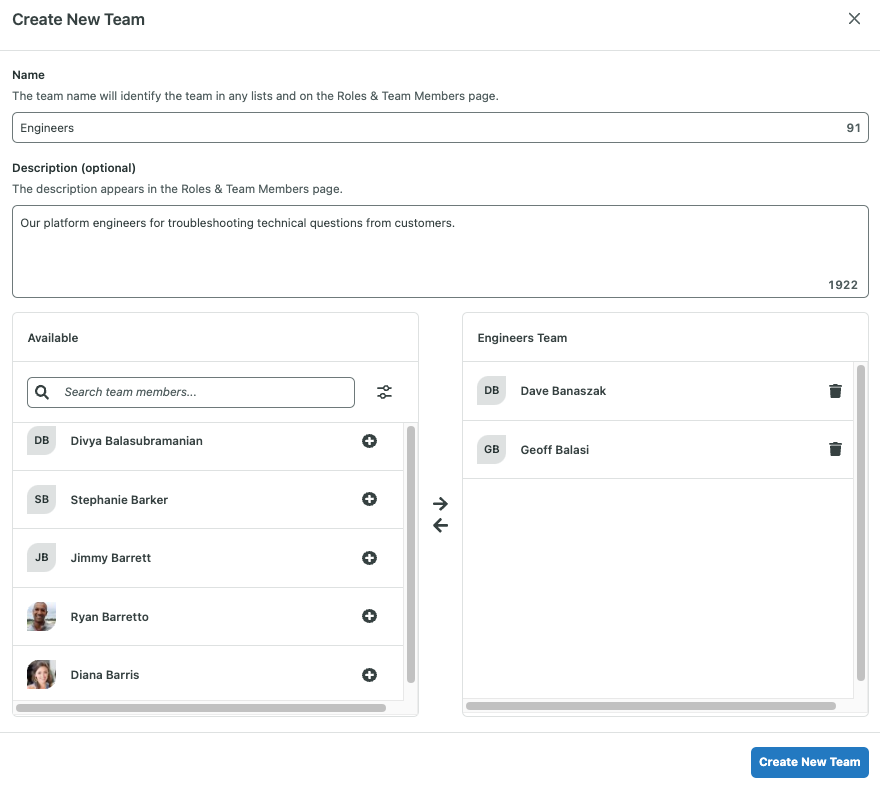
You can also create user teams in Sprout to ensure conversations and message comments are fielded to the right people for replies or clarification.
Who should agents go to with questions?
Whether all tough questions go through a single individual or you have point people for specific issues, document responsibilities for various topics and ensure agents know exactly where to direct their questions.
Bonus: Great customer service strategies aren’t built in a vacuum. Use this free social media customer service training deck to align marketing and service teams around a defined set of shared goals.
To further reduce confusion, use Sprout’s Conversations feature. This centralizes team conversations within the Smart Inbox, so questions can be answered without extra emails or direct messages back and forth.
9. Get ahead of holiday customer service crises
Responding to specific inbound customer questions and feedback during the holiday season is critical, but it’s just as important for teams to monitor the bigger picture. Today’s shoppers reflexively turn to social when something goes wrong, from product or packaging flaws to weather-related delivery delays, whether or not they tag your business.
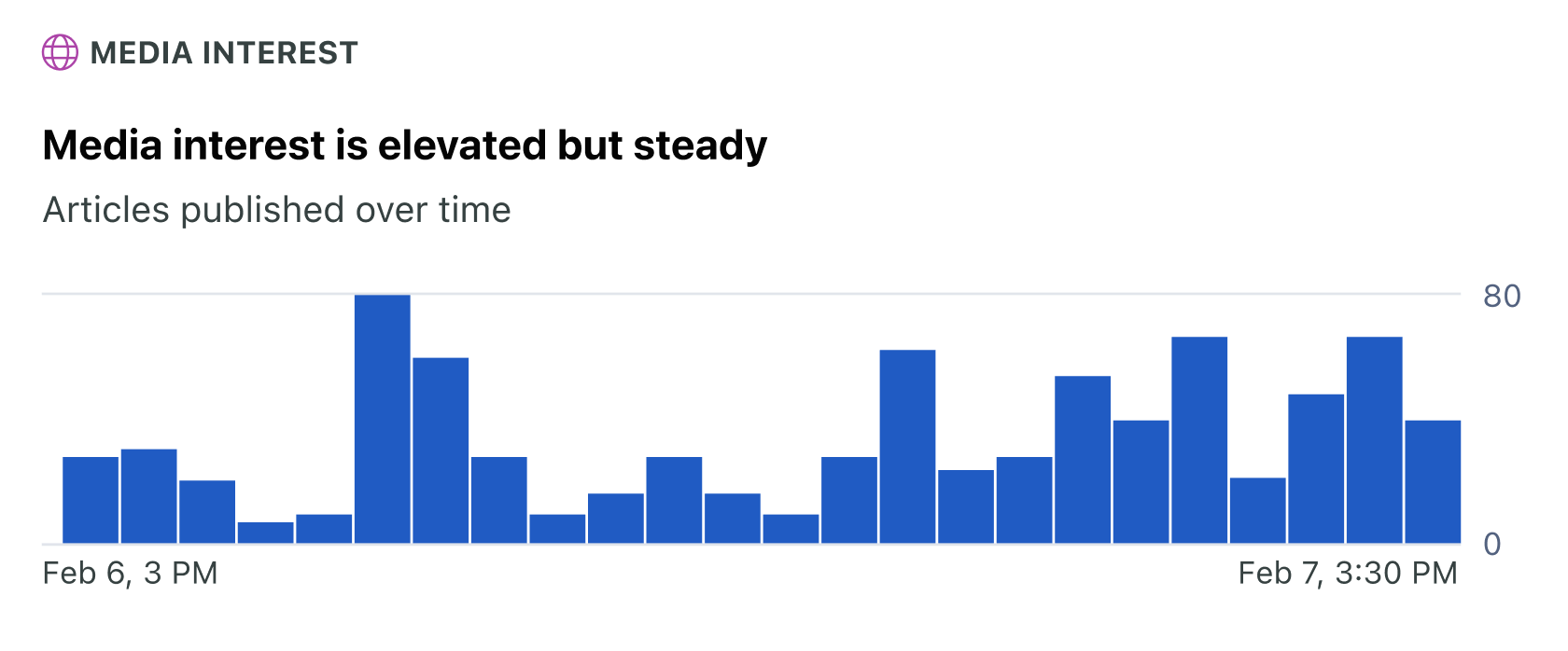
With the right tools, marketing and customer care teams can keep an eye on the larger conversations happening around your brand and spot crises before they spiral. NewsWhip by Sprout Social uses predictive monitoring to spot potential threats early, detecting what’s being said about your brand across news media and social channels, and projecting how big the story could become. Paired with Sprout Social Listening, teams can track audience sentiment over time to see how social conversations shift before, during and after a crisis.
10. Capture feedback and performance metrics in real-time to constantly improve
To refine your holiday customer service strategy, you must be able to capture real-time feedback and performance metrics to make continuous improvements. Externally, customer feedback surveys are critical to seeing the big picture of how people feel about their service.
Add surveys directly on social platforms like Instagram to capture feedback where customers are most engaged. Using Sprout, it’s easy to configure and implement surveys that measure Customer Satisfaction Score and Net Promoter Score on Instagram, Facebook and X—three major platforms for customer engagement—to gain insight into customer loyalty and satisfaction levels.
Internally, analyzing customer service metrics—like reply time and messages answered—fills in the details behind why customers may feel a certain way about your service by pinpointing bottlenecks.
Real-time reporting also helps teams understand what’s driving service quality during the holiday rush. For brands like pet tech company Whisker, Sprout’s Automated Routing and Case Management tools helped feed support teams actionable posts to respond to, and the Case Management Report unlocked visibility into metrics like handle time that they could work to improve.
“We had historically struggled to prove the true value of our team’s work. Using the specific metrics in the Case Management Report, average handle time, total replies, reply time from assignment, tag tracking, we finally had the concrete data to show stakeholders exactly how necessary and impactful our daily work really is.” — Christopher Kuzara, CX Supervisor, Whisker
These powerful reporting and automation tools empower agents to streamline high-volume queues—freeing up their time to provide fast, consistent support even during peak seasonal demand.
‘Tis the season to be efficient: Master your holiday social media customer service strategy with Sprout Social
A strong holiday customer service strategy has a long-lasting impact on customer satisfaction and loyalty that continues long after decorations have been put away for the season.
The folks on the front line of your brand play a pivotal role in resolving customer concerns and building loyalty that endures. Equipping your team with the right tools ensures they can focus on delivering top-tier service—the kind that drives repeat engagement, clicks and purchases.
Luckily, Sprout can keep your customer care team in good spirits well into the new year. Get started with a free 30-day trial and spread holiday cheer, empowering your team to delight customers all season long with exceptional customer service during the holidays.
A landing page can't grow your list until people see it. Yours is ready to share before you leave the publish screen.
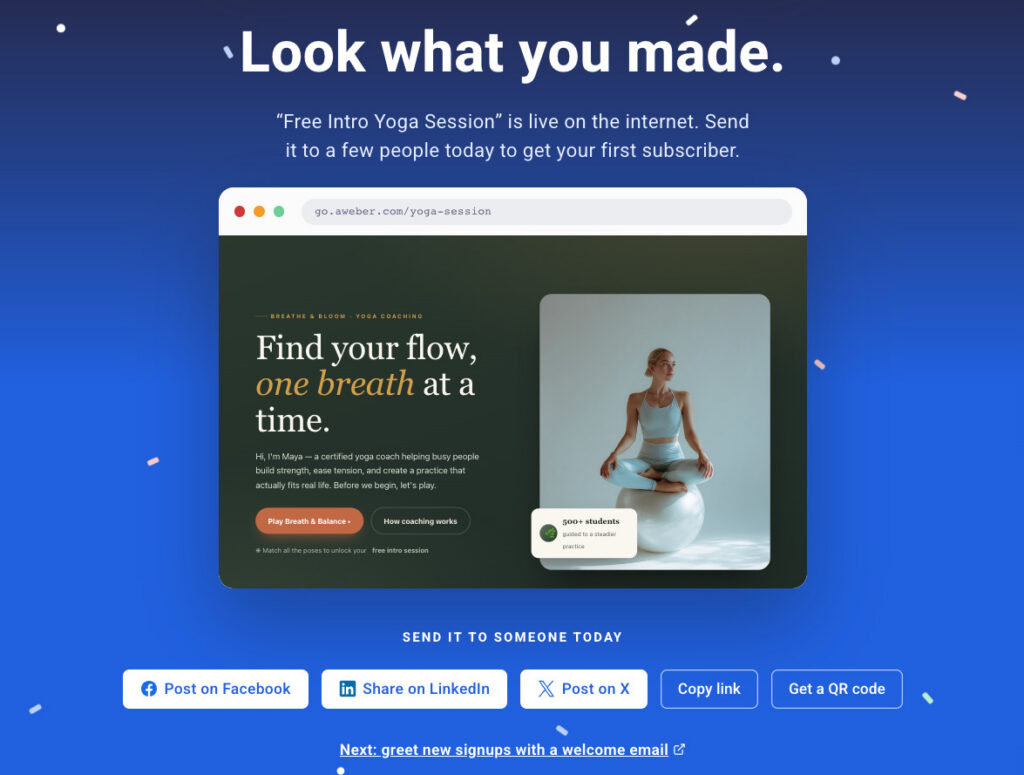
Post it to Facebook, LinkedIn, or X in one click. Or download a QR code for anything you print. Every visitor who signs up on your page joins your email list.
Post to your socials in one click
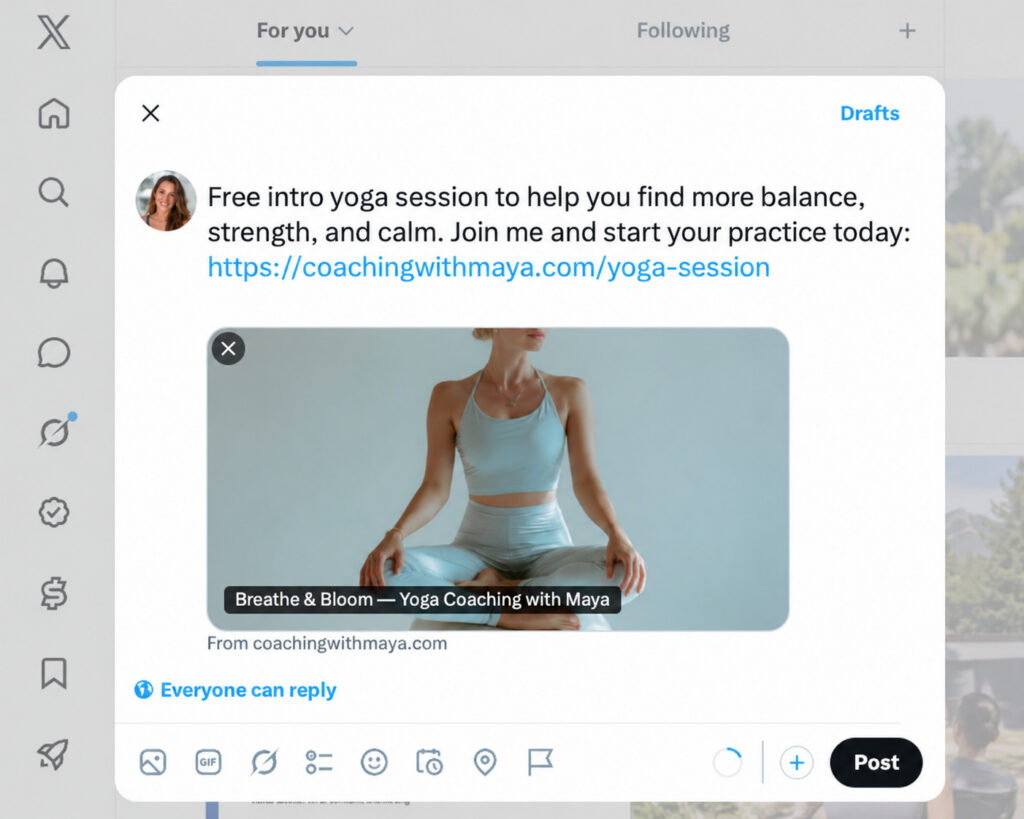
Click Facebook, LinkedIn, X, and the post window opens with your page already attached. Your page image and title show up as a preview, so people see what they'll get before they click. Add a line about your offer and hit post.
The publish screen stays open until you close it. Post to one channel, then the next, and you're on every channel in a few clicks.
Put your page in print
Click Get a QR code, and a high-resolution PNG of your page's QR code downloads. Anyone who scans it lands right on your page.
Put it wherever people see you in person:
Flyers and posters for classes, workshops, and events
Business cards so every handoff leads to your list
Table signs and counters at pop-ups, markets, and storefronts
Packaging and receipts so customers can join after they buy
The last slide of a talk so your audience can sign up before they leave
Take your link anywhere else
Copy link grabs your page URL for your profile bio, a DM, a text, or your email signature. Your page stays one tap away wherever people find you.
Greet every new subscriber
Right below the share buttons, one click opens Workflows in a new tab. Set up a welcome email, and every new subscriber from your posts or QR code hears from you right after they join.
Share your new landing page
Sharing is built into every publish, so there's nothing to set up. Build a page with the AI Landing Page Builder, click Publish, and pick where to post it.
As the poem goes: “Consumers scour social media with care, knowing that the holidays will soon be here.” Or something like that.
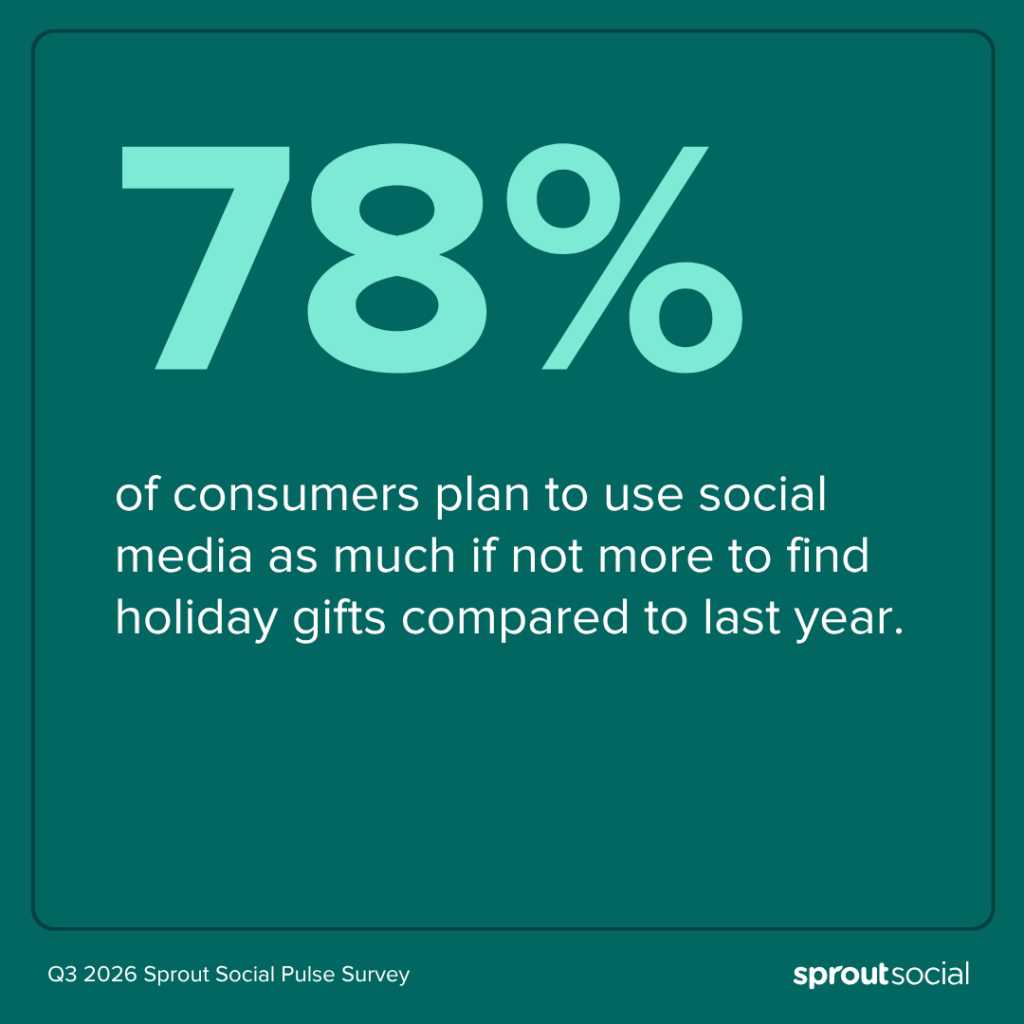
The most wonderful time of the year is fast approaching, and the influence social has on consumer purchasing behavior is undeniable. According to the Q3 2026 Sprout Social Pulse Survey*, more than three quarters (78%) of consumers plan to use social as much if not more to find gifts compared to last year.
Social has evolved into consumers’ favorite holiday marketing resource: a one-stop destination for discovering gifts, finding the latest deals and seeking customer service.
In this article, we’ll uncover key holiday shopping trends on social, including when consumers want brands to kick off their holiday campaigns, where consumers will look for gift ideas, what will make them more likely to buy, and how social media will play a key role in the customer experience.
Early holiday marketing campaigns don’t deter consumers from purchasing
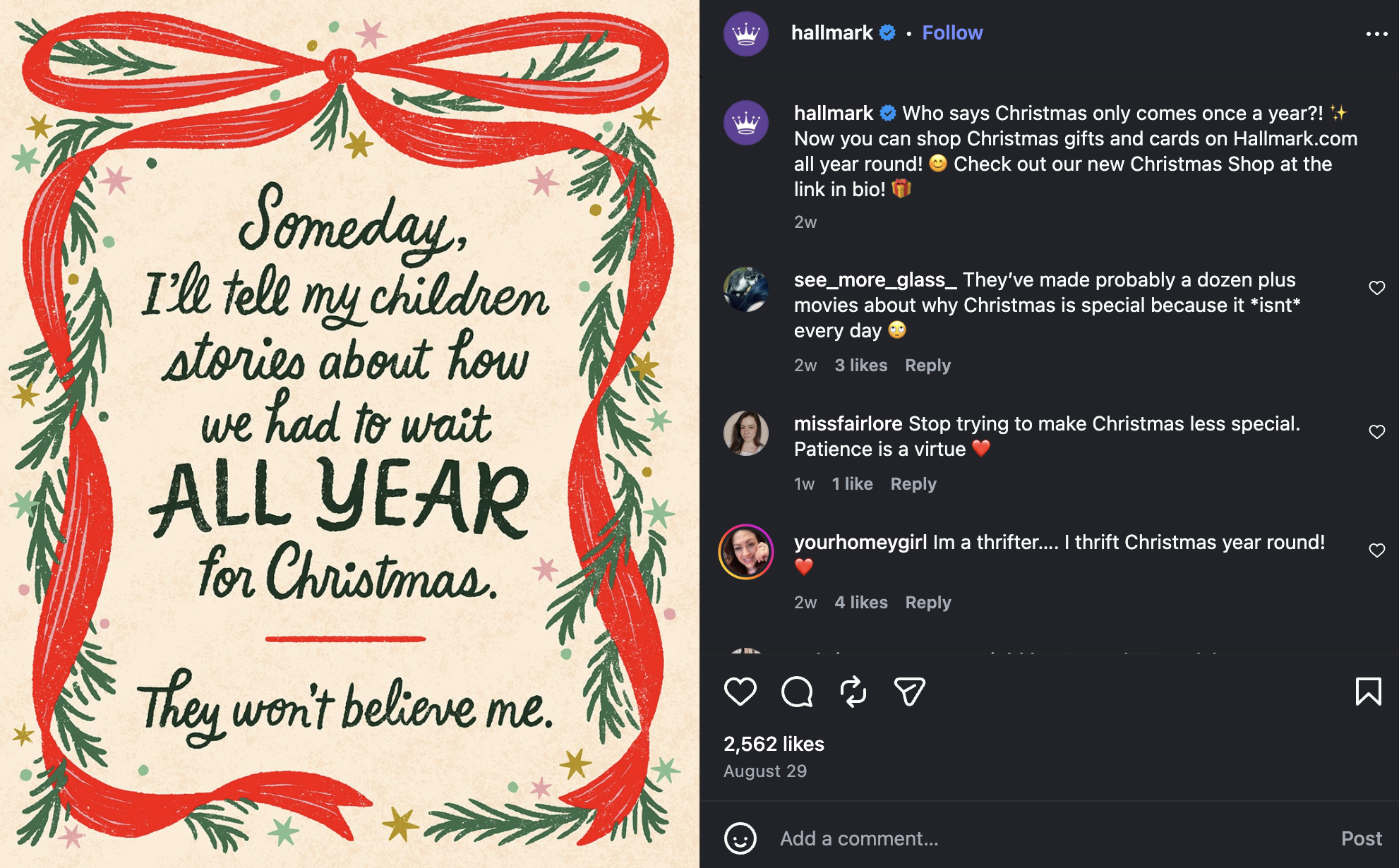
Holiday milestones (and marketing) are starting sooner than ever. Social users celebrated Summerween in June, Starbucks launched their pumpkin spice latte in August and Hallmark even started promoting their online Christmas shop along the same timeline.
But in 2026, holiday campaigns creeping into the summer months are the opposite of what data shows consumers want: campaigns with a more traditional October start date.
This year, we saw a later shift in when consumers want brands to start their holiday campaigns, with 50% saying brands should start holiday advertising in October. This is a change compared to 2025, where August and September were the preferred months.
Yet even with consumers signaling a preference for later campaigns, that preference isn’t enough to influence actual buying behavior.
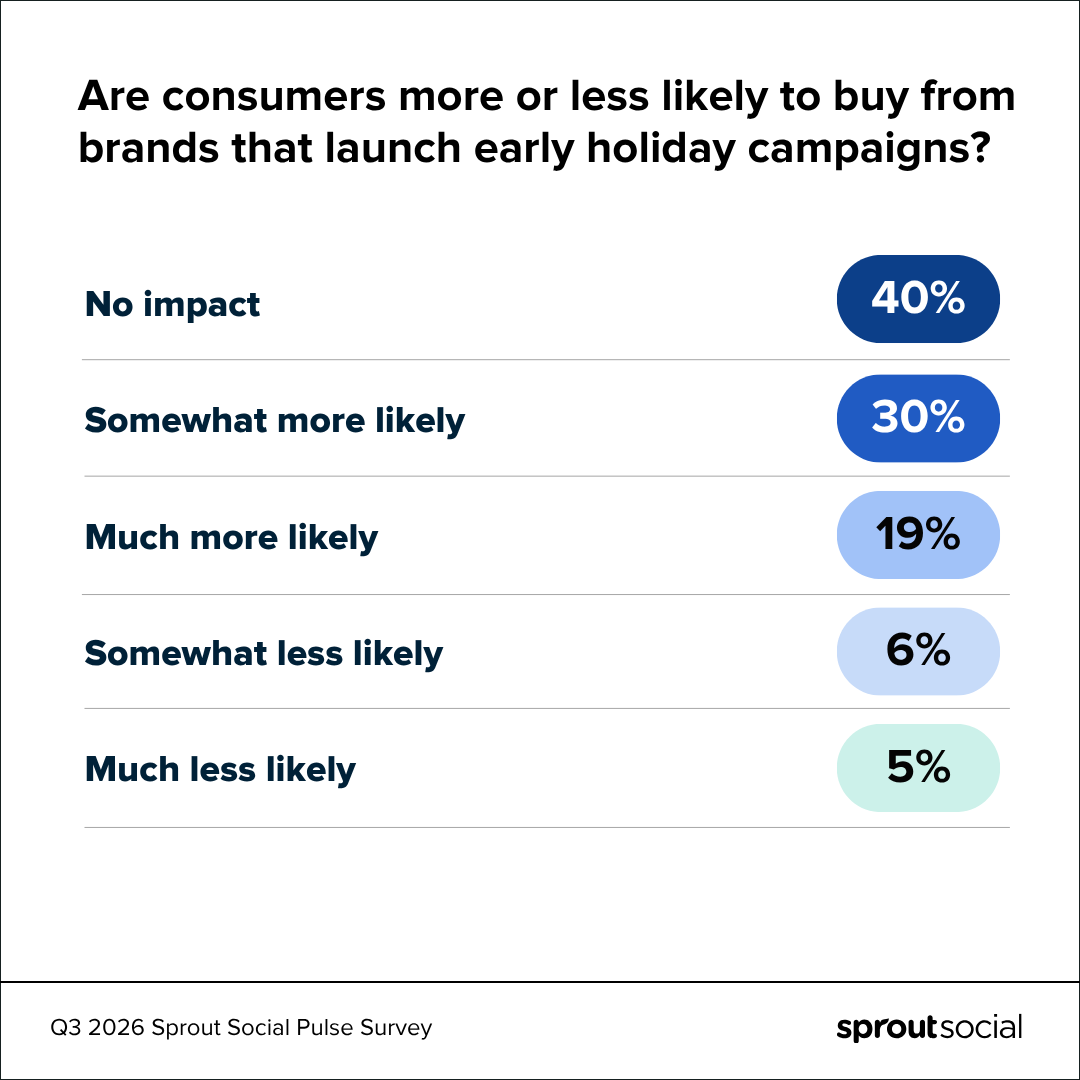
In fact, 40% of people said campaigns starting as early as August have no impact on their decision to buy from a company, while nearly 50% said they are either somewhat more likely or much more likely to buy from a brand who advertises as early as August.
Brand takeaway: Ideal campaign timing isn’t a core motivator for most shoppers. In most cases, posting a holiday message too soon (or too late) isn’t going to determine if people buy from you or not. Instead of focusing on timing, shift attention to your campaign content and what will resonate most with your target audience.
Tariffs and the economy are impacting this year’s holiday shopping habits
While campaign timing preferences don’t translate to buying behavior, tariffs and a tight economy do.
In 2026, consumers plan to shop earlier and spend less due to lower budgets and tariff-related price increases. More than half of people (69%) are concerned about price rises due to tariffs this year, and more than a third (36%) plan to shop earlier to avoid potential future price hikes.
And overall, 56% of consumers plan to reduce their holiday spending due to economic conditions.
What will make consumers more likely to buy?
With less than ideal shopping conditions, what will motivate consumers to make a purchase?
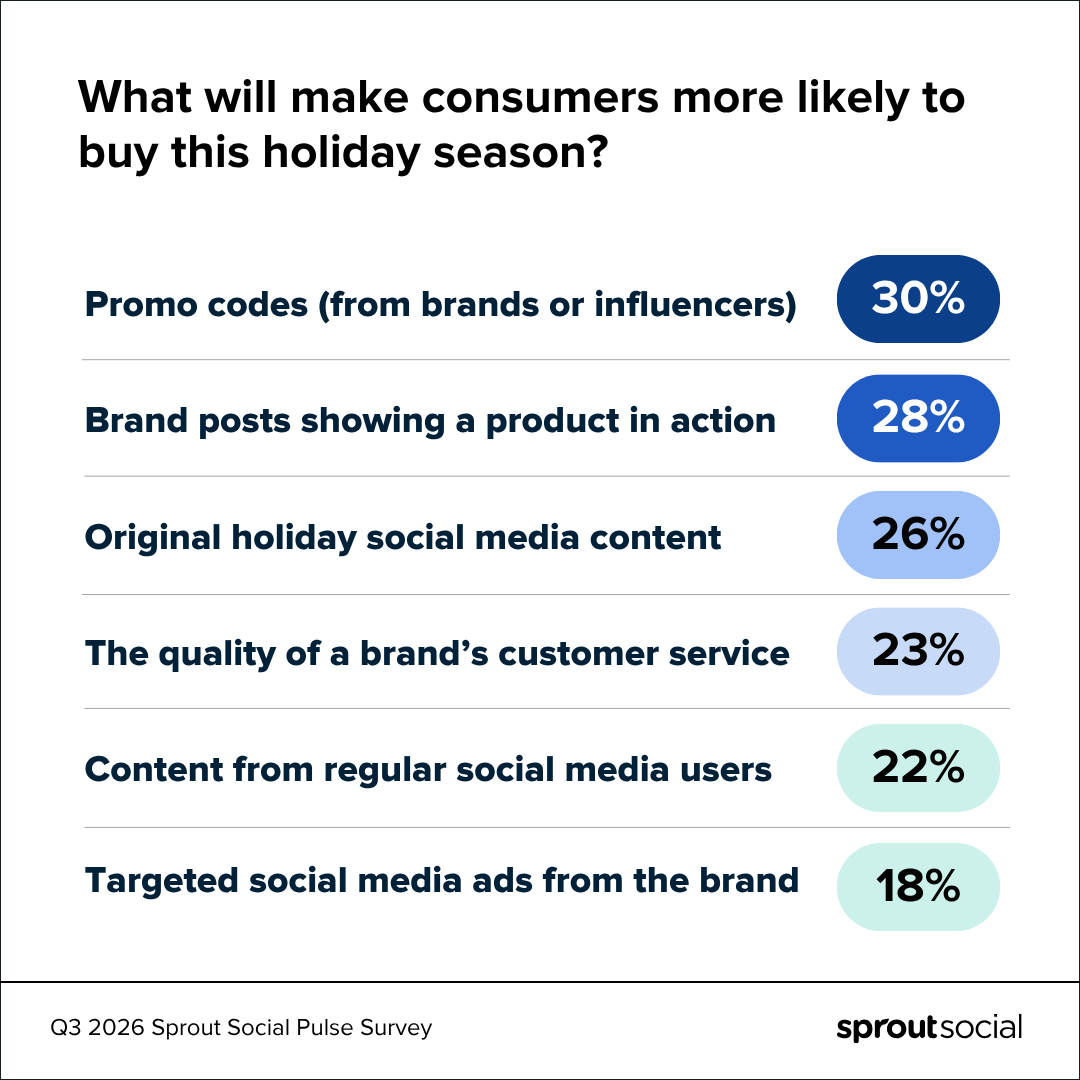
Promo codes are the top tactic for brands to grab consumer attention, with 30% of consumers saying a code, whether from the brand itself or from an influencer campaign, would persuade them to buy, reaffirming how much budget consciousness will define this holiday season. Your campaigns and influencer partnerships need to emphasize value—even more than years past.
Consumers are also looking for brands to show their products in action (28%) and create original, holiday-specific social media content to grab their attention (23%). This comes as a notable shift from 2025 preferences, where a brand’s customer service and user-generated content were the most influential factors in driving purchase intent.
Brand takeaway: The habits of price-conscious consumers are at odds with their preferences—but the wallets win. While consumers might not want their feeds flooded with holiday content in August, tight budgets are forcing shoppers to plan and purchase earlier than years prior. Since we know campaign timing isn’t a leading motivator, lean into what is. This year’s consumers want discounts, to know how your product works and creative holiday content, making 2026 ripe for influencer partnerships that cover all three bases.
Social is a top source for holiday shopping and product discovery
It’s been a few years since we saw the initial surge in people turning to social media as a search engine. And Sprout’s Q2 2026 pulse survey proved that social search is even more popular than traditional search when people look for experiential, highly-visual or peer-led information, with social search acting as the preferred method for seeking out restaurants, bars or things to do (38%), and product reviews or recommendations (30%).
It makes sense that these behaviors translate to the busiest shopping season of the year. In 2026, social media tied for the number one spot for holiday gift discovery, with 46% of consumers turning to social media for gift ideas, exactly the same number that said they would go to physical stores. Social rises to the sole top spot for both Gen Z and Millennials, with at least half of consumers scrolling on social to decide on gifts.
But social’s influence on holiday shopping doesn’t stop at product discovery. Consumers are routinely using social networks to purchase products directly, too. More than half of consumers said they’re open to making purchases directly within a social media app this holiday season, making experiences like TikTok Shop, Facebook Shops and Instagram Checkout all the more appealing for brands to use in holiday promotions.
Brand takeaway: With influence on behavior from discovery through purchase, brands can bet on social as a top driver of holiday campaign success. Create full holiday campaign journeys on social media, instilling trust and leading consumers along the whole buyer journey with the least amount of effort for them.
How holiday shopping trends impact customer care
Compared to the 2025 holiday season, 86% of users plan to use social as much if not more to get customer service questions answered.
They are most likely to turn to TikTok (50%), Facebook (46%) and Instagram (44%), while also using X (28%) and WhatsApp (17%). DMs are still the preferred method to reach out to brands for most consumers across generations (55%), but the comment section is also gaining traction, with nearly one-third (31%) saying they’ll reach out in the comments.
When handling customer service on social media, speed is paramount, with 70% of consumers expecting a response from a brand within a day of reaching out. Fast responses paired with high demand for many retailers leaves brands looking for options to address gaps in service. With the holiday rush, many brands are likely to turn to AI to help deal with the influx of customer messages. AI tools can help brands prioritize incoming messages, determine sentiment and even draft initial responses. Luckily, 70% of consumers are at least somewhat comfortable with brands offloading tasks to AI in the name of better customer service. This number rises to 77% for Gen Z.
While fast service is critical, speed doesn’t always mean a better experience. It’s best to use AI to expedite tasks behind the scenes and keep a human in the loop to respond to customers directly, so you can maintain the level of quality and personalization consumers expect.
Brand takeaway: Even with the use of AI, brands still need to make a plan to prioritize personalized, timely customer service during the busy holiday season. Given that 89% of consumers say response time matters to them after they reach out to a brand for help, customer service becomes a core driver of your brand’s reputation. And with the new emergence of consumers taking to the comments section for customer service, your brand has a higher chance of public exposure when something goes awry. Prepare now with a knowledgeable team, self-help resources and FAQs you can post to social media to alleviate social customer service strain before it happens.
Use holiday shopping trends to set your brand up for a happy new year
Consumers are turning to social not just to discover gifts and deals, but to make informed, trusted purchase decisions shaped by friends, family and other users. As tariffs tighten budgets and timelines shift earlier, brands that blend originality, responsiveness and value will stand out. Whether through early promotions, relatable content or seamless service, social media is the foundation of consumers’ holiday shopping experience.
To make your brand more discoverable during the ‘ber months, use this workbook to optimize your content for social search optimization.
*About the data
Unless otherwise noted, all data cited in this article is from a Q3 2026 Pulse Survey of 2,286 consumers in the US, UK and Australia conducted by Panoplai on behalf of Sprout. The survey was conducted online from August 11 to August 18, 2026.
For years, brands on social have chased follower count. More followers meant more reach, more reach meant more engagement, more engagement meant more sales, more sales meant more budget. Rinse and repeat. But that playbook is dated.
Today’s social networks run on algorithmic feeds, not follower counts, and a post can rack up thousands of views from non-followers, which often outnumber followers that see the post in modern feeds. Relevance is now the key, not audience size.
And the importance of discoverability even extends past the network itself, since social content is increasingly feeding into search engine results and used in AEO answers. That means the content of a post can drive awareness and traffic long after it disappears from the feed.
The takeaway for brands is the importance of content that is discoverable, not catering to just the audience you already have.
Reach has moved on from scaling with followers to scaling with relevance. The rise of algorithmic recommendation feeds means that on Instagram’s Reels tab or TikTok’s For You page, a majority of viewers for a given piece of content are people who don’t follow the account whose content they’re watching. Sprout’s own data shows that more than 70% of views come from non-followers 60% of the time.
And audiences have adjusted to this pattern. Only 17%* of users say they check an influencer’s follower count before deciding to follow for themselves. That means it’s less about audience size as a trust signal, and more about having the right content to engage your target audience.
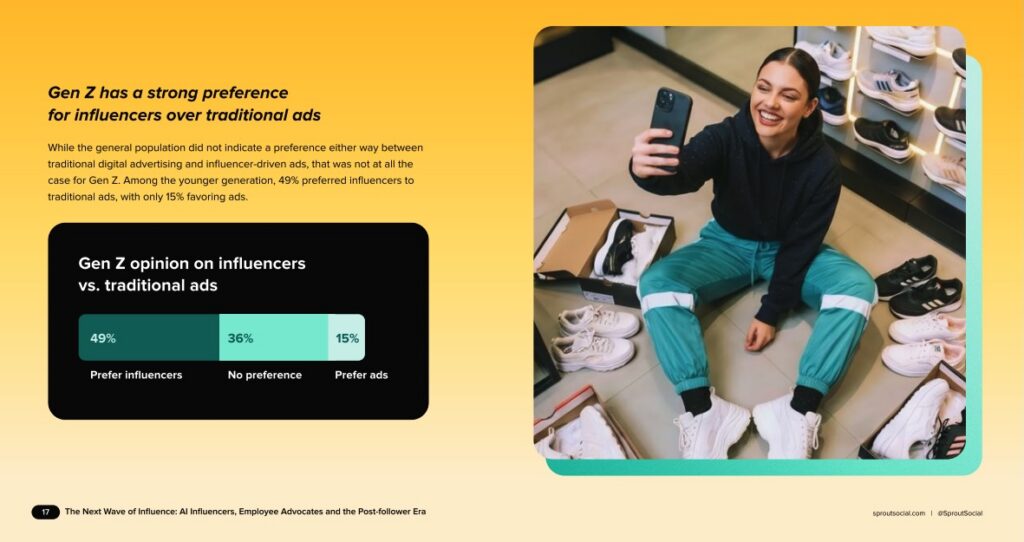
For brands, that contains lessons for both content creation and the partners they work with. Follower count, especially for picking influencer partners, isn’t a reliable enough metric in 2026, when topic relevance, content quality and engagement rate are the best predictors of performance. Brands looking for new creative partners should be looking for these metrics first and foremost when assessing potential fit.
In fact, the one time you might want to look at the follower count is to make sure they don’t have too many.
Niche creators and micro-influencers can deliver superior engagement and purchase intent
Niche creators are the clearest proof of relevance over reach, as their naturally smaller audiences can still be very highly engaged and influential. Our survey data shows that buyers are more likely to purchase based on a recommendation from a niche creator than a mega-influencer (21% vs. 15%, while about a third reported no preference.)
This says a lot about community trust, with smaller influencers often having highly engaged audiences that pay closer attention to their recommendations, and produce more genuine feeling content because of that smaller audience.
It all comes back to authenticity.
And that authenticity also matters in direct product promotion, with 80% of consumers believing influencers should actually use the product they’re promoting, and 44% wanting them to be long-term users before promoting anything. That’s much more likely to happen for smaller influencers who are promoting something that’s genuinely relevant to their audience, rather than a mega-influencer being used as a broadcast-style megaphone.
When you’re building a shortlist of partners to work with, relevance and authenticity matter more than follower totals. A creator with a highly engaged niche audience can easily outperform one with higher reach and less credibility with their own audience.
And speaking of credibility, audiences are increasingly going straight to the source to hear from the people that work at the brand itself.
Frontline employees are your brand’s newest discovery engine
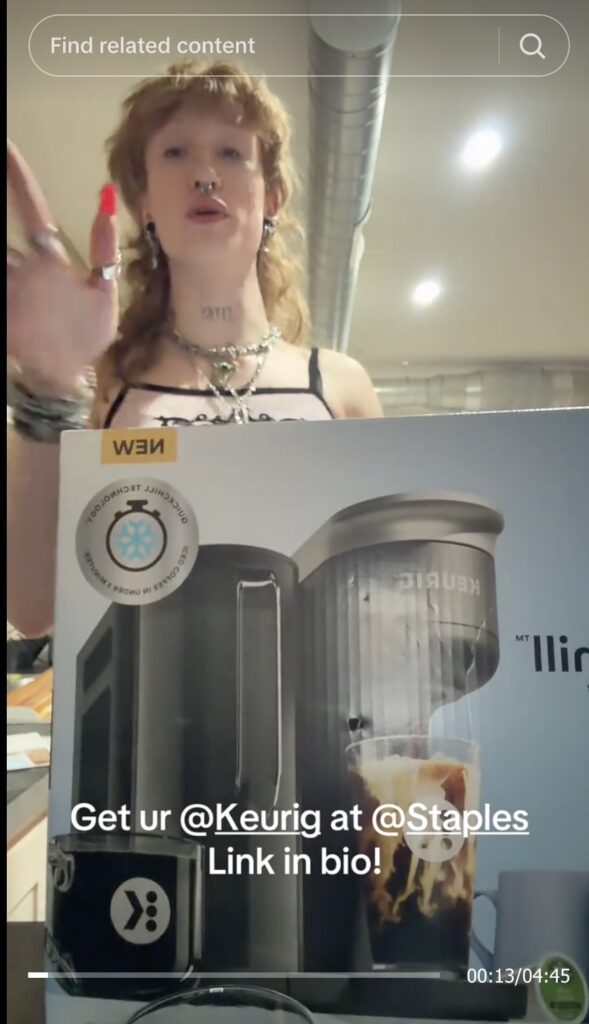
Brands’ own employees are beginning to take over the algorithm. We saw this anecdotally with the attention the Staples Baddie got this year, with her content about everyday occurrences at the office supply store getting huge traction and national recognition, even laddering up to a profile in the New York Times.
Employee-generated content now drives product discovery at least monthly for 40% of consumers according to our research (rising to 62% for Gen Z), so this has already become a major channel, and that’s before most brands have made any significant investments in it as an official program.
The quest for authenticity is reflected in who audiences want to hear from when it comes to employee advocates. For example, consumers would rather hear from frontline employees doing their actual job than the marketing team or C-suite presenting a polished vision of the brand. A stockroom employee explaining how products get ordered, or a barista showing you how a new drink gets made is much more engaging than a campaign asset delivered through a different mouthpiece, especially for B2C brands, though it does extend to B2B teams too.
But this channel needs to be treated with care, just as any partnership would be, and consumers believe that workers should be paid extra for the extra work if it extends beyond their normal job description. A clear majority (61%) believe brands should pay, and some brands such as Gap and Starbucks are already leaning into formalizing the programs to give employees clear guidelines while proposing fair pay and giving them the creative freedom to be themselves within the brand’s constraints.
Social Media SEO: The tactical side of discoverability
Beyond algorithmic discoverability, social networks now also function as search engines. According to our Q2 2026 Pulse Survey data, social media is the second most commonly used platform for search across all age groups and demographics, behind traditional search engines but ahead of chat-based AI and asking friends and family directly. Among younger users, the gap between social search and traditional search engines is narrowing significantly, with consumers routinely splitting their search habits based on their exact intent.
That means brands need to not only have an SEO strategy, but also a strategy for social search (SOSEO). That starts with understanding what your audience is searching for on social and making sure the keywords you’re using contain those same search terms, exactly as you would for a blog post or website page.
And it goes beyond just keywords used in the captions; algorithms are digesting much more than that. They also use the spoken audio, on-screen text and captions to understand the theme of the video and decide who sees it and who doesn’t, so even if they don’t search directly, the right keywords also aid discoverability. A video on the right topic but missing the right keywords for that topic will have less reach than one engineered for maximum discoverability across onscreen text, audio and captions.
These are small, consistent tweaks you can make to your content, much like experimenting with the hook to improve retention, but are crucial to making sure discoverability is maximized.
Discoverability beyond social networks through SEO & AEO
SOSEO has been a rising trend for years, but even more recently SEO and AEO through traditional search engines and AI answer engines have become more relevant to social professionals, and discoverability has extended beyond the walls of the networks themselves. For example, Google added a Short Videos tab to its search results, pulling directly from Instagram Reels, TikTok and YouTube Shorts, meaning the benefits from the SOSEO work that forward-thinking brands were doing now extend to traditional search as well.
And AI answer engines (the likes of Anthropic’s Claude, OpenAI’s ChatGPT and Google’s Gemini) are accelerating this trend. These tools pull directly from social content such as LinkedIn and Reddit when searching the web for indexed content to provide an answer.
This makes social content much more evergreen. Content used to lose relevance and disappear from the feed within 24-48 hours, but the mix of SEO, SOSEO and AEO extends that shelf life significantly, and often allows content to go viral multiple times over a longer period of time providing it remains relevant.
In practice, this is optimized the same way SOSEO is, with clear audio, good captions and keyword-aligned topics. That way, you get an algorithmic boost and potential search discovery in-platform, and then an additional discovery opportunity when that content gets indexed and resurfaced across the broader web.
How brands win in the post-follower era
All of the above points to the fact that we’ve gone well beyond the audience building that was the objective before the For You page came along. It’s an input into the broader algorithm, not the end goal itself.
The brands winning right now are building for discoverability first, across every layer of the social ecosystem. That means partnering with creators that make content that’s relevant to your brand, no matter how big they are, building out employee creator programs with frontline employees and ensuring all content is optimized with the right keywords. Done correctly, these optimizations compound, and your content becomes more discoverable across all parts of the internet.
Follower count will keep declining as a meaningful metric, and it’s not something that brands should be optimizing for in 2026. The most successful brands will be the ones that increase their discoverability through optimizations and partnerships, which they can track through increased engagement and reach on their own and partner posts, as well as AEO discovery and organic search traffic.
Want a deeper understanding of how creator partnerships are performing in this new landscape? Sprout’s 2026 Influencer Marketing Report has the full data set.
*About the data
Unless otherwise noted, all data cited in this article is from a Q3 2026 Pulse Survey of 2,286 consumers in the US, UK and Australia conducted by Panoplai on behalf of Sprout. The survey was conducted online from August 11 to August 18, 2026.
It’s time to pull the ripcord on creating content for content’s sake.
We hear the same sentiment again and again (and again): social media saturation is leaving audiences overwhelmed and social media professionals burnt out. Like the number of tabs open in my Chrome browser, keeping up with all the information in our social feeds is unsustainable.
Today, more than 5.5 billion people use social media worldwide, with the average person spending around two hours and 20 minutes on social networks every day.
Audiences are everywhere and seemingly nowhere, as network algorithms surface content based on interests rather than tangible connections. The rapid fire pace of trend and meme culture, paired with a stream of AI-generated content flooding feeds, has created a ceiling on the volume of content people are mentally and emotionally able to process.
We examined how BMC used social intelligence to overcome social media saturation and how brands can build strategies rooted in the quality content that earns audience attention.
Why we’re at peak social media saturation
As so much about the social media landscape changes, the one constant is content—and a lot of it. On average, brands published 9.5 posts per day across networks in 2024, according to Sprout’s 2025 Content Benchmarks Report. For certain industries, that number doubles and even quadruples.
Let’s look deeper at what’s contributing to the challenge:
Content production pressures
It’s impossible for consumers to actively engage with all of the social content they see. Literally: One research team found humans’ screen attention spans dropped from 2.5 minutes in 2004 to 47 seconds in 2023.
The irony is, as trends move faster and audiences flock to short-form content formats, the pressure to churn out a higher volume of posts intensifies. The sheer number of accounts competing for users’ fleeting attention exacerbates this dynamic.
Brands are constantly feeling the pressure to do more. It’s the same reason 87% of marketers said they planned to expand their presence to new social networks in The 2026 Social Media Content Strategy Report. Declining engagement rates highlight a need to connect with audiences, and while the path of least resistance may look like churning out more content in more places, in reality it’s only adding to the social media noise.
AI’s impact on social media feeds
Bots have been crashing the comments section on social for years. But now AI slop is flooding the zone.
From December 2025 to August 2026, Sprout Social Listening found more than 10.8 million mentions of “slop” or “AI slop” circulating on social. This doesn’t even account for the actual volume of slop posts themselves—only for the conversation around it. That signal alone tells us how inundated our feeds have become with subpar content.
And in less than one month since launching their “seems like AI slop” button, LinkedIn reports more than 1 million people have already flagged content as AI slop.
From a brand safety standpoint, this also means marketers will increasingly have to juggle their own content production on top of monitoring feeds for misinformation about their businesses.
Platform uncertainty
Today’s social media ecosystem is fragmented across networks with unique algorithms and audiences. How consumers use each to meet their needs for connection and consumption is always evolving.
The last few years alone have seen the emergence (and quick decline) of networks like BeReal, along with steady growth of alternatives like Threads, Bluesky and Mastodon. Pair that with constant changes to network features and algorithms that decide what content formats will be served up the most, and it raises questions around what will resonate today and how that may change tomorrow.
How one Sprout Social customer led with resonance to break through social saturation
In a saturated landscape, less can be more. A focus on quality can pivot a brand’s posts from those that fade into the feed to the timely moment that captures attention. Here’s how one brand used Sprout Social to pinpoint what their audience wanted more of, then acted on it.
BMC moved from daily posting to insight-led storytelling
BMC’s lightbulb moment came when social data revealed their thought leadership content consistently resonated with BMC’s audience. Rather than one-off promotions of specific assets, their engagement metrics told a story of resonance when they connected posts to industry trends, customer challenges or BMC’s specific point of view.
This pushed the team to rethink how they were using social media channels, and how they could evolve their storytelling to match audience interests. Social data revealing the value of thought leadership led to a strategy reset where BMC launched The BMC Briefing, a monthly LinkedIn newsletter packaging product education, customer stories and industry perspectives into an editorial experience. The newsletter became a primary channel for brand narrative, moving the team away from daily posting goals toward intentional, insight-led storytelling.
What your brand can do to overcome social media saturation
The challenge of social media saturation isn’t going anywhere. AI technologies will continue their ascent and the platform landscape will continue to diversify, regardless of whether marketers are ready. What social teams can do, however, is adopt new rituals to improve their odds of cutting through the noise.
Invest in original content
According to Sprout’s Q3 2026 Pulse Survey, one-third of customers say the originality of a brand’s content is what makes them stand out as a favorite on social media, second only to the quality of their products and services.
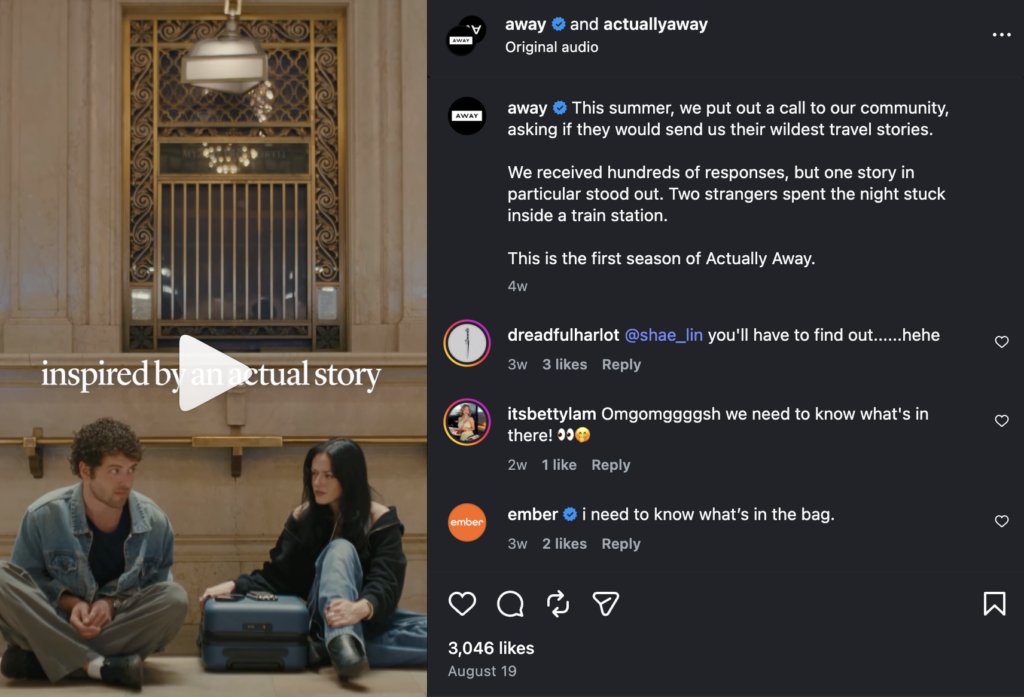
Original thought is the only way to stand out in a world of slop. It’s why brands like Away and Nuuly are producing microdramas, a unique way to highlight their products while serving as a form of escapism for an audience flooded with brand content that all sounds the same.
Lean into your brand’s differentiators and create something that your competitors can’t.
Calibrate your content around audience preferences
The first step to capturing your audience’s attention is to deeply understand what they want to consume.
For example, with almost every network supporting a menu of video options, social teams have to get even more precise with where they post, the length of their content and whether it’s grid-worthy.
According to Sprout’s Q1 2026 Pulse Survey, when videos longer than one minute are served in the Instagram or TikTok feed, Gen Z rarely skips them immediately (14%) while Baby Boomers are the generation most likely to swipe to the next post (33%). But overall, 44% of consumers say they would watch longer content if the first five seconds are engaging.
And across generational divides, people still want to be entertained and educated on social media the most, making edutainment posts a mainstay in a fleeting world. Knowing your audience and their preferences is key to investing in the right formats.
Align audience interests to cultural moments
This is a topic where the pendulum continues to swing: should brands keep up with cultural moments?
The verdict is in: yes.
Our Q3 2026 pulse survey found that 84% of consumers surveyed either strongly or somewhat agree it’s important for companies’ social media content to keep up with online culture.
But your brand has to strike a balance when trendjacking. Not every moment is the right fit for your brand, and jumping in on a trend when it’s not a good fit only adds to the slop. Take a data-first approach and use social intelligence to understand what your audience is talking about, the topics that resonate, and the moments that could create brand harmony. Avoid all the rest.
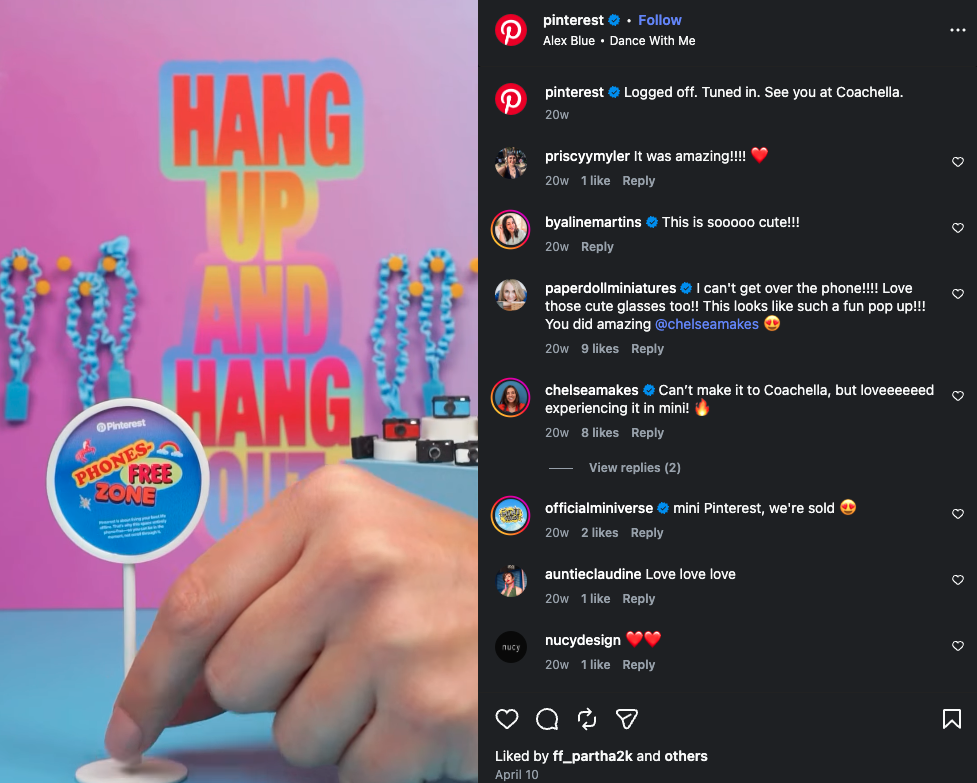
Take Pinterest’s IRL activation at Coachella as an example. Pinterest could have taken the easy route and created a digital experience for their activation at Coachella, but instead, they leaned into the “analog aesthetic” trend popping up on their own network, with searches for the term up more than 260%. They created a phone-free experience with custom charm making, beauty touchups and junk journaling. It was a fresh take on a trend, but they made it unique to their brand.
Redefine how you measure success
As social platforms continue to test the limits of just how much content audiences can process, now may also be a good time to advocate for new social success metrics. Our Index data shows that most marketers already prioritize engagement metrics (shares, comments, etc.) over reach and impressions. After all, what’s more valuable: someone seeing your post and scrolling on, or someone finding it so relevant they tag a friend in the comments?
Social teams can use this over-saturated moment to make the case for setting more targeted community growth and engagement goals (rather than reaching a certain number of eyeballs).
Social media saturation is a challenge—and an opportunity
Today’s social platforms are more nuanced, and the people who use them are more plugged in than ever before.
As a result, brands have to be even more strategic—and flexible—to ensure their investments in social pay off.
Despite the obstacles social media saturation presents, it also gives social teams an opportunity to reset their content strategies altogether. Run a short-term experiment to test the impact of lowering production volume and creating more original content. Prioritize a new approach to entertain your audience, or a new way to relate to a trend.
Social media may run on algorithms, but finding success is anything but formulaic.