Between all the DMs you need to answer and the posts you need to create, it’s time-consuming to maintain an active social media presence. And as you expand to more channels without increasing headcount, you get sucked into a productivity trap where you’re doing more work, but your results stagnate.
This is all too familiar for social media teams that do (almost) everything manually. The Social Media Productivity Report from Sprout Social even found that 63% of are unable to do high-impact work because they’re bogged down by manual tasks.
On the other hand, respondents who use dedicated tools to manage their social media are twice as likely to have enough time to get their work done.
This makes a strong case for marketers to start automating various aspects of their social media management. In this social media automation guide, we break down three essential steps to get started. Let’s take a look.
What social media automation means
Social media automation is the process of letting tools handle routine and repetitive tasks like scheduling posts or tracking brand mentions. This gives you back the time needed for more meaningful work that requires human input, whether that’s responding to your DMs or creating high-quality content.
Rather than “replacing you,” automation allows you to free up time by automating the routine. So you have more time to spend on personalizing the meaningful.
Step 1: Centralize your publishing
Connect your profiles to one dashboard
You waste time when you’re manually logging into different profiles to schedule every post individually. Streamline the process by connecting all your social media profiles to a centralized publishing dashboard.
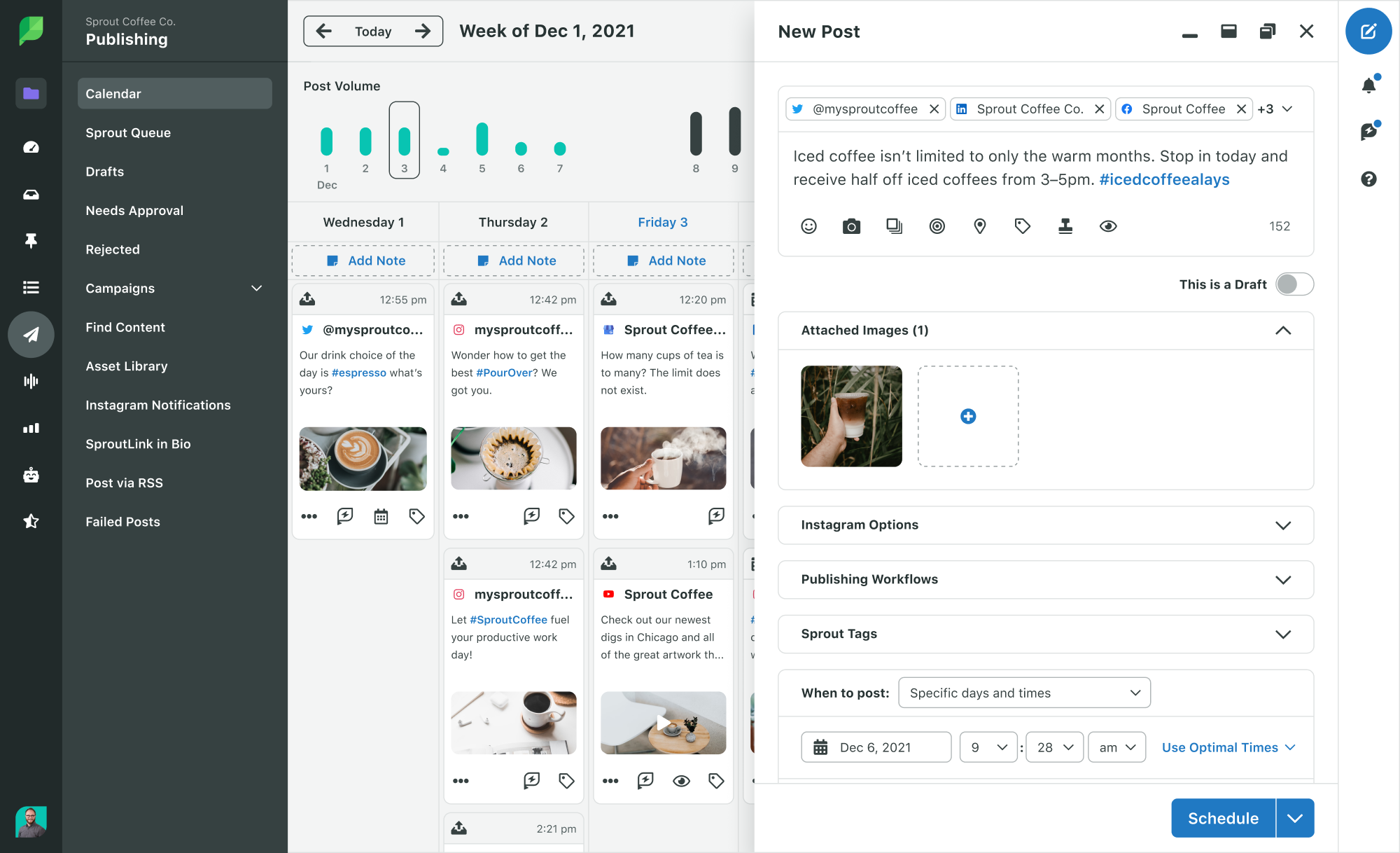
A social media management platform like Sprout consolidates your publishing through a single dashboard. This lets you connect your profiles across different social networks and manage your publishing in one place. When you create a new post to schedule, all you have to do is select the profile(s) where you want to publish it.
Build a lightweight content calendar
Before all the automation comes the planning. And you need to plan your posts ahead of time before you can schedule them.
A content calendar makes it easy to do this and organize your publishing efforts. When you already have content planned for the entire week or month, you can quickly start creating posts without spending too much time on ideation.
And you don’t have to build an elaborate calendar, either. Keep it simple with a clear outline of the essentials:
Publishing date and time
Platform and profile
Content pillar or topic
Format
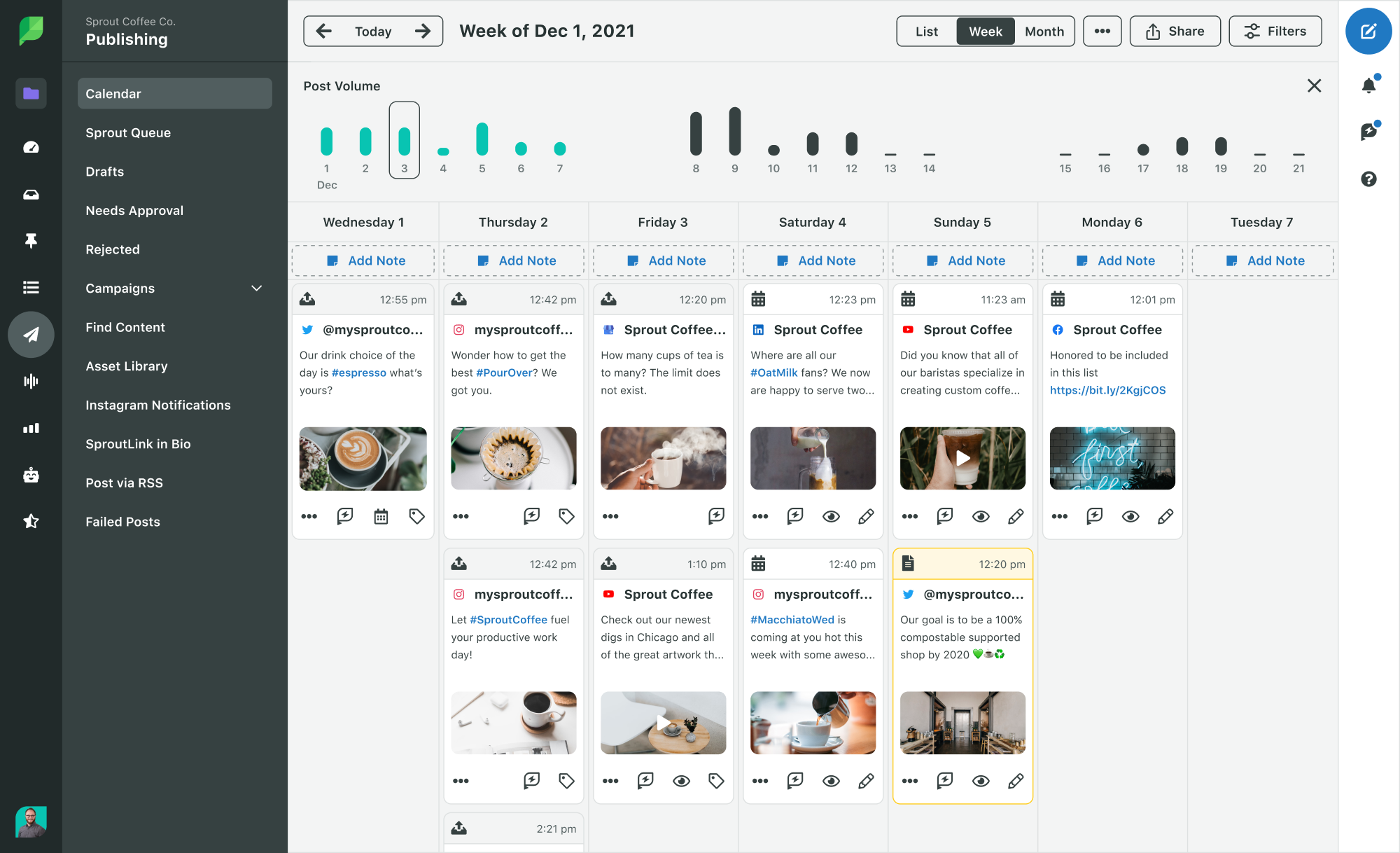
Sprout’s content calendar helps you visualize your planned posts across all your profiles. It lets you create and schedule posts directly within the calendar, which simplifies your publishing automation. You can even drag and drop posts to easily adjust your publishing cadence for optimal frequency.
Schedule around optimal send times
Effective publishing automation is highly strategic. It’s less about the publishing volume and more about the timing precision. When you schedule your posts to automatically go live, you need to time them to make sure they reach audiences when they’re most active.
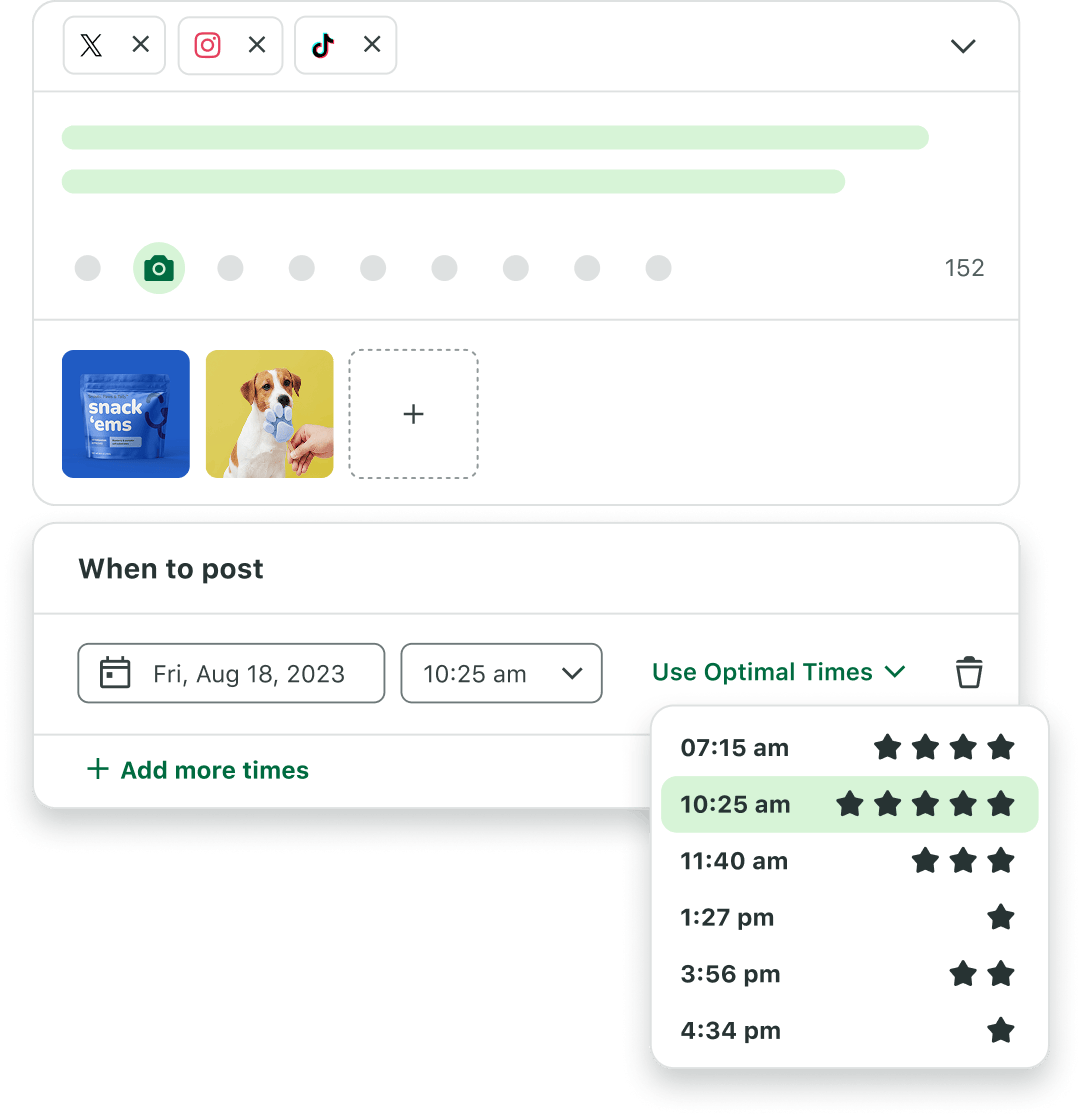
Sprout’s social media automation features like Sprout Queue let you do just that. It automatically sends out your posts at a time of your choosing, so you no longer have to set reminders to remember when it’s time to post. You can schedule posts in bulk and for the entire month, freeing up time to focus on more high-impact tasks.
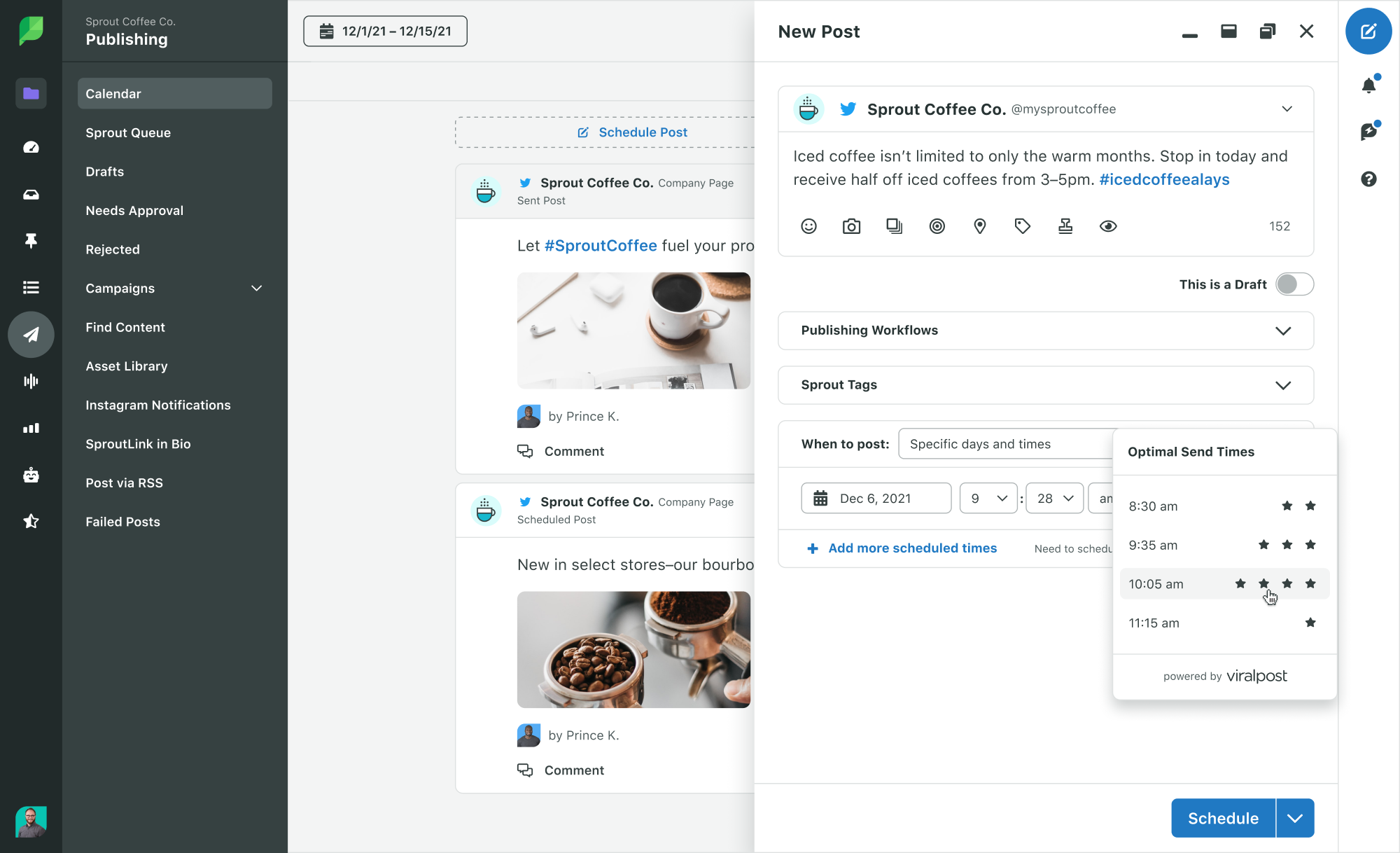
ViralPost™ takes the guesswork out of scheduling with optimal send time recommendations. It analyzes your audience and their engagement patterns to figure out when to deliver content for the greatest impact.
Step 2: Set up automated engagement and response rules
Unify your inbox across platforms
Many social media managers still handle engagement manually because they want to keep it human. But there are other aspects of engagement that you can automate without losing the human touch.
This starts with the process of tracking your comments, DMs and brand mentions. Instead of tracking everything manually across different networks and profiles, you can automatically collect them in a centralized inbox. This unifies all your engagement opportunities, so nothing falls through the cracks.
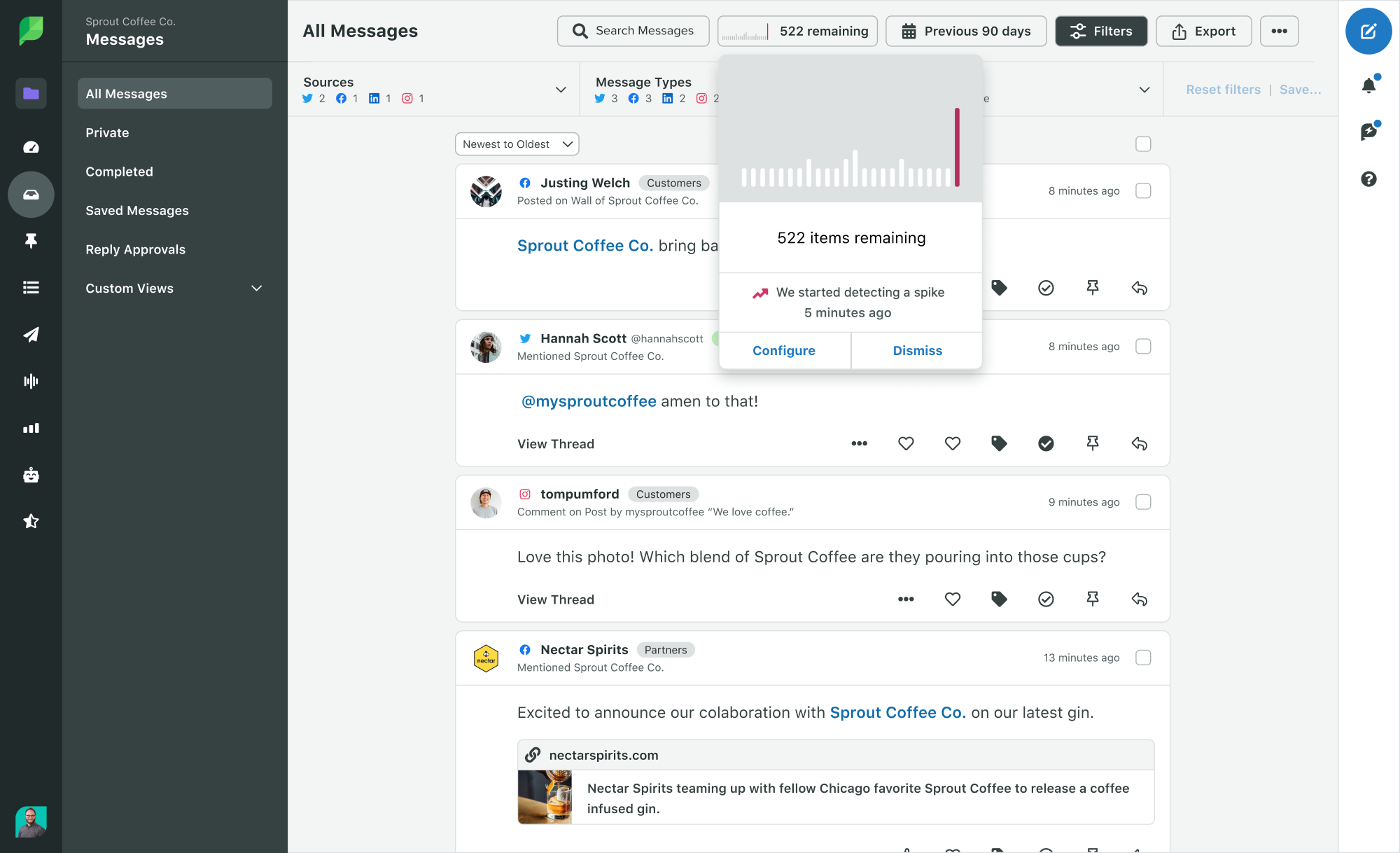
Sprout’s Smart Inbox centralizes all your messages from across your connected profiles. This helps you keep up with the latest comments and DMs without having to manually open your social media app. It even lets you manage your responses directly within the inbox.
Automated Inbox Rules further help you manage your responses more efficiently by measuring and categorizing inbound messages. So it’s easy to see which messages you need to prioritize and which ones can wait for a bit.
Build FAQ-style auto-responses for common questions
Quick response times make brands stand out on social. According to the 2025 Sprout Social Index™, nearly three-quarters of consumers expect a response within 24 hours. And 73% will even buy from a competitor if a brand doesn’t respond on social.
But manually answering every message or question slows you down. While this keeps your brand human, it means people have to wait longer even for a generic question. That’s the part of engagement you can automate, giving you more time to focus on interactions that need a more tailored response.
Sprout’s Bot Builder lets you create chatbots and automate responses for frequently asked questions. This streamlines your X (Twitter) and Facebook automation efforts to speed up responses and field routine customer care enquiries.
For example, an X user asking a routine question about plans and pricing doesn’t want to wait 24 hours for your team to respond. A chatbot that instantly sends them detailed pricing information and plan coverages will speed up response times and prime them for conversion.
You can set up X (Twitter) automation rules where the chatbot refers customers to a human agent when they’re ready to purchase. So the most important aspects of your engagement remain human and personalized.
Know when to hand off to a human
While you can automate most of your routine and time-consuming social media tasks, there are some responses that call for human interaction.
Your chatbot can field routine questions about plans and pricing. But it doesn’t have the capacity to handle more complex questions, like what happens if someone decides to upgrade their plan in the middle of the month.
Set up automated workflows that clearly outline when bots should direct conversations to a human agent. Unique questions and situations will always call for human intervention.
The chatbot builder integrates with the Smart Inbox, so you can effortlessly pick up ongoing social conversations once the bot hands them over to you.
Step 3: Automate listening and reporting
Set up brand and keyword alerts
Listening is one of those social media tasks that you should always automate. Otherwise, it’ll take days to manually scour millions of conversations and identify mentions that are relevant to your brand.
Social listening tools speed up the process by automatically detecting conversations that are related to your brand or industry. Set up alerts to keep track of specific brand names and keywords. This will help you stay on top of relevant industry conversations and gauge consumer sentiment.
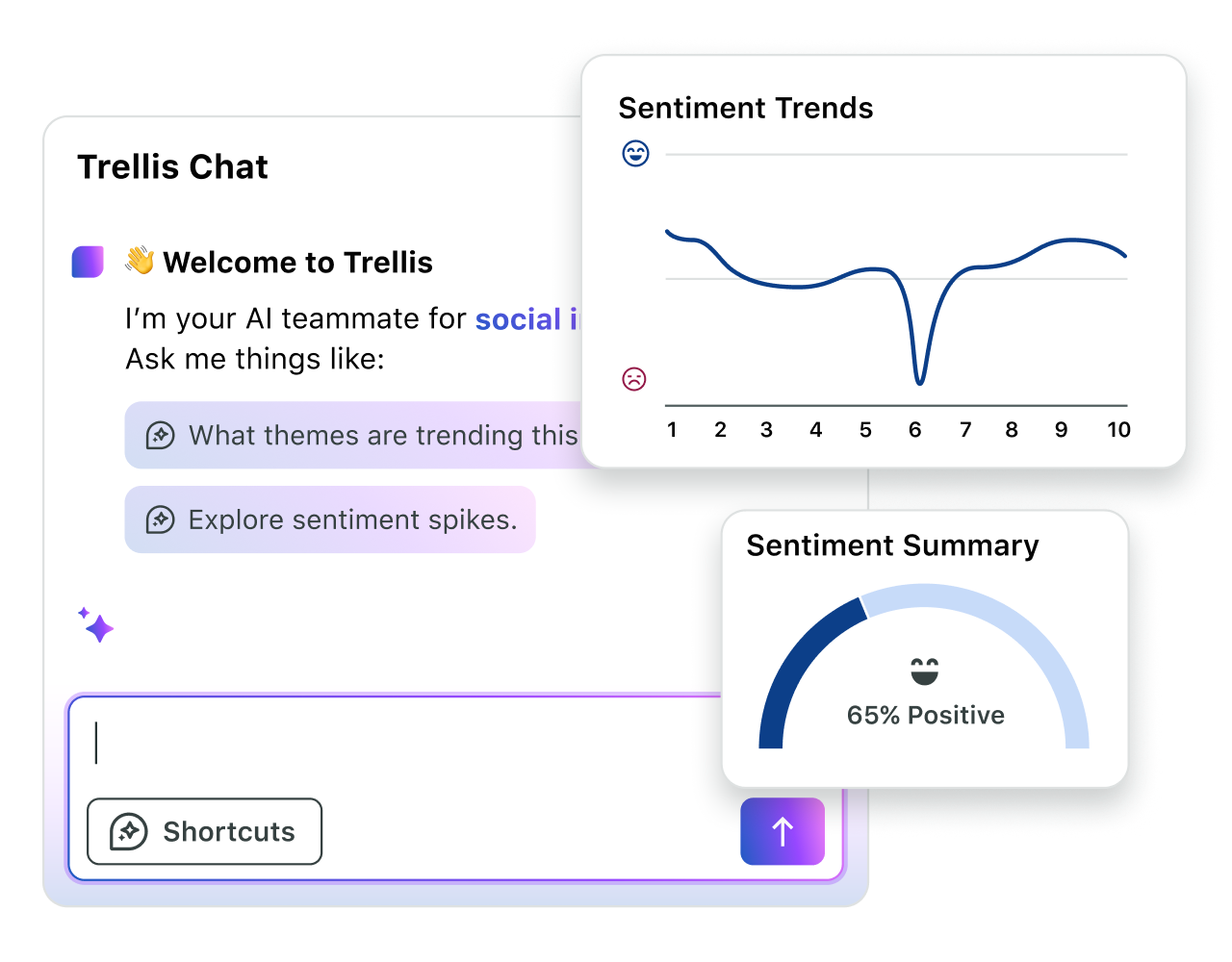
And with AI agents like Sprout’s Trellis, you can extract valuable insights from those conversations within minutes. From trending themes to sentiment spikes, it gives you tailored, data-backed answers to inform your strategy.
Schedule recurring performance reports
Reporting is another must-automate aspect of social media management. You can generate automated reports highlighting key social media metrics on your performance. This helps you visualize where you stand, what’s working and how your content is landing.
Social media automation tools will even let you set up recurring performance reports and deliver them straight to your inbox. Schedule them at regular intervals so you can always stay on top of your social media performance without the need to manually check native analytics dashboards.
Common social media automation mistakes to avoid
With 78% of companies already using marketing automation, automating social media tasks is the easiest way to catch up. But effective social media automation needs a strategic approach, or you could end up with spammy content and robotic responses. Here are some major automation mistakes you should avoid for social media:
Mistake #1: Relying on AI-generated content
As genAI becomes more advanced, many social media marketers are relying on it for content creation. In fact, 93% of practitioners in the 2025 Sprout Social Index™ believe AI can help them beat creative fatigue.
At the same time, fully AI-generated content lacks creativity and is prone to errors (AI hallucinations are a real thing).
Limit the use of generative AI to ideating content and drafting outlines or scripts. You still want to leave the actual content creation to humans, with thorough reviews and fact-checks for AI-generated data points and statements.
Mistake #2: Letting publishing queues run indefinitely
While automation is technically supposed to free up time for marketers, a total “set it and forget it” approach leaves room for ill-timed and spammy posts.
Imagine the blowback from a feel-good post that you forgot to pause in the middle of a nationwide crisis. That’s how you end up coming across as tone deaf and insensitive. So the last thing you want to do is leave your scheduled queues running indefinitely without reviewing them occasionally.
Stay on top of unexpected events and crises and double-check your publishing queue to pause anything that could be misinterpreted in those circumstances.
Mistake #3: Over-reliance on bot responses
Autoreplies can feel generic and lacking in empathy, even if they speed up response times.
Make sure to carefully craft your responses to keep the human element intact. This applies to every automated response, no matter how routine the answer might be.
Giving customers the option to speak to a human representative is another solution. Additionally, make sure to build automation workflows that direct complex questions to humans.
Gear up for social media automation success
Automation helps you streamline publishing, scale engagement and optimize reporting. And it doesn’t have to mean juggling multiple automation tools for all these management tasks.
With Sprout’s automation features, you can consolidate them all into a single platform. Automated publishing tools let you schedule your posts and recommend the best publishing times. The Smart Inbox automatically keeps track of every message across all your profiles to manage responses in one place.
Meanwhile, Sprout’s Bot Builder helps you speed up response times with automated replies for commonly asked questions. And with AI-assisted listening and reporting, extracting actionable insights from a sea of data takes just a few minutes.
Your customers are already telling you where their experience is falling short. The problem is, they don’t always tell you directly.
They post about it on social media, ask questions in comments, leave Google and Yelp reviews and talk about your brand in places your customer experience team may never see. Those conversations can expose frustrations, unmet needs and changing expectations that traditional feedback channels miss.
A customer experience audit gives you a structured way to evaluate those interactions across the customer journey. Building social intelligence into the process keeps the audit grounded in what customers are saying now and helps you decide what needs attention first.
In this article, we’ll break down what a customer experience audit involves, where social intelligence fits in and how to use the findings to improve the customer journey.
What is a customer experience audit?
A customer experience audit is a structured review of how people interact with your brand across the customer journey. It examines the touchpoints and feedback that shape the experience, from initial discovery through purchase and support.
Think of it like a health check for your customer experience. You’re looking at how different parts of the journey work together and where friction shows up between channels or departments.
A strong CX audit also looks beyond the channels your business owns. Social conversations and customer care interactions add context that surveys or CRM data alone may not capture, giving you a stronger foundation for what to improve.
5 steps for a modern customer experience audit that drives action
A customer experience audit works best when you approach it systematically. Here’s how to move from deciding what you want to learn to tracking whether your changes are working.
1. Set expectations for your CX audit
Before you pull data or review touchpoints, set the audit parameters. The steps below will help you establish what you’re trying to accomplish and what it will take to get there.
Involve the right stakeholders
Customer experience rarely sits with one department. Bring in people who own different parts of the journey, such as customer care, CX, social, marketing, PR and data analysts. Each group may catch gaps others miss.
Clarify everyone’s role upfront, too. Decide who will lead the audit, who will provide data or context and who needs to act on the findings.
Determine objectives and goals
Next, decide what you want to learn or improve. You might be trying to understand why customers abandon checkout after clicking through from social, improve response times on social or figure out where the brand experience feels inconsistent across channels.
Tie those objectives to specific parts of the customer journey and the outcomes that matter most. This will guide which touchpoints and metrics you review later.
Define scope
A CX audit can expand quickly across channels, customer groups and stages of the journey, so set boundaries before you begin.
Based on your objectives, decide what needs attention now based on your specific business priorities. That might mean auditing one priority audience across the full lifecycle or zeroing in on a stage where you already know there’s friction. Future audits can broaden the scope as new questions arise.
2. Map the customer journey across touch points
Customer journeys rarely follow a neat, predictable path. People move between channels and platforms as they discover brands, weigh their options and get support, making it harder to see the full experience in one place.
Mapping those touchpoints reveals how the pieces connect and where social media plays a role.
Capture the full customer lifecycle from discovery through care
Social influences customers at several key points in their relationship with your brand:
Product discovery: According to Sprout’s Q2 2026 Pulse Survey, around a third of consumers prefer social search for product reviews.
Purchase: Sprout’s State of Influencer Marketing Report found that 86% of consumers make an influencer-inspired purchase at least once a year.
Customer care:The Sprout Social Index™ found that 73% of social media users expect brands to respond on social within 24 hours.
Build your audit from the places customers interact with or talk about your brand. Alongside your own social posts and ads, include replies, DMs, chatbot interactions, reviews, customer posts, social shopping activity and traffic from social to your website. Widen the lens to review sites, discussion forums, influencer communities, media coverage and mentions that may never reach your profiles.
Sprout helps bring more of those touchpoints into one workflow. The Smart Inbox centralizes incoming social messages, while Reviews pulls customer feedback from sources including Google Business Profile, Yelp, Trustpilot and TripAdvisor. Sprout Social Listening bridges direct and indirect interactions, surfacing conversations about your brand and market that may not tag or mention you directly. Together, these tools give you a broader pool of customer conversations to draw from during the audit.
Connect social with the systems other teams use, too. The Sprout Social Salesforce integration enriches CRM profiles with social data, while Sprout’s Tableau BI Connector combines social with other business data for a fuller view of the journey.
3. Use social intelligence to identify pain points and gaps in customer experience
With the customer journey mapped, it’s time to diagnose what’s happening within it. Where is frustration building? What questions keep coming up? Are expectations changing faster than your experience can keep pace with?
Social intelligence helps answer those questions by illustrating how customer sentiment and conversation patterns are changing across the market.
Analyze audience sentiment
Look at how customers feel at key points in the journey. A drop in sentiment around a product launch or an increase in negative customer care messages can point to experiences worth investigating.
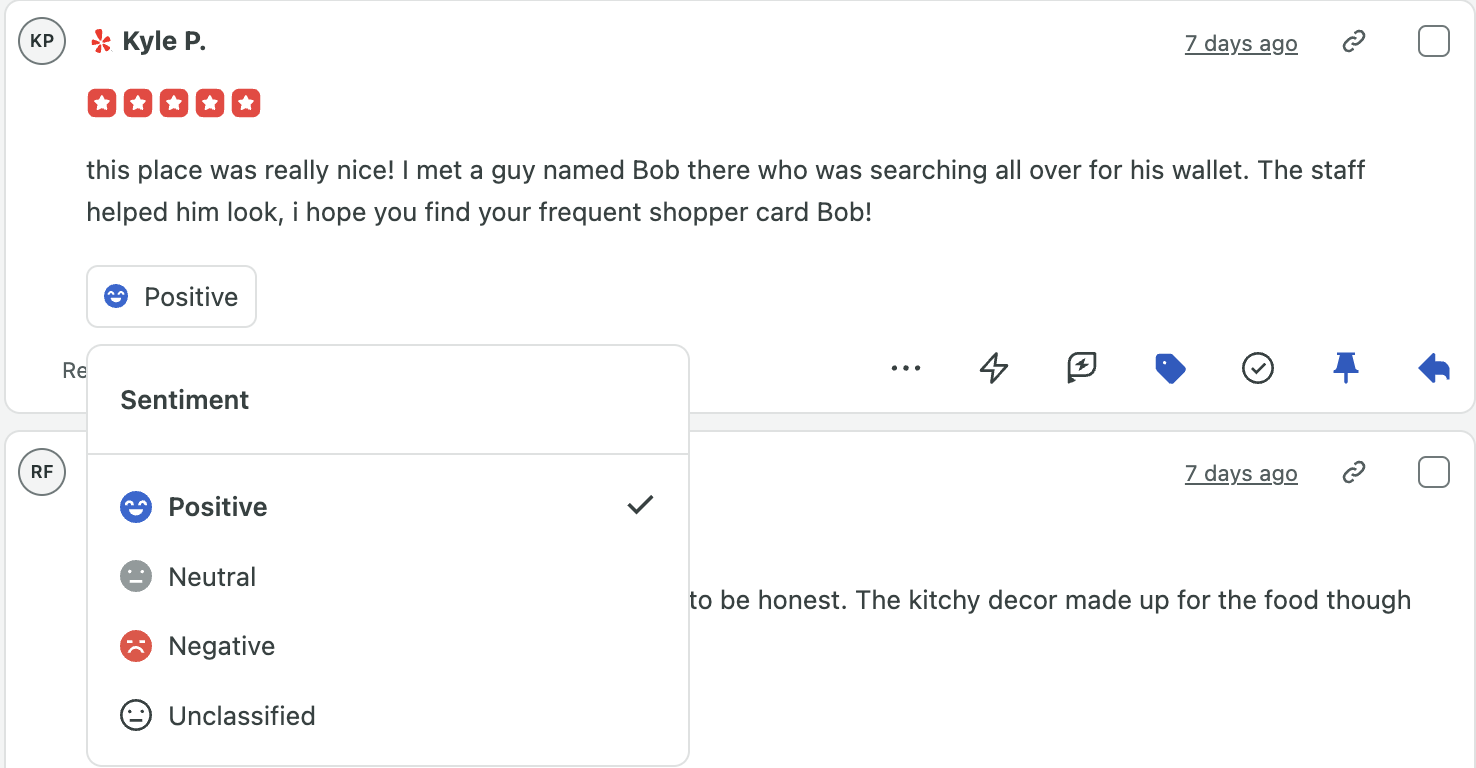
Social listening helps track sentiment across broader conversations, while Sprout’s Sentiment for Messages classifies incoming messages and reviews, enabling teams to identify interactions that need attention. NewsWhip by Sprout Social further adds predictive media intelligence to indicate when stories or issues are gaining traction.
Spot emerging patterns
Look for changes in what customers are talking about over time. If customers suddenly ask whether a new feature works with an existing product, your launch messaging may be unclear. More questions about faster delivery or easier returns could point to changing category expectations.
Sprout Social Listening surfaces spikes in conversation and rising topics. NewsWhip monitors real-time news and social activity to flag stories that are picking up speed, giving teams an earlier read on issues that could affect the customer experience.
Understand the broader competitive landscape
Compare your brand with competitors to see how sentiment and share of voice differ, then look for needs or conversations where your brand can show up differently. Sprout’s Competitive Analysis Listening templates support side-by-side comparisons of metrics like sentiment and share of voice.
Social Listening can also reveal opportunities outside your own customer data. One Sprout customer, for example, discovered that its audience was active on Reddit and used that insight to build a new community.
“Our goal for the year was 10,000 members joining our Reddit community by the end of football season. We launched two weeks ago, and 7,000 people joined in just one week. Social listening helped us realize our audience was on Reddit—so we built and executed the right strategy, and it’s been wonderful to see that response.”
Luke Panosian
Sr. Community Manager, PrizePicks
Set benchmarks to improve upon
Capture a baseline for the parts of the experience you plan to improve. For customer care, that might mean average reply time. For brand health, you might track sentiment or share of voice.
Use the social, CRM and BI data you’ve already brought together to set those benchmarks. A consistent baseline gives future audits something concrete to measure against.
4. Analyze your findings and create an action plan
Your audit will probably uncover more problems than you can tackle at once. Zero in on the issues causing the most friction for customers and the fixes that could make the biggest difference. Then decide what to address first and who will take it forward.
Align on priority conversations
Focus on conversations that highlight the biggest customer problems or clearest opportunities. Maybe customers keep asking the same product question because your onboarding is unclear. Or social listening signals that people are seeking peer support your brand could provide through a dedicated community.
Share that context with the people who can fix the problem. Decide what needs to happen, who owns the next step and how you’ll know whether the change worked.
Identify the high-ROI moments
Look for places where social is already showing you what customers want. Sometimes the opportunity is a conversation, behavior or use case that’s growing in popularity.
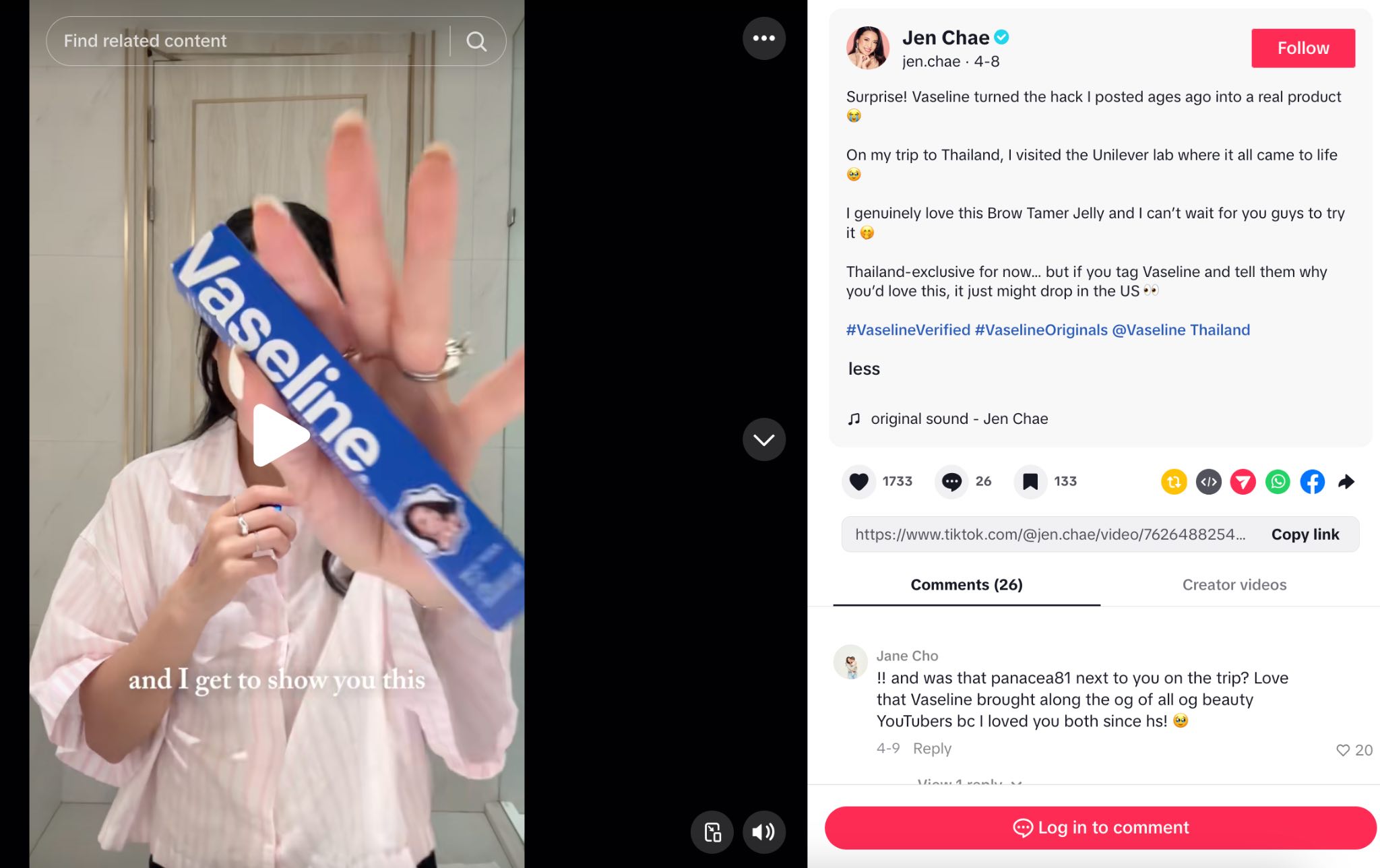
Vaseline, for example, used social listening to track the unconventional ways people were already using its products. In 2026, the brand turned two community-created beauty hacks into new products. Both launched on TikTok Live and sold out within minutes.
The same principle applies beyond product development. A high-ROI moment might be realizing customers keep overlooking a valuable product feature, then changing the messaging to spotlight it, or noticing an active Reddit community and building a presence there.
5. Continue to iterate and refine your customer experience
A CX audit is a snapshot of a moving target. Customer expectations keep evolving, so new pain points can appear even after you’ve made improvements.
Use the audit as a baseline and revisit customer feedback regularly to catch changes earlier.
Track progress against benchmarks
Return to the benchmarks you set during the audit and compare them against current performance. If slow social care responses were a problem, track whether response times improve after you adjust staffing or workflows.
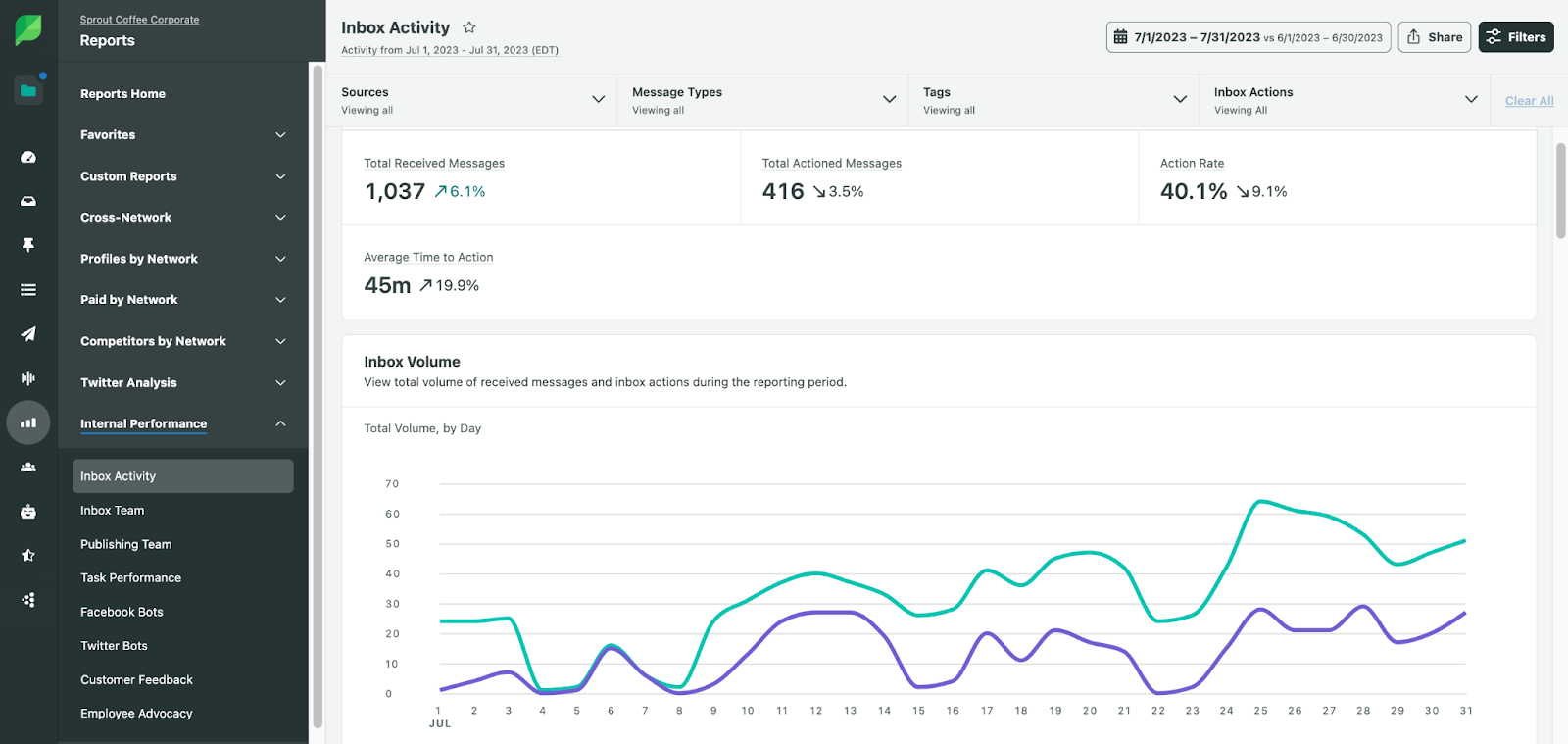
Sprout’s own customer support team used this approach after its Inbox Activity Report revealed slower response times between 6 p.m. and 8 a.m. CT. The team created a targeted staffing strategy for those hours, using existing customer support agents to handle social requests at specific points in their shifts. The result was up to a 55% decrease in average time to action during some of the periods targeted for improvement.
Benchmarks like these give you something concrete to return to after the audit and help show whether the changes you made are actually improving the customer experience.
Operationalize the experience audit
Build regular CX check-ins into your teams’ workflow. Audit stakeholders can periodically review what’s changed, what’s causing friction and whether previous fixes worked.
Focus these check-ins on what has changed since the last review and what needs attention next. Keeping social, care, marketing and CX teams connected makes it easier to get customer context to the people who can act on it.
Take action early and often
Use ongoing customer feedback to make adjustments before problems grow. If social conversations indicate that customers are confused by a new policy, clarify the messaging while questions are still manageable. If positive feedback builds around a product or campaign, amplify it while enthusiasm is high.
Sprout keeps those insights accessible in day-to-day workflows so teams can respond in real time and adjust as customer needs change.
Transform your customer experience
Your customers are already leaving clues about what needs fixing next. A CX audit brings those clues together, while social intelligence helps you stay tuned in as things change.
Use what you learn to improve the experience between audits, whether that means clarifying confusing messaging, changing how care teams respond or acting on conversations that point to a bigger opportunity.
Explore Sprout’s Social Intelligence Report to learn more about the value social data brings to organizations wanting to stay closer to their customers and make better business decisions.
Social teams have no shortage of work to do. But most of their capacity is still tied up in execution. According to our 2026 Social Intelligence Report, 80% of individual contributors say they spend more than half their time on operational work instead of the insight-driven work that moves the business forward.
AI is starting to change the equation. Social media tasks that once ate up entire afternoons can increasingly be delegated to AI agents and automated workflows. The question isn’t simply what social teams can automate, but what must be automated to keep up.
This article breaks down which tasks are best handed off to AI, where human judgment still matters and how automation can give social teams more room to focus on higher-value work.
Social media manager tasks: A daily overview
A social media manager’s day covers a lot more than planning content and hitting publish. Here are some social media tasks that fall under most social media job titles:
Respond to comments and messages across platforms
Monitor brand mentions, relevant keywords and industry conversations
Curate and create engaging content
Schedule posts for the next day, week or month
Analyze metrics to gauge performance
Brainstorm content ideas
Research trending topics and conversations
Manage paid social media campaigns
Vet and coordinate with creators and influencers
Handle crisis communication, as needed
Which of these are you still doing manually? Look at each task and ask: Could AI handle it? Or does it still need a person’s judgment?
Automated tasks in social media marketing: What AI can do now
A few years ago, most social media tasks required a person at every step. Now, AI handles a growing share of the daily workload, from scheduling to reporting to the first pass on customer replies.
Here’s where it’s already doing the heavy lifting.
Publishing & scheduling
Getting a post approved and published can often involve a few rounds of email or Slack follow-ups with your manager or other stakeholders. Automated approval workflows remove that back-and-forth by sending content directly to the right person at the right stage.
Choosing when to post has also become more precise. Instead of relying on generic best-practice windows, AI can analyze when your specific audience is most likely to engage. Sprout’s Optimal Send Times with ViralPost uses your audience’s behavior to recommend the best publishing times.
Alt text is another task that can slip when deadlines get tight. AI can help by generating descriptive alt text within the publishing workflow, making accessibility easier to build into the process. Sprout’s Generate ALT Text capability does this directly in the platform.
Reporting & insights
Building a report for leadership can mean pulling data from multiple dashboards, organizing it into a deck and then explaining what changed and why. AI can cut down that work by letting teams query social data in plain language instead of rebuilding the analysis from scratch each time. With Sprout’s Trellis, social teams, leaders and cross-functional partners can ask questions about social performance and get answers without waiting for someone to pull a report.
That also makes social data more accessible and useful outside the social team. If someone in product or customer care wants to know how a launch went or understand customer sentiment, they can get the answer directly by asking an AI agent.
Social listening & media intelligence
Thousands of conversations can unfold around your brand, competitors and industry in a matter of hours. AI helps teams sort through that volume by analyzing conversations for patterns, shifts in sentiment and emerging topics that would be difficult to catch manually.
Within Sprout Listening, Trellis takes that a step further by letting teams ask questions about sentiment, share of voice or emerging themes in plain language and get answers based on their listening data.
AI can also help teams spot reputation risks earlier. NewsWhip by Sprout Social analyzes real-time signals across social and the web to predict which stories are likely to gain traction. Teams get an earlier read on what’s picking up steam and more time to decide how to respond.
Influencer/creator discovery & vetting
Finding the right creators can take hours of scrolling profiles and comparing audiences to see if someone is a good fit for the brand. AI speeds up that research by narrowing a large pool of creators to a smaller set based on specific criteria.
Sprout Social Influencer Marketing’s natural-language search lets teams describe the type of creator they’re looking for and returns relevant matches, along with brand-fit scoring and brand safety checks. Creator managers can spend less time on manual research and more time reviewing the strongest options, reaching out and building relationships.
Social customer care
Customer messages don’t stop at the end of the day, and some need attention faster than others. AI can help care teams triage incoming comments and DMs by analyzing sentiment and identifying messages that may need a quicker response.
Sprout’s Smart Inbox brings messages from across networks into one place and helps teams prioritize what to address first. It can also draft responses for customer care agents to review and personalize, accelerating personalization while cutting down the time spent writing routine replies from scratch.
Social media management tasks that still need a human
AI can pull data, spot patterns and draft a response. But it can’t navigate internal politics, interpret culture, earn trust or persuade a leader to invest more in social.
Automating routine work gives social teams more time for the parts of the job that depend on judgment, context and relationships.
Cross-functional relationships & influencing up
Getting another team to act on social insights takes more than sending them a report. Social leaders need to understand what product, customer care or sales is trying to solve, then connect social data to the decisions already on their plate.
Leadership buy-in works the same way. A strong business case can support a request for more budget or headcount, but the numbers rarely do all the work. Leaders are more likely to invest when they trust the person making the recommendation and understand how it connects to broader priorities.
Community management
Community management gets complicated when there isn’t an obvious right response. A comment might look harmless on its own but carry more weight because of who posted it, what happened earlier in the thread or how the broader community is reacting.
Community managers use that context to decide when to respond, when to let a conversation play out and when to bring in another team. They’re also constantly interpreting the brand voice in real time. A style guide can set the rules, but it can’t tell you if humor will land in a specific moment or if saying nothing is the better move.
Strategy development
With AI and automation handling more of the day-to-day execution, social managers can spend more time deciding where the brand should go next. That means looking beyond the next post or campaign to questions like: What do we want people to associate with us a year from now? Which conversations should we consistently show up in? Where should we experiment, and what would pull us off course?
Those decisions draw on audience research, business goals, brand positioning and an understanding of what the organization can realistically support. Budget, internal priorities and leadership appetite all shape the plan. Social media managers have to weigh those factors, make tradeoffs and build support for a direction that can hold up over time.
Performance interpretation
A dashboard can tell you engagement dropped 12%. A social manager has to figure out why it happened, if it matters and what to do next.
That means looking at the context around the number: campaign timing, audience behavior, competitor activity or changes to the network itself. From there, managers can turn the finding into a recommendation, like adjusting the content mix or changing course on a campaign.
Content creation & trend judgment
Knowing a trend is taking off doesn’t mean your brand should join it. Social managers still have to judge how well an idea fits the brand, how the audience is likely to receive it and what the brand actually adds to the conversation.
They also have to decide who should create the content. Half of Gen Z say they’ll block or unfollow an account for posting AI slop, according to Sprout’s Q1 2026 Pulse Survey. Another six in 10 consumers say they’re less likely to engage with brand content in today’s AI-heavy environment.
Creator partnerships can help brands keep more of that content rooted in a real person’s voice and perspective, while also giving internal teams more capacity to respond to trends. Instead of producing every trend-driven post in-house, teams can work with creators who already understand their audience, internet culture and know how to make the format feel natural.
Sprout Influencer Marketing reduces the manual work behind those partnerships, from managing creator communication to measuring campaign ROI directly in the platform. Social teams can spend more time choosing the right creators and shaping partnerships that fit the brand.
Influencer relationship-building
Strong creator partnerships take more than a good campaign brief and timely payment. They grow through clear communication, thoughtful feedback and an understanding of what the creator wants from the relationship beyond the immediate deliverable.
That investment carries between campaigns too. Staying in touch, sharing relevant opportunities and giving creators room to bring their perspective helps build the kind of trust that makes people want to work together again. AI can support the admin around those relationships, but the relationship itself still needs a person.
Social media manager tasks checklist to help you delegate
Most social media tasks fall into one of three buckets: automate with AI, delegate to creators or keep human judgment at the center. The creator column is intentionally shorter. Creators are best suited to a focused set of content work in which their voice, perspective and connection with an audience add distinct value.
Automation & AI
Delegate to creators
Personalize & strategize
Scheduling posts at optimal send times
Trend-responsive content creation
Community guideline development
Approval workflows and routing
Sponsored campaign content
Resolving conflicts and complaints with empathy
Sentiment detection and message triage
Brand advocacy
Strategy development and goal-setting
Inbox alerts and spike notifications
Buyer persona research
Draft replies and tone adjustments
Performance interpretation and recommendations
Custom reports and dashboards
Cross-functional stakeholder buy-in
Competitor benchmarking
Personalized audience engagement
Creator vetting and brand-fit scoring
Trend judgment and brand-fit calls
Share of voice and sentiment monitoring
Long-term influencer relationship-building
Crisis and reputation risk monitoring
Employee advocacy content distribution
Bonus Resource: Spend less time prompting and more time getting work done. Get 135+ ready-to-use AI prompts for social media tasks, from content creation and planning to performance analysis.
Automate and delegate social media tasks with ease
The right mix of automation, delegation and hands-on work will change over time. New AI capabilities will take more manual work off your team’s plate, while new priorities may call for more human attention. Revisit the mix regularly to ensure your team is spending its time where it adds the most value.
Sprout can help across that workflow. Trellis makes it easier to get answers from social data. NewsWhip helps teams catch emerging stories and reputation risks earlier. Sprout Influencer Marketing takes some of the admin out of finding and managing creators. At the same time, Sprout’s publishing, listening and reporting tools reduce the day-to-day work happening behind the scenes.
The time you get back can go toward the work that benefits most from having a person behind it, from understanding what your audience needs to building stronger relationships across the business.
See how Sprout can help your team automate the busywork and focus on what matters. Start your free trial.
As the hub of cultural conversations and online activity, social media provides valuable intelligence to inform business strategies. It’s how you discover everything from what trends are taking over to what products people are buying. In fact, the 2026 Social Intelligence Report found that half of one-person teams consider it mission-critical for future growth.
But between crafting content and staying on top of communications, managing social media is hard enough when you’re the only one on the team. This leaves you with little time to focus on social intelligence, let alone extract insights to fuel business growth.
In this post, we provide a guideline on how to streamline social media management for one-person teams. From strategic automation to structured task management, we show you how you can save time and focus on more high-impact work. Let’s get started.
What it means to run social alone
When you’re running social media on your own, you’re juggling multiple roles. You’re the one coming up with content ideas and bringing those ideas to fruition by writing captions and designing graphics. At the same time, you’re in charge of publishing the content, managing comments, responding to DMs and analyzing your data.
You’re essentially doing everything by yourself all at once.
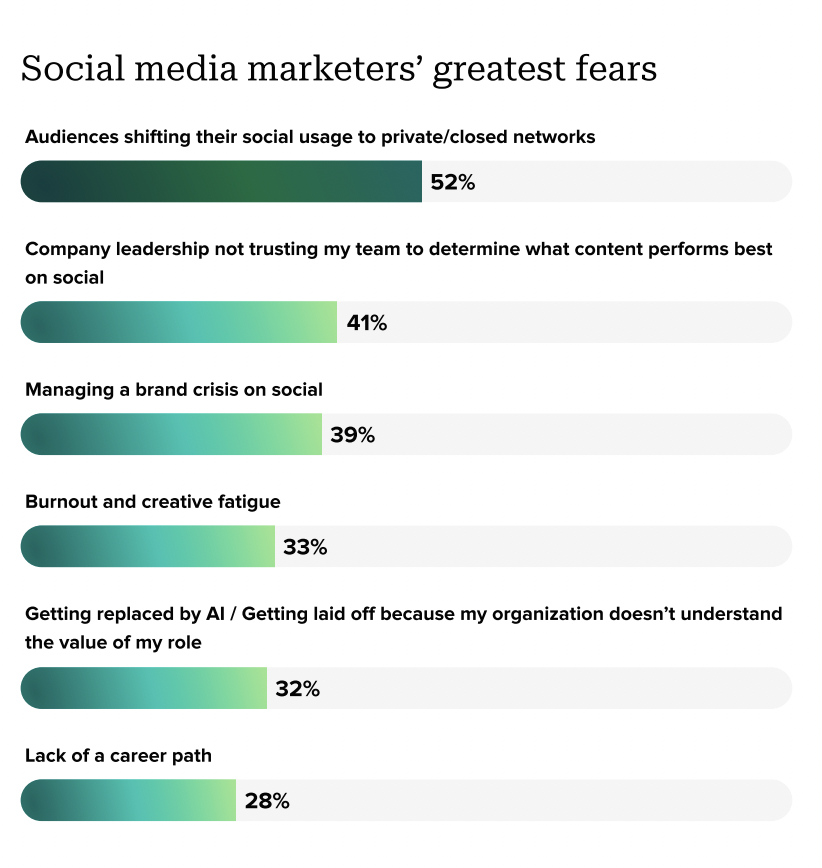
As it is, social media marketers are already at risk of burning out and running out of content ideas. The 2025 Sprout Social IndexTM notes that 33% of marketers fear burnout and creative fatigue.
The risk gets significantly bigger for someone who’s constantly overwhelmed because they’re doing it all alone. Yet this is what social media management looks like for most startups and small business operations.
The biggest challenges for a one-person team
To start with, you need to pinpoint what actually makes it challenging to manage social media on your own. That way, you can focus your efforts on tackling those specific challenges. Let’s dig deeper into the biggest problems in social media management for one-person teams.
Constant context-switching across platforms
One minute you’re checking your Facebook stats, the next you’re trying to catch up on all your Instagram DMs and messages. When you’re a one-person social media team, you’re constantly switching between different tasks across platforms. So you’re distracted and unable to focus on a single task, which will affect productivity.
It’s even worse when you’re doing everything manually. According to The Social Media Productivity Report, 63% of social media marketers report not being able to do high-impact work because of manual tasks.
Creative and content fatigue
Social media teams have to always be on top of trending memes and viral topics to keep producing relevant content. According to the 2025 Sprout Social IndexTM, 94% of social media practitioners report having to be chronically online to do their jobs.
Ultimately, the social media burnout catches up, especially when you’re the only one coming up with ideas and producing content. That’s why burnout and creative fatigue rank as the fourth greatest fear among social media marketers.
Proving ROI without a dedicated analyst
When you’re the only one on your team, you’re also in charge of collecting performance data and putting together reports. It’s easy enough to point out which content is performing well or how your page has grown over time. But without a dedicated analyst to interpret your data, you’ll have a hard time aligning your social media investment to actual business outcomes.
Keeping up with response-time expectations
Between the content creation and performance analysis, comments and DMs often go unanswered for hours when you’re a one-person team. This could reflect poorly on the customer experience, especially with consumers expecting swift responses on social media.
As the 2025 Sprout Social IndexTM found, almost three-quarters of consumers expect brands to respond within 24 hours. They’ll even buy from a competitor next time if the brand doesn’t respond to their customer service questions on social.
3 tips for prioritizing when everything feels urgent
You’re a few days behind on content and your DMs are flooded with messages that you haven’t been able to check. For one-person social teams, it seems like there’s a never-ending to-do list where every item needs to be done “right now.” Here’s how you can streamline your tasks and figure out what to prioritize:
1. Set 2–3 goals tied to business outcomes, not vanity metrics
Impressions are great, but what do they actually mean for your business? Have a clear idea of what you want to get out of social media. This will serve as the foundation for the rest of your social media marketing strategy, shaping everything from your content to your analytics.
Start with 2-3 goals that are related to actual business outcomes. For instance:
Growing brand awareness
Building a brand community
Improving brand sentiment
Generating online sales
Driving qualified leads
Preventing customer churn
Speeding up social customer service
2. Use an impact-vs-effort framework to triage daily tasks
Building a framework for prioritizing tasks will help you organize your schedule more strategically. Weigh the expected value of each task against the effort needed to complete it, so you can sort out the order in which to do them.
For example:
Quick wins (high impact, low effort)
What they are: Tasks that yield high value and require very little time or money
Examples: Repurposing existing content into graphics and bite-sized social posts, sharing user-generated content, customizing social media templates for new ideas, actively replying to recent comments
Big bets (high impact, high effort)
What they are: Tasks that yield high value and require heavy planning, time and/or budget
Examples: Running an influencer marketing campaign, launching a multi-platform content series
Backups (low impact, low effort)
What they are: Minor tasks that don’t add significant value but take very little time to complete
Examples: Making small tweaks to your profile, engaging with content from other brands/creators
Time sinkers (low impact, high effort)
What they are: Time-consuming tasks that yield little to no return on investment
Examples: Manually tracking and analyzing vanity metrics, designing complex custom graphics for platforms that your audience doesn’t use
3. Pick one or two networks instead of trying to be everywhere
Spreading yourself thin across multiple social media platforms isn’t doing anything for your performance or your productivity. Effective social media management for one-person teams is all about knowing which networks to focus on.
Pick a network (or two) that makes the most sense based on the type of audience you’re targeting. For example, LinkedIn for B2B audiences, TikTok for Gen Zs and teens, Instagram for Millennials and Gen Zs or Facebook for Gen X and Baby Boomers. Then focus all your efforts on creating great content and actively maintaining your presence on the chosen network.
How to use AI and automation to carry the load
When you’re a one-person team, you need to “outsource” as much as possible to AI and automation tools. In fact, 93% of practitioners in the 2025 Sprout Social IndexTM trust that AI can help with creative fatigue.
But it’s not about letting AI do the heavy lifting to create everything from scratch. Instead, AI marketing tools should help with tasks that are repetitive and take up a significant portion of your time. This will free you up to focus on high-impact work that needs the human touch. AI and automation are most useful for:
Caption drafting and content ideation
Coming up with new content ideas and crafting fresh captions day in and day out can take a toll on your creativity. Between the manual trend checks and figuring out how to weave them into your content strategy, you’re already spending half the day on planning and creating content.
Let AI handle the repetitive work. You handle the strategy.
Sprout Essentials pairs AI-powered captions, Optimal Send Time and cross-network reporting in one place — built for teams of one.
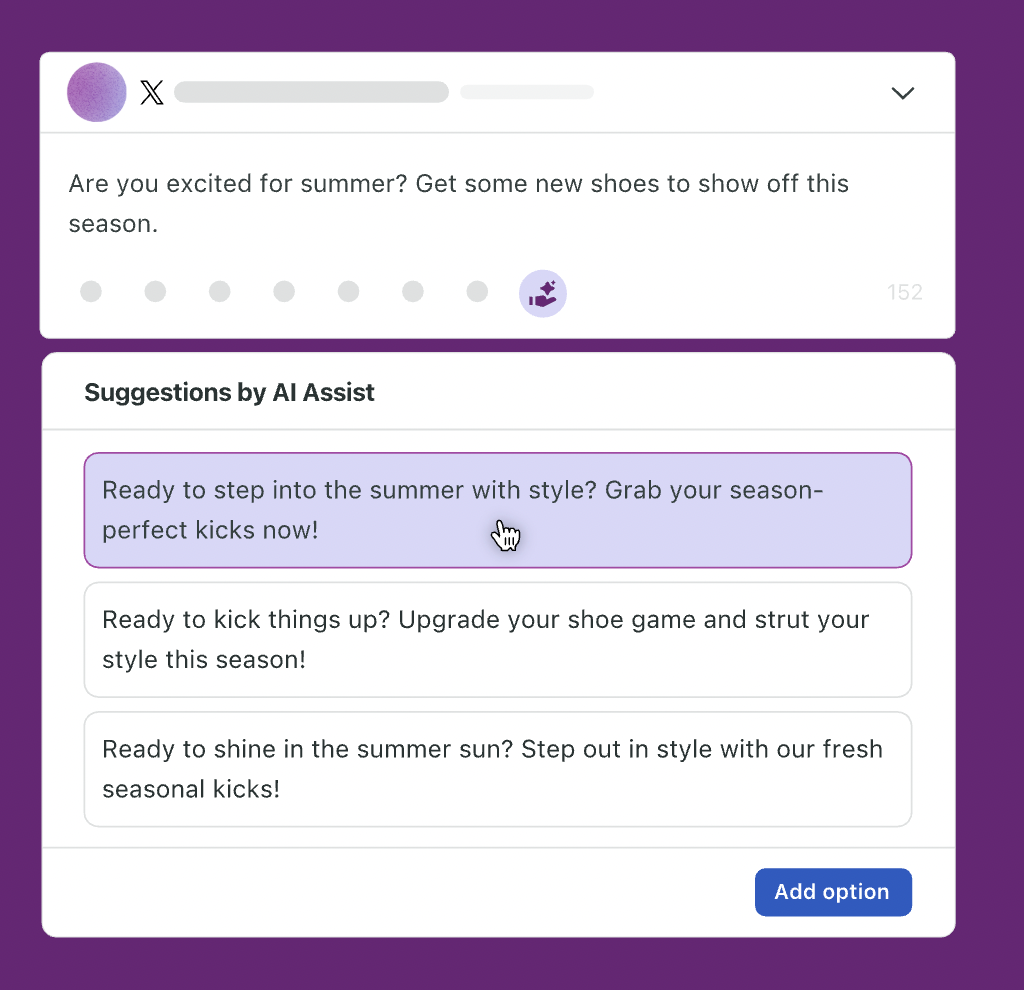
Use AI tools to check trending themes and topics, discover content ideas and generate captions. So you can save time filling up your social media calendar with fresh ideas.
Sprout Social’s AI tools offer content ideas and let you generate text posts from custom topics and top-performing posts.
Scheduling and optimal send times
Social media teams waste time when they’re still manually logging into different networks to push out every post when it’s time to publish. Scheduling tools help you optimize the process by automatically sending out your posts at your preferred time. You can set aside some time each week to create and schedule all your posts for the entire week.
As for when to publish your posts, AI tools like Sprout’s Optimal Send Time suggestions take the guesswork out of scheduling. It recommends the best times to post based on your profile engagement and audience behavior.
So you’re no longer wasting time manually checking your previous posts and comparing their performance against publishing time.
Reporting and performance summaries
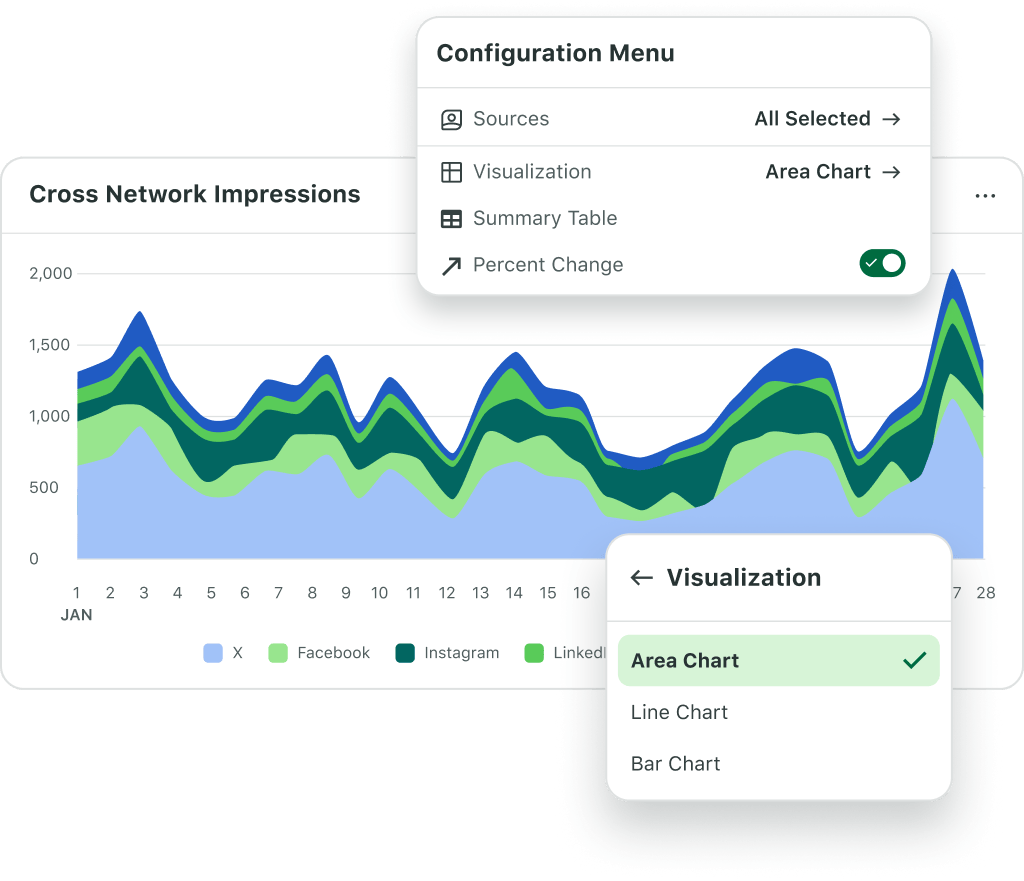
Automation tools help you save the hours spent on collecting data from native analytics dashboards, analyzing it and putting together meaningful reports. Platforms like Sprout will pull cross-network performance data and compile it into visual reports for easy interpretation.
Centralize listening and customer care so nothing slips
Maintaining community engagement is one of the hardest parts about social media management for one-person teams. Here are some tips on how to streamline things.
Monitor mentions and DMs from one inbox
Use social listening tools to keep track of all your comments, DMs and brand mentions in one place. So you can easily catch up on your engagements and make sure nothing slips through the cracks.
Tools like Sprout’s Smart Inbox centralize all your social media conversations into a unified inbox. You can easily filter inbound messages by platform and manage your responses within the inbox. It even alerts you to message spikes, making sure you stay on top of urgent conversations before things get overwhelming.
Set response-time expectations you can realistically hit
As established earlier, 24 hours is a reasonable timeframe for responding to customers on social. Better yet, if you can do it much faster.
But think of what’s realistic for you. Actively responding to each message and comment as they come in isn’t always viable for single-person teams. So start by defining a social media response time that’s reasonable both for you and your customers.
For example, a 16-hour timeframe could work if you set aside two time slots to manage your social media responses each day:
9 am to 10 am: Responding to messages that came in overnight
4 pm to 5 pm: Responding to messages you received throughout the day
Find the right setup for a team of one
Managing social media as a one-person team is all about using the right tools and knowing what tasks to automate. Sprout’s Essentials plan comes with everything you need to streamline your content planning, publishing and reporting.
Sort out your ideas into a visual calendar and schedule your posts based on Optimal Send Time suggestions. And keep track of your messages and content performance all in one place without manually going into every platform.
Ready to streamline your social media tasks?
Sprout Essentials gives one-person teams everything they need to plan, publish and report — without the stress.
Every automation you've built keeps working long after you've stopped thinking about it. That's the point of automation, but it's also why most people never find out if a workflow is actually converting as well as it could.
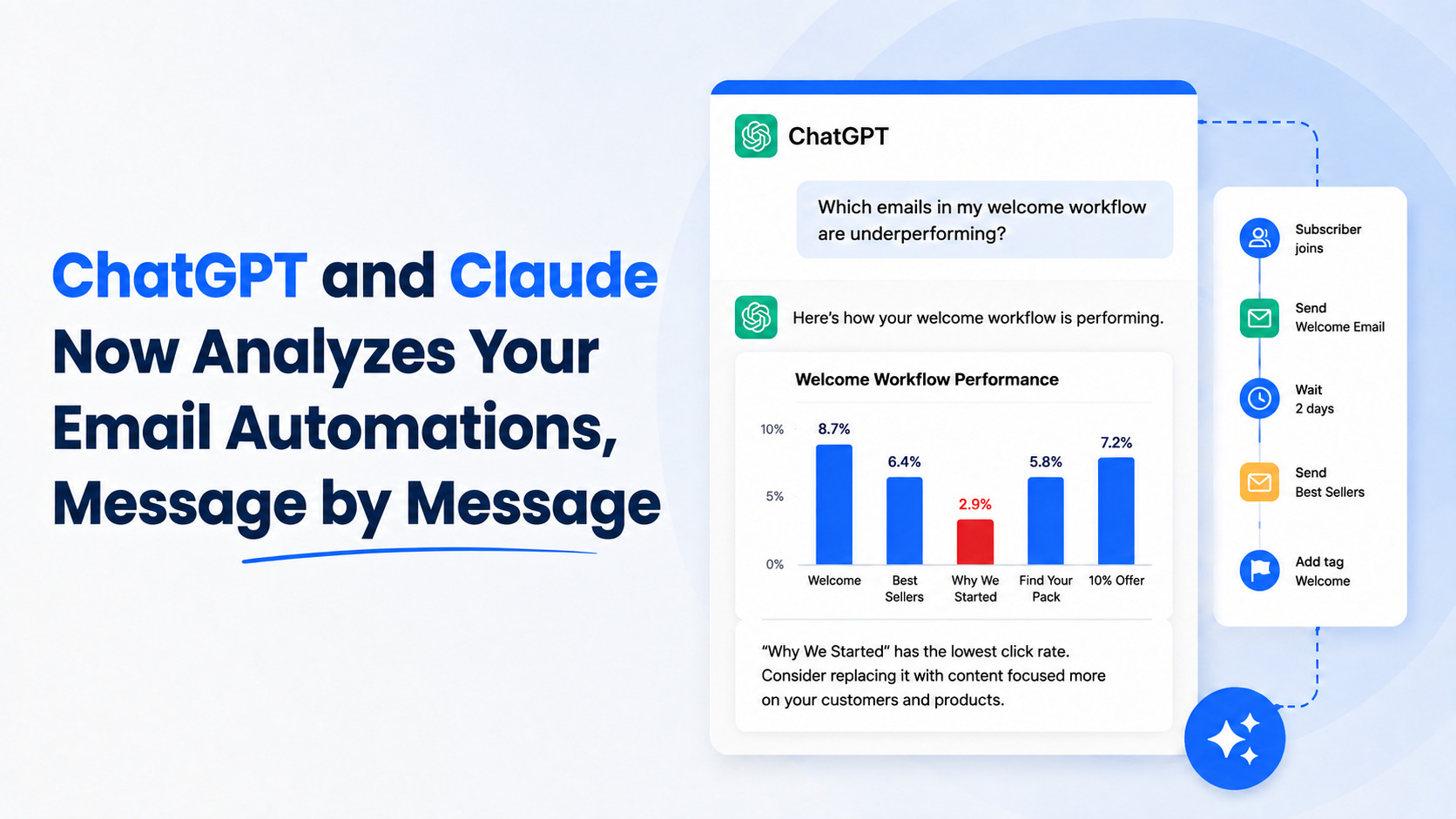
AWeber's ChatGPT and Claude plugin now gives you that answer directly. Ask about any automation and get a real analysis back. What's working. What's not. And exactly what to improve. All without opening AWeber.
Know exactly which email to improve
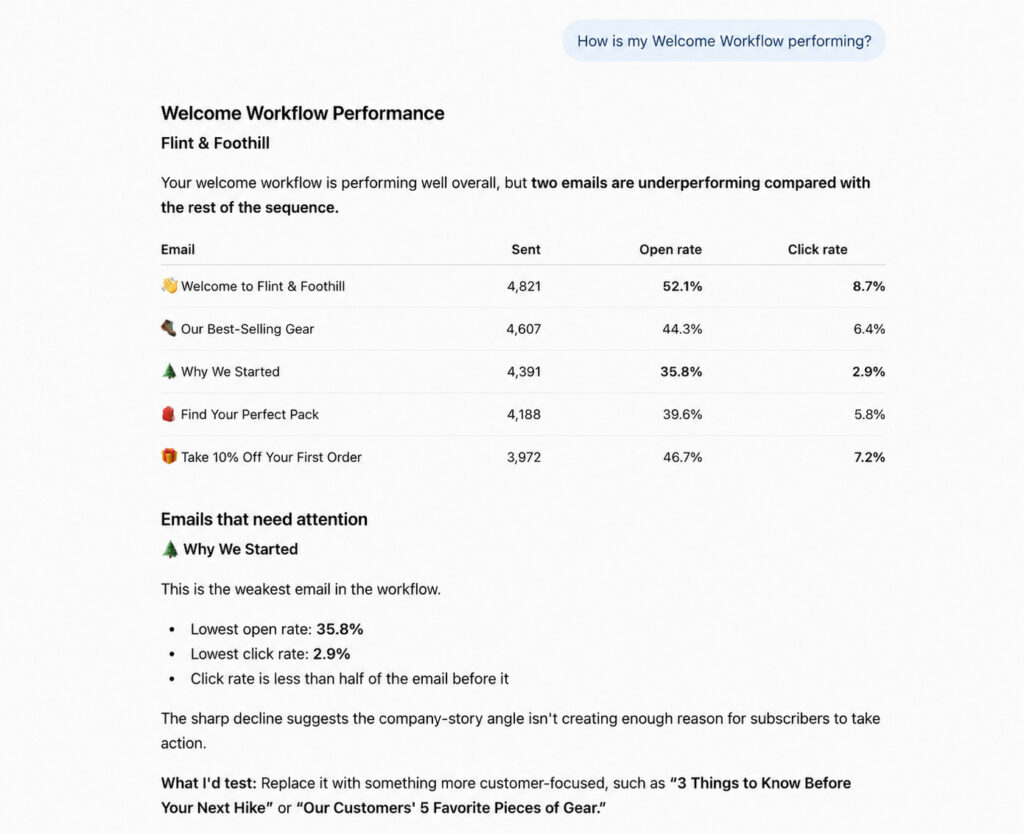
ChatGPT and Claude break down how the automation is performing: what's working, what's not, and exactly where the opportunity is.
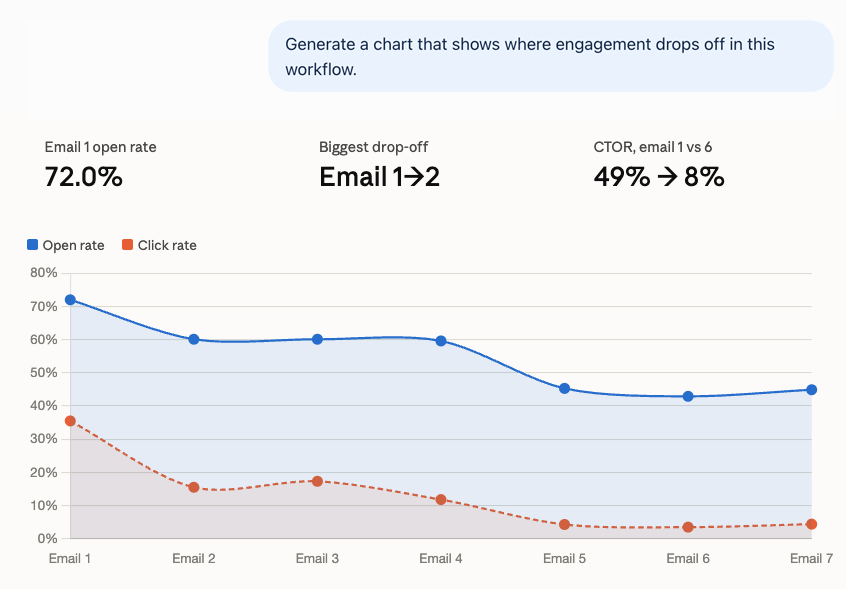
You can ask for an analysis to see the exact step where engagement drops the most. So instead of guessing which email is losing people, you know precisely where it happens.
Catch list health issues before they spread
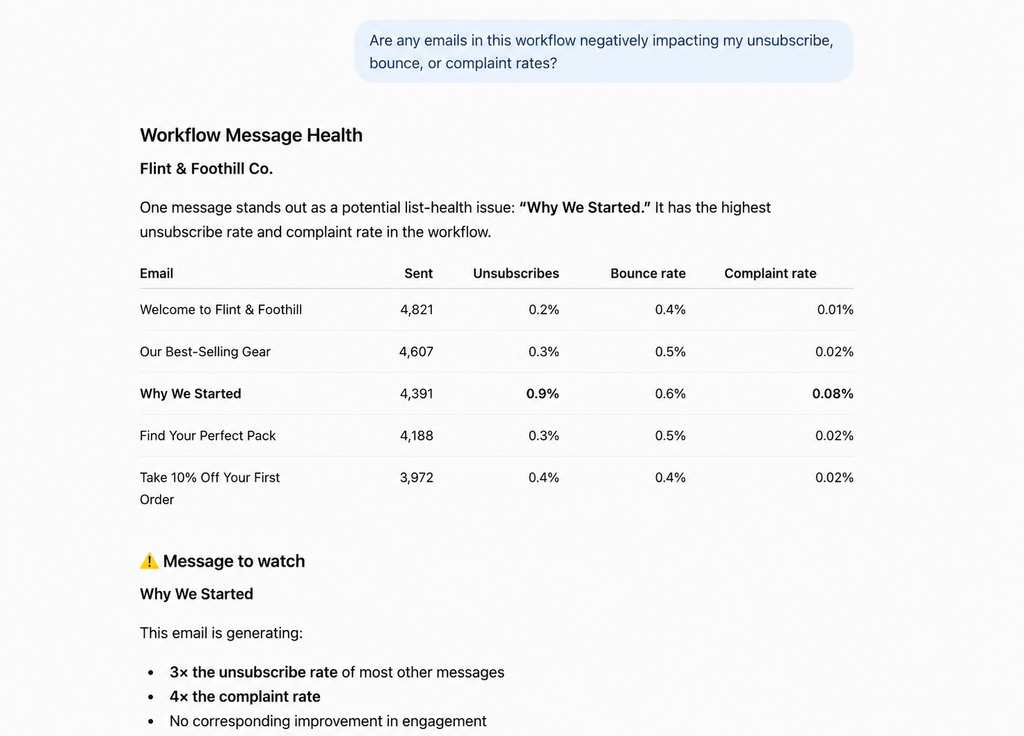
Ask about unsubscribes, bounces, and complaints for any message in the Workflow, and you can catch a message quietly hurting your list before it affects the rest of your sends.
Find out what your subscribers actually click
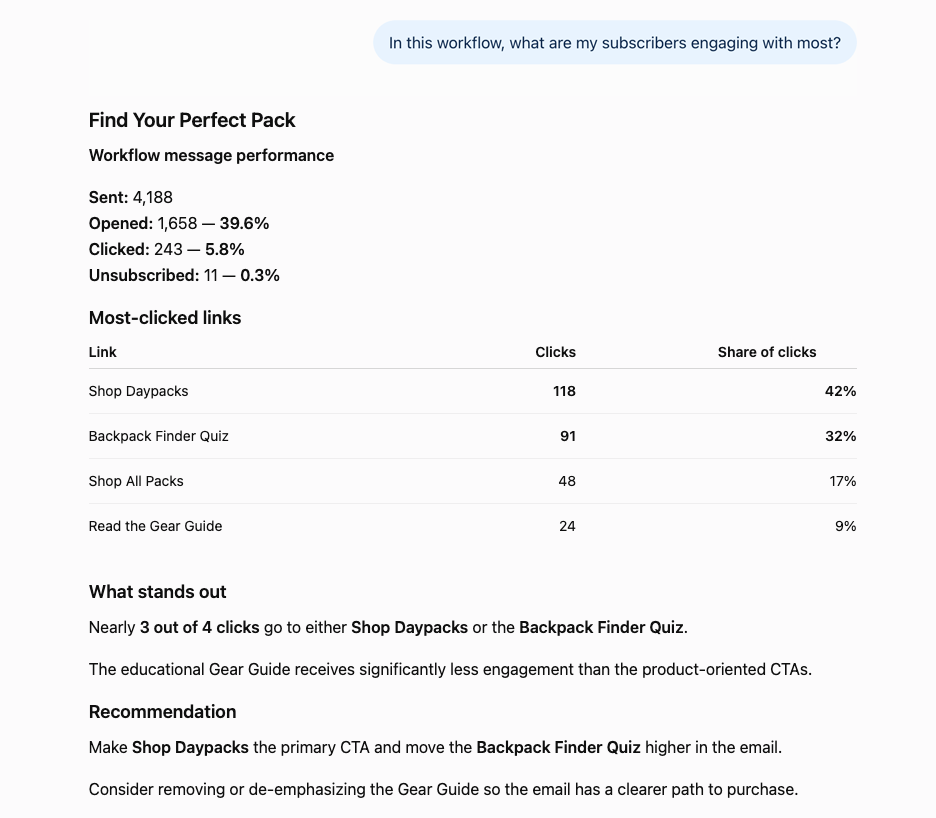
If your automation links to a few different products, offers, or pages, ask which one is getting clicked.
Know what subscribers actually want, so you know what to feature next.
See every Workflow at a glance
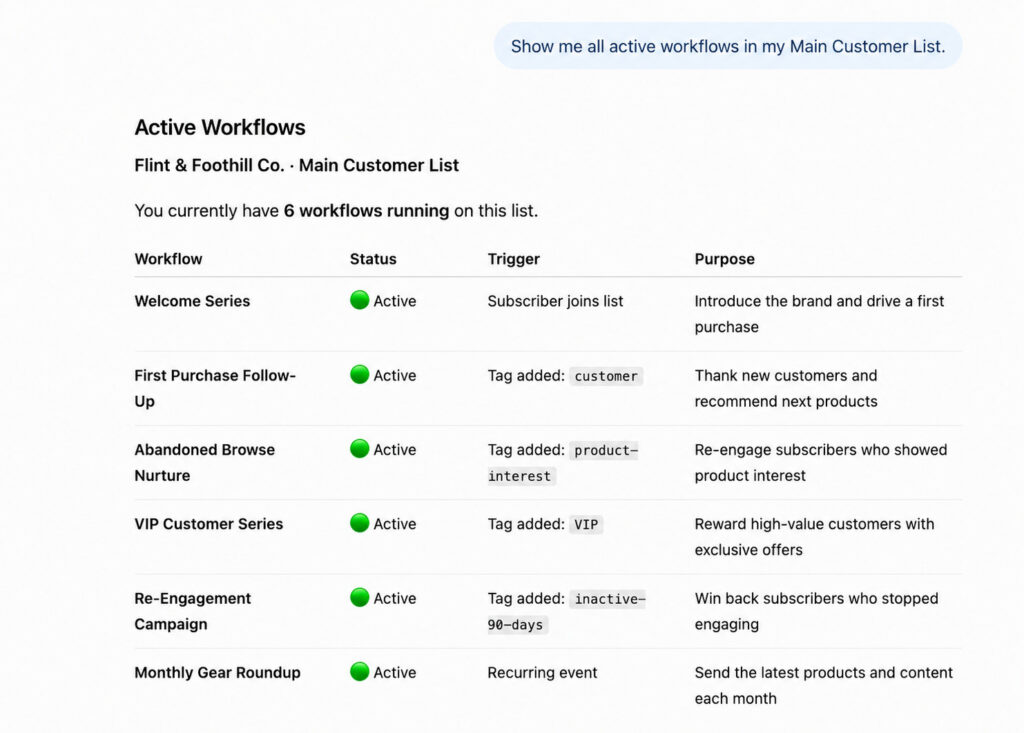
Ask ChatGPT to list every workflow running on a list, and you get the full picture of what's live without opening AWeber to check.
See the path every subscriber takes
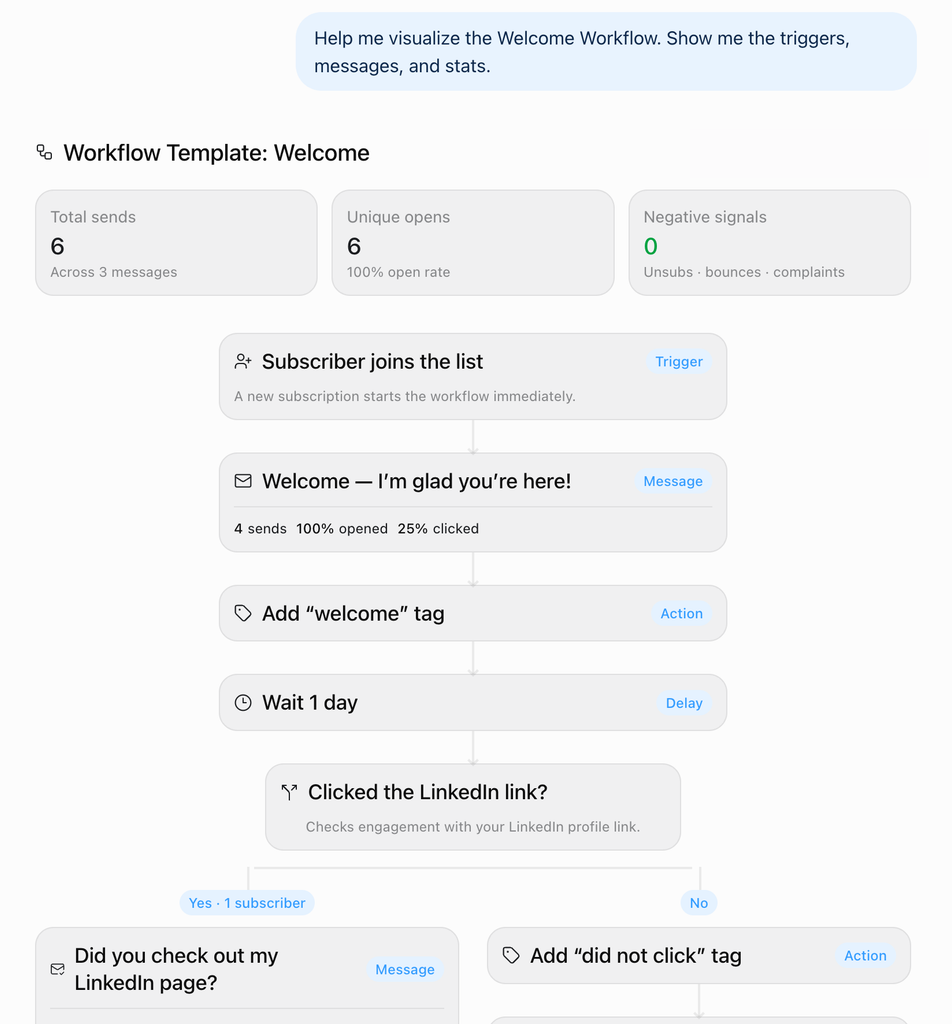
You can ask ChatGPT or Claude for visual of your Workflow. It will show every trigger, every branch, every message in order.
Get started
If you're already connected to AWeber's ChatGPT or Claude plugin, there's nothing new to set up. Open ChatGPT or Claude and ask about an automation you're running today.
There are social media strategy templates available for virtually any task you can think of—from content production to reporting to team onboarding. If you want to win time back in your schedule, make it your mission to never start from scratch.
Consider this: When you spend an hour formatting a spreadsheet, you’re losing an hour that you could have spent on your social media marketing strategy. Starting with a template provides much needed direction so you jump right into the work that matters.
In this article, we’re sharing every social media marketing template we’ve ever made. These templates are fully customizable and informed by industry best practices, so you can save time and effort.
What is a social media strategy template?
A social media strategy template is a pre-designed resource that serves as a starting point for a variety of social media marketing tasks. These can range from everyday content creation, to long-term strategic media planning and reporting, to frameworks for cross-collaboration and sharing social intelligence across your organization.
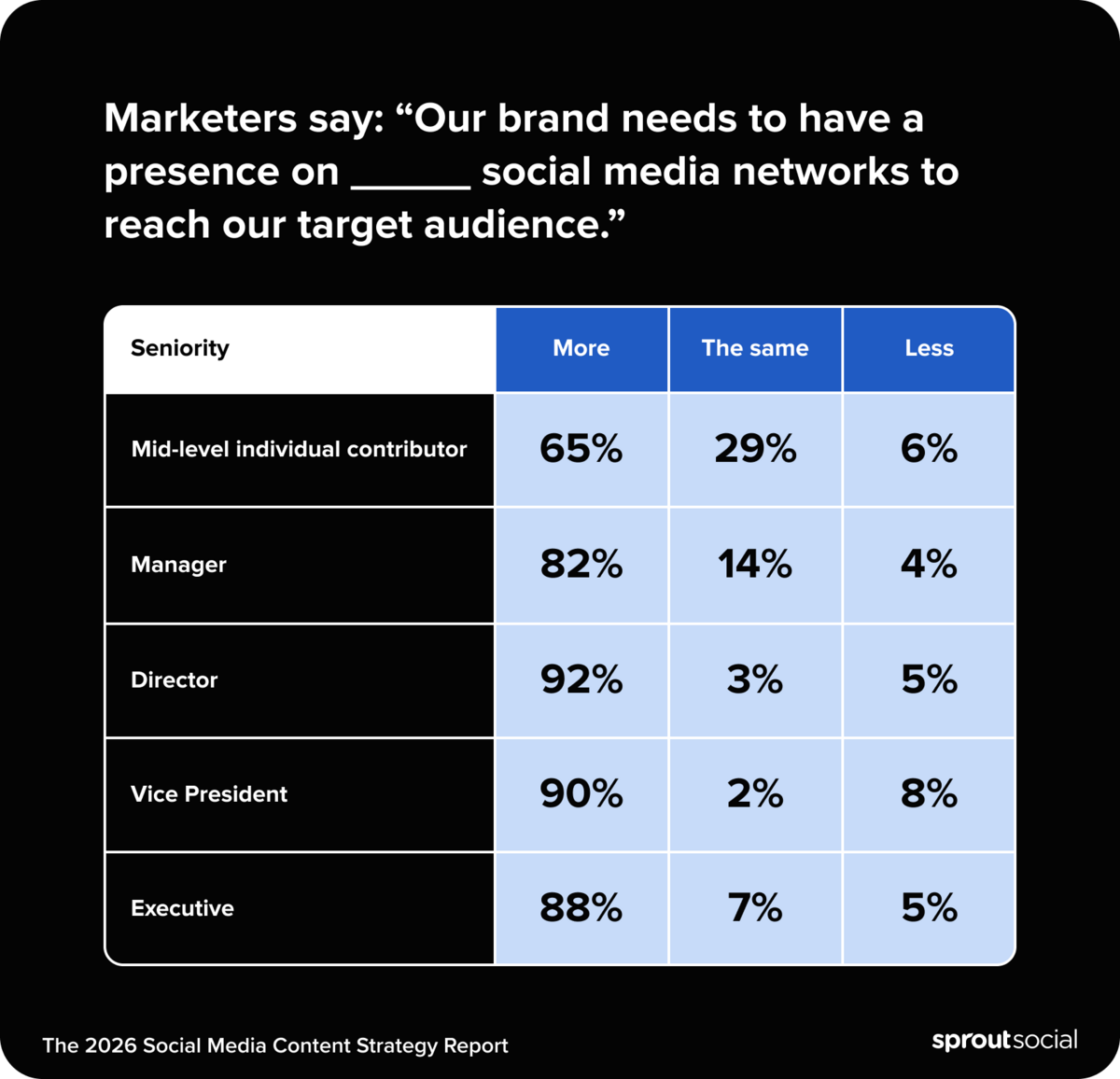
As if social media practitioners weren’t already operating at max capacity for years, expectations to keep up with audience demands continue to grow. According to The 2026 Social Media Content Strategy Report, an average 87% of marketers want their brand to show up on more networks in 2026 to reach target audiences.
When you’re already spread thin, every minute counts. Social media marketing templates streamline the process of creating new content or resources, helping you make the most of your time.
Social media strategy templates
A documented social media strategy sets the foundation for more consistent messaging, branding and reach over time. The following templates will help you build overarching and network-specific strategies so you can optimize your social media presence.
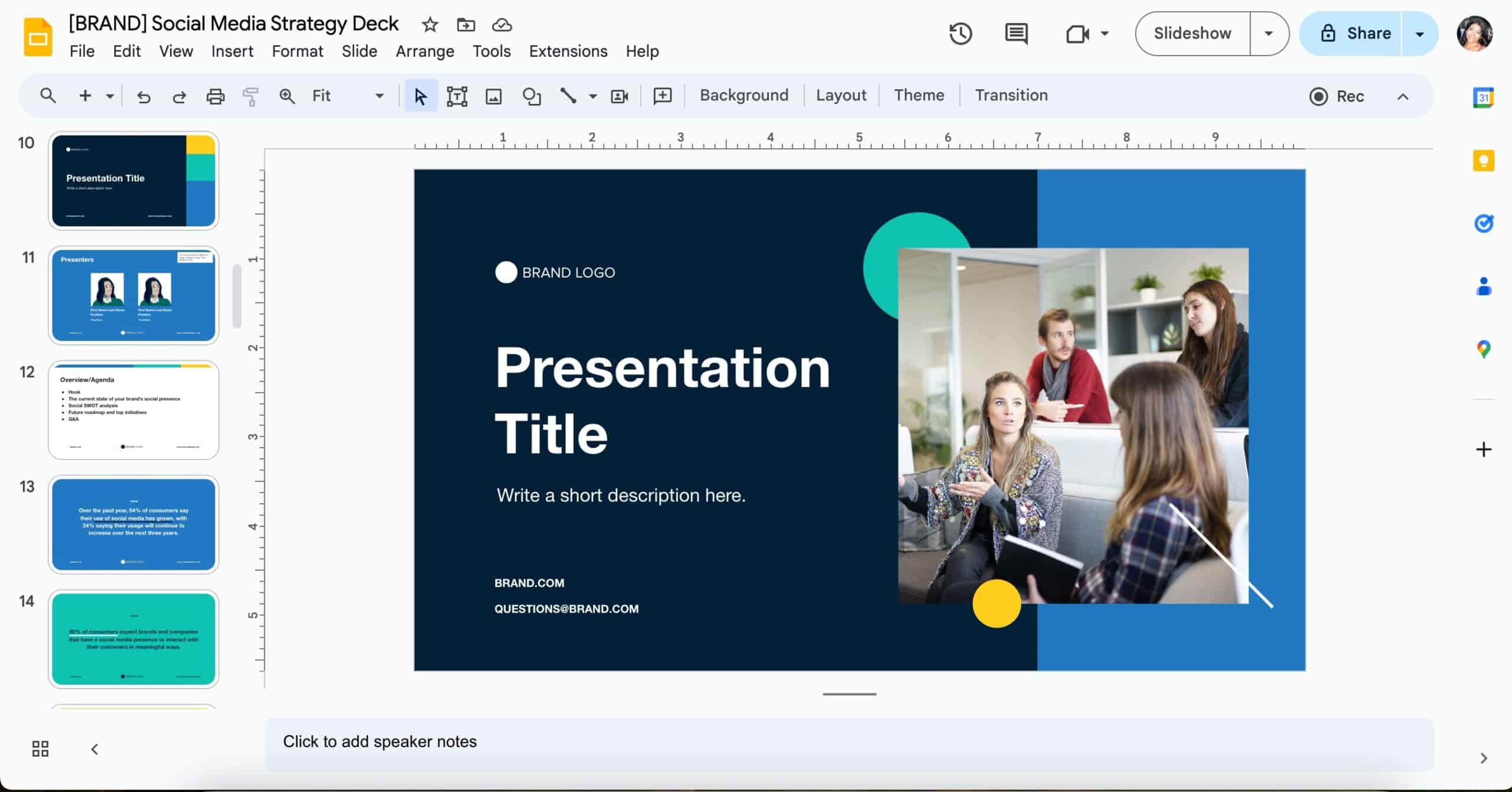
1. Social media strategy deck
You know the ins and outs of your strategy, but does your leadership team? If your answer is anything other than “yes”, you need this social media strategy deck.
This customizable Google Sheets template is designed to help you break down your strategy to audiences beyond marketing with thoughtful hooks and benchmark data. Use it to pitch a forward thinking vision, or to provide more context around your ongoing efforts.
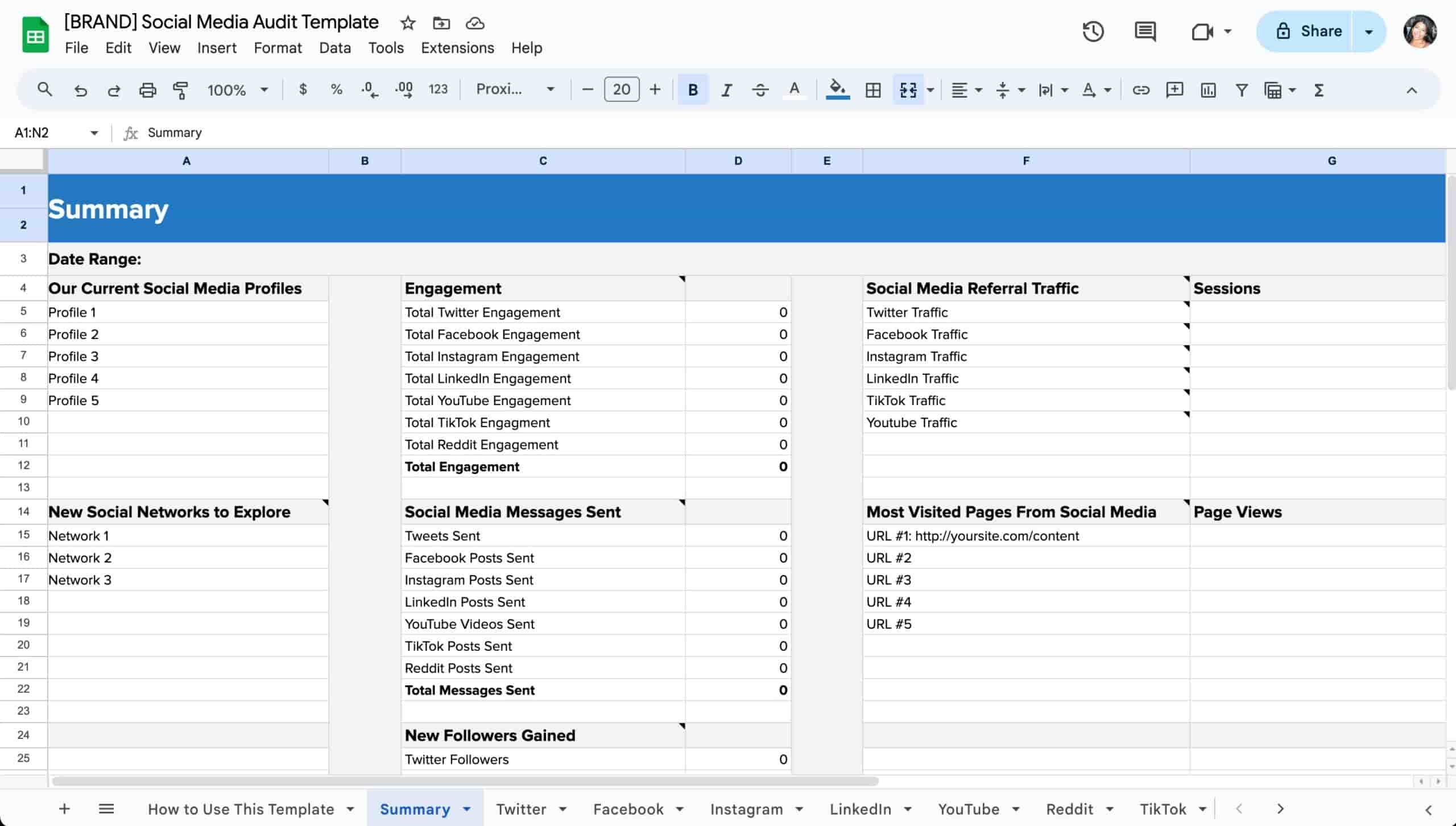
A social media audit is a step-by-step review of your business’ social presence. It’s a straightforward process but when you factor in all of your brand handles across every social network, it can become quite the undertaking.
This spreadsheet template provides a framework for your audit strategy, making the process much more approachable. Fill out one tab per day to complete the process in less than two business weeks.
Getting meaningful outputs from AI takes time (and a whole new skillset). This template library helps scale your impact with a catalog of AI prompts designed to support every stage of your social media strategy from planning through execution. With one simple click, you can copy and paste directly from the prompt library into your tool of choice.
Social media is now a discovery engine, and investing in a social media search strategy can make or break your brand’s visibility. This hands-on resource is designed to help you evaluate your current social search strategy, then optimize it. It comes complete with keyword research tips, a network prioritization matrix and content production checklists to make sure your content gets in front of the right audience.
A well-orchestrated social media campaign requires more than just brand consistency. To truly get the most value out of your efforts, it needs to be aligned to business goals from the initial planning stages, all the way through execution.
This social media campaign brief template encourages you to incorporate insights from across your organization. It also helps set up a reporting infrastructure to simplify performance measurement at the end of your campaign.
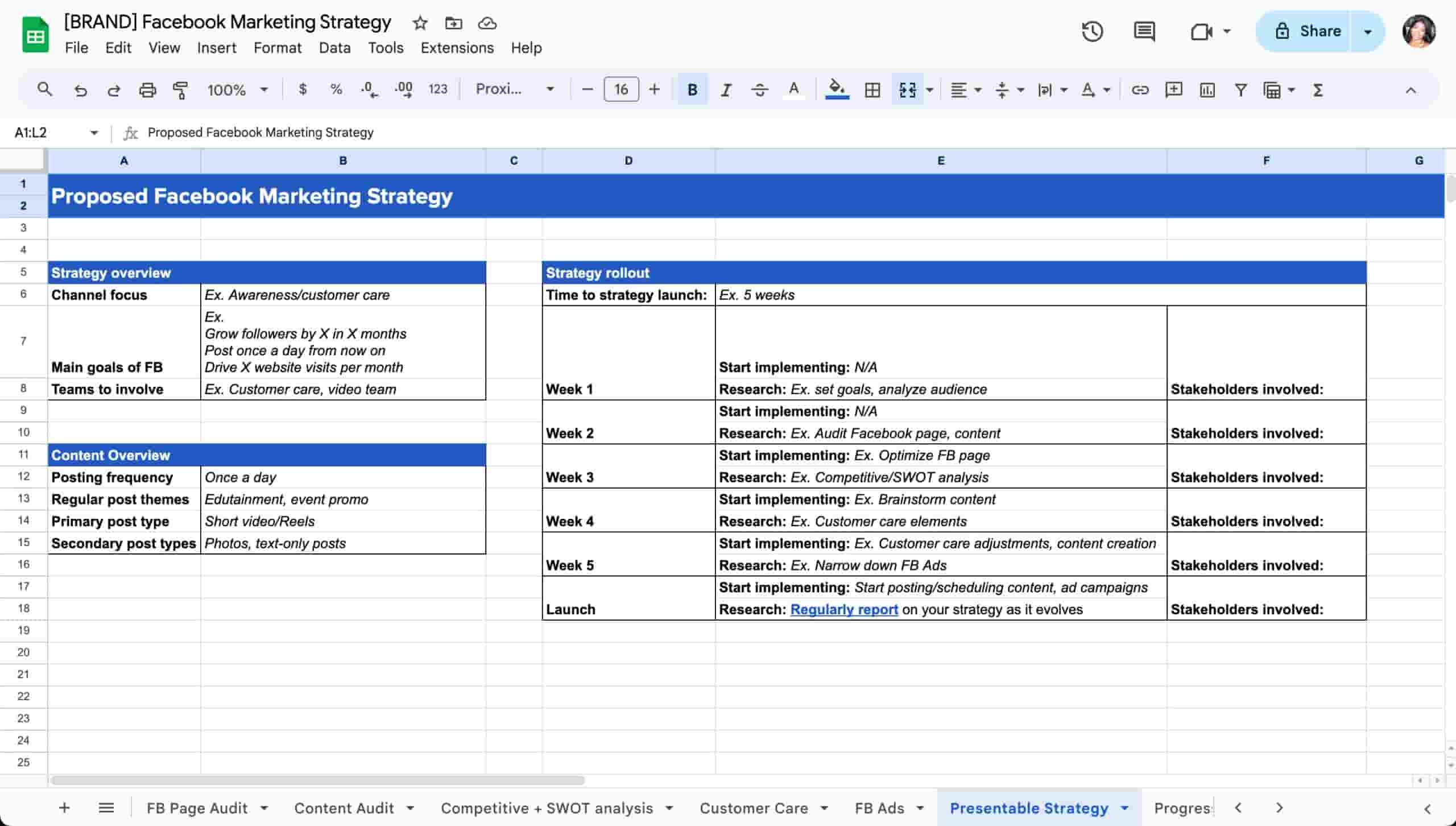
Facebook is synonymous with social media. It continuously retains its crown as the world‘s most popular social media platform by monthly active users, with more than three billion per month.
This spreadsheet template provides a framework for revamping and revitalizing your Facebook marketing strategy. It will help you identify goals, audit competitors and build out an ad strategy, wrapping up with a final, presentable strategic overview and rollout plan.
LinkedIn is more than just a hub for individual networking.
A thoughtful presence on the platform can help businesses attract leads, build authority and enhance their employer brand.
This workbook template will prompt you to assess the strengths and weaknesses of your current LinkedIn strategy, so you can identify how to best use the network going forward. You’ll walk away with recommendations tailored to your business goals and marketing maturity, so you can implement strategic upgrades quickly.
A lot goes into video marketing on YouTube. There’s talent sourcing, production needs, branding considerations—the list goes on.
Success on the world’s second largest search engine starts with a commitment to organization. This workbook template gives you a framework to audit your channel, define your audience and create a performance-optimized distribution plan. Once you fill it out, you’re left with a resource that will keep internal stakeholders aligned and on task.
Artificial intelligence (AI) capabilities extend far beyond text or image generation. When implemented strategically, it can help you synthesize data, automate processes and scale your operations.
This AI social media strategy workbook will set you up with a framework to think through your team’s unique AI opportunities. Use it to outline goals, draft usage policies and vet AI technology vendors so you can continue to innovate with your strategy.
10. The social media manager’s AI implementation checklist
AI is transforming how brands connect with their audiences—but making the most of it takes a thoughtful approach. This checklist helps you assess where AI can best support your strategy today, and where it can fuel future growth.
Built as part of our AI marketing resources toolkit, it highlights practical ways to use AI for content creation, customer engagement, campaign planning and more. Use it to align your efforts with your organization’s evolving needs and move forward with confidence.
Consistency is a key characteristic of a robust brand strategy. But as the customer experience expands across numerous touchpoints, maintaining that consistency becomes more challenging.
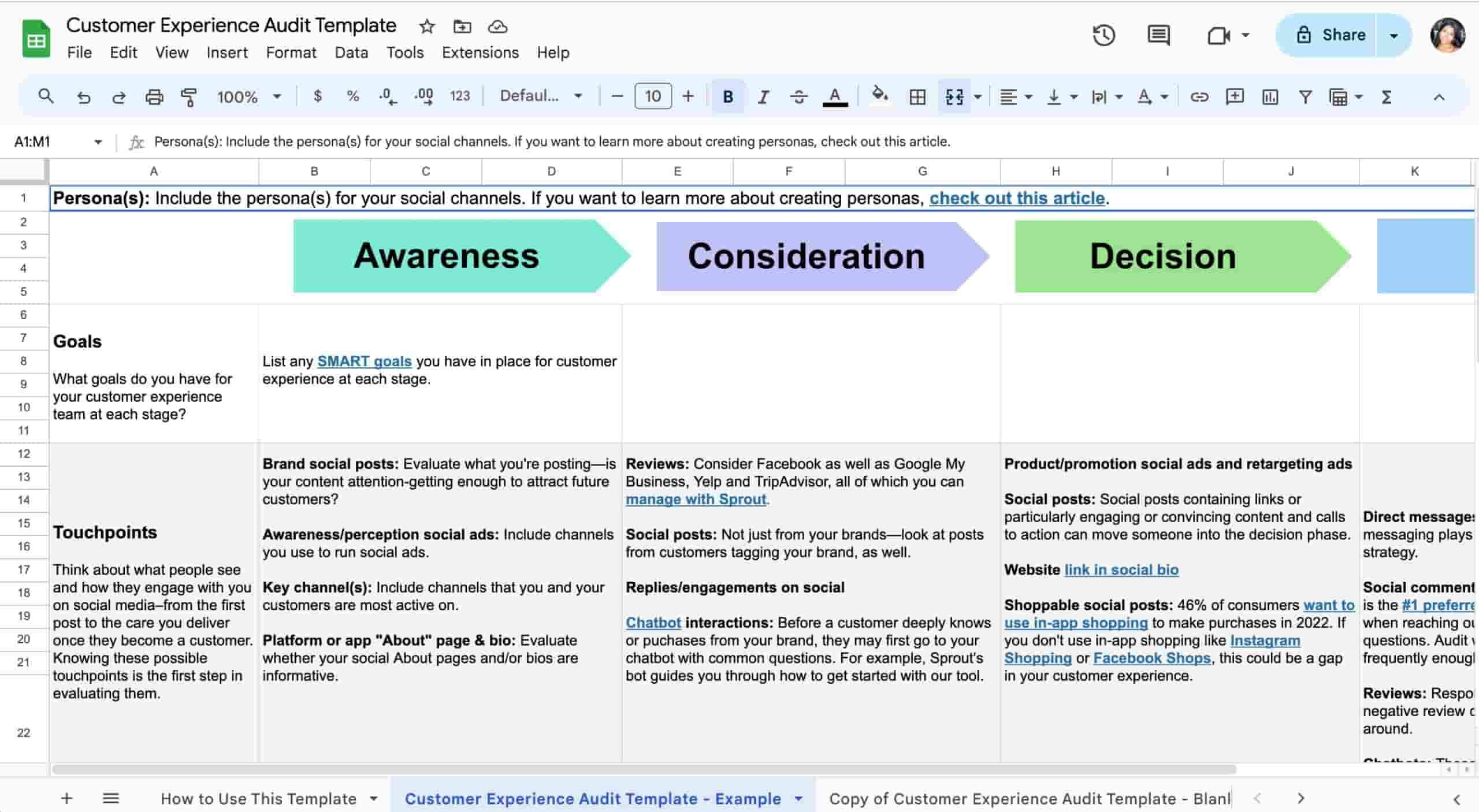
Use this social-specific customer journey map to analyze your social customer experience performance from the awareness stage through post purchase. This process will highlight gaps and opportunities to refine your strategy, so you can create more stellar brand experiences for new and existing fans.
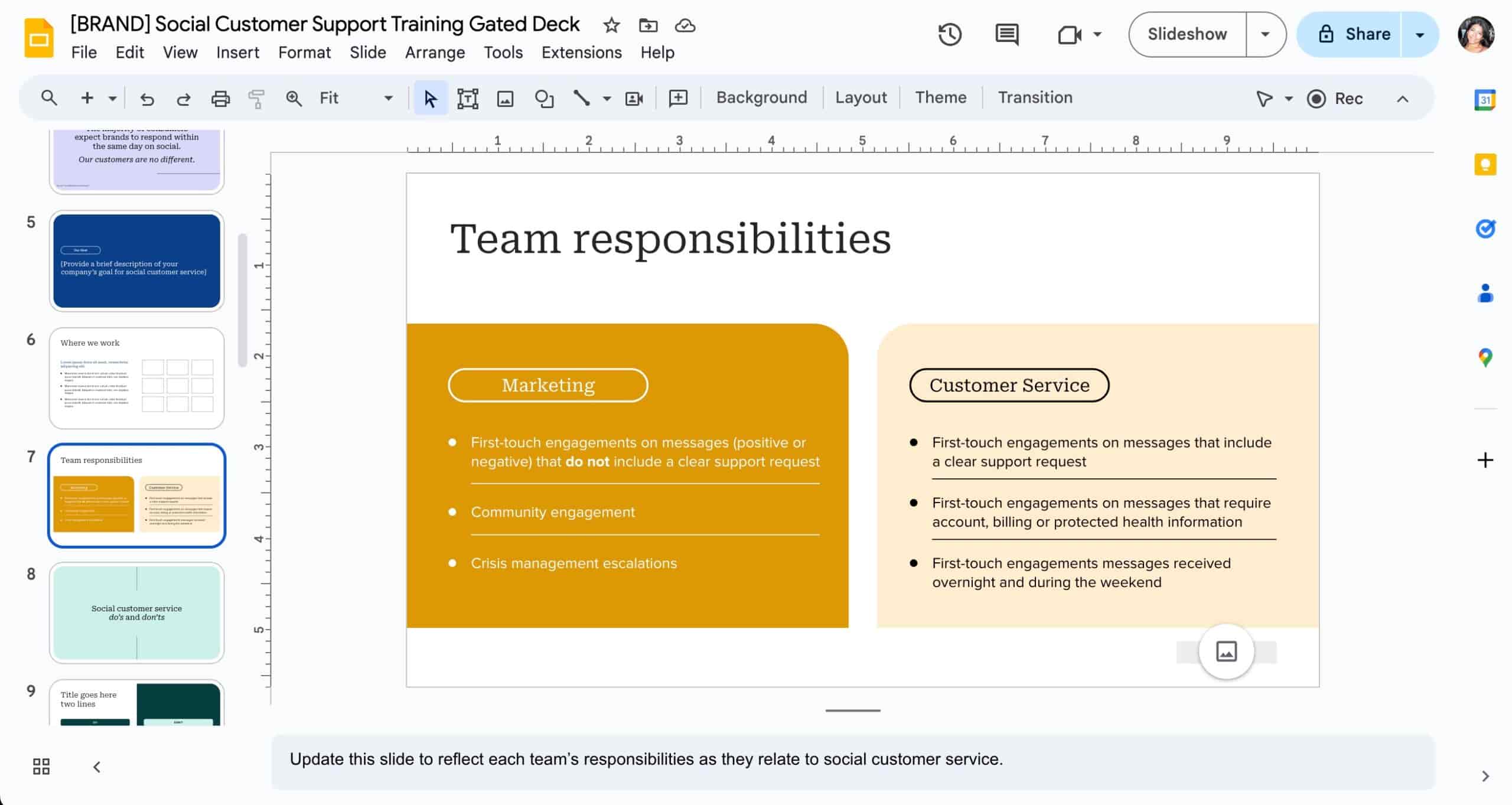
The Sprout Social Index™ found that 36% of marketing and customer service teams planned to share social customer care responsibilities in 2024. If you’re also looking for that level of collaboration this year, you need to clearly define roles and responsibilities for the channel.
This social media customer service training deck will help you document guidelines for customer service and marketing teams, in a format that serves as a visual aid during training presentations. Use it to set marketers and agents up for social customer care success.
Social media is the new mall. It’s where consumers go to find and research their next purchase, making it an indispensable channel for product launches.
This checklist offers a step-by-step guide to making the most out of your company’s next big launch. It provides actionable guidance on setting goals, managing timelines and reporting on the performance of your efforts, so you can better understand the promotional tactics that work with your audience.
Employee advocacy can increase brand awareness, drive lead generation, build employer brand and position your employees as experts in your industry—but it’s not a set-it-and-forget-it endeavor.
Use this launch checklist as a step-by-step guide to set up an employee advocacy program designed to encourage maximum participation. By following this checklist, you can implement and sustain a program set up for long-term success.
An executive’s social media presence is more than a collection of posts—it’s a powerful extension of your brand, your business and your leadership.
This resource offers a blueprint for building a collaborative, thoughtful strategy that amplifies your executives’ voices and supports broader business goals. Whether you’re getting started or leveling up your approach, this cheat sheet will help you position your leadership team as authentic, influential thought leaders in a competitive landscape.
Social intelligence is more than a reporting framework. It’s how marketers turn social media insights into action. Use these templates to pull your social insights out of silos and distribute them to the teams who can use them to inform business decisions.
16. Social intelligence presentation template
According to Sprout Social’s 2026 Social intelligence Report, 86% of social media professionals say their organizations have missed significant business opportunities in the last two years due to delayed, siloed or underused social insights.
To use social intelligence to its full potential, you have to deliver digestible insights and action plans to the right people. This presentation-ready template gives your team a starting point to turn social insights into actionable intelligence the whole organization can use.
Time to action on social media trends and audience signals can make or break a brand during pivotal moments. Building a newsroom model gives your team the speed and agility to act fast—whether to jump on a trend your audience will love or address a crisis before it spirals.
Use this template kit to centralize social media signals from your listening and media monitoring tools, get buy-in from the right committee members and deliver snackable, monthly updates to stakeholders org wide.
We’ve said it before, and we’ll say it again: Social media is the world’s largest, most important focus group. With the right tools in place, brands can tap into readily available conversations to extract unbiased feedback quickly and efficiently.
Market research on social media starts with a question—something you want to know about your audience, your competition or your industry. This worksheet will help you get clear on the question that will make the biggest impact for your business, while also providing actionable steps for gathering intel.
All of your social media strategies—content, engagement, influencer marketing, brand, etc.—come to life in your social media calendar. It’s the one place where you can see how everything works together at a glance.
These templates will help you create a comprehensive social media calendar that supports alignment, visibility and creative execution.
19. Social media calendar template
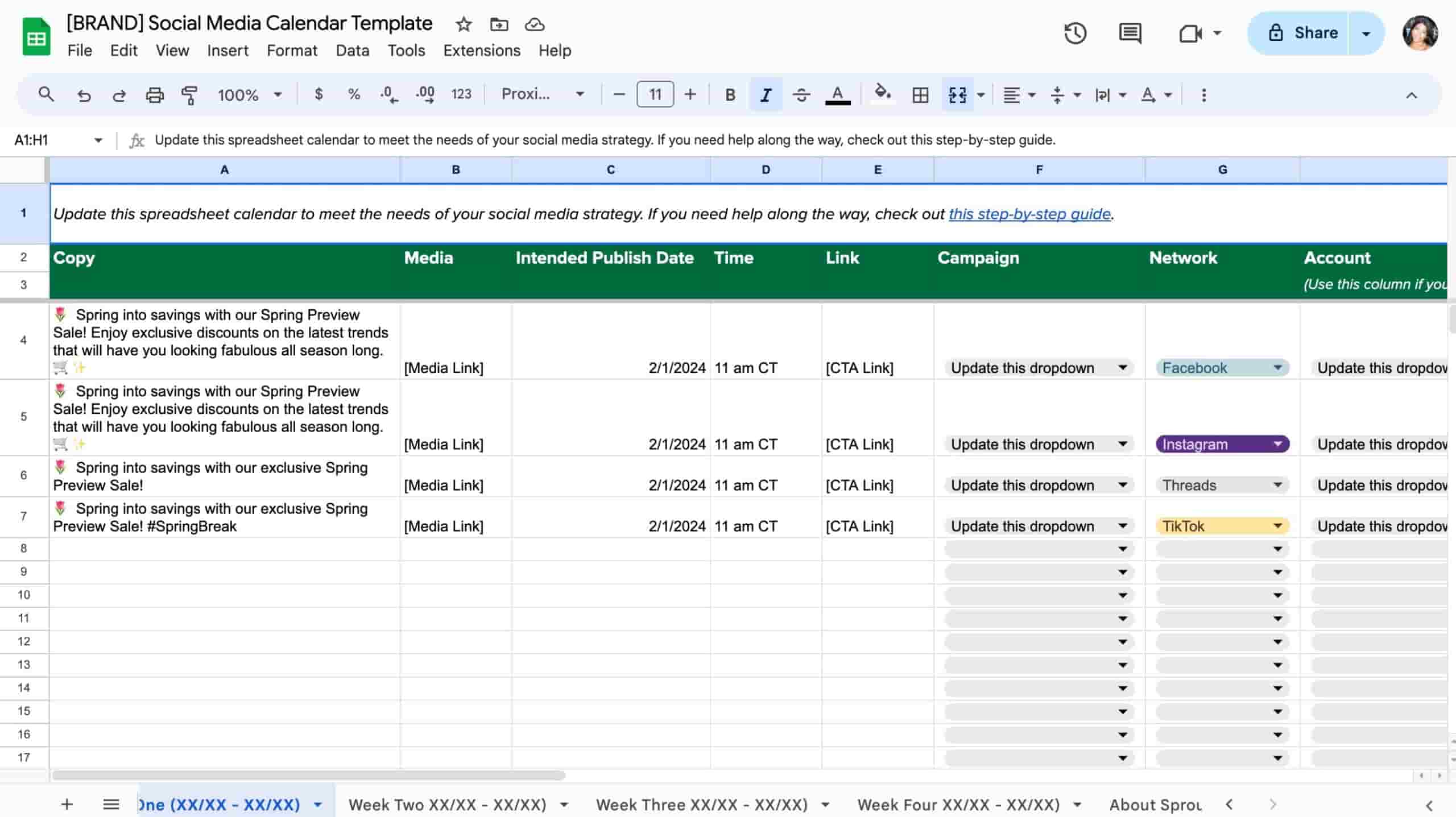
Social media calendars are like snowflakes—no two organizations share the exact same approach. Any template claiming to be universally ready for immediate use is probably overstating its value.
That’s why this social media calendar template is designed to prioritize customization. The spreadsheet format can be tailored to the unique needs of your strategy, from campaign association to content approval requirements.
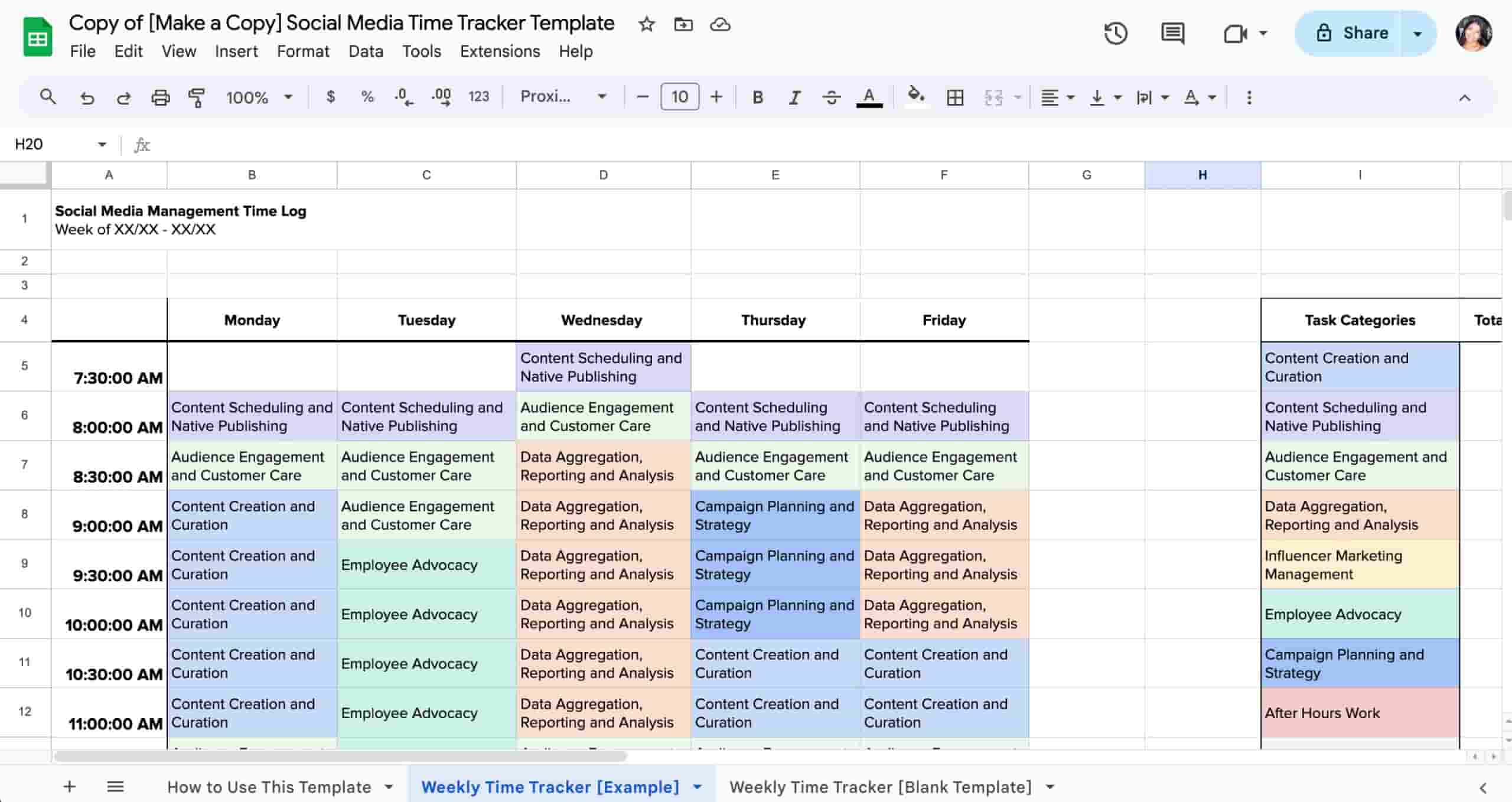
Social media management takes time. In fact, it can take more time than is available during the week, depending on your marketing tech stack.
If you want to make the case for workflow upgrades, you need this time tracking calendar template. Use it to document just how much work goes into executing a high-impact social strategy. It can also put a spotlight on opportunities left on the table due to a lack of bandwidth.
Social media post templates are the ultimate time-saver. Use these to jumpstart your creative process and avoid starting from scratch.
21. Instagram post templates
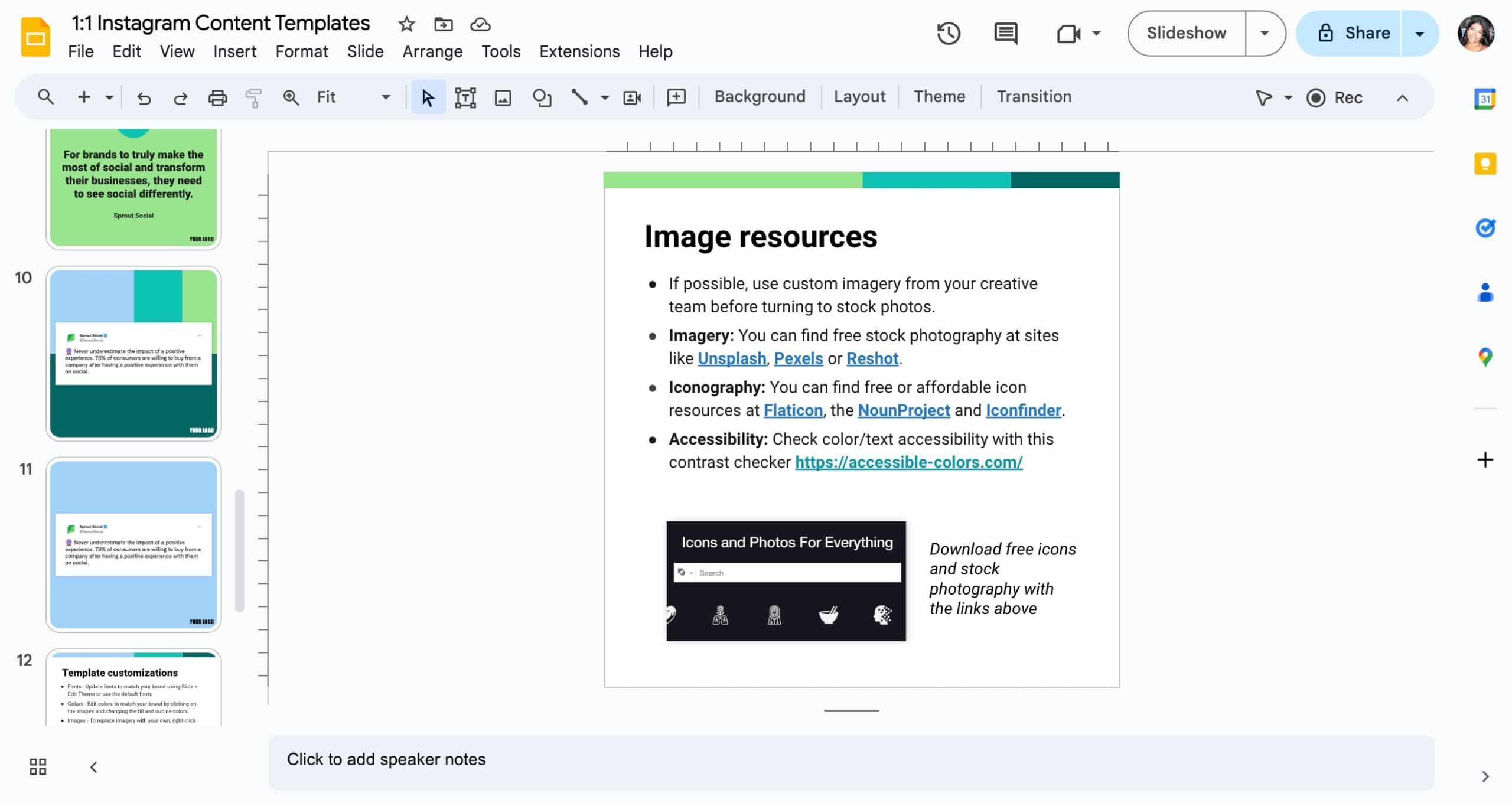
If you’re tired of spending hours tinkering around in design software trying to create the perfect IG post, these Instagram post templates are for you.
This resource includes 11 different templates for event promotions, employee spotlights and more. Plus, we included guidance for tweaking colors, typography and images so you can ensure your content stays on brand all the time.
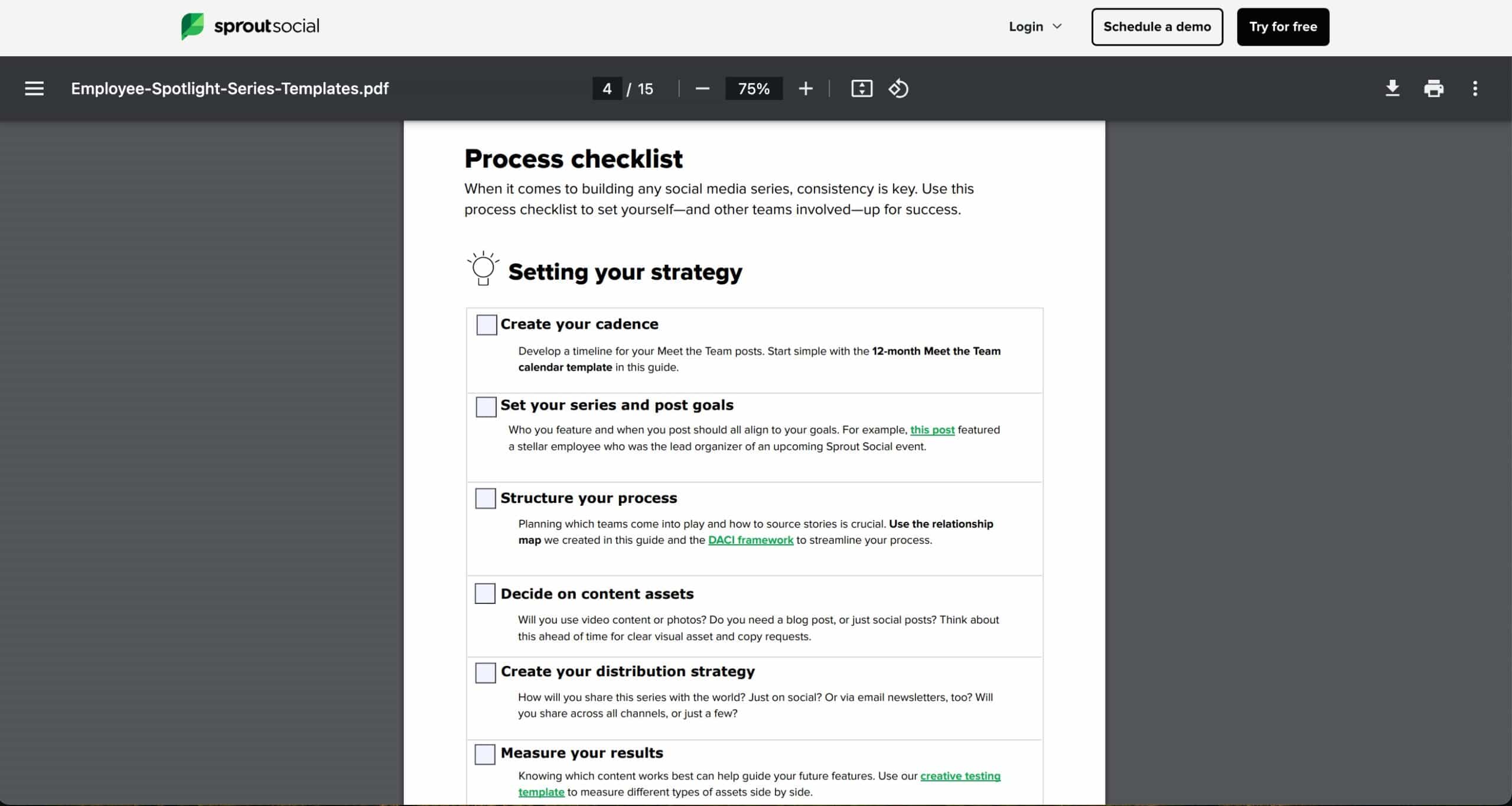
Employee spotlights and “meet the team” series are timeless social media strategy staples, and for good reason. They give brands a more human appeal, creating new opportunities for audience engagement and connection.
This workbook will help you take your teammates from behind-the-scenes to center stage. It includes a process checklist and a 12-month sample content calendar you can rely on as you build out your employee spotlight series.
Video content can take time, collaboration and resources to get across the finish line. While incorporating video into your social strategy is certainly worth the investment, you should think about how to extend the life of your videos to maximize ROI.
This video content planning workbook will help you make the most of your next video shoot. Use the pre-production checklist to plan extended use cases for all of your video content, so you get what you need before it’s time to call “cut.”
B2B social media content is engaging and valuable. Procurement teams are made up of people like you and me, and people want entertaining, visually interesting, valuable content.
This worksheet will help you create B2B social media content that resonates. Use it to align individual posts to an overarching strategy, so you can create an online presence that separates your brand from the rest.
Influencer marketing can scale to fit a variety of budgets, making it an effective tool for brands of every size and industry. While popular with retail and ecommerce brands, influencer marketing is an effective tool for brands across industries.
Use these influencer marketing templates to begin, budget and build a strategy optimized for ROI.
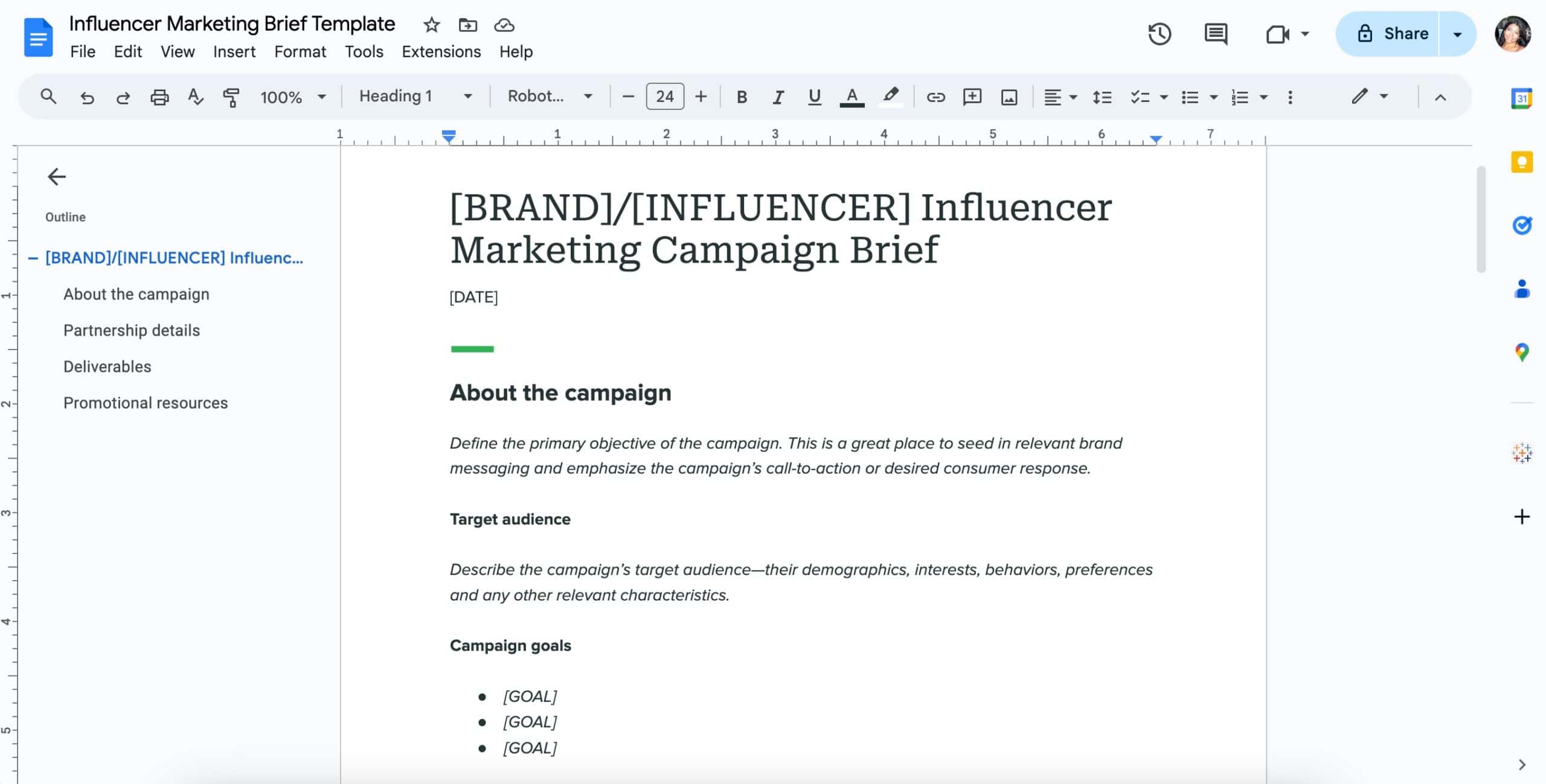
25. Influencer marketing brief template
The most effective influencer marketing strategies view influencers as more than just contractors with a task to fulfill. To get the most out of your influencer partnerships, you need to treat them as just that—partners.
Doing so means defining your expectations upfront, while establishing clear partnership guidelines that set both parties up for success. This brief template will help you document both, creating a valuable resource influencers can return to as they work to craft content that resonates with your audience.
Influencers offer brands something rare: Authentic connections that build trust and inspire action.
To maximize the impact of your influencer partnerships, you need a clear, organized view of your investment. That’s where this budget template comes in.
It helps you maintain a birds-eye view of your spend, so you can allocate resources strategically, prioritize high-value partnerships and stretch your marketing budget further—all while strengthening your brand’s credibility and reach.
Clear expectations are the foundation of strong, successful influencer partnerships.
Available as part of our influencer marketing toolkit, this customizable contract template covers the essentials, from deliverables and payment terms to usage rights and compliance. Customize it in partnership with your legal team to protect your brand, set your partners up for success and create the kind of clarity that helps campaigns run smoothly and scale with confidence.
Data aggregation takes enough time as it is, without having to build an entirely new performance dashboard to go along with it. Use these templates to take your time back, so you can focus on conducting analysis and delivering recommendations.
28. ROI strategy deck template
Social media’s true value isn’t just in engagement—it’s in driving real business results.
This customizable deck template, part of our social media ROI toolkit, helps you connect your social strategy directly to revenue, growth and broader business outcomes. Use it to clearly communicate impact, strengthen cross-functional alignment and empower your teams to invest in social with greater confidence and purpose.
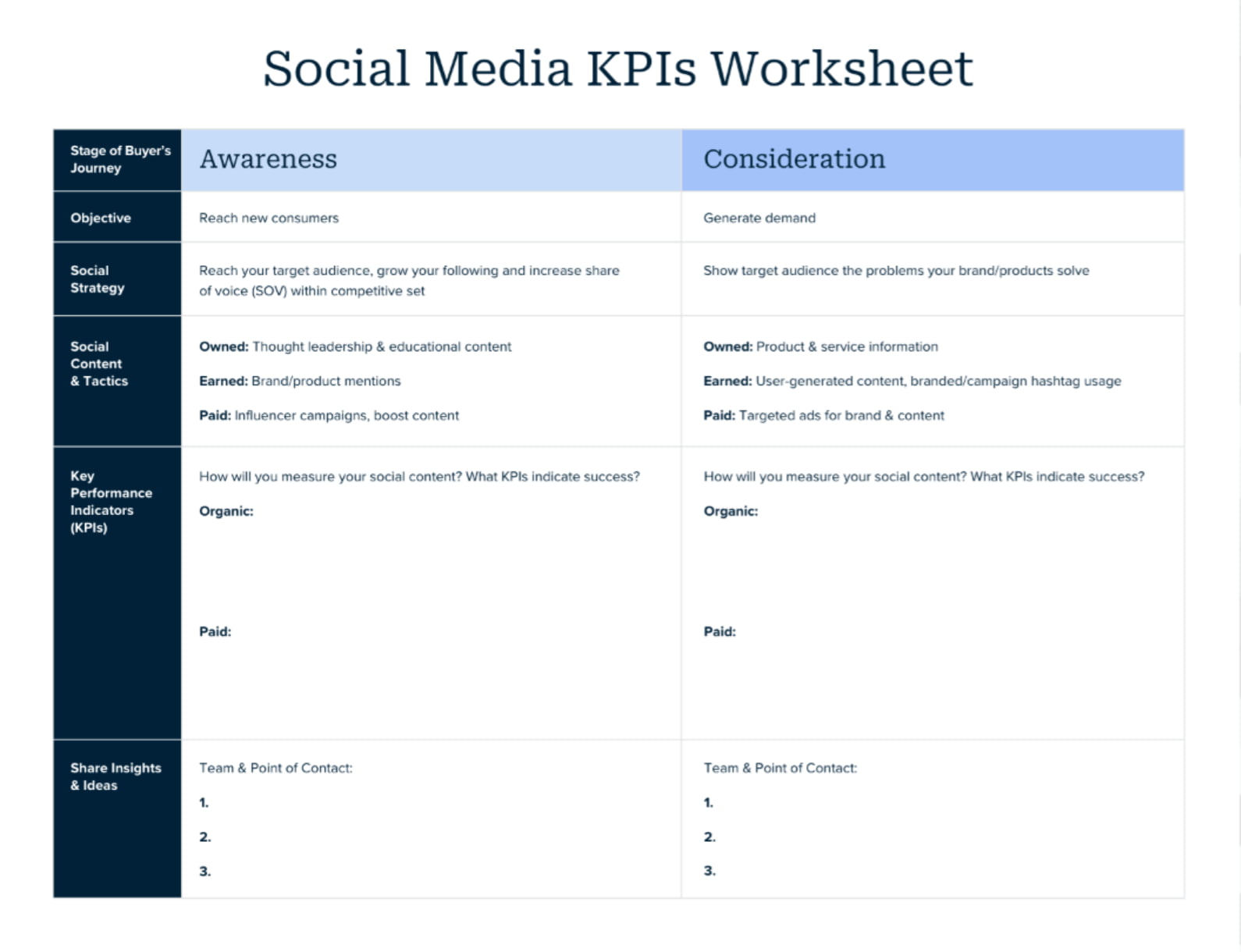
There are hundreds of social media metrics you can report on. How do you figure out which ones best reflect the performance and impact of your strategy with so many options?
You use this social media KPI template, of course.
This resource reviews the social media funnel, mapping critical key performance indicators to each stage. Use it to set goals, define objectives and determine the right approach for measurement.
Paid and organic social media strategies go hand in hand, but more strategies mean more metrics to track.
Keep your reporting to-dos in order using this social media analytics spreadsheet template. Use it to track and compare your monthly paid and organic social performance and to surface key insights and opportunities to the rest of your team.
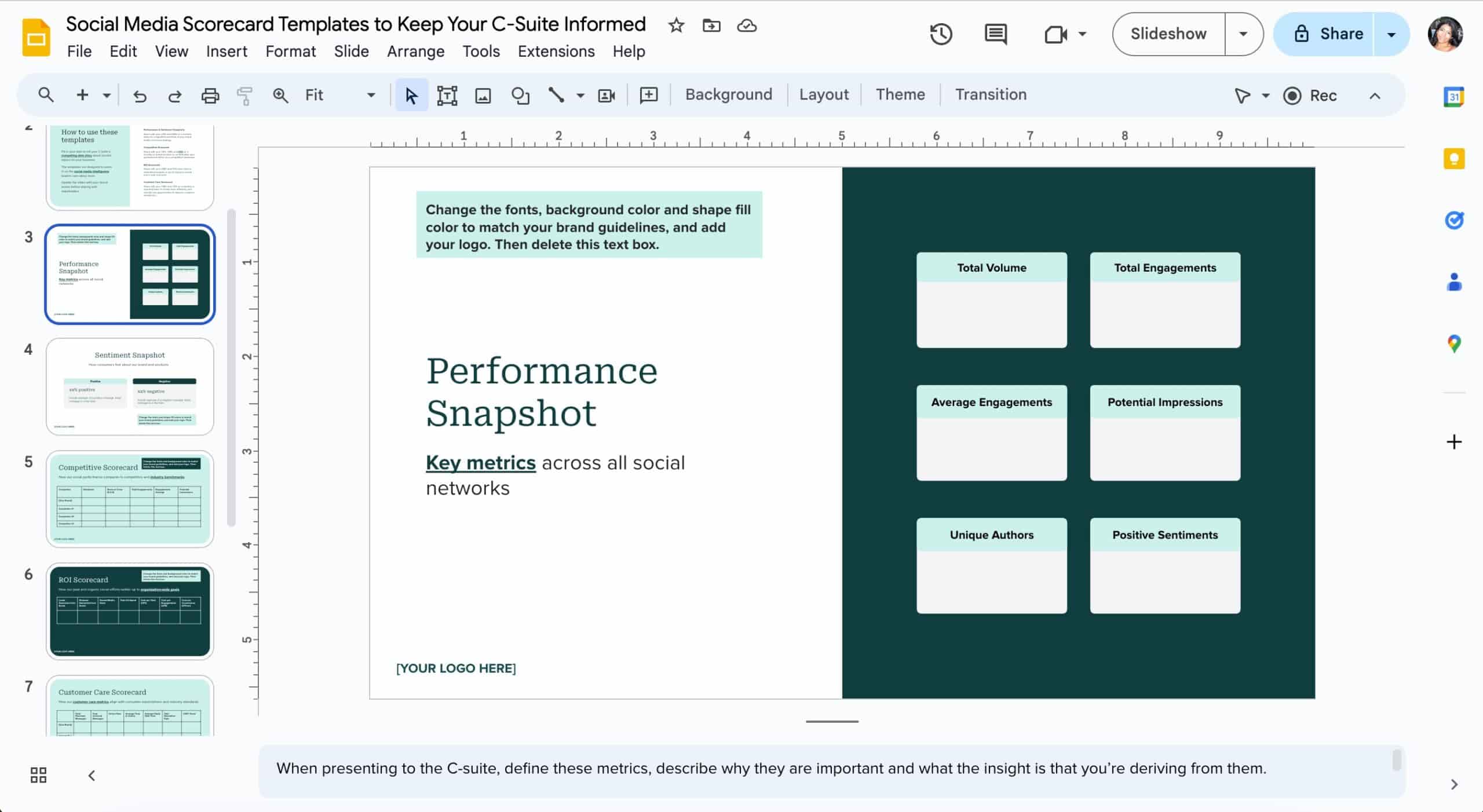
There’s an abundance of social media data available to report on, and leadership teams are increasingly keen to use it to inform business decisions. However, raw data and long, statistic-heavy reports alone often fail to convey a compelling narrative to executives.
This scorecard provides an at-a-glance method of sharing key insights with C-suite leadership. Use it to keep your leadership team up-to-date on your strategy’s impact.
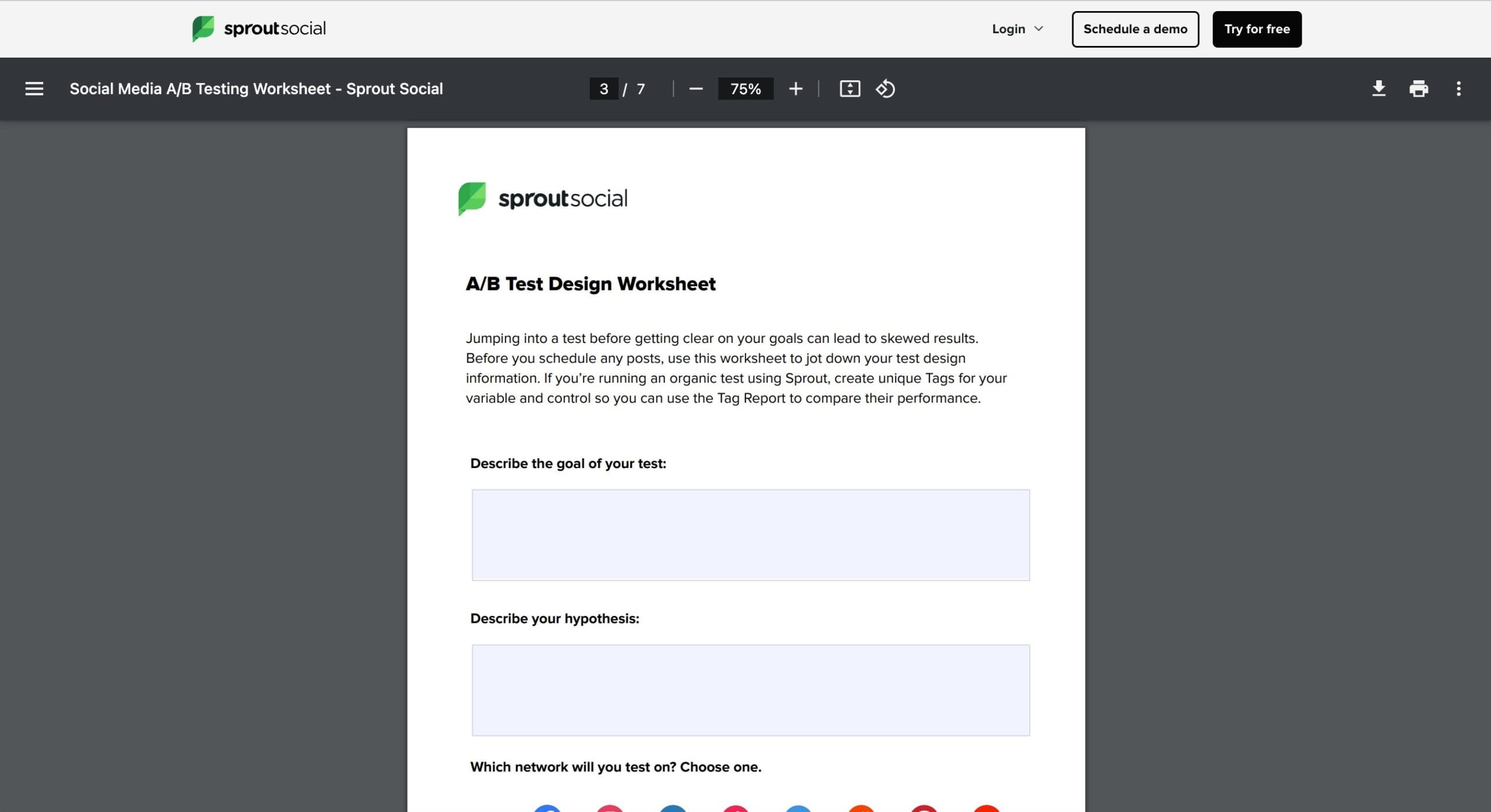
A/B testing on social media can help you better understand what messages, topics and creative assets resonate most with your target audience.
The right social media management tool can automate reports on A/B tests, saving time you’d otherwise spend building reports and aggregating data—but that’s not the only way to get answers to your burning questions. This worksheet template will help you design and record the outcomes of social media tests so you can make more informed decisions about your strategy.
Social media management is more than just what’s published on your brand’s profiles. It’s everything from people management to internal merchandising to policy development and more.
These social media templates are designed to help you scale your team and social’s impact throughout your organization.
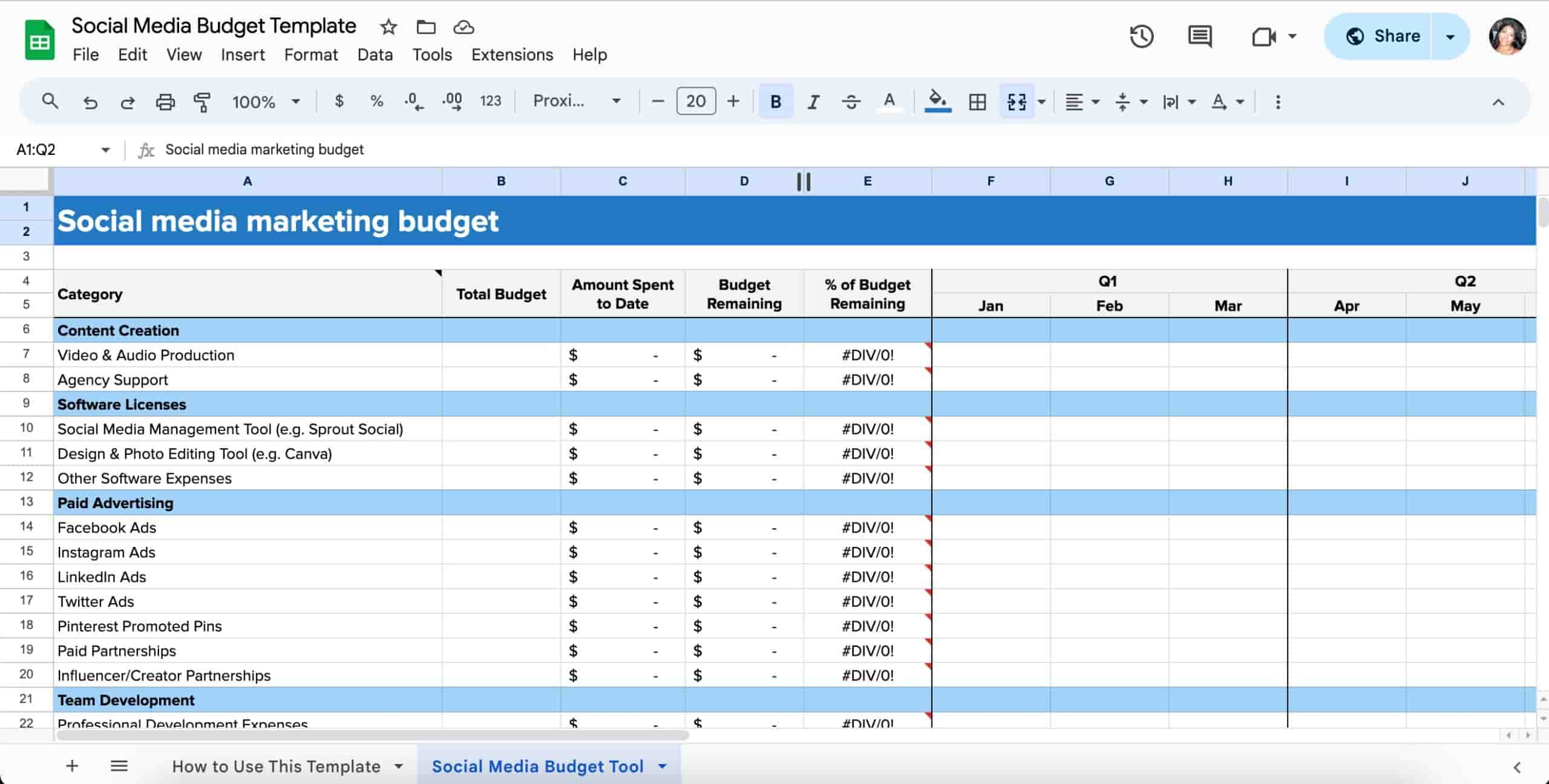
33. Social media annual budget template
Maintaining a birds eye view of your budget ensures spend is pacing on target with expectations, while preventing any valuable resources from going to waste. This social media budget template will give you a monthly, quarterly and annual breakdown of your team’s spend and remaining resources.
34. Social media manager meeting template collection
If you want meetings to be meaningful for all parties involved, preparation is key. Coming to the table—or video chat—with detailed notes and agenda items can keep discussions on task and action oriented.
This social media template pack contains meeting agenda samples for brainstorms, skip-level meetings, career development talks, pre-PTO hand-offs and creator introductions. We thought of everything you might need to cover during those talks, so you don’t have to.
35. Social media management job description templates
You’ve probably thought about what your social media team could accomplish with more headcount. That doesn’t mean all those ideas are ready to spring forward once it’s time to build out a new role.
Craft detailed job descriptions that position your brand as a career destination with help from these social media manager job description templates. The collection includes descriptions for generalist roles by experience level, along with the emerging and support-focused titles you’ll need to build out your team.
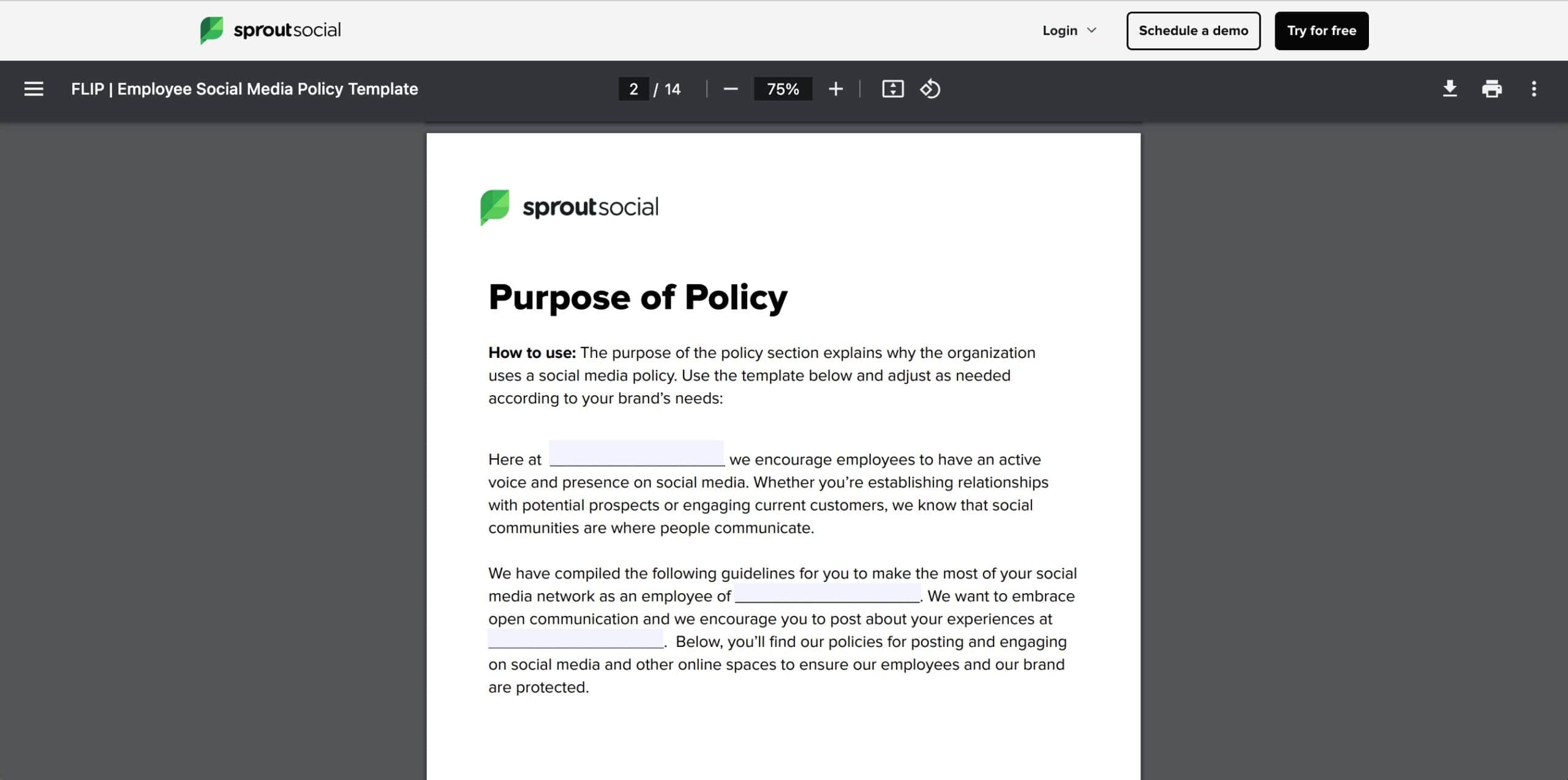
A social media policy is a crucial, organization-wide resource. It sets the expectations for how your employees should and shouldn’t represent themselves and your brand on social media, playing a key role in brand security, privacy and legal interests.
Setting your business up with one is a great way to solidify your reputation as a forward-thinking, proactive social media marketer. Start with this template, then review your final draft with your legal and human resources teams.
37. Brand safety checklist for social media managers
Brand safety is crucial for protecting your reputation online—but in an increasingly complex digital world, staying ahead of risks can feel overwhelming. From AI-generated threats to influencer partnerships, managing brand safety requires proactive strategies and the right tools.
This comprehensive brand safety checklist gives you the key steps and best practices to assess and strengthen your brand’s protection across social media.
A social media crisis is the stuff of work nightmares, especially if you don’t have any internal procedures in place to address and diffuse a crisis once it starts.
This social media crisis plan workbook will help you form and prepare your crisis management team so everyone knows how to respond quickly and efficiently. It will take you through the key considerations to mitigate risk so your organization can navigate crises with grace and resilience.
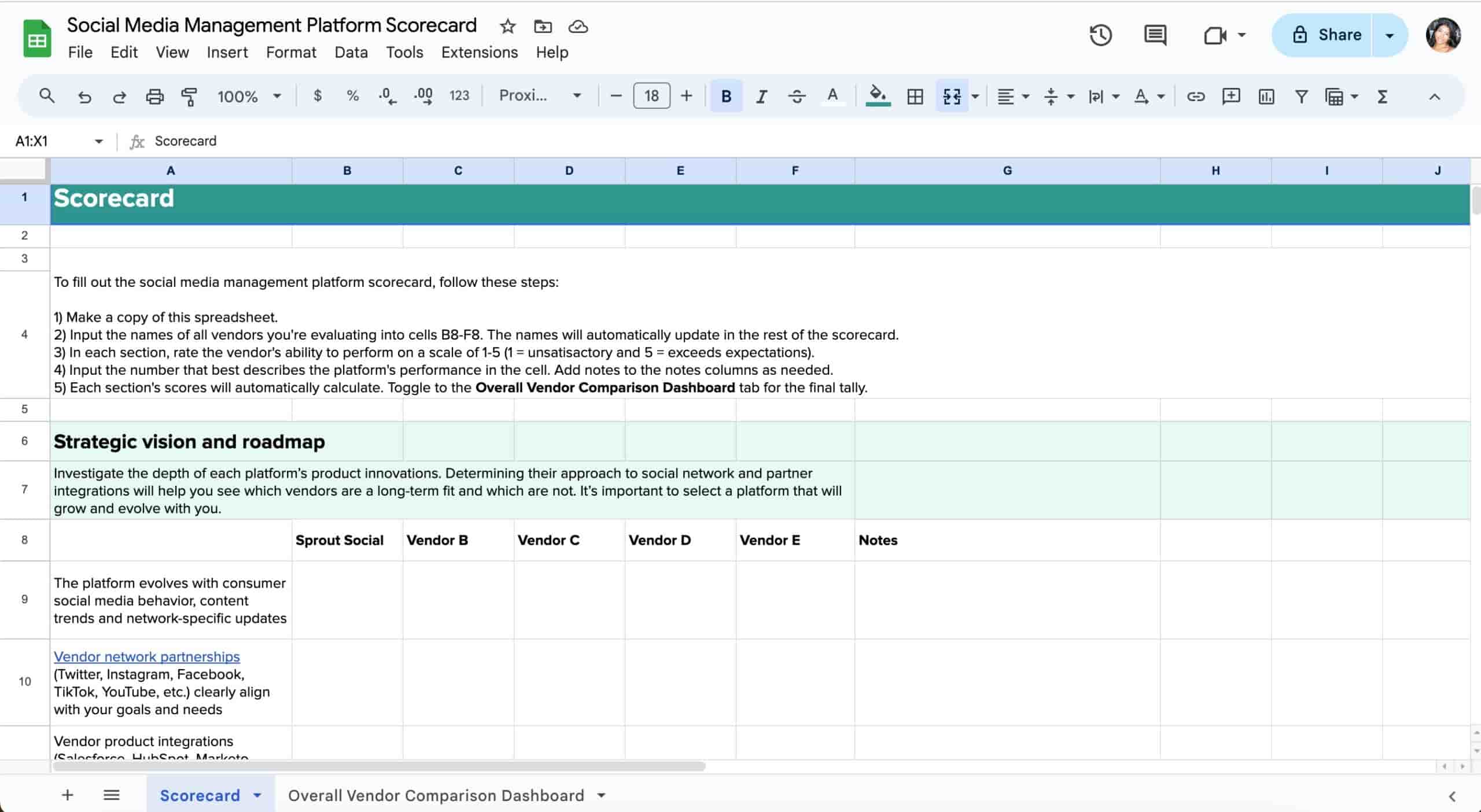
After three or four social media software demos, it can be difficult to keep track of which vendor said what.
If you’re tired of comparing software providers by combing through your meeting notes and pulling whatever feels relevant, use this social media management tool scorecard instead. This comprehensive rubric will help you vet vendors by comparing their performance across critical categories, so you can make the best possible investment for your team.
A social media software request for proposal (RFP) is a formal questionnaire used to assess whether or not a software vendor can meet the needs of your organization. They typically focus on software capabilities, data governance, product roadmaps and vendor information.
If you’re about to embark on the vendor selection process, this template provides a thorough question list that covers all priority RFP sections. Plus, we also included tips to hold better stakeholder requirement interviews, along with sample questions to support your team’s evaluation process.
The only thing better than a social media strategy template…
…is a social media management and intelligence tool that consolidates efforts into one centralized location with the help of agentic AI. With the right tool, you won’t need countless documents and decks to tell the story of your social media performance. Work that once took hours can be done in minutes.
Of course, it all starts with picking a platform that prioritizes ROI and efficiency (like Sprout Social). If you want to make the best choice for your brand, check out our social media management buyer’s guide. It will guide you through everything you need to know about the vendor selection process—from why it matters to what to ask during demos.