Wednesday, 8 July 2020

5 strategies to amplify your Twitter engagement

While having thousands of Twitter followers is great, those numbers don’t mean much if those followers don’t engage with your Tweets. That’s akin to having something important to say but being unable to get people to listen to you. So even though the platform has a huge potential to drive brand visibility and growth, you may be unable to make full use of it if you can’t drive Twitter engagement.

In this post, we help you uncover some of the top strategies to bring up those numbers and engage your Twitter audience more effectively. Let’s dive right in.

What is Twitter engagement and why does it matter?

Twitter engagement refers to all the ways people interact with your brand and its posts on the platform. So it not only includes likes, Retweets and replies but also brand mentions (tagged or not), follows, embedded media and links, just to name a few. In other words, it’s an indicator of how popular your brand is on the platform.

At this point, you may have started to get a fair idea of why Twitter engagement is so important. But let’s break it down and try to understand the specifics of why you should work on engaging your Twitter audience:

1. Massive audience base

The main appeal of Twitter is its massive audience base. With 330 million monthly active users recorded in 2019, it’s one of the biggest social media platforms and makes a significant contribution to brand visibility and growth. So you can imagine how the level of engagement you get on Twitter makes such a huge difference for your brand.

Graph chart showing the number of monthly active Twitter users by quarter

2. Builds exposure

Twitter allows users to quickly Retweet posts in just a few clicks, which could further promote sharing. And due to the Twitter algorithm, when people share your Tweets, it could help build exposure within their followers’ feeds.

Some likes and replies will show up in a person’s followers’ feeds, as you can see in the example below. A user liked Steak-umm’s Tweet, and that same Tweet appeared in her followers’ feed signifying that she liked it.

An example of a liked Tweet appearing in another users feed.

The best part is that this exposure doesn’t just end within the Twitterverse. With people often sharing screenshots of Tweets and conversations on other platforms or turning them into memes, you could potentially expand your reach even further. In fact, an estimated 1.6 billion unique visitors each month see Tweets through third-party platforms.

3. Boosts brand-consumer connection

With fewer privacy restrictions, Twitter allows brands to quickly discover and respond to Tweets concerning them. This allows you to connect with customers directly while resolving any complaints or issues at the earliest.

And when you engage with your audience this way, you get to strengthen your relationship with them. In fact, the Sprout Social #BrandsGetReal study found that liking or responding to a customer is the top social media behavior that can help brands connect with consumers.

4. Promotes openness

In line with the previous point, fewer restrictions also promotes transparency and openness between brands and consumers. Because interactions with customers through Tweets and replies is open for everyone else to see, it could quickly reach a large community.

How to measure engagement on Twitter

Now that you understand just how crucial Twitter engagement is, you’re probably curious where your current engagement rate stands. Keep in mind that your total engagements don’t translate directly to engagement rate on Twitter. You have to consider your following size too.

You may have hundreds of followers, but if only a small percentage of those followers like or Retweet your Tweets, your engagement rate needs improvement. Besides likes, Retweets and replies, you may also want to consider less typical actions like branded hashtag use, follows and linkbacks as engagement actions.

With so many factors to consider, it can be challenging to manually calculate your average Twitter engagement rate. And the native Twitter analytics won’t break it down for you either. So consider investing in a Twitter analytics tool to get a more accurate picture of your engagement and measure other performance metrics on the platform.

The Twitter analytics and reporting tool from Sprout lets you do just that. Your Twitter Reports dashboard will give you an in-depth look at your organic impressions, total engagements and link clicks. It also helps you track other metrics such as your net follower growth to gain a more comprehensive view of your Twitter performance.

Sprout Social Twitter Profiles reporting dashboard

5 ways to boost Twitter engagement

Once you start keeping a close eye on your Twitter engagement rate, you might notice a huge disparity between your following size and your engagements. That’s likely because you haven’t yet started making an active effort to boost your Twitter engagement. So check out these five strategies to get those numbers up:

1. Catch your audience at the right time

Timing is one of the most crucial factors that influence how well your Tweet performs or how many people engage with your Tweets. That’s because the platform sees around 350,000 Tweets on average every day. So it’s important to get your Tweet out at a time when people are highly active for a better chance of visibility.

At Sprout, we analyzed 20,000+ pieces of content from our customers to see how engagement changes by timing. Based on our findings, the best time to post of Twitter is either Wednesday or Friday at 9 a.m. Of course, this might vary based on factors like location and industry. So test different timings for your Tweets to see what works best.

sprout social heatmap showing best times to post on twitter

2. Make the most of visual elements

Any regular Twitter user knows just how much a photo or video stands out on the platform amid all the text Tweets. On mobile, in particular, a Tweet with a visual element takes up at least half the screen. And the more visible your Tweet is, the more likely it is to engage your audience. In fact, if your Tweets include a GIF, those Tweets get 55% more engagement than those without.

So it’s crucial that you use visual elements if you want to boost your Twitter engagement. You could post original graphics to share useful information and updates, photos of your team, videos demonstrating how to use your product, tasteful memes relevant to your industry and more. Even if you have to share a link, make sure you include a thumbnail or attach a relevant picture.

Check out this Tweet from Evernote, for instance. The team could’ve easily just posted the text with the link to their productivity playlist. Instead, they included a photo of a cassette labeled “productivity jam.” This not only catches the eye instantly but is highly relevant to the link. Plus, it’s consistent with the brand’s green and white color scheme.

3. Interact with your customers’ Tweets

Drive up your Twitter engagement is by actively engaging with your audience yourself. Instead of routinely Tweeting and expecting the likes to flood in, why not give out likes and Retweets from your end as well? Based on the principle of reciprocity, engaging with others will make them feel more inclined to engage with you.

Plus, when you interact with your customers’ Tweets or replies, your conversation gains more visibility in the feeds of other users, as mentioned earlier. This makes way for even more engagement for your brand. Here’s an example of Chipotle responding to someone who thanked the company for giving him some free chips and guac.

Go one step further with this and engage with posts that don’t directly @mention your brand. For example, check out how Feedly responds to a prospective user’s Tweet because someone mentioned the brand in the replies.

4. Jump in on a trending conversation

It seems like Twitter sees a new viral topic every other day. Your brand can capitalize on this by participating in trending conversations and topics relevant to your industry or your company. This helps you gain visibility with people who have yet to followed you on Twitter, which then paves the way for more engagement.

For an easy way to discover trending conversations to participate in, click on “show more” under the “What’s happening” section at the right-hand side of your screen.

example of twitter trending topics overview

This will bring up a long list of trending conversations personalized just for you, either by location or interest. But you can also look for trending topics in other industries as well.

example of twitter personalized trending topics

Go through these topics to see whether there are any posts you could join the conversation with a reply or Retweet. Or see if there’s any trending hashtag that you could make use of.

5. Create polls on relevant topics

Drive up your Twitter engagement by creating interactive content like Twitter polls. Polls allow you to ask questions on relevant topics and choose between several options. And since people can vote with just a click, it’s an easy way for them to engage.

So consider creating Twitter polls regularly if you want to see more engagement. Perhaps you could ask them what they’re using your product for, for instance. You could also ask them about their preferences when it comes to your content such as what time you should post, what types of posts do they want to see from you. This doubles up as a tactic to feed your social content strategy.

Additionally, like this thread from Sprout, you could offer several useful tips through a series of Tweets and then use polls to ask your followers about their opinions on your tips.

Aiming for meaningful engagement

These are some of the basic strategies that can help you begin amplifying your Twitter engagement. But keep in mind that not all engagement is good engagement, and crisis management may need to be done. So at the core, whatever strategies and approaches you apply should help you drive meaningful engagement.

What other strategies have you used to improve your Twitter engagement? Are you using any tools to bring up those numbers? Let us know in the comments. And don’t forget to sign up for our free social media toolkit to get an even more comprehensive guide on boosting your engagement.

This post 5 strategies to amplify your Twitter engagement originally appeared on Sprout Social.


from Sprout Social https://ift.tt/2nDISlQ
via IFTTT

A Flexible Publishing Platform Allowed this Author to Keep Control

This is True author Randy Cassingham

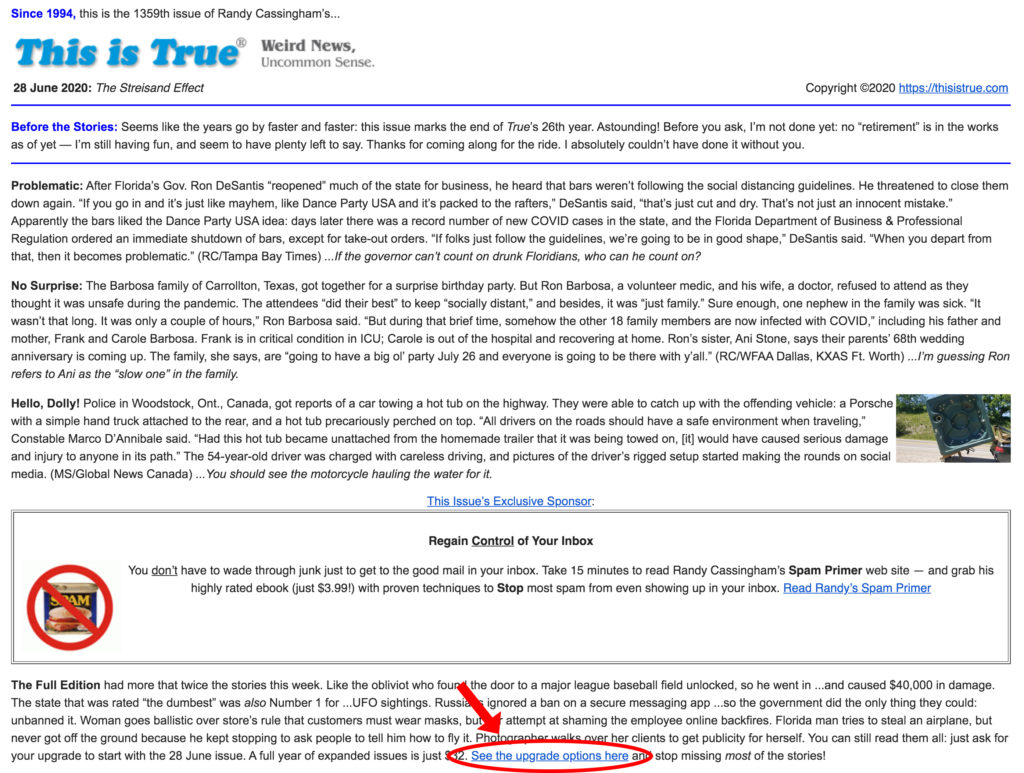
This is True, or TRUE — as founder Randy Casingham calls his company — is an email newsletter that uses "weird news" as a vehicle to explore the human condition in an entertaining way. 

TRUE's mission is to provoke more thinking in the world. Each issue contains stories of people who didn't think, sometimes with hilarious results, capped by a brief comment on each story. It's biting social commentary that's "about" the human condition, but designed to be entertaining so it's fun to read.

People are starving for an intelligent look at what's going on, rather than the doom or denial that seems to dominate the major news outlets," Cassingham says.

But creating good content alone is not enough —  you also need to figure out how to get paid for it. Cassingham actually turned down two syndication contracts to put TRUE into newspapers because he thought the future was online, and newspapers would suffer in the long run. 

He decided to go the self-publishing route and identified a publishing platform with all the tools he needed for both publishing and promotion: email.

Content creators require options beyond a blog platform. "It is very hard to monetize a blog. Creators need tools that can provide a gateway to reach paying customers. I am very grateful that AWeber provides a platform to actually help creators make money without depending on Google, or advertising in general," Cassingham says.

Taking great content and converting subscribers from free content to paid premium subscriptions is an art that TRUE has perfected. Last week was the 26th anniversary of the first newsletter he ever sent — in fact, he’s gone 1,359 weeks without ever missing an issue.

Treat customers the way you want to be treated

Maintaining a strong relationship with readers has been the backbone of TRUE's business. With average open rates above 70%, it’s clear subscribers can't get enough of TRUE's unique content. 

From the very first communication, Cassingham clearly lays out what subscribers will receive using his unique style of humor. And every correspondence includes a link to upgrade to the premium subscription to enable conversion. 

TRUE’s welcome email:

Example of subscription sign up notification and welcome email.

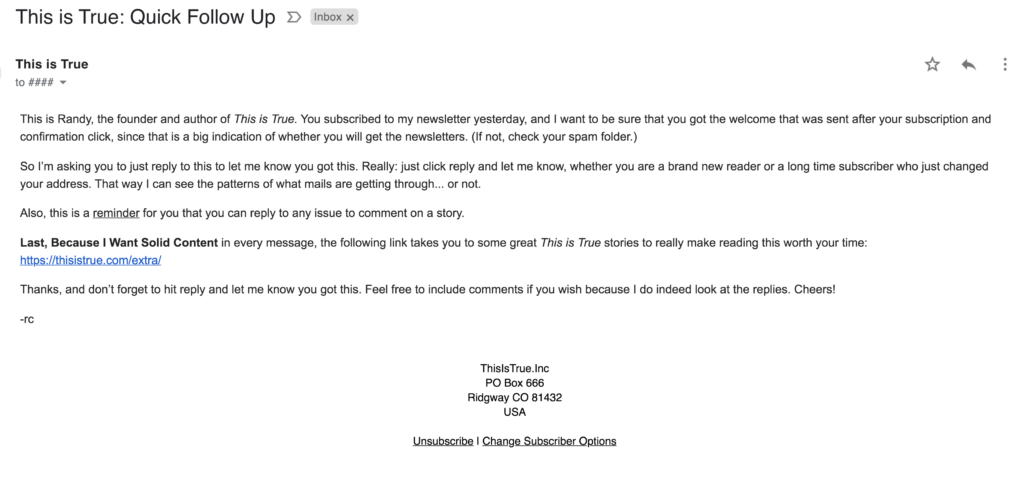
He also sends a follow-up email to help identify if the reader is a brand new reader or a long term subscriber. Because Cassingham wants every email to provide value, he includes a link for extra content as a ‘thank you’ for opening his email. 

TRUE’S follow up email:

Example of This is True follow up email.

How TRUE uses AWeber’s Blog Broadcasts

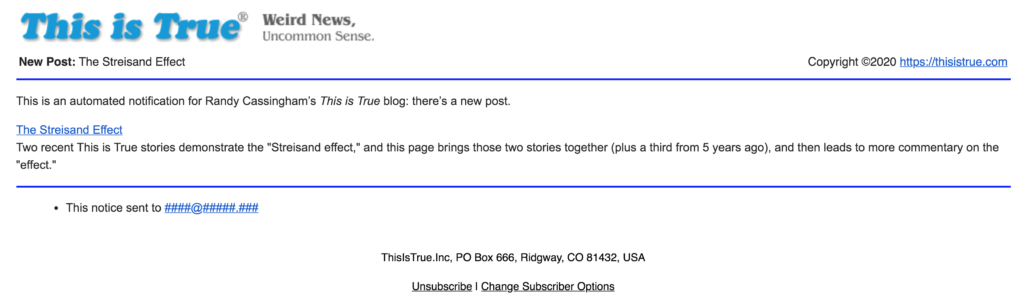
AWeber’s Blog Broadcast feature allows Cassingham to send customized notifications to readers when he posts a blog entry.

Example of This is True new blog post notification.

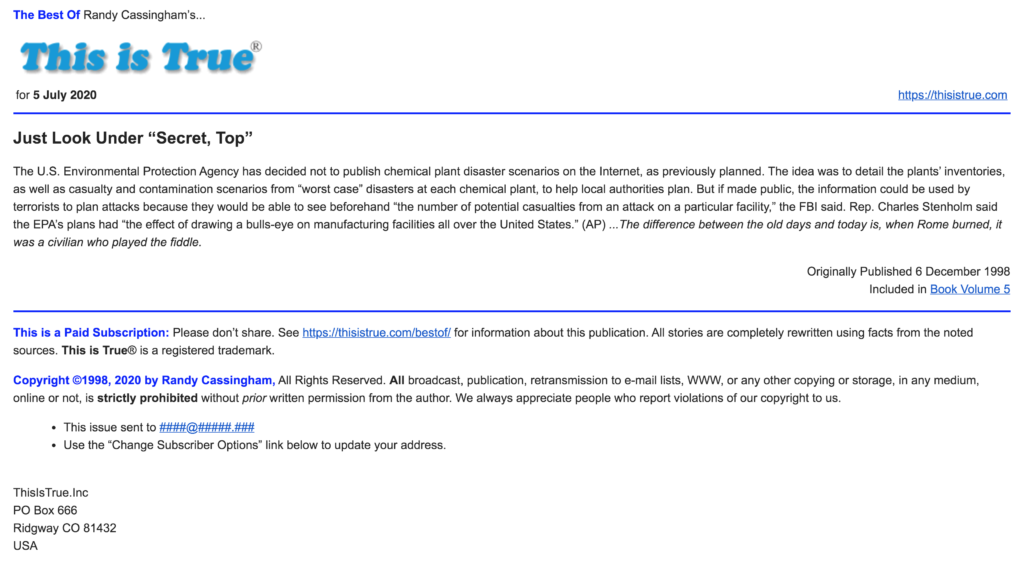
Cassingham takes it a step farther with AWeber's Blog Broadcast (automatic RSS to an email list). “It is more powerful than most people realize," Cassingham says. "It's not just to notify readers of new blog posts. I use it for a special paid list. My server drops a 'Best Of' archive story to a specific feed URL, and AWeber picks it up and sends it out early each morning. The subscribers love it, and it's totally automated for me."

Example of Best of This is True daily premium email.

AWeber's Blog Broadcast pulls content from a blog and reformats it into an email newsletter template to share with subscribers.


Step-by-step on setting up your Blog Broadcast

1. Under the Messages tab, select Blog Broadcasts.

2. Then, click the "Create A Blog Broadcast" button.

3. Enter your RSS feed URL for your blog in that first field.

4. Select the template you'd like to use, click on the Load Template button.

5. Next, you'll need to schedule when your broadcasts will be sent out.

6. Then click "Save Blog Broadcast" at the bottom of the page. 

Create income by having subscribers upgrade to paid content 

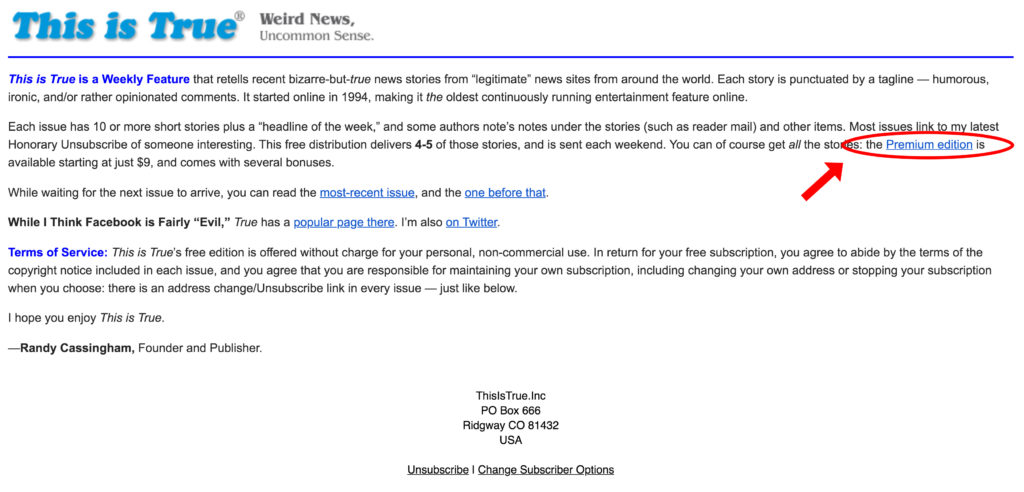
TRUE's primary source of income is subscription upgrades from the free content. Premium upgrades are Cassingham's "bread and butter," so every free newsletter has a pitch to upgrade to the paid version. 

Example of This is True free email with a link to upgrade to the premium subscription.

How email gives TRUE the freedom to do what he loves

TRUE is the oldest entertainment feature on the internet, running weekly for more than 26 years. TRUE started June 26, 1994 — and has never missed sending out a weekly issue. It is older than Google, Amazon, and eBay.

 "While I haven't gotten 'rich' from it," Cassingham says, "I have something that many rich people don't have: the freedom to live exactly where I want, work and 'play' pretty much every day, and have the time to give back to my community as a volunteer medic. I carry a pager and can dash off to help others get through the worst day of their lives. That's extremely fulfilling. One of the big reasons I can do it all is AWeber’s automated tools do so much of the tedious work for me."

Ready to grow your business?

Whether you're starting a new business, need to grow your audience, or you run an established e-commerce business, AWeber provides a powerfully-simple email marketing solution for any small business.

AWeber's email marketing platform includes unlimited landing pages with every plan, unlimited emails, email automation, sign up forms, and email analytics.

Start for free and quickly grow your business with powerfully-simple email marketing from AWeber.

Sign up for AWeber Free today

The post A Flexible Publishing Platform Allowed this Author to Keep Control appeared first on Email Marketing Tips.


from Email Marketing Tips https://ift.tt/3f6FyJb
via IFTTT

Tuesday, 7 July 2020

8 New Email Templates to Help You Grow Your Business

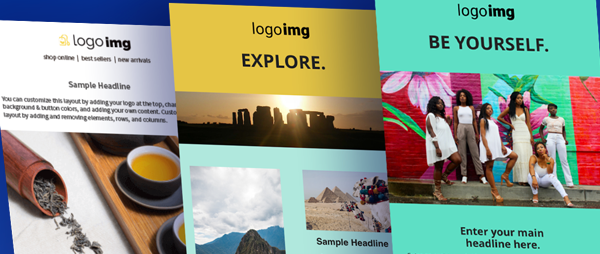
8 new email templates to grow your business

A good subject line gets your audience to open your email, but a well-designed email keeps the reader engaged — leading to higher click-through rates, better engagement, and increased sales. 

Email design can make or break your ability to connect with your audience. But most small businesses don’t have dedicated designers and don't have the time to create a library of email templates and test which one resonates best with their customers.  

AWeber's email designer, Jeni McGuigan, regularly updates and adds new email templates to the free template gallery so users can easily personalize a few items and make the email template their own.

"When I design an email template, it is not for a single client. I am creating a template for several businesses. It needs to be flexible, so they can easily do what they want with it by simply adding text, uploading their logo, and adjusting the color to match their branding," says McGuigan.

But how do you know which email template is right for your business?

Each template in AWeber’s gallery has a specific purpose. Explore the 8 new template options below to pick which is right for you and your business. 

Email Templates for real estate to showcase with ease

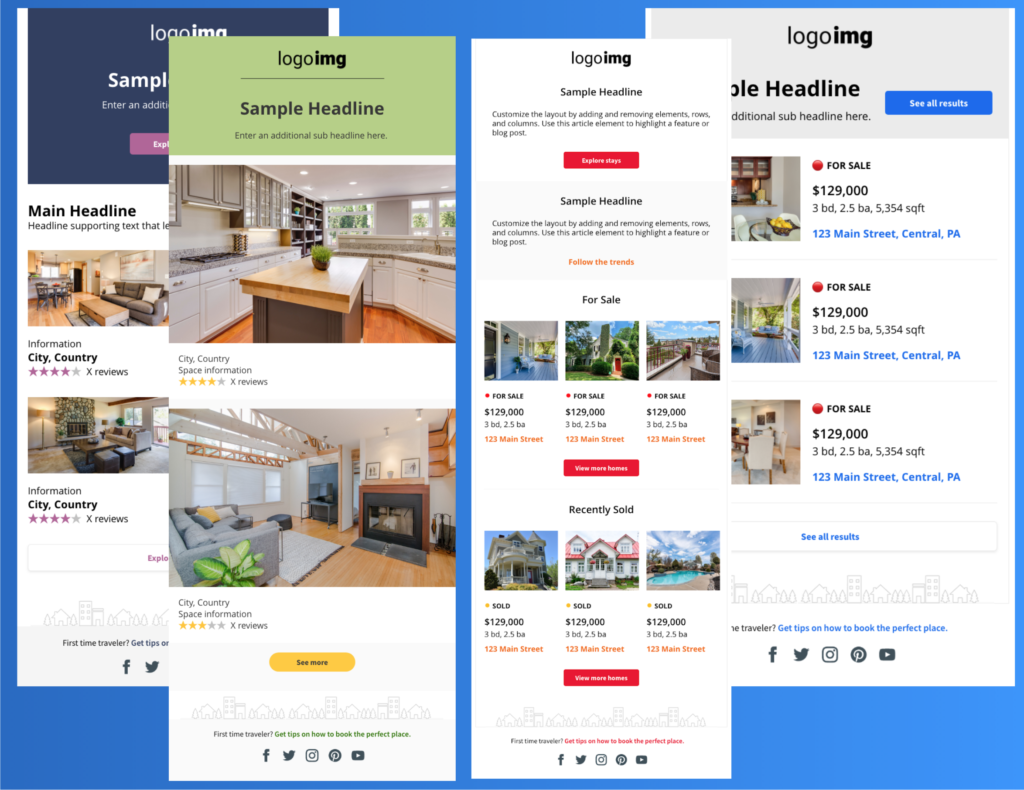
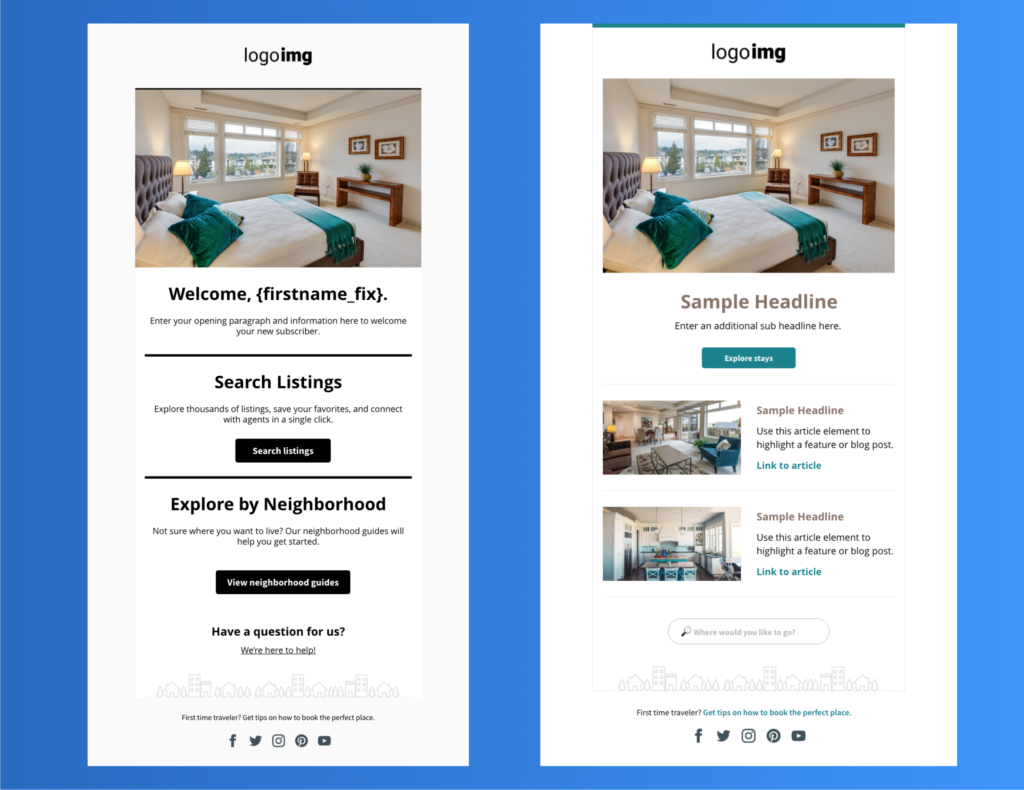
The design options in the Real Estate template were inspired by some of the leading businesses in the real estate industry. Each template is a little different, but creates a great foundation to help real estate agents promote homes on the market.

To use any of these templates, all a real estate agent needs to do is:

  1. Personalize the branding with their logo and color preferences. 
  2. Upload real estate images and property details. 
  3. Send the email to their prospective clients and customers. 
Examples Real Estate email templates
Want to use this template? Check out the Real Estate template in AWeber’s template gallery. 

To add a splash of color, simply adjust the color of your divider or button colors in the drag-and-drop email editor. 

Two email template examples for Real Estate
Want to use this template? Check out the Real Estate template in AWeber’s template gallery. 

Show your appreciation with a thank you email template 

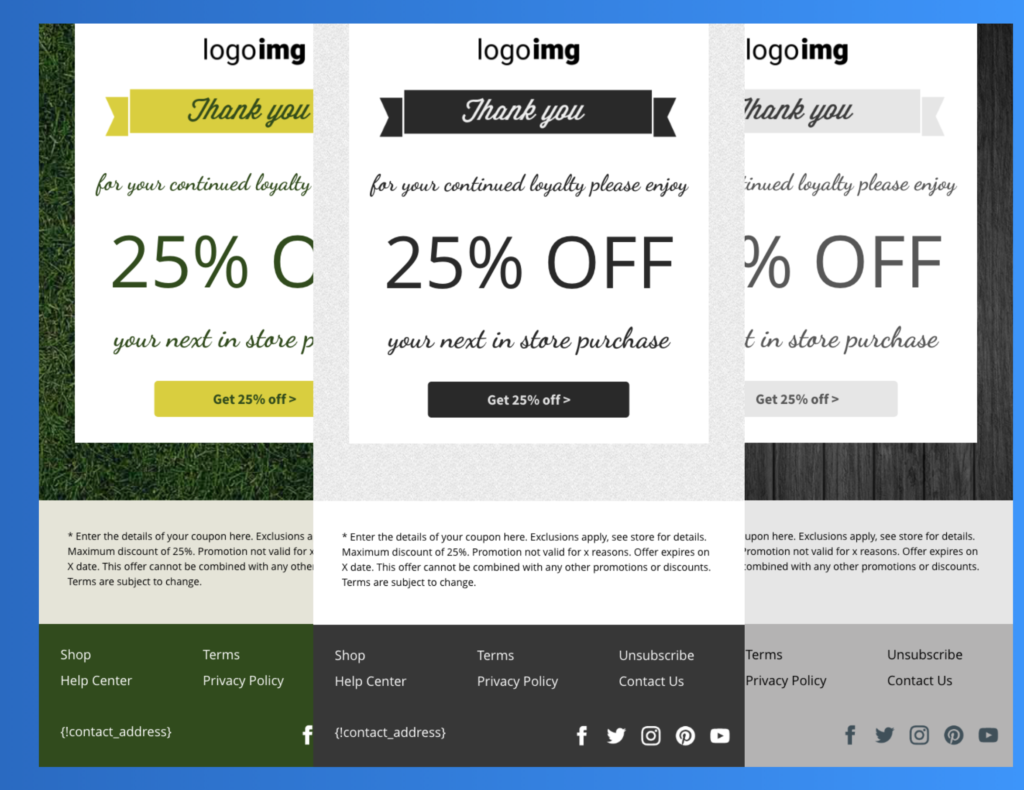
Who doesn't love a thank you email with a discount on your next purchase?  With the Nelson template, all you need to do is pick your color preference, add your logo, and the details of your discount, and you are ready to send it to your loyal customers. 

Examples of Thank You templates
Use the Nelson template in AWeber’s template gallery. 

Everything a blogger needs

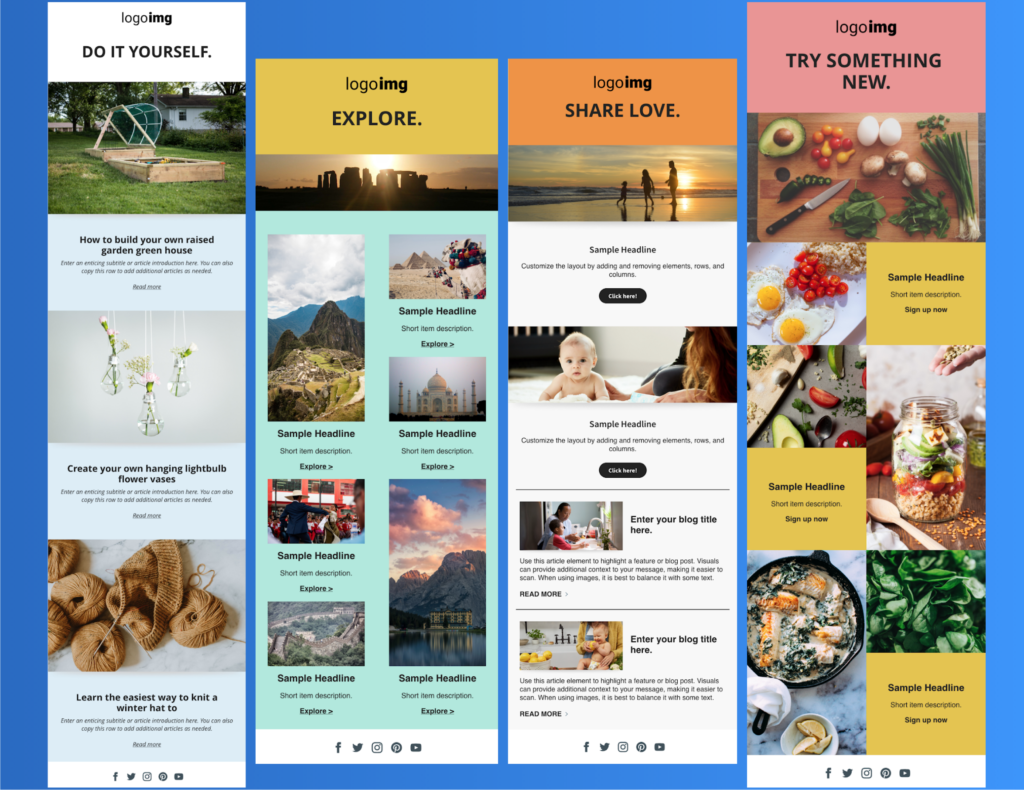
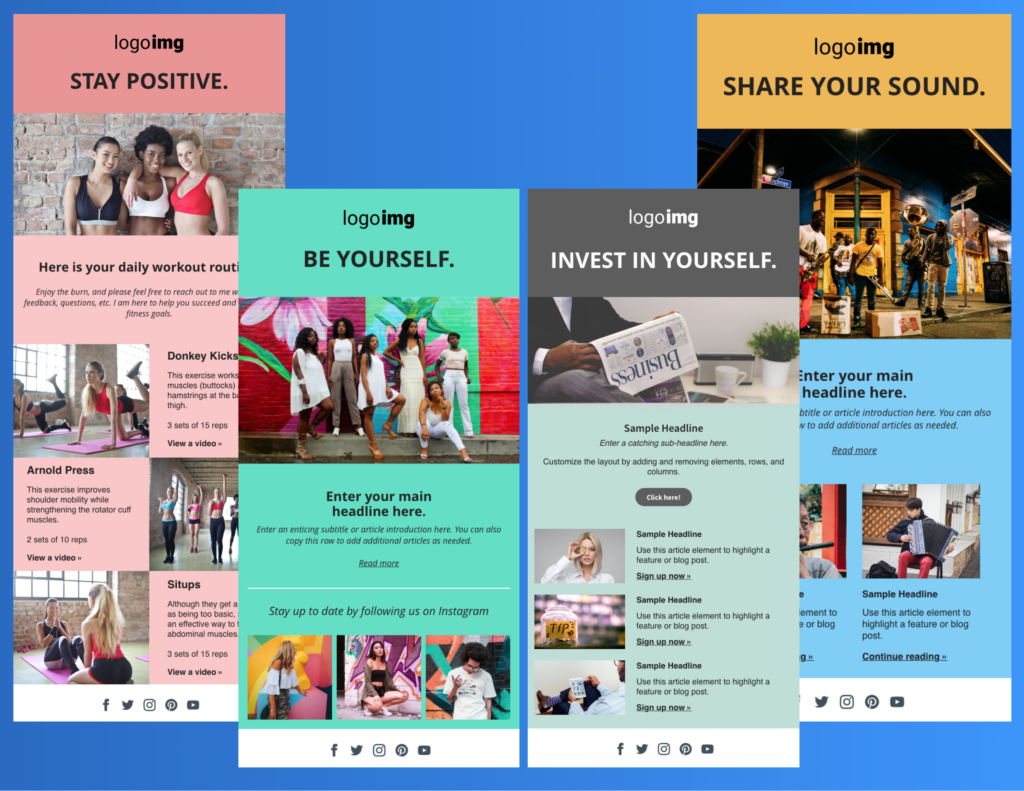
Popular blogging categories — including DIY, Travel, Parenting, Food, Fitness, Fashion, Finance, and Music — influenced the design of the Harold templates.  

Each of the row colors can be entirely customized. You can use the stock image in each template, upload a different image from AWeber's image gallery, or upload your own images.

Example of Blogger email templates

Additional examples of email templates for a blogger
Send visual emails using the Harold template in AWeber’s template gallery. 

Modernize your email design

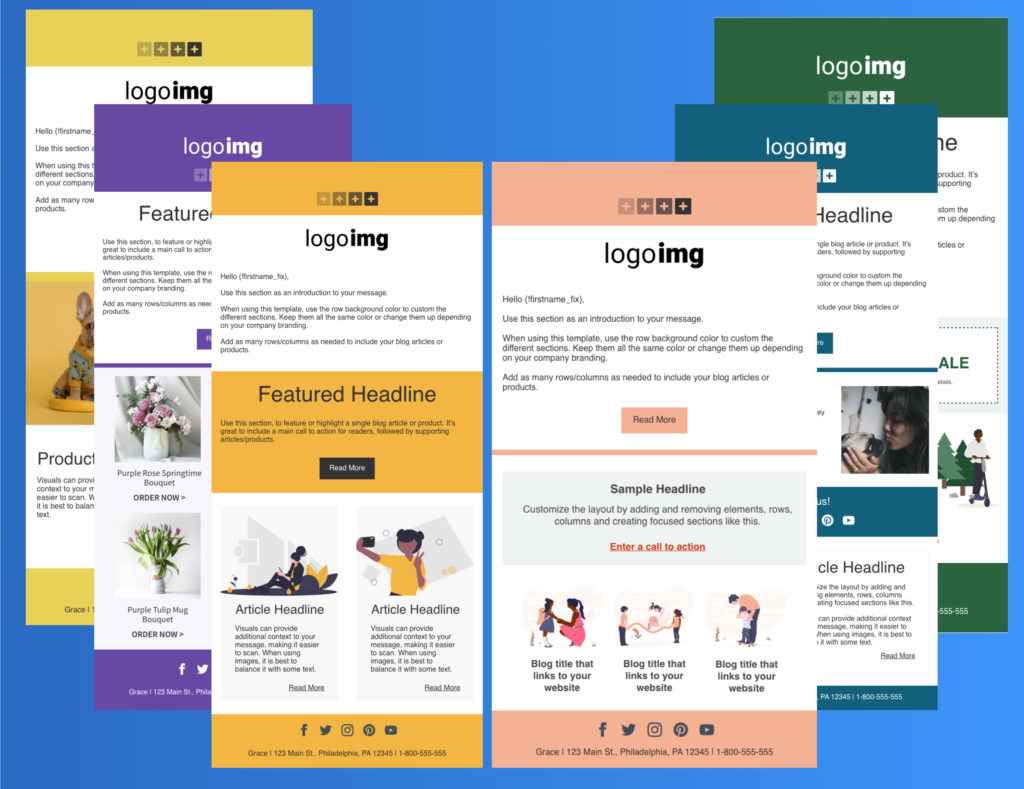
Are you looking to try a new layout?  Consider one of the Grace templates. Each template has a slightly different layout, and the color rows can all be completely customized. Just add your logo and content, and your email template has an instant refresh.

Six examples of a new, modern email template
Try one of the Grace templates in AWeber’s template gallery today.

Stand out with bold patterns

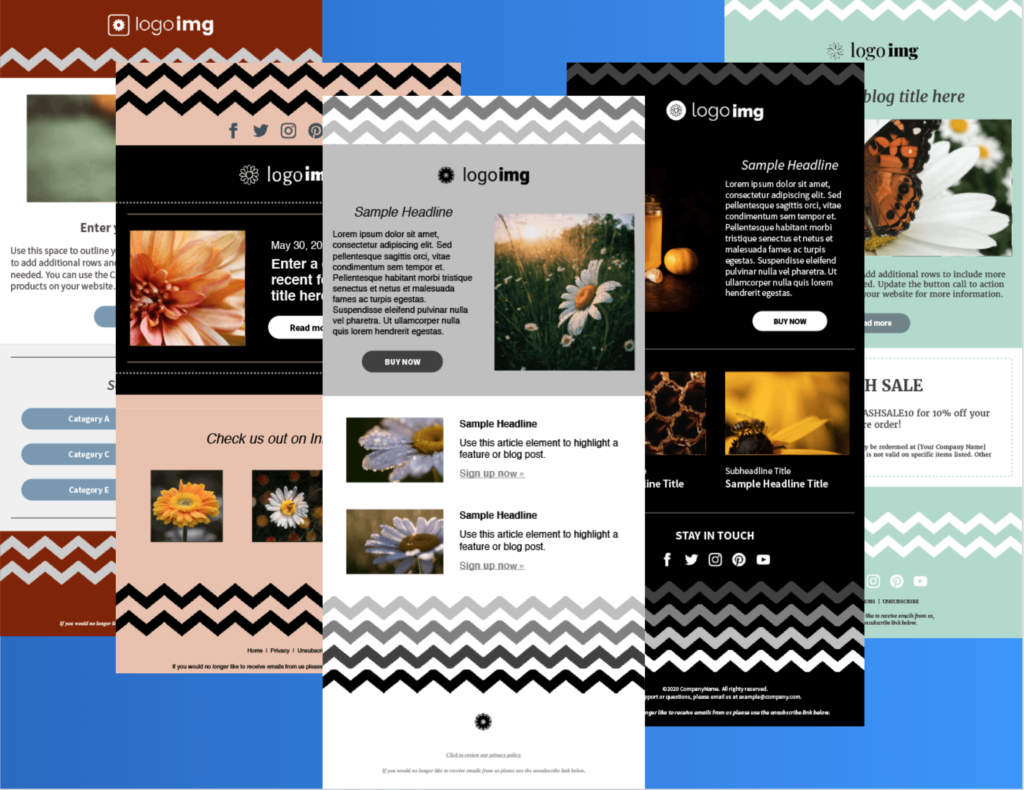
If you like clean designs and geometric zig-zag images, you should check out the Daisy templates. On the black & white versions, the zig-zag is inverted — so when you change the row color, the color of the zig-zags changes.

Examples of the Daisy template with bold zig-zag patterns
Add eye-catching design to your emails with the Daisy templates in AWeber’s template gallery.

Sell more products

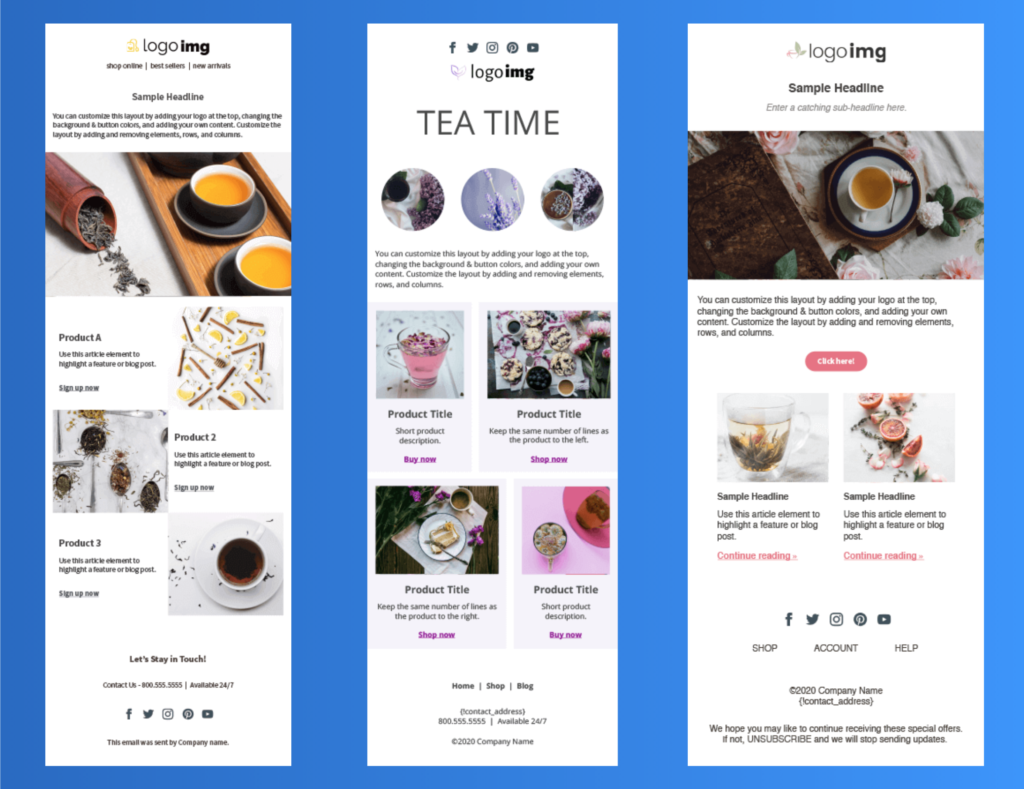
Want to sell products or drive people to your store? Consider the Tea Time templates — designed to highlight individual products. There are three different layouts, and you can easily add or change elements in AWeber's drag-and-drop email editor

Examples of the Tea Time email template to design to sell products.
Showcase your online or retail store with the Tea Time templates in AWeber’s template gallery. 

Highlight customer quotes or reviews in a new email newsletter template

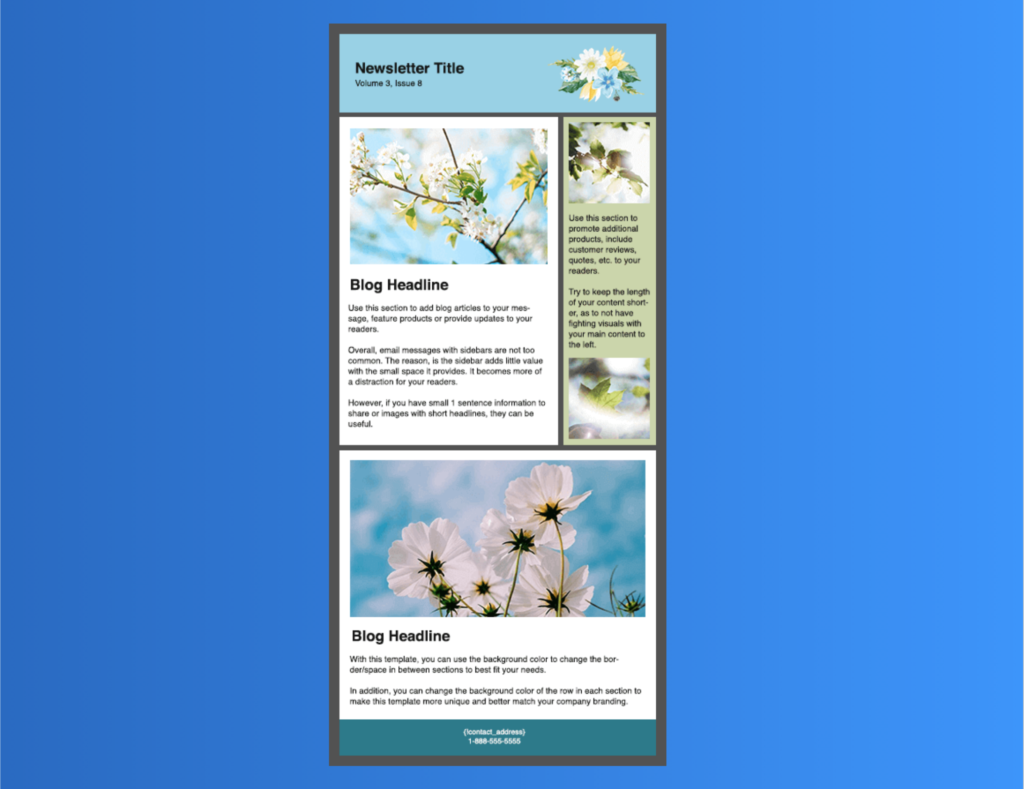
If it is time to consider a new newsletter format, check out the It’s Spring template. It even includes a sidebar box that is perfect for a short testimonial, quote, or review. 

When you use a sidebar box, keep the content short, so it does not distract from your lead content or blog post.  

Example of Its Spring template to highlight customer quotes or reviews.
Showcase your customers’ feedback in a sidebar box with the It’s Spring template in AWeber’s template gallery.

Bold headers

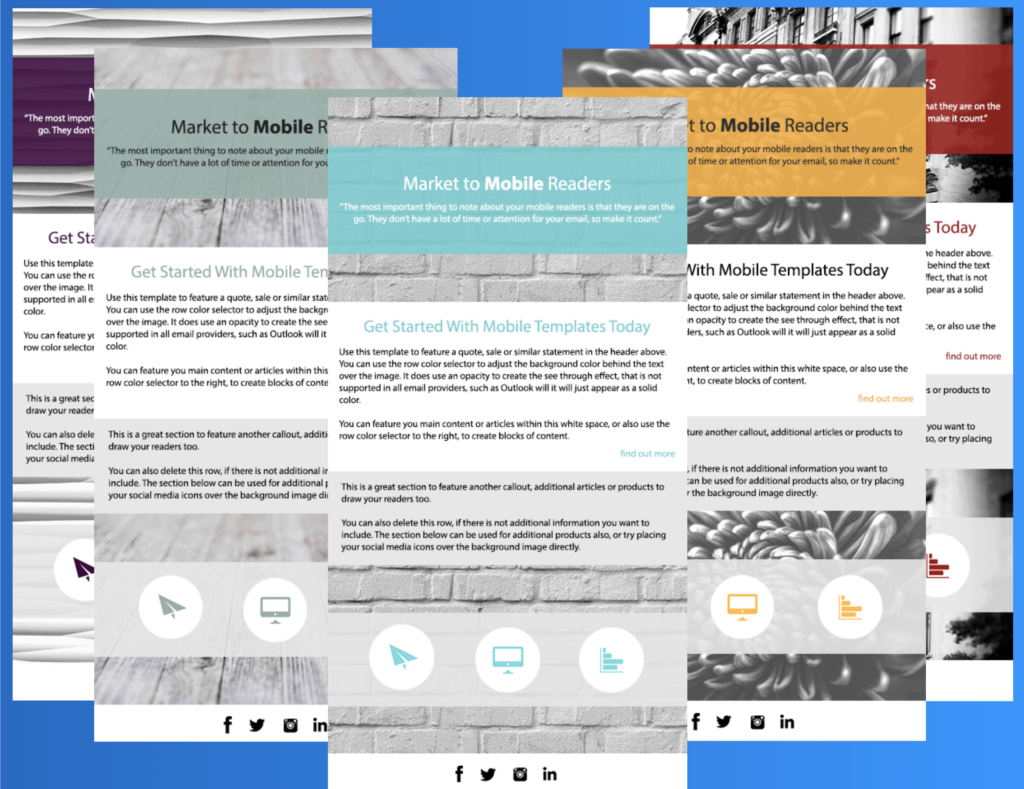
The Hector email template is a great option for your business if you're looking for bold headers. The background image color is removed to make the header stand out. It is a super easy and effective way to highlight a quote, statement, or sale. The row color can be adjusted to match your business's branding. 

Examples of Hector template highlighting bold headlines
Try the Hector template in the AWeber template gallery today. 

Ready to grow your business?

Whether you're starting a new business, need to grow your audience, or you run an established e-commerce business, AWeber provides a powerfully-simple email marketing solution for any small business.

AWeber's email marketing platform includes unlimited landing pages with every plan, unlimited emails, email automation, sign up forms, and email analytics.

Sign up today for your 30-day free trial

The post 8 New Email Templates to Help You Grow Your Business appeared first on Email Marketing Tips.


from Email Marketing Tips https://ift.tt/2O4R5g8
via IFTTT

#BrandsGetReal: How brands can lead on social movements

Throughout 2020, brands have been challenged to maintain their social media presence as audiences invest their attention into major social movements and changes to their way of life. This means marketers have been constantly adjusting well-laid plans for 2020 while finding the right way for their brands to contribute to the conversation around social change.

Over the last few years, our #BrandsGetReal series has highlighted data around what consumers want from brands as they take part in an increasingly complicated online landscape. Consistently, the message has been that audiences seek brands’ participation on social issues.

“Seventy percent of consumers say it’s important for brands to take a stand on social and political issues, up from 66% in 2017.”

How exactly brands meet this demand without fatiguing audiences or merely engaging in performative “woke-washing” remains an ongoing challenge to marketers, especially as they balance these conversations with planning daily content and working towards existing business goals.

That’s why we’re reviewing the findings of our #BrandsGetReal surveys to help guide your decision making now.

Why do audiences look to brands on social issues?

Just halfway into 2020, everyone–including both social marketers and their audiences–have confronted wide-ranging challenges:

  • Adapting to work and life disruptions caused by COVID-19 stay-at-home measures, including managing new schedules and expectations around work and daily life, balanced with anxieties about a rapidly-changing situation.
  • A new understanding of social movements fueled by support for #BlackLivesMatter: People are continuing to debate and evolve their behavior to move beyond performative, one-time actions and commit to transformative allyship.

Given the complexity and emotional weight of these issues, why should brands weigh in on social media channels traditionally used for marketing? Our data from #BrandsGetReal shows us that audiences actually do want brands to speak out on social issues and use their social feeds as a platform.

Audiences believe brands are well-positioned to bridge the gap across different groups of people and garner wide attention. According to our survey in #BrandsGetReal: What consumers want from brands in a divided society, nearly four in five consumers feel brands can connect people of different backgrounds and beliefs for multiple reasons. These reasons include the fact that brands carry products and services that appeal to a diverse range of customers, and that brands have the resources and presence to receive significant media attention.

chart: why consumers believe brands are able to connect people of varying beliefs

Further, in our 2019 #BrandsGetReal survey, 66% of consumers said they believed brands should weigh in on social issues because they can create real change, while 63% reaffirmed that brands have the platform to reach a large audience.

These consumer beliefs weren’t linked to any specific political affiliation. A majority of consumers from all political affiliations felt that brands should take a stand on social issues.

chart: consumers from all political affiliations want brands to take a stand

Despite the rise of call-out culture in the popular consciousness, participating in social issues can also increase consumer trust in your brand and help you recover from missteps in messaging. In #BrandsGetReal: Social media & the evolution of transparency, we found that nine in 10 consumers are more likely to give brands who are highly transparent second chances after bad experiences, and 85% are more likely to stick with them during crises. Being human and authentic about social issues is one way to build this culture of transparency.

Social media enables brands to lead on important issues

Not only do audiences want brands to speak up about social movements, they see social media as the channel to do so on. In our 2019 #BrandsGetReal data, nearly half of consumers (47%) stated they want brands to take a stand on social media.

According to our 2018 #BrandsGetReal data, audiences view social media as a key way of regularly staying in touch with others, including those with different views or beliefs, and staying informed.

how social builds connection

Taken together with data showing that people look to brands to bridge the gap between those with different views, social media is the ideal platform for brands to use their reach and influence to build connections.

While 55% of consumers wanted brands on social media to help connect them to like-minded people, and 36% were looking for communities to belong to, we also found that over half of conservatives (51%) and liberals (54%) would like to connect with people who are different from them.

Brands should be conscious of the impact of their actions on social media. In our 2019 survey, 41% of consumers said brands’ social posts did influence their opinions on public issues–a 21% increase from the same question in 2017. Brands were effective at encouraging their audiences to research further into issues (61%) and participate in public action, including actions such as donating to causes (55%) and registering to vote (53%).

chart: consumers are more likely to take positive actions on social issues when prompted by brands

How brands can lend their voice to social movements

It’s more important than ever that brands engage with social issues in a way that is meaningful and fits a brand’s specific voice and image.

The era of fake news and increased media literacy means audiences are increasingly conscious of factors like disconnects between messaging posted on brands’ social feeds versus their actual business operations.

Audiences are also more savvy about standard marketing tactics, and with the high volume of discussion around important topics on social media as a whole, quicker to become fatigued with messages that appear to be hollow or performative, without showing a commitment to greater change.

What to consider before your brand weighs in

There are risks to engaging in politicized issues without preparing your message carefully. In on our 2019 #BrandsGetReal data, over half (55%) of consumers said they would boycott a brand whose stance they disagreed with. However, when consumers agreed with a brand’s stance, 37% of consumers say they would recommend the brand to friends and family. Further, 36% percent said they would purchase more from that brand and 29% would publicly praise or promote it.

Marketers risk getting caught up in analysis paralysis over how to balance the potential disconnect between moving prospects through your funnel and remaining reactive to unexpected social issues. Yet recent events have proven out what we’ve seen in the data: audiences don’t want brands to remain silent or neutral during opportunities for social change.

Before you weigh in on social media, make sure your brand is taking the right actions to back your message up. In our 2019 survey, 43% of consumers said brands should speak out when an issue directly impacts their business, and 38% said brands should take a stand when a topic relates to a company’s values.

chart: when consumers want brands to take a stand

Audiences will see through attempts to speak up on issues just to be part of a trending topic. Make sure your actions as an entire company back up what you’re espousing on social. For example, if your brand doesn’t highlight diversity in your marketing to date, or doesn’t have a diverse employee base, weighing in on representation will feel hollow and could easily prompt a backlash.

Rather than avoid the issue or post a generic message, outline steps toward making changes for your brand. Embrace transparency by highlighting some of the internal discussions and challenges your brand is facing.

Finally, be ready to back up any major statements with ongoing efforts. This includes preparing your social team to be aligned on messaging and restate your position throughout ongoing replies and reactions to any stances you take.

Our past data shows that audiences do want brands to respond to social movements with continuing action, including working with nonprofits or through ongoing content and replies. Take stock of your brand voice and evaluate how ready your messaging and your team are to respond to social issues. This can help you navigate unexpected crises and contribute in a way that’s both meaningful to your specific audience and the issue at large.

chart: how brands should take a stand on social media according to consumers

Next steps for brands

There’s no doubt the social landscape in 2020 will continue to challenge both marketers and audiences on social media to continually re-evaluate what they’re saying, how they’re saying it and how they’re actually impacting social movements.

Use these stats to help guide your action, and don’t shy away from the significant opportunities social provides to be a leader and help shape the conversation for good. As we’ve seen through multiple years of #BrandsGetReal surveys, social media provides a valuable platform to positively impact social issues, and connect more deeply with audiences, even during ongoing uncertainty.

As your brand navigates this new understanding of social movements, see our recommendations for 5 ways to develop a long term strategy for diversity, equity & inclusion on social media.

This post #BrandsGetReal: How brands can lead on social movements originally appeared on Sprout Social.


from Sprout Social https://ift.tt/2Z7Ddbf
via IFTTT

Monday, 6 July 2020

5 ways to develop a long-term strategy for diversity, equity & inclusion on social media

As the United States is experiencing the largest social movement in history, it’s become clear that inaction and silence are no longer options for brands.

People expect the companies they shop with and the organizations they support to take a stand—in fact, 70% of U.S. consumers say it’s important for brands to take a stand on social and political issues. Furthermore, 67% of people believe brands are effective at raising awareness around important public issues when they speak out on social media specifically.

As a social media manager, perhaps you’ve created campaigns in the past for Black History Month, Women’s History Month or Pride, or posted about holidays recognizing marginalized groups of people. You might have recently published a corporate statement in support of Black Lives Matter and racial justice.

That’s all a great start. These campaigns and posts suggest that your organization is aware of the issues and has internal buy-in to be vocal about your values and role in facing injustice. However, as God-is Rivera, Twitter’s Global Director of Culture and Community, recently wrote:

This is not a fad or a ‘moment.’

While it seems like the entire world is paying attention to this fight for equality now, it’s a battle that Black Americans have been fighting for centuries. It’s important to recognize that this movement existed well before the recent protests and will live on long after. This community wants to know that you’ll show up for them even when it’s not popular to do so.

Brands need to go beyond a one-time statement about diversity on social media. As social marketers, we should be integrating diversity, equity and inclusion into our social strategies for the long term. To do that successfully, we need to focus on both internal and external steps to ensure the efforts are authentic, sustainable and helpful.

Here are five of the ways we’ve approached this at Sprout. We’re constantly learning, so we’d love to hear more thoughts and ideas from you on Twitter.

1. Recognize your brand’s role.

It’s natural to feel a sense of urgency when it comes to addressing racial injustice. In the context of your brand’s response, however, it’s important to take a step back to determine what role your brand should play in this conversation and what your audience is expecting from you.

Developing your brand’s position isn’t something that social can do in a silo—if you aren’t already, work with other brand and communications stakeholders to have these conversations. It’s all well and good to create social content, but developing your brand’s position in a way that’s rooted in your business and values will ensure that you have a sustained, meaningful plan.

How do you determine your brand’s place? Use these questions as a guide.

Ask yourself:

  • Where in the conversation about DEI, Black Lives Matter or systemic inequity does it make sense for our company to weigh in?
  • Where are there gaps in our own organization’s education and how can we further our own education?
  • What questions might our audience have right now where we could provide helpful, valuable insight?
  • How can we be there for those in our brand’s community who are looking for support or resources from us?

Most brands simply aren’t expert authorities on racial justice, and it’s completely fine if that’s not your brand’s place. Maybe your focus will be on sharing resources, or using your data to talk about how this issue relates to your customers or industry, or increasing representation in your content. Every brand and community are different, and if you want your social media approach to resonate with your audience, it’s important to develop a plan that’s truly representative of your brand.

Speak to your expertise, with your lens. For example, the McBride Sisters Collection, a wine company, offered their followers specific tips on how to keep up this momentum by supporting black-owned wineries:

Similarly, Red Bay Coffee joined the call for major retailers to pledge 15% of their shelf space to black-owned businesses:

As you determine your brand’s role and direction, it’s important to keep checking in throughout content creation to ensure your brand messaging is appropriate and contributes to the larger conversation.

2. Prioritize representation.

On June 10, Black women took over white women’s Instagram accounts for day as part of an action called #ShareTheMicNow. The goal? To center Black women’s voices, work, and experiences. More than 40 pairs of women participated with a reach of over 300 million followers, amplifying previously underrepresented perspectives.

Amplifying diverse voices on your brand’s social platforms, as celebrities and influencers did with #ShareTheMicNow, is an intentional, measurable step that companies can take towards fulfilling their commitment to DEI. For example, a brand may set a goal along the lines of, “We will ensure that X% of our social content features Black, Indigenous and people of color (BIPOC) or their work.”

When setting these goals, consider the demographics of your core audience, who currently isn’t represented in your social feed and the specific process you’ll use to increase and track representation in your photos, videos and written content.

Clothing provider POP Fit comes to mind here: Their mission is based on representation, inclusivity, and body positivity—and their unretouched images of a diverse group of models show it!

Instagram example from POP Fit clothing showing a feed of diverse, unretouched images

How to improve representation:

  • Choose your models and images with intention. For example, according to the Census, the U.S. population is 18% Hispanic or Latinx, 13% Black or African American, 6% Asian and 3% multiracial. A U.S. brand can keep that in mind while putting together creative assets and gauging representation.
  • Credit BIPOC content creators and creators from other underrepresented groups for their work. External representation of your internal team counts, too!
  • Enlist your followers. Your brand’s social media pages present an opportunity to uplift marginalized voices. Seek out and share user-generated content from underrepresented followers or their networks to pump up their volume and improve representation.

Representation isn’t only about external content, either: it’s about ensuring the internal voices of BIPOC at your organization are heard and taking part in decision-making about your social approach.

At Sprout, our very own Kristen Rice, a Senior Marketing Analyst, recently moderated a discussion in the Social Marketers’ Exchange community with Stephanie Morgan, Social Media Specialist at Givelify, and Talisa Beall, Social Media Manager at Idea Grove. Check out the conversation below to learn how to incorporate diversity into your current social strategy and how to take a stand in an authentic way.

3. Show, don’t tell.

A corporate statement tells your audience what you believe and what you plan to do about it. A long-term social media strategy shows them how your brand is doing what you promised. It goes beyond announcing a donation or new diversity goals and shows the many ways that DEI is a long-term commitment for your brand.

Make a plan to highlight your employees’ actions and your brand’s ongoing work in your social media strategy. This could focus on education; for example, if one of your initiatives focuses on internal education and dialogue, you can share the racial justice resources, organizations and materials that your team is learning about with your audience.

If your team is focused on volunteering, use your platforms to highlight your team members and their stories of impact when it comes to serving the community. This gives you an opportunity to promote nonprofit organizations and show the world who makes up your team and what they care about.

And of course, if your brand is making a financial commitment, communicate it clearly and make sure to follow up to cover how that money has been donated or spent. For example, financial solutions provider Esusu had already been providing rent relief in the wake of COVID-19. Their recent post addressing police violence encourages disproportionately affected Black renters to apply to the assistance program:

The ability to make financial commitments ranges from company to company, but fortunately there are many ways to help and to be part of a movement rather than just posting about it.

How to provide solutions:

  • Research how racism affects your industry and create or recommend, promote and amplify anti-racist resources like books, podcasts, industry thought leadership and more.
  • Get your company involved with the movement via volunteering (remotely if necessary), and invite your followers to do the same.
  • Learn about your company’s efforts (more on that in section five) and develop a plan to tell your employees’ stories and show your company’s actions on social.

4. Check yourself.

It’s important to remember that your approach shouldn’t focus only on sharing the DEI work your brand is doing. Instead, your approach should focus on how you bring the principles of diversity, equity and inclusion to all of the work you do. All of your content and initiatives should be evaluated through that lens, even when they don’t specifically relate to your brand’s DEI efforts.

If you’re not thinking about diversity, equity and inclusion before publishing any of your content, you run the risk of coming off insensitive at best. Take, for example, the fashion industry. Statements about solidarity and diversity in social media posts feel inauthentic when brands’ products, decisions and content have historically showcased a lack of diversity and been hurtful as a result.

But fear of making a mistake should not hold us back. Instead of running from the solution, take time before making a post or finalizing a campaign to think about the impact of your content.

When developing campaigns and content, ask questions such as:

  • Are we appropriating elements of a marginalized culture?
  • Are we using insensitive language or phrases that have racist origins or insensitive connotations?
  • Are we amplifying the voice of someone who is considered racist or harmful to the BIPOC community?

Make it a habit to filter your content through a lens of equity, and be ready to get it wrong sometimes. Doing the work behind the scenes will give you a stronger product when it’s time to hit publish. And, if you do make a mistake and receive critical feedback, you’ll be able to reflect on the process you went through to determine what went wrong and how to improve in the future.

How to prepare:

  • First, talk with your team about the potential for missteps. Together, you can come up with a social response plan that covers who to inform if negative or constructive feedback appears, who responds or approves responses and anything else your team deems helpful.
  • Make intentional space in your strategy for feedback to learn from your experience.
  • Accept criticism with an open mind and a goal of understanding.
  • Be brave and prepare for mistakes. You will mess up, and you will need to bring it up to leadership when it happens in order to have productive conversations and move forward.

Mistakes are how we learn. Growth happens outside of our comfort zone, and we need growth now more than ever. Now is the time to be open to criticism and change.

5. Understand your organization and your sphere of influence.

We started by talking about external representation, but we can’t really do this work without looking inward. Before you can publish anything on social, it’s important to have an understanding of the DEI landscape within your organization.

What your brand says and does on social media should be a direct reflection of your organization’s values and actions. When it comes to diversity, equity and inclusion, content developed in a communications or creative silo risks coming across as performative if your company’s commitments and activities don’t back it up.

If you aren’t sure what your company is already working on internally when it comes to DEI, start a conversation with your manager or your human resources contact to learn more about what your organization is doing. In the meantime, focus on the elements you personally can control and make change there. Depending on your role, those might be things like internal representation when developing new ideas, representation within social creative, who your brand Retweets or where you source UGC, etc.

Here are a few questions you can research and ask within your organization to start the conversation.

Internal questions to inform your social strategy:

  • What is your company’s DEI strategy? What are the main areas that your brand is focused on?
  • What stance did your company take on Black Lives Matter and what were the next steps covered there?
  • How has your audience responded to communication about this topic in the past? Are there areas of your company’s efforts that they were particularly interested in?
  • How is your approach to DEI integrated with your employer brand? How do you represent your employer brand on social today and what could you add or change?

These questions will help you understand where your organization is focused today and develop a social strategy to support those efforts and share them with your audience. They will also help you identify potential problem areas or gaps that your audience might point out on social and proactively connect with the right internal stakeholders to support responses and share feedback.

If your organization can achieve it, there are many ways to take your efforts to social media.

How we move forward

At Sprout, we prioritize DEI throughout our organization and our day-to-day in a number of ways. In spite of the progress we’ve made, we also recognize that there is still room to improve. It will come in the intentionality of asking the questions presented here, answering honestly and prioritizing BIPOC and other marginalized voices at every turn.

It’s time to get it right, and that means correcting mistakes, seizing opportunities to learn and contributing to equality and justice. It’s the only way forward.

Looking for inspiration on what to do next and want to connect with other social professionals wondering the same?

Check out our Social Marketer’s Exchange Facebook group to connect with your fellow marketing peers and share best practices, tips and more. Agency marketers can also join The Agency Exchange.

This post 5 ways to develop a long-term strategy for diversity, equity & inclusion on social media originally appeared on Sprout Social.


from Sprout Social https://ift.tt/3iFshJY
via IFTTT

How to Analyze Twitter Data