SaaS social media marketing is non-optional for growth. Unlike simple e-commerce, SaaS marketing involves long sales cycles, intense competition and complex products, meaning buyers need more than just a landing page. They need ongoing education, trust and proof.
Social media is an essential channel for building that brand equity, generating consistent demand and retaining customers. It’s where decision-makers discover brands, scope out expertise and build connections long before they’re ready to buy.
Here’s a strategic guide to use social media marketing to fast-track your SaaS growth.
Why social media is critical for SaaS marketing
SaaS marketing works differently from ecommerce (and other markets).
Instead of driving clicks, you’re helping people understand your SaaS product, make confident decisions and stay engaged once they become customers. That means showing up frequently and sharing content that meets people where they are.
Social media plays a big role in making that happen. It gives SaaS brands a natural way to show value, share helpful insights and stay connected with both prospects and customers on a daily basis.
Here’s what makes SaaS marketing unique and how social media brings it all together.
SaaS marketing is all about long-term customers
SaaS growth starts with retention. When your revenue depends on renewals, keeping customers around for the long haul does more for your bottom line than any acquisition tactic.
According to Recurly, the average churn rate for SaaS businesses is between 1% and 5%, with 4% being considered a good benchmark. That might seem small, but even a slight drop in churn can significantly impact your long-term revenue. For SaaS brands built on renewals, that makes ongoing engagement and customer support essential parts of the growth strategy.
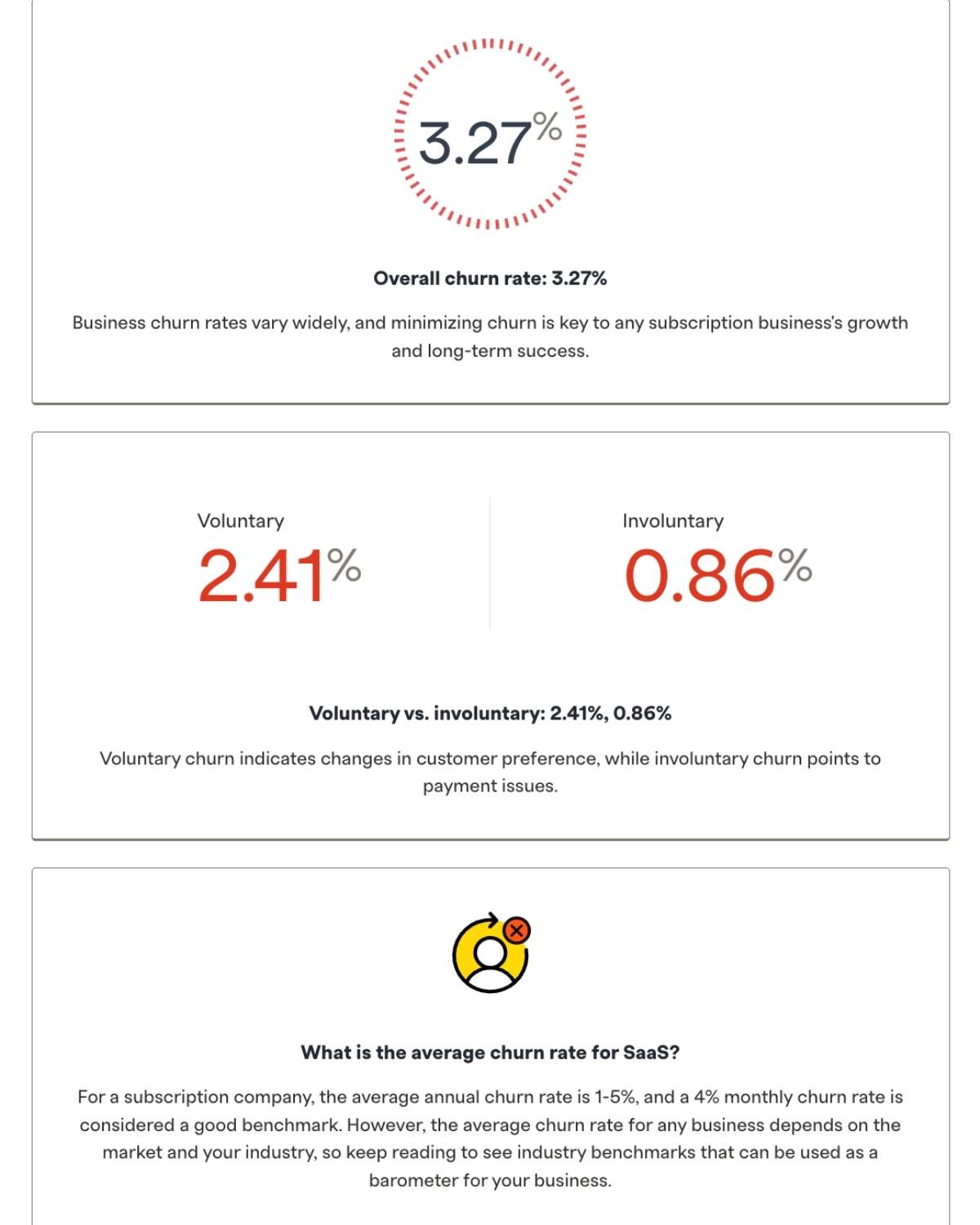
(Source: Recurly)
Enter social media: one of the best channels for reducing churn and strengthening loyalty. Through community building on social media networks, SaaS brands can share updates, educate users, communicate consistently and offer real-time support. All of this keeps customers engaged so they feel connected to your brand and stick around for longer.
The SaaS customer journey is complex
SaaS buyers rarely make quick decisions. Closing deals can take months of research, comparison and validation.
Gartner reports that the average B2B buying group now involves 11 to 20 decision-makers and requires multiple interactions across channels before any purchases happen. Social media is essential for nurturing leads across this long journey.
To make sense of the SaaS customer journey, imagine it as a marketing funnel with the following stages:
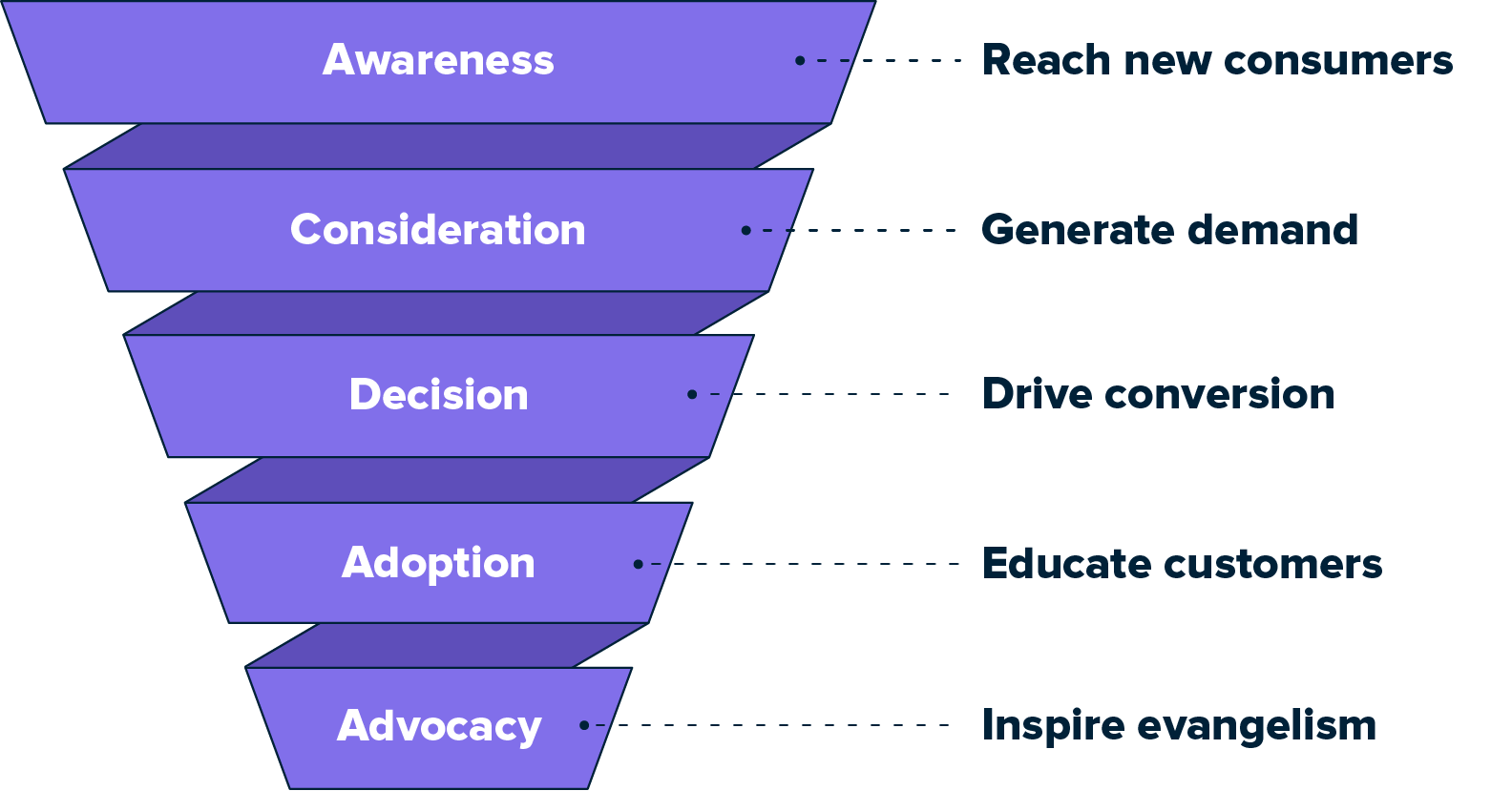
- Awareness: Build visibility through social content, search and public relations (PR).
- Consideration: Share thought leadership, case studies and testimonials to build credibility.
- Conversion: Use targeted demos, free trials or personalized outreach to convert interest.
- Adoption: Support onboarding and reinforce value through community engagement.
- Retention: Build long-term relationships with ongoing education and social listening.
Social media connects each of these stages by giving buyers consistent, low-friction touchpoints throughout their journey. It acts as an open channel where customers can learn about your product, validate your expertise, ask questions openly and share their thoughts in real time.
This steady flow of interaction creates a loop: people discover your content, engage with it, return for updates and eventually advocate for you, keeping your product top of mind from first impression through long-term use.
The SaaS space is crowded with competition
SaaS is growing fast, and competitive benchmarking shows your competitors are growing fast too. For example, there are around 1,400 customer relationship management (CRM) software products currently listed on Capterra, each vying for the same decision-maker’s attention. And that’s just one category.
The Vendr 2024 SaaS Trends Report highlights a growing SaaS portfolio and rising investment in tools across every business function, creating even more noise for buyers to sort through.
To stand out, SaaS brands can’t rely on paid campaigns alone. While ads get you visibility, an organic social strategy helps people understand your product, keeps you in the conversation and builds trust and familiarity that ultimately give you a competitive edge.
How social media supports other channels for a modern SaaS marketing strategy
A strong SaaS marketing strategy isn’t built on a single channel. Growth happens when every touchpoint—email, SEO, paid and webinars—works together to meet customers where they are.
Social media plays a central role in that mix. It amplifies your reach, deepens engagement and reinforces your message across every format and platform.
Here’s how social media supports all your other SaaS marketing channels.
Email marketing
Email is still one of the most reliable ways to reach customers directly and drive long-term engagement. From onboarding workflows to feature announcements, newsletters and feedback surveys, it’s the foundation for consistent communication.
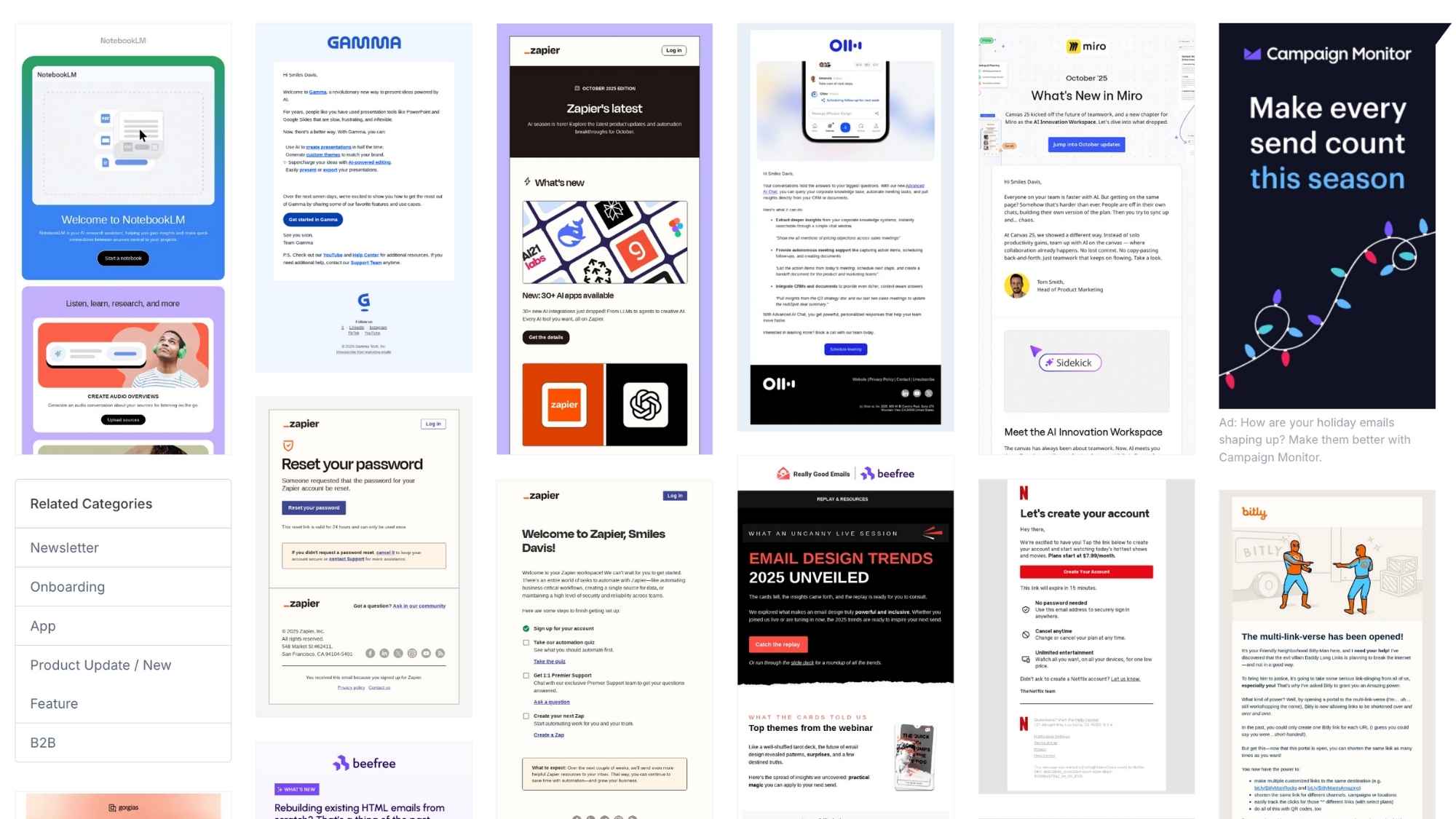
(Source: Really Good Emails)
Social media can strengthen your email marketing efforts by expanding your list and extending your reach. For example, you can share newsletter signup forms and gated content on your social channels, or launch a LinkedIn newsletter to reach professional audiences directly in their feeds.
Use social to amplify your most valuable email content, like feature announcements or long-form guides, creating multiple entry points for prospects to engage with your brand.
SEO
Search remains a major discovery and conversion channel for SaaS brands. High-performing types of content—like comparison pages, case studies and in-depth guides—help you capture organic intent, build credibility and reach buyers who are actively researching solutions.
In most cases, this independent research starts with a quick Google search.
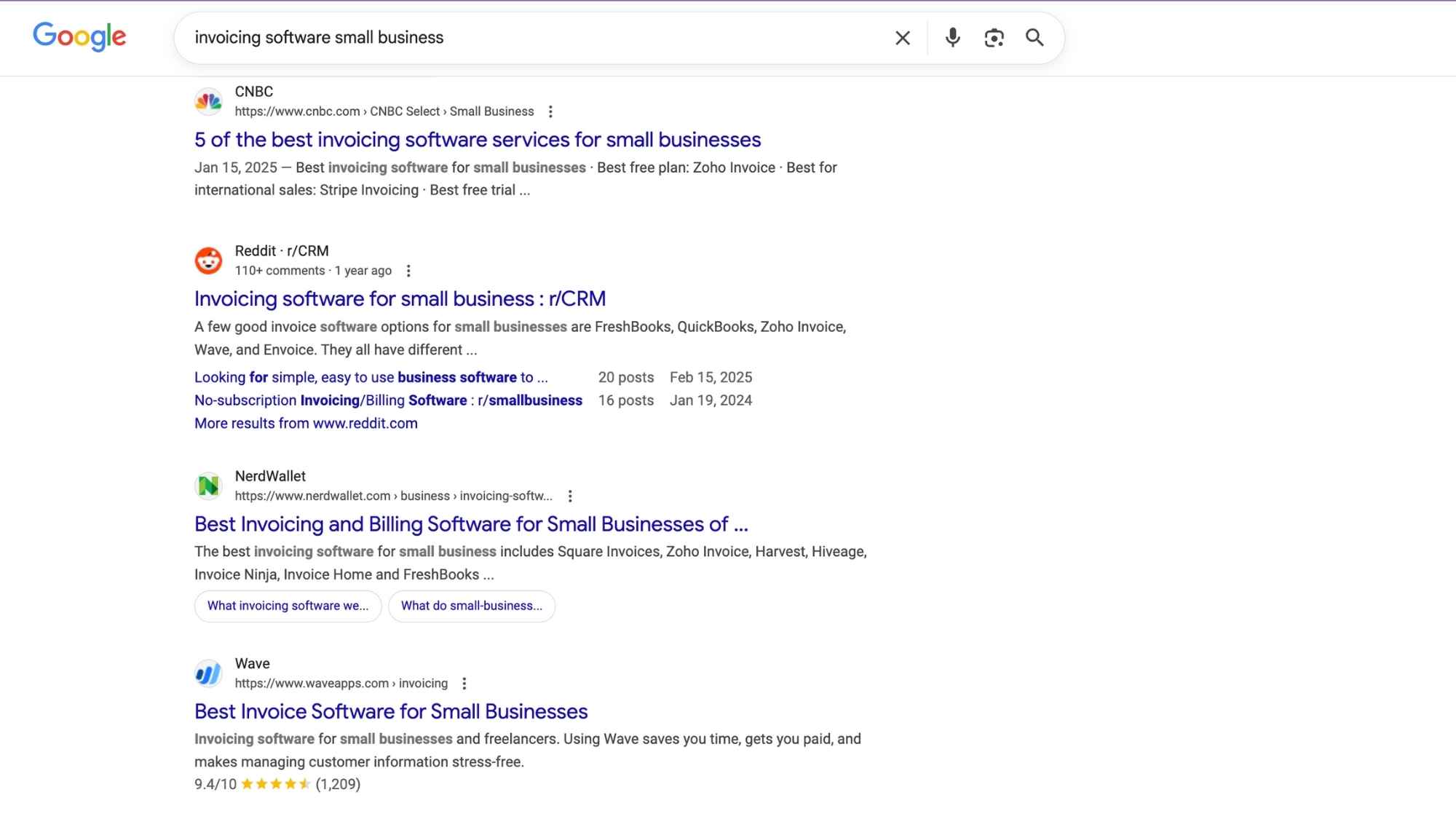
However, social media now works hand in hand with traditional search.
When your content gets shared and engaged with on social, it drives more traffic and branded searches. Social results, such as YouTube videos, Reddit threads, LinkedIn posts and even Instagram content, now also appear in Google.
More importantly, tap into social listening to surface new keyword ideas and trending topics to create content around.
And as social media search behavior grows, especially on platforms like LinkedIn, Instagram and YouTube, these platforms are becoming discovery engines in their own right, complementing Google search for product discovery.
Webinars
Webinars are a top-performing channel for B2B and SaaS marketers because they combine education, thought leadership and real-time engagement. Recent industry data shows 73% of B2B marketers say webinars are one of the best ways to generate high-quality leads.
Social media is essential for amplifying your webinars. For example, you can use LinkedIn Events to drive signups, share reminders as the date approaches, post live takeaways during sessions and promote on-demand recordings afterward to extend reach.
You can also share short teaser clips, speaker quotes or carousel recaps across different platforms to bring more people back to the webinar replay. These social touchpoints keep the conversation going long after your webinar is over and help you build relationships that last beyond a single event.
PPC and social ads
Paid advertising plays a major role in SaaS growth because it gives you immediate visibility in crowded spaces. For instance, Google Ads help brands increase visibility for competitive keywords without waiting for organic SEO to take effect.
Paid social ads are just as important. They allow marketers to target defined audiences more reliably than an organic algorithm. For instance, platforms like LinkedIn and Meta let you zero in on decision-makers by role, industry or interest. This is especially useful when promoting high-value assets like checklists, webinars and case studies as it generates more demand, engagement and clicks.
That said, organic and paid social work best together: organic content builds authority over time, while paid campaigns amplify reach and retarget users who’ve already shown interest. It’s a full-funnel approach that turns awareness into measurable growth.
How to build a SaaS social media marketing strategy that drives growth
Social media has evolved from a posting channel into one of the most strategic drivers for the entire customer lifecycle. The days of one-way updates are long gone. Today, social supports every stage of the customer journey. It shapes reputations, builds relationships and influences purchase decisions before a demo is ever booked.
Research from Sprout Social backs this up: 91% of people believe in social’s power to connect. This offers SaaS brands an incredible opportunity to drive long-term growth. When customers feel connected to a brand, 57% will increase their spending with them and 76% will choose that brand over a competitor.
Here are some specific ways you can use social media marketing to grow your SaaS brand.
Use social listening to find your audience and track competitors
You can’t market to an ICP (Ideal Customer Profile) you don’t understand. Social listening replaces assumptions with actual data so you know exactly what your target audience is saying about your product, competitors and category. This helps you prioritize your spend, spot opportunities before your competitors and craft messaging that genuinely resonates.
Listening goes further than simply counting brand mentions. It involves tracking keywords, topics and conversations that reveal emerging trends, unmet needs and unidentified feelings.
Sprout’s Listening tools, for example, help SaaS marketers drill down deep, spotting what’s resonating in real time, uncovering niche communities on networks like Reddit and X (formerly Twitter) and identifying content gaps your competitors haven’t filled.
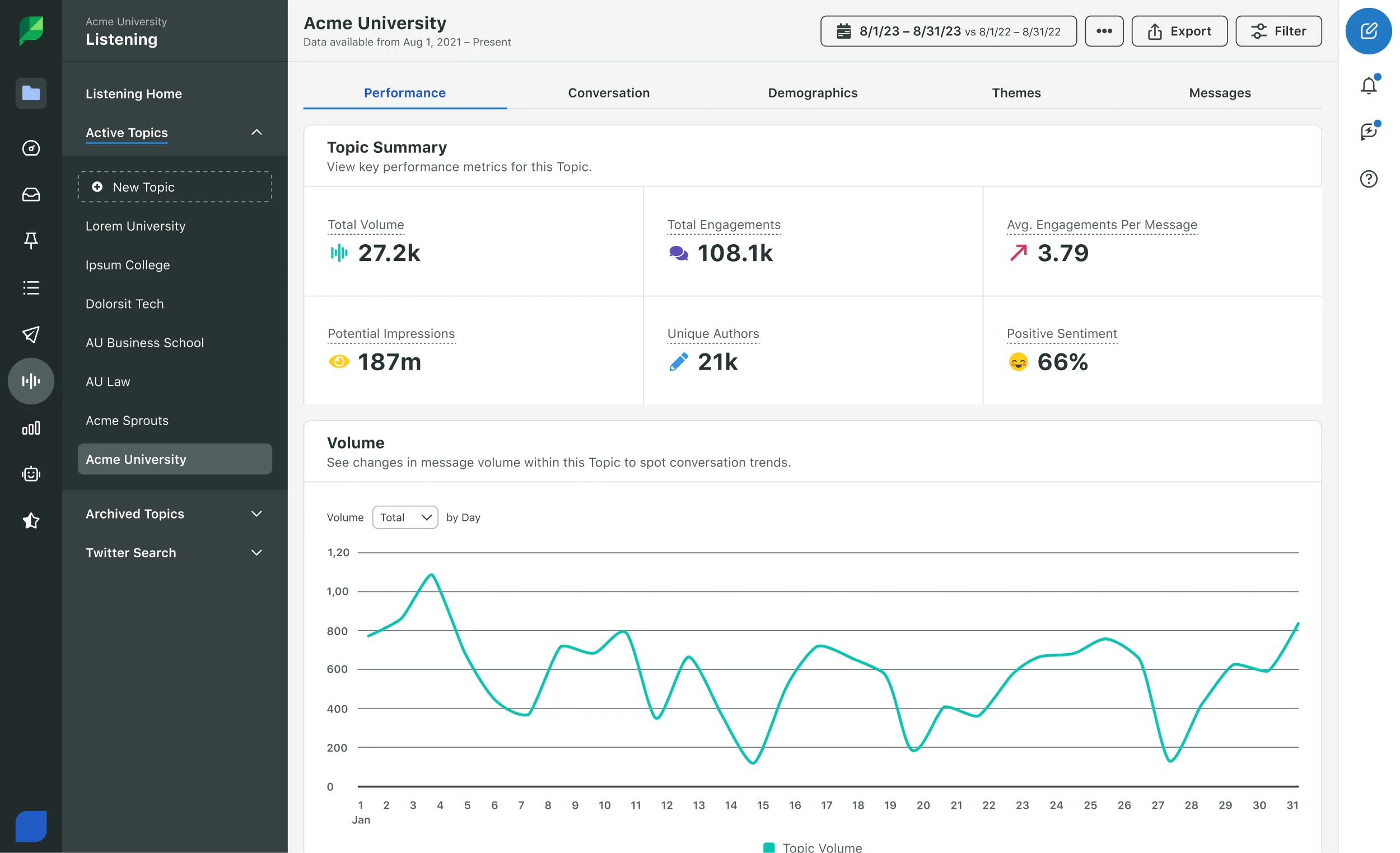
By moving beyond surface-level metrics, you can shape campaigns around what your audience actually cares about—not just what you think they do.
Build a community, don’t just collect followers
SaaS customers stick around when they feel part of a community. Community takes shape not just on the main feed but in replies, comments and DMs—the places where customers ask questions, share wins or troubleshoot together.
Every one of those touchpoints is part of your customer experience. The sooner you respond, the stronger that experience becomes. Salesforce reports that 80% of customers value their experience with a company as much as the product itself. For SaaS brands, that means slow replies or disjointed communication across marketing teams can quickly hurt trust.
Sprout’s Smart Inbox brings all those interactions into one place, helping teams manage messages collaboratively and respond quickly without losing the human touch. That consistency builds trust, reduces churn and keeps customers engaged long after onboarding.

Focus on education and authority on LinkedIn
LinkedIn is where SaaS brands earn credibility. Decision-makers and practitioners alike use the platform to find insights over ads. And they can spot the difference.
Use your company page and your leaders’ personal profiles to share thought leadership, product education and behind-the-scenes stories. Short, educational posts, carousels and short-form videos perform well on LinkedIn because they deliver quick value.
When your team consistently educates instead of selling, you establish authority. That credibility pays off for SaaS brands when audiences are more likely to trust your recommendations, explore your product and take high-intent actions like booking demos or starting trials.
Develop an engaging content strategy that educates and converts
Great SaaS social content doesn’t just attract. It teaches, solves and converts. Mix formats to reach target audiences at different stages:
- User-generated content (UGC) to build authenticity and social proof
- How-to videos that walk through product use cases
- Thought leadership that elevates your brand voice
- Behind-the-scenes content to humanize your team
And with social search now influencing discovery, optimize your posts to answer user questions like “What’s the best CRM for startups?” or “How do I reduce churn in SaaS?” The more your content matches what your audience is looking for, the more visible your brand becomes across social media algorithms and feeds.
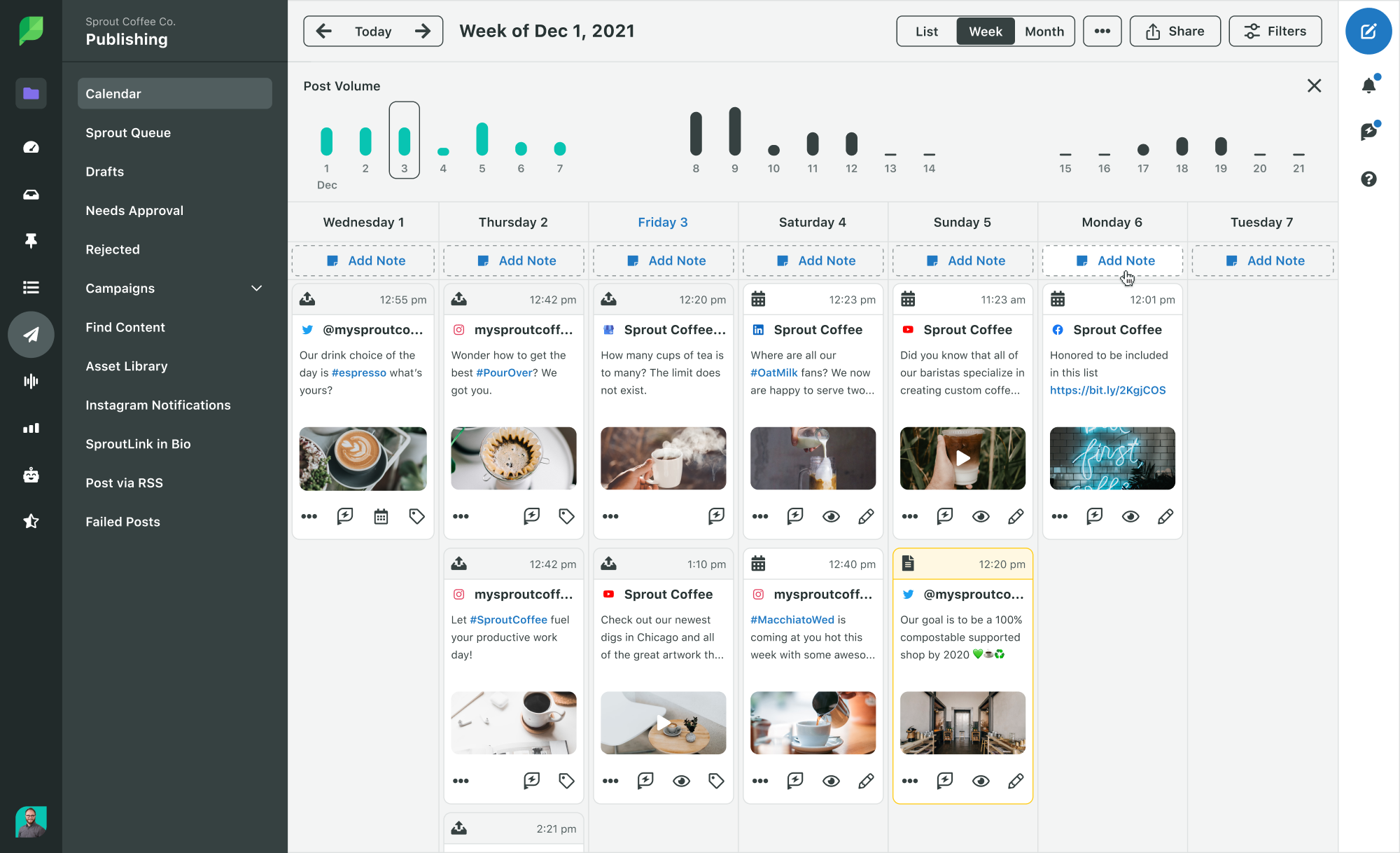
Sprout’s publishing tools make content planning much easier. With advanced scheduling and a unified content calendar, you can see every post, format and platform in one place. This keeps your team aligned and your content consistent across all your social media channels.
How to measure ROI in SaaS social media marketing
SaaS marketing has always been rooted in data, perhaps more so than any other type of business. Every channel, campaign and customer interaction generates insights that can influence strategy across product, sales and service. Social media is no different. It’s not just a brand platform; it’s a powerful source of business intelligence.
For data-driven SaaS leaders, the question that all of this leads to is simple: “So what?”
Social success means little if it’s not tied to measurable business impact. The key is linking engagement with outcomes to see how every post contributes to your pipeline.
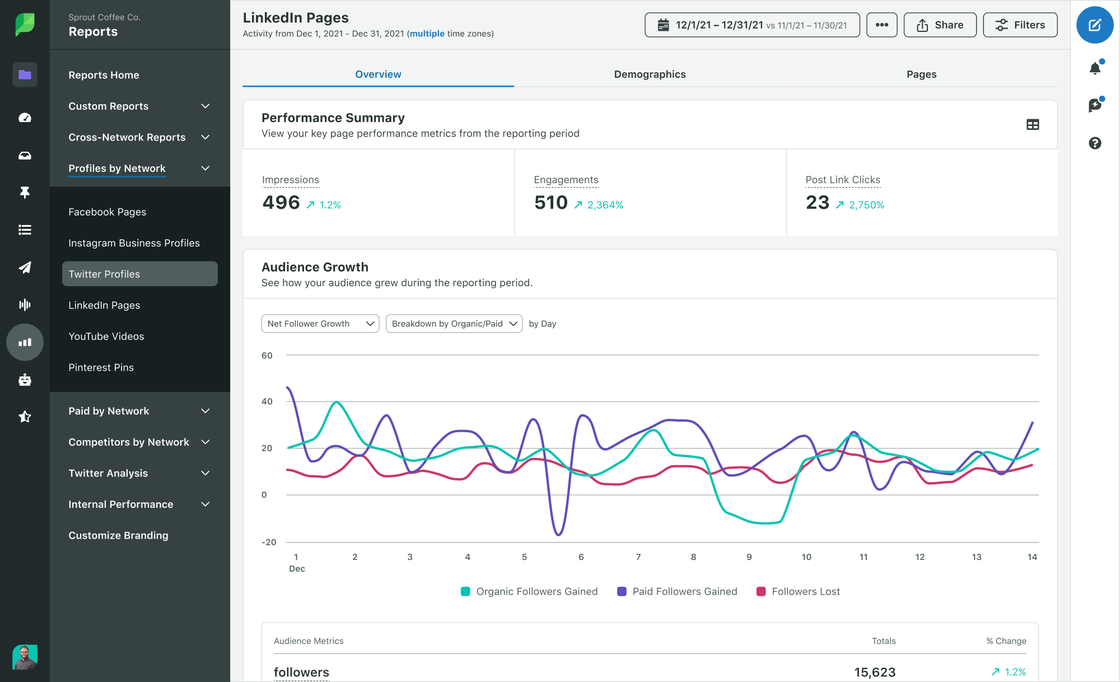
With Sprout Analytics, you can track metrics that matter to the C-Suite like:
- Engagement rate: How actively users interact with your brand’s content
- Traffic and conversions: How social drives high-value actions like signups, demo requests and marketing qualified leads (MQL)
- Churn rate: How social support and community engagement correlates with customer retention over time
- Customer lifetime value (CLV): How long-term, nurtured relationships translate into recurring revenue
- Share of voice: How your brand’s mentions and visibility compares against competitors in your category
- Sentiment trends: How audience perception shifts over time—an early indicator of brand health
Tying social activity to revenue reframes social as a growth driver and supports smarter decisions across your SaaS business.
4 ways to activate your SaaS social media strategy
Once you’ve built a strong foundation of channels and analytics, the next step is activation—turning engagement into measurable growth. These four strategies help SaaS brands use social not just for awareness, but to convert interest into advocacy and long-term retention.
1. Curate reviews and customer success stories
Social proof remains one of the most powerful drivers of SaaS conversions. Today’s buyers trust peers before brands, with over 99% checking online reviews before making a purchase decision.
Use social media to spotlight customer stories. Share testimonials, case study highlights or customer shoutouts from review sites like G2, Product Hunt or Capterra. The goal is to build confidence with prospects and remind current users why they chose you.
With social media monitoring and listening, you can find wins that people share naturally. And when you consistently engage with that feedback and offer great customer service, you turn happy customers into advocates who extend your reach.
2. Create and promote content for the top of your funnel
Today’s SaaS buyers are self-educating. Research shows B2B buyers engage with 11 pieces of content on average before ever speaking to sales. That makes top-of-funnel storytelling one of your best approaches to SaaS social media marketing.
Focus your content mix on formats that perform across social: short-form videos, carousel posts, quick industry explainers and thought-leadership clips that highlight your expertise. Social doesn’t just distribute your content—it amplifies it to new audiences.
Data shows video remains the most engaging format on social, and posts that educate outperform those that simply promote. Sharing valuable insights helps your brand earn attention early and stay top of mind through the entire SaaS journey.
3. Use social to drive high-intent actions
In SaaS, interest turns into action when the next step is obvious. Social media gives you the perfect place to make that jump seamless. Here are some tactics to implement:
- Use clear, action-oriented CTAs in posts and ads to prompt demo bookings, trial signups or pricing exploration.
- Retarget engaged users with paid campaigns to re-ignite intent and move them closer to conversion.
- Make conversion easy from your social profiles using link-in-bio tools like SproutLink, which turns your bio into a curated hub for demos, signups and gated content.
When the path to conversion is straightforward, every interaction on social nudges prospects closer to a “yes.” Also, keep your demos and trials as simple as possible. Complex steps increase friction, which can create drop-offs and slow down conversions.
4. Use social for customer education and onboarding
In addition to creating and promoting content, building a strong knowledge ecosystem helps your customers get more from your product.
A well-organized library of tips, tutorials and product walkthroughs empowers users to solve challenges quickly and explore advanced features on their own.
Social media can extend that ecosystem. Share bite-sized tutorials, onboarding videos and “pro tips” directly on your channels to meet customers where they already spend time. These resources reinforce product value, reduce support requests and keep users confident and engaged long after signup.
When education becomes part of your social strategy, you transform customer care from a reactive process into an ongoing experience that drives satisfaction and retention.
3 ways to stand out in a crowded SaaS market
You’ve built your foundation and activated your channels. The next step is rising above the noise. This is where the “why” behind your SaaS story becomes the competitive edge that’s yours alone.
Here are three strategic differentiation tactics to turn your SaaS product into a memorable brand.
1. Communicate your value proposition on social
If a potential customer looked at your social profiles right now, would they know exactly what you do and who you do it for? That clarity is your strongest differentiator.
Your value proposition should answer one question immediately: “How does this make my work—or my life—better?” Keep it simple, findable and human. Avoid technical jargon, and focus instead on the outcome your product delivers.
Social is the perfect place to deliver that message. Your bios, pinned posts and visual templates can make your offering obvious at a glance. Share quick explainer clips, customer outcomes or side-by-side, before-and-after use cases that bring those promises to life.
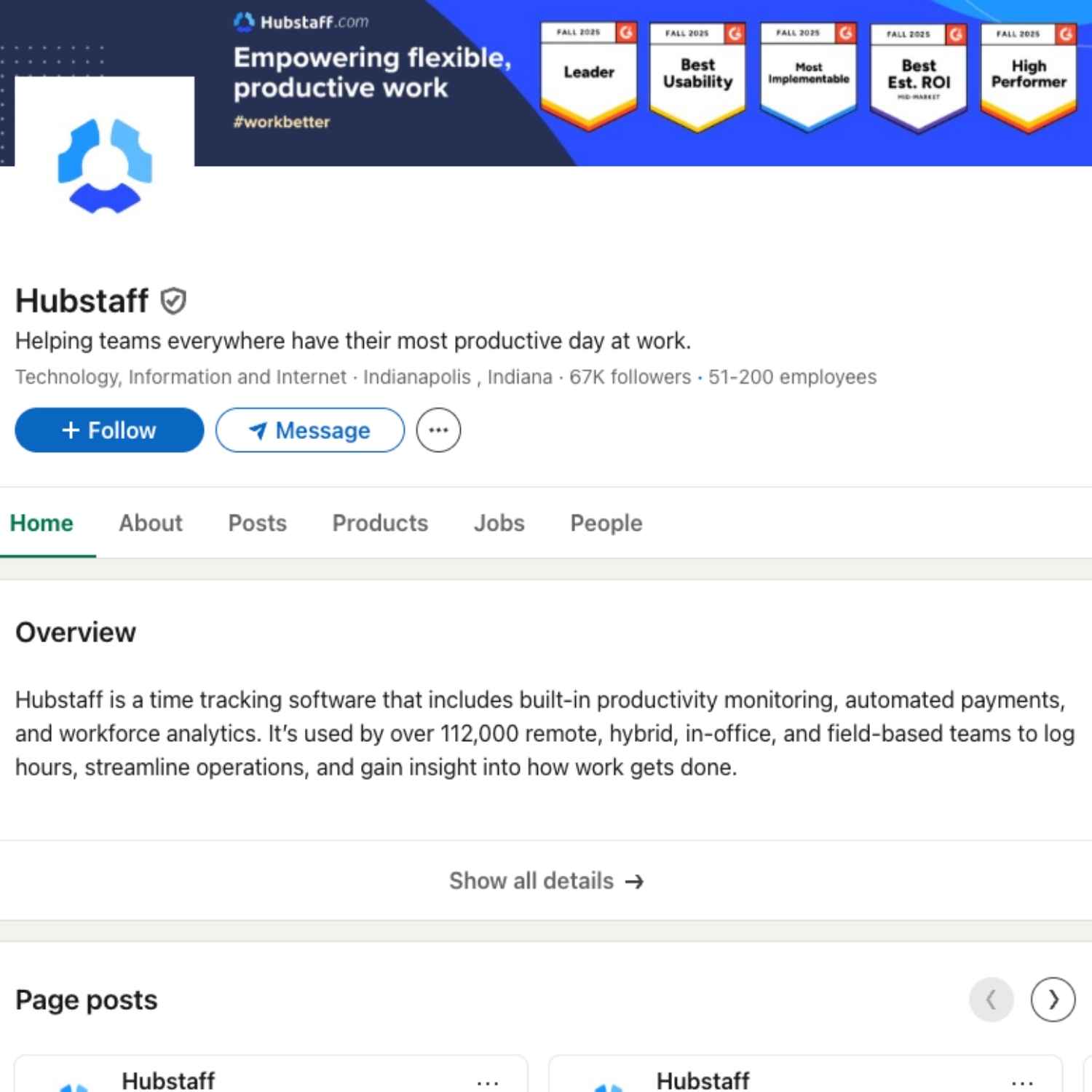
Hubstaff is a great example. Their LinkedIn page immediately communicates their value (“Helping teams everywhere have their most productive day at work”) backed by social proof (awards and badges).
(Source: LinkedIn)
2. Make your brand unmistakable
Social is the number one channel for expressing your brand voice and visual identity. Elements like your logo, color palette, tone and design consistency create instant familiarity. SaaS companies need a defined branding strategy to grab customers’ attention and make a lasting impression.
It’s easy to overlook elements such as logo design and brand voice when you’re trying to push a powerhouse product with tons of features. That said, these simple pieces of branding are what’s going to help you define you versus your competitors.
Think of brands like Slack, with their recognizable color scheme and messaging emphasizing how their product improves your life at work.
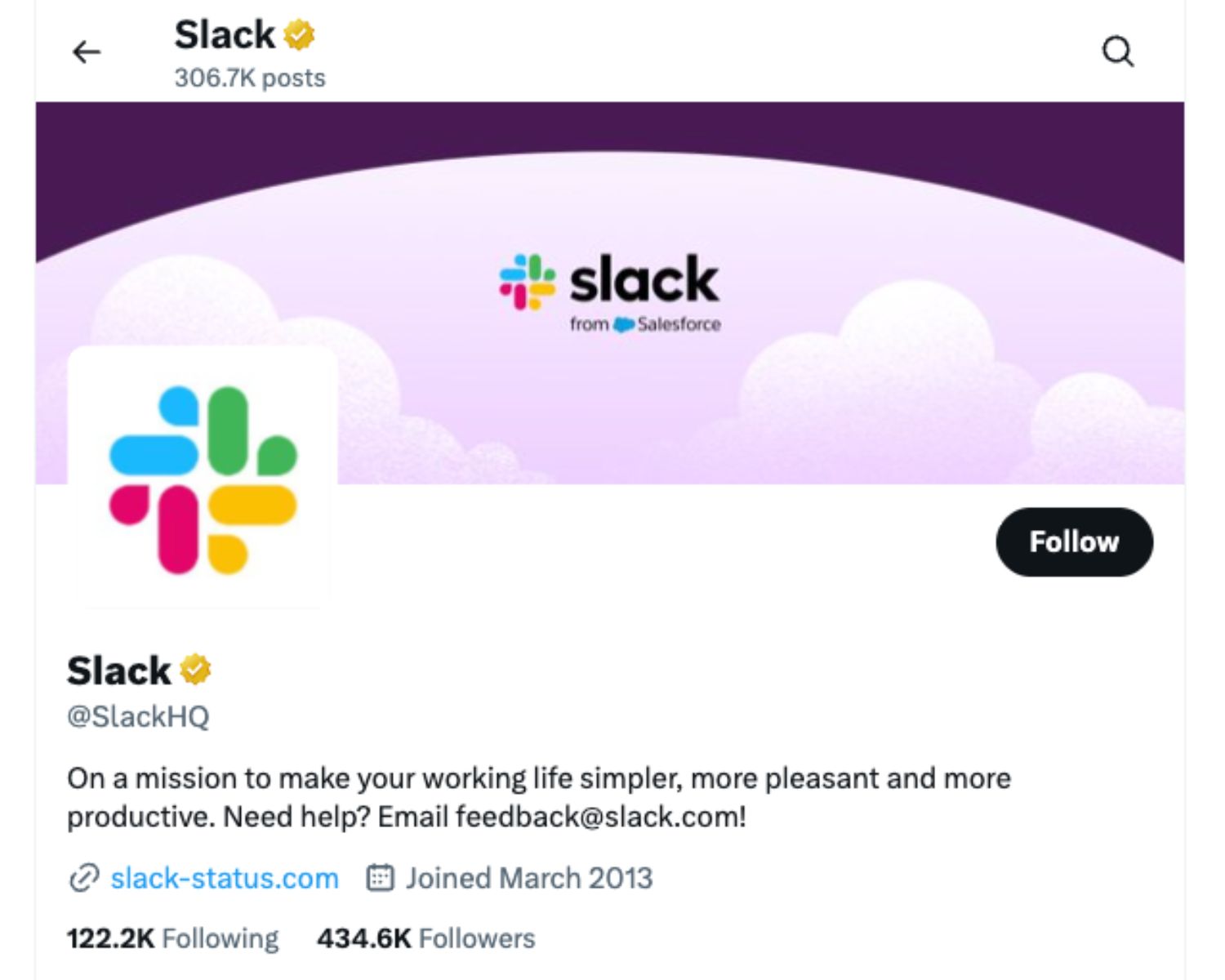
(Source: Slack on X)
Mailchimp is another great example of masterful SaaS branding, with a distinct logo and community of creatives that are uniquely theirs.
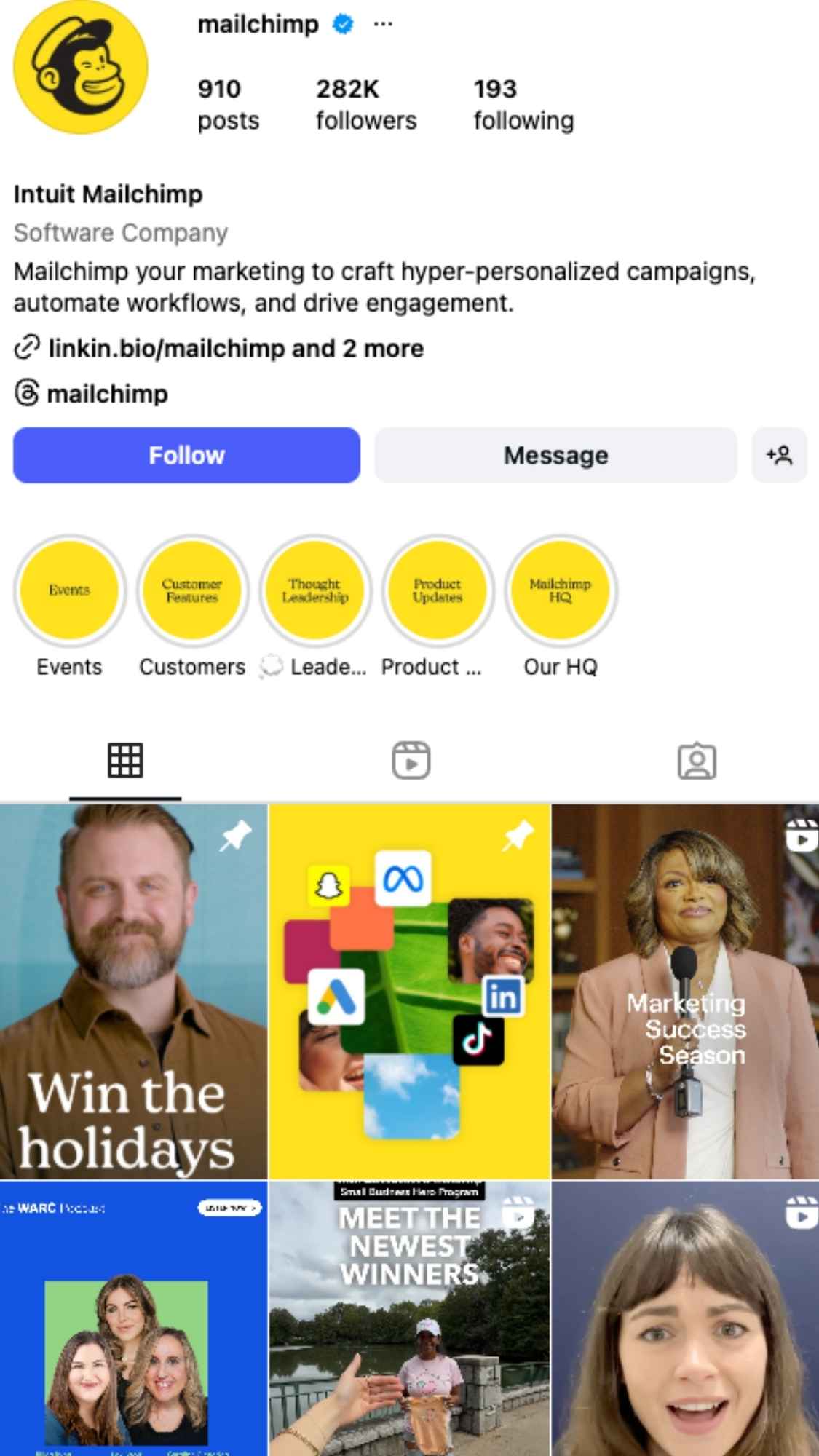
(Source: Mailchimp on Instagram)
3. Take time to showcase your company culture and values
Behind every great SaaS product is a team people want to root for. Highlighting your culture and values builds credibility with both customers and future talent, which helps reframe your brand from a vendor into a partner.
Consumers also want authentic content from brands they follow. The 2025 Sprout Social Index™ shows that authenticity and relatability are the top two qualities people value most in brand content. Social gives you the perfect stage for that authenticity.
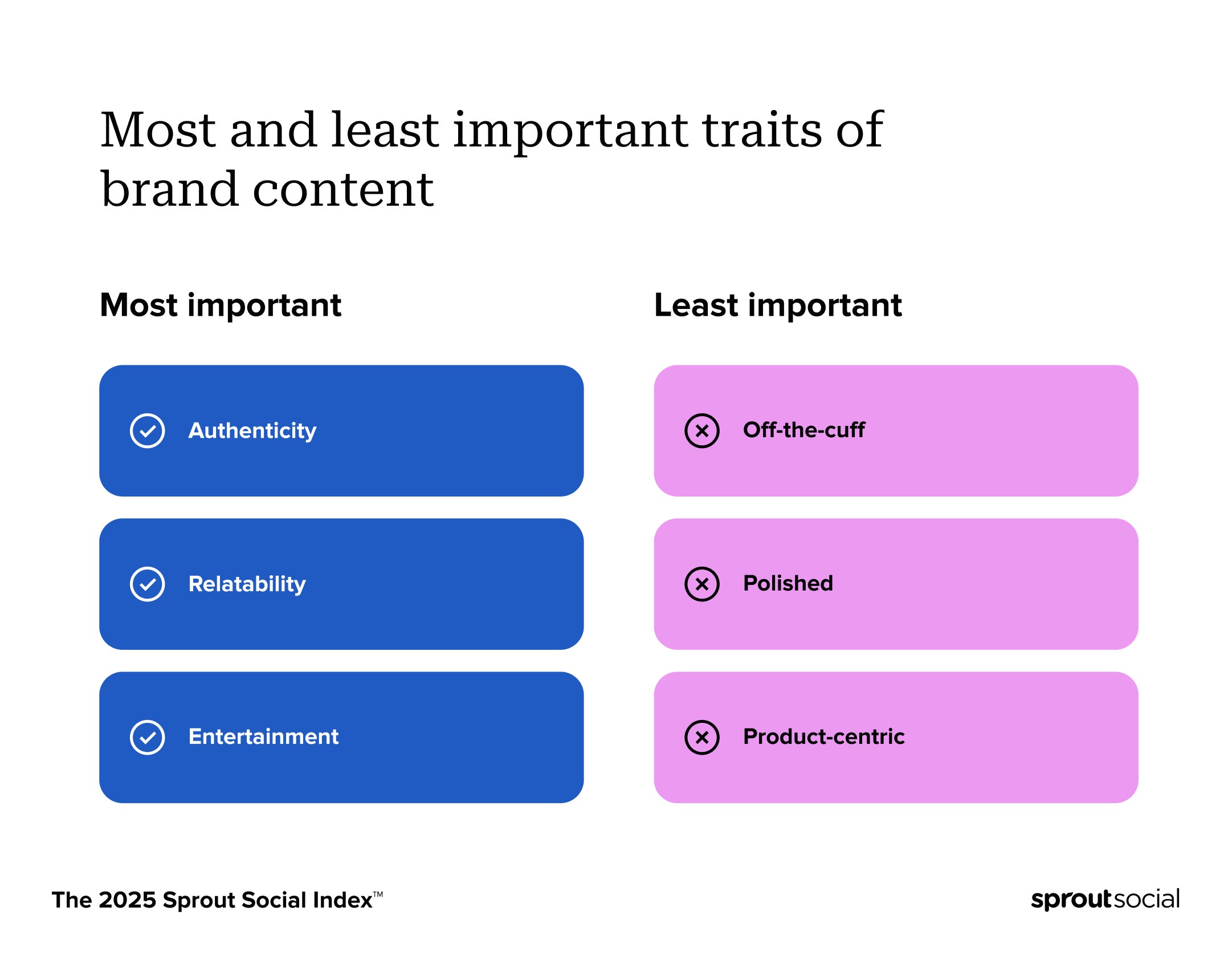
Share how your team collaborates, gives back and supports your mission in action. Posts that celebrate employees, philanthropy and community involvement signal to your audience that your company stands for something more than revenue. That’s what builds trust that lasts.
Ready to fine-tune your SaaS social media marketing strategy?
Social media isn’t a side channel; it’s a strategic engine for long-term SaaS growth. Your strategy is powered by data (Listening), focused on community (Retention) and optimized for business outcomes (Leads).
A key part of your top-tier strategy is measuring what works. To connect social activity directly to business outcomes like demos and retention, a powerful analytics tool is essential.
Schedule your demo today to see Sprout’s Premium Analytics tool in action and refine your strategy.
The post How to build a top-tier SaaS social media marketing strategy appeared first on Sprout Social.
from Sprout Social https://ift.tt/yLd5m38
via IFTTT

No comments:
Post a Comment