Like most industries today, the guest experience in hospitality starts long before check-in. Travelers now discover destinations, compare options and shape expectations, all on social media.
On top of that, the 2025 Sprout Social Index™ shows 86% of users plan to maintain or increase the time they spend on social platforms. This means every interaction is a chance to build trust, strengthen brand authority and generate bookings.
Below, we’ll share the key components of a 5-star social media marketing strategy and spotlight examples from leading hospitality brands setting the standard.
The evolution of social media for hospitality brands
Social media has completely reshaped how people plan and experience travel. Instead of relying on brochures or travel agents, guests now turn to social platforms to explore places, ask questions and get a feel for what their stay could be like.
For hospitality brands, this shift means social is no longer just a marketing channel. It’s a core part of modern customer care. When someone reaches out with a question, concern or feedback, your response sets the tone for their relationship with you.
And when replies aren’t timely or helpful, it has consequences. According to the Sprout Social Index™, 73% of consumers will choose a competitor after a poor interaction or delayed response. Engaging directly with guests builds trust and shows your commitment to satisfaction, giving you a competitive edge.
Guests also expect more than promotional posts on social media. They look for human-focused, video-led content that captures authentic experiences and emotions. For example, local stories or behind-the-scenes glimpses help future guests imagine themselves there, long before they book.
With 5.85 billion global social media users expected by 2027, investing in a thoughtful, customer-first social strategy positions you to expand your reach and attract new guests around the world.
What a 5-star social media strategy for hospitality includes
A 5-star social media strategy connects every part of the guest journey, from discovery to post-stay reviews. It involves using social platforms to deliver helpful service, strengthen relationships and turn positive experiences into a lasting reputation.
Here’s what that looks like in practice.
Unify guest service and reputation management
Social customer care works best when it’s proactive, not just reactive. That involves anticipating needs, offering support before issues escalate and building one-to-one relationships that feel personal and human.
In many ways, social media is your digital front desk. When guests visit your profile, comment on a post or send a message, they expect a quick, thoughtful response.
Your social team can implement these second-mile service principles by using social media tools that simplify and enhance efficient, personalized experiences.
By using Sprout’s Smart Inbox, for example, you can unify all incoming social messages, reviews and mentions into a single stream. This helps your team deliver consistent, branded experiences that drive loyalty and satisfaction.
Uniting guest service and reputation management turns every comment, review and message into an opportunity to showcase your hospitality values and create memorable connections.
Win the “where to go” moment with social search
The modern travel journey begins on social. Travelers use platforms like TikTok and Instagram to decide where to go, what to eat and which hotels to book. This shift marks the rise of social media search, which is a high-intent discovery channel you can’t afford to overlook.
Social search is when consumers use social media channels to search for inspiration, ideas, products and brands, instead of relying on traditional search engines like Google and Bing.
Optimizing for social search (or social SEO) goes beyond hashtags. It involves crafting captions, alt text and location tags that match what users are searching for and creating short-form video content that answers those questions directly.
Whether you optimize for “best brunch in Austin” or “family resorts in Hawaii,” appearing in those searches puts you in front of ready-to-book travelers. By treating social search as part of your travel industry search strategy, you strengthen visibility across both social and traditional search, driving discovery at every stage of the booking funnel.
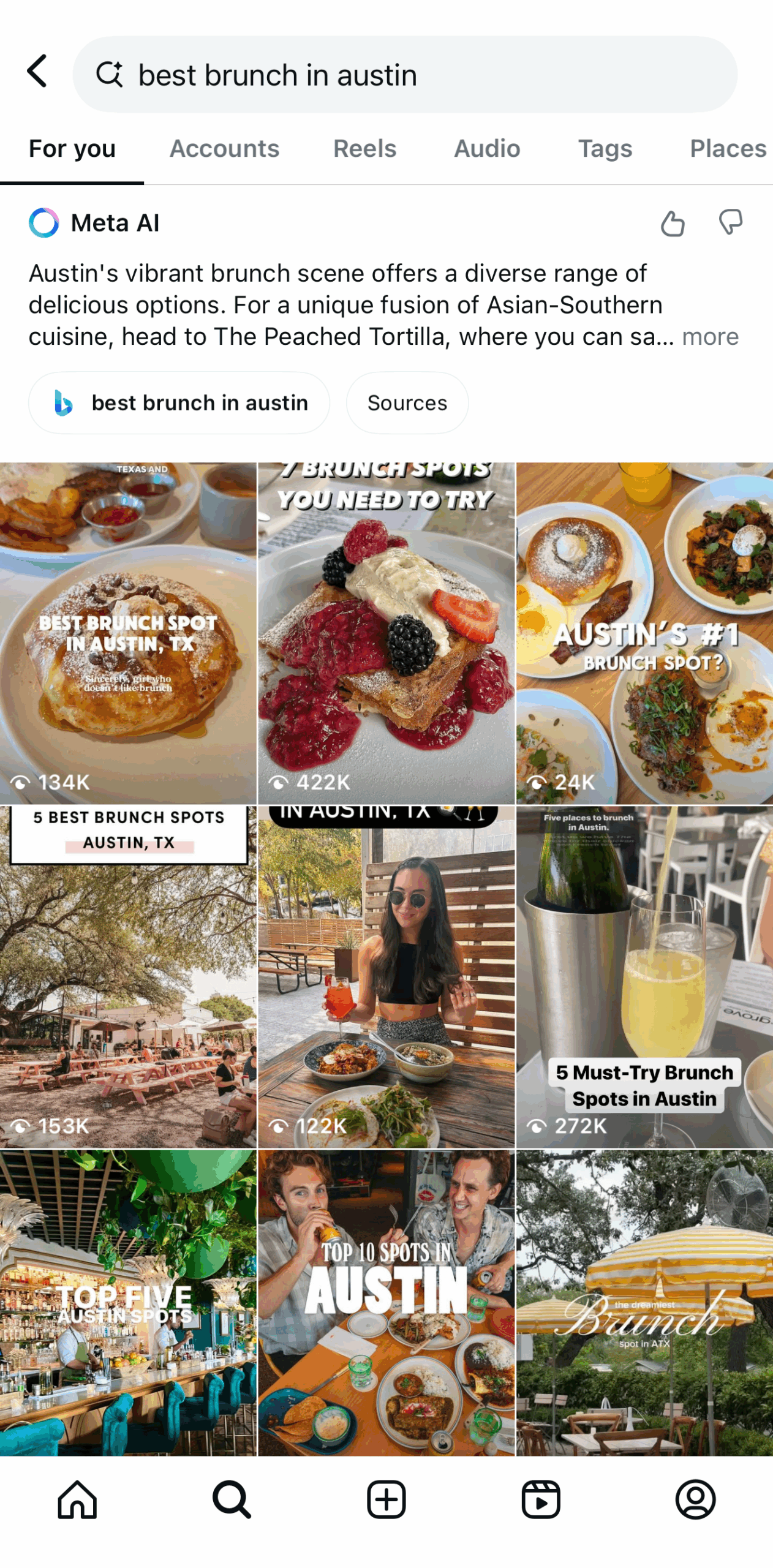
(Source: Instagram)
Create content that sells the experience, not just the room
Guests don’t just buy a stay. They buy the feeling that comes with it. Your social content should go beyond showcasing rooms or amenities to capture the full experience of being there.
Use storytelling to help potential guests imagine themselves at your property. Feature behind-the-scenes moments, local activities, guest testimonials and short-form videos that spark emotion. These strategic assets build trust, deepen desire and turn inspiration into action.
Take Nima Local House Hotel, a boutique hotel in Mexico City, as an example. In a TikTok video, the brand shows aesthetic visuals and relaxing experiences in a cozy corner of the city.
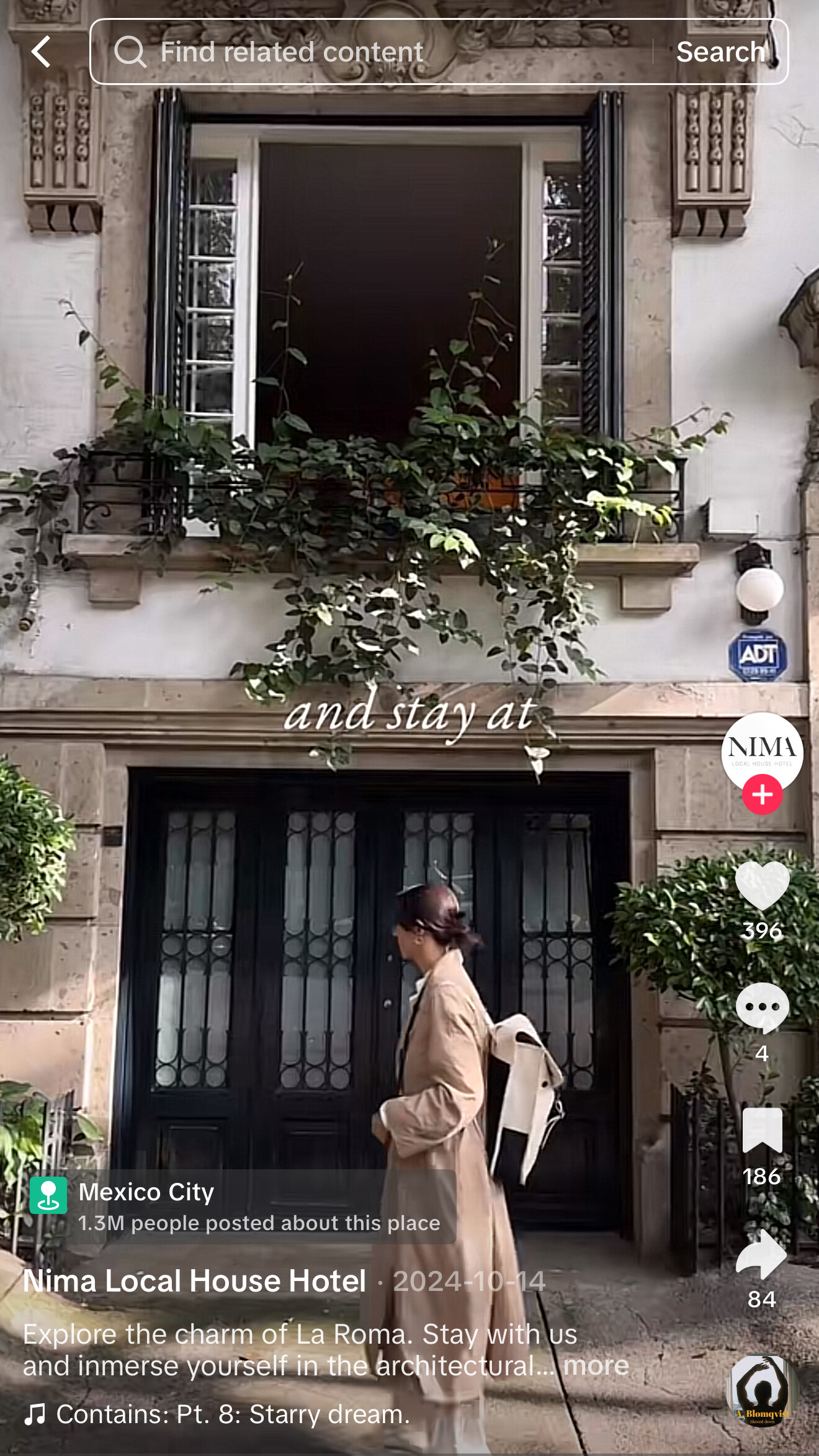
(Source: TikTok)
This works because it gives travelers a feel for the atmosphere, not just the amenities. Viewers can picture themselves in the experience, which makes the property more memorable and desirable.
Build your brand as a hyper-local community hub
Authenticity drives connection. More travelers are choosing hospitality businesses that are genuinely rooted in place and purpose, not just polish. To do this, go beyond surface-level “local content” by blending strategic storytelling with measurable impact.
For example, share stories that reflect your brand’s unique character (like “meet the team”) and collaborate with nearby businesses to amplify reach. Also, highlight cultural events that inspire guests to explore.
When you back community-driven content and user engagement with performance data, you build a competitive advantage that’s hard to duplicate for even global brands.
Additionally, for the hospitality industry, local influencers are especially powerful. They offer authenticity and an immediate connection to the community. Look for micro-creators who already hold influence in your local area to drive specific actions like restaurant bookings, hotel stays or event attendance.
When their content starts earning engagement, social algorithms take notice and surface it to even more people. Sprout’s Influencer Marketing solution helps you amplify that impact by making it easy to find the right creators, manage partnerships and measure the results—all in one place.
Connect social engagement with bookings and loyalty
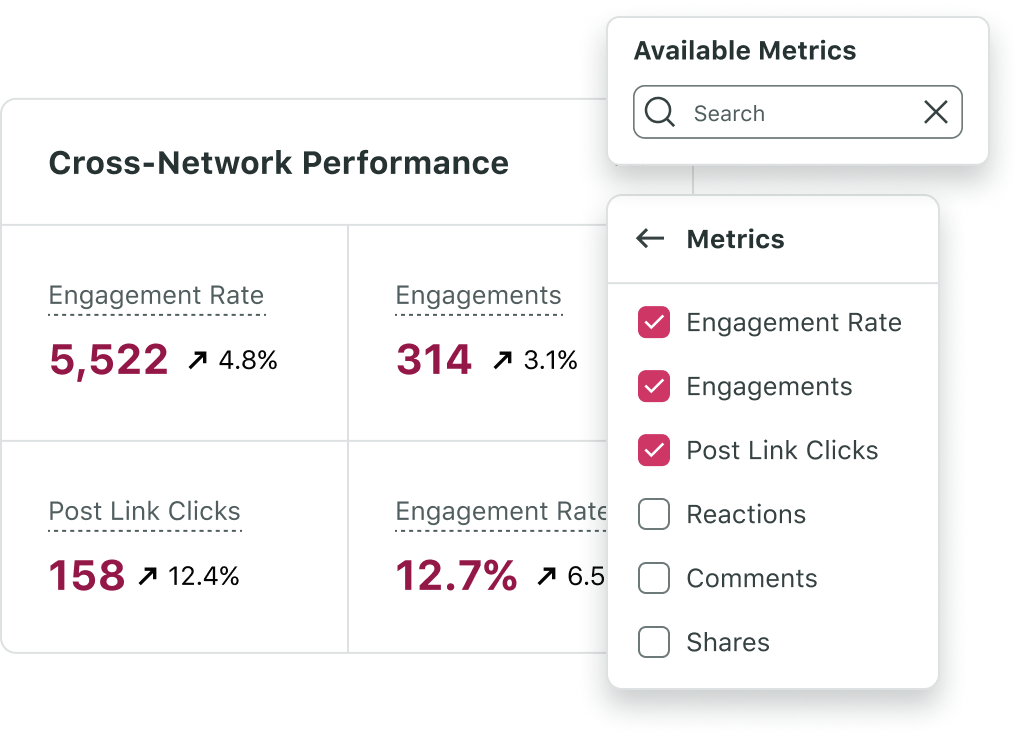
A strong social presence must drive measurable impact. Move beyond vanity metrics such as likes and followers, to focus on KPIs that tie directly to business outcomes, including bookings, revenue and repeat visits. To attribute your effort to bookings and growth, use an analytics tool.
For example, Sprout’s Premium Analytics add-on lets you connect engagement data to performance insights that show what’s truly working. Linking your social efforts to tangible results helps your team prove ROI, refine strategy and keep customers coming back.
4 examples of hospitality social media strategies in action
Want to see what great hospitality social looks like in the wild?
These four brands show how strategic content, storytelling and customer care on social media translates into stronger loyalty, standout guest experiences and more bookings.
1. Vail Resorts leans into local appeal
With more than 40 mountain resorts around the world, Vail Resorts manages a mosaic of social accounts across regions and countries. Their social team faces the challenge of reaching distinct audiences—from global travelers to local residents.
As Tabbey explains, “We lean into the uniqueness of each resort brand. Our resorts offer different experiences—including urban, luxury and adventure—and different benefits, like picturesque hikes or family-focused activities.”
Simply posting scenic photos isn’t enough to stand out in a competitive landscape. To rise above the “slopes of sameness,” Vail Resorts tailors their content to highlight what makes each destination special. Some resorts focus on local events, like in the Facebook video post below.
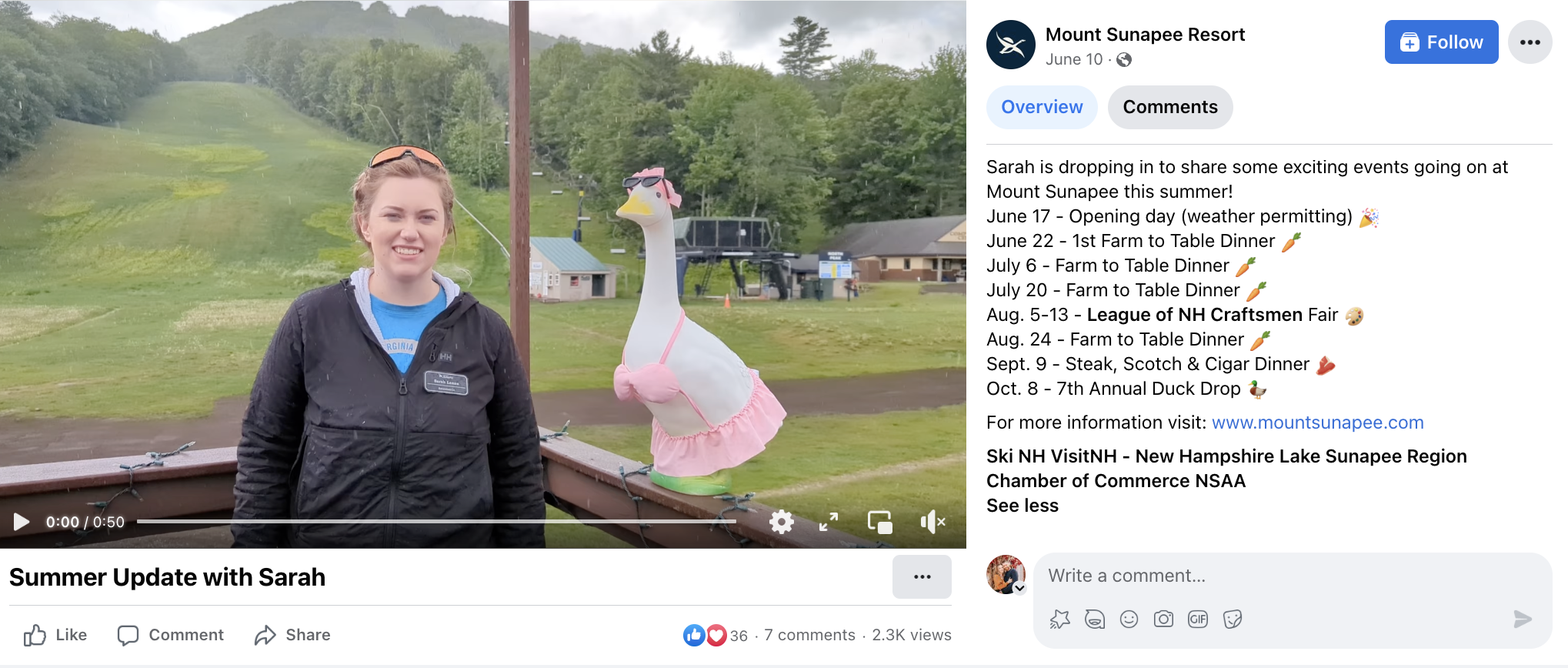
(Source: Facebook)
Other posts highlight iconic adventures and breathtaking views, like in the following Instagram post.
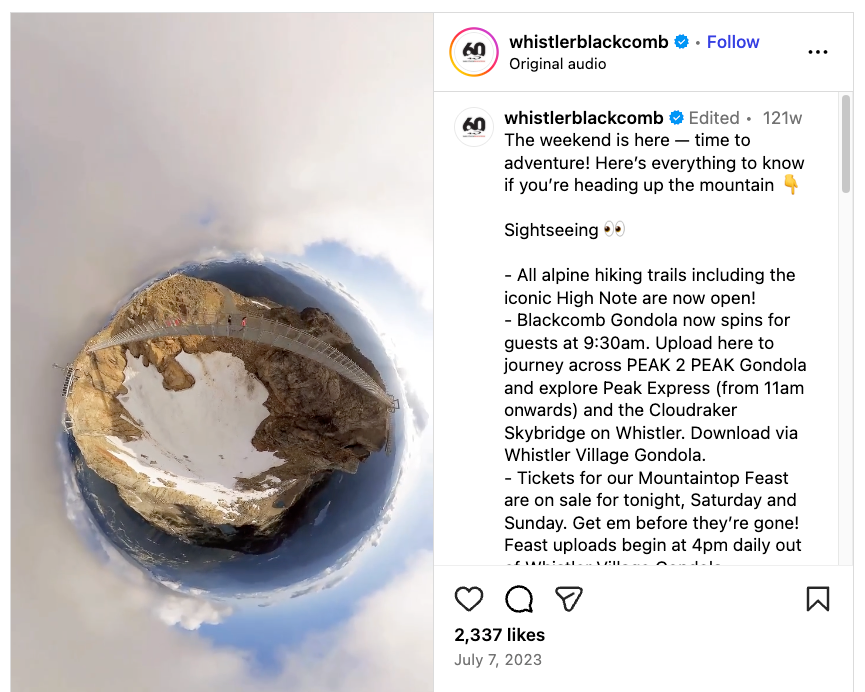
(Source: Instagram)
Apply it: Dedicate time and resources to understanding your diverse audience and how demographics vary by location. Use those insights to create content they want to engage with and post where they’re most active.
“Vail Resorts uses audience demographics from each social media platform to inform our strategy. Our different resorts—destination, urban, local and regional—all lean into each social platform’s unique content types and audience demographics to reach the intended user. They all approach each app uniquely based on their brand. Some take a heavier video-first approach to inspire, while others lean into photography and community management to connect,” describes Tabbey.
2. Loews Hotels has a knack for surprising and delighting
With 27 hotels and resorts across the United States and Canada, Loews Hotels & Co. uses social listening through Sprout to stay connected to its global audience and uncover real-time opportunities to elevate guest experiences.
“We use social listening to look for a lot of different things,” says their social team. “The happiest of them all, obviously, is identifying opportunities to surprise and delight our guests.”
For example, when an X/Twitter user asked for theme park recommendations in Orlando, the Loews team noticed, even without being tagged. They jumped in with personalized suggestions, turning a casual tweet into a concierge-style interaction that boosted brand awareness and love.
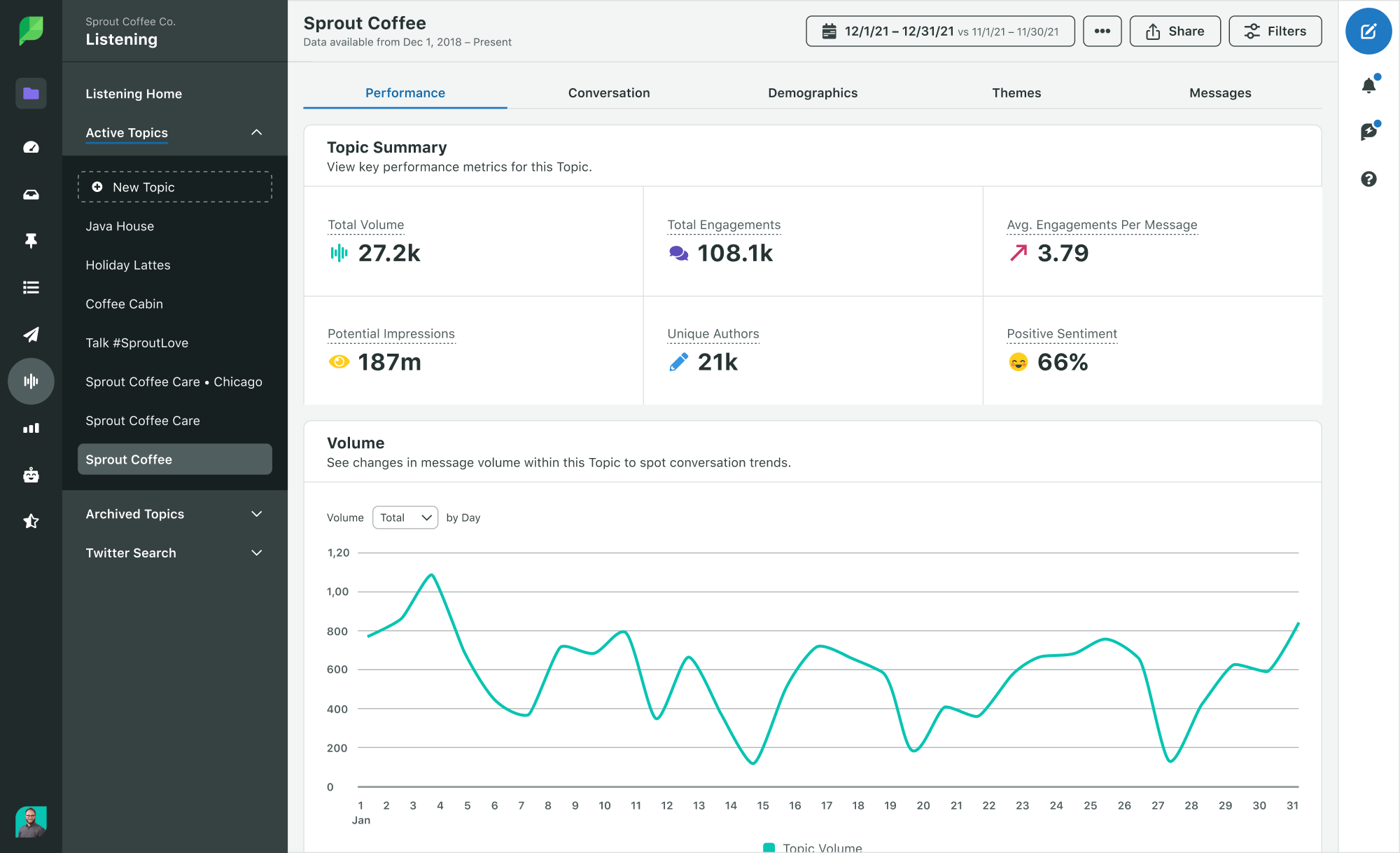
Apply it: Use social listening to merge online and in-person hospitality. With a powerful tool like Sprout’s Listening, you can uncover conversations that inform local content strategy and inspire surprise and delight moments for your global brand marketing. Sprout’s proprietary AI monitors sentiment and discovers trends, so your team can easily plan memorable guest experiences.
3. Allegiant Air shows customer travel, even after they land
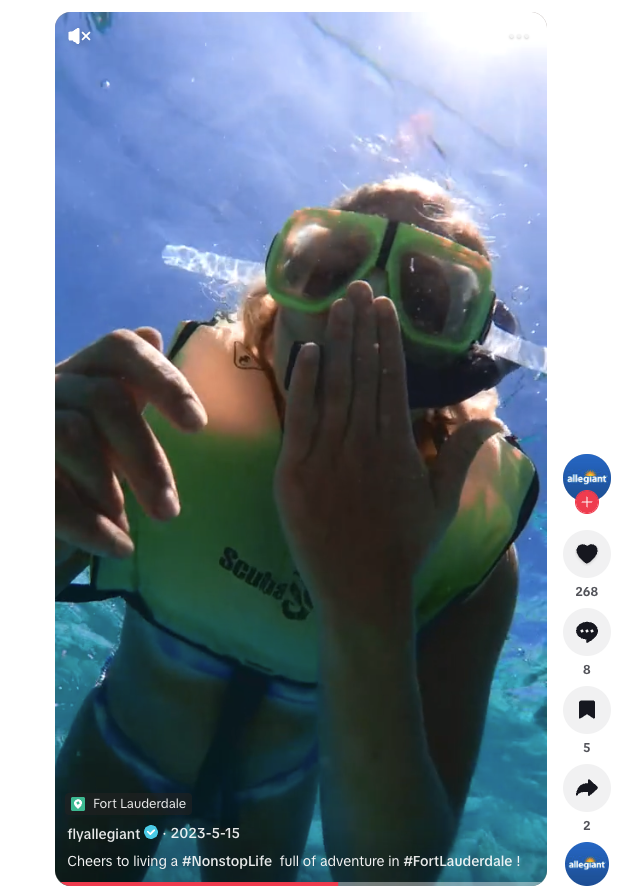
Allegiant uses social media to share user-generated customer experiences. In one case, for example, Allegiant showed two customers in the airport, flying on a plane and enjoying their beach vacation.
This showed how the airline can bring happy travel experiences right from the beginning, starting with transportation.
(Source: TikTok)
Through the end-to-end customer experience, Allegiant builds a human connection and encourages positive engagement.
Apply it: Make customer stories the face of your brand on social. Showcasing your customers and team interactions humanizes your company, boosts engagement and builds loyalty that lasts. Sprout’s Publishing and Scheduling make it possible to streamline your social media content strategy, ensuring consistency and posts with intention. Plus, with the Premium Analytics add-on, you can choose metrics that fit your business goals and show the impact of your data in presentation-ready reports.
4. The Breakers Palm Beach masters luxury through storytelling
The Breakers Palm Beach, one of Florida’s most iconic resorts, uses social media to blend timeless elegance with modern engagement. Their content highlights the property’s heritage, oceanfront beauty and signature guest experiences, while maintaining an approachable and inspiring tone.
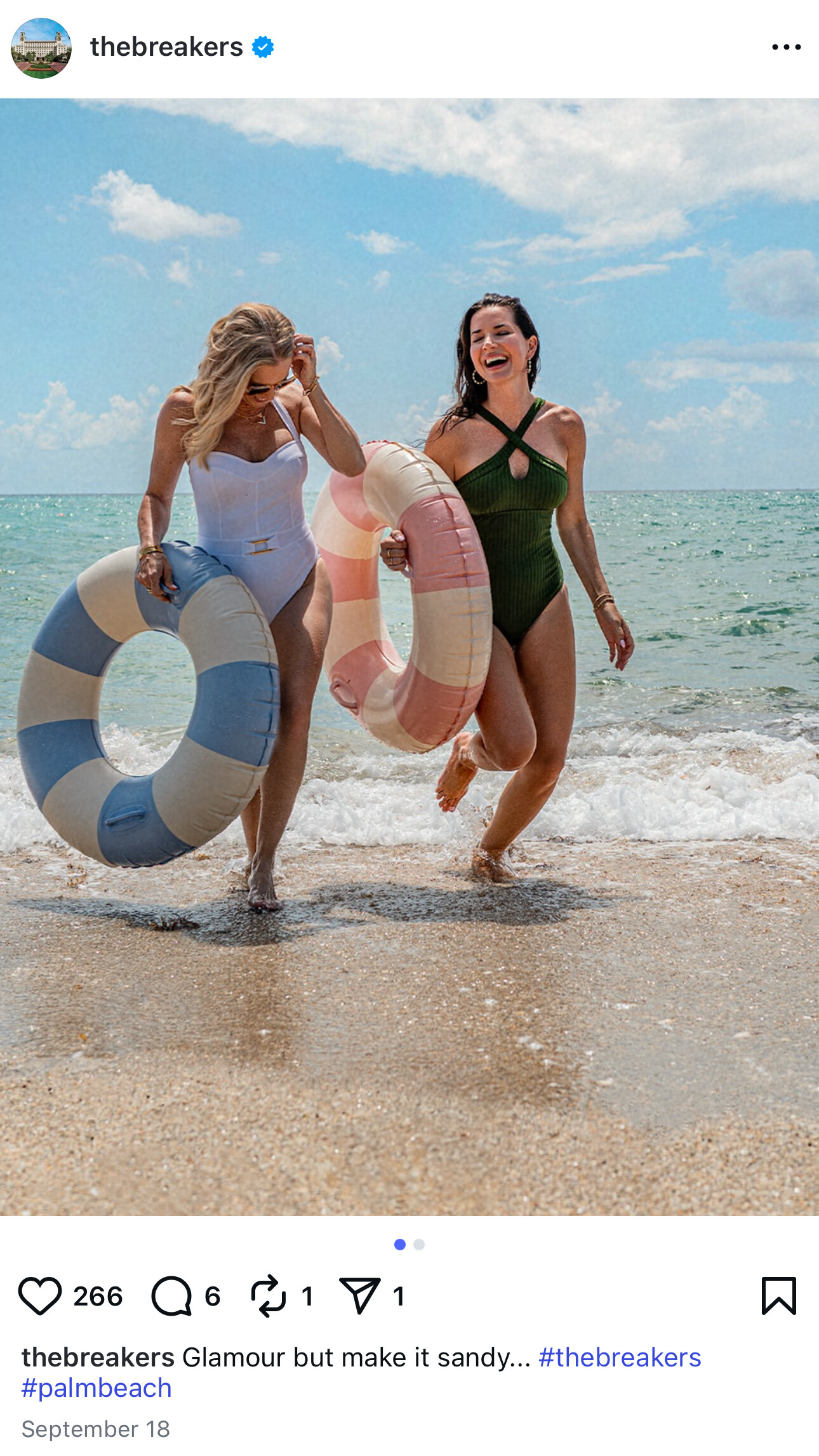
(Source: Instagram)
The Breakers’ team consistently shares cinematic videos and high-quality imagery that showcases the resort’s atmosphere, from sunrise views over the Atlantic to behind-the-scenes looks at culinary events and spa offerings. It also responds promptly to guest feedback, reinforcing its reputation for world-class service and social listening.
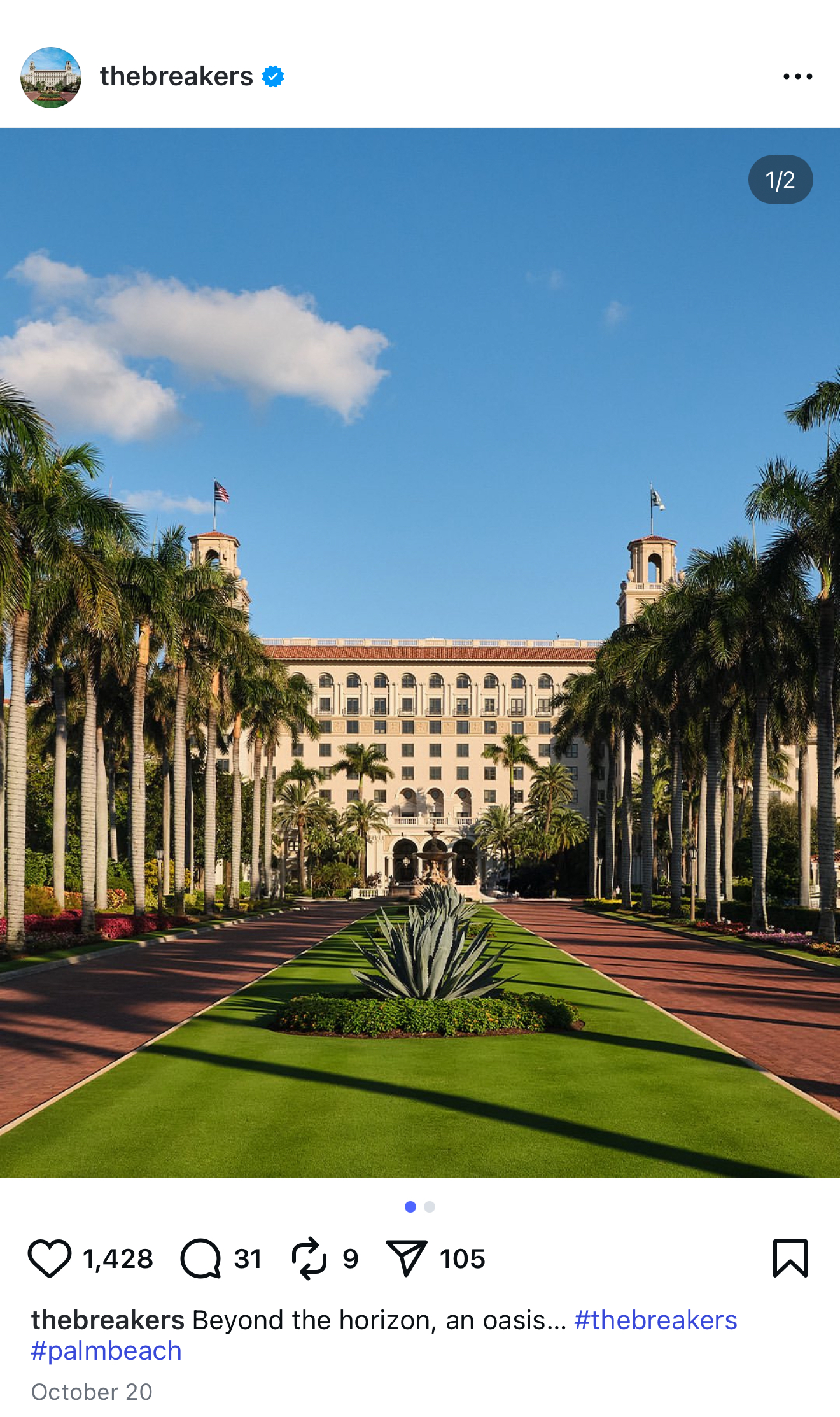
(Source: Instagram)
Apply it: Use social media storytelling to reinforce your brand identity. In your social media campaigns, blend high-quality visuals with authentic narratives that highlight your people, history and setting. By curating every touchpoint to reflect your brand promise, you turn social followers into future guests.
Deliver a first-class experience for your customers on social
Social media is no longer optional for the hospitality industry—it’s essential to delivering a seamless, customer-first experience. From engaging content to responsive care, every interaction shapes how guests perceive your brand.
Apply the best practices shared here to elevate your guest experience, grow loyalty and drive new business. Use Sprout Social to unify your engagement channels, power your content calendar, streamline customer care and leverage data to prove your ROI. It’s time to stop chasing five stars and start delivering them–try our trial demo today.
The post Social media for hospitality: Your ultimate guide for 5-stars appeared first on Sprout Social.
from Sprout Social https://ift.tt/oe5ZzmV
via IFTTT

No comments:
Post a Comment