Donald Trump has been banned from Facebook and Instagram “indefinitely” following the riots at the US Capitol building. Facebook CEO Mark Zuckerberg said Trump’s accounts would be blocked at least until Joe Biden replaces him as president on January 20. “We believe the risks of allowing the President to continue to use our service during this period are simply too great,” Zuckerberg wrote in a Facebook post on Thursday. The social network had already blocked Trump from posting for 24 hours. It also removed a video of Trump calling the rioters “very special” and repeating false claims about the election. [Read: Meet the 4…
Twitch has banned the popular PogChamp emote after the person it portrays posted incendiary tweets about the deadly riots at the US Capitol. In the wake of the police shooting of a female protestor, Ryan “Gootecks” Gutierrez, a professional Street Fighter player who’s depicted in the emote, expressed support for the rioters. He also shared a graphic video of the fatal shooting. “Will there be civil unrest tonight for the woman who was executed inside the Capitol today, or will the #MAGAMartyr die in vain?” he tweeted. Twitch responded by banning the emote, but pledged to work with the community to…
Every blogger knows growing a list of engaged followers takes time and effort. Even if you have a loyal readership, growth plateaus are not uncommon.
If you find yourself in a growth rut, you may need to jump-start your interactions with your readers. You could develop awesome lead magnets or other incentives to entice them to give you their email address. Or you could try a different approach altogether.
What if there was a new way to connect with the visitors and get them to your website, even those who are not comfortable giving you their email address? Wouldn't it be awesome if you could display a message directly to one of your web visitor's browsers, even when they aren't on your website?
And how cool would it be to have an easy to use way to instantly add website visitors to a list without requiring them to input their email address?
With web push notifications, all of the great stuff I mentioned above can become reality. In one click, they can be added to your web push notification list — making it super easy for you to start sending instant messages to your audience.
Plus, when you combine email marketing with web push notifications, you create a targeted multi-channel campaign that increases engagement and revenue.
And if you are an AWeber customer, web push notifications are included in AWeber Free and AWeber Pro — at no additional cost!
What are web push notifications?
Web push notifications are short, and clickable messages delivered straight to a subscriber's desktop when they have a browser open.
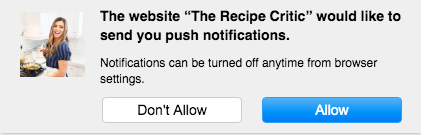
You've probably already seen web push notifications, even if you never subscribed to one. It's not an intrusive pop-up, but a notice from your browser, letting you know the site you are visiting would like to send web push notifications.
Each browser may display a push notification a bit differently, but most likely, you have seen something like this:
When you click “allow,” you become a subscriber to that website's web push notifications and are giving them permission to send you real-time notifications.
How do web push notifications work for bloggers?
Web push notifications are super easy to create and can be done even by those with little or no technical background.
They slide in either on the top or bottom right-hand corner of the screen, depending on the operating system.
Web push notifications are incredibly effective because you are given permission to speak directly to your website visitors, even when they are not currently on your website, landing page, or reading an email.
Once a subscriber, visitors will receive short, one-time messages on their desktop when they have a web browser open.
Web push notifications can link directly to a blog, website, landing page, sign up form, or shopping cart — basically anything with a link.
Web push notifications make promoting your blog easy
Web push notifications are one of the easiest ways to grow your business and turn your passion into profits. It lets you quickly increase engagement to reach more people and make more money.
4 ways bloggers use web push notifications
Below are a few of our favorite ways AWeber customers are using web push notifications to grow their blogs.
Motivate customers to reach their goals with daily tips
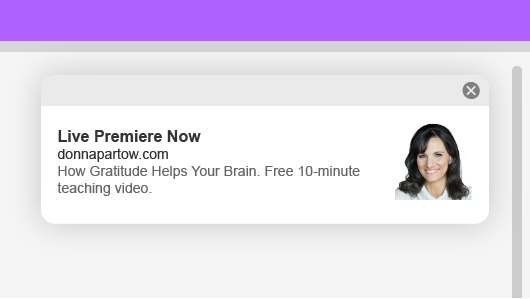
Donna Partow is a content creator, author, and motivational speaker with a passion to empower people to accomplish their life mission. Her books have sold more than a million copies worldwide and have been translated into numerous languages. She was part of the team that pioneered ivillage.com, serving as the Work From Home coach and co-creating one of the first content providers on the internet.
Donna uses web push notifications for a specific purpose. She primarily sends them to a select group that signs up to be part of one of her challenges. The push notifications serve as both a reminder and the mechanism to deliver her content for the challenges.
"One of the hottest things on the internet right now for content creators is running challenges to bring people into a relationship with you. I'm really excited about using web push notifications for limited-time challenges, 7-day challenges, and 10-day challenges. Each day, I send them a little reminder with a link that connects to their assignment for the day to keep them moving forward on their goal. I want them to be glad and thankful that they're receiving my web notifications because it's going to be a benefit to them."
Donna Partow
Notify followers instantly when you create new content
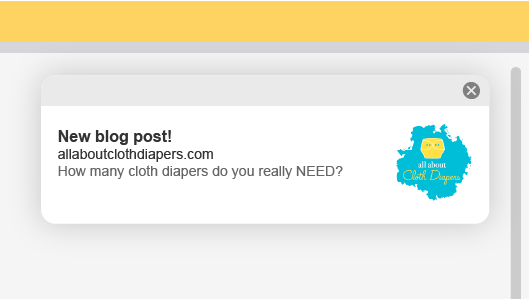
Jennifer Reinhard, cloth diaper educator and advocate, who shares her real life experience and common sense advice to make using cloth diapers easier to understand, use and wash. Her business, All About Cloth Diapers, for over a decade has been sharing their cloth diaper experience and knowledge with parents. Jennifer sincerely believes that cloth diapers are the best thing for babies and she wants to help spread her love of cloth diapers one fluffy tush at a time!
Jennifer uses web push notifications to share new content and evergreen content to her audience. Her goal is to encourage new visitors to subscribe, since they are the people looking to learn about cloth diapers. She hopes web push notifications make uncovering education easy for them as web push notifications will put that content right in front of them, exactly when they need it.
"Web push notifications are another method to reach my readers. They may not read the email or see Facebook posts, but they will see the web push notification because it will pop up on their desktop when they’re online — exactly when they need it. I have not seen anyone else use it yet, and that includes retailers or any other resources or content creators. So I definitely think it would distinguish us from other people.”
Jennifer Reinhardt
Drive traffic to individual blogs within digital properties
Jamila Bannister is a personal branding strategist and coach. Her business J Bannister Branding helps entrepreneurs leverage personal branding as a marketing strategy. She helps her clients create strong personal brands to become influential and convert this influence into paid opportunities.
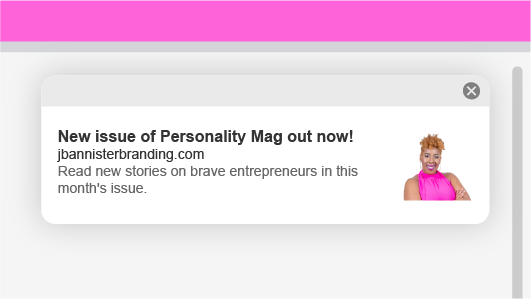
Jamila uses Web Push notifications to drive traffic to her online magazine and individual articles within the publication.
“I have an online magazine. What tends to happen is that when I first publish, I get a lot of traffic. But after about a week, the traffic declines. So I use web push notifications to drive traffic back to the online magazine and to specific articles. So instead of writing a blog, people can click and read by using web push notifications and get my most up-to-date content. Another thing I like about AWeber's web push notification is that you can customize the icon so the notification comes up as something from me with my picture.”
Jamila Bannister
Sell more products with limited-time discount notifications
John Grubb owns Keystone Computer Concepts (4KCC), a full-service computer company. They sell, service and repair computers by providing in-person and remote technical support in the United States, Europe, and Canada.
They also create amazing content to help educate their audience through written content and YouTube videos.
Grubb uses web push notifications for two reasons:
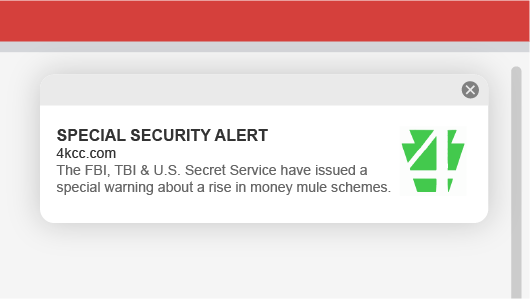
1. To send out time-sensitive security alerts to his audience.
2. To send out notifications when there is a special offer on a particular computer or computer related product
“I limit sending emails to my audience to no more than two a week. My customers appreciate it, because they’ve come to expect 2 emails per week. So the web push notifications are really important to me because I can send out something time-sensitive without an additional email. I get income from affiliate sales but many of the sales are for a very short period of time. I can’t notify my customers if it is on a day I am not sending an email, but I can send out a web push notification.”
John Grubb
Pro tip: Looking to grow your web push notification’s list? In John Grubb’s three-email welcome series, his second email explains what web push notifications are and why they should opt-in to receive these messages.
Web push notification best practices for bloggers
Want to incorporate web push notifications into your own blogging strategy? Follow the best practices below to create web push notifications your audience will no doubt appreciate.
Copy is king
To keep your subscribers engaged, you need to craft compelling, concise content. Web push notifications impose character limits on the headline and the message, so pick your words carefully to make your messages compelling.
One topic per push
Be clear on the point you want to make and the action you want your subscriber to take. Clearer messages tend to have a higher click-through rate.
It’s helpful to understand your audience and the questions they want answers to. Create content around these questions to drive readers back to your blog through web push notifications.
Create urgency wherever possible
Use scarcity to create urgency to drive specific actions. Be clear about the desired action you want your readers to take when they click their link.
For example, rather than the saying, “Flash Sale Today,” consider “Only a few hours left to save 25% off. This creates a sense of urgency, driving readers to consider the limited-time offer”
Include social proof
When appropriate, work in statements from your existing customers mentioning your products or services.
For example, consider content like, “500 people have already registered today,” or “This post has more than 10,000 Twitter shares.” Include an image from your social platforms.
Get Web Push Notifications
If you're struggling to reach more people, web push notifications could be the answer. Send direct messages to your visitors’ browsers, widen your online reach, and connect with your subscribers through an easy click opt-in.
Plus, AWeber's web push notifications are included in AWeber Free and AWeber Pro — at no additional cost!
If there’s one thing staying at home has revealed to us it’s that we watch a ton of video content. YouTube reports one billion hours of video are watched every day and research estimates social video ad spend will grow 44% from 2019 to reach $14.89 billion by 2021. In other words, video is still very much an effective tool in a marketer’s arsenal.
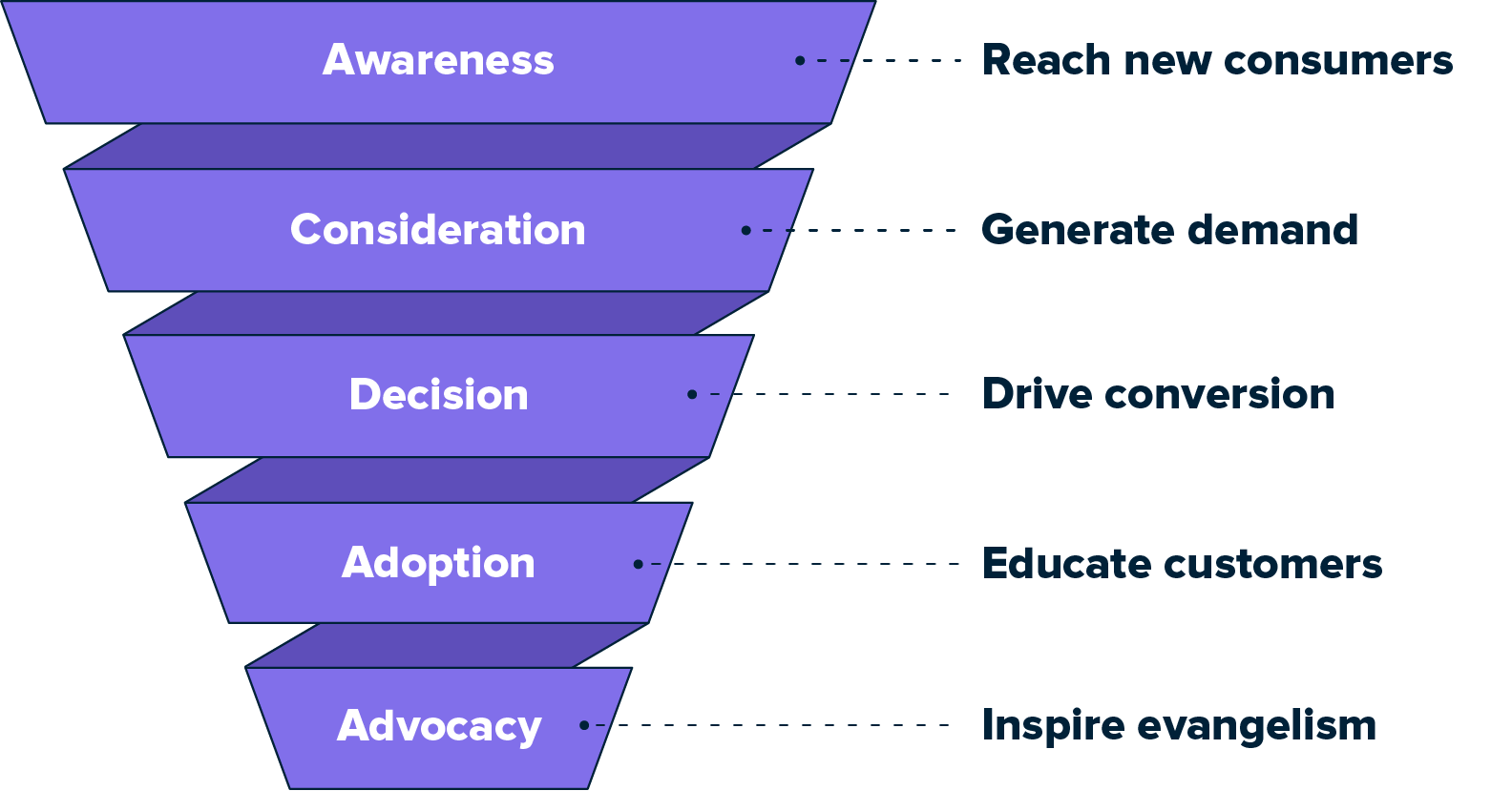
And with the right script and creativity, social media video marketing can do more than support a brand’s awareness and consideration goals. It can also guide prospects through the decision stage of their buyer’s journey, educate customers on their brand new purchase and fuel a brand’s advocacy plans.
In this article, we’ll explain how video content marketing can support five different social goals, provide types of videos that successfully align with each stage of the buyer’s journey and inspire your own social media video ideas.
Build brand awareness and put a stake in the ground with video content
If you’re like the majority of social marketers, brand awareness is your top goal. Social media video marketing is a great medium to reach new customers and show them who you are, what you do, what you stand for and what makes you unique.
Mint Mobile, a low-cost wireless carrier, was founded back in 2016. When Ryan Reynolds became the majority owner in 2019, he brought his marketing acumen, wit, a new vision and major brand awareness to the company.
In a world where big wireless companies are constantly competing and trying to one-up each other, MintMobile promises to be a company “that extends its middle finger to conventional truths while also pointing out where big wireless is letting people down.” The brand uses video driven by Reynolds’s dead-pan humor to get the message across.
In their “New ManageMint” video, Reynolds outlines what the wireless carrier is and identifies a benefit of the service that everyone loves—saving money. It’s short, funny, engaging and clearly explains what the company is all about and how it compares to competitors.
Don’t worry if you don’t have an A-list spokesperson to intrigue your audience. This type of video is not about who the face of your brand is, it’s about showing what your brand offers, how it solves customers’ challenges and what differentiates it.
In the first stages of the buyer’s journey, brands are just trying to capture consumers’ attention and introduce themselves, and with video, you may only have seconds to do it. If you’re creating awareness-stage video content, get right to the point. Thought leadership and educational videos of this nature can establish credibility and your brand identity, so when consumers have purchase intent your brand is top of mind.
Generate demand with tutorials and other types of how-to videos
Once consumers have reached the consideration stage, they may know about your brand and what you offer, but it’s your job to generate demand for your products and services. There are several ways you can achieve this goal with social media video marketing.
How-tos and tutorials show your product in action and make it easy for the consumer to envision how they’d use the product themselves. Skincare, makeup and beauty brands like ColourPop Cosmetics are masters of these kinds of consideration-stage videos. You can bet that whenever ColourPop has a sale or giveaway going, they will share short- and long-form social videos of makeup artists, influencers and real customers applying their products. Consumers can see the smoothness of foundations, color pigment of eyeshadows and creaminess of lipsticks as they go on.
When people can see how a product works or how other people use your service to solve a problem, they can more easily visualize themselves doing the same thing. Animated explainer videos can be an alternative option to live-action demonstrations. While they might be a bit more abstract, they’re still an opportunity to put the customer’s problem into perspective and introduce your services as the solution.
Consideration-stage videos don’t have to focus solely on your products or services. Now more than ever, consumers also consider a company’s culture and core values before committing to being their customer. When consumers find that a brand shares their values, 58% will buy from that brand. Videos that go deeper into your brand story and highlight your core values can establish an emotional connection with your audience, making it more likely that they’ll choose your company over a competitor.
Drive conversion by telling real customer stories through video
The decision stage is the point at which your goal is to turn prospects into customers. Customer testimonial videos show the real potential and payoff of your brand’s products and services.
People may know about Peloton’s stationary bike and workout classes but what people may be surprised and delighted to find out is that it also has a tight-knit member community. Peloton’s “Meet Our Members” video series features stories from people from all over the world. Each person shares their unique reasons for becoming Peloton members and sticking with it. The video shows these people in their everyday lives to establish relatability to the viewer. Then, they show them riding the Peloton bike, a real example of how the product might fit into your life too.
Some members clip into their bikes for a good sweat and endorphins, others, for an escape after homeschooling kids. No matter what the story is, the value of being a Peloton customer and member of their community is clear and compelling from start to the finish.
What makes these videos strong decision-stage content, is the aspirational, yet authentic, “this could be you” feeling. Peloton isn’t just making a promise to you as a customer and hoping you buy with blind faith. They’re showing that they’ve already earned their customers’ trust and made differences in their lives. Use this kind of video content to show potential customers the results and the real benefits that others have reaped and that they stand to gain from choosing your business.
Leverage video to keep your customers satisfied and engaged
It’s not just marketers who want to make sure they’re seeing a return on their investments. Once a prospect becomes a customer and enters the adoption stage, educate them about how they can get the most out of your products and services.
For AirBnB hosts, reviews are essential reputation builders. When renters are choosing their home away from home, reviews could seal the deal or steer people elsewhere. And good business for hosts is good business. That’s why AirBnB works with “superhosts” to create tips and tricks style videos about “How to Host.”
This kind of fun, energetic how-to video is ideal for platforms like YouTube, Facebook or IGTV, where people are willing to spend a bit more time watching and learning.
If your products or services have a lot of bells and whistles, features based on specific needs or there’s a learning curve that comes with them, lean into educational video. Content that’s focused on hacks, tips, optimization or special features can put complexities into perspective and make customers more confident. Webinars and social media live videos can be highly effective mediums for this kind of content. They give customers a chance to engage with your brand in real-time, ask questions and get answers they’re looking for.
Skincare regimens are not a one-size-fits-all kind of thing and if people use the wrong products, things could easily go awry. To help customers find the right products, the skincare brand Origins, partners with influencers to host their “Shopping Live” series on Instagram.
In each live stream, influencers talk in detail about new or featured Origins products. They discuss how and why they use those products, share the results they’ve seen, teach how products address specific skin concerns and respond to customer questions as they come through. These videos aren’t just an attempt to sell products. They ensure that customers feel understood, heard and empowered to pick the products that are best suited to their needs.
Going live can help you capture a broader audience, but it’s your biggest fans and existing followers who are most likely to tune in. Unlike posts that show up in people’s feeds, Instagram Live streams appear at the top of the interface at the beginning of Stories. Followers who have their app open when you go live will also receive a notification that you’re broadcasting, so they can easily tune in to get the latest from your brand.
Inspire evangelism and embrace customer advocacy
By the advocacy stage, you have happy customers that will sing your praises and champion your brand.
If you kept up with viral moments of 2020, you probably already know about Nathan Apodaca AKA doggface208. When Apocada’s truck broke down on the way to work, he didn’t let that setback keep him down. He grabbed his longboard, a bottle of Ocean Spray juice and created a TikTok seen round the world. The video was so popular that it inspired the #DreamsChallenge and a wave of people, including Mick Fleetwood and the CEO of Ocean Spray, creating their version of the video.
His TikTok, one of the most viral in 2020, was an organic, spur-of-the-moment video that Ocean Spray spun into advocacy-stage gold. The value of Ocean Spray sharesnearly doubled in less than a month, “Dreams” returned to the Billboard charts for the first time since 1977 and Apocada received a new truck courtesy of the brand.
The beautiful thing about this kind of advocacy video is that it doesn’t feel like you’re being sold anything. Capitalize on organic, genuine love for your brand and product using social listening tools like Sprout Social’s. With listening, you can meet the moment and capture brand mentions from engaged profiles and surface user-generated video content.
TikTok’s Global Head of Business Marketing Katie Puris told Adweek, “You can’t plan for viral. Don’t just wait for a moment to be opportunistic, but plan for this to be a component in the way you think about building your brand all of the time, with an always-on strategy. And have a plan in place for when these opportunities do show up.”
Not every advocacy video will be viral or come straight from your fans. Employer brand strategies can also be bolstered by advocacy videos. Consider also showcasing your colleagues to show the ins and outs of your company and why they love working there.
Achieve your goals at all stages of the buyer’s journey with videos for social media
By investing in social video, brands have an opportunity to increase awareness, build stronger connections with their audiences and grow their business. At Sprout, we believe in the power of social video. Harness that power with Sprout Social’s video publishing and analytics tools to optimize your strategy and measure the results of your efforts. Sprout analytics reports have unique video metrics that align with your goals at all stages of the funnel.
Unsure which KPIs to focus on? Download this cheat sheet with the important social media video metrics to track for each stage of the buyer’s journey, from awareness to advocacy.
Marketers are always on the hunt for “the next big thing.”
And rightfully so.
But from emerging social platforms to share-worthy content, trends arguably come and go faster than ever. Figuring out what’s a fad and what’s worth pursuing often feels like a gamble.
Despite popular belief, getting ahead of the curve and predicting marketing trends doesn’t require a crystal ball. It’s not a matter of dumb luck, either.
You simply have to level up your trendspotting skills.
In this guide, we’ll break down actionable steps that empower you to uncover and capitalize on trends in your industry before they blow up.
What is trendspotting, anyway?
Trendspotting represents the process of predicting trends before they enter the mainstream, while also analyzing whether or not that trend is relevant to your business.
Social marketers are natural trendspotters. This is especially true considering how much time we spend analyzing data, talking to customers and adapting our strategies.
Trendspotting on social media equal parts important and challenging given how fickle social algorithms are in creating a constantly changing social landscape.
Keep in mind that being a trendspotter is about much more than being a sort of “merchant of cool” that has a pulse on popular content or viral marketing.
For example, a specific meme (think: baby Yoda) might represent a passing fad while brands using memes and humor effectively in their marketing represents a larger, long-term trend.
You can almost think of trendspotting as a proactive form of market research. While both depend on monitoring data, trendspotting is ideally an ongoing process while marketing research may be done on an as-needed basis to inform a specific project, campaign or change in direction.
The benefits of trendspotting speak for themselves. Getting in on the ground floor of a new network, marketing campaign or content form means that you have more time to work out the kinks and troubleshoot your strategy.
In short, the ability to identify trends represents a significant competitive advantage versus companies playing catch-up.
Which types of trends should marketers track?
Trends can vary from sweeping changes in your business’ strategy to smaller happenings that are specific to your industry or business. Let’s look at some examples below.
Social media trends
Again, social media is a prime place to spot trends.
Not only are businesses of all shapes and sizes active via social, but so are consumers. If you want an idea of what’s trending and popular among the public at large, look no further than your social feed(s).
Some examples of trends you can identify via social media include:
Types of content are people sharing and engaging with the most
Which social platforms and marketing channels are growing (or shrinking)
Types of ads that consumers engaging with
Up-and-coming products, brands and influencers
Below are some social-specific trends from the most recent Sprout Social Index. These insights are crucial not only for companies looking to refine their social strategies now but also to understand which trends are poised to grow in the future.
Industry-specific trends
For social media and beyond, so many marketing trends are specific to certain industries.
For example, marketing priorities for SaaS companies versus those in the gaming industry are apples and oranges.
If you want an example of companies that rely heavily only on trendspotting, look no further than the beauty industry.
In such a highly competitive field with a social-savvy audience, beauty brands have to constantly fight to stay ahead of the curve when it comes to new platforms, content formats and promotion types. While some brands are haven’t even test-driven Instagram Reels or even TikTok, others like Pravana are already on top of the latest social beauty trends.
Competitive analysis is crucial to identifying industry trends as you keep an eye on how others in your industry are engaging their own audiences.
For example, which types of campaigns are they running? How does their growth compare to your own? This highlights how trendspotting is both qualitative and quantitative as you watch both audience conversations and engagement metrics.
Customer-specific trends
Customer trends are obviously important since they impact, well, your customers.
For example, tracking feedback, reviews and top-selling products can inform you of trends that might influence future promotions.
If nothing else, you can more easily identify what products people like (see Birchbox below) and phase out the ones that they don’t.
“How do you identify a trend, anyway?”
This is important. From adopting a new social platform to running a new campaign, there’s a certain level of investment and risk involved with any given trend.
Part of trendspotting is the ability to do a sort of cost-benefit analysis to ensure that you’re spending your time on campaigns that’ll actually produce returns.
Again, the pursuit of any trend needs to be rooted in data and analytics versus just a gut feeling or trying to jump on a viral bandwagon.
5 actionable ways to get better at trendspotting
If you’re looking to become a top-tier trendspotter, your head is in the right place.
The good news is that trendspotting is a skill that you can actively develop and refine over time. Below are five steps to take to do exactly that.
1. Make a point to talk to your customers more often
Frequent conversations with your customers can clue you in on not only what they want and expect from you, but what sort of features and products they’re interested in general.
Of course, you have to read between the lines when identifying customer trends. Social media is the perfect place to pick your customers’ brains without having to hit them with a survey or questionnaire.
Polls, product recommendations and other closed-ended questions can likewise spark conversations among your customers to help figure out where their heads are at.
Poll time! Now that #iOS14 and #iPadOS14 are out, what's your favorite new feature?
Furthermore, it’s important to put your conversations with your customers into context. This includes questions, comments and concerns sparked via social media.
If you’re using social media management tools like Sprout, you can identify customer-wide trends on social media within a single platform.
2. Set up social listening for industry keywords and hashtags
Piggybacking on the last tip, you can identify up-and-coming industry-wide trends by listening to the conversations of both your customers and competitors.
For example, social listening allows you to pick up on keywords and terms that are used most commonly among your target audience. This includes brands, product names, and sentiment-related keywords (ex: “good” or “disappointing”).
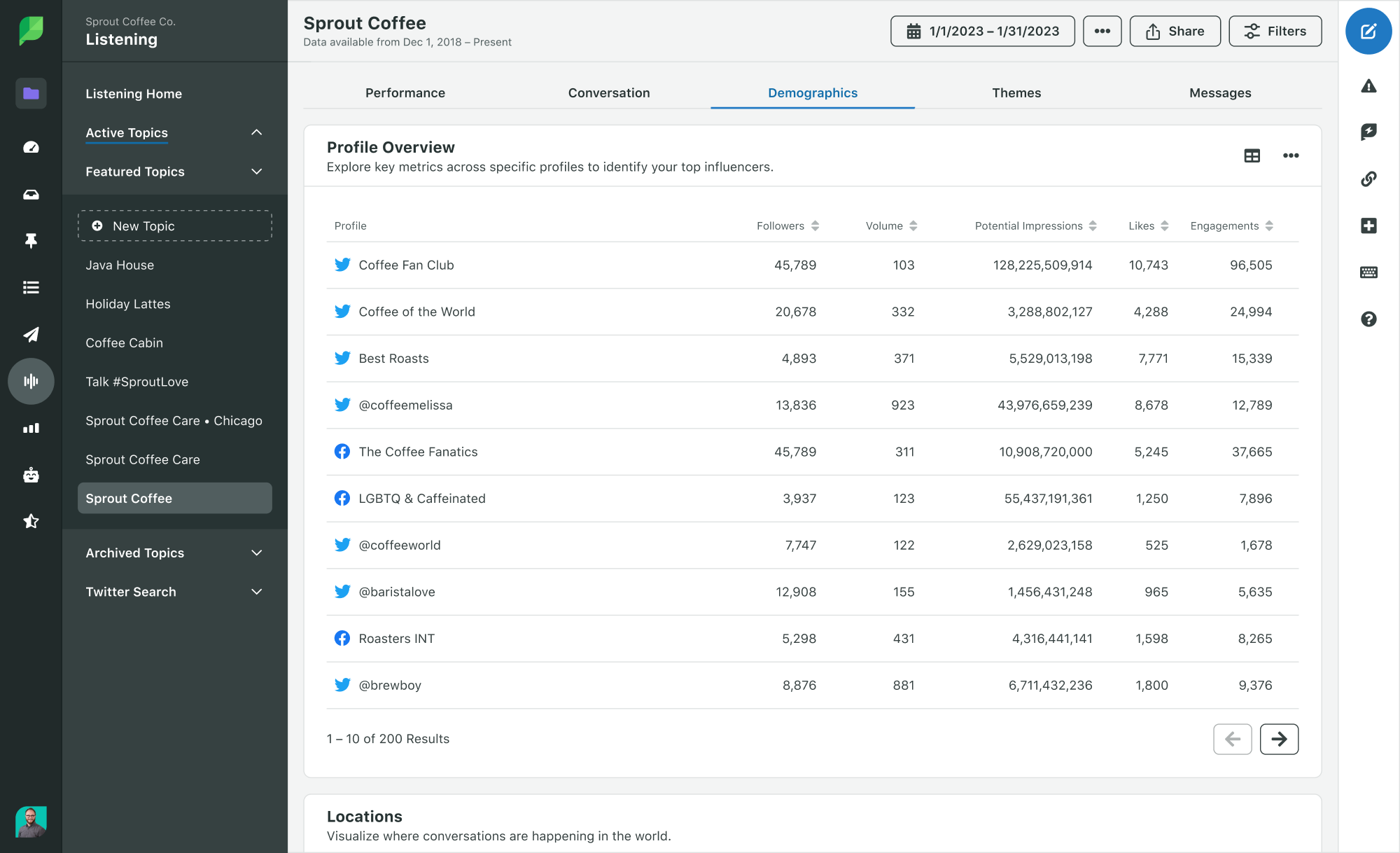
Rather than try to listen to hundreds or thousands of conversations manually, a social listening tool does the legwork for you. Here’s an example of how to identify an industry trend using Sprout:
Through Sprout’s listening report, you can discover related topics frequently mentioned with the terms you’re tracking. This can help you discover the positive and negative discussion that your customers are participating in, even if they’re not mentioning you directly.
3. Conduct thorough, ongoing competitive analysis
Trendspotting often feels like a race between yourself and your closest competitors.
As such, keep tabs on the types of campaigns your direct competitors are running and what their growth looks like.
The idea here isn’t to obsess over what your neighbors are doing but compare and contrast your approach to marketing. You may notice that you pursue totally different trends. On the flip side, you might pretty much be in lock-step with each other.
Either way, you can use tools like our competitive analysis template to help find your greatest opportunities to stand out.
4. Identify your own “trending” content
Remember what we said about trendspotting being quantitative?
If you want answers about which types of content or campaigns move the needle, look no further than your own social media metrics.
Let’s say there’s a particular type of post or content (think: influencers, UGC) that drives a ton of engagement. Conventional wisdom says you should consider creating more of the same. Chances are you can spot trends and common threads among your top-performing content.
5. Actively talk to other influencers in your industry
Lastly, you can’t spot trends if you’re a total island.
From digital events and webinars to Twitter chats and beyond, make sure to participate in industry-related conversations and see what observations others are making.
There’s so much you can learn about your industry simply by following influential players in your space. #DTCTwitter is a shining example of this:
So, let me get this straight.
You run into an interesting new challenge and you can just instantly get insights from some of the leading minds in your industry?#DTCTwitter is an absolutely incredible place to be and I'm grateful to be a part of it.#FBAds#eCommerce#DTChttps://t.co/1RnsAU9Oyr
Oh, and don’t forget about reading blogs (like this one), newsletters, and case studies relevant to your business. If you want to be a trendspotter, you need to keep yourself informed.
What are you doing to improve your trendspotting skills?
Keeping track of trends can be downright overwhelming for marketers today.
Trust us. We get it.
By developing a trendspotting strategy using the steps we’ve outlined (and tools like Sprout!), you can make it so much easier to keep a pulse on what’s happening in your industry.
And speaking of trends, make sure that you’re up-to-date on the latest trends of social media by checking out the most recent Sprout Social Index.
After the year we just had, you’re probably breathing a sigh of relief like I am.
But here’s the thing: The world is more virtual than ever. And being able to connect with people digitally has become incredibly important if you want your business to thrive.
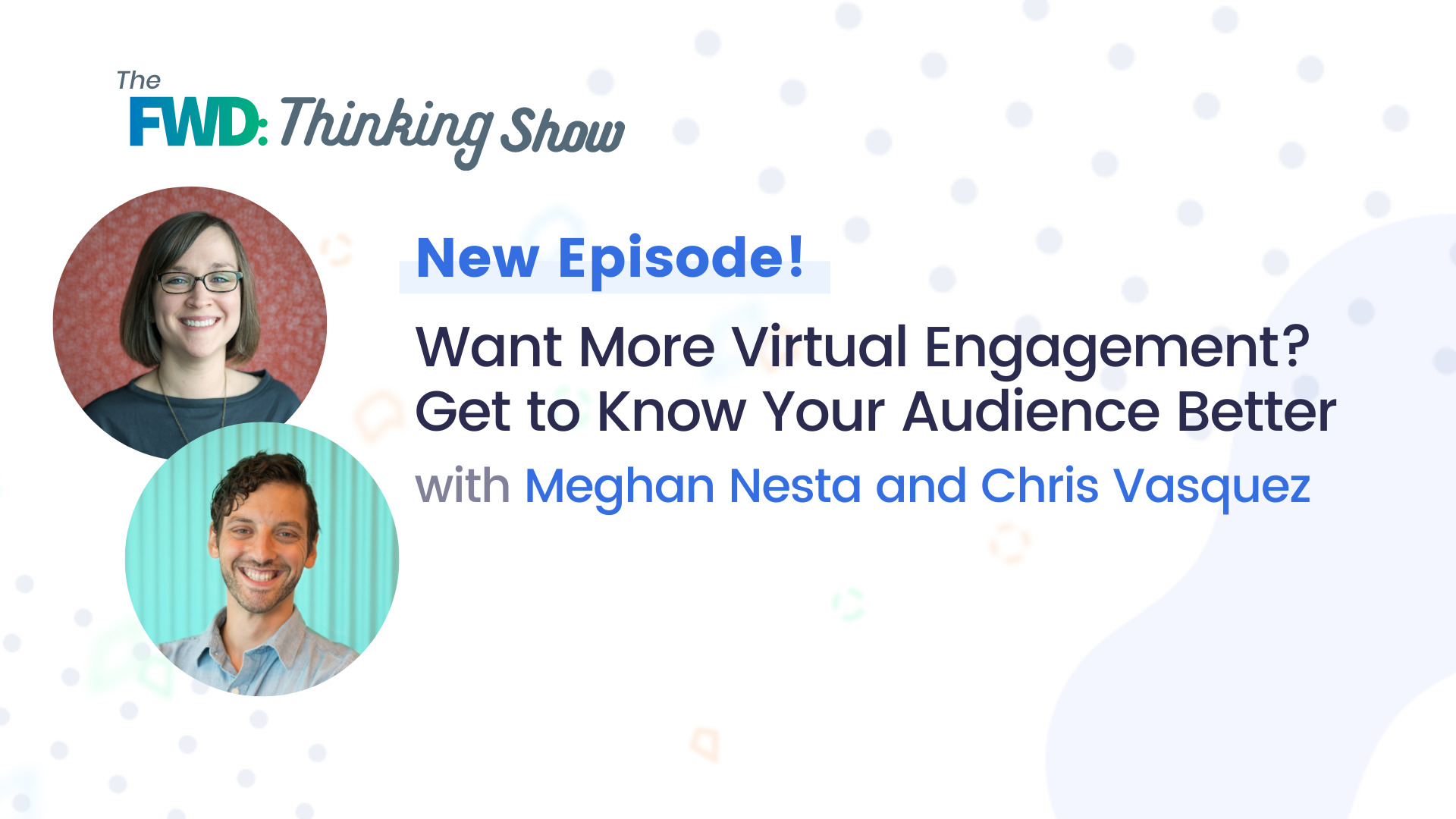
That’s why we’re throwing it back to a conversation with Chris Vasquez, AWeber’s Chief Product Officer, and Meghan Nesta, Senior Product Manager at AWeber, about getting more virtual engagement with your audience.
While this episode was recorded a few years ago, it’s never been more relevant than now.
People are busy. And when you add it all up, the conclusion is obvious: connecting with people virtually is not easy.
In fact, it takes a lot of intentional work and dedication.
In this episode, Vasquez and Nesta answer a listener’s question about getting more virtual engagement — likes, comments, shares, opens, clicks, and more.
Want a quick peek before diving in? Here are the highlights.
2:20: Introducing today’s topic: how can you get to know your audience better and get more virtual engagement?
4:00: Treat virtual engagement like a consistent call to action.
5:20: Give an example of the types of engagement you want. Show your personality and be vulnerable with your audience — you might just inspire them to do the same.
8:15: Share something about yourself so the other person feels comfortable sharing something too.
8:50: Remove the phrase “ email blast” from your vocabulary, because it’ll be really hard to get virtual engagement that way.
22:50: How to test your emails without split testing: Treat email like an experiment and formulate a hypothesis. Construct your email around that hypothesis.
25:00: How to get immediate feedback and temperature check your audience with a sentiment widget.
31:30: If you want to have human conversations, act like a human.
31:45: Look for virtual engagement with your customers in unexpected places.
Want more? Check out past interviews for marketing ideas
We’ve had experts from all walks of marketing on The FWD: Thinking Show to share their expertise and guidance. Check out previous episodes and get expert advice by clicking the button below.
Every new year brings opportunities for marketers to try new things, improve upon their old strategies and pitch ideas that have never been brought to the table before. But it’s one thing to come up with a creative idea. It’s another to pitch a social media marketing campaign and secure your boss’ approval to execute it, especially when you consider the impact the events of 2020 have had on marketing as a whole.
A powerful pitch, regardless of the circumstances, requires preparation, proof of concept and a plan for execution. In this article we’ll walkthrough:
Content themes that have potential for 2021
Using social data to prepare your pitch
Showing how your idea supports business goals
Packaging and presenting your pitch to get your team on board
What’s the big idea? Inspiration for your social media marketing pitch
In 2021, brands may be a bit more cautious with their content due to the pandemic and growing concerns around appearing out of touch or insensitive to consumers’ needs. At the same time, they’ll need to find ways to stand out from their competition in the saturated digital space. However, that doesn’t necessarily mean you need to completely reinvent your brand and social strategy.
A great marketing pitch idea could be as big as an original campaign or as minor as adjusting your tone of voice on social. Consider what is top of mind for your business and your specific audience and use that to influence what ideas you pitch.
According to the 2020 Sprout Social Index™, the top three reason consumers follow brands on social are to:
Learn about new products or services
Stay up to date on company news
Learn about promotions or discounts
Pandemic or not, those reasons aren’t going anywhere.
If the pandemic is still top of mind for you and making you rethink your 2021 social media calendar, consider pitching content ideas that support and benefit your audience. That might mean building content that highlights the precautions your brand is taking in stores or investing more in your social customer care strategy. According to Hubspot, the “four Cs”—community, cleanliness, contactless and compassion—will be a good point of focus for brands, especially those that rely on in-person interactions.
Burger King, Popeyes, and Tim Hortons will get new modern drive-thrus at 10,000 locations to increase contactless payment and other digital amenities 🍔 pic.twitter.com/oWLIcyvBhB
Coming in fourth on the list of reasons consumers follow brands is to be entertained. Considering that 2020 was a rather tense year, you might also consider pitching content or campaigns that encourage joy scrolling rather than doom scrolling.
The aforementioned stats and data should merely be a starting point that you might build upon. Once you do have more solidified, brand-specific ideas, if third-party data inspired them, embed the relevant stats in your pitch. Showing that there is merit and appetite for your ideas among your target audience can assure the people you’re pitching to that you’re onto something.
Do you have social proof that your audience will dig your idea?
Trends can be good for inspiring new ideas, but not every social trend will work for your brand. Social listening can help you hone in on specific trends and content your target audience is most interested in and engaged with, which may spark a social idea worth pursuing.
For example, a restaurant franchise used Sprout’s social listening tool to determine which menu item to feature in a new campaign. After analyzing the themes in conversations around their brand, the franchise found that nachos weren’t discussed as frequently as other food items, but they had the highest percentage of positive mentions compared to other dishes. The franchise used that insight to create new content promoting their nachos knowing their customers would be happy and engaged.
If you already have an idea in mind, social listening can help you validate if it’s something worth pursuing. Set up a listening query using relevant keywords and search terms to find frequently asked questions, demographic data and other qualitative from your audiences and industry to create new, compelling content.
Listening can also ensure that your brand is cognizant of the social and political landscape. Failure to read the room can turn seemingly well-intentioned campaigns or content into a brand crisis.
This Tweet from the Gap wasn't just a spur of the moment post from a social media manager who couldn't read the room.
It went through layers of approval & was put on a content calendar for today.
They were going to post this regardless of the results.
And that makes it even worse pic.twitter.com/BPDxE4qlgz
If 2020 taught us anything, it’s that nothing is certain and events can change on a dime. However, future marketing success is often dependent on past results. Digging into your social data can help you understand your audience on a deeper level and inspire new creative ideas. Once you’ve collected the necessary data, use it to back up your pitch and show your colleagues or clients why your idea has legs.
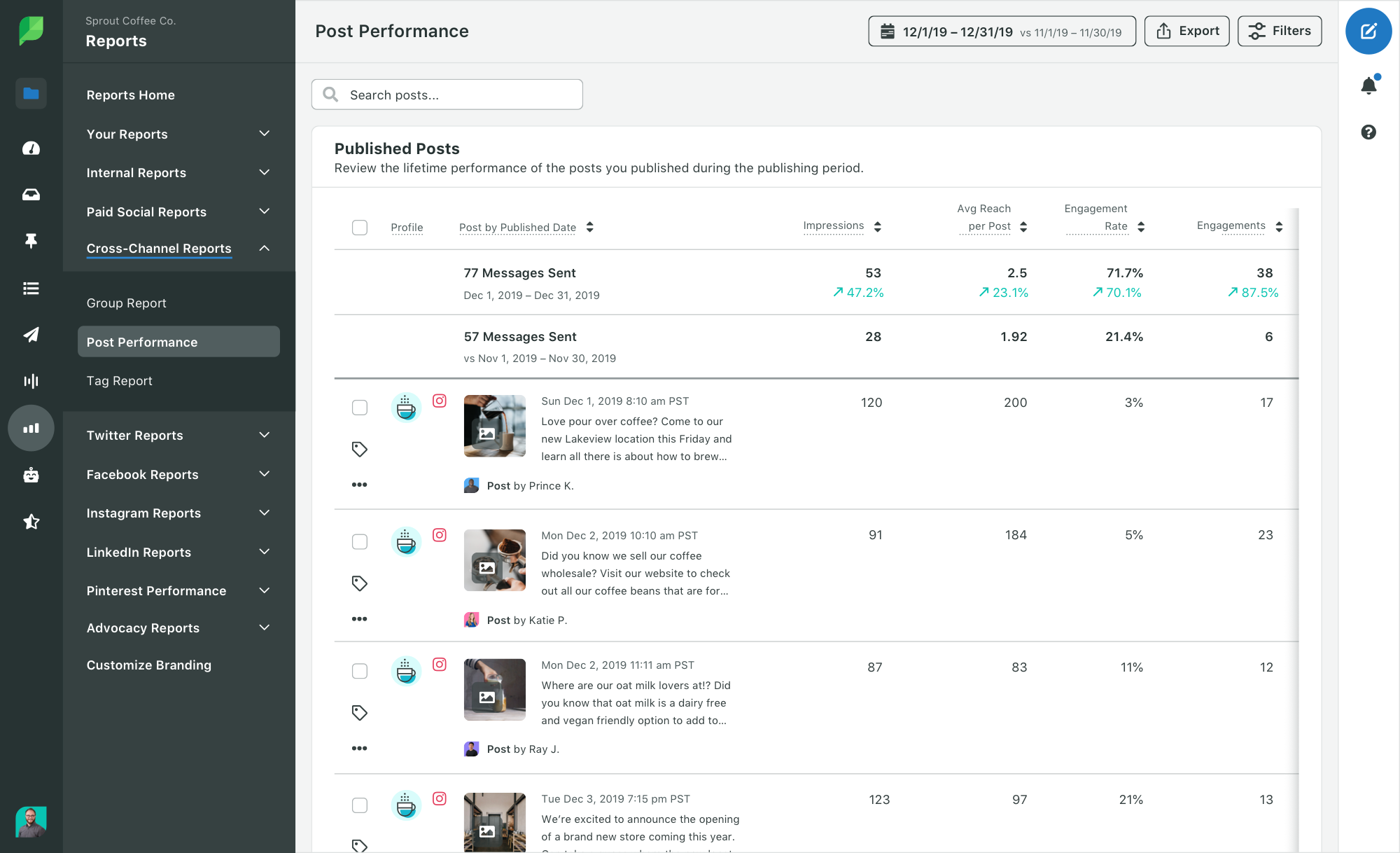
Look back at your content performance and embrace your inner data scientist. Using Sprout’s Premium Analytics, you can identify themes among your strongest performing content to inspire the direction of your next social campaign. Hone in on the messaging and tone of those high-performing posts as well.
Take note of any anomalies that occurred. If there was a unique piece of content that wowed your audience in a major way, that might be a good jumping-off point for your next campaign idea. Or if the opposite is true and your content fell flat, that’s equally important to know so you can reevaluate and even discontinue the use of content types, tone of voice or creative assets that don’t serve you or your audience.
Go beyond metrics and take a look at the comments on your popular posts. What was your audience actually saying and telling your brand? Their responses could be feedback that influences the direction of your content and give more context to your raw numbers.
As you build your pitch, package up all the key data points that will help demonstrate social proof and inspire confidence in your idea.
How does this idea support your marketing and business goals?
One of the most important things to keep in mind when you’re pitching a new idea or social media marketing campaign: goals, goals, goals. Goals hold you accountable, guide budgeting and inform more data-driven decisions. Demonstrating how your social plan can support objectives like driving organic traffic or bringing in net new leads goes a long way in securing buy-in from those in leadership.
In case you’re unsure of how to set your goals, get SMART:
Specific: Goals should be clear, simple and defined.
Measurable: Select the key performance indicators that support your goals and set up reporting plans.
Achievable: Is the goal achievable with the resources you have?
Realistic: With your current resources of time, bandwidth and budget, is your goal realistic?
Time-sensitive: Every goal needs a time frame. Determine when you hope to achieve it and identify checkpoints to make sure you’re staying on track.
Round out your pitch by demonstrating how your idea will have a broad impact on your greater marketing and business efforts. If you can show that your idea will support product marketing efforts or be fruitful for your sales team, the catchers are more likely to give you the greenlight.
For additional guidance on goal setting and identifying the right metrics to track for each stage of the marketing funnel, download Sprout’s handy social media metrics map.
How will you package and present your pitch?
How you pitch a marketing campaign or idea depends on your business, brand and internal processes. In some instances, pitching your idea might be as simple as emailing your manager, but an in-person or virtual meeting may pack more punch. This option creates a more personal connection between you, your colleagues, leadership and the idea. People often respond well if they are made to feel that they are participating in an idea’s development. According to advice from the Harvard Business Review, once the people hearing your pitch feel like a creative collaborator, the odds of rejection diminish.
To deliver a pitch that wows, whether it’s for a one-off idea or a campaign, you need to sell why this matters and clearly articulate your ideas–before they go into tactics. Make sure to include the following information in your proposal.
The big idea: Clearly articulate your idea, the inspiration behind it, what excites you about it and the data that supports it.
Why this matters: Sell your idea by answering how your audience and your brand will benefit? Make them from the very beginning of your pitch.
Goals: What is the intended result you expect to see after launching this idea? How will you measure ROI? Think beyond financial return. If for instance, you want to improve an internal process to promote efficiency, the return would be increased bandwidth for your team.
KPIs: Are there specific metrics you will track?
Resources: How much time will you need to dedicate to this idea? If your social team is broken up into several different roles, document who is responsible for what and the expectations that come with each position.
Budget: Will you need additional investments/resources? If you do need an additional budget, be specific about how, when and on what you’ll spend it.
Pitch perfect
Not every idea is a winning one, but with data, audience insights, your natural marketing intuition and a solid plan of attack, you can be confident that you will win over leadership and gain the necessary buy-in to bring your next great idea to life.
Need a bigger budget and additional resources to get it done? Use this guide and template to create a compelling social media business case