Wednesday, 2 July 2025

How to boost your TikTok engagement rate and calculate it

Part of growing your TikTok profile is increasing the amount of engagement you receive. TikTok engagement refers to actions that your viewers take on your posts, including likes, comments and shares.

Reach and follower counts can be considered important metrics, but social media engagement shows how much your content actually resonates with your intended audience. If your videos are getting people to leave comments or share them with their audience, that’s a good sign they are finding your content relevant and engaging.

Throughout this article, you’ll learn more about what exactly TikTok engagement entails, how to calculate your TikTok engagement rate and how to improve your TikTok engagement.

What is TikTok engagement?

TikTok engagement is defined as any action that a viewer takes on your TikTok video. These include:

  • Liking your video
  • Leaving a comment
  • Sharing your video
  • Bookmarking your video
  • Clicking on your TikTok shop link
  • Watching more of your videos
  • Following your account

Even a video view can count as engagement, though the previously mentioned actions indicate a deeper level of engagement from the viewer.

What is a TikTok engagement rate?

Your TikTok engagement rate is a social media metric that helps you to understand what percentage of your video viewers interact more with your video. This metric provides helpful insight into how effectively your content engages your viewers.

If you have a low engagement rate, you may need to explore different content ideas to see how you can better resonate with your audience and entice them to leave comments or share your videos. It’s important to track metrics like this, especially when running TikTok campaigns or influencer partnerships.

Having a clear understanding of how people are engaging with a specific influencer lets you know whether you want a partnership with a TikTok influencer or not. Moreover, your engagement rate metric for your own brand will likely be a big part of your social media reporting to illustrate that your social media team is producing quality content that resonates with your brand’s audience.

How to calculate your TikTok engagement rate

While you can access data surrounding specific TikTok engagements within your TikTok analytics—or other analytics tool of choice—you’ll have to calculate your engagement rate yourself.

The formula for TikTok engagement rate is:

TikTok Engagement Rate = [(Total Likes + Comments + Shares)/Total Number of Views] x 100

You can calculate your engagement rate per video or for all videos published over a specified time range.

Let’s go over an example.

If you use TikTok’s built-in analytics, the Overview section provides you with a detailed look into your engagements over a specified time period (either 7 days, 28 days, 60 days or a custom time frame you can select):

A screenshot of engagement metrics in TikTok analytics

Head over to the Reach tab, to find your total video views for a specific time period as well.

You can also use a tool like Sprout Social’s analytics to easily calculate your engagement rate. Log into your account and head to your TikTok Profiles dashboard to get a clear look at your report.

A screenshot of TikTok engagement metrics in Sprout Social analytics

Sprout Social’s data makes calculating engagement rate easy, as it already combines all of your engagements. Rather than having to add those up as part of the formula, you can simply plug in the engagements and video views numbers.

Using the data from Sprout Coffee Co., if we enter those numbers into our TikTok engagement rate formula, we get these results:

[190,024/1,112,731] x 100 = 17.1%

Multiplying your engagement right by 100 at the end helps the final result come out in percentage form, a typical format for your social media reports. Give it a try by signing up with Sprout Social for a free trial.

How to track your TikTok engagement

Tracking your TikTok engagement is one way to know if your content strategy on the app is working. By monitoring your metrics, you can identify trends, understand your audience on a deeper level and make data-driven decisions to fuel your brand account growth.

While TikTok offers native analytics, using a comprehensive social media management tool like Spout Social provides more insight into your content performance in the context of your overall social strategy.

How to track your TikTok engagements with Sprout Social

Connecting your TikTok profile to Sprout Social consolidates your analytics and engagement data into a single, powerful platform. Connect all your social accounts to Sprout and compare your performance data across networks.

Step 1. If you’re not yet a customer, you can get started with a free 30-day trial using your business email. This gives you full access to reporting data.

Step 2. Navigate to Settings and then click Groups & Social Profiles.

Step 3. Click Add a Social Profile and select TikTok from the menu.

Step 4. Authorize the connection by logging into your TikTok account. Once connected, Sprout will begin pulling in your profile data and post performance.

Step 5. Once your profile is connected, Sprout backfills 60 days of TikTok metrics. Sprout’s TikTok Profiles Report provides a comprehensive view of the metrics that matter most, including:

  • Video Views
  • Audience Growth
  • Engagement Rates (Likes, Comments, Shares)
  • Top Performing Posts

Sprout Social centralizes your TikTok performance data with insights from all your other social networks. This unified reporting offers a single source of truth, eliminating the need to jump between native networks and analyze data. For social media marketers, this means you can easily compare cross-channel performance and present the full impact of your social strategies to stakeholders.
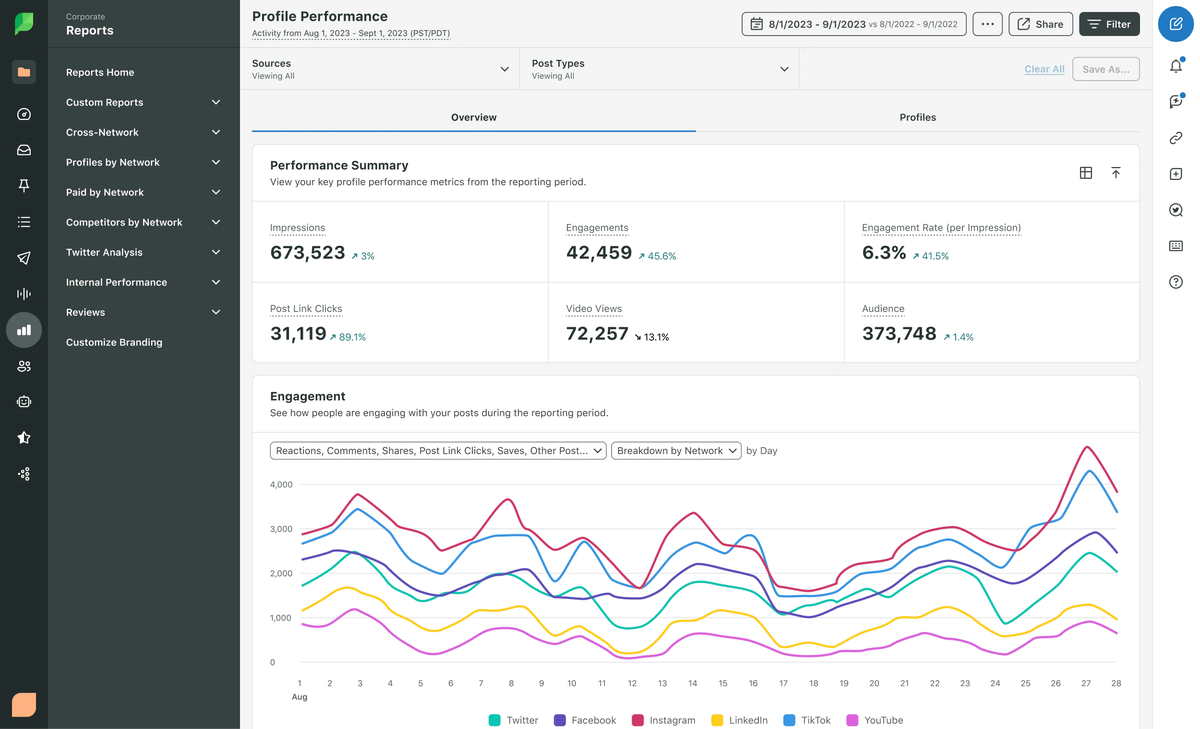
Sprout Social Profile Performance Report showing engagement data across all social network profiles across a 30-day period.

Ready to quantify your social media presence with Sprout? Sign up for a free trial today.

10 valuable ways to boost your TikTok engagement rate

While 17.1% from our above example is a pretty fantastic engagement rate, that may not be the case for your business. And that’s okay!

But you’re probably looking for a few tips to increase those numbers. Implement some of these tips into your TikTok strategy to help boost your engagement.

1. Quality content beats quantity

Above all else, quality content is the way to go. While you may have seen stats about how TikTok recommends posting 1-4 videos per day, but if those videos aren’t high quality, no one is going to want to watch them.

Instead, aim for a consistency that is realistic for your team but doesn’t sacrifice quality. Plus, RivalIQ’s TikTok benchmark report found that most brands are posting around 1.75 videos per week—a rather sustainable frequency as opposed to multiple videos per day.

Take sustainable candle shop, Mala the Brand, as an example. The brand posts one video per business day, so up to five days per week (or fewer if there is a national holiday).

A screenshot from Mala the Brand's TikTok profile

The brand’s strategy is simple but solid. The social media manager creates a number of posts sharing behind-the-scenes content, new scent updates, tips, business information and answers to customer questions. It’s good content that doesn’t feel rushed just to push content out.

Keep this in mind as you build out your own TikTok content strategy.

2. Post at the right times

Even if you’re consistently sharing quality content, posting at the wrong times means your audience might not even have a chance to see and interact with it.

But you need to know more than just the best times to post on TikTok. You need to know the best times to post for your specific audience. A TikTok scheduling tool like Sprout Social can help.

When you get ready to publish or schedule your TikTok videos through Sprout Social, you can access our Optimal Send Times feature, powered by our patented ViralPost(r) technology. This AI-powered technology analyzes your audience’s engagement patterns to suggest the best times to post. Remove the guesswork from publishing and maximize your TikTok video reach.
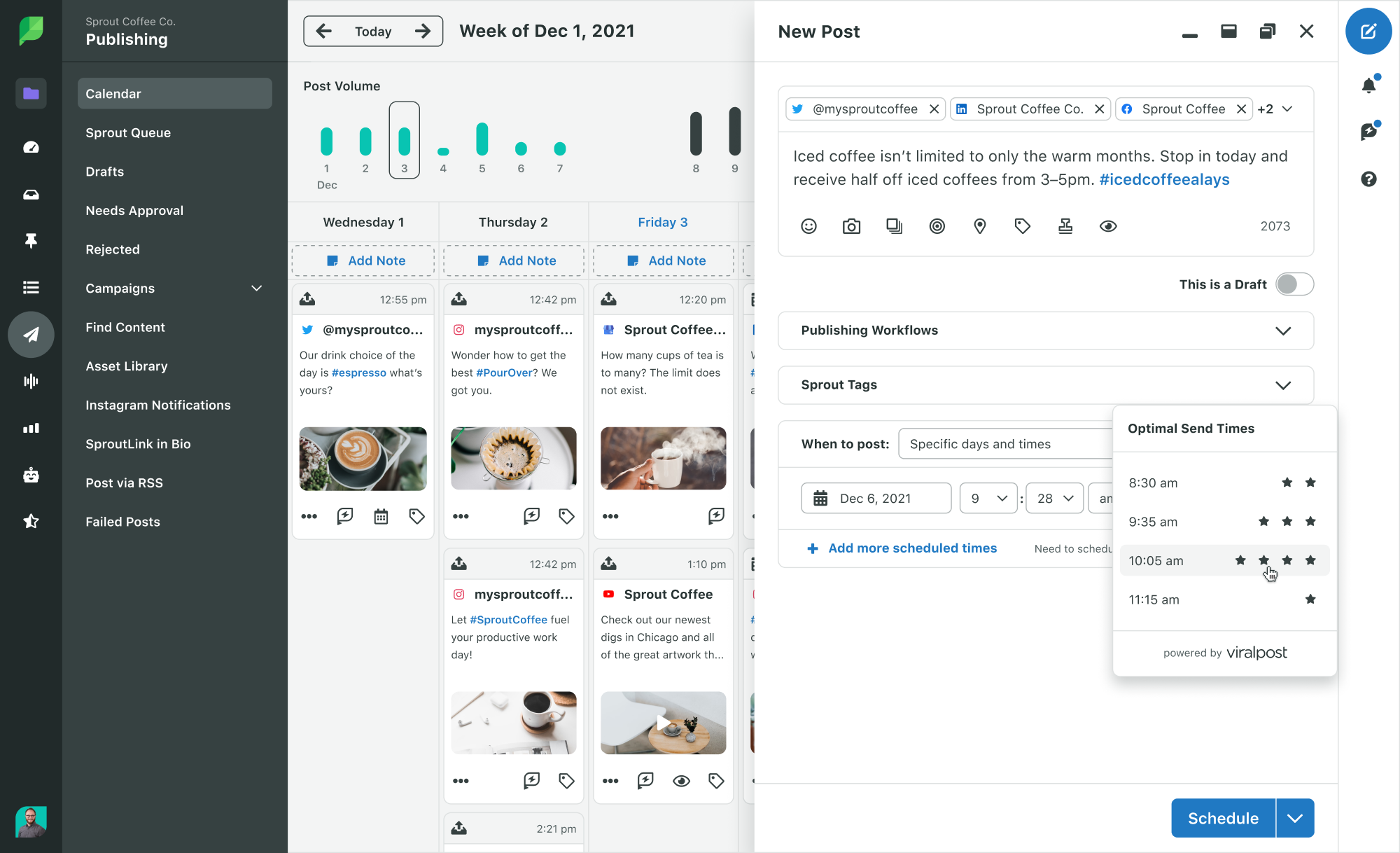
A screenshot of scheduling TikTok posts in Sprout Social's publishing tool

3. Inviting viewers to share what they think in the comments

Invite engagement on your video by asking viewers to leave TikTok comments. This is a great way to be able to hold conversations with your audience by reading and responding to their comments.

But more than that, TikTok allows users to respond to a comment with a video, helping you to further engage with your audience. Let’s take a look at this example from Gushers. The brand posted a video with a number of random food combinations, and someone replied with a comment that says, “Pretzel gushers.”

In response, Gushers created a video response trying out the new food combo:

A screenshot of Gusher's TikTok video response to someone requesting pretzels to be eaten with Gushers in the comments of a previous Gusher TikTok video

This video generated almost 1,000 views and a number of new comments. Try to engage your audience by asking for comments and responding to them when you receive them. This will help you increase your organic views on TikTok.

4. Post consistently

Yes, quality over quantity. But, consistency is also key.

When you’re creating a TikTok content strategy, you need to have a plan for how you can regularly pump videos out. Quality might be the most important factor in your videos, but having a consistent schedule so your videos are regularly showing up in feeds is a close second.

Consider batch-recording your video content to make it easier to post more consistently. This way, you can create a week or so worth of videos at one time, rather than having to pull out your recording equipment every single day.

5. Define your niche and stick to it

Find your niche. Sure, you might sell candles. Or cookies. Or burrito bowls. But what specifically will dictate the type of content you share?

As a candle company, you might focus on behind-the-scenes content that showcases how you make each of your products. As a cookie bakery, you might focus on showing off your different best selling cookies. And if you sell burrito bowls, you might, like Chipotle, make memes a big part of your strategy.

The bottom line is this—you want to choose a specific niche and focus for your content. This way, your audience comes to know what to expect from your brand and they can enjoy each video or post you put out.

Let’s take a look at Gymshark, a fitness apparel store. This brand’s TikTok strategy doesn’t even center around video content. Every single one of Gymshark’s posts is an image carousel with motivational text overlaying each image.

A screenshot of posts from Gymshark's TikTok feed

This simple and consistent strategy garners the brand hundreds of thousands if not millions of views on each video. Find your own niche and use it to grow your audience.

If you’re not sure where to start, consider browsing the For You page to see what other brands and creators are doing. This can be a great way to gather inspiration for your own TikTok marketing campaigns.

6. Make the most of user-generated content

User-generated content is another great strategy for increasing engagement. Consumers trust user-generated content, with 86% saying they trust UGC over influencer content and are more likely to buy from a brand sharing UGC.

UGC is a type of content—in this case, a TikTok video—that someone has created that mentions your brand or showcases your product or service somehow. You can then reshare this content on your own feed as a form of social proof, letting your audience know that you have happy customers and that they could be one, too.

Here’s a great example from Dunkin’. One of Dunkin’s customers shared a video of them enjoying a Valentine’s Day-themed donut. Dunkin’s team found it and commented asking if they could repost it on their own feed—the perfect step to take before sharing UGC with your audience:

A screenshot of Dunkin' asking a customer if they can repost a UGC video on TikTok

Monitor your brand across different social media platforms to see if anyone is posting videos mentioning you or your product. If you’re not finding any organic UGC, consider putting out an ask for your customers to share photo or video content you can use. Or, you might even look into hiring a UGC creator to help you compile some great content.

7. TikTok ads can increase engagement

Running TikTok ads is also a great way to reach a wider audience, grow your audience and subsequently increase your overall engagement. There are a number of different types of ads, ranging from brand takeovers to sponsored hashtags. But one of the best types of ads to increase engagement is the in-feed ad.

This is just like a TikTok video that you pay to promote. Viewers can head to your profile, leave likes, add a comment and more.

Take a look at this in-feed ad run by integration software Zapier. It draws people in by showcasing something useful that can be done with its tool. It includes all of the components of a regular post—video, caption and hashtags.

A screenshot of a TikTok ad run by Zapier

People can even swipe over to view the profile. A website will pop up first as the CTA for viewers to learn more. They can take action on your website, but then they can also head to your profile afterwards, potentially watching more of your videos or following your account.

Put together your own TikTok ads strategy so you can reach a wider audience and increase your engagement.

8. Hook the viewer

It’s incredibly easy for viewers to continue scrolling through their feed if your video doesn’t immediately interest them, hook them or draw them in. There are many different ways to do this, and we’re going to walk you through a few different examples to give you a better idea of how to create your own attention-grabbing video content.

First, take advantage of popular TikTok sounds in your content. When different sounds are used often—especially in a way that’s recognizable and enjoyable—it makes people stop scrolling to see the sound used in a fun new way.

Take a look at Capri Sun using the popular TikTok sound from The Kardashians of Kris Jenner showing off her china collection to a friend. Many brands and creators use this sound when showcasing something cool—and Capri Sun did just that when showing off its new straws.

A screenshot of a TikTok post from Capri-Sun announcing their new straws using a trending audio

Another way to grab attention is to hook the viewer with a great story. Dive right in with a strong story hook in order to get them to stop scrolling—or use a text overlay to explain more about your story so people want to hear the full thing.

While not a brand, you could also take a page out of creator Alana Fineman’s book. She shares different restaurant skits and starts every video with the same line—”Time for another restaurant story.” And it pulls in her audience and gets them ready for story time every time.

Also, keep an eye out for various TikTok trends that your brand can jump on. These are more likely to pop up in the For You page if they’re timely enough and they’re also more likely to catch a viewer’s eye.

Finally, consider hopping on a TikTok challenge as long as it’s still relevant to your business. Or, create your own challenge and challenge your audience to give it a try.

Here’s an example of a video that isn’t a challenge, but easily could be turned into one. Essie created a fun and nostalgic ’90s nail art TikTok post. The team easily could’ve turned this into a challenge by asking followers and nail influencers to create their own ’90s looks.

A screenshot of Essie's TikTok post on fun and nostalgic 90's nail art

While there doesn’t necessarily have to be an incentive, one great way to increase engagement and participation is by offering a prize to the best (a more subjective choice) or the video that gets the most likes (a more straightforward option).

9. TikTok SEO will increase your visibility

SEO stands for search engine optimization, and TikTok is a search engine. In fact, 40% of Americans are using TikTok as a search engine—so you need to pay attention to TikTok SEO as a part of your marketing strategy.

Some tips include:

  • Using TikTok’s predictive search to help you come up with video ideas based on what people are looking for
  • Incorporating your video’s focus keyword(s) naturally into your video caption
  • Adding hashtags that use your video’s focus keyword(s)
  • Having a good understanding of the TikTok algorithm and key ranking factors

Make sure you’re including SEO within your content strategy to increase chances of your video reaching your audience and increasing engagement.

10. Hashtag campaigns

Finally, consider running a hashtag campaign to help spread the word about your business and its products or services even more. A hashtag campaign creates a branded hashtag, then asks viewers to use that hashtag in their own video content to spread the word.

Here’s a great example that’s pretty popular—#CanvaTok. This is a hashtag that graphic design tool Canva uses within its own TikTok captions. But many other designers and small businesses on the app also use it to show off their different creations.

A screenshot of the branded hashtag #CanvaTok

Creating a hashtag campaign can take some time to build up. You need to use it enough within your own videos for it to start to catch on, while also using CTAs to get your audience to use that TikTok hashtag within their video captions as well.

Boost your TikTok engagement rate

Ready to boost your TikTok engagement rate? Start implementing these 10 engagement strategies and learn how to keep track of your overall engagement rate.

To learn even more about TikTok marketing, head over to check out our ultimate guide to creating a TikTok marketing strategy that will work for your business.

The post How to boost your TikTok engagement rate and calculate it appeared first on Sprout Social.


from Sprout Social https://ift.tt/jEtpQMx
via IFTTT

Tuesday, 1 July 2025

How to get more views on Etsy: 6 proven ways to increase traffic and sales

how to get more views on Etsy

Etsy is home to over 80 million active buyers searching for unique, handmade, and creative products. For sellers, that means massive opportunity—but also serious competition.

If you’ve launched your Etsy shop but aren’t getting the visibility you hoped for, don’t worry. There are proven ways to increase your product views and drive more sales, many of which are backed by Etsy’s own recommendations.

In this guide, you’ll learn 6 effective strategies to boost your Etsy traffic—covering search optimization, product photography, off-platform promotion, and email marketing.

Let’s dive in.

Show up in Etsy search results

Like Google or Amazon, Etsy runs on search visibility. If your products don’t appear when someone types in “boho earrings” or “pet memorial gifts,” you’re invisible. Etsy provides a Search Optimization Guide in its Seller Handbook, and here’s how to apply it:

Optimize for query matching

Etsy recommends targeting highly specific keywords—the exact phrases people use in search.

Example: Instead of targeting “jewelry,” use “sterling silver birthstone necklace.” Etsy will still categorize your listing under broader tags (like Accessories > Jewelry), but specific queries help you rise to the top.

🧠 Tip: Etsy search favors listings that match long-tail, niche keywords over generic ones.

Understand Etsy's ranking algorithm

Etsy ranks listings based on purchase likelihood. Factors that affect this include:

  • Relevancy: Match search terms in your title, tags, categories, and attributes.
  • Listing quality score: Etsy tracks how often your listing leads to a sale. High-converting listings rank higher.
  • Recency boost: New listings get a temporary visibility bump. But Etsy warns: constantly renewing listings isn’t an effective SEO strategy.
  • Customer & market experience: Etsy rewards sellers with strong reviews, quick shipping, and completed shop policies.

Avoid search penalties

Etsy penalizes listings that include false, deceptive, or misleading content. Don’t stuff unrelated keywords or miscategorize your products. Honest, accurate listings help with trust and conversion.

Use high-converting listing strategies

Here’s how to turn Etsy’s algorithm into an advantage:

  • Be ultra-specific: The more precise your titles, tags, and descriptions, the more relevant your traffic will be—and the better your conversion rate.
  • Mind your pricing: Etsy emphasizes that price is “one of the most important factors customers consider before purchasing.” Find a sweet spot where your price reflects your value and still encourages clicks.
  • Keep it honest: Align your photos, descriptions, and titles with what buyers actually get. Misleading listings lead to low reviews—and Etsy may demote you in search.

Attract clicks with better product photos

Think of your Etsy storefront like a virtual pop-up shop. Your photos are your curb appeal. Etsy shoppers often skim listings visually before they ever read a word.

📸 Tip: Etsy sellers who use clean, high-resolution photos from multiple angles tend to earn more clicks and conversions.

Etsy’s visual best practices

  • Shoot from different angles: Mimic the in-person shopping experience.
  • Don’t zoom in: Zooming can reduce image clarity. Instead, get closer to the product with your camera.
  • Use natural light: Avoid flash when possible. Photos near a window feel more professional and inviting.

Promote your Etsy store beyond Etsy

A well-optimized Etsy listing is great—but relying solely on Etsy traffic can limit your growth. Smart sellers supplement it with off-platform promotion to drive more views.

Use social media to drive Etsy views

Etsy shoppers love discovery. Platforms like Instagram and Pinterest are perfect for showcasing your products in action.

  • Post lifestyle photos or videos of your products
  • Use hashtags like #EtsySeller, #HandmadeBusiness, or niche-specific tags (e.g., #BohoHomeDecor)
  • Add your Etsy link in your Instagram bio or Linktree
  • Use Pinterest to share product pins that lead directly to your Etsy store

📊 Instagram posts with product tags see a 1,416% increase in traffic to shops.

Leverage YouTube or TikTok for product demos

If you’re comfortable on camera, try short-form content. Unboxings, “how it’s made” reels, or customer testimonials help build trust and drive sales. Include your Etsy link in the video description or profile.

Use email marketing to increase views and sale

Even if Etsy owns your storefront, your email list is something you own. It’s your direct line to loyal customers and people who already like your work.

Why email works for Etsy sellers

  • You can send subscribers updates when you launch new products
  • You can promote seasonal collections or sales
  • Higher conversion rates from your email list boost your listing quality score on Etsy

💡 Email marketing creates a loop—more conversions mean better Etsy rankings, which brings more organic traffic.

Automate emails with AWeber + Etsy

Use AWeber’s email automation built specifically for Etsy sellers. It connects directly to your shop and pulls in product listings, so you can:

  • Automatically email subscribers when new products go live
  • Create a recurring newsletter with fresh items
  • Save time with pre-built ecommerce templates

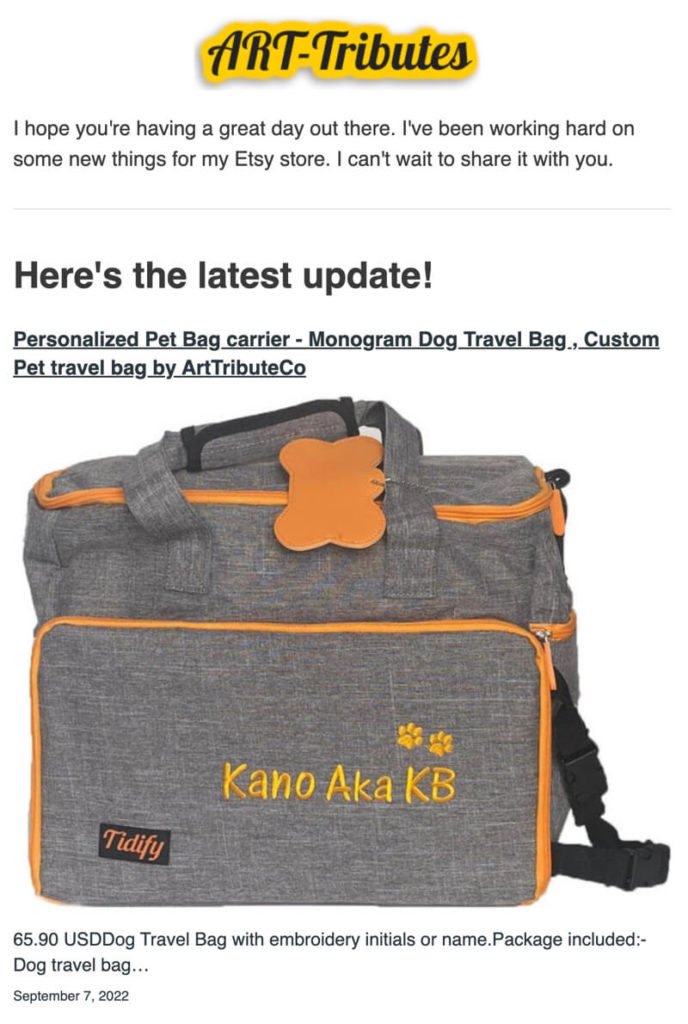
Here’s an example from Etsy seller ART-Tributes who uses automation to send out new product announcements:

Email promoting new product in an Etsy shop

Make Etsy part of a bigger ecosystem

Your Etsy store is your front door, but it doesn’t have to be your whole business.

Etsy is great for visibility and sales—but owning your audience, branding, and marketing channels (like email or a standalone website) gives you room to grow.

🧭 Treat Etsy as a traffic generator—not your final destination. Integrate tools like AWeber, Canva, or a personal website to build long-term business success.


Frequently asked questions

How do I increase visibility for my Etsy listings?

Use specific keywords in your titles, tags, and descriptions. Match buyer intent with long-tail phrases like “custom pet portrait in watercolor” instead of just “pet art.”

Does renewing Etsy listings improve views?

Not significantly. Etsy gives new listings a short-term boost, but renewing an old listing won’t increase visibility long-term. Focus on improving listing quality and relevancy instead.

What are the best ways to drive off-platform traffic to my Etsy store?

Use Instagram, Pinterest, YouTube, and email marketing. These channels help attract customers who wouldn’t otherwise discover you on Etsy.

How does Etsy decide what to rank first in search results?

Etsy looks at relevancy, listing quality score (conversion rate), customer satisfaction, and shop policies. Listings that lead to more sales are ranked higher.

Can email marketing really help my Etsy sales?

Yes. Email helps you reach customers who already trust your brand. And when those customers buy, it improves your Etsy search rankings due to better conversion rates.

Turn Etsy into a storefront

A storefront is great. But it’s called the front for a reason.

Done right, your Etsy store can be an invaluable part of your online presence. But it doesn’t have to be your entire presence, either. 

Integrate with AWeber to turn your Etsy storefront into something more—a way to attract foot traffic.

The post How to get more views on Etsy: 6 proven ways to increase traffic and sales appeared first on AWeber.


from AWeber https://ift.tt/14jYPUT
via IFTTT

25 Aussie TikTok creators brands should know in 2025

Wondering how to team up with the right TikTok influencers in Australia? You’re not alone. With nearly 9 million active Aussie users (including 38% of the population over 18), TikTok is one of the fastest-moving brand networks, but finding the right creators can be tricky. Trends shift fast, attention spans are short and what works globally doesn’t always land locally. Say goodbye to guesswork in TikTok influencer marketing with a curated list of 25 top Australian creators—from lifestyle creators to comedians, foodies to fashionistas and more. Plus, get practical tips for picking the right talent, spotting red flags and running smarter influencer campaigns that convert.

10 must-know Aussie TikTok influencers in 2025 (quick picks)

To kick things off, below are 10 of Australia’s most prominent TikTokers across varying niches.

1. Anna Paul (@anna.paull)

Anna Paul TikTok screenshot vlogging her adventures in Texas

Source: TikTok

  • Followers: 6M
  • Niche: Lifestyle, beauty, vlogs

Anna Paul is a prominent Australian influencer and model known for engaging daily vlogs and lifestyle content featuring her family members and pets. She has amassed a significant following across platforms like Instagram, YouTube and TikTok and owns her own skincare line, Paullie. 

2. Bridey Drake (@brideydrake)

Bridey Drake TikTok screenshot of a video featuring her brother, Michael

Source: TikTok

  • Followers: 3.5M
  • Niche: Comedy, lifestyle, rural life

Bridey Drake is an Australian TikTok star loved for her humorous and relatable content on girlhood, mental health and rural living. She gained popularity during the pandemic and was named TikTok Creator of the Year in 2024.

3. Latisha Clark (@latishaclarkk)

Latisha Clark TikTok screenshot doing an outfit reveal to Don’t Smile by Sabrina Carpenter

Source: TikTok

  • Followers: 3.4M
  • Niche: Vlogs, fashion, cosmetics

Latisha Clark is a TikTok star from Australia known for her vlogs, style, cosmetics, lip sync and day-to-day content. In many of her videos, she includes her family members who have become well-known to her audience.

4. Michael Finch (@michaelfinch)

Michael Finch TikTok screenshot cooking creamy beef one pot pasta

Source: TikTok

  • Followers: 2.6M
  • Niche: Food, lifestyle, beauty

Michael Finch is an Australian content creator who shares everything from food recipes to lifestyle videos, men’s beauty and comedy. He has a significant following across TikTok and Instagram and was even crowned TikTok Australia’s Food Creator of the Year in 2024.

5. Fonzie Gomez (@fonziegomez)

Fonzie Gomez TikTok screenshot interviewing people about Gladiator II in Sydney

Source: TikTok

  • Followers: 2M
  • Niche: Street interviews, lifestyle, pop culture

Fonzie Gomez shares engaging street interviews with random individuals, from everyday people to celebrities. His content spans various industries, including sports, music and fashion.

6. Indy Clinton (@indyclinton)

Indy Clinton TikTok screenshot dancing in the kitchen with her partner and two children

Source: TikTok

  • Followers: 2.1M
  • Niche: Motherhood, lifestyle, fashion

Indy Clinton is a mother of three who shares candid insights into her family life, fashion and personal experiences. At the 2023 TikTok Awards, she was named TikTok Creator of the Year.

7. Sarah Magusara (@sarahmagusara)

TikTok screenshot of Sarah Magusara performing a trending dance challenge

Source: TikTok

  • Followers: Over 18M
  • Niche: Lifestyle, family, dance

Sarah Magusara is one of Australia’s most followed social media influencers, known for her fun lip-syncing videos, family lifestyle content and bubbly personality. She quickly rose to internet fame through TikTok, inspiring millions with her energy and creativity.

8. Havea 676 (@havea_676)

TikTok screenshot of Havea Matangi vlogging his dining adventures

Source: TikTok

  • Followers: 2.2M
  • Niche: Comedy, dance, family life

Havea Matangi, known as Havea 676, is an Australian TikTok star celebrated for his comedic skits, dance clips and family-oriented content. His videos often highlight his Polynesian heritage.

9. Millie Ford (@millie)

Millie Ford TikTok screenshot impersonating performers at local markets

Source: TikTok

  • Followers: 1.5M
  • Niche: Comedy, character impersonations

Millie Ford is an Australian comedian known for her satirical videos that impersonate iconic Australian personas, such as primary school teachers, tuckshop ladies and PCYC mums. Her relatable content gained her a massive following during the pandemic.

10. Tilly Oddy-Black (@tillyoddyblack)

TikTok screenshot of Tilly Oddy-Black performing a skit

Source: TikTok

  • Followers: 1M
  • Niche: Mental health, wellness, relationships

Tilly Oddy-Black is a Brisbane-born, Sydney-based actress, writer and comedian known for her sharp, character-driven comedy on TikTok. With over 117 million likes, she has established herself as a prominent figure in Australian online comedy.

The Australian TikTok influencer landscape

TikTok continues to grow rapidly in Australia, with around 8.5 million active users and over half of Aussies aged 18 to 34 spending time on TikTok monthly. Those impressive numbers make TikTok one of the most engaging local social networks. Short-form video dominates user attention—you’ll see measurable results when tapping into this content.

Over 60% of Australian marketers say TikTok influencer campaigns deliver stronger engagement than other networks. With TikTok’s format encouraging authentic, creative content, brands can reach audiences naturally—key for communicating with Australian audiences. 60% of Aussies prefer seeing real people in ads, especially those aged 25-44. Overall, TikTok’s vast user base and highly visible algorithm can create significant opportunities for brands to connect and build community through short, shareable videos. Knowing how to navigate this fast-moving space is essential for successful influencer partnerships.

How to find the right Australian TikTok influencers for your brand

Choosing the right TikTok influencers can make or break your campaign. Here are key factors to consider:

1. Audience alignment

Ensure the influencer’s followers match your target market in age, location, interests and values. With 70% of Australians aged 16-64 using social media daily, understanding your audience’s social media habits and preferences is crucial for effective targeting.

2. Engagement over follower count

High follower numbers don’t always mean high engagement. Look for influencers whose content gets real interaction—likes, comments and shares. These show an active and interested audience. Meaningful engagement is becoming more critical than sheer reach. 58% of Australian marketers use engagement rates as the top metric to measure influencer success, highlighting why engagement matters more than follower count.

3. Content style and authenticity

Review their videos to ensure their tone and style fit your brand personality. Authentic creators who connect with their audience drive better trust and campaign results. Users crave genuine, relatable content over polished ads.

4. Previous brand collaborations

Check their past sponsored posts to see how they handle partnerships. Transparent, well-executed collaborations usually indicate a professional influencer.

5. Brand safety and reputation

Assess any past controversies or content that might clash with your brand values. Protecting your brand’s reputation is critical. Sprout Social’s Influencer Marketing tool allows users to easily check and compare influencer brand safety scores.

6. Platform and campaign fit

Consider if TikTok’s short-form video format suits your campaign goals and whether the influencer regularly produces content that performs well on the platform. Short-form video continues to grow rapidly, with TikTok and Instagram Reels leading engagement trends in Australia.

15 more standout TikTok personalities in Australia

To complete the list of 25, here are 15 more Aussie TikTok influencers to watch this year.

Female Australian TikTok influencers

11. Mikaela Testa (@mikaelatestacle)

TikTok screenshot of Mikaela Testa chatting in the backseat of a car

Source: TikTok

  • Followers: 2.6M
  • Niche: Lifestyle, beauty, OnlyFans, commentary

Mikaela Testa is an Australian influencer known for her candid lifestyle content, beauty tutorials and commentary on social issues. She has garnered a substantial following on TikTok, where she shares her experiences and engages with her audience on various topics such as creator drama and the adult industry.

12. Sopha Dopha (@sophadophaa)

TikTok screenshot of Sopha Dopha getting ready and talking to her followers about AFW

Source: TikTok

  • Followers: 1.3M
  • Niche: Fashion, lifestyle, beauty

Sophia Begg, or Sopha Dopha, is a fashion and lifestyle influencer who rose to fame by sharing outfit inspirations and shopping hauls on her TikTok account. She has collaborated with brands like Princess Polly, Gymshark and White Fox Boutique. Sophia also founded a fashion line, All For Mimi.

13. Veruca Salt (@verucasalt444)

Veruca Salt TikTok screenshot drinking a McDonald’s Australia Coke Zero

Source: TikTok

  • Followers: 1.2M
  • Niche: Lifestyle, personal experiences

Veruca Salt is an Australian TikTok creator who shares personal content, including her experiences as a mother. She has been open about her journey, including the tragic loss of her son, Cash, which has resonated with many of her followers. Despite her hardships, she remains one of the most authentic and transparent Australian creators.

14. Sofia Ligeros (@sofialigeros)

Sofia Ligeros TikTok screenshot showing her followers around the garden of a home in Queenstown

Source: TikTok

  • Followers: 1.2M
  • Niche: Travel, lifestyle, comedy

Sofia Ligeros, also known as Aunty Sofia, is an Australian TikTok creator who shares content around travel, lifestyle and comedy. She has built a substantial following by documenting her adventures and sharing humorous takes on various topics.

15. Nariman Dein (@nariman.dein)

TikTok screenshot of Nariman Dein performing a skit on parents of newborn babies

Source: TikTok

  • Followers: 1M
  • Niche: Comedy, fashion, lifestyle

Nariman Dein is an Australian TikTok star known for her comedy and fashion content. She hosts the podcast Psych & the City and shares daily videos that often explore humorous aspects of everyday life.

16. Emma Mac (@0emmamac)

TikTok screenshot of Emma Mac doing a GRWM and life update video

Source: TikTok

  • Followers: 893.7K
  • Niche: Fashion, lifestyle

Emma Mac is an Australian TikTok creator known for her fashion and lifestyle content. She showcases her style and shares outfit inspirations, gaining a substantial following on the platform.

17. Starr McGowan (@starr)

TikTok screenshot of Starr McGowan talking about her experience as an Aussie in the USA

Source: TikTok

  • Followers: 176.8K
  • Niche: Comedy, lifestyle, pop culture

Starr McGowan is a Sydney-based content creator who creates sharp comedic skits and nostalgic takes on pop culture. Her TikTok content often delves into relatable moments and Aussie nostalgia, forming a witty commentary that Gen-Z audiences especially love. Beyond TikTok, Starr co-hosted the 2022 AIMCO Awards and now co-hosts the 7Plus online show, Reality Check.

18. Sam Todd (@samjtodd)

TikTok screenshot of Sam Todd giving her followers a ring tour

Source: TikTok

  • Followers: 251.6K
  • Niche: Travel, shopping, lifestyle

Sam is a Brisbane-based creator known for her vintage fashion finds, designer bag hunts and aesthetic travel vlogs. She rose to fame on TikTok after documenting a trip to Japan to find a Coach green apple bag. Her content blends fashion, nostalgia and no-gatekeeping energy.

19. Deja Clark (@deja_clarkk22)

Deja Clark TikTok screenshot of her outfit of the day

Source: TikTok

  • Followers: 150.4K
  • Niche: Fashion, lifestyle, entrepreneurship

Deja Clark is a 14-year-old Australian content creator and entrepreneur from the Gold Coast. She gained prominence through her engaging TikTok and Instagram content, where she shares lifestyle vlogs, beauty tutorials, dance videos and family moments. Deja is Latisha Clark’s younger sister.

Male Australian TikTok influencers

20. Liam Dowling (@liam_dowling)

Screenshot of Liam Dowling’s TikTok video impersonating Aussie parents

Source: TikTok

  • Followers: 1.3M
  • Niche: Comedy, lifestyle, entertainment

Liam Dowling is an Australian content creator known for his comedic sketches and lifestyle videos. With a significant following on TikTok, he entertains his audience with humorous takes on everyday situations. Liam also expanded his presence to YouTube, where he shares longer-form content.

21. Chebbo (@chebbo)

TikTok screenshot of Chebbo sharing a beef brisket cooking fail with his followers

Source: TikTok

  • Followers: 1.2M
  • Niche: Cooking, food content, comedy

Chebbo is a social media personality and YouTuber known for posting cooking videos on his TikTok account and YouTube channel. He has gained popularity for his engaging food content, including unique recipes and cooking challenges. He usually infuses humour and personality into his recipes, making his content entertaining and accessible.

22. Matt Hey (@alright.hey)

TikTok screenshot of Matt Hey vlogging his first experience at Nobu

Source: TikTok

  • Followers: 357.9K
  • Niche: Comedy, lifestyle, LGBTQ+ advocacy

Matt Hey, known online as Alright Hey, is a Sydney-based content creator and self-proclaimed “Australia’s Biggest Glamazon.” He gained popularity through his humorous takes on everyday life, influencer culture and LGBTQ+ experiences. Matt’s content ranges from comedic sketches to insightful commentary, and he also hosts the podcast High Scrollers, where he discusses various topics with fellow creator Brittney Saunders.

23. Mitchell Coombs (@mitchell_coombs)

TikTok screenshot of Mitchell Coombs ranting about concert tickets

Source: TikTok

  • Followers: 432K
  • Niche: Comedy, podcasting, lifestyle

Mitchell Coombs is an Australian content creator and podcaster known for his humorous takes on everyday life. He shares comedic content on TikTok and hosts a podcast, engaging his audience with relatable and entertaining discussions around Australian culture, politics and LGBT issues.

Australian couple TikTok influencers

24. Dani and Blake (@daniandblake)

TikTok screenshot of Dani and Blake performing a skit on the streets of London

Source: TikTok

  • Followers: 703.4K
  • Niche: Family, parenting, lifestyle

Dani and Blake are a Sydney-based couple who share their journey through parenthood and family life on TikTok. They are parents to Leo and Mia and have created content series like “Hired or Fired,” engaging their audience with relatable family moments.

25. Georgie and Zac (@georgieandzac)

Georgie and Zac TikTok screenshot dancing in their bedroom

Source: TikTok

  • Followers: 1.6M
  • Niche: Family, parenting, lifestyle

Georgie and Zac are a couple who share their journey through parenthood and family life. Their content includes relatable parenting moments, family skits and lifestyle vlogs.

Collaborate with Aussie TikTok influencers

TikTok will continue reshaping influencer marketing with its evolving, short-form video content and highly engaged audiences. If you’re marketing on TikTok, partnering with the right Australian influencers is key to maximising reach and ROI. Sprout Social’s reimagined Influencer Marketing tool uses AI-powered search and vetting to help you find, analyse and collaborate with TikTok creators who truly fit your brand. Ready to boost your TikTok influencer ROI? Take a product tour today and see how the tool can transform your campaigns.

The post 25 Aussie TikTok creators brands should know in 2025 appeared first on Sprout Social.


from Sprout Social https://ift.tt/WL8TBsI
via IFTTT

How millennials use social media: What marketers need to know

Side parts. Skinny jeans. The Valencia filter. We could only be talking about one generation: Millennials.

Once dismissed as unforgivably cringe, Millennials are making a pop culture comeback. After dominating the headlines for over a decade, the generation—born between 1981-1996—took a step back as Gen Z sauntered into the limelight.

But in recent months, they’ve regained cultural cache and are finally getting the flowers they deserve for pioneering social media culture. Millennials were the earliest adopters of some of the networks that have become global behemoths.

As Monica Dimperio—the force behind Hashtag Lifestyle, the consultancy making brands cooler, culturally fluent and impossible to scroll past—put it: “Millennials grew up both with and without social—we remember the world before filters and followers—so our relationship with it is deeply emotional. We’re still talking about our AIM screen names and which MySpace song played on our profile. We literally invented the photo dump. And that early experience taught us to care about presentation, meaning and vibe—even now. We built the culture Gen Z now thrives in.” Dimperio is a Millennial herself, as well as a brand builder and digital native who helped define influencer culture.

Despite the nostalgia associated with Millennials and social media, 31% of Millennials actually plan to use social more in 2025, the most of any generation, per The 2025 Sprout Social Index™. As their income and spending power goes up, their increased time on social translates to real opportunity for brands.

In this guide, we explain how Millennials want brands to show up on social media and how to market to them the right way.

How to reach Millennials on social media

On social, Millennials look for connection. Whether it’s with people they actually know, influencers and celebrities, or even brands. As Dimperio explained, “Because we’ve grown up alongside the evolution of every major platform, social media has become emotional infrastructure for Millennials. It’s how we remember birthdays, stay in touch with old friends and feel a little less alone when we’re watching a show by ourselves on the couch. It’s companionship.”

Data backs this up. According to the Index, 92% of Millennials use social to keep up with cultural moments. Which aren’t exactly the same thing as trends. Instead, they’re looking for shared experiences and touchstones.

Dimperio goes on, “We’re not chasing trends or trying to become influencers. We’re looking for hacks, humor and a reminder that we’re not the only ones spiraling through whatever life stage we’re in (aka middle age). That’s why we gravitate toward content that teaches, entertains or makes us feel seen. If it helps us cook a better dinner, find a better brow gel or sends us into a meme spiral because it hits way too close to home, we’re following.”

Though they still turn to search engines for research, that is quickly changing. Nearly 30% are most likely to use social to find information—specifically product reviews and recommendations—per the Q2 2025 Sprout Pulse Survey.

Yet, brands shouldn’t make the mistake of pushing a hard sell. Millennials want brands to stop using a salesly or corporate tone and, instead, lean into authenticity, according to the Index.

“We don’t need perfection, we need personality. If it feels like marketing, we’re out. But if it feels like a friend with taste? We’re in,” sums up Dimperio.

What social media networks do Millennials use and why?

According to the Q2 2025 Sprout Pulse Survey, 85% of Millennial social media users are on Facebook, 80% are on YouTube and 74% are on Instagram, making these platforms the most popular with the generation. Millennials are most likely to use all of these channels for entertainment and connecting with friends and family.

Digging deeper into how they use certain platforms, Millennials report TikTok is their favorite channel to turn to for social commerce, closely followed by Facebook and Instagram, according to the Q4 2024 Sprout Pulse Survey. The Q1 2024 Sprout Pulse Survey found that they are also most likely to use Facebook and Instagram for staying up to date on the news, and Facebook for customer care.

A data visualization that lists the percentages of Millennials that use different social networks for social commerce, news and events, and customer care.

What brand content do Millennials engage with?

On their most-used channel, Facebook, Millennials are most likely to engage with text-based brand posts, per The 2024 Social Media Content Strategy Report. On Instagram, it’s short-form video (<15 seconds) and on YouTube, long-form video (>60 seconds).

Though Millennials ultimately consume all content on most platforms, the key is understanding the nuance and culture of each one. That doesn’t mean completely recreating posts from scratch—and overtaxing your team’s bandwidth. It means charting multiple points of distribution and connection, and prioritizing the platforms that matter most to this generation.

Regardless of format, the characteristics Millennials care about most in brand content are authenticity, entertainment and reliability, according to Index data. Compared to all other generations, they’re also most likely to say if a brand doesn’t respond on social, they’re strongly likely to buy from a competitor next time.

As Dimperio says, “Millennials are both the most skeptical and the most brand-loyal generation.” When you win them over, you earn a customer for life. But doing so takes a commitment to building a truly unique brand persona and excellent customer experience.

Millennial social media trends

As Millennials have matured, they’ve gone from being the centerpiece of marketing plans to middle-aged consumers with less cultural sway, but even more market impact. To reach Millennials, brands should invest in emerging networks, stay true to their brand ethos and center social in their go-to-market strategies.

This is not a trends listicle that will inspire specific content ideas (for that, read our top social media trends article). Instead, these trends map out the future of Millennials’ social media habits, and give clues that reveal what it takes to build lasting resonance as this generation reaches the next stage of their lives.

Emerging network early adopters

Interestingly, Millennials’ desire for connection on social is driving them to use more community- and creator-driven platforms over the next few months, per the Q2 2025 Sprout Pulse Survey. 63% plan to use Reddit, while 57% plan to use Bluesky, Threads and Mastadon. Another 53% plan to use Patreon and Substack.

Millennials are most likely to jump into these new platforms if their friends and family members are already using them, according to the same survey. They also sign up for new networks when they’re interested in niche communities and topics, or when influencers and creators they follow join the network.

But if brands joined every platform in the crowded landscape of emerging networks, they would devote all of their team’s time to developing these new channels. Instead, they should invest in experiments on one or two networks where their target audience is, or where niche communities related to their brand already exist.

They’re not looking for brands to be viral or trendy

The Q2 2025 Sprout Pulse Survey found that Millennials believe the top two things brands should prioritize are audience engagement and posting original content—even more so than being viral or trendy. Which is a consistent finding across many of the reports cited in this article.

This is an important area where marketing to Gen Z differs from marketing to Millennials. While over half of Gen Z say it’s cool for brands to jump on viral trends, only 43% of Millennials say the same, per the Index. Millennials are also slightly more likely to say that the originality of a brand’s content matters.

Dimperio says this is because of Millennials’ early days online. “Originality still matters to us because we remember the golden age of blogs, niche memes and cultural moments that weren’t curated by an algorithm. We know what creativity looks like…and what’s just a recycled trend in a different font.”

There’s a persistent false belief that brands can market “to everyone” on social media, and that going viral is a hole-in-one strategy for every demographic. In reality, Millennials are more discerning than their younger counterparts and have higher standards for creativity. They’re looking for a brand with a consistent voice that “gets them” rather than a copy-and-paste unhinged persona.

Social is inextricably tied to their purchasing decisions

Social has transformed the way Millennials shop. Case in point:

  • Over half make spontaneous purchases inspired by social at least once a month (The 2025 Sprout Social Index™).
  • 35% are more likely to buy something they discovered on social in this economic climate (Q2 2025 Sprout Pulse Survey).
  • Millennial consumers are most likely to make daily or weekly purchases inspired by an influencer—on par with Gen Z (The State of Influencer Marketing Report).

Dimperio explains how this should impact the ways brands approach social selling. “Social media completely collapsed the funnel. For Millennials, discovery, research and purchase all happen in the same scroll. Brands need to get it right—fast. Paid ads and algorithm tokens practically force us to see things two to five times until we eventually give in. Peer pressure marketing is real. So when something does hit organically, like a product recommendation from a friend, a creator we trust or a brand we already love, it actually feels refreshing.”

Even as shopping on social media becomes more ubiquitous, successfully grabbing Millennial attention requires a synchronized approach, as this generation uses both digital and physical storefronts. Dimperio adds, “I still walk into stores. I love the IRL experience. But maybe that’s the takeaway here: If your brand is going to live online, the digital and physical need to feel emotionally connected. Do they feel the same? Same tone, same vibe, same trust factor?”

Positive views on the personal impact of social media

While the negative aspects of social media dominate news stories, Millennials are more likely than other generations to view social media positively. The Q2 2025 Sprout Pulse Survey found that 68% of Millennials say social media has a positive impact on their mental health. Another 61% said it had a net positive impact on their social lives, and over half agreed it had a net positive impact on their financial decisions.

This is because Millennials use social to build communities beyond geographic limitations, amplify movements and stay close to friends as life gets busier. As they’ve grown up, social has helped them launch careers, grow businesses and explore their identities. Even with the challenges—burnout, comparison and algorithm fatigue—Millennials are more likely to see the overarching benefit.

Brands Millennials love on social

As mentioned, Millennials are a somewhat misunderstood generation. Marketing to them the same way you market to Gen Z and not accounting for their generational nuances doesn’t win their favor. They’re looking for brands with a clear, well-established identity.

Dimperio explains it this way: “The brands we love feel like people. When I build a social strategy, I treat it like creating a character—voice, visuals, tone, timing. It’s a full personality. Millennials connect with brands like that, ones who are intentional, consistent and actually know who they are.”

Here are three brands who have mastered the art of Millennial marketing, and found a way to breakthrough in a way that feels true to their image.

Sézane

Good taste. Classic elegance. Where grown ups shop. Sézane, the French brand that empowers you to build your own “Parisian wardrobe,” is a staple among Millennial women. These consumers, who were sold on the mystique of French women’s style at a young age, make up a large percentage of Sézane’s cult following.

A Sezane TikTok video featuring a midsize model trying on different swimsuits in short transitions to upbeat music

The brand owes much of their recent success to social media hype. On their own channels, they’re applauded for using models that have body types that match their core audience, and for designing clothes built with comfort, style and Millennial style icons in mind. The brand also leans into creator-led marketing and user-generated content.

Give your brand a Millennial makeover: Take a cue from Sézane, and lean into the early influences on Millennial taste. Understand why they’re motivated to gravitate toward specific aesthetics, and incorporate those themes into your content.

Ceremonia

Ceremonia, the clean hair care brand rooted in a Latinx heritage, is a founder-led company with a clear penchant for Millennial branding. Founder Babba C. Rivera is incredibly cool, a Forbes 30-under-30 alum and a Millennial herself. Her knack for storytelling—from her heritage to her brand’s mission—resonates with the generation. Plus, the brand’s warm, coordinated colorways and simple logo are Millennial-coded.

An Instagram video from Ceremonia founder Babba C. Rivera showcasing her haircare routine for a brand giveaway

On social, the brand leans into Rivera’s inspiring story, while also creating polished visuals that showcase their products.

Give your brand a Millennial makeover: What makes your company unique? What can you share about your founder or the origin of your company? Where are your products made? These are the details your Millennial audience wants to learn more about. They want to understand who they’re buying from and how their products are sourced and manufactured. Use social to tell your story.

Graza

If anything is true about Millennials, it’s that they love to take pantry staples and give them a refined twist. While there are countless examples, Graza stands out as a brand that has risen to the forefront of Millennial consciousness.

An Instagram video from Graza of a baguette swirling in olive oil with a text overlay that reads "aligning my chakras"

The brand commonly associated with their signature olive oil exemplifies Millennial fancification, and celebrates this on social. Whether it’s by reposting their fans’ Graza-inspired tiny tattoos or demonstrating how to incorporate their olive oil into a mocktail with a complex flavor profile, the team is on it. They even partnered with James Jones, Love On The Spectrum showrunner.

Give your brand a Millennial makeover: While Graza doesn’t exclusively market to Millennials (in fact, sometimes they’re categorized as a Gen Z brand), their originality and strong community management enable them to reach across generations. In your own social content, consider how partnering with Millennial creators and media personalities, and serving up Millennial-core can help you expand your audience.

Don’t forget about Millennials in your social strategy

Millennials may no longer be the new kids on the block, but they’re still one of the most active generations on social. As their buying power continues to grow, brands need to pay attention to this demographic’s specific habits, preferences and values. They don’t want trend-chasing or faceless corporate posts. They want connection, creativity and original storytelling.

The brands that win with Millennials understand this isn’t just a matter of repackaging Gen Z tactics. It requires a strategy rooted in understanding the nuances of their online behavior, the platforms they gravitate toward and the emotional reasons they use social in the first place.

If you’re building a brand meant to last, don’t sleep on the generation that helped build social as we know it.

Looking for more on generational trends and the current state of social? Read our guide to generational marketing.

The post How millennials use social media: What marketers need to know appeared first on Sprout Social.


from Sprout Social https://ift.tt/S4r3L2d
via IFTTT

15 Essential types of marketing emails for higher engagement and revenue

15 Types of emails to use in your marketing

Email marketing remains one of the most effective digital marketing channels, with an average ROI of $42 for every $1 spent. You've heard the advice — send personalized, targeted emails, welcome subscribers to your list, recognize customer milestones and celebrations, and so on.

But did you know there are different types of emails to help you do each of those things?

Email marketing encompasses 15 distinct email types, each serving specific purposes in the customer journey from awareness to retention. You don't have to use all of them, but let this comprehensive guide help you find the best way to reach your audience.

Quick Reference: 15 Essential Marketing Email Types

Conversion-Focused Emails

  1. Transactional emails - Order confirmations, receipts, shipping notifications
  2. Welcome emails - First impression emails for new subscribers
  3. Promotional emails - Sales announcements and special offers
  4. Cart abandonment emails - Recovery emails for incomplete purchases
  5. Launch emails - New product or service announcements

Relationship-Building Emails

  1. Nurture emails - Lead qualification and education sequences
  2. Storytelling emails - Brand narrative and emotional connection
  3. Milestone emails - Customer celebrations and anniversaries
  4. Inspiration/educational emails - Tips, tutorials, and how-to content
  5. Digest emails and newsletters - Regular content updates

Engagement & Retention Emails

  1. Re-engagement emails - Win-back campaigns for inactive subscribers
  2. Targeted emails - Segmented campaigns based on behavior or demographics
  3. Challenge or course emails - Educational series and skill-building content
  4. Survey emails - Feedback collection and market research
  5. Privacy policy updates - Compliance and transparency communications

Detailed Email Type Breakdown

1. Transactional Emails

Definition: Transactional emails are automated messages triggered by specific customer actions, providing receipts or confirmations rather than promotional content.

Key characteristics:

  • 99% higher open rates than promotional emails
  • Triggered by user behavior (purchases, sign-ups, password resets)
  • Required for customer service and legal compliance

Common examples include:

  • Order confirmations and receipts
  • Shipping and delivery notifications
  • Account creation confirmations
  • Password reset emails
  • Subscription confirmations
  • Payment notifications

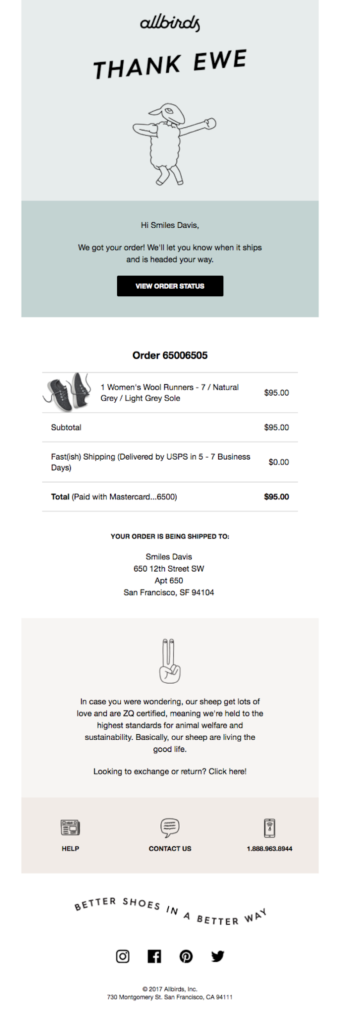
Best practice: Even transactional emails can reflect brand personality. Companies like Allbirds infuse sustainability messaging into order confirmations, turning functional emails into brand touchpoints.

Transactional email example
Photo courtesy of Really Good Emails

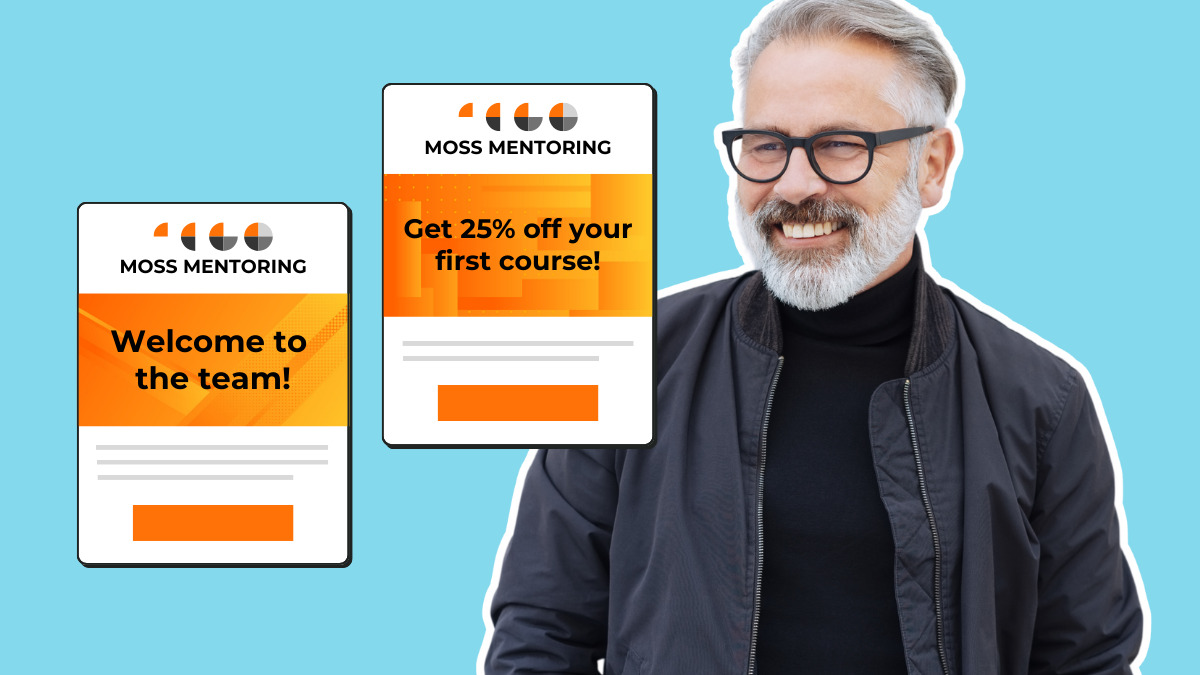
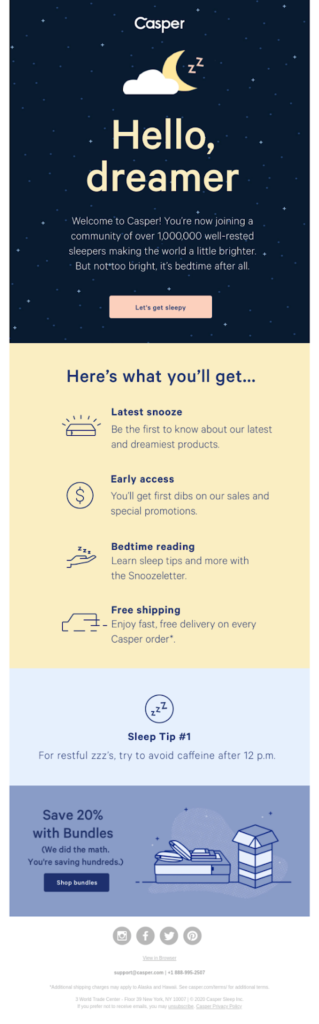
2. Welcome Emails

Definition: Welcome emails are the first automated message new subscribers receive, designed to establish relationships and set expectations.

Performance statistics:

  • Open rates average 50-86% (significantly higher than regular campaigns)
  • Generate 320% more revenue per email than other promotional emails
  • Best sent within 1 hour of subscription

Essential welcome email elements:

  • Thank you message for subscribing
  • Clear value proposition and expectations
  • Delivery of promised incentives (discounts, downloads)
  • Introduction to your brand story
  • Social media links and contact information

Pro tip: Welcome email series (3-5 emails over the first week) perform better than single welcome messages, with 13% higher click-through rates.

Welcome email example
Photo courtesy of Really Good Emails

Related: Welcome email campaigns: How to onboard new subscribers

3. Promotional Emails

Definition: Promotional emails are broadcast messages designed to drive immediate action through product announcements, sales, or special offers.

Types of promotional emails:

  • Flash sales - Limited-time offers creating urgency
  • Seasonal promotions - Holiday and event-based campaigns
  • Product launches - New item introductions
  • Exclusive member offers - Subscriber-only deals
  • Event invitations - Webinars, workshops, conferences

Optimization tips:

  • Use clear, action-oriented subject lines
  • Include compelling call-to-action buttons
  • Create visual hierarchy with images and formatting
  • A/B test send times and content variations

Best practices: Limit promotional emails to 20% of total email volume to maintain subscriber engagement and avoid spam complaints.

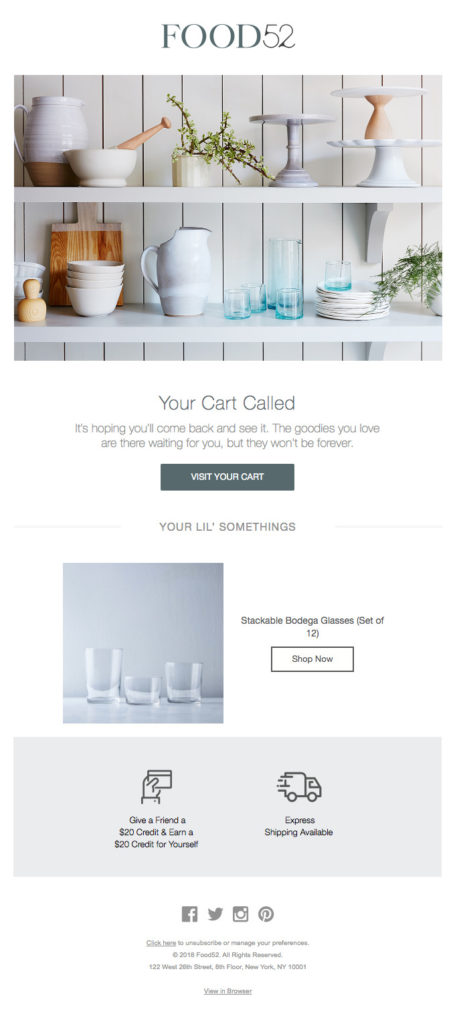
4. Cart Abandonment Emails

Definition: Automated emails sent to customers who add products to their shopping cart but leave without completing the purchase.

Cart abandonment statistics:

  • Average cart abandonment rate is 69.99% across all industries
  • Cart abandonment emails recover 15% of lost sales on average
  • Series of 3 emails perform better than single messages

Effective abandonment email sequence:

  1. First email (1 hour later): Simple reminder with cart contents
  2. Second email (24 hours later): Address potential concerns, add social proof
  3. Third email (72 hours later): Offer discount or free shipping incentive

Optimization tactics:

  • Use dynamic product recommendations
  • Include product images and descriptions
  • Address common purchase objections
  • Offer customer support contact information
  • Create urgency with limited-time offers
cart abandonment email
Photo courtesy of Really Good Emails

5. Launch Emails

Definition: Specialized announcement emails that introduce new products, services, or features to your subscriber base.

Pre-launch sequence strategy:

  • Teaser emails - Build anticipation 2-3 weeks before launch
  • Early access - Reward loyal subscribers with exclusive previews
  • Launch day - Official announcement with full details
  • Last chance - Final call-to-action before launch period ends

Launch email best practices:

  • Use compelling subject lines that create curiosity
  • Include clear value propositions and benefits
  • Provide social proof through early reviews or testimonials
  • Offer limited-time launch incentives
  • Direct traffic to dedicated landing pages

Timing consideration: Send launch emails when your audience is most active, typically Tuesday-Thursday between 10 AM-2 PM in their local time zone.

6. Nurture Emails

Definition: Nurture emails are automated sequences that guide prospects through the sales funnel using targeted content based on their interests and behaviors.

Key benefits:

  • Companies using email nurturing generate 50% more sales-ready leads
  • Cost 33% less than traditional lead generation methods
  • Increase purchase amounts by 47% on average

Effective nurture email strategies:

  • Drip campaigns tied to lead magnets
  • Educational content addressing pain points
  • Gradual introduction of products/services
  • Social proof and customer testimonials
  • Exclusive offers for engaged prospects

Timing: Most effective nurture sequences span 4-7 emails over 2-4 weeks, allowing sufficient time for relationship building without overwhelming subscribers.

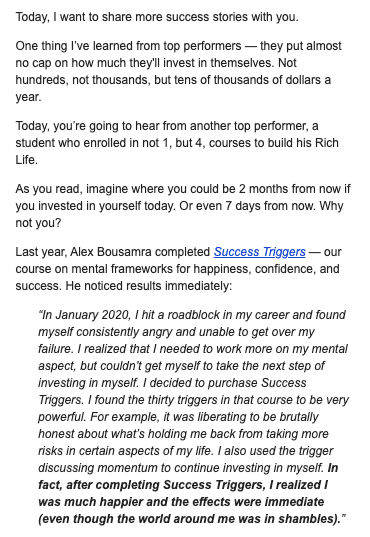
7. Storytelling Emails

Definition: Storytelling emails use narrative techniques to build emotional connections and communicate brand values beyond direct sales pitches.

Psychological benefits:

  • Stories are 22 times more memorable than facts alone
  • Create emotional connections that drive brand loyalty
  • Humanize brands and build trust with audiences
  • Encourage social sharing and word-of-mouth marketing

Effective storytelling email formats:

  • Founder origin stories
  • Customer success stories and case studies
  • Behind-the-scenes company narratives
  • Personal anecdotes related to business lessons
  • Employee spotlights and team stories

Example: Entrepreneur Ramit Sethi regularly shares personal stories and customer transformations in daily emails, creating strong subscriber engagement and brand affinity.

storytelling email type

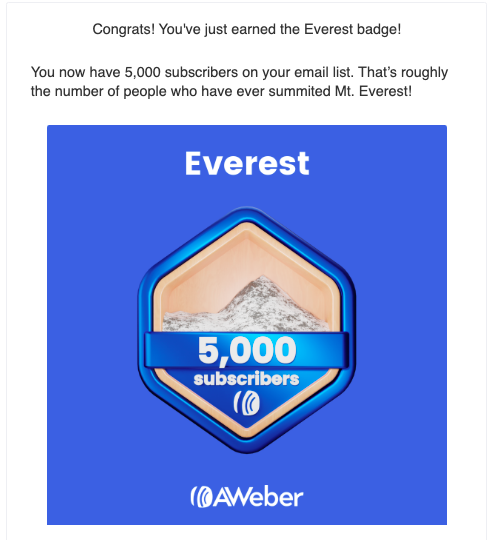
8. Milestone Emails

Definition: Celebration emails that recognize subscriber anniversaries, achievements, or important dates to strengthen customer relationships.

Types of milestone celebrations:

  • Subscription anniversaries - Annual thank you messages
  • Purchase milestones - Multiple order celebrations
  • Birthday emails - Personal occasion recognition
  • Achievement badges - Progress acknowledgments
  • Company anniversaries - Brand milestone sharing

Personalization impact:

  • Milestone emails have 70% higher open rates than standard campaigns
  • Generate 2.5x more clicks per email
  • Significantly improve customer lifetime value
  • Increase brand loyalty and retention rates

AWeber example: The company sends milestone badges to customers when they reach subscriber growth goals, creating shareable social media content and celebrating customer success.

milestone email

9. Inspiration/Educational Emails

Definition: Value-driven emails that provide tips, tutorials, and educational content without direct sales pitches.

Educational email formats:

  • How-to guides - Step-by-step instructions
  • Industry tips - Expert advice and best practices
  • Trend analysis - Market insights and predictions
  • Case studies - Real-world success examples
  • Resource roundups - Curated tool and content lists

Content marketing benefits:

  • Educational emails have 27% higher click-through rates
  • Build authority and thought leadership
  • Improve search engine optimization through content sharing
  • Generate organic social media engagement
  • Create opportunities for media mentions and backlinks

Example applications:

  • Jewelry retailers sharing seasonal styling guides
  • Software companies providing productivity tips
  • Fitness brands offering workout routines
  • Financial services explaining investment concepts

10. Digest Emails and Newsletters

Definition: Newsletters are regularly scheduled emails containing curated content, company updates, and valuable information for subscribers.

Content categories:

  • Company news and updates
  • Industry insights and trends
  • Educational articles and tutorials
  • Curated third-party content
  • Behind-the-scenes content
  • Product tips and best practices

Success metrics:

  • Average open rate: 21.33% for newsletter campaigns
  • Click-through rate: 2.62% across industries
  • Higher engagement when sent consistently (weekly or bi-weekly)

RSS integration: Tools like AWeber allow automatic newsletter creation from blog RSS feeds, streamlining content distribution without duplicating efforts.

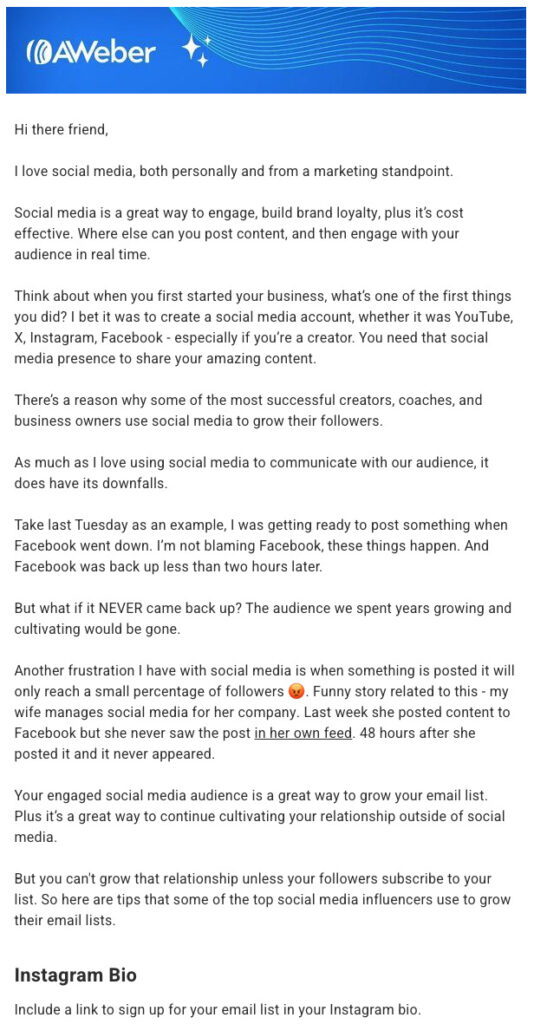
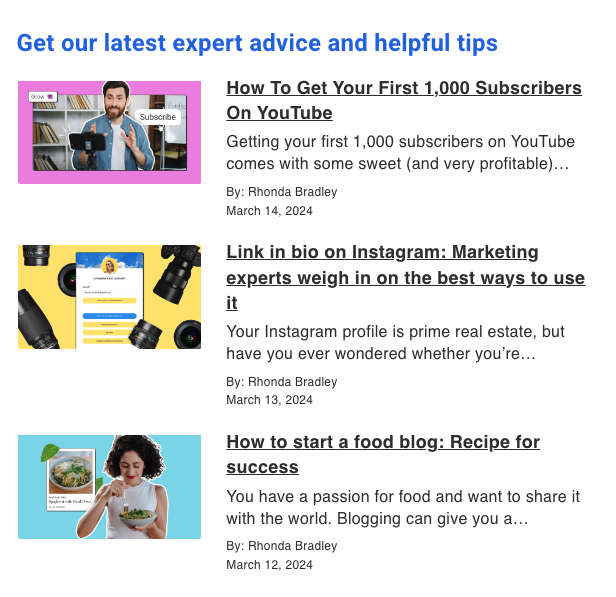
Here’s an example of AWeber’s customer newsletter. Each week we send high-value content, our most recent three blog articles, bonus tips, and more. 

AWeber newsletter example
Most recent blog posts included in AWeber's newsletter

11. Re-engagement Emails

Definition: Re-engagement emails target inactive subscribers to revive their interest and prevent list churn.

When to send re-engagement campaigns:

  • Subscribers haven't opened emails in 3-6 months
  • Click-through rates have significantly declined
  • Before removing inactive contacts from your list

Effective re-engagement strategies:

  • "We miss you" messaging with emotional appeal
  • Special offers or exclusive content
  • Preference center updates
  • Direct questions about continued interest
  • Clear unsubscribe options

Important note: Remove persistently inactive subscribers after re-engagement attempts fail. This improves overall deliverability and engagement metrics by focusing on genuinely interested recipients.

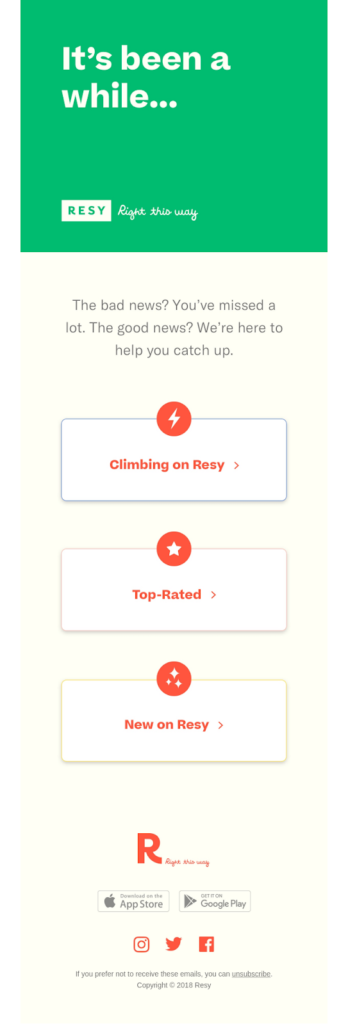
re-engagement email
Photo courtesy of Really Good Emails

12. Targeted Emails

Definition: Targeted emails use subscriber segmentation to deliver personalized content based on demographics, behavior, or purchase history.

Segmentation strategies:

  • Demographic segmentation - Age, location, gender, income
  • Behavioral segmentation - Purchase history, email engagement, website activity
  • Psychographic segmentation - Interests, values, lifestyle
  • Lifecycle segmentation - New subscribers, active customers, lapsed buyers

Performance improvements:

  • Segmented campaigns have 14.31% higher open rates
  • Generate 100.95% higher click-through rates than non-segmented campaigns
  • Produce 760% increase in email revenue

Advanced targeting: Use dynamic content blocks to personalize emails at scale, showing different products or messages to different segments within the same campaign.

13. Challenge or Course Emails

Definition: Educational email sequences that deliver structured learning content over multiple days or weeks, often used as lead magnets or paid digital products.

Common formats:

  • 7-day challenges - Daily actionable tasks
  • Email courses - Weekly lessons with assignments
  • Skill-building series - Progressive tutorials
  • Masterclasses - In-depth topic exploration

Engagement benefits:

  • Higher open rates due to anticipated content
  • Stronger subscriber relationships through value delivery
  • Natural segmentation of highly engaged users
  • Opportunities for upselling paid courses or coaching

Delivery schedule: Most successful email courses send content every 2-3 days, allowing subscribers time to implement lessons without overwhelming their inboxes.

14. Survey Emails

Definition: Feedback collection emails designed to gather customer insights, testimonials, and market research data.

Survey email applications:

  • Customer satisfaction - Post-purchase experience ratings
  • Product feedback - Feature requests and improvement suggestions
  • Market research - Industry trends and preferences
  • Content preferences - Email frequency and topic interests
  • Testimonial collection - Social proof gathering

Survey optimization tips:

  • Keep surveys short (3-5 questions maximum)
  • Offer incentives for completion
  • Use mobile-friendly survey tools
  • Send follow-up thank you messages
  • Share survey results with participants when appropriate

Response rates: Well-designed survey emails typically achieve 10-15% response rates, significantly higher than traditional market research methods.

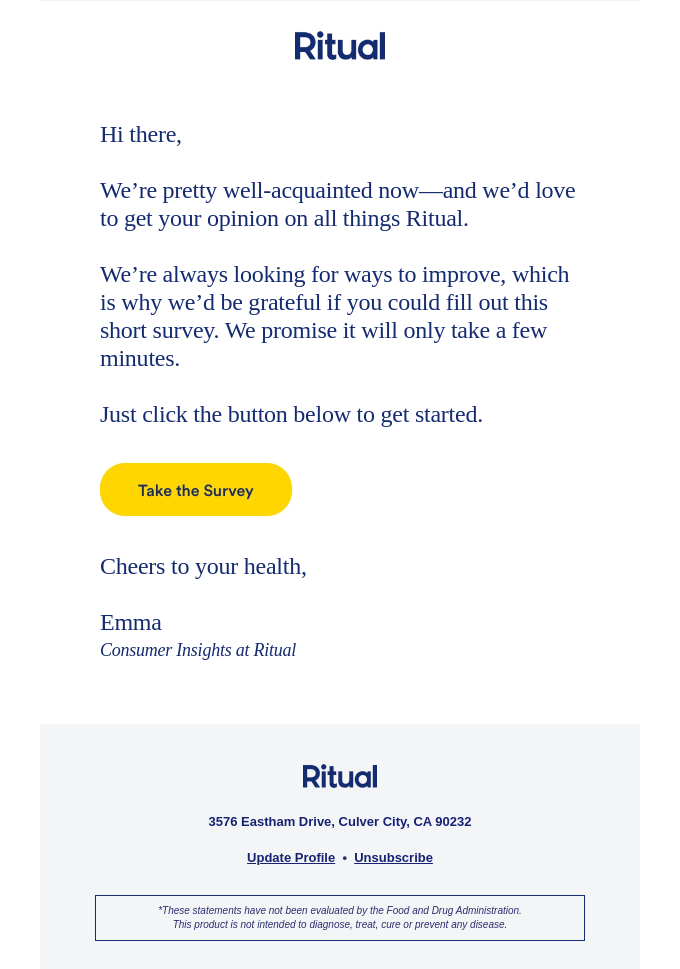
survey email
Photo courtesy of Really Good Emails

15. Privacy Policy Updates

Definition: Compliance-focused emails that inform subscribers about changes to data collection, storage, and usage policies.

Legal requirements:

  • GDPR compliance requires explicit consent and policy notifications
  • CCPA regulations mandate privacy right disclosures
  • CAN-SPAM Act requires clear unsubscribe options
  • CASL (Canada) has specific consent and identification requirements

Privacy email best practices:

  • Use clear, non-technical language
  • Explain changes and their impact on subscribers
  • Provide easy access to full policy documents
  • Include contact information for privacy questions
  • Maintain professional, trustworthy tone

Trust building: Transparent privacy communications increase subscriber confidence and reduce unsubscribe rates, even when not legally required.


Frequently Asked Questions About Email Marketing Types

How many types of marketing emails should I use?

Most successful email marketers use 5-8 different email types depending on their business model and customer lifecycle. Start with welcome, promotional, and newsletter emails, then add other types based on your audience's needs and engagement patterns.

What's the difference between transactional and promotional emails?

Transactional emails are triggered by user actions and provide service-related information, while promotional emails are marketing-focused broadcasts designed to drive sales or engagement. Transactional emails have higher open rates but stricter content regulations.

How often should I send different types of marketing emails?

Email frequency varies by type:

  • Transactional: As needed (triggered by actions)
  • Welcome series: 3-5 emails over first week
  • Newsletters: Weekly or bi-weekly
  • Promotional: 1-2 times per week maximum
  • Nurture sequences: Every 2-3 days

Which email types have the highest ROI?

Welcome emails, cart abandonment emails, and segmented campaigns typically generate the highest ROI. Welcome emails average 320% more revenue per email, while abandoned cart emails recover 15% of lost sales.

Can I combine multiple email types in one campaign?

Yes, hybrid approaches often work well. For example, newsletters can include promotional sections, or welcome emails can incorporate educational content. The key is maintaining clear primary objectives for each message.


Implementing Your Email Marketing Strategy

Email marketing success depends on using the right email types at appropriate times in your customer journey. Start by mapping your customer lifecycle and identifying which email types best serve each stage.

Getting Started Checklist:

  1. Audit your current email campaigns and categorize by type
  2. Identify gaps in your customer communication journey
  3. Prioritize 3-5 email types that align with your business goals
  4. Create templates and automation workflows for chosen email types
  5. Test and optimize performance metrics over time

Ready to start sending with AWeber? Get AWeber for free for 14 days today.

The post 15 Essential types of marketing emails for higher engagement and revenue appeared first on AWeber.


from AWeber https://ift.tt/9K82srG
via IFTTT