Wednesday, 29 September 2021

How to measure employee advocacy at every stage of your program

You’ve shared your content through the proper internal channels. You’re seeing more employee posts on LinkedIn and Twitter. Overall, your employee advocacy program seems to be performing well. But can you prove it?

To accurately measure employee advocacy initiatives, you need to have a clear goal in mind. Whether your needs lie in brand awareness, human resources or sales, employee advocates can play a vital role in achieving business objectives. You just need to zero in on the right assortment of metrics to prove it.

In this article, we’ll break down the 14 key metrics that you can use to evaluate the success of your employee advocacy program. The right combination of metrics will help you track employee engagement, business value and program performance over time.

How do you measure employee advocacy?

The success of your employee advocacy program can be measured by several metrics that fall into either of the following categories:

  • Internal metrics, which measure overall program adoption across your business.
  • External metrics, which measure how employee advocacy efforts impact key business areas, like sales, recruiting and marketing.

An employee advocacy tool like Sprout’s can be used to track both kinds of metrics. It’s important to note that external metrics may require additional information from other sources like your CRM or Google Analytics.

During the early stages of your employee advocacy program, we recommend focusing on internal metrics. After all, the external metrics are almost impossible to reach if your colleagues aren’t participating in advocacy efforts.

As participation builds, you can begin tracking external metrics. If you’re not sure what exactly to track, reflect on why your company needed an advocacy program in the first place. Maybe it was to increase brand trust or reduce time to hire. Whatever the reasoning, it can surely be tied back to one or more of the metrics you’ll find below.

Employee advocacy metrics to measure for adoption

Tracking internal adoption over time helps ensure program longevity. These metrics may not be as exciting as those that have a more direct link to ROI, but they’re absolutely vital to the success of your program.

As we said before, employee advocacy is not a “set it and forget” game. For the best results, you should treat it as a campaign aimed at your fellow colleagues. Keeping an eye on one or two of the following metrics will help you track success (and identify ongoing opportunities to boost or sustain participation).

Conversion Rate

Let’s kick things off with a true essential. If you’re new to advocacy, we recommend onboarding employees in cohorts. This will allow you to give more time and attention to advocates as they learn the program basics. Tracking employee conversion rate is a great way to measure what percentage of invited employees are actually participating.

Active participation rate

Active participation rate measures what percentage of all employees are engaged and sharing advocacy content. Remember, it’s unlikely that you’ll reach 100% participation. Some people just won’t be interested (or may not be active on social in their personal lives either)—advocacy only works if it’s entirely voluntary. Once you’ve concluded advocacy onboarding sessions, keep an eye on this metric to monitor how many employees are keeping up with the program.

Top Contributors

There are two types of top contributors: those who share often and those who receive a high level of engagement per post. A thoughtful recognition strategy designed to incentivize both groups is the secret to gaining internal traction during the first few phases of your program. Track top contributors to ensure you’re rewarding power advocates.

Story Contributions

If you’re using an advocacy tool like Sprout’s, your employees have the opportunity to submit content for other program participants to share. Regular content submissions do more than support your curation efforts. They show that your colleagues are taking advocacy duties into their own hands, which is a solid sign of engagement.

Employee advocacy metrics to measure brand awareness

These days, increasing the reach of your social media efforts typically comes with some kind of price tag. Whether it’s through ad spend, influencer contracts or some other form of paid promotion, getting more social bang for your buck feels like it’s costing more and more bucks.

Employee advocacy can do wonders for brand awareness at a fraction of the typical cost. If you need to prove the ROI of your efforts, there is no better place to start than with the following awareness metrics.

Engagement

Studies show that employees have an average of 10 times as many connections on social media as a standard brand. This increased reach sets your brand up for a world of new engagement opportunities. Track comments, shares, likes and clicks to better understand what content is resonating so you can queue up comparable posts.

A LinkedIn post promoted the launch of a new content piece

Website traffic

Whether you’re looking to attract new candidates or get in front of potential customers, the end goal of your advocacy program is ultimately more web traffic. Your employee advocacy tool should allow you to attribute traffic directly back to your advocates. That way you can differentiate between traffic driven from colleagues and traffic driven by your brand account.

A Google Analytics dashboard tracking clicks driven advocacy efforts.

Earned media value

Earned media value is any publicity or media generated by organic methods beyond your own marketing, whether that be through customers, social media fans or employee advocates. When used to measure employee advocacy efforts, it allows for a more direct comparison to paid efforts. This is a highly effective way to prove dollar-for-dollar ROI when reporting on your employee advocacy program.

Employee advocacy metrics to measure for social selling

Social selling can bring enormous value to your sales team. In fact, 72% of salespeople who use social media as a part of their process outperform their peers and exceed quota 23% more often. While that data is impressive, it may not be enough to get your entire sales team sharing content regularly.

To get your sales team engaged in advocacy, you’ll need to show how they can benefit from participating. Use the following metrics to prove your program’s value on a more personal level to sales leadership and representatives alike.

Lead volume

Employee advocacy efforts can help individual sales reps build their personal brand on social, increasing their visibility to high-value prospects. To see how your advocacy program is impacting pipeline generation, make sure you pick an employee advocacy tool that uses UTM parameters to measure conversions by rep.

A UTM builder that creates trackable links to measure employee advocacy efforts.


Conversion rate

In many cases, leads that come in through employee advocacy efforts have already engaged with your brand or their sales rep in the past. This existing relationship increases trust from the jump, which can also increase the likelihood of a closed-won deal. To track this metric, work with your sales operations team to make sure that employee advocacy is a recognized lead source in your CRM. Compare it to other sources over time to see where your program stacks up.

Time-to-close

Designing a program that circulates both awareness and consideration content can streamline the buyer’s journey, priming prospects to purchase faster once they’ve entered your sales funnel. Similar to conversion, this can also be measured using a proper UTM strategy and your CRM solution.

LinkedIn SSI

A strong brand presence on LinkedIn can support multiple business functions, but for sales, it’s a goldmine. Help your reps up their social selling game by introducing them to the LinkedIn Social Selling Index. This nifty tool measures a salesperson’s ability to find and connect with the right prospects on LinkedIn. As sales team members continue to share curated employee advocacy content, their scores will continue to climb.

LinkedIn's Social Selling Index dashboard, which measures social selling efforts based on how often a user is creating content and engaging with people outside their network.

Employee advocacy metrics to measure for recruiting

Finding the right candidate to fill a role is no easy feat. The Society for Human Resource Management states that it takes an average of 42 days to fill a role at a cost of just over $4,400. If your business needs to grow quickly, optimizing your hiring process is critical.

Almost a quarter of recruiters say a lack of employer brand awareness is a top hiring concern. Your employee advocacy program can become a reliable, cost-effective way to make your company stand out in a competitive hiring market. If recruiting is a top priority for your advocacy program, here are some metrics you can use to measure its efficacy.

Employee referrals

Your employees have vast professional networks, filled with qualified people they’ve met through networking opportunities and previous positions. When you use your employee advocacy program to promote open roles, you increase your brand’s visibility in those networks, increasing the likelihood of a referral. It’s simple, yet incredibly effective. Research shows that referrals can save up to $7,500 per hired employee in productivity and sourcing costs.

A LinkedIn post promoting open roles within Sprout Social

Job portal traffic

Ninety-two percent of people would consider changing jobs if offered a role at a company with an excellent corporate reputation. As you cultivate a group of advocates who champion your brand’s values and company culture, you will probably start to notice an increase in overall job portal traffic.

Time-to-hire

In a competitive job market, time is of the essence. Time-to-hire is the amount of time that passes between when a candidate is first contacted by a company and when they accept an employment offer. Increases in job portal traffic and employee referrals can shorten time-to-hire by establishing a pipeline of qualified candidates.

Build an employee advocacy program that drives measurable ROI

There are a lot of metrics that can measure the success of an employee advocacy program. Remember: you don’t have to track every single one. Instead, align with internal stakeholders to determine which will make the biggest impact on your brand.

For even more tips on how to get the most out of your advocacy program, check out this employee advocacy launch checklist. This step-by-step action plan will help you refine your advocacy strategy so you can meet your goals and start celebrating more team wins today.

The post How to measure employee advocacy at every stage of your program appeared first on Sprout Social.


from Sprout Social https://ift.tt/3COM2Ia
via IFTTT

Tuesday, 28 September 2021

How to get more views on YouTube: 11 tips that actually work

Trying to figure out how to get more views on YouTube?

Hey, you’re not alone. Brands and creators often struggle for viewers’ attention when they’re in the early stages of channel growth.

But boasting over a billion collective hours of content viewed per day, recent YouTube statistics signal that there’s plenty of attention to go around on the platform.

The importance of growing your viewer count can’t be overstated, though.

Because views often represent a sort of snowball effect. The more views and engagement on any given video, the more likely you are to earn reach and visibility in the YouTube algorithm.

And if you’re hungry for more YouTube views, you’ve come to the right guide.

11 ways to get more views on YouTube

Listen: views don’t happen by accident.

Brands should borrow from the playbooks of well-established channels and likewise familiarize themselves with the best practices of YouTube if they want to move the needle.

Below we’ve broken down eleven actionable ways to increase YouTube videos.

1. Narrow down and analyze your target audience

If you want to grow on YouTube, carving out a niche is a smart first step.

The absolute flood of new content on YouTube speaks for itself. Generic, surface-level videos with no target audience aren’t going to rack up many views.

Given the time and investment required to grow on YouTube, defining your target audience should be a priority as you begin publishing content. To narrow down your audience, ask yourself:

  • Are we focused on introducing ourselves to new customers (think: brand awareness) or educating existing ones (think: loyalty and nurturing)?
  • Should our videos be geared toward “basics” and “beginners” or “advanced users” and “experts?”
  • Do our videos’ titles, thumbnails and tone speak to our target demographic (think: Gen Z versus millennials)?
  • Should we focus on long-form or short-form videos?

Beyond your own research, consider using your YouTube analytics to assess what’s already getting traction.

Screenshot of the native YouTube Analytics Dashboard

For example, you can assess your top-performing content, high-volume keywords and average view duration to better define your audience and content strategy. When in doubt, these insights can clue you in on what to publish next.

2. Prioritize content that educates and entertains

Food for thought: videos targeting “beginners” were up by 50% in 2020.

That’s because the average viewer flocks to YouTube as a way to educate themselves.

And with the average viewer remembering 95% of a message when it’s watched verses remembering only 10% when read, it’s no wonder YouTube is the second largest search engine.

From beauty and investing tips to building a business online and beyond, so much of how to get views on YouTube is about finding a balance between education and entertainment. It’s no surprise that many of the most-viewed videos on YouTube are:

  • How-tos and tutorials
  • “What is” videos that define a concept
  • “Beginner” videos targeting views totally new to a field or activity
Example of YouTube being higher for views targeting "beginner" audiences

If you’re a brand on YouTube, how-to videos are a must-do. These types of videos are perfect for targeting keywords and likewise signaling to viewers that you’re a valuable resource worth returning to (see Sephora below):

Screenshot of a Sephora YouTube tutorial targeted to beginners

3. Craft engaging, must-see video previews (titles and thumbnails)

According to YouTube’s own creator academy, 90% of the top-performing videos on YouTube have custom thumbnails (instead of a random frame capture).

And much like most people read blog posts based on the title alone, the same rings true when it comes to video content.

Previews matter. Your titles and thumbnails serve as an invitation for viewers and an opportunity to pique their interest. These elements are especially important for winning over viewers who might not be familiar with you or your brand.

There is no one-size-fits-all approach to crafting previews that get views on YouTube, but a combination of the following tips can help:

  • Feature a person (subject, narrator) as part of your thumbnail
  • Use hyperbole in your titles (think: “perfect,” “best”) without clickbaiting viewers
  • Include some form of text within your thumbnail (such as a variation of the title)
  • Take advantage of colorful imagery to catch viewers’ eyes

Below are some examples from Kyle Beats (44+ million views) that tick most of these boxes…

Enticing YouTube title examples from Kyle Beats' channel

…and here are a few from Binging with Babish (2+ billion views).

Example of compelling thumbnails can entice more YouTube views from Binging with Babish

See how that works? This approach to thumbnails is something that brands should strive to emulate. Doing so not only makes your videos seem more human but also provides an opportunity to inject some personality into your content strategy.

4. Encourage subscriptions to get more YouTube views long-term 

Not every step of figuring out how to increase YouTube views is rocket science.

Sometimes you just need to ask.

But much like views, subscribers don’t have to happen at random. A brief request or in-video animation at the beginning (or throughout) of a video can serve as a subtle call-to-action to boost your subscriber count.

Screenshot example of a YouTube subscription request in-video

Asking (hint: not begging) for subscribers is a no-brainer for boosting your view count over time. The more subscribers you have, the more views you’ll earn (and more likely you are to be favored by the algorithm).

5. Transcribe and caption videos to expand your audience

Although the platform captions videos automatically, enabling and double-checking your YouTube subtitles is a plus for your view count.

Subtitles are crucial for accessibility and also making sure that your videos are easier to understand for non-native viewers. This makes your views more watch-friendly for all of YouTube.

Also, consider that ~70% of YouTube videos are watched via mobile devices. For the sake of reaching people that might be watching muted on smartphones, correct captions encourage those viewers to stick around.

Example of a YouTube video transcribed with subtitles.

6. Publish your videos at the proper times

Timing isn’t everything when it comes to how to get more YouTube views.

But much like sticking to the best times to post on social media, content timing is a point in your favor for reaching more viewers.

According to data from InVideo, the following represents “optimal” publishing times for YouTube based on broad trends:

  • Monday to Wednesday: 2–4 p.m. EST
  • Thursday and Friday: 12–3 p.m. EST
  • Saturday and Sunday:  9–11 a.m. EST

Perhaps what’s most important is that you stick to a consistent, realistic publishing schedule that keeps your subscribers engaged and feeds the YouTube algorithm on a regular basis.

With Sprout Social, you can schedule your social content alongside your YouTube content and figure out optimized timing for both based on actual audience engagement data.

Sprout Social YouTube scheduling with optimal send times


7. Fine-tune your channel details to maximize YouTube views

Another big part of getting more views is creating a YouTube account that looks the part.

Viewers are more likely to trust a “complete” and professional profile versus one that looks like it was thrown together or not fully fleshed out. For the sake of branding and likewise improving your YouTube performance, make a point to:

  • Promote a consistent visual identity (think: brand name, logo, banner image, website, social media links)
  • Complete your “About” section and YouTube channel description
  • Make sure your contact information is up-to-date
Screenshot of Sprout Social's YouTube channel About page.

These are small but significant steps to encourage views from folks finding you for the first time.

8. Optimize your individual videos for searchability

Keep in mind that YouTube represents the second-largest search engine in the world behind Google.

And minding your YouTube SEO is central to getting more eyes on your content.

We’re not advising that you keyword-stuff your videos. Instead, look for natural opportunities to target relevant search phrases and boost engagement. This includes:

  • Including keyword terms in your title, tags and/or thumbnail
  • Featuring calls-to-action to like, share or comment throughout your content
  • Completing your video descriptions and including keyword phrases when possible
Example of YouTube video optimization with keywords in the title and the description

Given that you have 5,000 characters to work with, your descriptions in particular represent valuable real estate that you shouldn’t let go to waste.

9. Create playlists to encourage binge-watching

It’s no secret that we live in an era of binge-watching (think: Netflix, Hulu).

YouTube is no exception.

Featuring your videos as part of playlists is a brilliant way to encourage long-term viewing and serves as a natural way for someone to jump from one of your videos to a fresh one. Try uncovering content themes or publishing videos as part of a series that would make sense for a playlist.

For example, you might create a playlist for your brand’s “how-to” content or lessons relevant to a specific topic. Check out how FreeCodeCamp creates playlists of their educational videos, for reference:

Example of a video playlist with high YouTube views

10. Always invite viewers to check out another video

Piggybacking on the point above, someone that’s already shown interest in your content is a prime candidate to watch more.

That’s why YouTube cards and end screens are so popular, serving as a place to invite viewers who’ve made it to the end of a video to keep going down the rabbit hole.

Keep in mind that you need to verify your account to access these features and have at least 5,000 views to appear in YouTube’s suggested results.

Invite users to "watch more" to get more YouTube views when a video is over with video cards.

Again, you can increase YouTube views quickly by seamlessly moving people throughout your channel’s content (and if they have autoplay enabled, it’s a piece of cake).

11. Actively promote your content beyond YouTube

Remember: not all views to your YouTube videos need to happen on YouTube to count.

For example, embedding YouTube content on your homepage or individual product pages is a great tactic to drive up your view count (especially if you have a high-traffic site).

Bellroy's website homepage includes an embedded YouTube video

And of course, video content is among the most shared and popular on social media. Experiment with publishing and cross-posting your YouTube content across networks like Facebook and Twitter to see how traffic from such sources performs against native YouTube viewers.

Publishing videos to social can help you get more YouTube views. This example is from Yoga with Adriene, posting her YouTube videos to her Facebook page.

And with a tool like Sprout, you can monitor the performance of your video content and social content alike. With our platform, you can keep all of your assets in one place to post to YouTube alongside your social networks of choice. Using a single tool like Sprout to create a comprehensive and data-driven social video strategy can help extend the life of your video content as well as build connections across social audiences.

Screenshot of Sprout Social's YouTube Reporting dashboard.

Have you figured out how to get more views on YouTube?

If you want to get YouTube views, you’ll need to put in the work.

But doing so doesn’t have to be a massive uphill battle.

By stacking the tips above, you can create a solid foundation for your YouTube view-count to support your channel’s sustained growth. As an added bonus, many of these strategies can be implemented right now so you can get your view numbers up ASAP.

And if you haven’t already, make sure to test-drive Sprout Social to step up your YouTube reporting and publishing to score those ever-so-important views from social media.

The post How to get more views on YouTube: 11 tips that actually work appeared first on Sprout Social.


from Sprout Social https://ift.tt/3ARqNVB
via IFTTT

Monday, 27 September 2021

Need a dose of inspiration for 2022 planning? Join us at our next digital event

The social media landscape is brimming with potential. Over the past year, changes in consumer preferences drove innovation from both platforms and brands alike, revamping the field for leaders across industries.

As we close out 2021 and start planning for 2022, now is the time to step back, reflect and find the inspiration you need to bring your team into the new year.

That’s why we’re thrilled to bring you Untapped: Leaders Talk Opportunity—a digital event taking place on October 6, 2021. In just 90 minutes, we will help you tap into the unseen opportunities in your industry with inspiring talks from three leaders who said “yes” where others said no.

Register for Untapped Today

Shape your vision for 2022

The time for doing things the way they’ve always been done is over. At Untapped, you’ll learn from industry veterans who took—and continue to take—bold risks in their industries.

The program will prompt you to consider unexplored opportunities, no matter what your 2022 plans look like. Here’s a peek at what’s in store:

  • Need inspiration for your annual plan? Join Alexandra Waldman, Co-Founder and Creative Director of Universal Standard, as she shares her blueprint for identifying and capitalizing on the opportunities that helped her build a mission-driven company that’s changing the face of fashion.
  • Want ideas on how social can make a bigger impact for your business? Tune into Sprout Social CEO Justyn Howard for a discussion on how social media is transforming our understanding of consumer expectations and driving business growth at leading brands.
  • Putting the final touches on your 2022 strategy? Then get inspired to execute by listening to Alexis Ohanian, Seven Seven Six Founder and former Executive Chair of Reddit, as he reflects on risk, innovation and the next generation of industry game-changers.
  • Need help documenting your game plan? All registrants will receive a free digital toolkit full of resources you can use to plan, share and execute your next big bet.

Bring your team, get inspired and get ready to maximize your possibilities together.

Build momentum for tomorrow

2022 is coming fast. Before you know it, calendars will be cluttered with planning meetings and holiday PTO. If next year is going to be your year, then Untapped is where you clarify your vision.

Whether you lead a marketing team today or leadership is on your roadmap for tomorrow, you don’t want to miss this chance to tap into your next big opportunity. Register today and join us at Untapped on October 6, 2021, at 10 a.m. CST. Inspiration awaits.


The post Need a dose of inspiration for 2022 planning? Join us at our next digital event appeared first on Sprout Social.


from Sprout Social https://ift.tt/3ia2f2C
via IFTTT
How to Monetize Your Blog: A Comprehensive Guide

how to monetize your blog

These days, the opportunities for making money online are seemingly endless. One of the most tried-and-true methods for generating an online income, however, is that of monetizing your blog. Whether you're looking to earn a healthy side income or could see yourself blogging for a living, there are plenty of opportunities worth exploring.

So, just how much money can you make as a blogger—and how do you make money blogging, anyway? This comprehensive guide will explain:

How Much Money Can Bloggers Make?

The amount of money you can bring in with a blog will vary greatly, depending on a number of factors. The monetization methods you use, as well as the number of readers your blog has, will have a major impact on your income.

Your specific blogging arrangement will also influence how much you get paid. For example, if you're hired to be a part- or full-time blogger for a company, then you may be offered a guaranteed salary. In this case, you can generally expect to be paid between $40,000 and $80,000 per year in this type of role. 

If you're a freelance blogger or will run your own blog, then your pay may fluctuate more based on your readership and monetization methods. According to FitSmallBusiness.com, the monthly income for an independent blogger can range from a couple hundred dollars per month (for a beginning blogger) to $15,000 or more per month for an established writer.

The high earning potential, paired with the creative freedom that comes along with blogging, makes this a lucrative option for many. And of course, as an independent blogger, you'll enjoy the ability to work on your own schedule, writing as much or as little as you want.

How to Set Up Your Blog to Make Money

Now that you have a better understanding of how much money you could possibly make as a blogger, it's time to make sure your own blog is set up for success. Specifically, there are a few things you can do in setting up and planning for your blog that will make all the difference in your earning potential.

Choose the Right Niche

choose the right niche

Start by selecting a blogging niche that has the potential to be profitable; many of the most successful blogs out there are dedicated to a certain field, industry, or topic. When deciding on a blogging niche, consider not just your own interests, but your target audience and the popularity/relevance of your interests.

Ideally, you'll want to choose a topic that you are extremely knowledgeable about and have plenty of experience with. This way, you'll be able to bring some new and interesting insights to the table, thus setting yourself apart from other blogs on similar topics. Meanwhile, choosing a niche that you have a lot of experience with means that you'll be able to come up with new and engaging blog ideas that have never been done before!

In addition to choosing a blogging topic that genuinely interests you, you'll want to make sure the topic you're choosing is relevant to a large enough audience to be profitable. 

As you ponder your options, take some time to consider what your blogging audience would look like. You may also want to explore some existing blogs that are already out there covering the same niche; what could you do differently and what can you bring to the table that is unique?

Grow Your Reader Base

grow your reader base

Once you have the general theme for your blog decided, it's a good idea to actually get a few posts under your belt before you begin actively growing your reader base and recruiting new readers. This way, your readers will have some content to explore and consume right away; if the content is well-written, this will leave them eager for more.

So, what are some things you can do to grow your blog's reader base—especially when you're first starting out? 

Take advantage of the outlets you already have with existing followers, such as social media and email lists. Create posts on social media that advertise your new blog, and provide direct links to individual blog posts that will promote clicks and shares. Meanwhile, consider sending out an email blast to your list that introduces your new blog and encourages people to check out your first few posts.

Related: See How One Blogger Gained 120,139 Email Subscribers

Build Your Reputation

build your reputation

One of the keys to success as a blogger is establishing yourself as a respected leader within your field or topic. Obviously, this is not something that can be done overnight; it's something you'll need to work on over time through regular posting of new content. However, there are some other steps you can take to further build your credibility in your field.

Consider, for example, exploring some guest-blogging opportunities within your niche. This means writing guest blogs for other industry sites that have a large reader base. This is an excellent way to gain some additional exposure while boosting your credibility. 

And of course, most guest blogging opportunities allow you to include a writer bio with a link back to your own blog, so this can be an excellent way to increase blog traffic.

Expand Your Reach

expand your reach

The more people you can get following your blog and reading new posts, the better the chance you'll have at successfully making money. In order to expand your reach, however, you may need to get a bit creative.

One of the best ways to expand your blog's reach is to focus on search engine optimization (SEO) each time you craft a new blog post. Specifically, SEO refers to the strategic steps you take to increase your blog's recognition and ranking within the search engine results pages (SERPs).

There are many small yet effective steps you can take to optimize your blog for SEO (and thus increase the chances of more readers stumbling upon your blog), such as:

  • incorporating relevant keywords into your title and content
  • conducting research on long- and short-tail keywords
  • crafting new blog topics around popular search queries

In addition to SEO, you can continue driving traffic and growing your reader base by using social media. Make sure you're sharing new blog posts on all your social media outlets as they become published, as this can drive readership. You'll also want to ensure that each of your blog posts has a "share" button that allows readers to easily share the post on their own preferred social media page, as this can bring in new readers as well.

If your blog is part of a larger website, take time to promote your blog on the home page and elsewhere throughout your site. Make it easy for potential readers to find your blog and even be alerted of new posts with an opt-in form that will send out email alerts for new content.

Keep Readers Engaged

keep readers engaged

Building a solid reader base is key to making money as a blogger. After all, the more readers you have, the higher your earning potential will be. However, you will not be able to maintain your income as a blogger unless you keep your readers engaged and coming back for more.

There are plenty of ways to keep your readers up-to-date and engaged with your latest content as it becomes available, but one of the most effective ways is to set up an email newsletter (if you haven't already). Specifically, subscribers to your blog can sign up for a newsletter by providing their email address in a sign-up form that you include at the bottom of each blog, on your home page, or elsewhere on your site.

When you post new content to your blog, you can send out a newsletter update to your subscribers so they never miss a post. Setting up a newsletter is easier than you might think—and there are even options to set one up without the use of an email list.

You might consider, for example, integrating Real Simple Syndication (RSS) into your blogs. This allows you to publish your posts directly to an RSS feed that your subscribers have installed on their devices. When posts are added, your RSS subscribers can also be automatically notified without the need for an email address.

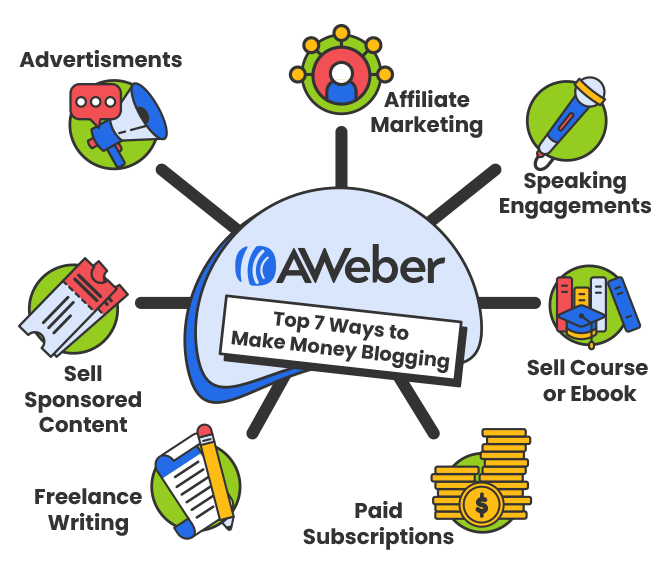
Top 7 Ways to Make Money Blogging

Once you have a solid reader base, you'll be in a solid position to actually start making money off your blog. Now sure how to monetize a blog? There are a number of options to consider. 

Top 7 ways to make money blogging

1. Incorporate Advertisements

One way to monetize your blog is to incorporate advertisements into your posts; this can be done easily through Google AdSense, which is a program that will automatically insert ad spaces into your blog that are relevant to your keywords and topics. From there, you will earn money each time your readers view and/or click those ads.

Advertisements can be a significant source of income for many bloggers—especially for those whose blogs receive heavy visitor traffic on a daily basis. After all, the more people you have visiting your blog, the more likely your ads are to be viewed and clicked on.

If you decide to go this route for monetizing your blog, you'll still need to focus on creating quality and unique content on a regular basis. After all, you'll need to maintain and grow your reader base in order for these ads to remain a consistent source of income. 

You may also have more success with advertisements on your blog if you take time to do keyword research and craft blog topics based on the keywords your audience is most often searching for.

2. Try Affiliate Marketing

Another popular way to make money blogging is through affiliate marketing. When you get into affiliate marketing, you blog to recommend or review a product/service in exchange for a referral commission. For example, if you start a parenting blog and want to get into affiliate marketing, you might receive a free sample of a new baby swaddle from an up-and-coming company.

From there, you will take the time to use and review the new product, writing a detailed blog post about the product and your experience with it. Within your blog post, you will include affiliate links for your readers to purchase the product if they are interested in it. Each time a reader makes a purchase through your affiliate link, you receive a certain percentage of the sale. 

As you can probably imagine, the profits for affiliate marketing can add up very quickly—especially if you have a large reader base.

How do you get started in affiliate marketing? If you have a large enough following and a strong reputation in your field, there's a good chance that companies will be approaching you with affiliate opportunities. 

You can also look into AWeber's referral program; this program is a great fit for those who are passionate about digital marketing, motivated to help other entrepreneurs succeed, and looking to create an additional stream of revenue through blog writing. 

Specifically, you could write about setting up a newsletter, building a landing page, and sending emails. And how that can help bloggers and business owners within your industry.

You can earn 30% recurring payments each month for the lifetime of each account referred with AWeber. To get started simply sign up, then start spreading the word..

3. Book Speaking Engagements

As you build a reputation within your industry and become widely known as a thought leader through your blog, you might also be able to earn income through public appearances and speaking gigs. No matter what field your blog is in, there's a good chance that there are annual conferences and other events that need speakers to attend.

If you can get a public speaking gig through one of these conferences (or through another opportunity), you might be surprised at how much money you can make just by speaking for even 30-60 minutes on a topic you're passionate about. 

Of course, you will need to be comfortable speaking in front of a crowd—and it probably wouldn't hurt to sharpen up your public speaking skills if you haven't done any similar presentations recently.

Still, you don't need to be a professional public speaker to make money as a presenter at conferences and other events. Don't wait to be approached and invited to speak, though; there is nothing wrong with reaching out to event organizers directly and letting them know that you're available to present.

Even if you don't land any paid gigs right away, you can always host your own workshops (either for free or for a nominal registration fee); this is a great way to gain experience and build your reputation even further as a presenter. 

4. Bundle Content Into a Course or eBook

There is a huge market for eBooks and online courses these days—and you actually don't need extensive experience to create a profitable course or eBook. In fact, blog posts often make for excellent content that can be easily repurposed into an eBook or online class.

Consider, for example, bundling several of your most successful blog posts and making them into an eBook that you can sell for a profit. There are plenty of great and easy-to-use tools that allow you to put an eBook together without previous experience (this includes tools for creating book covers!). 

From there, you can simply make your eBook available for purchase on your website or landing page and promote it through other avenues as well. You might even consider submitting your eBook to Amazon Kindle Direct Publishing for added exposure and earning potential.

Likewise, you can use some of your existing blog content to craft an online course that will interest your readers and teach them a new skill. The nice thing about online courses is that they don't require much (if any) more work than an eBook to create—yet you can typically sell them for a much higher price point.

The main thing to remember with an online course is that you will probably need to develop and create some supplemental content to go along with your existing blog content. This may include anything from slideshow presentations and videos to infographics, templates, and other supporting material that will appeal to a wide range of learners.

There are plenty of tools that can help you build your online course and even publish it. One option is with AWeber’s landing page builder. Once your course is live, you can promote it through your own website, on social media, and elsewhere to further monetize your blog content.

5. Offer a Paid Subscription

Today's readers love exclusive content; many of them will even pay out of their own pockets if it means they'll have access to content that your everyday blog readers do not.

If you have a fervent enough reader base, then, you might consider offering a paid subscription service for those who want access to an even larger and more exclusive library of content. 

Your members, for example, might receive longer-form blog posts that are not otherwise published on your blog. They might even receive exclusive video content, podcasts, and other downloads in exchange for their paid membership.

The nice thing about these paid subscriptions is that they can be an ongoing source of revenue for as long as you have subscribers. You can charge by the month or even offer a small discount to those who will pay up-front for a year of special content.

6. Explore Freelance Writing Opportunities

As you become more skilled as a blogger in your own niche, you might want to explore some freelance opportunities in other industries. After all, blogging is an in-demand skill—and many businesses are willing to pay good money to freelance writers who can deliver quality, unique, and engaging content in a timely manner.

If you're looking to earn some additional income as a blogger, then, be sure to explore freelancing as an option. You can even post on your blog or website that you are looking for new opportunities and are willing to take on new blogging projects; from there, people can reach out to you and discuss specific terms/payment. 

This can be a great way to bring in additional income while expanding your blogging skills to other industries or topics! And of course, you have the freedom to take on as many (or as few) freelance gigs as you want. You can also set your own pricing (which, by the way, most freelance bloggers charge per word).

If you decide to go this route, just make sure you have a reliable way of collecting and securing payments from your clients

Many freelance bloggers, for example, will require an up-front deposit (sometimes 50% or more) before content is delivered, with the remainder to be paid after the post is published. 

7. Sell Sponsored Content

Sponsorships are another option to consider when it comes to monetizing your blog. This is actually a popular money-making alternative for those who may not feel comfortable using paid ads on their website. The concept is similar to that of affiliate marketing in many ways, with the exception that a sponsorship pays you for the actual blog post—not necessarily for sales generated directly as a result of a blog post.

In most cases, sponsored content will involve writing a review, summary, or "how-to" on a product that your sponsor would like to promote. In exchange for your post, you will receive compensation directly from the sponsored business (and of course, you can negotiate your own terms here).

If you decide to go this route, there are some important things to keep in mind, especially from a legal standpoint. The most vital thing to know is that in the United States, you need to clearly disclose that your content is a paid sponsorship. This is a requirement set forth by the FTC, and you can actually face some pretty severe fines and penalties if you fail to comply.

Generally, you'll have the most success selling sponsored blog posts if you already have a large following on your blog. After all, businesses will be more likely to pay decent money for a sponsored post if they know the post will reach a large audience. This is where really taking the time to build up and maintain a large readership base can make all the difference, then.

How do you get started in selling sponsored blog posts? 

If you already have a large following and are established in your field, you could reach out directly to companies in your industry to see if they would be interested in a sponsorship. 

In some cases, you might even find that companies will approach you directly with these opportunities. From there, it's a matter of nailing down the details and deciding how much you will be paid for such a post.

Accept Payment on Your Own Landing Page

Whether you decide to offer paid subscriptions or even choose to sell an eBook/online course derived from your blog, it's important that your site is set up to accept payments directly from your landing page. This is the hands-down best way to make it easy for your readers to make purchases, which can increase your profits in-turn.

Not sure how to set this up? There are plenty of tools that make it easy to sell a subscription or accept payments directly through your website or landing page. AWeber, for example, allows you to start accepting payments for your products or services. Using the easy to use drag-and-drop landing pages builder, which includes all the tools you need to start selling, you can make your content even more accessible to your most dedicated readers and customers.

The Final Word on How to Make Money Blogging

As you can see, there are many ways to go about setting your blog up for success and making a profit off of your posts. From paid advertising and affiliate marketing to creating eBooks and online courses, the possibilities for your blog are truly endless. 

At the end of the day, as long as you are taking the time to craft truly engaging and useful content for your reader base, you'll have the following you need to be successful and profitable. 

From there, it's just a matter of keeping that momentum going and figuring out which monetization strategies are best suited to your needs.

Looking for more resources to monetize your blog? 

AWeber has you covered with solutions you can use to publish, promote, and sell - all from a single platform.

The post How to Monetize Your Blog: A Comprehensive Guide appeared first on AWeber.


from AWeber https://ift.tt/3i89tEw
via IFTTT
Friday, 24 September 2021

Maximize Your Sales with Ecommerce Email Marketing

maximize your sales with ecommerce email marketing

Are you leaving money on the table by neglecting your ecommerce email marketing strategy?

If you have an online store and want to boost sales, email marketing should be a huge part of your strategy. Email marketing is one of the most powerful digital marketing tools that can be used to cultivate leads and build relationships with your customer base.

Read on to learn how you can use email marketing to maximize your sales and build a stronger ecommerce brand reputation.

What is Ecommerce Email Marketing?

Email marketing is a strategy that uses email content to appeal to your audience. Statista reports over 3 billion emails are sent every day and marketers generate $42 for every $1 spent. Yet, only 64% of small businesses use email marketing and only 20% claim to personalize their emails.

There is a lot of money being left on the table for many companies.

Email marketing uses your understanding of the customer to help them to the next stage in their buyer’s journey. Companies that have a non-existent strategy are wasting a huge resource. These companies that treat email marketing with a one-size-fits-all approach are not capitalizing on the power of email marketing. 

And, brands who use their emails to only self-promote miss a huge chance to build a meaningful relationship with their audience that creates brand loyalty.

You can use emails in multiple ways in your email marketing strategy. But the two most common strategies are emails that boost sales and emails that build relationships.

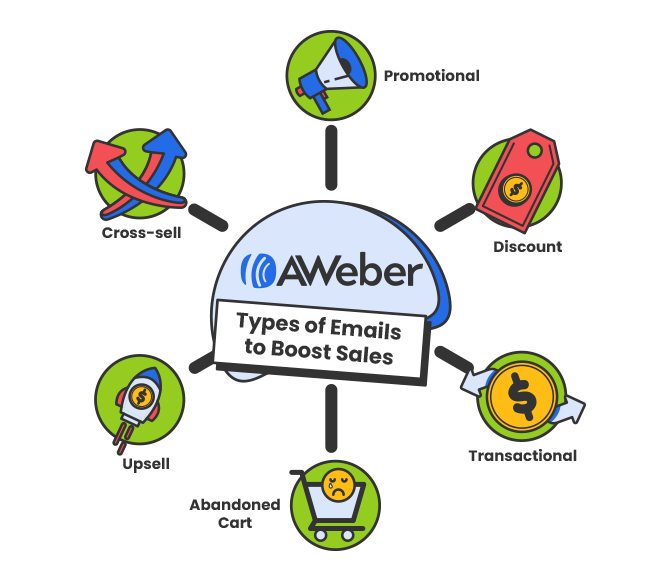
Types of Emails that Boost Sales

These are the most common for companies attempting an email marketing strategy. These emails will help directly increase sales by linking to products and including purchase-oriented CTAs (calls to action).

types of emails to boost sales
  • Promotional – directly highlight a specific product or service.
  • Discount – offer a special price to trigger a purchase reaction.
  • Transactional – based on the purchase or site activity.
  • Abandoned carts – reminders for shoppers to go back and complete their purchases.
  • Upsell – offering the option to upgrade to a pricier product or package.
  • Cross-sell – offering products that go hand-in-hand with a selected product.

Emails that Cultivate Leads and Build Relationships

There are slightly less common emails that only serve to build the relationship. In these emails, purchases typically aren’t the CTA. Instead, brands can use these emails to indirectly provoke sales by building a stronger connection with the target audience.

  • Welcome – introducing brand and reminder of email list opt-in.
  • Value offers – centered around non-sales offers (like a free guide).
  • Tutorials – guides that explain the use or troubleshooting of a product.
  • How-to guides – creative, industry-relevant ideas that don’t push products.
  • Customer-centric content – Blog posts, memes or whatever the customer finds relevant.
  • Order confirmation – notice of purchase for customer’s records.
  • Order shipment – communicating for customer clarity and peace of mind.
  • Thank you – a response when the customer completes a desired action.

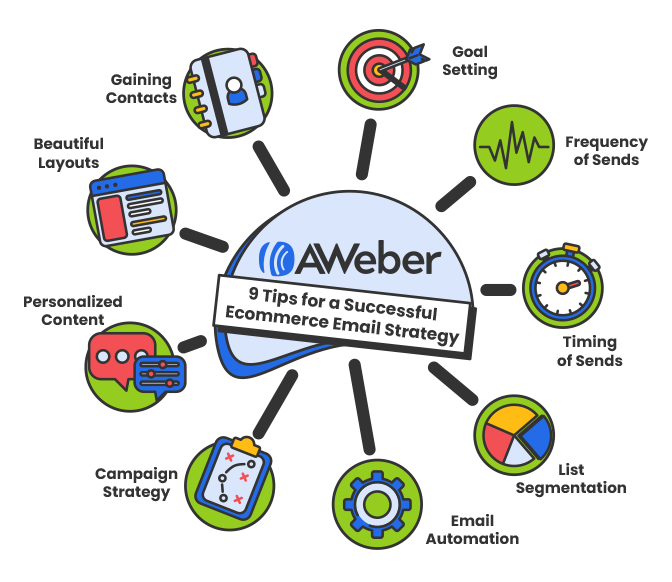
9 Tips for Successful Ecommerce Email Strategy

Every company should take the opportunity to truly build a strategy, not just start sending out emails. Now that you know some of the emails sent out to build relationships and boost sales, here are some tips for building a strong and successful strategy.

Tips for a successful ecommerce email strategy

Gaining Contacts

First and foremost, NEVER BUY AN EMAIL LIST. Purchasing contact lists will quickly get your brand marked as untrustworthy and spam. You need to market a value offer or special discount in order to prompt email opt-ins. Each contact should be immediately welcomed and sent the value offer or discount code so that they remember signing up and want to stick around.

While many companies are focused on growing their contact lists, few are worried about keeping those lists clean. You want to remove contacts who didn’t opt-in for your messages to avoid looking like spam. 

To grow your lists, you can use CTAs (calls to action) in content, targeting those leads at the top of the sales funnel (just entering awareness or discovery phases) to help them learn more about your company.

If someone makes a purchase, make it easy to create an account afterward so they remain in contact with your brand. Sometimes brands are very focused on gaining qualified leads and not focused on connecting with the repeat customer groups. This is a mistake, since customer acquisition is more expensive and less efficient than customer retention and remarketing.

Goal Setting

Start email marketing off right by setting specific goals for your strategy. It’s hard to create a valid strategy if you don’t know what you are aiming for. Create SMART goals:

  • Specific – when possible, choose numbers over vague concepts (for example: “increase click-through rates by 5%,” not “get more click-throughs”) to help you pinpoint measurable goals for outcomes and conversion rates.
  • Measurable – identify how you will measure success—especially for goals without a direct measurement, like increasing customer satisfaction rates or building a stronger brand reputation.
  • Achievable – choose goals that are something that you have control over. Something like “improve shipment process” wouldn’t be an achievable goal for email marketing.
  • Realistic – choose numbers and goals that are within your grasp. If your click-thru rates are 5%, you can’t plan to increase them to 75% in the month without setting an unrealistic goal.
  • Timely – establish a timeline for how long you will attempt the goal before measuring to determine success or failure. Include checkpoints so you don’t waste a longer period of time (like 6 months) on a strategy that isn’t working.

Frequency of Sends

Sending out emails too often will result in unsubscribes from customers who feel bothered. However, sending out emails rarely or infrequently will result in lost opportunities and people forgetting about your brand.

The ideal frequency will depend a lot on what your strategy offers. If your emails are promotional and brand-centric, then sending out 3-5 emails a week will seem like a barrage of ads. 

However, if you offer a mix-and-match approach (like a weekly deal, a weekly promotional spotlight, a couple value offers and activity-based emails), then the 3-5 emails a week will all serve different purposes.

While frequency is important, equally important is considering what you are sending out at that frequency. Always keep the customer’s perspective in mind when scheduling emails. 

Many people check their email several times a day, which is why it’s such an effective tool. But, it also means that companies clogging the inbox with a flood of self—promotional emails are likely to get the boot.

Timing of Sends

When you send an email is also crucial if you want to improve your rate of engagement. Tracking the timing of open rates, click-through rates and other actions will help you identify when your audience is checking email. 

Send out your emails just before this heightened activity time to increase the potential for engagement. Certain days may have different engagement rates or ideal times for sending emails.

Different audiences are likely to have different times when they are most active. Some don’t check email much at work, while others are on their email all day for work. Some won’t interact as much with your brand in the morning, but a morning reminder could spark an interest that results in an evening purchase. Test your theories with A/B testing on the timing of the email for each specific segment of your list.

This means you need to create your content and design your emails in advance. Scheduling your emails is the best way to ensure you send out emails exactly when they will be best received.

List Segmentation

Sending out the same messages to your entire list is bound to result in a poor fit. Email marketing is not a one-size-fits-all solution. 

You wouldn’t want to send your welcome email to a contact who has been a loyal customer for a long time. You wouldn’t want to push for a sale before you’ve even introduced your brand to a new lead who signed up for a value offer.

Segmenting your list means breaking the list into various groups for different marketing-relevant reasons. This helps you get the right message to the right contact at the right time. The more information you know about your contacts, the more relevant your messaging can be. 

Segmenting your list is one way to provide a more personalized marketing approach. Segments could include:

  • Point in buyer’s journey
  • Physical location
  • Activity on website
  • Past purchases
  • Professional title/industry
  • Gender
  • Demographics
  • Age
  • Buyer persona

Once you have email segments established, you can control which groups get which emails. This allows you to change your messaging and marketing to better fit the customer.

Email Automation

There are certain emails that should be set up to go out automatically. These pre-written emails will typically follow a very standard template that is only updated as needed. Many automated emails will be based on user actions, including:

  • Welcome emails
  • Abandoned cart email reminders
  • Value offer delivery (eBooks, guides and whitepapers)
  • Product support or tutorial triggered by a purchase
  • Upsell and cross-sell recommendations
  • Loyalty program updates and reminders
  • Transactional emails
  • Thank you emails
  • Order confirmation and shipment notices

You can set up campaigns to target different list segments, automating the emails to send out during certain times of the day and week. The more sophisticated your site and CRM tool, the more automation you can build into your strategy without losing relevance or a genuine connection.

You can also use automated emails to check in on contacts who haven’t opened or clicked on any links, asking if they want off your list. While it might seem counterproductive to remove contacts, cleaning up your list will help boost your engagement rates and ensure you are marketing to people who are interested in your brand. 

You will find that some people will be even more interested in your company when you show this willingness to let them go. If the contact doesn’t re-opt-in after the automated reminder email at this point of non-engagement over a long period of time (say 12-24 months), then you would remove them from the list with an easy option to re-opt-in at any time.

Campaign Strategy

Ideally, you will create content that appeals to every part of the funnel. Email campaigns allow you to consider the segment you want to reach, what goals you want to achieve and what messaging will convince the audience.

Campaigns are a collection of messages sent out at specific times over the course of an established timeline. When the determined time period is up, the campaign is evaluated for effectiveness and ROI (return on investment). 

Not all campaigns are designed to solicit purchases, some are after other actions, like click-throughs or survey responses. The goals, messaging and CTA of each campaign should align with the targeted list segment.

To support your strategy, use landing pages that carefully align with the messaging of your email content. If the lead is interested enough to click through on the email, then they will experience continuity on the following page.

Personalized Content

A great email marketing strategy is going to look for ways to take advantage of personalization. Email personalization is far more than just adding the contact’s name to the subject line or opening greeting. Personalization should include offering suggestions and content based on the user’s past behavior.

List segmentation should be a massive part of your personalized marketing strategy. Breaking down your contacts list allows you to send more relevant content to the people who care.

However, list segmentation isn’t the only thing you can use for creating individualized content. Recommended products and images can change in the emails based on past purchases. Set up emails that show recently viewed items like a small ad on the side of the email content.

Create Beautiful Layouts

Finally, beautiful content and consistent branding are what connect people to your brand. Appealing layouts, fonts, images and colors will help get your audience to stop and look at your emails. 

A cohesive experience is accomplished with consistent design and messaging. This will form your brand aesthetic and should flow seamlessly into your web content as they click to your ecommerce site pages or check out your brand’s social media profile.

AWeber helps you make a professional and appealing email in just seconds. Using a simple drag-and-drop tool, you can start with a template and fully customize your em. Are you ready to improve your ecommerce emails? 

The post Maximize Your Sales with Ecommerce Email Marketing appeared first on AWeber.


from AWeber https://ift.tt/39yTevl
via IFTTT

Call it what you want, Taylor Swift is a model community manager

As a social media marketer and Taylor Swift stan, I’m constantly in awe of her community management mastery.

Social is at the center of how she and Taylor Nation—her fan engagement and hype team—connect with fans and share clues about what could be coming up next in the world of Taylor Swift. Taylor is an international pop icon for reasons beyond Grammy wins, masterful songwriting and award winning tours. She understands how to use social to connect with her fans on a deeper level that keeps them invested beyond album releases.

Hear me out…

Since Taylor started her career, she’s been fan driven. She started engaging with her growing fan base on Tumblr early in her career and continues to interact with some of her most loyal fans there. The responsive reputation Taylor built with her fans on Tumblr carried over on Twitter and, most recently, TikTok. Not only does Taylor follow her community, she actively listens to them. Whether that means helping one of her fans attend university or releasing her re-recording of “Wildest Dreams (Taylor’s Version)” early because fans had the song trending on TikTok, Swifties know that she and her team always keep an ear to the ground.

@taylorswift

Someone said slow zoom makes you look like the main character I said make it Taylor’s Version pls #wildestdreamstaylorsversion #swifttok #slowzoom

♬ original sound – Taylor Swift

Taylor understands how to meet her fans where they are. Though she has a presence on most major social networks, she keeps her engagement focused on where her diehards are most active. You don’t need to be everywhere or the first to an emerging network. Listen to where your audience wants to engage with you and follow their lead. That’s where you’ll build the most loyal customer relationships.

Part of maintaining a devoted customer base is making them feel like they play a role in your brand’s journey. Taylor is an expert at this. You’ve probably heard about the “Easter eggs” or clues she leaves for her followers through social posts, lyrics and interactions. Let me tell you, this is what the Taylor Swift experience is all about. Everything she does on social media makes fans feel like it’s a secret message made just for them. Sometimes our theories are correct—like when fans were convinced that this butterfly mural in Nashville was a clue for the Lover album release (and then Taylor made a surprise appearance).

Sometimes our theories are wrong—like when fans thought Taylor was sharing a coded photo countdown to the Lover album release, then she jokingly trolled fans on Twitter.

There were five holes in the fence. I remember it all too well.

Then there are the current theories we’re still waiting on answers for. Now that “Wildest Dreams (Taylor’s Version)” was released early, are we getting the full 1989 re-recording soon?

Whether our fan theories are right or wrong, the way that we are trained to look for these clues says everything about how invested her fans are. Taylor’s approach is a master class for building buzz around your next product launch, feature release or new location opening, but there are also so many other ways you can bring your customers into your brand’s journey. This could start with creating content that centers their stories and experiences with your products or tapping into a lifestyle that your customers can see themselves in.

The most successful brands put their audience first. In fact, 46% of consumers say engaging their audience makes brands best in class on social. Whether or not you’re a Taylor Swift fan, there’s a lot social marketers can learn from the way she’s built and maintained fan engagement over her 10+ year career.

Long story short: Taylor and her team are listening and making data-driven decisions based on where her fans are and how they’re engaging on each network. If you invest in your community and truly listen, they’ll invest in you.

The post Call it what you want, Taylor Swift is a model community manager appeared first on Sprout Social.


from Sprout Social https://ift.tt/3o0vokF
via IFTTT