Monday, 29 September 2025

Best Email List Building Strategies for Small Businesses

Best Email List Building Strategies for Small Businesses

Social media followers disappear when algorithms change. Paid ads stop working when budgets run out. But your email list? That's the one marketing asset you actually own and control.

While other businesses chase vanity metrics on platforms they don't control, smart small businesses focus on building email lists that generate consistent revenue. Every email subscriber represents someone who actively chose to hear from you, making them far more valuable than passive social media followers.

The 15 most effective email list building strategies for small businesses:

  1. Create irresistible lead magnets that solve immediate problems
  2. Optimize signup forms for maximum conversions across all devices
  3. Use strategic popups that provide value instead of interrupting
  4. Turn blog content into subscriber magnets with content upgrades
  5. Gamify the signup process with interactive elements
  6. Convert social media followers into email subscribers
  7. Optimize checkout flows for email capture
  8. Run strategic contests and giveaways that attract ideal customers
  9. Use quizzes and surveys to capture emails naturally
  10. Leverage email signatures and cross-channel promotion
  11. Create dedicated landing pages for specific campaigns
  12. Offer exclusive content that feels like insider access
  13. Implement referral programs that turn subscribers into advocates
  14. Form strategic partnerships for mutual audience growth
  15. Convert offline interactions into online email relationships

Let's dive into each strategy with specific implementation steps you can use immediately.

Strategy 1: Create Lead Magnets That Actually Convert

Your website visitors won't hand over their email addresses for nothing. They need a compelling reason, something valuable enough to justify sharing their contact information.

Templates and Checklists Generate Highest Conversions

Templates and actionable checklists consistently outperform generic ebooks because they provide immediate value. Instead of promising future benefits, they solve problems right now.

High-converting lead magnet ideas for small businesses:

  • Email sequence templates for specific industries (restaurants, fitness, retail)
  • Planning worksheets with customizable fields (content calendars, budget planners)
  • Step-by-step checklists for complex processes (launch preparation, SEO optimization)
  • Resource libraries with curated tools and links

At AWeber, we help customers create these lead magnets using our built-in Canva integration, making professional design accessible without hiring experts. Our drag-and-drop email builder makes it simple to deliver these resources through automated welcome sequences.

For specific lead magnet inspiration tailored to different business types, check out our guide featuring 25 brilliant lead magnet ideas to grow your email list right now, complete with real examples from successful businesses across industries.

Interactive Lead Magnets Drive Higher Engagement

Interactive content like calculators and assessments create conversations instead of just collecting emails. When visitors actively engage with your content, they become more invested in receiving your follow-up emails.

Effective interactive formats:

  • Assessment tools that provide personalized insights
  • ROI calculators showing potential savings or earnings
  • Product recommendation engines matching customers to solutions
  • Planning wizards that guide users through complex decisions

The key is making the interaction valuable enough that people want to save their results—which naturally leads to email signup.

Strategy 2: Optimize Signup Forms for Maximum Conversions

Your signup forms are the bridge between visitor interest and email subscription. Poor design or placement kills conversions, while strategic optimization can double or triple your signup rates.

High-Converting Form Locations

Place signup forms where visitors are already paying attention:

  • Above-the-fold homepage with your primary lead magnet offer
  • End of blog posts when readers are most engaged with your content
  • About page where curious visitors want to learn more
  • Contact page with exclusive subscriber benefits highlighted
  • Sidebar placement on high-traffic pages with contextual offers

We've designed our signup forms to be mobile-responsive by default, ensuring they work seamlessly across all devices without requiring technical expertise.

Optimize Form Copy for Conversions

Focus on benefits, not features. Instead of "Subscribe to our newsletter," try "Get weekly marketing strategies that actually work" or "Access our exclusive small business resource library."

High-converting CTA button text:

  • "Get Your Free Template"
  • "Download Now"
  • "Send Me the Guide"
  • "Access Exclusive Content"

Generic phrases like "Subscribe" or "Sign Up" create mental barriers. Specific, benefit-focused language makes the action feel valuable rather than burdensome.

Strategy 3: Use Strategic Popups That Add Value

Done right, popups can be your highest-converting list building tool. The key is timing them strategically and offering genuine value instead of generic newsletter signups.

Exit-Intent Popups

Trigger popups when visitors are about to leave gives you one final chance to provide value. Instead of generic "Don't go!" messages, offer something genuinely helpful related to the page they're viewing.

Effective exit-intent offers:

  • Page-specific lead magnets related to content they just consumed
  • Discount codes for first-time visitors on product pages
  • Free consultations for service-based businesses
  • Bonus resources that extend the value of blog posts

Scroll-Based and Time-Delayed Popups

Show popups after visitors demonstrate engagement rather than immediately interrupting their experience. Wait until they've scrolled 50% down the page or spent 30+ seconds reading.

Strategic popup timing:

  • Blog posts: After 60% scroll depth when readers are engaged
  • Product pages: After 45 seconds when visitors show purchase interest
  • Homepage: After 30 seconds with your strongest lead magnet
  • Mobile devices: Delay popups longer to avoid immediate interruption

Our popup tools include smart timing controls that let you test different triggers to find what works best for your specific audience.

Strategy 4: Turn Blog Content Into Subscriber Magnets

Every blog post is an opportunity to grow your email list—if you approach it strategically. Content upgrades and topic-specific offers can transform casual readers into engaged subscribers.

Content Upgrades That Actually Work

Content upgrades offer bonus materials directly related to specific blog posts. They work because they provide the logical next step for engaged readers who want more detailed information.

Effective content upgrade examples:

  • Downloadable versions of processes described in posts
  • Extended guides with additional tips and examples
  • Template versions of strategies you discuss
  • Checklist summaries of multi-step processes

Creating these doesn't have to be overwhelming. Our step-by-step guide shows you how to create a lead magnet in less than a day (that actually works), complete with templates and proven formulas you can implement immediately.

Strategic Email Captures Within Content

Embed signup opportunities naturally within your content rather than just hoping visitors notice your sidebar form. Mid-article placements catch readers when they're most engaged.

Natural placement opportunities:

  • After introducing a problem you can solve with exclusive content
  • Before revealing key strategies that require detailed explanation
  • When mentioning tools or resources available to subscribers
  • At natural transition points between major sections

The goal is making your email signup feel like a helpful resource, not an interruption.

Strategy 5: Gamify the Signup Process

Interactive games and contests make email signup fun instead of feeling like another marketing ask. Gamification taps into natural curiosity and the excitement of potentially winning something valuable.

Spin-the-Wheel Campaigns

Spin wheels create immediate engagement and give visitors a sense of control over their reward. Even small prizes like 5% discounts can significantly boost signup rates.

Effective spin wheel prizes:

  • Discount percentages (10%, 15%, 20% off)
  • Free shipping on next order
  • Bonus resources like exclusive guides
  • Early access to sales or new products

The key is making every option feel valuable, even the "smallest" prize. Nobody should feel disappointed with their result.

Quiz-Based List Building

Educational quizzes naturally lead to email capture because people want to receive their personalized results. The quiz itself provides value while collecting subscriber information.

High-converting quiz topics:

  • "What type of [solution] do you need?" for product recommendations
  • "How [advanced/ready] are you?" for skill assessments
  • "What's your [business/personal] style?" for personalized advice
  • "Which [strategy/approach] fits you best?" for customized guidance

Our quiz integration makes it simple to collect emails as part of the results delivery process.

Strategy 6: Convert Social Media Followers Into Email Subscribers

Your social media followers already know and trust you—now you need to give them compelling reasons to join your email list. Social media builds awareness, but email drives sales.

Cross-Platform Conversion Strategies

Make your email list feel like an exclusive community rather than just another marketing channel. Offer content and insights that followers can't get anywhere else.

Effective conversion techniques:

  • Instagram bio links directing to lead magnet landing pages
  • Facebook post CTAs promoting subscriber-only content
  • LinkedIn article mentions of exclusive email resources
  • YouTube video descriptions with newsletter signup incentives
  • Twitter threads that tease fuller content available via email

At AWeber, we help customers bridge this gap by making it easy to promote exclusive subscriber content across all platforms while maintaining consistent branding.

Social Media Exclusive Offers

Create urgency with platform-specific promotions that require email signup to access. Limited-time offers work particularly well for converting social media engagement into email subscriptions.

Proven social media conversion tactics:

  • Instagram Stories with swipe-up links to exclusive content
  • Facebook Live promotions requiring email registration
  • Twitter polls with results delivered via email
  • LinkedIn posts offering detailed resources to email subscribers

The key is making social media feel like the teaser and email like the main event.

Strategy 7: Optimize Checkout Flows for Email Capture

Every customer transaction represents a golden opportunity for list growth. People making purchases have already demonstrated trust in your business—they just need a compelling reason to stay connected.

Strategic Checkout Placement

Add email signup options at multiple points in your checkout process without creating friction. The goal is making subscription feel like a natural extension of their purchase.

Effective checkout integration points:

  • Pre-checkout page with order update subscriptions
  • During checkout with marketing email opt-ins
  • Order confirmation with exclusive subscriber benefits
  • Thank you page with community membership invitations

Post-Purchase Email Capture

Thank you pages have some of the highest conversion rates because customers are in a positive mindset after completing their purchase. Use this momentum to invite them into your email community.

High-converting post-purchase offers:

  • Exclusive customer content like care guides or advanced tips
  • Early access to sales and new product launches
  • Customer-only community with special perks and resources
  • Loyalty program enrollment with points and rewards

Our automation tools make it easy to create different post-purchase sequences based on what customers bought, ensuring relevant follow-up content.

Strategy 8: Run Strategic Contests and Giveaways

Contests create excitement while attracting subscribers who match your ideal customer profile. The prize itself acts as a filter, drawing in people who are genuinely interested in your brand's offerings.

Prize Selection Strategy

Choose prizes that naturally appeal to your ideal customers while aligning with your brand values. Generic prizes attract everyone; strategic prizes attract buyers.

Effective prize ideas by business type:

  • E-commerce: Product bundles or store credit
  • Service businesses: Free consultations or packages
  • Content creators: Exclusive access or personalized sessions
  • B2B companies: Industry tools or conference tickets

Contest Structure and Promotion

Keep entry requirements simple while maximizing list growth potential. Complicated rules reduce participation and can create legal complications.

Proven contest elements:

  • Clear entry requirements (email signup + one additional action)
  • Easy sharing mechanisms to amplify reach
  • Transparent winner selection process to build trust
  • Follow-up engagement with all participants, not just winners

The relationships you build matter more than the emails you collect. Thank every participant and keep non-winners engaged with consolation offers or exclusive content.

Strategy 9: Use Quizzes and Surveys to Capture Emails Naturally

Interactive quizzes and surveys naturally lead to email capture because people want to receive their personalized results. This creates a value exchange that feels helpful rather than pushy.

Educational Assessment Quizzes

Position your brand as a trusted authority while collecting valuable preference data. Assessment quizzes work particularly well for businesses offering customized solutions.

High-converting quiz formats:

  • Skill level assessments that recommend appropriate resources
  • Preference surveys that match users to ideal products
  • Readiness evaluations that suggest next steps
  • Style assessments that provide personalized recommendations

Survey-Based List Building

Market research surveys can double as list building tools when you offer valuable insights in exchange for participation. People appreciate being asked for their opinions.

Effective survey approaches:

  • Industry trend surveys with aggregated results shared via email
  • Customer preference research with personalized insights
  • Market analysis with exclusive findings for participants
  • Product development input with early access to new features

The key is making participation feel valuable and ensuring follow-up content delivers on promised insights.

Strategy 10: Leverage Email Signatures and Cross-Channel Promotion

Your existing communication channels represent untapped opportunities for list growth. Every email you send and every platform you use can include subtle list building elements.

Strategic Email Signature Integration

Professional email signatures can include newsletter signup links that reach people during valuable business conversations. Keep the message brief but compelling.

Effective signature elements:

  • Brief value proposition (Weekly marketing insights for small businesses)
  • Direct signup link to your main lead magnet
  • Professional design that matches your brand
  • Mobile-friendly formatting that works across devices

Cross-Channel Promotion Strategy

Promote your email list consistently across all your business touchpoints without being overwhelming or repetitive.

Strategic promotion opportunities:

  • Podcast mentions of subscriber-exclusive resources
  • Video descriptions with community invitation links
  • Speaking engagements with exclusive audience offers
  • Networking events with QR codes linking to signup forms

The goal is making list membership feel like a natural extension of knowing your business.

Strategy 11: Create Dedicated Landing Pages for Specific Campaigns

Focused landing pages convert significantly better than generic homepage signups because they speak directly to visitor intent and eliminate distractions.

Single-Purpose Landing Page Design

Remove all navigation and focus entirely on your email signup offer. Every element should guide visitors toward subscription.

Essential landing page elements:

  • Compelling headline that clearly states the benefit
  • Brief value explanation of what subscribers receive
  • Simple signup form asking only for essential information
  • Trust signals like testimonials or subscriber counts
  • Clear privacy assurance about how you'll use their email

Campaign-Specific Landing Pages

Create targeted pages for different traffic sources to improve relevance and conversion rates. Social media visitors have different expectations than blog readers.

Targeted landing page examples:

  • Facebook ad landing pages with social proof and urgency
  • Google search landing pages that match specific search intent
  • Partner referral pages that acknowledge the referring source
  • Event-specific pages with exclusive offers for attendees

Our landing page builder makes it simple to create professional pages without technical skills, complete with mobile optimization and A/B testing capabilities.

Strategy 12: Offer Exclusive Content That Feels Like Insider Access

Exclusivity is a powerful motivator that makes people feel special for being part of your email community. Frame your list as insider access rather than just another newsletter.

Members-Only Content Strategy

Create content that's genuinely exclusive to email subscribers, not just repurposed blog posts or social media content.

Effective exclusive content types:

  • Behind-the-scenes insights into your business or industry
  • Advanced strategies that go deeper than public content
  • Early access to new products, sales, or important announcements
  • Subscriber-only resources like tools, templates, or guides
  • Personal stories and lessons learned that you don't share publicly

Community Building Approach

Position your email list as joining a community rather than just receiving marketing messages. This creates stronger emotional connection and reduces unsubscribes.

Community-building elements:

  • Welcome sequences that introduce new members to the group
  • Subscriber spotlights featuring community member success stories
  • Interactive elements like polls or questions that encourage engagement
  • Exclusive events like webinars or Q&A sessions for subscribers only

The goal is making people feel like they're part of something special, not just on another mailing list.

Strategy 13: Implement Referral Programs That Turn Subscribers Into Advocates

Turn existing subscribers into list-building partners by incentivizing referrals. Happy subscribers are often willing to recommend your content to friends—they just need the right motivation.

Double-Sided Reward Systems

Benefit both the referrer and the new subscriber to create win-win situations that feel generous rather than manipulative.

Successful referral program elements:

  • Clear rewards for both parties (discounts, exclusive content, early access)
  • Simple sharing mechanisms across email and social platforms
  • Easy tracking to attribute and reward successful referrals
  • Tiered benefits that increase rewards for multiple successful referrals

Our automation tools make referral tracking simple—when someone refers a friend, both parties automatically receive bonuses through triggered email sequences.

Gamified Referral Systems

Add competitive elements to make referring friends feel like a game rather than work. Leaderboards and achievement badges can motivate ongoing participation.

Gamification elements:

  • Progress tracking showing referral counts and rewards earned
  • Achievement levels with increasing benefits for active referrers
  • Seasonal competitions with special prizes for top referrers
  • Social recognition for successful community builders

The key is making referral participation feel rewarding and fun, not like unpaid marketing work.

Strategy 14: Form Strategic Partnerships for Mutual Audience Growth

Partner with complementary businesses to access new audiences without competing directly. The best partnerships feel natural and provide genuine value to both audiences.

Collaborative Content Creation

Co-create valuable resources that serve both audiences while requiring email signup to access. This approach provides more value than simple cross-promotion.

Effective collaboration formats:

  • Joint webinars addressing shared audience interests
  • Co-authored resources like guides or toolkits
  • Bundled offerings from multiple non-competing businesses
  • Cross-promotional campaigns featuring partner resources

Look for businesses serving similar audiences but offering different solutions. Their customers might need your services, and vice versa.

Guest Content and Cross-Promotion

Write for each other's audiences while naturally incorporating list building opportunities. This provides fresh content for both businesses while introducing you to new potential subscribers.

Strategic partnership opportunities:

  • Guest blog posts with author bio newsletter mentions
  • Podcast interviews where you discuss subscriber resources
  • Social media takeovers promoting exclusive email content
  • Joint email campaigns featuring partner recommendations

The goal is creating authentic value exchanges that benefit all parties involved.

Strategy 15: Convert Offline Interactions Into Online Email Relationships

Don't ignore offline opportunities to collect email addresses. Real-world interactions often create stronger connections than digital-only relationships.

Event and Networking Integration

Every in-person interaction represents a potential email subscriber. The key is making the transition from offline meeting to online relationship feel natural.

Offline collection strategies:

  • QR codes on business cards linking to exclusive signup offers
  • Event registration that includes email list opt-ins
  • Workshop attendance with follow-up resource delivery via email
  • Trade show interactions with immediate valuable follow-up

Retail and Service Business Opportunities

Physical business locations provide natural opportunities for email collection when approached strategically.

In-person collection methods:

  • Point-of-sale signup offers with immediate discounts or perks
  • Receipt-based QR codes linking to customer loyalty programs
  • In-store exclusive offers requiring email signup to access
  • Service follow-up with additional resources delivered via email

For comprehensive tactics across all channels, explore our detailed guide covering 44 strategies to add high-quality subscribers, including offline methods, social media integration, and advanced automation techniques.

Measuring and Optimizing Your List Building Success

Consistent testing and optimization separates successful list builders from those who struggle to gain traction. Small improvements compound over time into significant results.

Essential Metrics to Track

Focus on quality over quantity:

  • Conversion rate from visitors to subscribers
  • Source attribution showing which channels bring engaged subscribers
  • Engagement rates of new subscribers within first 30 days
  • List growth rate accounting for both additions and unsubscribes

Email lists naturally decay by approximately 22% annually, making consistent list building essential for maintaining audience size and engagement.

Systematic Testing Approach

Test one element at a time to understand what actually improves performance. Running multiple tests simultaneously makes it impossible to identify which changes drive results.

High-impact testing priorities:

  • Headlines focusing on benefits versus features
  • CTA button colors and text variations
  • Form placement and timing triggers
  • Lead magnet offers and descriptions

Our built-in A/B testing tools make it simple to test different approaches and automatically send more traffic to winning variations.

Ready to Build Your Email Marketing Foundation?

Email list building isn't just about collecting addresses—it's about creating sustainable connections with people who genuinely want to hear from you. While other marketing channels become more expensive and less reliable, your email list becomes more valuable with each engaged subscriber.

The businesses that master these strategies build competitive advantages that compound over time. They own direct relationships with their best customers, independent of platform changes or algorithm updates.

Start implementing these list building strategies today using our comprehensive email marketing platform. From mobile-responsive signup forms to automated welcome sequences, we've designed every feature to help small businesses grow engaged, profitable email lists without technical complexity.

Your future customers are ready to join your community—make it easy and valuable for them to take that step.

The post Best Email List Building Strategies for Small Businesses appeared first on AWeber.


from AWeber https://ift.tt/RQPN9Mq
via IFTTT

Saturday, 27 September 2025

What is Social listening and what problems can it help you solve?

The video explains that social listening is the process of analyzing social media conversations to gain insights and make better business decisions [00:42]. It differs from social monitoring by focusing on how people feel and why, even when they don’t directly tag a brand [01:02].

Social listening can help answer five key questions:

What content does your audience want to see?

By tapping into broader industry conversations, brands can identify trends and create relevant content that resonates with their audience, avoiding irrelevant posts [01:26]. An example given is a coffee brand discovering a trend in alternative milks [01:40].

How do you stack up against your competitors?

Social listening allows businesses to understand what customers like most about them compared to competitors, identify industry gaps, and set better benchmarks [02:31]. The video illustrates this with a coffee shop adding chai tea lattes after noticing a competitor’s customers complaining about their absence [03:05].

What does your audience really need?

It helps uncover customer questions and pain points about a brand, industry, or competitors, even when the brand isn’t directly tagged [03:43]. These insights can be used to proactively create educational content and address product complaints [04:19].

Who are your biggest fans and influencers?

This enables brands to discover advocates and potential partners for influencer marketing campaigns [04:40]. The example shows identifying influencers for a new latte flavor promotion [04:54].

How do you identify and manage potential crises on your channels?

Social listening can help catch a crisis before it escalates, allowing teams to create a response strategy early [05:17]. It can also track sentiment during a crisis to see if it’s gaining or losing traction [06:06].


The video concludes by emphasizing that social listening offers many possibilities, from product innovations to measuring brand sentiment, and encourages viewers to start their own strategy [06:33].


The post What is Social listening and what problems can it help you solve? appeared first on Sprout Social.


from Sprout Social https://ift.tt/E6evGsr
via IFTTT

Build smarter workflows with AI marketing automation

AI marketing has transformed how marketing teams approach automation. Static workflows are out, and intelligent systems that learn and adapt at superhuman speeds are very in.

Marketing leaders face mounting pressure to improve efficiency, deliver personalized experiences and turn data overload into insight. AI handles all three at scale. In fact, according to the Sprout Social Index™, 97% of marketing leaders say knowing how to use AI is critical for their work.

Brands that embrace AI marketing automation eliminate repetitive busywork, unlock data insight and position themselves to make major strides in the future.

What is AI marketing automation and how does it work?

AI marketing automation is an emerging technology that combines artificial intelligence with digital marketing workflows to create systems that execute, personalize and optimize marketing campaigns based on real-time data and predictive intelligence.

97% of marketing leaders say it’s crucial that marketers know how to use AI in their work.

This evolution represents a fundamental shift from traditional marketing automation, which follows predetermined rules like, “If someone downloads an ebook, send them email sequence A.” AI marketing automation turns this static approach into a dynamic, intelligent system.

But how does AI marketing automation work? Machine learning models use massive volumes of training data to analyze customer behavior patterns, allowing them to predict future actions and adjust campaigns in real time. These platforms learn from every interaction, refining their approach with each new signal.

AI supercharges modern marketing capabilities with:

  • Predictive analytics that forecast customer lifetime value and churn risk with incredible accuracy
  • Advanced segmentation that goes beyond basic demographics to include behavioral and psychological factors
  • Personalization that serves up content in real time based on individual preferences
  • Workflow automation that adjusts campaigns constantly based on performance data, without human intervention
  • Social listening that identifies emerging trends and customer sentiment across platforms in real time
  • AI-driven publishing that optimizes post timing, format and messaging for stronger engagement

Consider the difference between a fixed posting calendar and an AI-powered approach. Traditional automation pushes out content at predetermined times, no matter when your audience is active. AI marketing automation, on the other hand, analyzes engagement signals—likes, shares, comments and scroll behavior—to recommend the optimal send times.

This intelligent adaptation drives significantly higher reach and engagement because the system learns your audience’s habits instead of relying on a rigid schedule.

7 key benefits of AI-driven marketing automation

Marketing leaders continue to run into the same persistent challenges: lean teams juggling too much, customers expecting personalized experiences and executives demanding proof of social media ROI on every initiative. AI-driven marketing tasks address these pain points while unlocking new opportunities for growth and efficiency.

Data from the Sprout Social Index™ shows that social marketers say content creation is one of their most time-consuming tasks.

Here’s how AI marketing automation rises to meet those demands:

1. Save time and reduce manual tasks

AI’s biggest impact shows up in your team’s daily workflow. It automates time-consuming tasks like scheduling social posts, qualifying leads and prioritizing responses by quietly handling them in the background.

Reclaiming those hours lets your team shift from admin mode to strategic thinking. They can now focus on creative campaigns, meaningful relationships and high-impact initiatives that move the business forward.

2. Deliver advanced personalization at scale

Personalization remains one of the biggest challenges for marketing teams, especially when serving diverse audiences with limited resources. AI marketing automation tackles this by analyzing individual customer data to build unique profiles that guide content recommendations, optimal posting times and social messaging that resonates.

The result feels personal instead of mass-produced. Customers see relevant social posts when they’re ready to scroll, which means better conversion rates, stronger relationships and less strain on your team.

3. Enable data-driven decision-making

Marketing teams generate massive amounts of data but often stop short of unlocking real value from it. AI marketing automation bridges the gap using predictive analysis, real-time monitoring and attribution modeling to transform raw numbers into clear AI insights your team can use and take to leadership.

By drastically cutting the guesswork, you can make confident decisions using evidence instead of assumptions, which results in more effective campaigns and resource allocation across the board.

4. Reduce creative burnout

Content demands never stop and the constant pressure to generate fresh ideas can exhaust even the most dedicated creative teams. AI marketing automation relieves this pressure by handling routine creative tasks and uncovering patterns in what’s actually working. It’s no surprise that 72% of B2B marketers now use AI tools for content tasks to lighten their workloads.

AI can suggest post formats, captions or creative variations based on past performance, so more of your social team’s energy goes toward big-picture ideas.

5. Improve segmentation and targeting

Traditional segmentation relies on basic demographics and manual list management, while AI-enhanced segmentation continuously refines itself based on real-time behavior and engagement signals, like social interactions and content preferences.

Better segmentation leads to more relevant messaging and improved campaign performance. When you reach the right people with the right message at the right time, engagement and conversion rates improve dramatically.

6. Scale campaigns efficiently

Growing your marketing programs traditionally means giving your already overloaded teams more manual work. AI marketing automation breaks that cycle by enabling teams to scale through automated workflows and real-time optimization, not by adding hours or pushing priorities.

This efficiency allows smaller teams to run enterprise-level programs, while bigger teams can expand their reach without overwhelming their resources. With AI, both teams can increase campaign volume without sacrificing quality.

7. Provide shared visibility

AI-powered platforms give your teams dashboards with real-time visibility into campaign performance, customer behavior and team productivity. This includes social performance data like reach, engagement and share of voice. Leadership gets clear ROI insights while sales teams gain access to qualified leads and interaction history.

Shared visibility also breaks down silos and allows for better cross-functional collaboration. When everyone sees the same data and insights, teams align around common goals and customers get better experiences across every touchpoint.

Types of AI marketing and automation

Understanding the different types of AI marketing automation lets you pinpoint exactly which solutions match your team’s goals. Each one solves a specific challenge. Together, they create a powerful ecosystem that elevates your entire strategy.

Here are the main types of AI marketing tools and how they help your team work smarter:

AI content generation and editing

Content creation no longer means endless drafts and revisions. AI-powered tools streamline your content workflow by generating compelling first drafts, suggesting sharp edits and optimizing copy specifically for your target audience and channels.

Jasper’s AI platform page says that it is “purpose-built AI that helps social marketing teams work smarter to achieve better outcomes.”

Platforms like ChatGPT, Jasper and Copy.ai crank out blog posts, email campaigns and ads quickly and effectively. And some social platforms, like Sprout Social, offer built-in AI tools to generate social captions, video subtitles and even alt text for your images. These platforms use natural language processing and machine learning to generate initial drafts, suggest improvements and optimize content for specific audiences and channels.

More sophisticated platforms analyze brand voice, audience preferences and performance data to generate content that aligns with messaging strategies.

Predictive analytics and lead scoring

Predictive analytics takes marketers from guessing to forecasting. These applications dive deep into your historical customer data to predict what your prospects and customers might do next. With them, you’ll quickly spot which leads have the highest conversion potential and who might churn without immediate intervention.

Marketo Engage by Adobe’s product page shows the latest and upcoming innovations for Marketo Engage.

Tools like HubSpot, Salesforce and Marketo Engage put AI to work refining lead scoring based on actual behaviors and outcomes.

Customer journey-based automation

Your customers don’t move in predictable straight lines, so your automation shouldn’t either. AI-driven customer journey automation dynamically adjusts workflows based on real-time behavior to create truly personalized experiences.

ActiveCampaign’s page reads, “The next era of marketing is here,” with an invitation to start a free trial or get a demo.

Marketing automation platforms like Salesforce Marketing Cloud Account Engagement (formerly Pardot), Oracle’s Eloqua and ActiveCampaign build sophisticated, adaptable journeys that respond to real customer behavior. Instead of following a rigid path, customers shift between journeys based on their actions, ensuring your messaging always lands at the right moment with personalized content.

Social listening and sentiment analysis

AI-powered social listening takes your brand’s pulse online by tracking mentions, competitors and trending topics across platforms, blogs and forums. With advanced sentiment analysis, these tools help you decode the deeper emotions, intent and context behind the chatter.

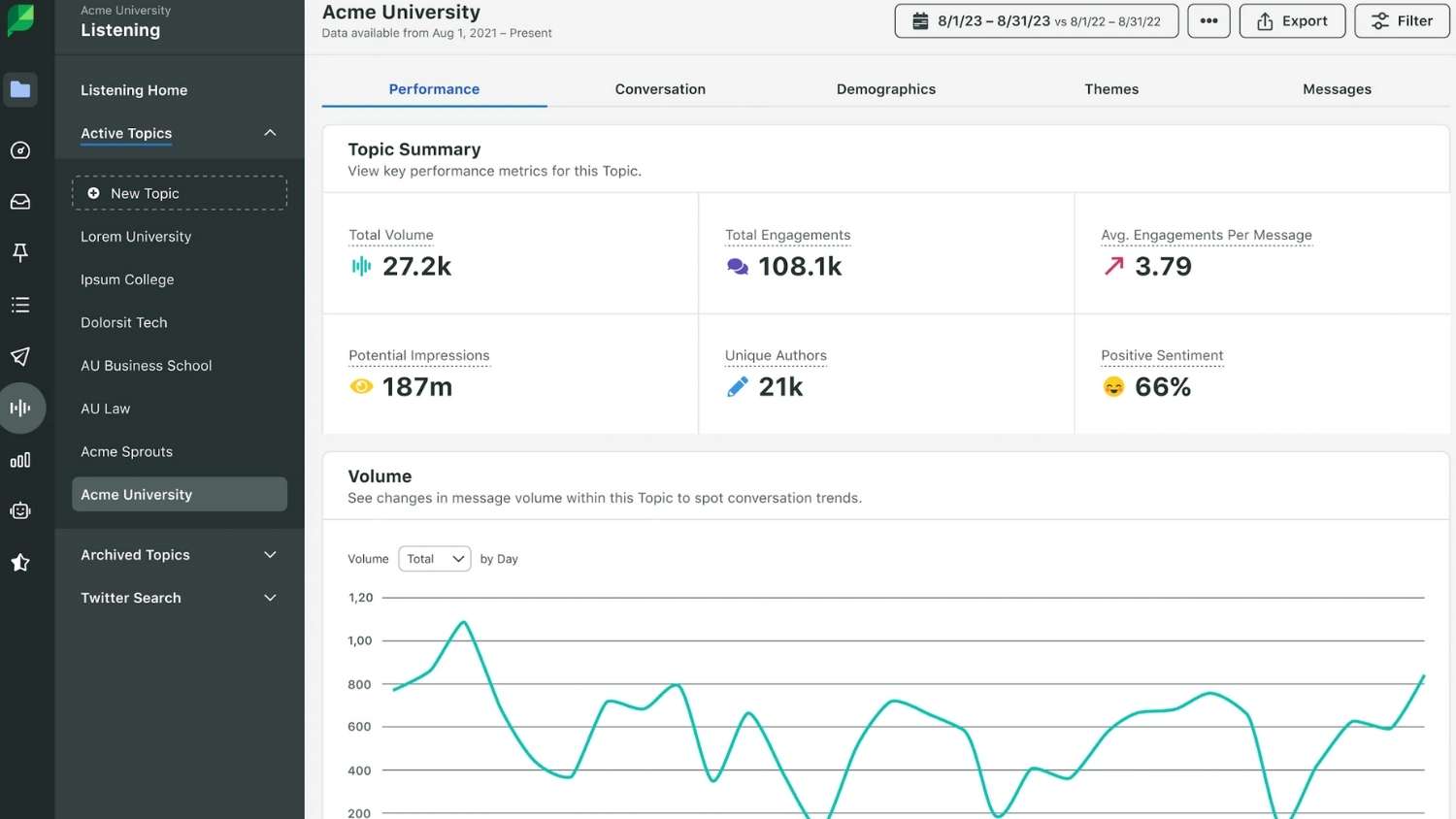
Sprout Social’s listening dashboard shows key performance metrics by topic and changes in messaging volume.

Tools like Sprout Social provide listening features that rapidly process millions of conversations. That way, you get actionable insights in real time so your team can respond strategically instead of reactively.

Chatbots and conversational AI

Chatbots aren’t just automated FAQs anymore. Today’s conversational marketing technology delivers interactions that feel human, handle complicated inquiries, offer tailored recommendations and smoothly transition customers to human agents.

Platforms like Drift, Intercom and ManyChat create sophisticated conversation flows that reflect customer responses and past interactions. They also effortlessly qualify leads, answer complex questions and move prospects through initial buying stages, improving customer engagement, satisfaction and team efficiency.

Common AI marketing automation challenges (and how to solve them)

Every marketing leader hits roadblocks when rolling out AI marketing efforts, and most are avoidable. Still, recognizing these hurdles up front and having solid strategies ready to go will help your team sidestep setbacks and stay on track.

Here are some quick ways to anticipate challenges for smoother implementation:

Turning skeptics into believers with small, impactful wins

The toughest part of AI implementation is typically getting everyone on board, rather than the technical implementation. Executives demand clear ROI, IT teams raise security questions and employees worry about AI replacing their roles. But starting small can ease these concerns.

Data from the Sprout Social Index™ shows that 54% of marketers expect AI to add new roles to social teams because of AI.

Focus initially on automating one high-impact, repetitive task, such as social response triage or email segmentation. Then track clear metrics like how many hours your team saves each week, how much faster you respond and how engagement improves. Measurable wins provide tangible evidence of AI success, turning skeptics into advocates.

Reinforce your case by highlighting success stories from competitors who have already achieved meaningful outcomes, such as cost savings, revenue growth or stronger market positioning.

Cutting through tool overload by focusing on strategic fit

With so many vendors offering similar features, even experienced teams can feel overwhelmed trying to identify which solutions truly provide the most value.

The best way to cut through the noise is to start with a clear understanding of your team’s challenges, such as slow content production, inefficient lead qualification or complex campaign management. When you know what you’re trying to solve, evaluating tools becomes far more straightforward.

Integrations should also be a top priority. Choosing tools that fit easily into your existing tech stack helps you avoid the pitfalls of manual data transfers and siloed workflows.

Finally, make sure any platform you consider is easy for your team to learn and directly addresses the challenges you’ve identified. That’s how you ensure long-term value without unnecessary complications.

Keeping ethics and trust intact with responsible AI adoption

Ethical concerns like bias, privacy and authenticity can quickly become roadblocks when exploring AI marketing automation. However, addressing them early builds trust, both within your team and with your audience.

Start by setting clear usage guidelines upfront for how and where AI will fit within your processes. From there, define an AI use policy that outlines the tasks your team can fully automate, which ones require human oversight and which should always involve a person (think sensitive customer interactions). This planning helps you establish explicit expectations for your team.

Being transparent about AI use also strengthens customer trust, which is why it’s important to clearly label AI-generated content and provide an easy path to a human when it really matters. Include regular AI audits in your workflows to catch bias and keep your systems fair and accurate. This ensures that you prioritize customer confidence, ethical standards and regulatory requirements as they unfold.

Finally, keep human oversight in the loop. Reviewing feedback, monitoring performance and adjusting AI regularly helps your automation stay aligned with your brand and your values.

AI marketing automation: A quick-start checklist

Every successful AI rollout starts with a few smart choices. With over three-quarters of companies recently surveyed by McKinsey now using AI, there’s more urgency than ever to build the right foundation. The trick is to keep the first phase focused, manageable and tied to impact.

Here’s a framework to help you get there faster:

  • Identify manual workflows that drain time: Flag repetitive, low-value tasks like publishing across social platforms, sorting social responses or repurposing blogs. These create bottlenecks not because they’re hard, but because they consume hours your team doesn’t have.
  • Set measurable goals for AI implementation: Pick one or two metrics to track right away (e.g., hours saved per week, campaign output increase) and link them to KPIs your leadership already values, like cost per acquisition or lead-to-close rate, to make a case for adoption.
  • Audit your current tools for integration compatibility: Before bringing in new tools, map what’s already in play (CRM, content calendar, social, email, analytics) and choose AI solutions that integrate seamlessly to avoid duplication and complexity.
  • Pilot a solution with fast time-to-value: Start with small AI use cases, like testing an AI scheduler for one or two social channels or using engagement triage for inbound mentions. Aim for visible results in 30–60 days to build momentum.
  • Evaluate and expand based on ROI: If the pilot boosts speed, engagement or efficiency, scale thoughtfully, keeping each step tied to business goals like faster response times, better campaign efficiency or measurable revenue impact.

How Sprout Social powers AI marketing automation for social teams

Social media marketing moves fast and generates more data than most teams can keep up with. That’s exactly where AI marketing tools can help the most. These tools streamline repetitive tasks and uncover actionable insights.

Tools like Sprout Social integrate AI into the workflows your team already uses, letting you scale what works while managing the parts that need a human touch. Instead of introducing a dozen new, disconnected tools, Sprout incorporates AI across publishing, engagement, listening and analytics. This keeps strategies intact, even as the work behind them becomes more efficient. No patchwork or silos, just an integrated approach to a more efficient workflow.

The goal behind this approach is straightforward: AI automation should enhance marketing teams’ creativity and judgment, not replace it.

Here’s how Sprout Social’s AI features streamline workflows, boost engagement and turn data into action:

AI Assist helps content creation move faster (and smarter)

Creating content at scale takes more than good ideas. It also takes a lot of time.

AI Assist reduces that load by generating on-brand social copy, offering message variations and repurposing top-performing content across platforms.

Sprout Social’s AI Assist offers suggestions for longer, shorter, friendlier or more professional copy options.

Sprout’s publishing tools integrate AI Assist, enabling teams to generate post drafts, optimize them for different networks and A/B test variations without switching platforms. It also adapts to your brand’s tone and typical engagement patterns to provide relevant, on-brand suggestions.

With it, turning one strong post into four network-specific versions becomes a five-minute task instead of an afternoon’s effort—without a drop in quality. Teams using AI Assist benefit from faster workflows and content production while maintaining consistency and performance.

Smart Inbox’s automation clears the clutter

As your channels grow, so does the volume of inbound messages you’ll see. This creates a need for tools that reduce manual work while preserving humanity.

To help, Sprout’s Smart Inbox uses AI to automatically categorize conversations, prioritize them based on urgency and sentiment and surface suggested replies that keep things moving. The system routes each message based on keywords, customer type or emotional tone so the right team member can jump in at the right time. It also resolves routine inquiries quickly and flags high-priority issues before they slip through the cracks.

Suggested Replies offer context-aware responses that feel natural, not scripted, while real-time sentiment detection highlights risky mentions early. Together, these features give your team the insight they need to respond proactively and stay ahead of customer issues.

The system also learns continuously and adapts to your team’s communication style and customer base. Over time, it evolves to support a more innovative, more responsive engagement engine.

Listening and analytics bring clarity to the chaos

There’s no shortage of data to glean from social media posts. The challenge is knowing what to do with it.

Sprout’s AI-powered listening analyzes millions of online conversations to help teams spot what’s trending, what’s changing and what matters most right now.

Data from the Sprout Social Index™ shows that social listening leads the functional skills that marketing leaders say are most important in 2025.

This analysis includes everything from emotional nuance in customer feedback to new hashtags gaining traction in your industry. By tracking these signals, teams can monitor shifting sentiment, identify viral content early and uncover patterns that would be hard to detect manually.

Sprout’s analytics builds on social listening by linking social performance to business outcomes. With machine learning highlighting which posts drive meaningful results, your team can shape data-based strategy without getting overwhelmed by multiple dashboards. You also gain a real-time view of competitor activity, making it easier to benchmark effectively and stay ahead.

Put AI marketing automation to work for your team

AI marketing automation isn’t just about saving time. It’s also about making better decisions, faster and scaling personalization without burning out your team.

The real momentum starts with one workflow improvement that shows clear value. From there, it’s easier to expand with purpose, backed by real ROI.

Sprout’s AI-powered platform helps social teams eliminate the busywork, focus on what matters and tie their efforts directly to business outcomes. Ready to see what that looks like in action? Explore what’s possible by requesting a demo today.

The post Build smarter workflows with AI marketing automation appeared first on Sprout Social.


from Sprout Social https://ift.tt/HVvQBYq
via IFTTT

Friday, 26 September 2025

Best Email Marketing Strategies for Black Friday 2025

Best Email Marketing Strategies for Black Friday 2025

Black Friday 2025 is shaping up to be massive. Black Friday 2024 in the U.S. set a new all-time record with $10.8 billion in online sales, marking a $1 billion increase from 2023, and this year's expected to be even bigger. But here's the thing, everyone knows that. Your customers' inboxes are about to become battlefields.

The real question isn't whether you should send Black Friday emails (you absolutely should), but how to make yours the ones people actually open, read, and act?.

Start Your Black Friday Campaign Before Black Friday

Black Friday email marketing starts weeks before the actual day. Your customers are actually open to Black Friday and Cyber Monday promotions as early as a month before they start, which means you can capture early shoppers while your competition is still planning.

Your pre-Black Friday strategy should include:

1 - Teaser campaigns starting 3-4 weeks early that build anticipation without revealing specific deals. 

2 - Early access emails for VIP subscribers sent 1-2 weeks before your main sale goes live. This strategy works particularly well when you segment your most engaged customers and loyal buyers, making them feel valued while driving initial momentum.

3 - "Deal preview" emails that give subscribers a sneak peek at your Black Friday offers without revealing everything. Think of it as a movie trailer—enough detail to get them excited, not enough to satisfy their curiosity.

Create Your Black Friday Email Series

Don't send just one Black Friday email. Plan a strategic email funnel that maximizes your sales window:

The Essential Black Friday Email Sequence:

Launch Day Email (Thursday or Friday morning): Your main promotional email with your biggest offer and clearest call-to-action. Since mobile accounts for 57% of holiday spending, make sure your design looks perfect on phones.

Midday Boost Email (Friday afternoon): Resend to non-openers with a different subject line and social proof elements like "Over 1,000 customers already shopping our Black Friday deals!"

Extended Weekend Email (Saturday): Keep momentum going with additional products or bundle offers. Don't assume Friday was your only shot. Many shoppers spread their purchasing across the entire weekend.

Cyber Monday Follow-up: Different angle, different products, or extended deals for anyone who missed Friday. Cyber Monday climbed to $13.3 billion in 2024, proving this day deserves its own focused campaign.

Final Hours Email: Create urgency with countdown timers and "last chance" messaging. Our AI Writing Assistant can help you craft compelling urgent language that motivates without sounding pushy.

Segment Your List to Maximum Your Impact

Generic Black Friday emails get ignored. Smart segmentation is what separates successful campaigns from inbox clutter.

High-Impact Segmentation Strategies:

Purchase History Segments: Send different offers to first-time buyers versus repeat customers. Your loyal customers might appreciate early access or exclusive products, while new subscribers might need stronger incentives to make their first purchase.

Engagement-Based Segments: Black Friday emails sent to subscribers who have opened previous emails from your brand have an open rate 10% higher than emails sent to subscribers who have never opened an email from your brand. Target your most active subscribers with your premium offers.

Product Interest Segments: If someone clicked on automation-related content in previous emails, they're more likely to respond to Black Friday deals on our automation tools rather than design templates.

Mobile vs. Desktop Segments: Since mobile behavior differs from desktop browsing, consider tailoring your offers. Mobile users often prefer quick, simple deals, while desktop users might engage with more detailed product information.

Our tagging system makes this segmentation automatic—when subscribers click specific links or visit certain pages, they're automatically tagged for relevant follow-up campaigns.

Optimize Subject Lines for Crowded Inboxes

Your subject line determines everything. With Black Friday emails achieving a 13% click-through rate despite the increased competition, the right subject line can make or break your campaign.

Subject Line Strategies That Work:

Urgency Without Panic: "24 hours left: Your Black Friday savings" works better than "URGENT!!! LIMITED TIME!!!"

Personalization That Matters: Use subscriber names, but go deeper. "Sarah, your wishlist items are 50% off" performs better than generic personalization.

Benefit-Focused Headlines: Lead with what subscribers get, not what you're selling. "Cut your email marketing time in half" resonates more than "50% off AWeber plans."

Question-Based Subject Lines: "Ready for your biggest email marketing win?" engages curiosity while promising value.

Our AI Writing Assistant generates multiple subject line variations instantly, so you can A/B test different emotional triggers and find what resonates with your specific audience.

Design for Mobile-First Shopping

Mobile shopping isn't the future—it's the present. Mobile shopping made up 69% of global purchases during Black Friday 2024, making mobile optimization crucial for your campaign success.

Mobile Optimization Essentials:

Single-Column Layouts: Our drag-and-drop email builder automatically creates mobile-responsive designs, but always preview on actual devices to ensure buttons and text are properly sized.

Large, Tappable Buttons: Make your call-to-action buttons big enough for thumbs, not just mouse cursors. We recommend minimum 44px height for optimal mobile usability.

Scannable Content Structure: Use short paragraphs, bullet points, and clear headings. Mobile users scroll quickly, so make your key points immediately visible.

Fast-Loading Images: Compress images to ensure quick loading, even on slower mobile connections. Our built-in Canva integration helps you create optimized graphics without leaving the email builder.

Leverage Automation for Maximum Efficiency

Manual email sending doesn't scale during Black Friday chaos. Smart automation handles the heavy lifting while you focus on customer service and order fulfillment.

Essential Black Friday Automations:

Cart Abandonment Sequences: Set up immediate triggers for anyone who views your Black Friday landing page but doesn't purchase. These recovery emails often generate 15-20% additional revenue during peak shopping periods.

Browse Abandonment Workflows: When someone clicks your email links but doesn't buy, automatically send personalized follow-ups featuring the products they viewed.

Post-Purchase Sequences: Don't stop at the sale. Automated thank-you emails with complementary product suggestions can increase average order value by 20-30%.

Win-back Campaigns: Target subscribers who haven't engaged recently with special "we miss you" Black Friday offers.

Our visual automation builder makes setting up these workflows simple, with pre-built templates for common Black Friday scenarios.

Create Compelling Black Friday Content

Your email content needs to work harder during Black Friday. Almost two-thirds of consumers (56.5%) prefer the email inbox for Black Friday promotions, but they're also seeing 10x more promotional emails than normal.

Content That Cuts Through the Noise:

Gift Guides Instead of Product Lists: Position your products as solutions for specific gift recipients rather than just discounted items. "Perfect gifts for the entrepreneur in your life" engages better than "50% off business tools."

Story-Driven Promotions: Share brief customer success stories that highlight how your products solve real problems. This builds trust and demonstrates value beyond the discount.

Social Proof Integration: Include customer testimonials, review stars, or usage statistics. "Join 50,000+ small businesses already using AWeber" is more compelling than feature lists.

Clear Value Propositions: Don't assume people understand why they need your product. Explain the specific problem it solves and how it makes their life better.

Our email templates include sections specifically designed for Black Friday content, making it easy to showcase products alongside compelling narratives.

Test and Optimize Your Campaign Performance

Successful Black Friday campaigns rely on data, not guesswork. A/B testing different elements can dramatically improve your results.

Key Testing Opportunities:

Subject Line Variations: Test emotional triggers, urgency levels, and personalization approaches. Small subject line changes often create 20-30% differences in open rates.

Send Time Optimization: While conventional wisdom suggests Friday morning, your specific audience might respond better to Thursday evening or Saturday afternoon sends.

Offer Presentation: Test percentage discounts versus dollar amounts, bundle deals versus individual product promotions, and different urgency tactics.

Email Design Elements: Compare single product focus versus multiple products, different button colors and sizes, and various image styles.

Our built-in analytics track all these metrics automatically, so you can see which variations perform best and apply those insights to future campaigns.

Plan Your Post-Black Friday Strategy

Black Friday isn't the end—it's the beginning of an extended holiday shopping season that continues through New Year's. Google found 20% of online store traffic in December happens in the 6 days after Christmas.

Extended Holiday Campaign Elements:

Cyber Monday Follow-up: Different products, different angle, or extended deals for Friday non-buyers. Position it as a second chance, not a repeat.

Holiday Gift Campaigns: Transform your Black Friday products into gift guides for December shoppers who missed the initial sales.

New Year Promotions: Business-focused subscribers often make purchasing decisions in January, making it perfect for productivity tools and business software.

Customer Retention Focus: Use the holiday momentum to build long-term relationships, not just generate one-time sales.

Our 10-step holiday email marketing guide provides detailed strategies for maintaining engagement throughout the entire season.

Ready to Dominate Black Friday 2025?

The brands that win Black Friday don't just send more emails—they send smarter emails. By starting early, segmenting strategically, and focusing on mobile-optimized automation, you can cut through the inbox noise and connect with customers when they're ready to buy.

Our drag-and-drop email builder, AI Writing Assistant, and automation tools are designed specifically for campaigns like this. With over hundreds of templates, built-in Canva integration, and powerful segmentation capabilities, we make it easy to create Black Friday campaigns that actually drive results.

Ready to get started? Our holiday email templates give you professionally designed starting points that you can customize with your branding and offers, so you can focus on strategy instead of design.

The post Best Email Marketing Strategies for Black Friday 2025 appeared first on AWeber.


from AWeber https://ift.tt/Wp51gmH
via IFTTT

The 16 Best Lead Magnets for Increasing Email Subscribers

The 16 Best Lead Magnets for Increasing Email Subscribers

Your website gets decent traffic, but your email list barely grows. Sound familiar?

You're not alone. A study by ViB Tech found that 41% of B2B marketers named generating more leads their biggest marketing challenge, while most businesses struggle with lead magnets that simply don't convert.

The solution isn't creating more content, it's creating the right lead magnet that solves a specific problem for your ideal customer. The best lead magnets for building an email list focus on immediate value rather than generic information, the formats that perform best have shifted dramatically.

Interactive lead magnets like quizzes and calculators now convert 70% better than static PDFs, while short-form video and text content consistently outperform lengthy guides. The companies building the fastest-growing email lists understand that today's audiences want instant, actionable solutions not another 40-page whitepaper to download and forget.

What Makes a Lead Magnet Convert?

Before diving into specific lead magnet examples, you need to understand why some convert at 5% while others hit 35% conversion rates.

The highest-converting lead magnets share four characteristics:

1 - Solve one specific problem immediately: Instead of "10 Marketing Tips," try "5-Minute Email Template That Books Discovery Calls"

2 - Demonstrate your unique process: Give prospects a taste of what working with you looks like

3 - Require minimal time investment: short-form video content drives higher conversion than long-form content

4 - Match your paid offering's value level: A $5,000 consulting service needs a more sophisticated lead magnet than a $29 course

At AWeber, we've seen thousands of businesses transform their email growth by switching from generic lead magnets to problem-specific solutions. Our most successful customers focus on one clear outcome rather than trying to cover everything their audience might want to know.

The 12 Highest-Converting Lead Magnet Types for 2025

Interactive Lead Magnets

1. Quizzes and Assessments

Why they work: Conversion rates for quizzes typically range from 20-40%, with high-quality quizzes potentially capturing up to 60% of participants' contact information

Best for: Service-based businesses, coaches, consultants, ecommerce brands

Quizzes work because they feel like a conversation, not a transaction. Instead of asking for an email upfront, you're providing personalized results that people actually want.

Example: "What's Your Email Marketing Personality Type?" or "Which Business Model Fits Your Lifestyle?"

Quiz-based lead magnets can see significantly higher engagement rates in their welcome sequences because subscribers feel like they're getting customized advice.

An example of a quiz being used as a lead magnet

2. Calculators and Assessment Tools

Why they work: People love instant, personalized answers to "How much?" or "How long?" questions

Best for: Financial services, SaaS companies, agencies, consultants

Example: ROI calculator, pricing estimator, or timeline assessment tool

These lead magnets position you as the expert while helping prospects understand the value of solving their problem.

3. Product or Service Recommendation Engine

Why they work: Eliminates decision paralysis by providing personalized recommendations

Best for: Ecommerce, software companies, service providers with multiple offerings

Example: "Find Your Perfect Email Marketing Plan"

Content-Based Lead Magnets

4. Checklists and Cheat Sheets

Why they work: Cheat-sheet pages can reach conversion rates up to 34%, significantly higher than average landing pages

Best for: Any business where your customers follow step-by-step processes

Example: "15-Point Email Campaign Launch Checklist" or "Holiday Marketing Timeline"

The key is making them immediately actionable. Your checklist should help someone complete a task today, not someday.

5. Templates and Swipe Files

Why they work: Templates save time and reduce the fear of starting from scratch

Best for: Marketing agencies, consultants, creative services, coaches

Example: Email templates, social media post templates, contract templates, or proposal templates

Templates work especially well when you include brief explanations of why each section matters.

6. Complete Resource Bundles

Why they work: Comprehensive resource bundles position you as the definitive source while solving multiple related problems at once

Best for: Food bloggers, fitness coaches, designers, marketers, educators

Example: Recipe ebooks, workout libraries, design template bundles, marketing swipe files

Think beyond single resources—create collections that your ideal customer would pay for. A nutritionist might offer "50 Quick Healthy Recipes," while a social media consultant could provide "Complete Instagram Templates + Captions Library."

These work because they demonstrate the breadth of your expertise while giving subscribers enough value to justify sharing their contact information.

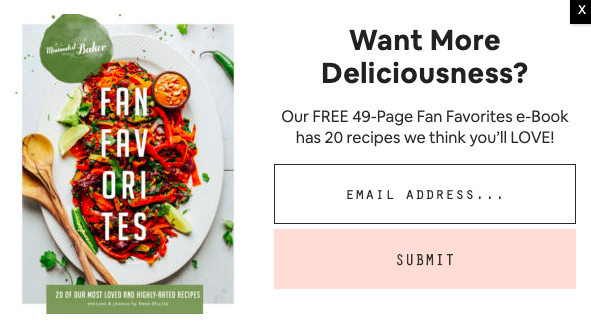
a lead magnet idea for a food blogger recipe ebook

7. Industry Reports and Original Research

Why they work: Original data and industry insights position you as a thought leader while providing information prospects can't get anywhere else

Best for: Agencies, consultants, SaaS companies, professional services

Example: "State of Email Marketing 2026" or "Small Business Growth Report"

Original research works because it's genuinely exclusive content that other businesses and media outlets want to reference and link to. Even simple surveys of your existing customers can provide valuable insights your prospects crave.

The most effective research reports focus on trends, benchmarks, or challenges specific to your industry. Include actionable insights, not just raw data.

Live Training Lead Magnets

8. Webinars and Free Training Sessions

Why they work: Live training sessions build trust through real-time interaction while positioning you as the expert authority

Best for: Coaches, consultants, course creators, SaaS companies, agencies

Example: "How to Double Your Email Open Rates in 30 Days" or "Free Website Audit Training"

Webinars work exceptionally well because they combine education with subtle sales positioning. During a 45-60 minute session, you can demonstrate your expertise while naturally introducing your paid services as the logical next step.

The key is focusing on one specific, achievable outcome rather than trying to cover everything you know. Promise a clear transformation that attendees can implement immediately.

9. Free Strategy Sessions and Consultations

Why they work: One-on-one time with an expert feels extremely valuable and helps prospects envision working with you long-term

Best for: High-ticket services, consulting, coaching, agencies

Example: "Free 30-Minute Email Marketing Strategy Call" or "Complimentary Business Growth Audit"

These work best for businesses with services priced above $1,000 because the lead quality justifies the time investment. The consultation itself often converts directly to sales.

Educational Lead Magnets

10. Video Training Series (Short-Form)

Why they work: Video content is the preferred lead magnet type, with short-form videos consistently outperforming long-form content

Best for: Coaches, consultants, course creators, service providers

Example: "3-Part Email Automation Series" or "5-Minute Marketing Wins"

Keep individual videos under 10 minutes and focus on one specific outcome per video.

free training lead magnet

11. Free Mini-Courses and Email Sequences

Why they work: Delivers value over time while keeping your brand top-of-mind

Best for: Education-based businesses, coaches, consultants, SaaS companies

Example: "7-Day Email Marketing Quick Start" or "5-Day Landing Page Challenge"

The most successful mini-courses focus on helping someone achieve one specific result by the end of the sequence. Our AWeber customers using email course lead magnets report higher customer lifetime value because subscribers experience multiple touchpoints before making buying decisions.

At AWeber, our "What To Write" lead magnet consistently generates qualified leads because it helps businesses with a major pain point we here from our customers - "I don't know what to write".

Exclusive Access or Promotion Lead Magnets

12. Free Trials and Demos

Why they work: Free trials eliminate purchase risk while letting prospects experience your value firsthand, turning skeptical visitors into confident buyers who've already seen results

Best for: Software companies, subscription services, course creators

Example: 14-day free trial, free consultation, or access to premium features

The key is showing value within the trial period, not just demonstrating features.

13. Exclusive Content and Behind-the-Scenes Access

Why they work: Appeals to people's fear of missing out while building community

Best for: Personal brands, content creators, membership sites

Example: "Insider newsletter with strategies I don't share publicly" or "Monthly behind-the-scenes business updates"

This works best when you already have an audience that values your perspective.

14. Discounts and Free Shipping Offers

Why they work: Immediate financial incentive removes purchase friction while building an email list of ready-to-buy customers

Best for: Ecommerce stores, retail businesses, subscription services, course creators

Example: "Get 15% off your first order" or "Free shipping on orders over $50"

Discount-based lead magnets attract highly qualified leads because people who are interested in your offer are already in buying mode. The key is making the discount valuable enough to justify sharing an email address but not so steep that it hurts profitability.

Consider offering first-time customer discounts, free shipping thresholds, or exclusive subscriber pricing to create urgency and value.

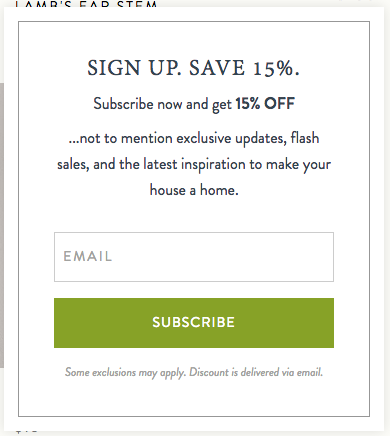
sign up for email to get discount

Problem-Solution Lead Magnets

15. Case Studies and Success Stories

Why they work: Provide proof that your approach actually works in real situations

Best for: Agencies, consultants, coaches, B2B services

Example: "How We Generated 47% More Qualified Leads in 90 Days" or "The Email Campaign That Doubled Our Customer Retention"

The most compelling case studies include specific numbers, timeline, and what obstacles you overcame.

16. Diagnostic Tools and Problem Identifiers

Why they work: Help people understand what's wrong before selling the solution

Best for: Technical services, consultants, health and wellness, marketing agencies

Example: "Website Conversion Audit Template" or "Email Deliverability Health Check"

These work particularly well when you offer the corresponding solution as a paid service.

How to Choose Your Best Lead Magnet Format

Match your lead magnet to your ideal customer's stage in the buyer's journey:

1 - Awareness stage: Educational content, checklists, resource lists

2 - Consideration stage: Case studies, calculators, assessment tools

3- Decision stage: Free trials, consultations, demos

Consider your business model:

  • High-touch services ($2,000+): Use consultations, assessments, or diagnostic tools
  • Online courses ($100-$500): Try mini-courses, video trainings, or templates
  • Physical products: Offer buying guides, size calculators, or exclusive discounts
  • SaaS/software: Free trials typically outperform content-based magnets

For small businesses specifically, implementing the right email marketing best practices from day one ensures your lead magnets integrate seamlessly with revenue-generating campaigns.

Setting Up Your Lead Magnet for Maximum Conversions

Your lead magnet's success depends as much on presentation as content. Here's how to optimize each element:

Landing Page Essentials

Clear value proposition: State exactly what subscribers get and why it matters

Benefit-focused headline: Focus on the outcome, not the format

Social proof: Include testimonials specifically about the lead magnet's value

Simple form: Email address only for most lead magnets (add name if you'll personalize follow-ups)

Follow-Up Sequence Strategy

Don't just deliver your lead magnet and disappear. Your follow-up emails determine whether leads become customers.

Email 1 (Immediate): Deliver the lead magnet with simple next steps

Email 2 (Day 2): Share a related tip that reinforces your expertise

Email 3 (Day 4): Address common objections or obstacles

Email 4 (Day 7): Soft introduction to your paid offering

Our AWeber automation workflows make this sequence simple to set up. You can create sophisticated follow-up campaigns that nurture leads based on their specific interests and behaviors.

Common Lead Magnet Mistakes to Avoid

Creating generic, broad content: "10 Marketing Tips" appeals to everyone and converts no one

Making promises you can't keep: If your lead magnet promises "instant results," it better deliver them

Forgetting mobile optimization: More than 60% of emails are opened on mobile devices

Neglecting the follow-up sequence: Your lead magnet is just the beginning of the relationship

Using too many form fields: Unless you're offering something extremely valuable, stick to email address only

Focusing on features instead of benefits: People don't want "a 20-page guide"—they want "the solution to their specific problem"

Host and Deliver Your Lead Magnet with AWeber's Complete System

Ready to create a lead magnet that actually converts? The fastest way to go from concept to converting leads is using AWeber's integrated lead magnet system that handles everything from hosting to automated delivery.

Why AWeber is Perfect for Lead Magnet Success

Complete hosting solution: Upload your PDF, video, or any digital lead magnet directly to AWeber—no need for separate file hosting or complex delivery systems

Drag-and-drop landing pages: Our landing page builder includes 100+ professionally designed templates optimized specifically for lead magnet conversion, with built-in Canva integration for custom graphics

Automated delivery system: Set up instant lead magnet delivery plus sophisticated follow-up sequences that nurture leads into customers—all from one platform

Smart segmentation: Automatically tag and segment subscribers based on which lead magnet they downloaded, so you can send targeted follow-ups that match their specific interests

Your 4-Step AWeber Lead Magnet Setup

Step 1: Create Your Lead Magnet Landing Page

Use our drag-and-drop builder to create a conversion-optimized landing page in minutes. Choose from templates specifically designed for lead magnets, customize with your branding using built-in Canva integration, and ensure mobile responsiveness automatically.

Step 2: Upload and Host Your Lead Magnet

Upload your PDF, video, checklist, or any digital resource directly to AWeber. We handle all the hosting and delivery logistics, so your subscribers get instant access without any technical headaches on your end.

Step 3: Set Up Automated Delivery

Our email automation builder lets you create sophisticated sequences that deliver your lead magnet immediately, then continue nurturing leads with relevant follow-up content. No coding required—just drag, drop, and customize.

Step 4: Track and Optimize Performance

Monitor landing page conversion rates, email open rates, and lead-to-customer conversion data all in one dashboard. Use these insights to continuously improve your lead magnet performance.

AWeber's Unique Lead Magnet Advantages

AI Writing Assistant: Can't write compelling follow-up emails? Our AI Writing Assistant creates personalized email sequences based on your lead magnet topic and audience

Built-in Analytics: See exactly which lead magnets drive the most qualified leads and highest customer conversion rates

Seamless Integrations: Connect your lead magnets to your existing business tools, from CRMs to ecommerce platforms

Professional Deliverability: We ensure your lead magnet delivery emails reach inboxes, not spam folders, with industry-leading deliverability rates

Start Building Your Lead Magnet System Today

Don't let another day pass watching potential customers leave your website without joining your email list. Our all-in-one platform makes it simple to create, host, and deliver lead magnets that turn visitors into subscribers and subscribers into customers.

Ready to turn your website visitors into email subscribers? Start building your high-converting lead magnet system with AWeber—includes landing pages, automation, and lead magnet hosting. Everything you need to implement these strategies is included from day one.


Frequently Asked Questions

What's the best lead magnet format for beginners? Start with a checklist or template. They're quick to create, highly practical, and consistently convert well across industries.

How long should my lead magnet be? Focus on value, not length. A one-page checklist that solves a specific problem will outperform a 20-page guide that covers everything generally.

Can I use the same lead magnet for different industries? It's better to create specific lead magnets for each audience segment. Generic content rarely converts as well as targeted solutions.

How do I know if my lead magnet is working? Track your landing page conversion rate (aim for 20%+), email open rates for your welcome sequence (50%+), and ultimately, how many leads convert to customers.

Should I gate all my best content? No. Share plenty of valuable content freely to build trust, then gate your most actionable, step-by-step resources.

The post The 16 Best Lead Magnets for Increasing Email Subscribers appeared first on AWeber.


from AWeber https://ift.tt/soZPQq5
via IFTTT