You know that your team’s work on LinkedIn drives results, but the native LinkedIn analytics dashboard makes proving it an arduous, manual process. With it, your team may spend hours exporting siloed data and stitching together reports that offer limited insight into your true business impact.
It’s time to stop reporting and start strategizing.
A unified social media analytics dashboard moves your team from simply tracking posts to visualizing performance and proving a clear social media ROI. Here’s how to build a LinkedIn dashboard that transforms your team into a strategic business unit.
What is the native LinkedIn dashboard?
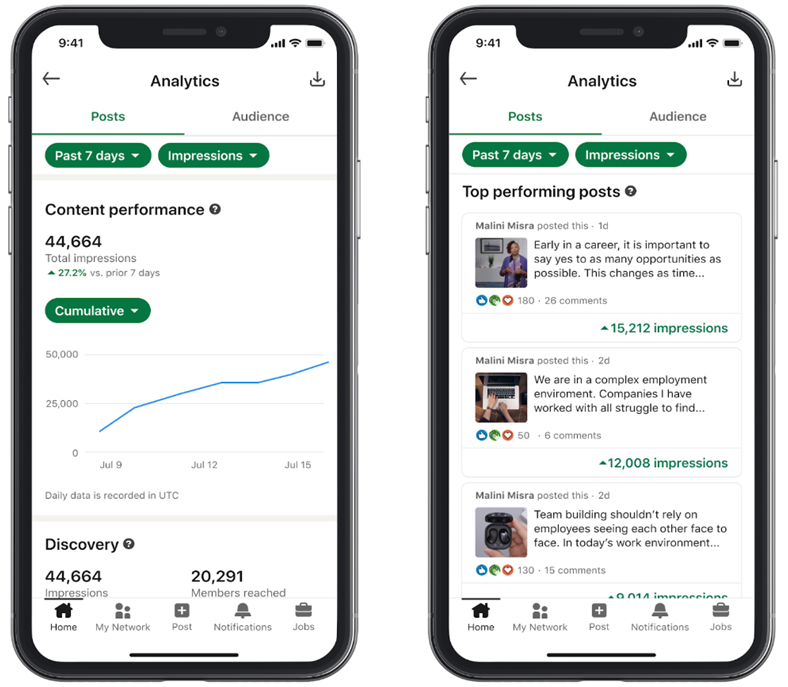
Every administrator of a LinkedIn Company Page gains automatic access to the native LinkedIn analytics dashboard. The platform provides this foundational reporting tool to all users.
To find the native dashboard: Go to your Admin view and select the Analytics tab in the top navigation bar.
This built-in tool provides basic metrics across these three main categories:
Visitors: Insights into page views and unique visitors
Followers: Basic demographics and follower growth trends
Content: Performance data on your most recent LinkedIn posts, including impressions, reactions and comments
While helpful for a quick check-in, the native dashboard is not a strategic decision-making tool. It provides raw numbers but lacks the historical context and cross-channel comparison needed to define a long-term content strategy.
Native LinkedIn analytics limitations and how to fix them
The native LinkedIn dashboard’s limitations become clear the moment you try to elevate your reporting. Teams often face three distinct roadblocks:
Short data retention: Native data is often limited to specific time windows, making year-over-year analysis difficult.
Siloed reporting: You cannot view LinkedIn metrics side-by-side with X (formerly Twitter) or Facebook data without manual exports.
Manual effort: Building a monthly report requires exporting spreadsheets and building charts from scratch every time.
When you’re learning how to use LinkedIn, the goal is to move beyond simple post-level reporting. You need a centralized LinkedIn analytics dashboard that unifies your data, automates the busywork of reporting and provides competitive benchmarks.
This shift turns you from a data collector into an insight storyteller. A unified dashboard transforms numbers into meaning, allowing you to prove social ROI on LinkedIn and drive decisions.
Why your LinkedIn dashboard is more than just a report
Your LinkedIn dashboard isn’t just a data repository. It’s also a decision-making tool that drives your overall social media marketing strategy. When you centralize your data in a social media dashboard like Sprout Social, you unlock the ability to:
Prove ROI: Connect specific LinkedIn campaigns to measurable outcomes, such as website traffic and conversions.
Align with business goals: Shift the conversation from vanity metrics (likes) to key performance indicators (KPIs) that leadership cares about (engagement rate, click-throughs).
Democratize data: Share secure, read-only links with stakeholders so they can view performance without needing Admin access to your LinkedIn Page.
How to build your LinkedIn dashboard in Sprout Social
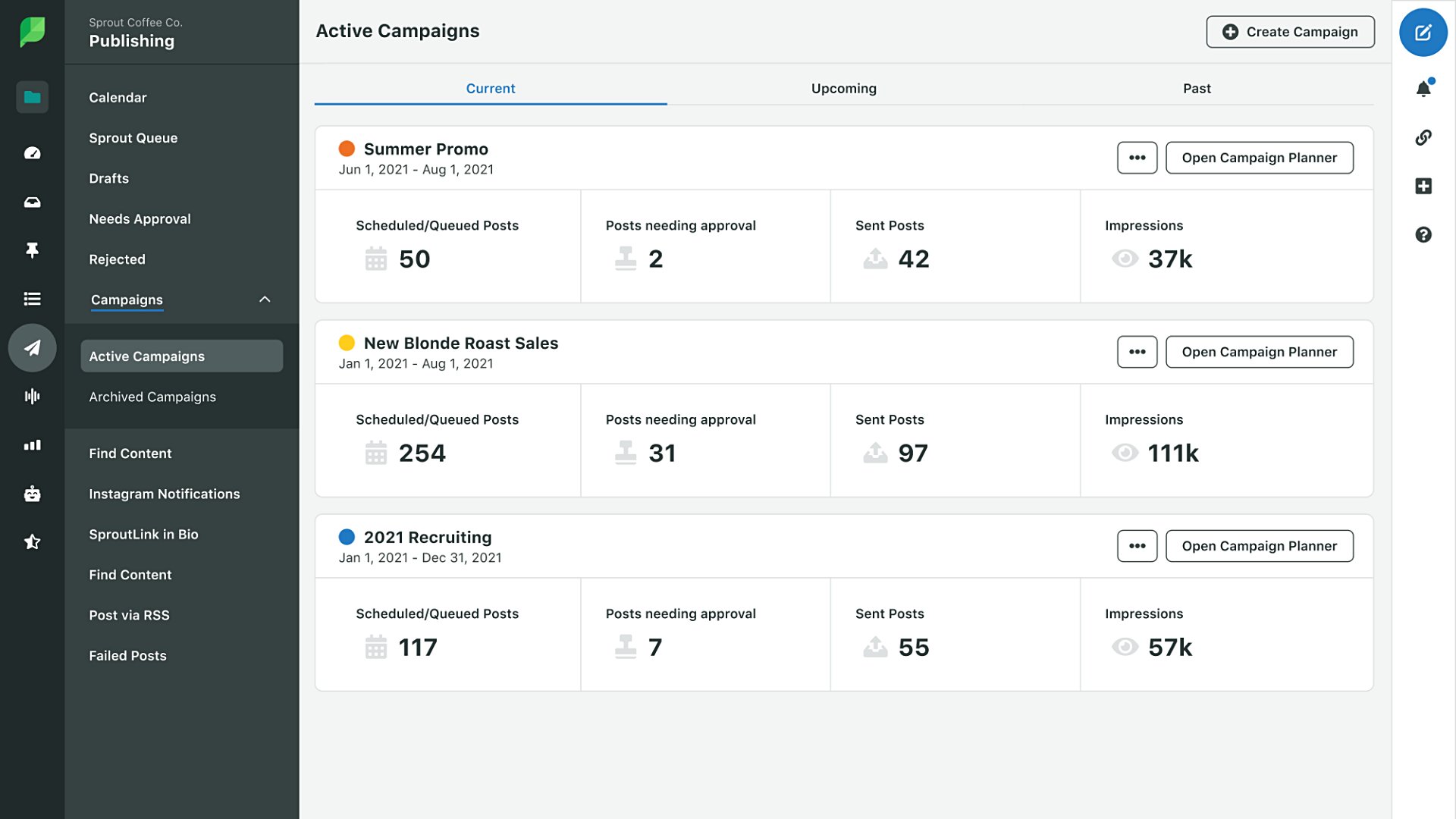
The fastest way to access your data is to leverage Sprout’s pre-built LinkedIn Pages Report.
For teams that need to tell a specific story to leadership, Sprout’s Premium Analytics enables you to build a custom LinkedIn dashboard from scratch.
Here’s a step-by-step guide to setting up your own LinkedIn dashboard in Sprout:
Step 1: Connect your LinkedIn Company Page
To get started, connect your LinkedIn account to Sprout Social. The platform will immediately begin syncing your historical data and will then capture all future activity. This automatic data sync solves the native tool’s short retention issue, ensuring your reporting is always audit-ready.
Limitation note: Sprout integrates with Company Pages, personal profiles and Campaign Manager accounts. However, due to LinkedIn API restrictions, Sprout cannot integrate with LinkedIn Groups or University personal profiles. Additionally, demographic breakdowns by country, gender or age are not available via the API.
Step 2: Choose your reporting path
Once connected to Sprout, navigate to the Reports tab. You have two options:
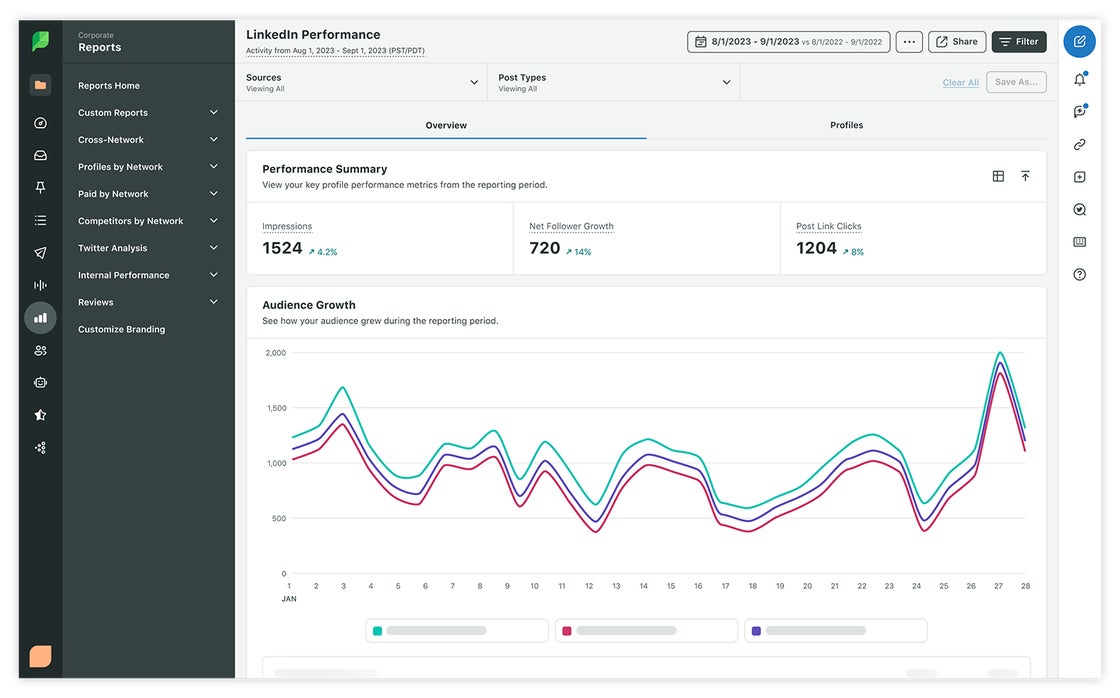
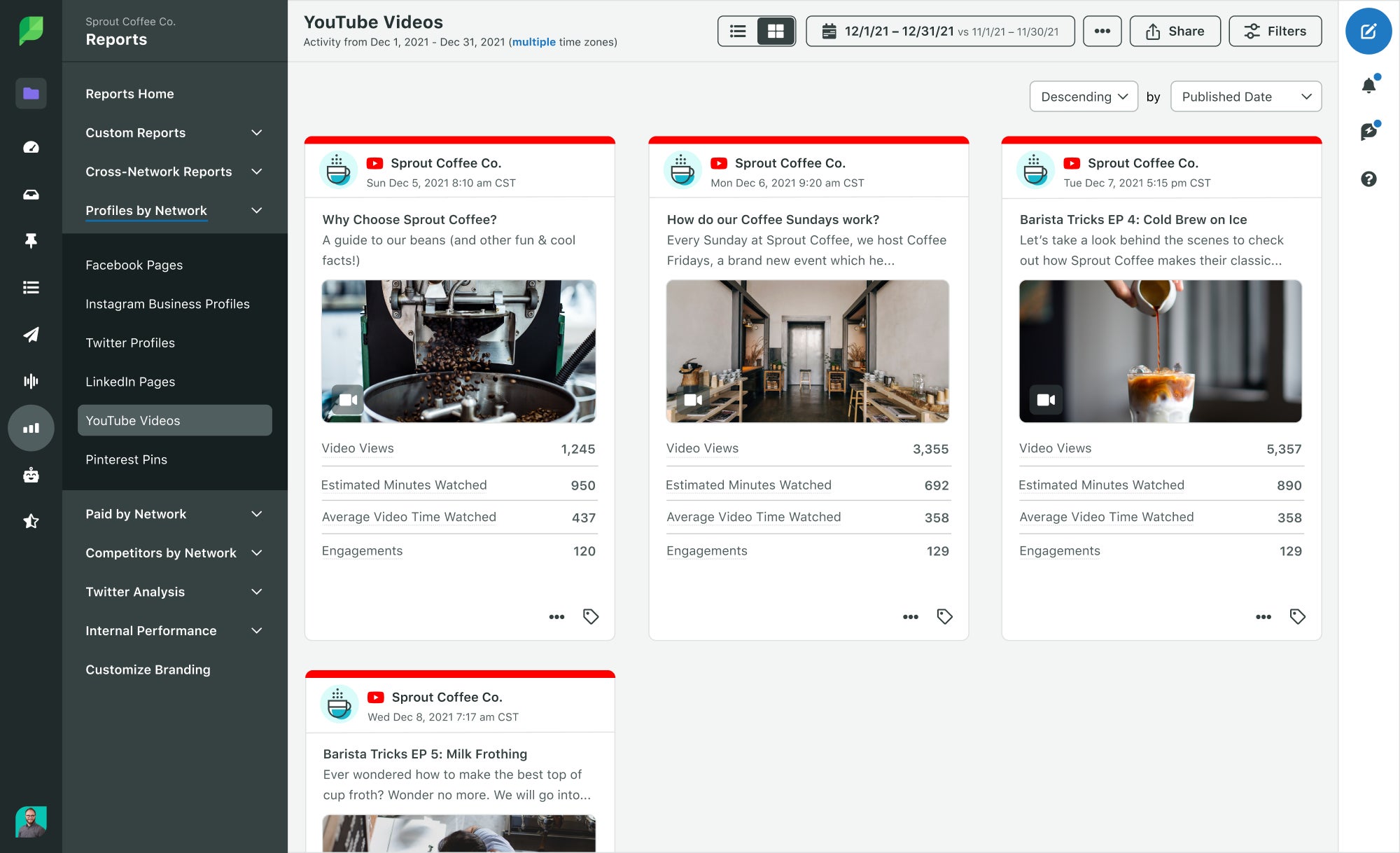
For instant insights: Select the LinkedIn Pages Report, found under Profiles by Network. This pre-built template gives you a comprehensive overview of your performance immediately—no setup required.
For custom dashboards: Select Custom Reports, available to Premium Analytics customers, to build a dashboard tailored to your specific KPIs.
Step 3: Select the right metrics for Custom Reporting
If you’re a Premium Analytics user building a custom dashboard, hand-pick the key metrics that matter most to your stakeholders. We recommend tracking:
Audience growth: Track total follower growth and net add to measure the momentum of your brand awareness.
Content performance: Break down performance by format (Video vs. Image vs. PDF) to understand what drives attention.
Top performing posts: A visualization of your posts with the highest impressions, reaction counts and click-through rate (CTR).
Engagement rate: Monitor the percentage of the audience that interacts with your content.
Step 4: Customize views for your audience
Your dashboard’s goal should be to inform action. Custom Reports allows you to build different LinkedIn dashboards for different stakeholders:
For leadership: Create a high-level view that focuses on KPIs like follower growth, total impressions, web traffic and conversion rate.
For practitioners: Create a tactical view that focuses on specific engagement metrics, such as post-level engagement rate, ideal posting times, as well as content format trends.
Step 5: Enrich with qualitative context
Data points alone don’t tell the whole story—you need context too. For example, the conversations happening on-profile will help you explain why certain posts resonated, raised questions or sparked reactions.
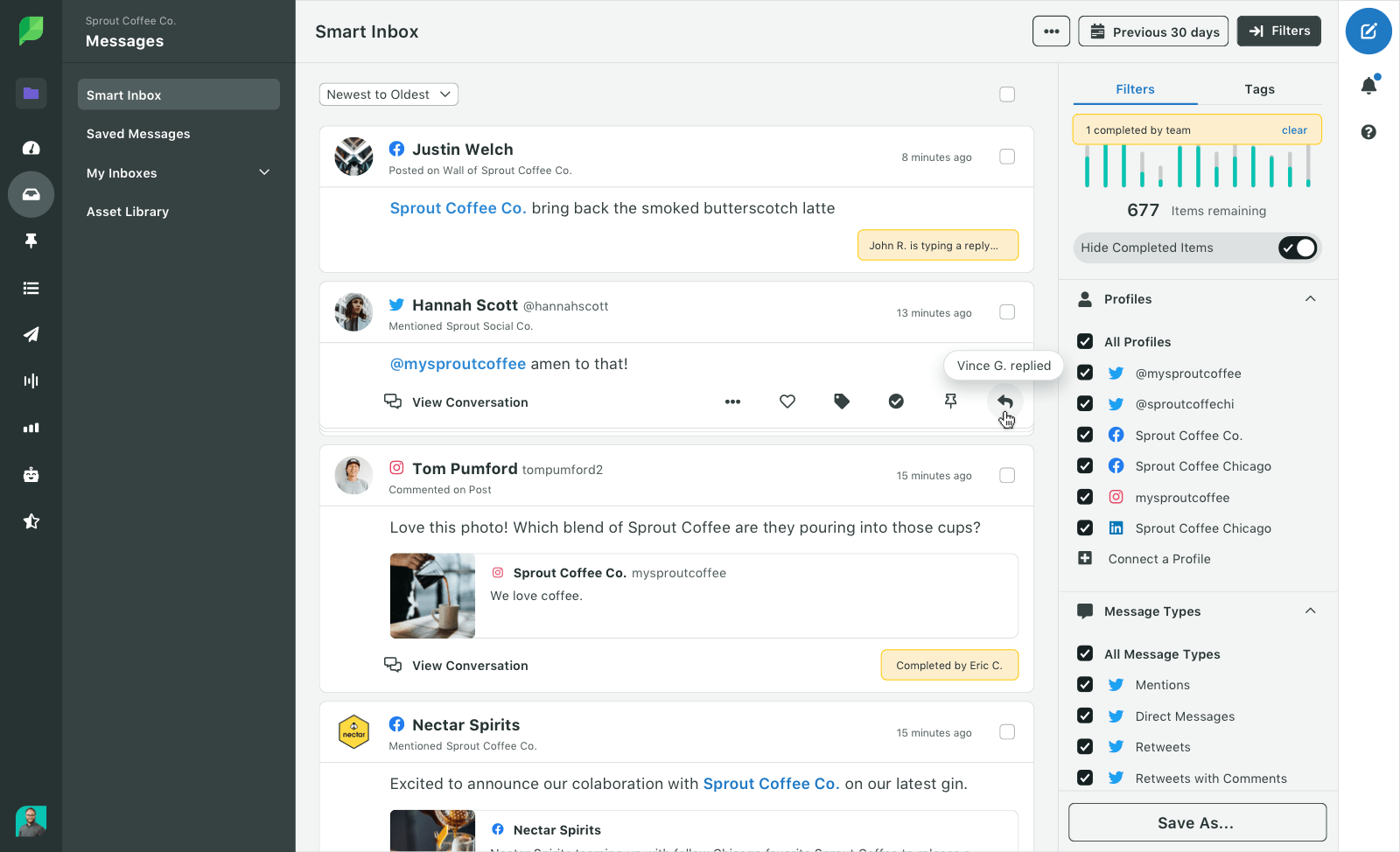
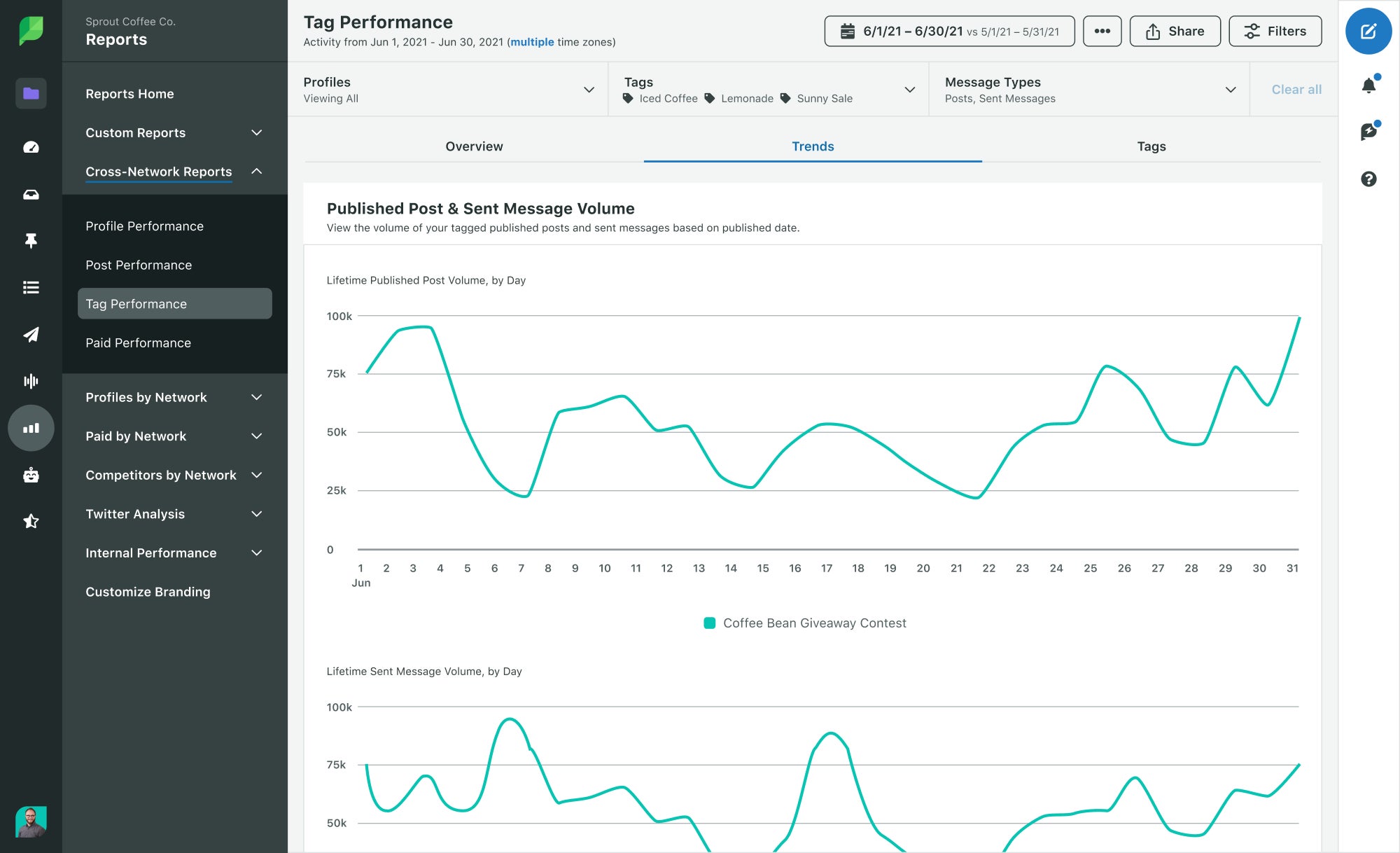
In a Custom Report, add Tag Performance widgets. By tagging incoming messages in Sprout’s Smart Inbox with your own tags (e.g., “Positive Sentiment,” “Product Questions,” “Pricing Feedback”), you can visualize qualitative feedback directly in your dashboard. This proves to leadership that you aren’t just counting likes and that you’re listening to the customer voice.
Pro tip: While LinkedIn’s API restricts “listening” to public conversations outside of your owned page, Sprout’s Social Listening allows you to track broader brand sentiment across X, Reddit and the web. Combining this broader market context with your specific LinkedIn comments helps you explain why content performed the way it did.
What’s inside a Sprout Social LinkedIn Pages Report
Once you’ve connected your company page to Sprout and your data is live, you need to interpret it.
Here’s how to use the specific tabs in Sprout’s LinkedIn Pages Report to extract actionable insights:
Overview
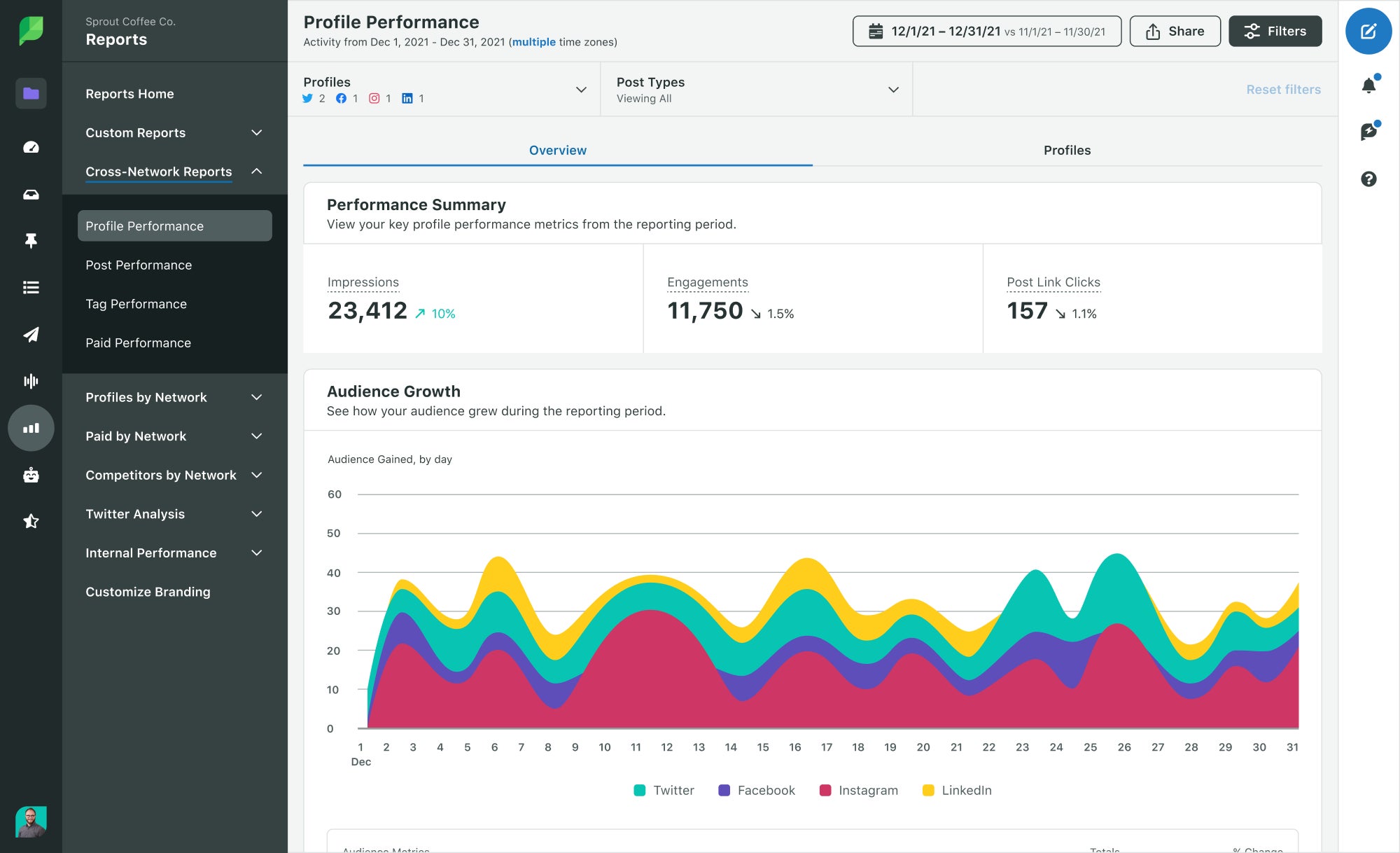
Think of the Overview tab as your morning health check. It aggregates your critical health metrics—Audience Growth, Publishing Behavior, Impressions and Engagement—into a single, high-level view.
Use this section to answer big questions quickly: Are we growing? Are we consistent? And, most importantly, is the audience caring? Analyzing your Engagement Rate alongside your Top Posts allows you to immediately spot which content types are resonating and distinguish between vanity reach and actual audience interest.
Pro tip: Look for efficiency, not just volume. If your Publishing Behavior (number of posts) is down but your Engagement Rate is up, you have a powerful story for leadership: You’re achieving more impact with less noise.
Post performance
The post performance section of the LinkedIn Pages Report highlights your top-performing post by metrics, including impressions, CTR and video views. With it, quickly see which topics, formats or types of calls to action drive the highest response rates.
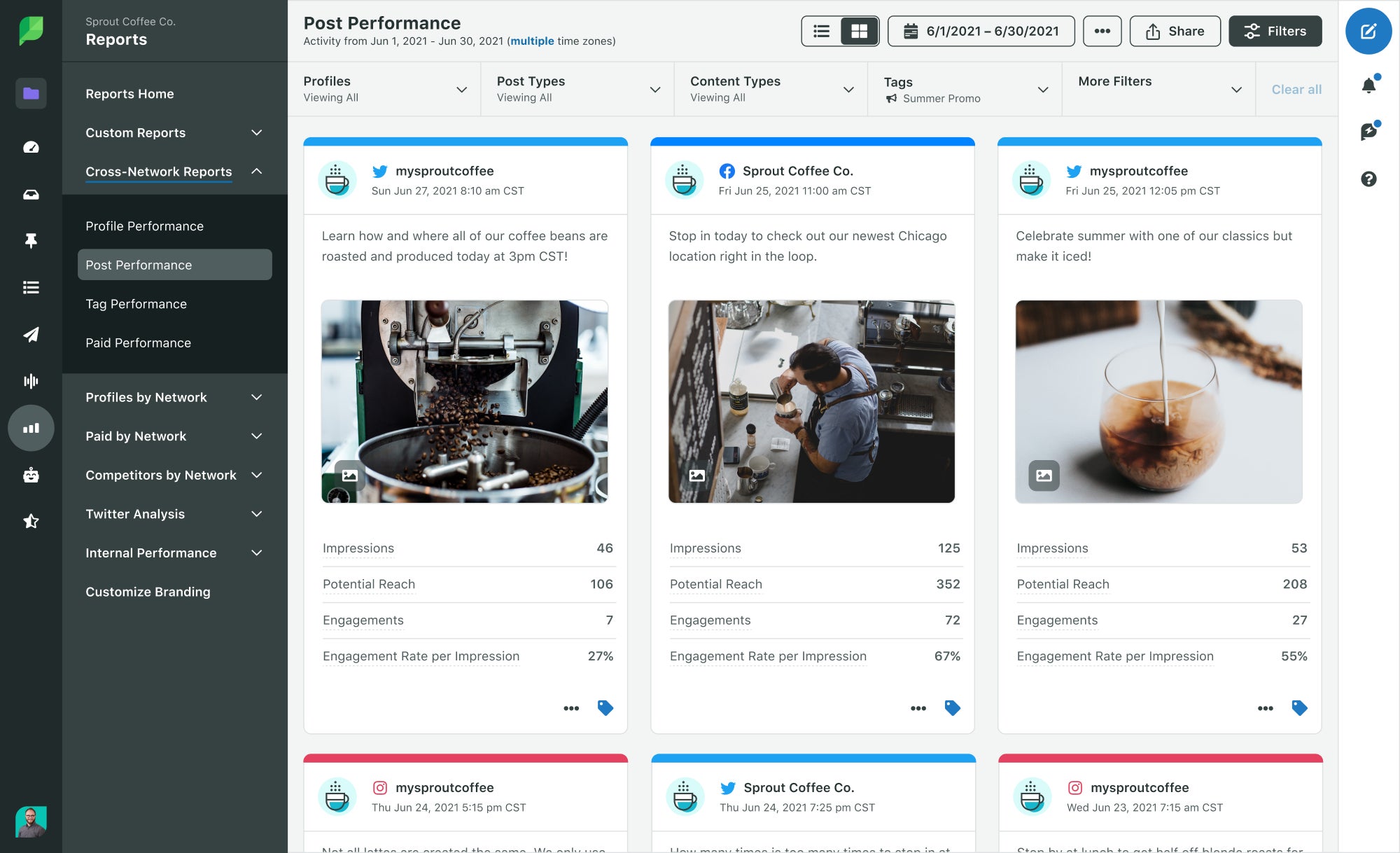
Alternatively, use the Cross-Network Post Performance Report, filtered for your LinkedIn Company Page, to sort your content by type, tag and specific metrics.
Try sorting your last quarter’s posts by shares to see what content was viral enough to be reposted, and then sort by click-through rate (CTR) to see what content actually drove traffic. You will often find that “viral” content and “converting” content are two different formats.
Pro tip: Look for outliers. Did a specific video get 3x the normal engagement? Analyze the topic and format, and then replicate that success in next month’s calendar. This data helps you spend your content creation efforts wisely.
Benchmarking
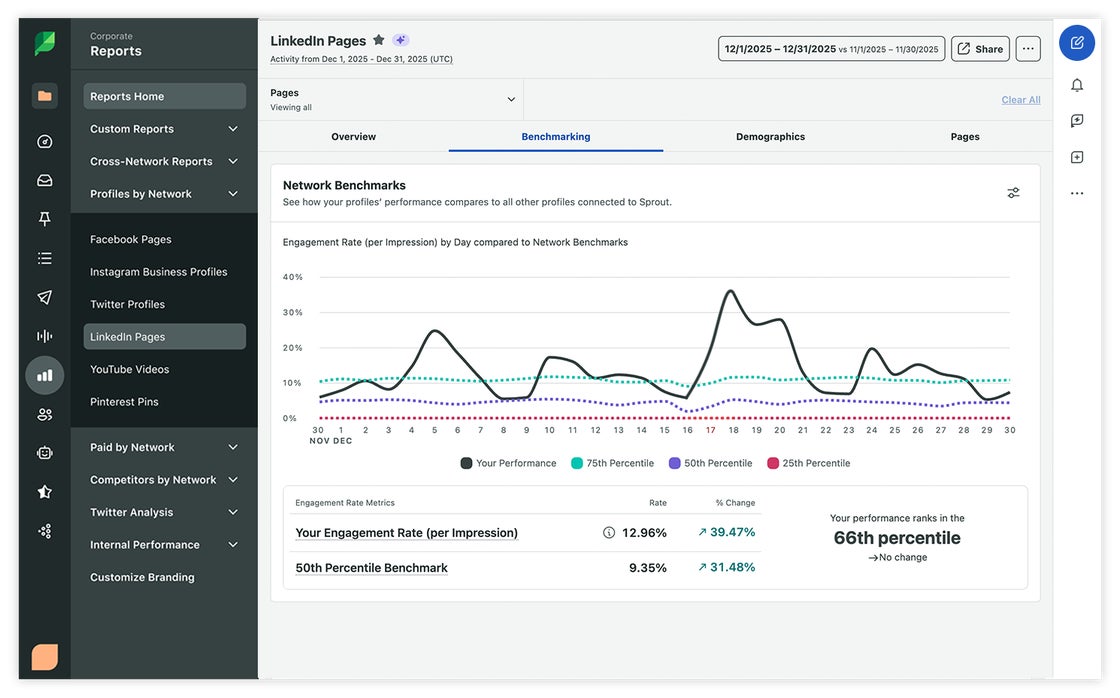
Context is everything. Sprout’s Premium Analytics customers often use data in the Benchmarking tab to answer the question, “Is this good?”
Benchmarking helps you visualize your Engagement Rate per Impression compared against all LinkedIn pages connected to Sprout. If your engagement rate is 2% and the average for Sprout-connected pages is 1.5%, you can confidently report to leadership that you’re outperforming the broader Sprout LinkedIn network.
Demographics
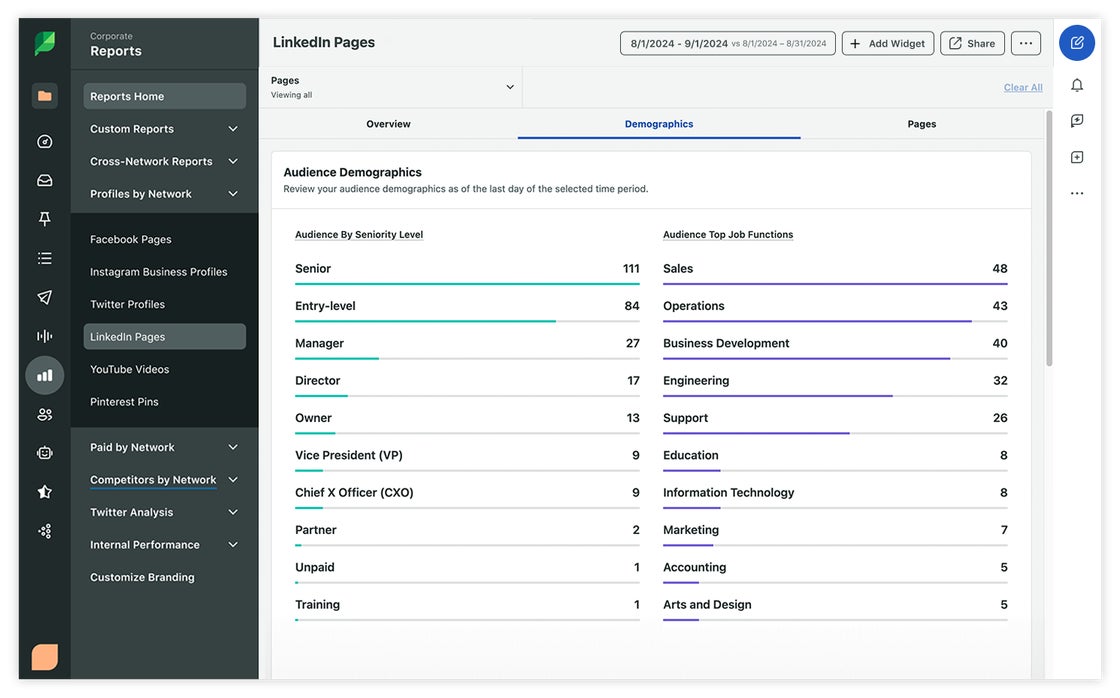
Your audience data is the key to successful targeting. Don’t just look at your total follower count. Consider who those followers are. Use the Demographics tab to view breakdowns by Job Function and Seniority Level.
This is essential for B2B alignment. If your marketing messaging is technical, but your audience’s job function is mostly “Sales” or “Business Development,” you are speaking the wrong language to the wrong room. Use these insights to pivot your LinkedIn content strategy to appear to the decision-makers you actually want to reach.
Pages
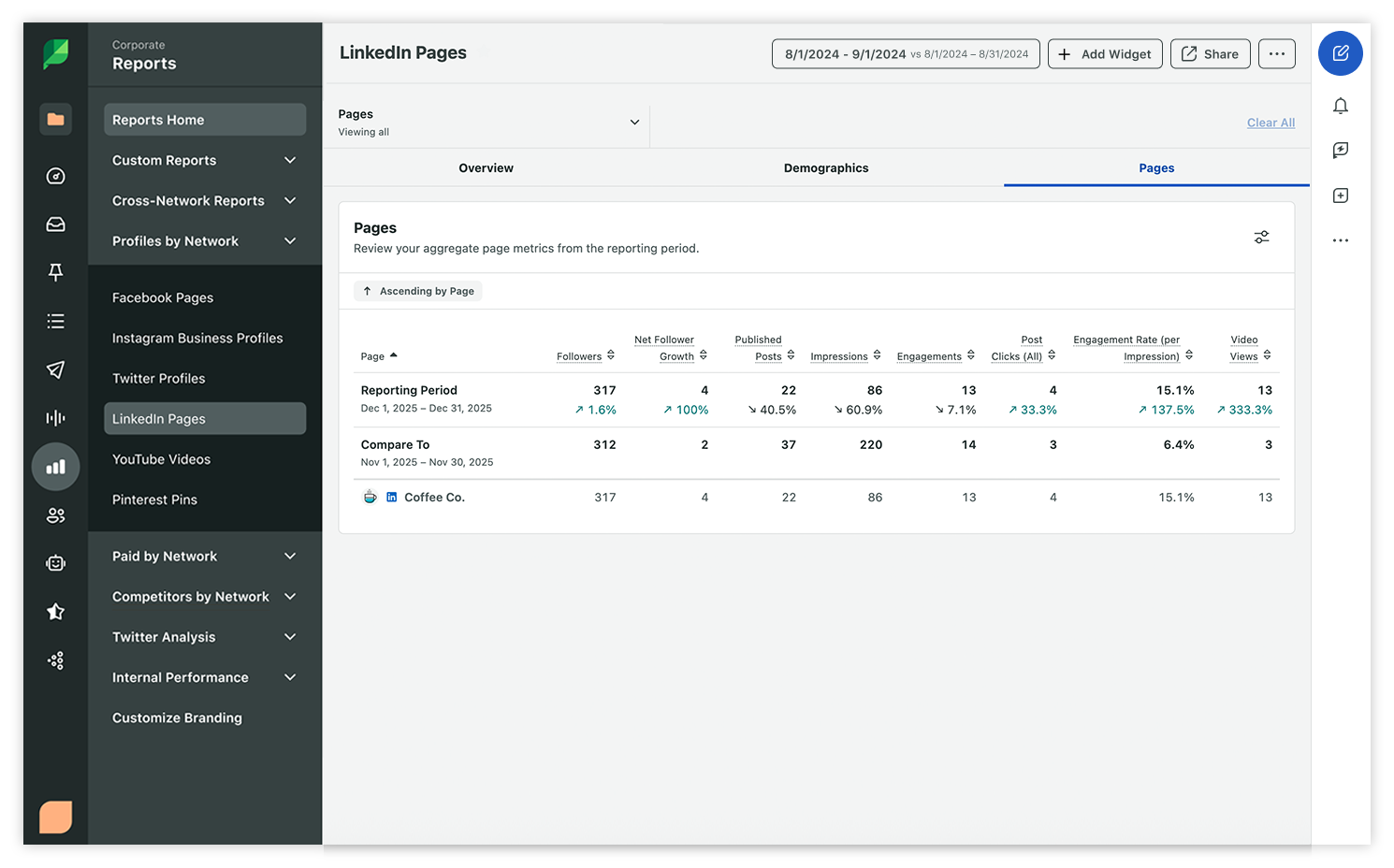
For agencies or enterprise brands managing multiple LinkedIn Company Pages—like global brands with regional pages or franchises—the Pages tab is essential. It provides a roll-up view that lists every connected page in a single table.
Instead of manually toggling between Admin views to gather data, sort the list by any metrics, such as Total Followers, Net Growth or Impressions, to instantly compare performance across all your accounts.
Pro tip: Identify your top-performing regional page and analyze its content mix. If your “West Coast” page is seeing higher engagement with a video, test that format on your underperforming “East Coast” pages to lift results globally.
Bonus: Traffic and conversion data with GA4 integration
While this data doesn’t live in the native LinkedIn API, Sprout’s integration with Google Analytics 4 is a game-changer.
By pairing Sprout’s URL tracking functionality with GA4, you can use your LinkedIn dashboard to connect your posts directly to website clicks, form fills and campaign tags.
Presenting this hard conversion data moves your social team to a revenue driver, especially when you can say, “This LinkedIn campaign drove 500 leads.”
Go from LinkedIn dashboard to decisions
You no longer have to settle for the limitations of manual spreadsheets or the basic native LinkedIn dashboard.
By centralizing your LinkedIn analytics dashboard in Sprout Social, you automate the time-consuming parts of reporting, allowing you to focus on the story your data is telling. This capability positions you as a strategic leader, not just a publisher.
Ready to automate your reporting and prove your team’s impact? Start your free trial today and build your LinkedIn dashboard.
As a social media practitioner, you already know how Pinterest brings a unique creative lift to your publishing flow. But keeping up with daily new Pins while tracking seasonal trends can stretch anyone thin. And because Pinterest is a visual search engine that rewards fresh activity, consistency isn’t negotiable.
Smart Pinterest scheduling gives you that time back and sets you up for steady, predictable growth by optimizing when and how your content shows up. Here’s how to schedule Pinterest posts for business success—and why it matters.
Scheduling Pinterest posts for business success
Pinterest is more than a social media channel; it’s a visual discovery and search engine where users come to plan purchases, projects and ideas. This unique user intent requires a Pinterest strategy focused on both content quality and consistency. When you master scheduling Pins, you move from reactive posting to proactive growth.
Consistency is key to predictable performance
The Pinterest algorithm actively prioritizes fresh, consistent activity from creators. Pinterest rewards fresh, relevant content and maintaining a steady cadence helps you stay present in search and recommendations. Use scheduling to keep your boards updated consistently, then validate impact in analytics.
This shift from posting for the sake of posting to prioritizing engagement is what sets top brands apart, as documented by recent data showing that quality outweighs sheer volume. In fact, the 2025 Content Benchmarks Report from Sprout Social found that brands stand out because they post original content, and not just because they’re posting a lot.
So posting less, but posting with greater consistency and intention, is a highly effective strategy when it comes to Pinterest marketing. By focusing on high-quality content over quantity, you can more easily move the needle on your Pinterest engagement rate, ensuring that every Pin you schedule is actively contributing to your brand’s resonance rather than just filling up a feed.
Maximize your organic reach with optimal timing
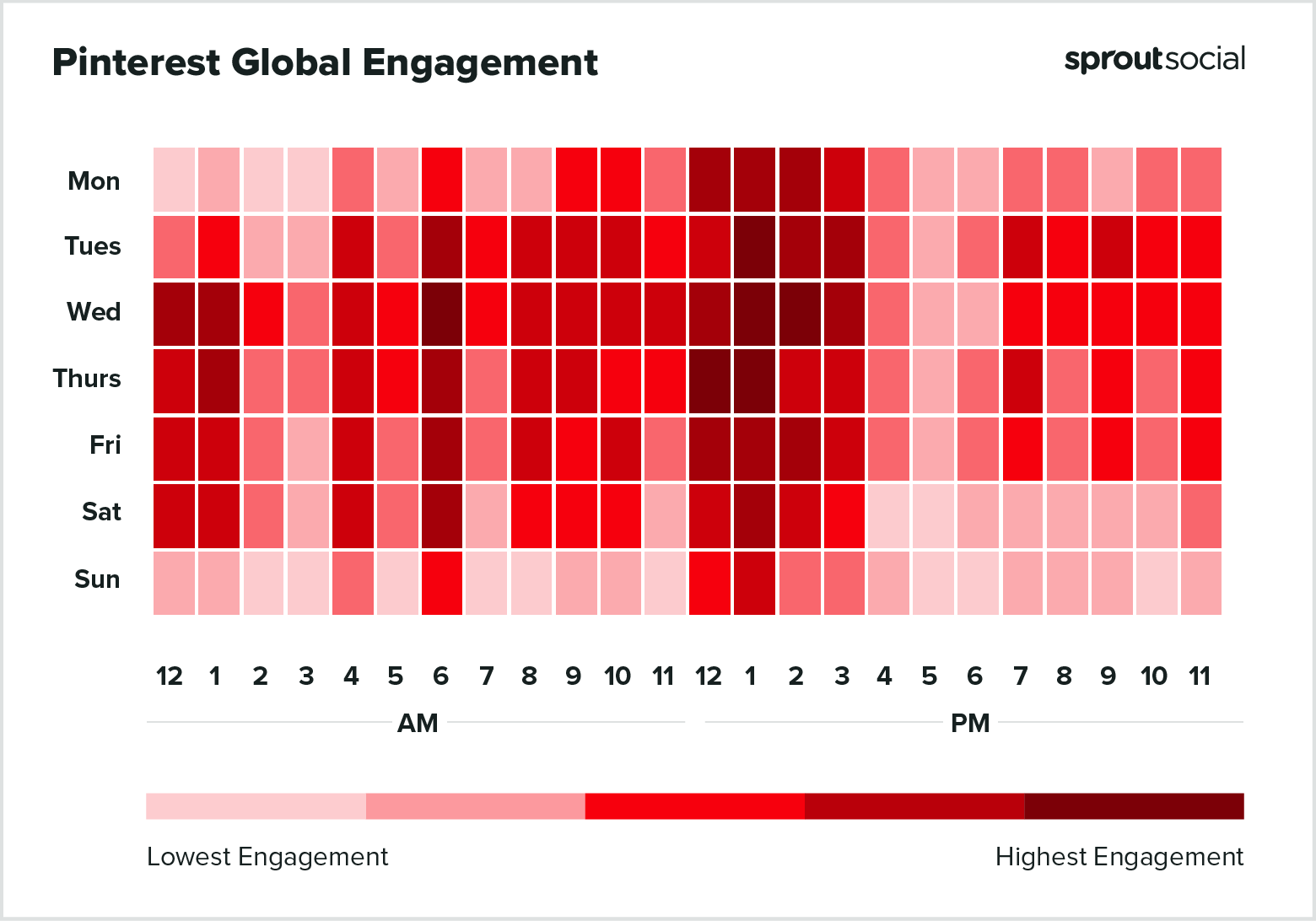
Your audience drives higher engagement when you publish Pinterest Pins at their most active times. This is where “optimal send times” come into play. According to Sprout’s data on the best times to post, Pinterest sees increased traffic around 10 a.m.—when people are browsing for inspiration. You’re also likely to see higher engagement during seasonal interest spikes.
During the weekend, the audience shifts from a work mindset to personal inspiration and planning, making them highly receptive to discovery content.
A strategic Pinterest scheduling tool accounts for these trends, automating the process and ensuring your posts appear in the perfect window. But that also means continuously testing for the perfect post timeframe using Pinterest analytics. What works for a B2C fashion Pinterest account differs from a B2B service, so treat audience behavior as your most valuable data point.
To test this, compare the performance of Pins published at 7 p.m. versus 9 p.m. for a month. Then use the data on outbound clicks and saves to find out your specific audience’s peak time.
Start planning in advance
Unlike other social media networks, Pinterest users often search weeks or even months ahead of a major event, holiday or seasonal trend. For example, searches for summer recipes start in late spring. This user behavior means your Pinterest content pipeline must be well ahead of the curve.
Effective post planning allows you to capitalize on this long lead time, so you get to fill up your Pinterest board with relevant content as soon as users begin their searches. This foresight helps you maximize your impact on the platform.
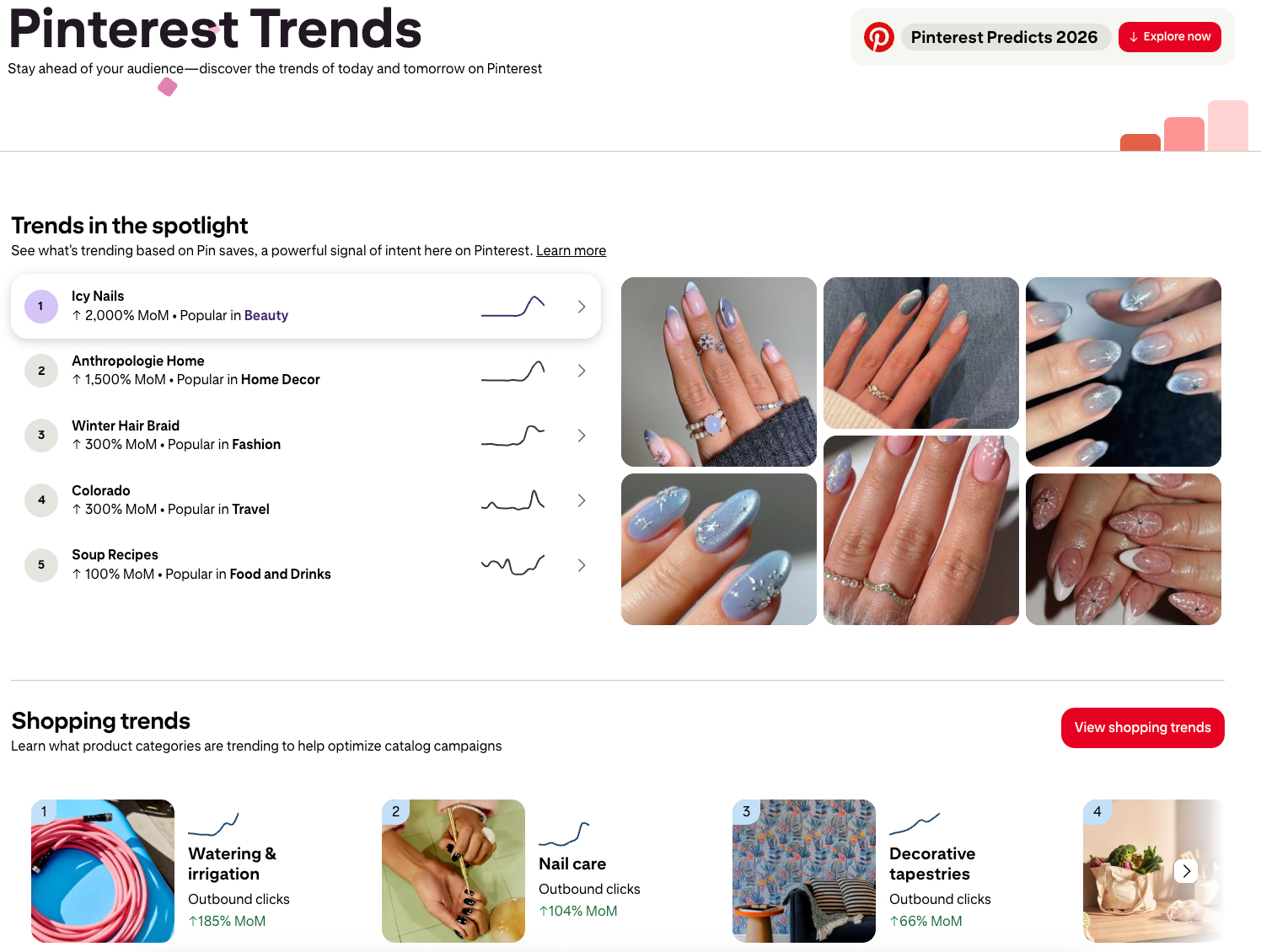
For major holidays or seasonal topics, start posting relevant content 45-60 days in advance to capture the initial surge in user searches. Use Pinterest Trends to identify these high-volume, seasonal secondary keywords and incorporate them into your Pin descriptions weeks before the topic peaks.
How to schedule posts directly from Pinterest
You can schedule Pinterest Pins directly through your business account settings. This is a simple, no-cost way to move from manual posting to an automated workflow. However, be aware of the native scheduling limits: you can only schedule up to 30 days in advance, and keep up to 10 scheduled at a time. This process is best for business owner accounts with a low volume of daily Pins.
The limitations in bulk scheduling and long-term planning are significant pain points that often necessitate a dedicated social media management solution as you scale.
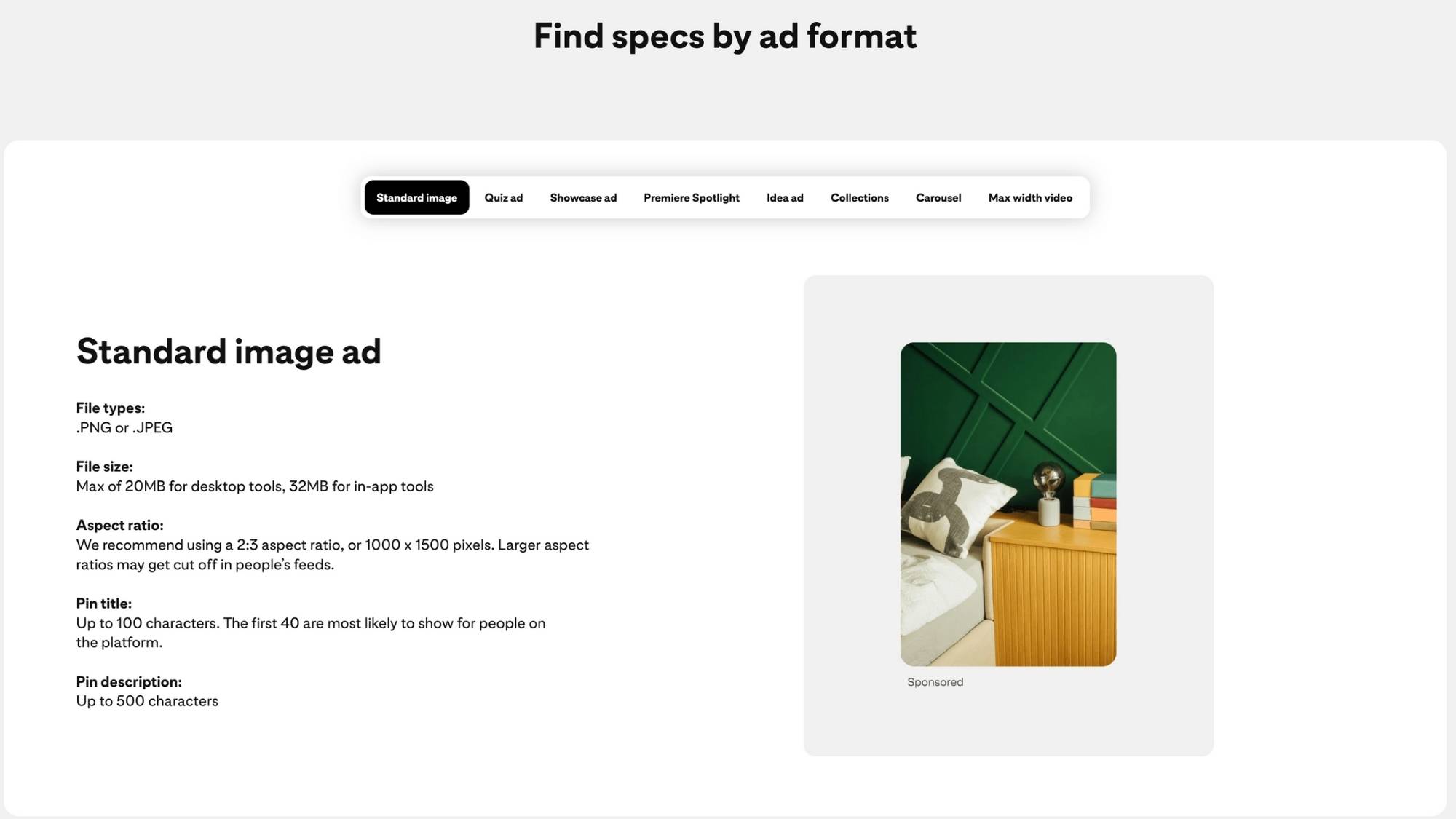
First, navigate to the “Create” menu and select “Create Pin.” You must use a business account to access the native Pinterest scheduling feature. The foundation of a high-performing Pin is the visual, so ensure you follow creative best practices for size and quality.
2. Write a captivating title and Pin description
An effective Pinterest Pin requires a compelling title and description text. This is where Pinterest SEO comes into play. Incorporate relevant keywords and phrases that reflect what your audience is searching for. A description that is helpful, relevant and keyword-rich increases your Pin’s discoverability and organic reach.
Try thinking less like an Instagram caption and more like a blog post title, using natural language that answers a user’s search query. For example, avoid a title like “Cute Outfits” and instead use: “Winter Minimalist Outfits for Work: 5 Essential Pieces.”
3. Set your target board and a future publication date
In the top right of the Pin creation window, select the Pinterest board where you want the Pin to live. Then, choose “Publish at a later date.” Select your time zone and the specific date and time for publication. And that’s how you schedule Pinterest posts natively on the platform.
Remember the 14-day limit and that you must repeat this step-by-step process for every single Pin. If you have a large Pinterest strategy requiring dozens of posts a month, this one-by-one scheduling process becomes time-consuming and prone to human error. So there’s a need for a solution with bulk scheduling capabilities.
How to schedule Pinterest posts with Sprout Social
A comprehensive social media management tool like Sprout Social helps you upgrade from a manual workflow. This helps you maximize efficiency, manage multiple social media profiles and schedule Pins in bulk.
Sprout eliminates the need to manually log into each Pinterest account to schedule Pinterest Pins. You manage everything from a single, centralized platform, streamlining both collaboration and time management. This integrated approach is essential for any growing team looking to scale its social presence without sacrificing consistency or quality.
1. Create your Pinterest post
From the Sprout platform, open the Compose window. The all-in-one solution allows you to manage content for Pinterest alongside other social media networks like TikTok and LinkedIn. You can publish static image Pins and board Pins directly through Sprout.
This process eliminates disjointed assets and the pain point of having to log into multiple accounts every time you create Pinterest content. By centralizing your profile management, you can toggle between your Instagram, Facebook and Pinterest accounts instantly, saving hours of manual login and content uploading.
2. Add media to your post
Upload your visual media directly in the Compose window. For a cohesive and on-brand presence, use the Asset Library to quickly access approved, branded visuals. This feature prevents using disjointed assets across multiple tools and streamlines your workflow while ensuring all of your Pinterest Pins meet brand standards.
The Asset Library ensures team members are always using the correct, up-to-date visual templates and branding. So it solves the common problem of fragmented assets across multiple tools and cloud storage solutions.
3. Preview and optimize your post
A crucial step-by-step element of the Sprout scheduling process is the preview, during which you visualize how your Pins will appear on Pinterest before publishing. It’s a crucial step to ensure text overlays, aspect ratios and branding appear correctly. Just as crucial? Captions.
Optimize your caption for Pinterest SEO by using natural keyword phrases relevant to the Pin image, but avoid keyword stuffing. Pinterest reads both the Pin title and description for context. Unlike other networks, branded hashtags are not essential here; only include them if they’re relevant to your audience’s search behavior.
This optimization step is vital because an incorrectly cropped image or illegible text overlay instantly diminishes the professional appearance of your Pinterest content. That means lower engagement and reduced click-through rates.
4. Finalize your post
Before you schedule your Pinterest posts, don’t forget to submit your content for approval or save it as a draft to collaborate with your team. Use Sprout’s Approval Workflows to ensure every Pin is reviewed and aligned with brand standards before going live. This is essential for large teams or highly regulated industries, as it reduces risk and improves collaboration.
Approval Workflows automate the content sign-off process, eliminating back-and-forth emails and ensuring compliance checks are completed before a high-risk Pin goes live.
5. Schedule your post for publishing
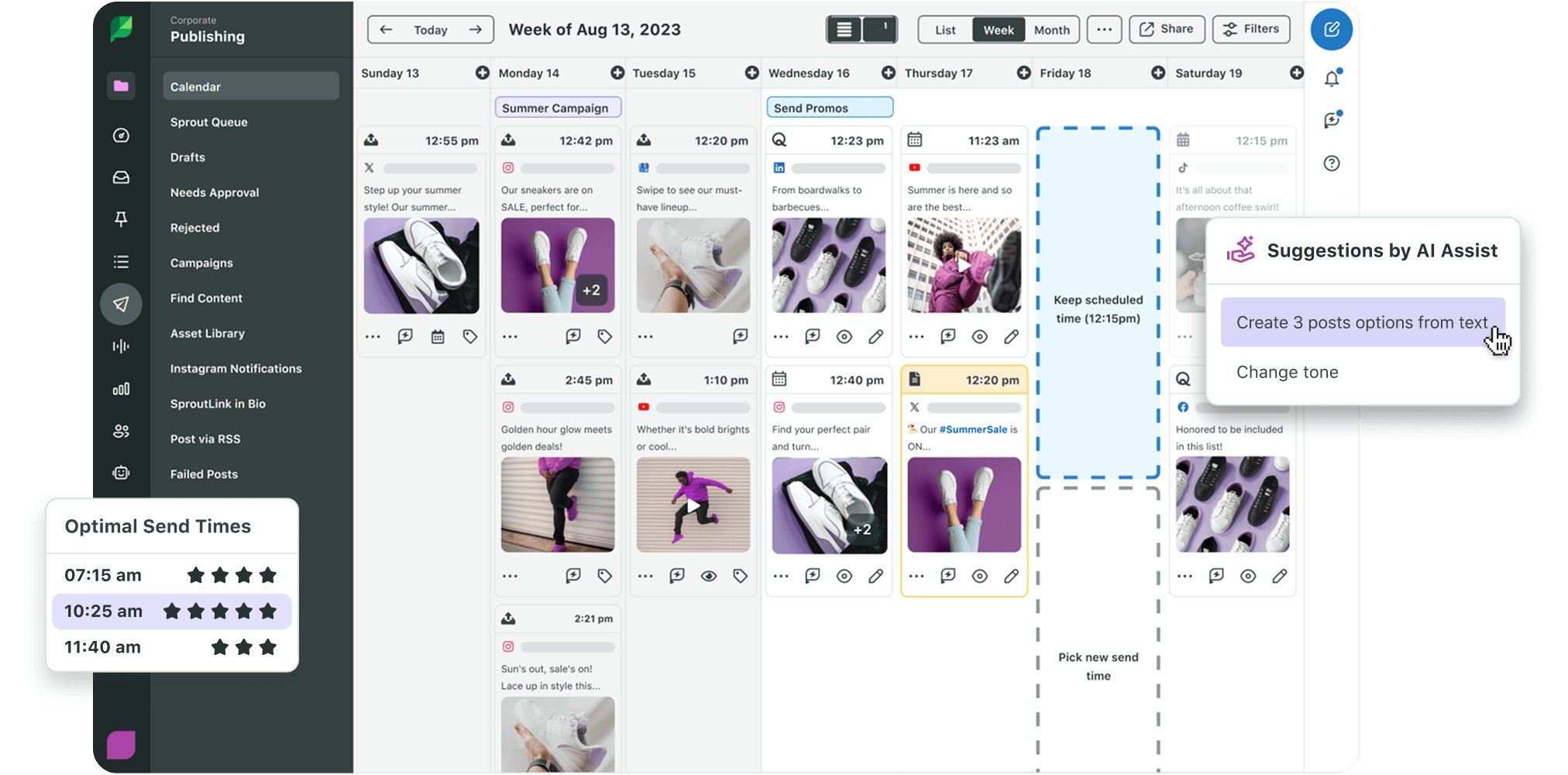
With Sprout’s Publishing tools, you can publish your post immediately, automate it with Sprout Queue or schedule posts for a later date. To achieve maximum impact, use Sprout’s proprietary ViralPost feature to suggest your Optimal Send Times. This eliminates guesswork and ensures your content is pushed out when your specific audience is most active and ready to engage.
This level of data-backed posting time optimization turns scheduling Pins into a strategic advantage. ViralPost’s algorithm analyzes your profile’s historical metrics to suggest the best times for your audience to engage with your Pins, eliminating the manual guesswork for when to post for high engagement. For high-volume publishing, Sprout Queue ensures you always maintain a steady, consistent publishing cadence without running out of content.
Quick Pin scheduling features to perform natively
While Sprout Social provides robust scheduling and analytics for your core Pinterest content, some formats must be created and published directly on the Pinterest platform. This is a technical limitation based on the API integration for these formats. Being aware of these exceptions allows you to plan your workflow efficiently.
Multi-image Pins
Multi-image Pins, where a single Pin contains a carousel of visuals, must be done natively. This post type relies on the Pinterest interface for content creation, making it difficult for an external social media management tool to support through the standard API.
If your Pinterest strategy relies heavily on showcasing multiple products or step-by-step tutorials in a single Pin, you must integrate native scheduling into your weekly workflow.
Video Pins
Video Pins, a must-have for your Pinterest strategy, are a highly effective Pinterest content format. Due to the specific video processing, aspect ratio requirements and internal tagging that Pinterest performs, you must publish this format natively.
Pinterest’s native uploader is essential for optimizing the video’s file size and ensuring the correct aspect ratio (like 9:16) for its vertical, mobile-first feed.
Shopping Pins
Shopping Pins are critical for driving direct sales from your Pinterest account, as they allow correct product tagging and commerce integrations. To ensure accurate pricing, inventory syncing and tracking, you must create and publish Shopping Pins natively through the Pinterest merchant platform.
The complexity of connecting your product catalog and ensuring the tags are accurate and live requires the native platform’s backend integration.
4 Pin best practices to boost engagement
Mastering how to schedule Pinterest posts is only the first step to getting the most out of the platform. To ensure your Pinterest strategy delivers a high return on investment, you must constantly optimize your approach based on what’s working.
1. Use Pinterest analytics to validate your best posting times
Data drives smarter strategies. Move beyond simply checking your metrics and use Pinterest analytics to track your content’s performance. Use Sprout Analytics to identify your high-performing Pins and see what works. Or use the Premium Analytics (a paid add-on) to dive deeper into key metrics like saves, impressions and engagements filtered by tags or content and message type
These reports help you identify your top-performing content and understand when your audience is most active, allowing you to continually refine your Pinterest scheduling strategy.
2. Optimize images for the correct Pin ratio
Pinterest is a visual platform, so incorrect image ratios can make your content look unpolished and unappealing, ultimately hurting your reach and engagement. Always use a 2:3 aspect ratio, such as 1000x1500px, as it’s ideal for mobile viewing and full-screen display.
Ensure that any text overlays are clear, minimal and mobile-friendly. Avoid overly busy designs that distract from the core visual.
3. Incorporate high-performing content from other channels
Don’t treat Pinterest as a silo. Encourage content repurposing by adapting your high-performing visuals from other social media platforms like Instagram or Facebook to appeal to Pinterest’s unique visual-first style. Direct, unfiltered cross-posting is rarely successful. Instead, take a popular concept and use tools like Canva or other creative apps to adjust the image ratio and aesthetic to suit the Pinterest board environment.
4. Drive attention by using rich Pin formats
A dynamic Pinterest profile uses a variety of Pin formats to capture attention and help boost the benefits of Pinterest for business. Rich Pins automatically pull metadata from your site to display more information, such as product pricing, recipe ingredients or article headlines. This format provides a higher-value user experience and can boost your outbound clicks.
Turn consistent Pinterest scheduling into consistent growth
A strategic workflow for scheduling Pinterest posts is a non-negotiable step toward scalable Pinterest marketing. By moving away from manual, reactive posting, you gain the efficiency needed to focus on high-value creative work and data-backed optimization.
Consistency drives the Pinterest algorithm, and automation ensures you always hit the optimal posting time. This process transforms Pinterest from a low-priority task into a powerful engine for consistent growth.
Ready to build a strategic system that drives real results? See how you can achieve smarter, faster impact from your social media strategy today with a Sprout demo.
Pinterest is a discovery-first platform where people search, plan and save ideas over time. Engagement often builds slowly, which is different from social media networks designed around recency and fast-moving feeds.
Add in shifting algorithms and tricky attribution, and measuring Pinterest ROI becomes even more challenging. To understand performance, you need to go beyond vanity metrics and look at your true engagement rate.
Below, you’ll learn what a Pinterest engagement rate is as it relates to Pinterest marketing and the different ways to calculate it. We’ll also share benchmarks and strategies for improving your engagement rate.
What is the Pinterest engagement rate?
Your Pinterest engagement rate measures how often people interact with your Pins compared to how many times they see them. It goes beyond visibility to show how useful or inspiring your content is to your audience.
Unlike other networks where ‘likes’ dominate, interactions such as saves, outbound clicks and video views carry more weight on Pinterest, as they show genuine user intent.
To get the full picture of your content’s health, you need to understand the multiple types of engagement rates: per impression, per audience and per Pin.
Each type offers a distinct view of your performance, from visibility to the quality of interactions. We’ll show you how to calculate each one later in the article.
What counts as engagement on Pinterest?
Pinterest engagement is a direct action a user takes, signaling intent or value. These actions are what the algorithm prioritizes because they indicate the Pin is useful for planning and discovery. Here’s what counts as ‘engagement’ on Pinterest:
Saves (formerly repins)
Outbound clicks
Pin clicks (viewing the Pin in full)
Carousel swipes
Video views (for Idea Pins and video content)
The number of total engagements divided by a metric like impressions or audience size gives you the engagement rate.
How to calculate your Pinterest engagement rate
Calculating your Pinterest engagement rate gives you a concrete, measurable way to understand the impact of your content. Here are two ways to calculate this metric—by impressions and by audience.
Engagement rate by impressions
Engagement rate by impressions measures how often people interact with your Pin compared to how many times it was shown in feeds or search results. Here’s the formula:
ER (by impressions) = (Total engagements/Number of impressions) x 100
This metric is critical for understanding how well your visuals and Pin descriptions convert passive views into active engagement like clicks and saves.
Engagement rate by audience
This formula measures the depth of your connection with your audience. It helps you understand the percentage of your followers who are actively interacting with your content.
ER (by audience) = (Total engagements/ Total audience) x 100
This number is often higher for smaller, highly niche Pinterest account profiles and is a powerful indicator of community health. For social media marketers, comparing these two rates helps diagnose if the issue is reach (impressions) or relevance (audience).
What’s a good Pinterest engagement rate?
As a general benchmark for most brands, the average engagement rate on Pinterest hovers between 2–5%. This is a strong, healthy range that indicates your content is resonating and driving intent-based actions like saves and clicks.
However, this number shifts based on content type and industry. Pins that leverage strong visual storytelling often push past the average. Here are some specific benchmarks:
Idea Pins andvideo Pins regularly exceed engagement rates of 8–10%. This reflects Pinterest’s ongoing push to reward high-production, narrative-driven content.
High-engagement industries like food recipes, home decor and DIY often see elevated rates, sometimes peaking closer to 7–9%. These verticals align perfectly with the platform’s core mission as a planning and inspiration tool.
That said, a good engagement rate is subjective. It depends on your niche, your content style and even your business maturity. Smaller or newer accounts often see higher engagement because their audiences are more focused and active.
If your engagement rate is consistently above the average for your niche, your content is performing well. Ultimately, a good rate is one that moves you toward your primary goal, whether that’s driving website traffic or product discovery.
A good rate is also one you can consistently benchmark against your other channels. Sprout’s multi-network dashboard helps you diagnose if your Pinterest audience is outperforming other visual platforms, allowing you to reallocate resources quickly.
Why your Pinterest engagement rate is low (and how to fix it)
If your engagement metrics are flatlining, your issue likely falls into one of three critical areas:
Visual optimization
Trend alignment
Posting consistency
Addressing these pain points is the fastest route to improving your Pinterest engagement rate and realizing the full potential of your Pinterest marketing strategy.
Visuals not optimized for discovery
Pinterest is a visual search engine; if your Pins don’t look right, your audience won’t stop scrolling. Pinterest Pin failure often comes down to incorrect aspect ratios and poor resolution.
Stick to the standard 2:3 aspect ratio (e.g., 1000×1500 pixels) for best results. This vertical format dominates the mobile feed, which is where 85%+ of Pinterest usage happens. Here are some additional tips for visual optimization:
Be authentic: Prioritize authentic, in-context visuals over sterile stock photos. Users on Pinterest are looking for inspiration they can act on, not high-quality corporate imagery.
Control the text: Limit text overlay to under 10% of the image space. The title and description carry the keyword load; the image’s job is to be an eye-catching hook.
Pinterest trends follow a long-tail engagement cycle. A Pin you post today can resurface for months, which is unlike the fast-paced nature of platforms like TikTok, where content fades quickly.
Pinterest users also come to the platform with a positive, intentional mindset. In fact, Sprout’s research shows over half of consumers feel Pinterest is more positive than other platforms.
To stay relevant, you need to plan early and create content that matches what users expect and are searching for. Below are some ways to do that:
UsePinterest Predicts: The platform’s annual report is one of the best resources for shaping your upcoming content strategy and pillars. These early insights help you target keywords that have yet to peak.
Target unbranded searches: The majority of top Pinterest queries are unbranded. Your trend alignment must include non-branded, relevant keywords that align with user search intent. Engagement drops instantly when Pin titles and descriptions don’t perfectly align with what the user is searching for.
Inspire with Sprout Listening: To keep you on the pulse of emerging topics, use Sprout Listening, a paid add-on. While Listening is primarily for conversation monitoring, it helps you inspire evergreen Pinterest content ideas and keep your strategy on trend. You can research conversation volume and sentiment around your niche, giving you a competitive edge. This listening capability helps you uncover topics before they hit peak volume.
The Pinterest algorithm rewards consistency and fresh content. It’s not enough to post a burst of Pins and then disappear. You need a reliable, consistent publishing schedule. Pinterest values new Pins, even if they link back to an existing URL, because it shows your Pinterest profile is active and adding value to the platform.
Establish a rhythm: The best practice recommendation is to post three to five fresh Pins per day, which can include both new content and re-Pins from your own domain.
Simplify publishing: Sprout’s scheduling tools simplify maintaining this consistency across multiple group boards and campaigns.
Optimizeposting times: Use Sprout’s ViralPost feature to analyze your audience’s behavior and determine the best times to post on Pinterest for maximum interaction. This ensures your quality content is delivered exactly when your audience is most active and ready to engage.
Dig deeper into Pinterest insights with Sprout’s analytics and reporting
To turn Pinterest into a stronger part of your social strategy, you need one reliable place to track and understand your Pinterest analytics. Sprout Social centralizes your data, allowing you to track, compare and optimize your performance across all networks.
With Sprout’s Pinterest management tools, it’s easier to answer strategic questions, show results and demonstrate <a href=”https://sproutsocial.com/roi/social-media-roi/”social media ROI to your stakeholders.
Here’s a quick summary of what you can do with Sprout.
Track key metrics in one dashboard
Stop jumping between native dashboards. Sprout’s Profile Performance Report centralizes your Pinterest data alongside other channels, such as Instagram and TikTok. This multi-network view helps you see all your metrics in one place.
Here’s how that provides a unique advantage.
Clear comparison: See how your Pinterest engagement metrics stack up against your performance on other platforms so you can focus resources where they matter the most.
Pin-level analysis: Track granular data, including the total number of times your Pins were saved, the number of clicks they received and the video completion rate for your video pins.
Identify top-performing content
Sprout’s Post Performance Report analyzes exactly which content types and themes are driving the highest Pinterest engagement rate. You can slice the data by board, format and even tags to quickly spot trends in your own performance.
Below are some specific ways to use this report:
Focus on saves and clicks: By sorting your top Pins by outbound clicks and saves, you instantly identify the topics that fulfill user intent. This informs your future content strategy.
Compare thenumber of impressionsto engagement: A high impression count with low engagement signals a weak visual hook or misaligned Pin description. Sprout helps you diagnose these issues instantly.
Proving ROI to stakeholders
In a problem-aware customer journey stage, you need to prove the investment in social media is worthwhile. Sprout helps you do this by turning raw data into clear, shareable visuals.
Campaign and tag tracking: You can use tag tracking and campaign reporting, available on Advanced plans and higher, to tie specific content initiatives (e.g., a promoted Pins campaign or a new product launch) directly to your engagement results.
Scheduled reporting:Social media reports can be scheduled and exported in ready-to-present formats, providing marketing leaders with a crystal-clear understanding of the impact of your Pinterest marketing strategy. Sprout’s reporting and analytics tools empowers you to focus less on data gathering and more on strategic planning.
Curious about how Sprout’s Pinterest analytics can support your Pinterest marketing campaigns?
5 strategies to improve your Pinterest engagement rate
Improving your engagement rate requires a tactical shift focused on discoverability, content diversification and audience connection. Here are five actionable strategies you can implement right now.
1. Master keyword research to boost discoverability
Pinterest is a visual search engine, not a social network built on friendships. You must approach your Pinterest content with an SEO mindset. This means using keywords naturally in your titles, descriptions and alt text.
Follow these tips to boost your visibility on the platform.
Use Pinterest’s tools: Leverage the platform’s search prediction bar and the native Trends tool as your primary research sources. They show you exactly what users are looking for in real time.
Focus on context: Avoid keyword dumps in Pin descriptions. Instead, use long-tail keywords that naturally describe the image and the user’s intent—for example, “minimalist living room home decor ideas” instead of just “decor.” This ensures your content serves the user’s planning phase, not just the algorithm.
2. Diversify your content mix with video and Idea Pins
Pinterest’s strongest engagement now comes from content that’s visual, dynamic and story-driven. To keep up, brands need to go beyond static Pins and lean into newer formats—especially video. Here’s what to keep in mind.
Use more Video Pins: Auto-play video Pins consistently outperform static Pins by engagement rate.This is a major signal that brands need to invest more in motion graphics and short-form video.
Use Idea Pins for storytelling: Idea Pins (multi-page video or image stories) are built for inspiration and step-by-step content. They don’t link out, but they drive saves, comments and profile discovery, helping more people find your brand on Pinterest.
Adopt a ratio: Aim for a balanced content mix that reserves a significant portion of your output for new formats, such as 60% static Pins, 30% idea Pins and 10% video Pins.
3. Use compelling calls to action
Most Pinterest users visit the platform with the intention to research, plan or buy. This makes strong, relevant calls to action (CTAs) crucial for moving them down the funnel.
Fulfill intent: Because the platform is built for planning and shopping, your CTA must directly fulfill that user intent.
Align visuals and text: Ensure your visual CTAs (text overlay) and your description’s call to action are consistent. For an e-commerce brand, a visual overlay that says “Shop Now” could be paired with a description that explains the product and links to it.
Drive action: Use action-oriented phrases like “Shop the look,” “Plan your next project” or “Get inspired by this new design” to motivate users to click.
4. Engage proactively with comments and questions
Community interaction on Pinterest is often underutilized, yet it’s a strong signal of relevance to the platform’s algorithm. Engagement metrics are not just a measure of clicks; they’re a measure of conversation.
Build community: Responding to comments and questions not only builds loyalty, but also encourages further interaction. This proactive engagement tells Pinterest your content is generating a conversation.
Pin user content: Where appropriate, featuring responses or pinning high-quality user-generated content strengthens community ties and provides fresh content. Remember that engagement signals relevance to Pinterest’s algorithm.
5. Leverage rich Pins for more information
Rich Pins automatically pull key information from your website into your Pins. That added context makes them more useful for boosting SEO and clicks.
Here are some tips to remember:
Choose the right type: There are three main types of rich Pins: Product, Recipe and Article. Each format adds useful information—like pricing, ingredients or headlines—so your Pins feel more complete and helpful in search.
Boost click-through rates (CTR): By auto-syncing metadata, you provide more information upfront. This makes your Pin more valuable to the user and increases their confidence in clicking.
Audit for errors: Regularly audit your rich Pins to ensure there are no schema errors or missing metadata. The goal is to make every Pin a highly-contextualized asset that drives Pin clicks and saves.
Transform passive scrolling into active planning
The real power of Pinterest shows up when people do more than scroll—they save ideas, click through and start planning. Your engagement rate is an early signal that this is happening and shows your content has ROI potential.
Strong engagement means your Pins are discoverable, relevant and useful. When your visuals and search strategy align with what people want, you turn inspiration into action that supports your business goals.
Your next step: make every Pin count
A high Pinterest engagement rate reflects authentic, valuable Pinterest content that serves your audience’s need for planning and discovery.
Ready to put these strategies into action? Try a demo and see how Sprout Social amplifies your social media presence.
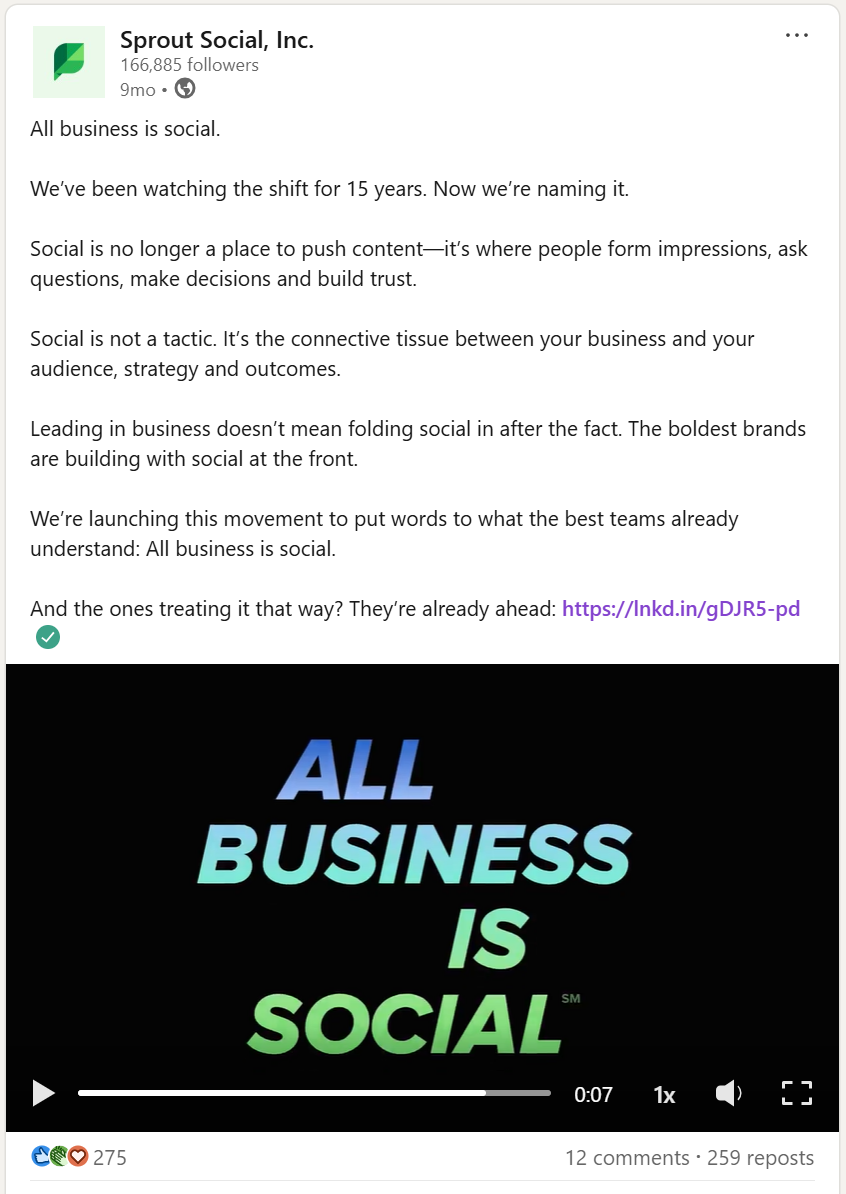
According to Sprout’s 2025 Impact of Social Report, most marketing leaders understand the influence of social media on various stages of the customer journey, including awareness (67%), customer acquisition (60%) and customer loyalty (58%).
The problem? They’re not as confident in their teams’ ability to tie social to these outcomes, often due to disjointed tech stacks and unclear ROI.
In other words, many execs are feeling uncertain about their teams’ social intelligence—the art of harnessing the unfiltered, real-time pulse of your market from social media and incorporating those insights throughout your business in tangible ways.
Fortunately, there are plenty of digital marketing leaders who are regularly put social first, harness social intelligence and share their expertise. We’ve curated a list of these marketing leaders so you can follow them for inspiration and guidance.
Dara Treseder, CMO, Autodesk
Dara Treseder is the CMO of Autodesk, a global leader in 3D design, engineering and entertainment software.
Autodesk’s mission is to empower everyone, everywhere to design and make anything that could create a better world for all. And that mission seeps into everything the brand does, both in real-world and social spaces.
But Autodesk doesn’t just talk the talk—it walks the walk, actively proving that you can make anything with its technology. Take its involvement with the 2026 Olympic and Paralympic Games. Its “Let There Be Anything” campaign stars three Team USA athletes who live and breathe Autodesk’s values.
In addition to championing these campaigns, Treseder uses her LinkedIn profile to share candid takes, tangible takeaways and real-world advice on industry-relevant topics and trending technologies like AI. Best of all, she does it in a voice that’s unmistakably hers: confident and forward-thinking yet wholly conversational.
In a social landscape riddled with vague or surface-level commentary, her clarity and candor make her the kind of marketing leader you want in your feed.
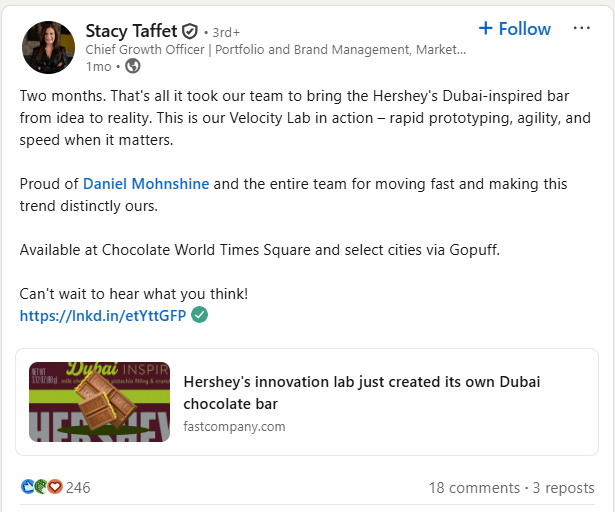
Stacy Taffet, Chief Growth Officer, The Hershey Company
With over 25 years of experience, Stacy Taffet is one of the most accomplished leaders in marketing. As Hershey’s Chief Growth Officer, she’s playing an integral role in adapting the brand’s practices and products to keep up with consumers’ ever-changing tastes.
Specifically, the brand is getting a marketing makeover in 2026, which will see it dabble in modern-day tactics, such as TikTok influencer campaigns, live events and activity around big cultural moments.
One trend they’ve already tapped is Dubai chocolate—a viral chocolate bar filled with pistachio paste and kataifi pastry. Hershey saw the growing interest online and seized the opportunity to join in, releasing its own limited-edition version of Dubai chocolate.
Taffet’s LinkedIn presence reinforces that cultural fluency. She regularly posts about Hershey’s latest campaigns, underscoring how they tap into consumers’ interests and preferences.
A case study in meeting consumers where they are, Taffet’s content mirrors the modern direction Hershey is taking. And by following her, you’ll get a front-row look at how a legacy brand is keeping pace with its audience.
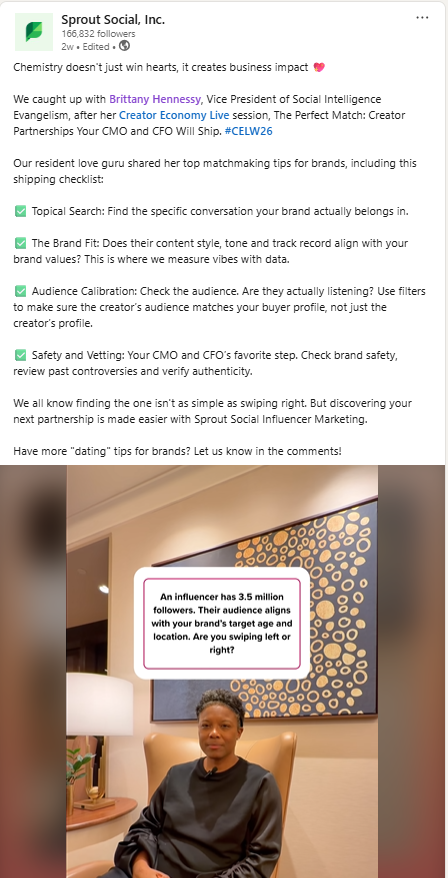
Brittany Hennessy, VP of Social Intelligence Evangelism, Sprout Social
If there’s anyone who understands the power of social intelligence, it’s Brittany Hennessy. A former influencer with over 15 years of experience in the social media space, she now serves as the VP of Social Intelligence Evangelism at Sprout Social.
She understands that social media—and other relevant technologies like AI—is shaped by human behavior, emotion and culture. On LinkedIn, she regularly demonstrates how leaders can use social to craft accessible, human-centered narratives around these emerging technologies.
She did the same thing during her Creator Economy Live session, The Perfect Match: Creator Partnerships Your CMO and CFO Will Ship. In it, Hennessy leaned into the “matchmaking” metaphor, framing creator discovery as a dating journey. She reminded brands that finding the right partner isn’t about chasing who looks good on paper—it’s about genuine compatibility and shared values.
Equal parts witty and strategic, Hennessy is an expert at translating complex social concepts into relatable stories that help marketers understand what’s coming next.
Stay up to date on Hennessy’s latest endeavors by following her on LinkedIn and subscribing to her Substack, Suite Intelligence.
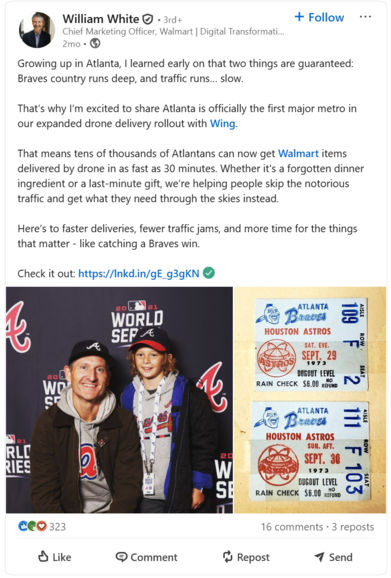
William White, CMO, Walmart
Since 2020, William White has served as the CMO of Walmart. His work for the commercial giant has earned him recognition as a top marketing leader, including a spot in the 2025 Forbes CMO Hall of Fame.
In his time as CMO, White has been working tirelessly to drive demand and customer loyalty, and position Walmart as a digital-first retailer.
In the past year alone, his oversight has made 85% of the company’s media shoppable.
White has also been instrumental in developing the Walmart Creator platform, particularly as the business leans more into creator marketing.
On his LinkedIn feed, White often breaks down Walmart’s most innovative partnerships, such as its collaboration with OpenAI to build AI‑first shopping experiences and its launch of drone deliveries in Atlanta. But he also brings a uniquely human touch to his content, tying the brand’s initiatives to his own passions, background and experiences.
His mix of vision, strategic insight and genuine personality make him a top marketing leader to follow.
The recipe for Verizon’s success is rooted in bold creatives and taking big swings, while still folding in relatability and flexibility. They find moments to participate in (and create) culture on social, and pave new paths forward for their brand.
Under Berland’s stewardship, the brand has also forayed into social and influencer marketing, with campaigns featuring the likes of David Beckham, Kevin Hart, Lindsay Lohan and Pete Davidson.
As the Official Telecommunication Services Sponsor for FIFA World Cup 26™, their recent collaboration with Beckham is the perfect example of how the brand taps into cultural moments while leveraging the influence of A-list figures. The ad leans on Beckham’s authority in the sport while simultaneously highlighting Verizon’s value proposition in an engaging way that capitalizes on the excitement for the World Cup.
These forward-thinking social campaigns have cemented Berland’s position as one of the top digital marketing leaders to watch by renowned organizations like AdAge and Matrix.
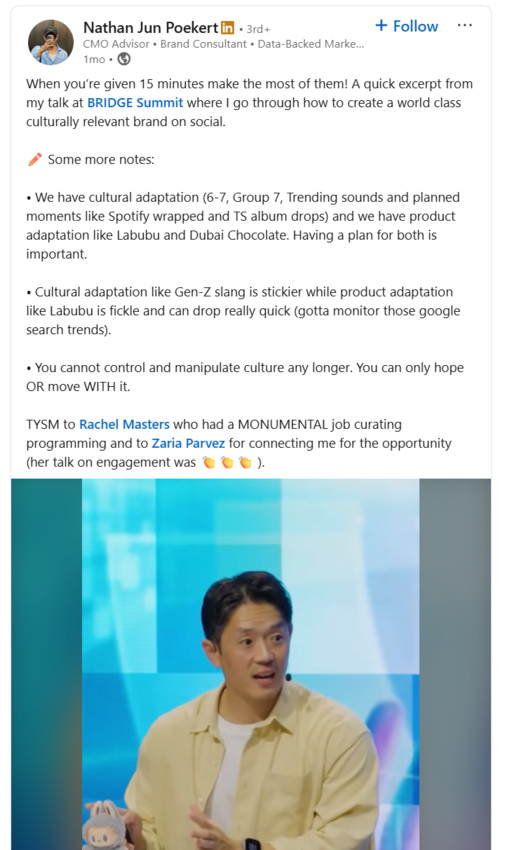
Nathan Jun Poekert, Interim Head of Brand, Blueland
Nathan Jun Poekert has built a name for himself on social. With more than 40,000 followers on LinkedIn, and over 900K across Instagram and TikTok, Jun Poekert is well-known as an expert in organic, influencer and paid social strategy.
After serving as Head of Social, Content & Digital Innovation at American Eagle, he transitioned to consulting brands on their social strategies, and building a reputation as a thought leader and creator. He then pivoted his social experience into the role of CMO at General Idea, a brand agency behind major fashion moments.
Now, Jun Poekert is serving as Interim Head of Brand for Blueland, which specializes in eco-conscious cleaning and personal care products.
Even while juggling his new position, Jun Poekert remains an active online personality and creator. His posts examine the philosophical and ethical questions of working in social while walking followers through the true best practices of running a successful brand presence.
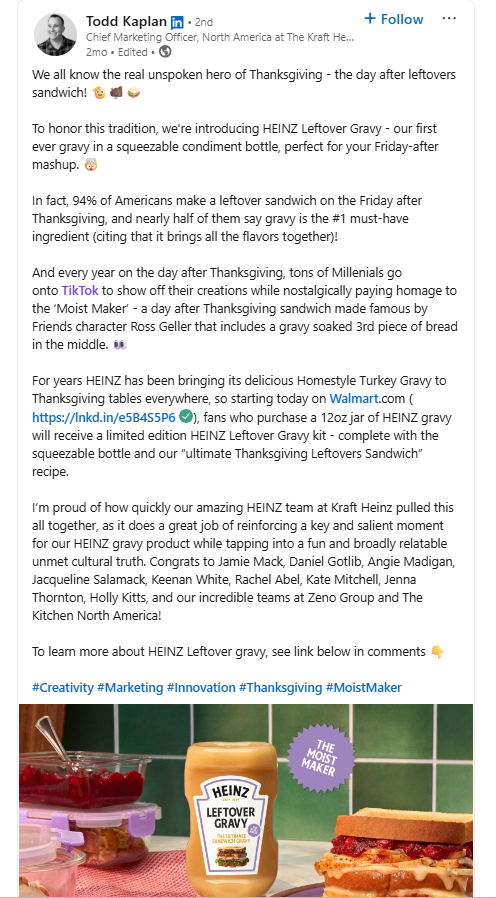
Todd Kaplan is the CMO of Kraft Heinz North America and has helped the brand usher in a new era of transformation in the digital landscape. As he told Adweek, his style of leadership helps his team “find the sweet spot between creativity and business objectives.”
Kaplan has been recognized by Forbes and Business Insider as a top CMO, and was even called a “Marketing Rockstar” by Rolling Stone. Kaplan spent most of his career helping PepsiCo grow and maintain cultural relevance.
His move to Kraft Heinz in 2024 was a fresh start for the legacy brand. Since then, it’s significantly increased both its share of voice and its online cultural competency.
Take its launch of the Leftover Gravy sauce as an example. Created in honor of the real hero of Thanksgiving—the leftovers sandwich—the product also capitalized on a social trend.
As Kaplan points out in his post, every year on the day after Thanksgiving, Millennials take to TikTok to show off their leftover creations, while nostalgically paying homage to the ‘Moist Maker’.
Keep up with Kaplan—a leader well-known for his laidback style and dedication to his favorite sports teams—on LinkedIn for highlights from his latest media appearances.
Kikora Mason, VP of Community & Social Media, JPMorgan Chase
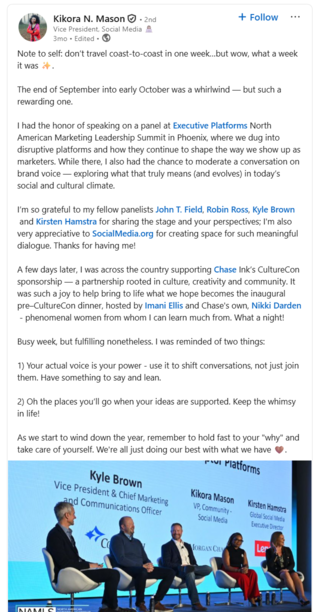
Kikora Mason is the VP of Community and Social Media at JPMorgan Chase. The multinational financial services firm is 225 years old, yet still invests in new ways to connect and grow its community, which is key to its success over the centuries.
In her role, Mason leads a team focused on social listening and community management. She reviews trend analyses on a daily basis—and finds tangible ways to incorporate these insights into business operations.
As she told us when we interviewed her for an article about social media executive career growth, “It’s always important to know your target audience and base your strategy on what will resonate with them and fulfill your objectives.”
But JPMorgan Chase doesn’t chase trends for the sake of it, or run on the trend cycle hamster wheel. Instead, they take a measured approach and wait for opportunities that align with their brand. Like when it tapped into BookTok in its own way, spotlighting book recommendations for professionals at every stage.
Follow Mason on LinkedIn, where she shares takeaways from leadership panels she participates in and offers advice to young marketers.
Taylor Montgomery, Global Chief Brand Officer, Taco Bell
While he now serves as Global Chief Brand Officer, Taylor Montgomery was previously Taco Bell’s CMO, overseeing the brand’s marketing presence during their biggest social media moments—from recruiting Doja Cat to bringing back Mexican Pizza. Montgomery champions approaching social like a user instead of a brand, a strategy that seems to be paying off.
Under Montgomery’s leadership, the brand has consistently grown. It has even expanded its offerings with a line of Live Más Cafés, beverage spaces changing the way fans experience Taco Bell. The move was in direct response to the preferences of younger consumers, who enjoy indulging in beverages.
“Over the past five years, we’ve really, really been transitioning and thinking about the brand and how to position it for Gen Z, and so Café was really born from that,” Montgomery said. “I think it’s something like 60% of Gen Z consumers come to a restaurant or [quick-service restaurant] for an afternoon treat.”
Taco Bell’s digital marketing strategy around this initiative has been savvy, with its posts taking on an appropriately youthful tone.
Follow Montgomery for the latest and greatest from Taco Bell’s marketing efforts and overviews of his thought leadership interviews.
Morris often pushes our social team to think beyond tried-and-true B2B marketing formulas, a testament to his brand-building expertise.
On LinkedIn, he shares wins from our campaigns—such as our Shorty Award-winning Influencer & Creator program—the latest product launches and his takeaways about the value of social and social insights. Follow him there to stay current, and read his growing library of articles on our blog.
Josh Rangel, Senior Director of Social, Ogilvy
As a Senior Director of Social Media at Ogilvy, Josh Rangel brings almost 20 years of social media experience to his client work. Under his leadership, his team builds award-winning campaigns for some of the world’s most well-known brands.
Rangel is also a member of our Index Council, a cohort of social marketers and thought leaders who helped us shape our data into the 2025 Index report. When we interviewed him, Rangel illuminated how he advocates for more resources for social: “Budget shouldn’t be a dirty word. Speak plain language that ties social media performance back to business results. Keep it simple and focus on: 1) bringing the receipts, 2) positioning social as a laboratory for testing and learning, and 3) sharing the cost of not being part of the conversation.”
On LinkedIn, Rangel shares about the experience of speaking up for more resources and his observations about the latest trends, plus relatable memes and POVs that capture the sentiment of the industry only social marketers can understand.
Fill your feed with marketing leaders’ insights
These marketing leaders are redefining the role of social—and more specifically, social insights—in modern business strategies. From legacy brands embracing innovation to trailblazers pushing creative boundaries, they offer inspiration and actionable lessons you can use to refine your strategies.
By following their work and learning from their successes, you can fuel your social-first marketing strategy and keep your wider business plans ahead of the curve.
YouTube’s algorithms are complex and constantly shifting, making it difficult to move beyond surface-level content trends. Fortunately, strategic competitive analysis provides your team with the opportunity to convert raw metrics into actionable insights that eliminate the guessing game.
How it works: A YouTube competitor analysis leverages listening and analytics tools to track key conversations, identify emerging creative trends and translate YouTube insights into an improved social growth strategy. Here’s how to build your own.
What is YouTube competitor analysis?
A YouTube competitor analysis is the process of evaluating the channels, creators and brands in your industry to understand what’s working for them—and where you have opportunities to outperform them. It goes beyond simply “watching what others post.” Instead, it’s a structured, data-informed review of your competitors’ content strategy, audience engagement, publishing cadence, video optimization and overall channel performance.
A strong competitor analysis helps you uncover the strategic patterns behind their success. This includes identifying:
Top-performing video formats: Tutorials, Shorts, long-form explainers, interviews, product reviews, livestreams and more.
Content themes and topic gaps: The subjects your competitors consistently cover and the valuable topics they’re missing.
Audience engagement signals: Likes, comments, shares, watch time trends and community sentiment.
Posting behavior: How often they upload, what days/times perform best for them and how they leverage Shorts vs. long-form content.
Optimization tactics: Titles, thumbnails, keyword usage, tags, video structure, playlists and end screen strategies.
Brand positioning and storytelling: How they use tone, personality, visuals and narrative to build trust and loyalty.
By analyzing these elements, you gain clarity on the competitive landscape so you can make smarter decisions about your own YouTube strategy.
Most importantly, a YouTube competitor analysis helps you stay relevant. Trends shift fast, and understanding what resonates in your space ensures your channel evolves with your audience. Instead of reinventing the wheel, you learn from proven patterns and then create content that’s differentiated, optimized and uniquely valuable to your viewers.
Why YouTube competitor analysis matters for social teams
Social media engagement continues to surge. In fact, 86% of users planned to maintain or increase the time they spent on social networks this year, according to the 2025 Sprout Social Index™. For social media practitioners, YouTube competitor analysis becomes a foundation for understanding why content performs—not just measuring what performs—so you can build smarter campaigns, refine creative decisions and inform high-level reporting that actually moves the business forward.
YouTube is a critical business driver, with billions of monthly logged-in users and 70 billion views each day. Instead of approaching the network reactively, a systematic competitive analysis captures this engagement by revealing what competitors are doing, why it works and how you can adapt those insights into your own strategy.
When you analyze your competitive landscape, you gain the power to meet the following goals.
Validate content decisions and build stakeholder trust
YouTube production is inherently resource-intensive, often requiring days or weeks of work. Competitive analysis helps identify proven formats within your industry, significantly reducing the risk of investing heavily in content that will not resonate. If competitors consistently see higher retention with tutorials versus vlogs, you can prioritize your budget accordingly and avoid costly creative dead ends.
Additionally, competitive benchmarks provide essential context for your key metrics. These benchmarks can aid in your decision-making process with stakeholders. Once you see results from these content decisions, you can use reportable ROI to prove your YouTube investment drives results. This data-driven marketing helps secure continued investment and creative freedom.
Align cross-team collaboration
YouTube insights don’t exist in isolation. When teams share competitive intelligence across departments, they build a unified content ecosystem where insights from one channel amplify performance across all others.
For example, social teams can use high-performing thumbnail designs to inspire Instagram ads. They can apply keywords from competitor descriptions to strengthen SEO strategies. They can adapt storytelling hooks that retain viewers in the first 15 seconds for high-impact content on TikTok or Reels.
Decode algorithmic positioning
Understanding which creators appear alongside your content in suggested videos reveals your true competitive set. Analyzing these algorithmic competitors helps you optimize for discoverability, ensuring your content appears in the correct recommendation flows to reach qualified audiences.
Map formats to business objectives
Different content types serve distinct goals. YouTube Shorts may drive top-of-funnel awareness, while long-form tutorials might convert consideration-stage prospects.
By analyzing which formats competitors strategically deploy throughout their content mix, you can design a balanced strategy that moves audiences through your marketing funnel more effectively. This strategic approach ensures every piece of content serves a clear, measurable business purpose.
How to conduct a YouTube competitor analysis
This five-step workflow combines YouTube’s native analytics, manual research and Sprout Listening and Premium Analytics capabilities to help you scale your findings into action.
Step 1. Identify your true YouTube competitors
The first step is defining who you’re really competing against. While it’s easy to fixate on the largest channels, the most meaningful insights often come from creators serving the same audience size or intent.
Start identifying competitors with these core practices:
Search for your primary keywords
Note the top competitors that appear consistently
Review YouTube’s “related channels” section for overlap
Analyze which creators appear in your “suggested videos” sidebar
As you conduct your research, look beyond surface-level competition by identifying shared audience preferences and keyword clusters. Tools like YouTube’s search suggestions, Google Trends and community tabs help surface brands and creators with overlapping viewers. Paid platforms such as OutlierKit and VidIQ offer even deeper insights, helping you uncover additional competitors and viewer overlap. This process is called competitor mapping.
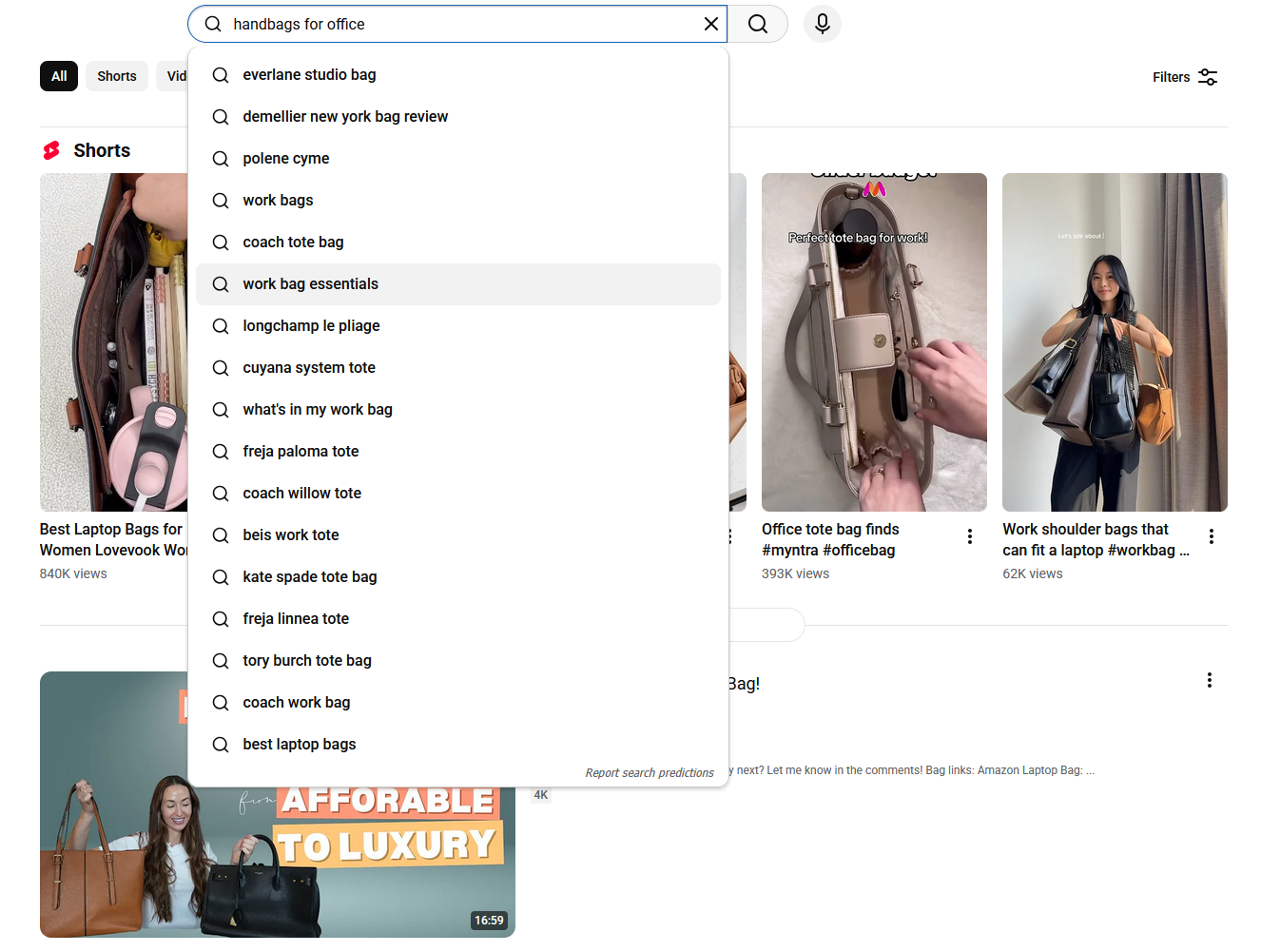
Here’s an example of what you see when you search for “handbags for the office.” The auto-suggestions show different brands and valuable keywords.
Notice, in the search results below, there are “suggested products” showing up as sponsored ads. This shows which brands invest in YouTube paid ads. In the video results, you’ll find influencers and user-generated content presenting competitor products. As you scroll down, you’ll spot brands posting as well.
After establishing your competitive landscape, prioritize a comparison across these essential metrics for a comprehensive competitive analysis:
Average views per video (last 10-20): This benchmark helps you assess content resonance, gauge algorithm momentum and compare audience reach against active engagement.
Views in the first 48-72 hours: This metric is crucial for determining immediate audience demand, quantifying algorithmic push on the day of publication and identifying accelerated growth momentum.
Upload frequency and consistency: Analyzing this indicates their investment level, determines the strategic balance between volume and quality and reveals the strength of their feed presence.
Engagement rate (likes + comments ÷ views): Comparing your rate against theirs uncovers key differences in emotional resonance, validates content quality and exposes the true strength of community connection.
Video length pattern: This analysis identifies optimal content formats (long-form vs. mid-form), signals viewer expectation (deep storytelling or rapid value delivery) and establishes if video length directly correlates with performance.
Keywords or tags: This reveals precise optimization strategies, identifies high-value search terms they prioritize and unearths consistent keyword themes or topical clusters for targeting.
Subscriber growth trend (past 30-90 days): This data is critical for assessing overall audience health, validating brand strength and determining the long-term viability of their content strategy.
High-performing and trending videos: These assets are your best resource for identifying breakout content opportunities, pinpointing emergent trends and sourcing formats or topics ripe for testing.
When comparing, always benchmark with context; YouTube channel size, topic complexity and audience behavior all influence results.
Step 3. Analyze content themes and creative hooks
Beyond raw metrics, your most actionable insights sometimes come from dissecting what competitors say and how they say it. Look for repeatable patterns in themes, formats and storytelling devices that consistently drive views.
Use this checklist to break down competitor creative hooks:
Identify their recurring themes. Look for repeated story angles (e.g., tutorials, myths, challenges, niche breakdowns) to understand what their audience reliably engages with.
Examine hook structures. Note whether they use open loops, bold claims, problem-first intros, quick outcomes, personal stories or high-tension statements.
Evaluate the strength of the first 5–15 seconds. Categorize how they earn attention: pacing, visuals, voiceover, text-on-screen or immediate value statements.
Track consistent opening phrases or formats. Competitors often reuse hooks (“Let me show you why…”, “The biggest mistake…”) because they convert well.
Analyze emotional triggers. Determine whether hooks lean into curiosity, urgency, controversy, empathy or authority—each attracts different segments.
Study how they position the viewer. Identify if the hook sets up viewer identity (“If you’re a beginner…”) or situational relevance (“If you struggle with…”).
Note visual hook techniques. Look for jump cuts, quick demos, surprising visuals, text callouts, or pattern-breaking shots used to hold attention.
Watch how they transition from hook to value. Strong channels maintain momentum; weak ones drop energy immediately after the hook.
Use Sprout Social Listening for large-scale analysis. While manual analysis is key for creative hooks, Sprout Listening can help you gather and analyze text at scale. Track keywords and themes mentioned across competitor video descriptions and comment sections to uncover underlying audience demand, strategic keyword usage and content trends you might otherwise miss.
This analysis helps you reverse-engineer what earns attention in your industry and informs which creative patterns you should adopt, evolve or avoid.
Step 4. Understand audience sentiment and engagement quality
Key metrics reveal what happened. Sentiment reveals why.
To truly understand audience perception, analyze competitor comment sections for tone, recurring phrases and engagement intent. YouTube’s comment environment often reflects emotional reactions more vividly than numerical data alone.
Comments, reactions and interaction patterns also reveal whether a channel is building trust, delivering value and meeting audience expectations. Start by scanning top comments across several recent videos to identify recurring themes—what people appreciate, what they criticize and what they request more of.
Pay attention to the why behind positive feedback, noting whether viewers respond to clarity, entertainment, depth, relatability or problem-solving. Likewise, track negative or frustrated comments that point to gaps in pacing, clickbait tendencies, missing information or misaligned expectations.
Beyond sentiment, look at the quality of engagement. Substantive comments that reference specific takeaways signal deeper audience connection than generic praise. Compare engagement patterns across a competitor’s top-performing and average videos to understand what consistently resonates versus what falls flat.
Also, be discerning about the comments you analyze. Quickly learn to spot bot activity, spam or trolling comments. These non-genuine interactions can inflate engagement numbers but offer no valuable insight into actual audience sentiment. Ignoring these irrelevant comments will ensure you focus your analysis on the feedback that truly matters for your strategy.
Use engagement rate (likes + comments ÷ views) as a directional indicator of how actively their audience participates relative to overall reach and pay attention to whether viewers interact with each other or if the creator replies—both signs of a healthy community. These observations help you identify where competitors excel, where they fall short and how you can strategically position your own content to deliver more meaningful value.
Step 5. Turn insights into strategy
Data without application is just noise. The final step of competitor analysis is turning your findings into an actionable plan that improves content performance and drives business outcomes.
Once you’ve gathered performance benchmarks, creative patterns and audience cues from your competitors, the next step is translating those observations into actionable strategy for your brand. The goal isn’t to copy competitors. It’s to identify what works in your industry, where the gaps are and how you can differentiate with purpose. Use the following framework to convert insights into a clear, brand-aligned content strategy:
Identify what consistently performs above baseline. Pinpoint competitor topics, formats, lengths and hooks that outperform their average. These patterns indicate audience demand you can capitalize on with your own unique angle.
Spot strategic content gaps. Look for questions in comments competitors aren’t answering, topics they haven’t covered or formats they haven’t explored. Gaps often reveal opportunities to lead the conversation.
Assess what underperforms and why. Notice themes competitors attempt but fail to gain traction with. Slow velocity, low engagement or critical sentiment can signal what to avoid or reimagine differently.
Refine your content pillars. Use competitor patterns to sharpen or validate your own pillars. Add pillars where you see opportunity and strengthen ones where competitors are weak or inconsistent.
Adopt high-performing creative behaviors. This includes hook structures, storytelling flows, pacing, thumbnail styles or value framing that consistently win in your industry—adapted to your brand voice.
Build your competitive differentiation. Determine how you’ll stand apart: deeper explanations, more polished visuals, stronger thought leadership, clearer show formats or a more relatable personality.
Inform your publishing cadence. Benchmark upload frequency, and find a sustainable cadence that keeps you competitive while protecting quality.
Prioritize experiments based on evidence. Let data guide your next tests—topics that show momentum, formats gaining algorithmic push or hooks tied to higher engagement.
By translating competitor signals into clear strategy, you position your brand to produce content that’s not only competitive but genuinely differentiated, audience-centric and designed for long-term channel growth.
Pro tip: Once your new, competitor-informed strategy is complete, Sprout Social is where you centralize execution and measurement. Use Sprout’s Content Calendar to schedule your new YouTube videos alongside all your other social content for a cohesive cross-channel strategy.
Then, leverage our YouTube Analytics to track your new content pillars, optimize your publishing times with ViralPost® and continually benchmark your channel’s performance to ensure your strategy delivers the intended business outcomes.
The metrics that actually matter for business impact
While most YouTube metrics measure content performance, brands need to focus on the signals that tie directly to business outcomes, not just video-level success. These metrics reveal whether your YouTube strategy is supporting awareness, authority, demand or customer trust, which are key drivers that matter to leaders far more than views alone.
Content efficiency
Consider how many videos competitors publish relative to the results they earn. If they upload weekly but only a handful of videos outperform their average, it suggests inefficiency that you can outpace with smarter, more intentional content rather than with volume. Leaders value this metric because it directly influences resource allocation and cost-effective reach.
High-intent topic performance
Look at which competitor videos attract search-driven or problem-aware viewers. These audiences are closer to taking meaningful action, whether that’s researching solutions, subscribing, sharing or purchasing. High-performing, high-intent topics show where your brand can win visibility that aligns with real demand.
Community depth signals
Analyze substantive comments, recurring viewer names, audience discussions and how often the creator replies. These signals reveal whether a channel builds trust and authority over time. A deep community strengthens long-term brand equity rather than simply boosting algorithmic performance.
Thought leadership strength
Identify competitors who simplify complex topics, offer clear frameworks or provide unusually strong expertise. These creators often earn disproportionate brand preference and credibility. This matters because authority-focused content shapes how audiences think and who they ultimately trust.
Momentum indicators (growth trajectory, not snapshots)
Rather than looking at standalone metrics, track consistent upward trends in subscriber growth, recurring viewer patterns or rising view velocity over time. Momentum shows whether a competitor’s strategy is gaining traction. Brands are not competing against where a competitor is today, but where that trajectory leads.
Conversion-adjoining signals
Observe how competitors use CTAs, lead magnets, description links, pinned comments and product mentions. Even without seeing final conversions, these behaviors signal intent to capture demand and expose gaps in your own funnel strategy. Channels that guide viewers toward deeper engagement are often building meaningful impact beyond YouTube.
By focusing on these business-oriented metrics, brands can make YouTube decisions that ladder up to revenue, reputation and strategic advantage, not just algorithmic performance.
Turn your findings into stories that your leaders will approve
Turning competitive insights into a compelling narrative is where your analysis becomes actionable for the business. Leaders want clarity, confidence and a strong connection to organizational goals. Your job is to present a focused story that shows how YouTube can create meaningful impact and why your recommendations deserve investment.
Establish the competitive landscape and opportunity
Start by grounding leaders in what is happening in your industry. Summarize where competitors are gaining traction, which topics or formats consistently perform and what audience sentiment reveals about unresolved needs. Then highlight the gaps competitors leave open, such as underdeveloped content areas, weak educational resources or audiences asking questions that go unanswered. This combination of landscape and opportunity creates a natural case for why your brand should step in.
Translate insights into strategic pillars
Organize your findings into a small set of content pillars or themes that define what your channel should focus on and why. These pillars should directly reflect what your analysis surfaced, such as high-intent topics competitors underutilize, formats that consistently resonate or creative approaches that differentiate your voice. Leaders respond well to clear frameworks that demonstrate intentionality and show how YouTube will support broader brand and marketing priorities.
Tie your strategy to business outcomes
Explain how each pillar connects to what matters most to the business, including improved brand authority, stronger top-of-funnel demand, clearer customer education or greater competitive positioning. This step is crucial because it shifts YouTube from feeling like a content initiative to being seen as a driver of measurable business value. Leaders want to see not just what you will make but why it moves the organization forward.
Present an actionable, measurable roadmap
Close by outlining a realistic plan for execution, such as a phased 30-60-90 day approach or a quarter-by-quarter rollout. Include what you will publish, the support you need and how you will measure success. Focus on business-oriented KPIs like recurring viewer growth, depth of engagement, high-intent topic traction and improvements in authority signals. Then make a clear ask for alignment or resources. This gives leaders confidence that your strategy is both achievable and anchored in meaningful results.
By shaping your findings into a structured, business-aligned narrative, you position YouTube as a strategic opportunity rather than a content experiment, making it far easier for leaders to support and invest in your plan.
Let competitor insights guide your next move
YouTube competitor analysis turns uncertainty into clarity. By studying the formats, themes and audience behaviors that drive success in your industry, you uncover patterns you can adapt and opportunities your brand can own.
When these insights are transformed into a focused, business-aligned strategy, YouTube becomes a growth engine that supports awareness, authority and measurable impact. Consistently applying these insights ensures your brand stays relevant, differentiated and positioned for long-term success.
Ready to see how Sprout can make competitive insights easier to uncover? Request a free demo.