Social media has solidified its place as a key component of the customer journey. It shapes how people discover your brand and determines who they’ll champion for the long haul. But the most successful brands don’t just use social media to talk to their audience. They use the insights found there to reshape their entire business strategy.
Social teams now operate with a dual mandate. They’re no longer just the voice of the brand talking to the customer, but also the ears of the organization. This balance of proactive engagement and actively listening is vital for building a customer-centric strategy that allows businesses to understand and act on the evolving needs of their audience.
What is the importance of social media marketing across the business?
Social media is used for everything from nurturing authentic community building and personalizing customer care to navigating complex crisis situations.
By leveraging real-time data captured via their social team, brands can shape their reputation, drive product innovation and secure a competitive edge.
Here are eight stats that show the importance of social media marketing for business.
1. Social media marketing builds community around your brand

According to The 2025 Sprout Social Index, 93% of consumers agree it’s important for brands to keep up with online culture. But this doesn’t mean jumping on every fleeting social media trend. Instead, consumers expect brands to understand what trends resonate with their niche interests—a critical step in building an engaged community.
Community building leads to a stronger feedback loop and more resonant content. It means your audience seeks you out of habit rather than stumbling across your content in an algorithmic feed. And you’re in conversation with your audience rather than talking at them.
It’s a key part of social media success, and as the internet becomes more fragmented with people gathering in different corners of it, that community is the throughline that keeps your brand relevant.
2. Social media data informs faster brand decisions
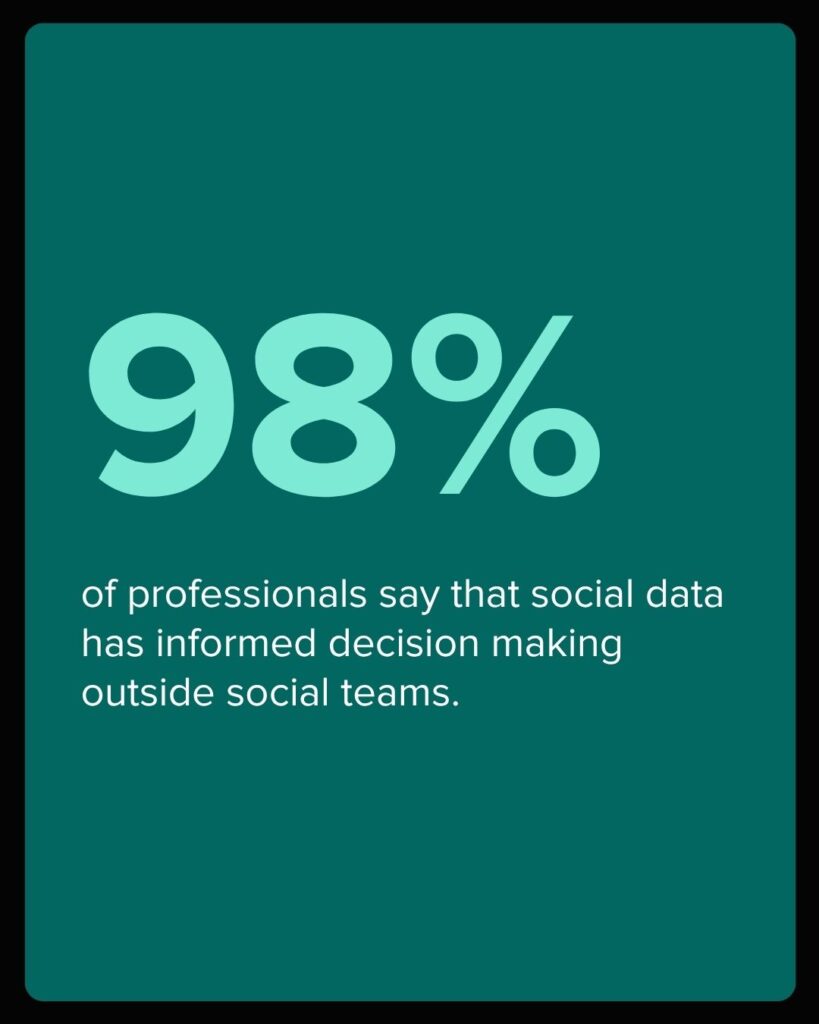
When 98% of professionals recognize that the data has informed decision making outside of social teams, it’s time to formalize that process.
Social media managers play a key part in the distribution of this data. They’re the ones that constantly have their ear to the ground, listening to the voice of both the customer and the market. This places them in a key position to make sure their organization is aware of what’s happening in real time—and the context behind it—so that information can feed into business decisions.
This is of course valuable for the marketing department, who are often the first to benefit from social data From adjusting messaging that isn’t landing to identifying entirely new audiences, marketing and comms teams can pivot in days rather than weeks to ensure budget and creative are aligned with current consumer sentiment.
Used strategically, these insights reach far beyond marketing. By analyzing common customer pain points, feature requests and competitor shortcomings mentioned online, brands can validate their product roadmaps and R&D with direct feedback. This unfiltered, unsolicited feedback can further business goals and ROI across the entire enterprise.
3. Social media marketing supports SOSEO
The way consumers discover information has undergone a fundamental shift. Social media is no longer just a place for scrolling; it has become a powerful search engine in its own right. As social media search engine optimization (SOSEO) and answer engine optimization (AEO) gain prominence, brands must optimize their social presence to remain discoverable in an era where social platforms are increasingly competing with Google and AI chatbots.
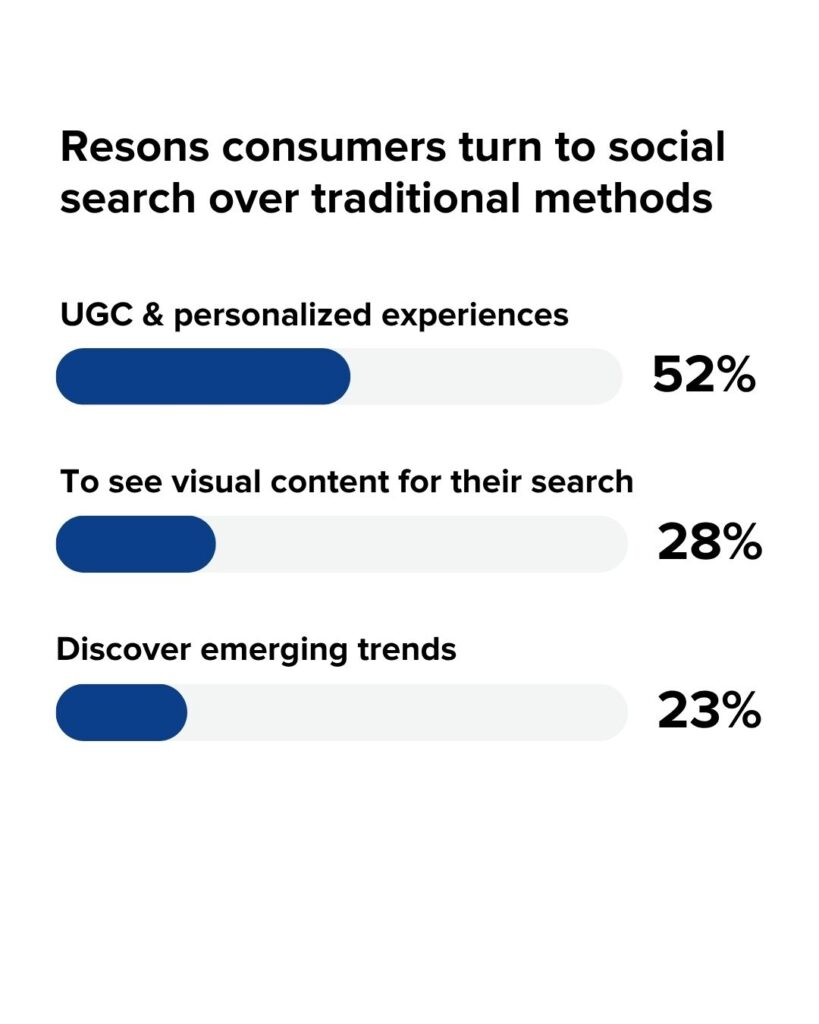
According to Sprout’s Q3 2025 Pulse Survey, consumers are turning to social search over traditional methods for several distinct reasons:
- To find user-generated content and personal experiences (52%): People trust the lived experiences of other consumers more than polished brand copy.
- To see visual content related to their search (28%): Whether it’s a tutorial or a product demo, photos and videos provide a layer of context that text-heavy search results cannot match.
- To discover emerging trends and real-time conversations (23%): Social media is the first place culture happens, making it the go-to source for what is happening right now.
So if you don’t have a SOSEO strategy driven by your social media team, you’re missing out on a huge source of search intent and opportunity to build brand awareness.
4. Social media marketing supports AEO strategies
SOSEO is a good enough reason to optimize for social on its own, but social also drives AEO success, with YouTube and Reddit the top two networks for sourcing answers.
AI chatbots and modern search engines are looking for answers sourced from authentic, community-driven networks. They increasingly pull data from platforms like Reddit and TikTok to provide users with multi-perspective answers.
By consistently publishing high-value, searchable content on social media, brands increase their chances of being the answer that an AI chatbot provides. When a brand’s social content is optimized with relevant keywords, captions and tags, it ensures they remain visible across the entire AI-driven search ecosystem.
5. Social media marketing plays a critical role in crisis management

Crises are no longer reserved for major brands. Social media opens businesses big and small up to a new level of scrutiny.
Social media crises can unfold on various scales, whether it’s an insensitive employee comment amplified by an outraged audience or a surge of customer complaints after a service slip-up. The most effective way to manage these risks is by having a social media crisis plan.
The importance of social media marketing in crisis management is two-fold. Firstly, by monitoring and listening to social media, you can proactively manage risks. Secondly, adopting a social-first crisis management strategy provides brands with an opportunity to address issues before they escalate into a larger problem.
Social intelligence tools like Sprout Listening and NewsWhip by Sprout Social are optimized to identify and escalate damage even faster so you can limit damage to your brand’s reputation.
6. Social commerce introduces your products and services to customers looking to buy
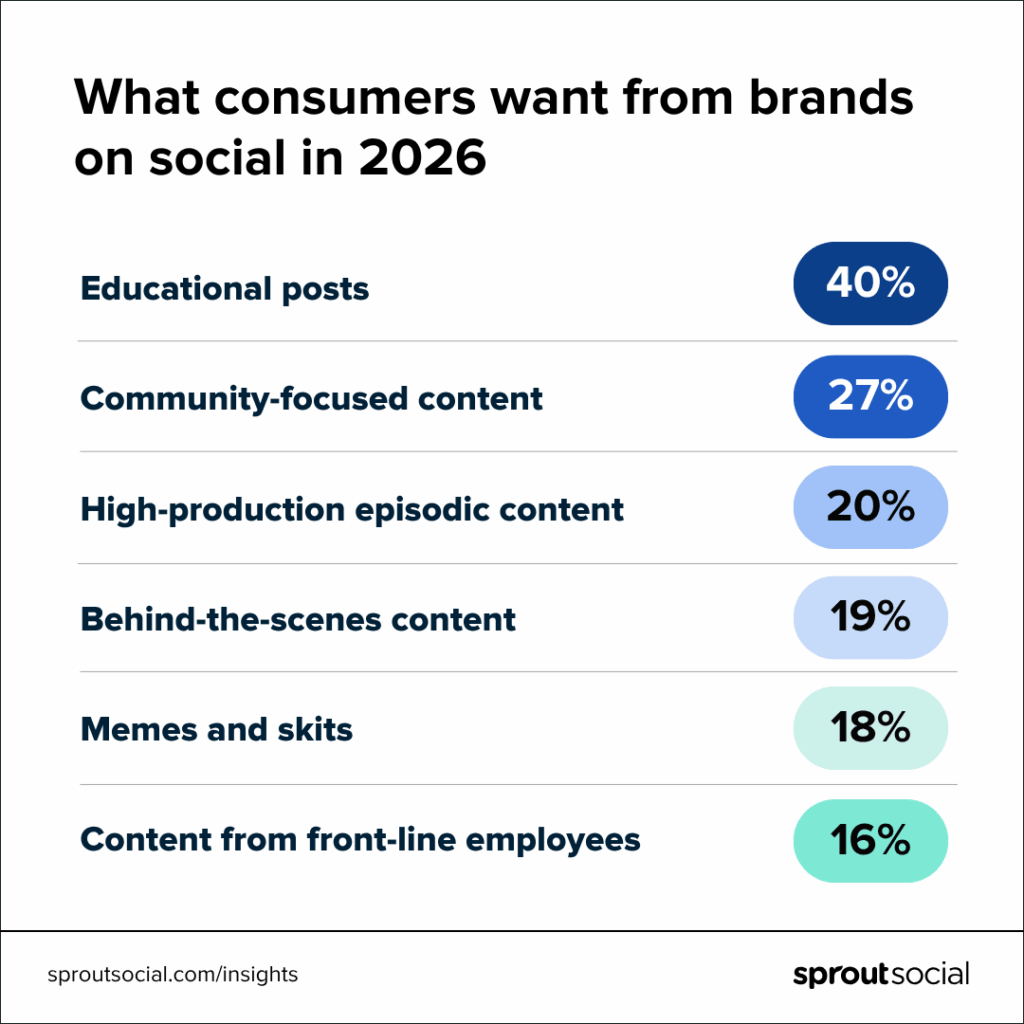
According to the Q1 2026 Sprout Pulse Survey, the top piece of content consumers desire from brands is educational posts about products and services. Buyers want to understand the what and why behind a product before they make a purchase. While many associate social commerce with the final click-to-buy moment (and it’s certainly the easiest to measure), for many brands, social’s true power lies in the research phase. Today’s consumers are looking for information that validates their purchase intent.
This demand for education is especially valuable during specific holidays and peak shopping seasons. Whether it’s a gift guide for the winter holidays or a how-to for back-to-school essentials, educational content helps cut through the seasonal noise by providing useful content rather than a sales pitch.
That said, you cannot activate a successful social commerce strategy only when a holiday rolls around. Brands must have an established relationship with their audience, so maintaining an engaging, educational presence throughout the year establishes your brand as a trusted source. By nurturing this connection year-round, you move from being a stranger with a promotion to a familiar solution with a proven track record.
7. Social media management plays a key role in customer engagement
Social teams are often the first employee a customer will encounter, especially a frustrated one. So customer engagement is fundamental for brand loyalty. Consumers expect a timely response tailored to their specific needs.
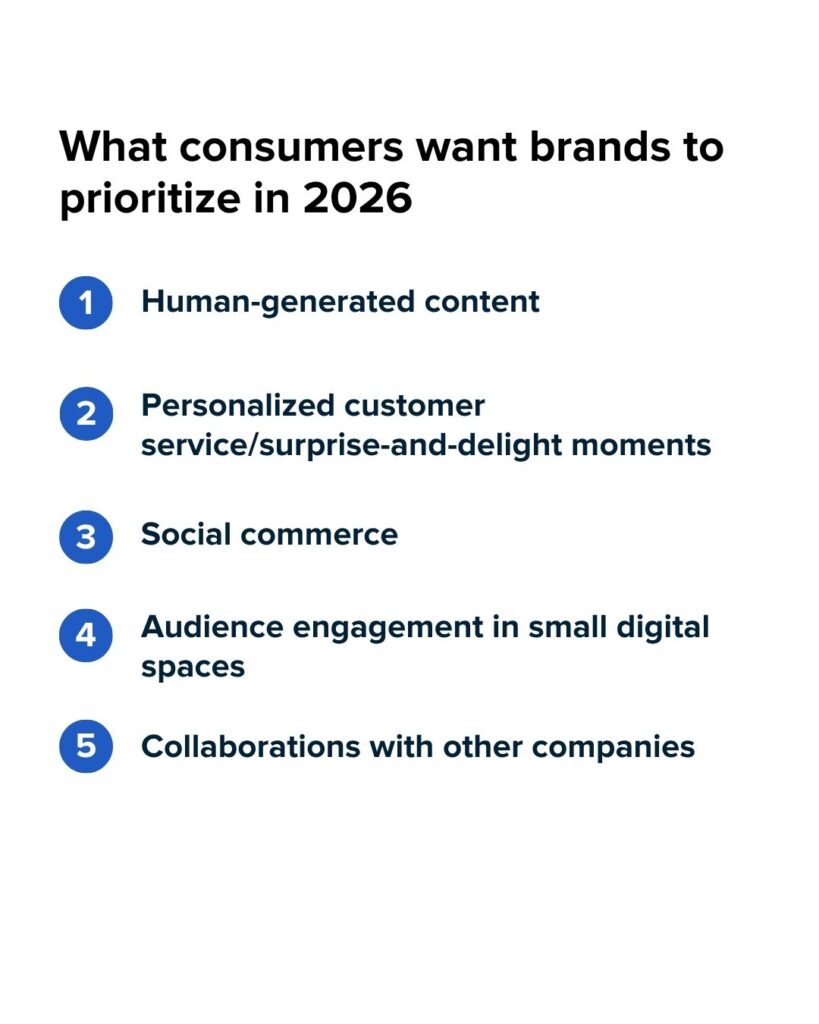
According to the latest Content Strategy Report, personalized customer service is ranked as one of the top three things audiences want from brands. In an era of automation and AI, the brands that stand out are those that use social media to provide a high-touch, individualized experience.
Our Social Intelligence Report found that 45% of professionals have successfully influenced customer retention by engaging with customers proactively. By participating in relevant conversations and addressing indirect feedback, brands can turn passive observers into loyal advocates. With tools like Sprout’s Smart Inbox and NewsWhip by Sprout Social you can implement social intelligence to surface and distribute insights earlier so your team responds before issues escalate.
8. Social media generates leads and revenue
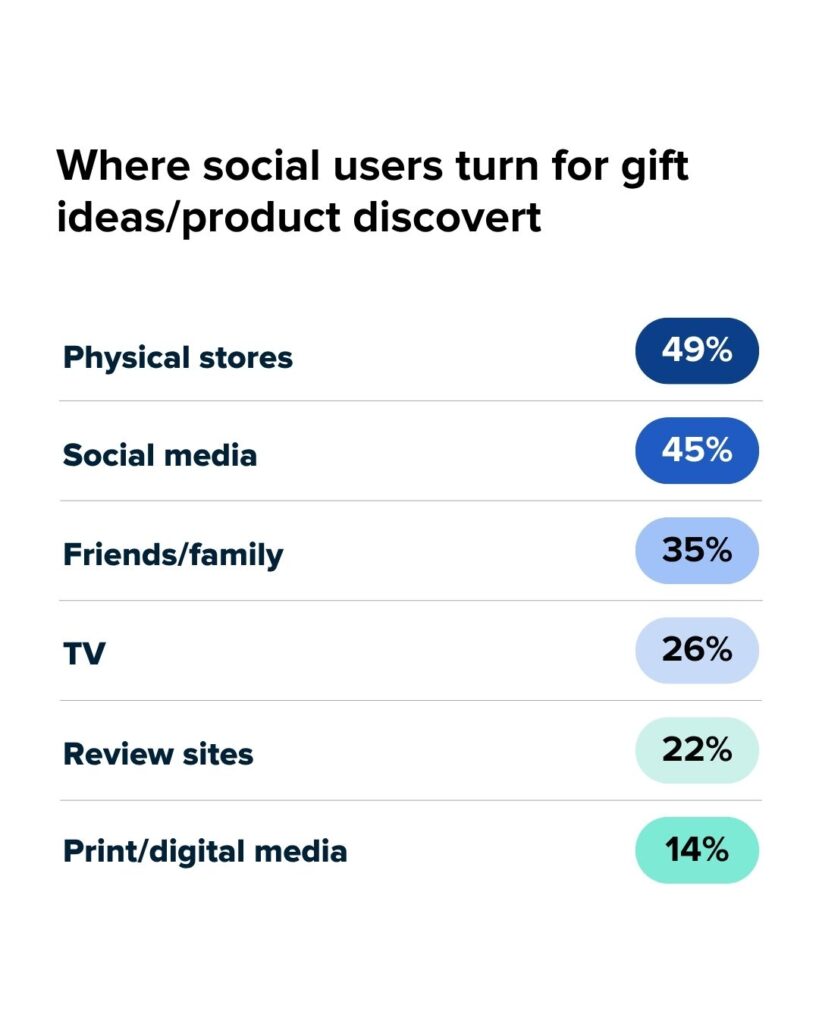
Data from our Q4 2025 Pulse Survey highlights that product discovery on social media is at an all-time high, with a majority of users citing social networks as their primary source for finding new brands and solutions.
Whether your business model is B2C or B2B, social media plays a pivotal role in distribution, though the path to conversion looks slightly different for each.
For B2C marketers, social media has narrowed the gap between seeing a product and owning it. The meteoric rise of TikTok Shop and other in-app purchase solutions has removed traditional friction points. Consumers can discover a product through an influencer or an educational video, and complete the transaction without ever leaving the app. This pipeline is revolutionizing retail by facilitating impulse buys and streamlining checkout processes.
In B2B, the sales cycle is longer. While it is less likely that a corporate buyer will make a high-ticket software purchase via an in-app button, social media is essential for building the trust, authority and intent required to get there. For these brands, success is measured by high-value engagement, including:
- Sharing white papers, webinars and industry reports to capture lead information.
- Using social as a platform for buyers to raise their hands and request a personalized look at a product.
- Staying top-of-mind with decision-makers so that when they are ready to buy, your brand is the first they call.
By aligning your social strategy with your specific business model, you can transform your social presence into a predictable and scalable source of revenue.
How 3 brands maximize the importance of social media marketing with Sprout Social
The data is there, now let’s see it in action. Here’s how three brands are realizing the potential of social media with help from Sprout.
Honda transforms social into a strategic asset for innovation
For American Honda, social media is a primary engine for two-way dialogue and a core source of business intelligence. By moving away from manual maintenance and clunky legacy tools, Honda’s team used Sprout to shift their focus from technical troubleshooting to pure customer-centricity.
“Most of our team is in Sprout every single day, whether it’s clearing queues and responding to key customer questions or scheduling content and pulling metrics. Sprout is there for whatever we need,” shares Heather Epstein, Senior Social Strategist at Honda.
By leveraging Sprout’s automation and listening tools, Honda reclaimed 40 hours a month that were redirected toward high-level content strategy and data analysis, as well as speeding up their response times. This efficiency enabled the social team to achieve a 251% increase in community engagement while maintaining a 91% high-quality engagement action rate.
Today, the social team serves as a strategic partner to internal departments like R&D, sharing real-time insights on customer sentiment regarding innovative products like electric vehicles. This proactive data sharing ensures that initiatives are backed by the reality of customer feedback, moving social from an afterthought to a core driver of major business initiatives.
Lemonade builds next-gen brand trust through social-first customer care
For the insurance disruptor Lemonade, social media is a way to build transparency and trust. To build on their digital-first reputation, the team uses Sprout Social to ensure every customer interaction is handled with speed, empathy and accuracy.
“Sprout helps us craft insightful takeaways about the pulse of our customers on social. We understand their pain points and what resonates with them.” noted Brian Burnham, Brand Manager at Lemonade.
By centralizing their engagement within Sprout’s Smart Inbox, Lemonade successfully bridged the gap between social media marketing and customer support. This integration enabled them to move beyond simple community management into a sophisticated care model where social insights directly inform how the brand addresses claims, policy questions and brand sentiment in real time.
Casey’s uses social media integrations to drive higher customer satisfaction
For Casey’s, creating stand-out social customer care experiences is a collaborative effort. To ensure no customer request goes cold, they use Sprout’s integration with Salesforce.
“The integration has been a game-changer,” says Jasmine Riedemann, Casey’s Social Media Manager. “It’s opened a floodgate of communication right within the tool between our social and Guest Relations Teams.”
Before Sprout, it took the Casey’s team up to three days to respond to social customer care messages. Siloed team structures made it difficult to know what was being addressed and when, leading to longer wait times for the customer.
Now, Casey’s guests receive responses to their messages within three to five hours, on average, according to Riedemann. This represents a 90% faster response time.
“I cannot applaud the Sprout Social and Salesforce integration enough for what it’s done for our teams,” says Ridemann. “The communication between our Guest Relations Team and social team has improved tenfold because we can see who addressed a case and what actions were taken.”
How social media management drives business success
Social media’s role in the corporate hierarchy continues to go through a significant transformation. Where once it might have been limited as a broadcast channel, social media is now an influential piece of business intelligence that connects a brand to its global community.
Because each platform carries a unique culture and language, businesses need dedicated strategies, and social media teams who understand this context. This function acts as more than community management and content broadcasters. They are the strategic translators who interpret nuanced data and feed it back into the organization to drive faster, more informed brand decisions.
By investing in social media management as a core strategic function, companies ensure they are growing with their audience. The brands that win will be those that listen just as loudly as they speak.
Ready to implement social intelligence at your organization? Find out how Sprout Social empowers businesses to make better, faster decisions with social.
The post The importance of social media marketing: 8 stats that prove social’s role in business success appeared first on Sprout Social.
from Sprout Social https://ift.tt/NSMH0FB
via IFTTT

No comments:
Post a Comment