Several years ago, companies taking a stand on socially and politically charged issues was par for the course. In the wake of the COVID-19 pandemic, social reckonings and natural disasters, consumers demanded brands take action.
Several years ago, companies taking a stand on socially and politically charged issues was par for the course. In the wake of the COVID pandemic, social reckonings and natural disasters, consumers demanded brands take action.
In a flash, brands went from “staying out of it” to being at the center of social media activism. They were quick to respond to any timely conversations tied to social issues (or risked being cancelled), and never missed an opportunity to promote the ways they were “solving” those issues. But is activism still impactful if it’s tied to self-promotion and selling products? Consumers began to see brand activism as performative, and many brands—fearing backlash from consumers and stakeholders—went silent.
The pendulum is swinging back again: 67% of social media users think brands should respond to political and social issues at least some of the time, per Sprout’s Q1 2026 Pulse Survey. Consumers and thought leaders are lamenting the lack of brand activations for milestones like Pride, Black History Month and Women’s History Month.
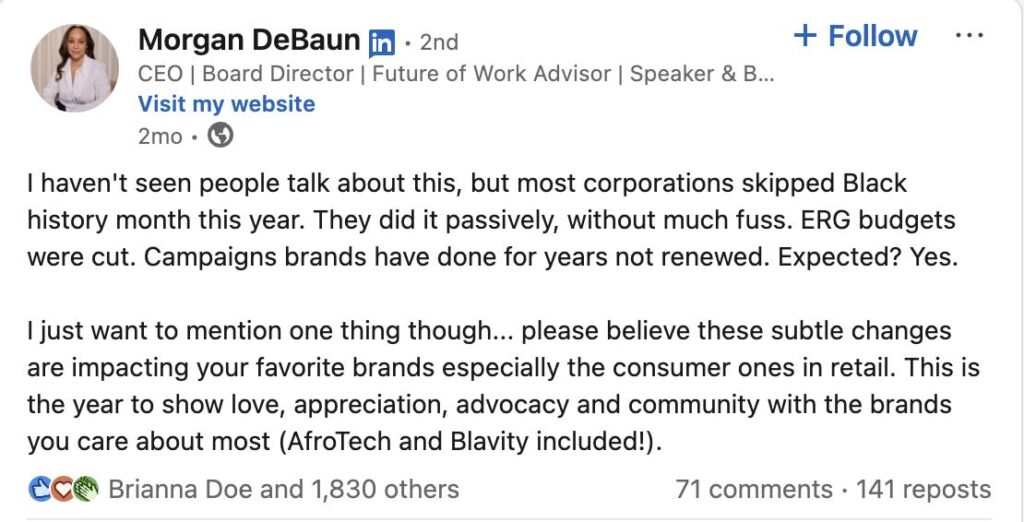
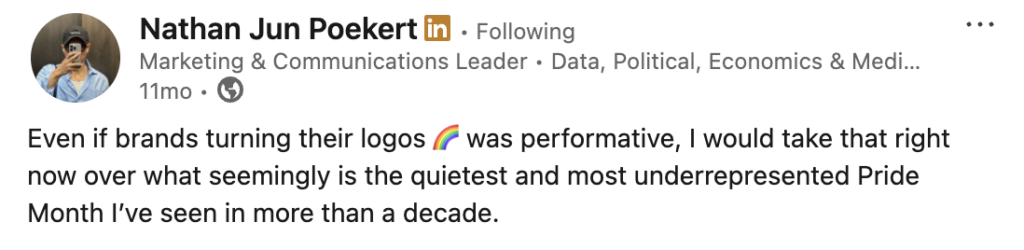
That doesn’t mean brands should dive back into activism headfirst. This is a moment for brands to reflect on what they stand for and where they can influence positive change long-term to avoid performative activism. As Nathan Jun Poekert, CMO advisor and management consultant, told us, “Unless you can directly address the source of the problem, it doesn’t benefit your brand to put out a statement.”
Do consumers want companies to take a stand on social issues?
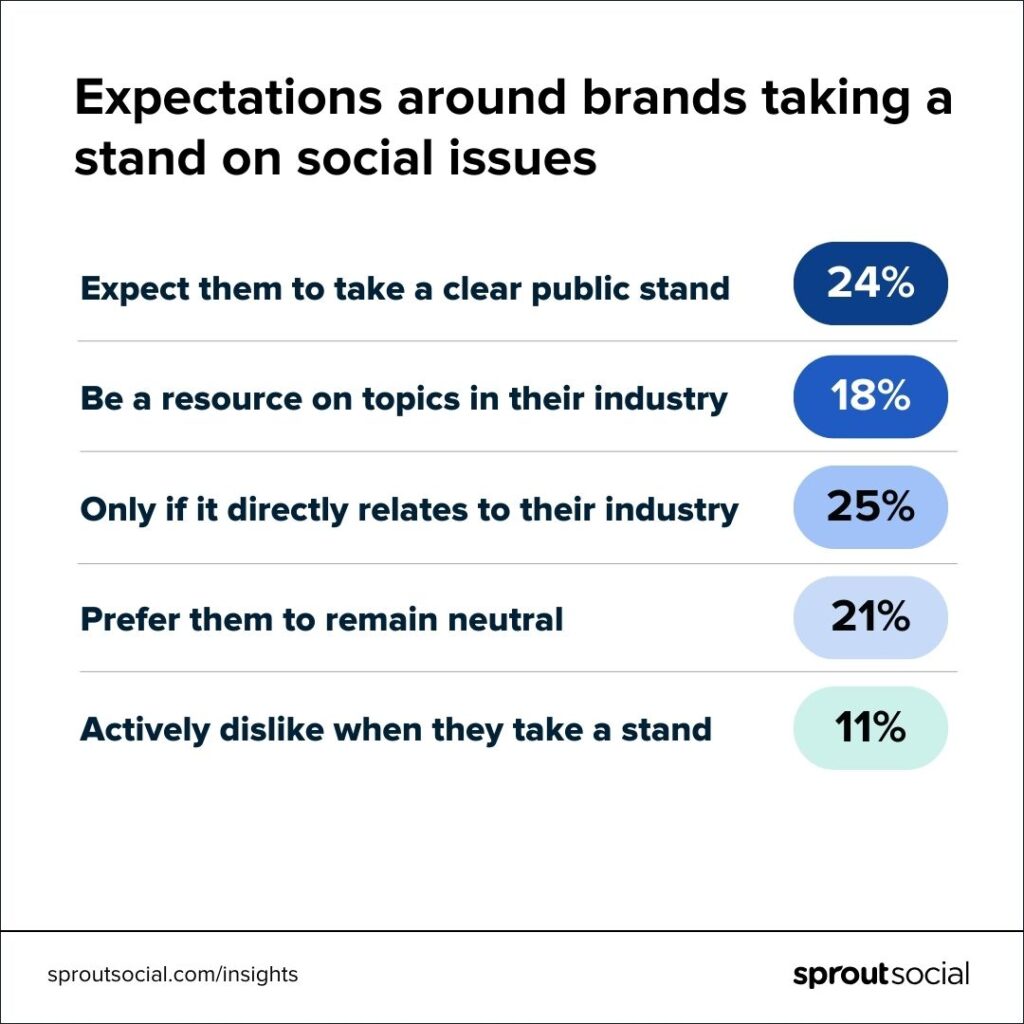
Consumers say it’s time for a brand activism renaissance. But this time, they’re looking for more intentionality. Back in 2019 for Sprout’s #BrandsGetReal Report, we found that 70% of consumers believed it was important for brands to take a stand on social and political issues. In our recent Q1 2026 Pulse Survey, only 24% said the same.
Other consumers felt brand activism should be tied to industry. About 18% expect brands to be a resource on social and political topics in their vertical, while 25% believe they should only speak out if something directly relates to their industry.
There are some outliers, though. Another 21% prefer brands to stay completely neutral, and 11% actively dislike corporate activism in all forms.
Though a majority of consumers want brands to take a stand of some form, the impact on their buying behavior varies significantly:
- 32% of survey respondents said that political stances have zero impact on their purchase decisions, with those based on price and quality alone.
- 29% said they would stop buying brands’ products if their values clash.
- Only 15% reported actively buying products to support a brand’s values.
Of all the generations, Gen Z reported a brand’s values having the most impact on what they buy. Political affiliation holds sway too, with liberals more likely to want brands to voice their social and political stances than conservatives.
The call for brand activism applies to influencer marketing too
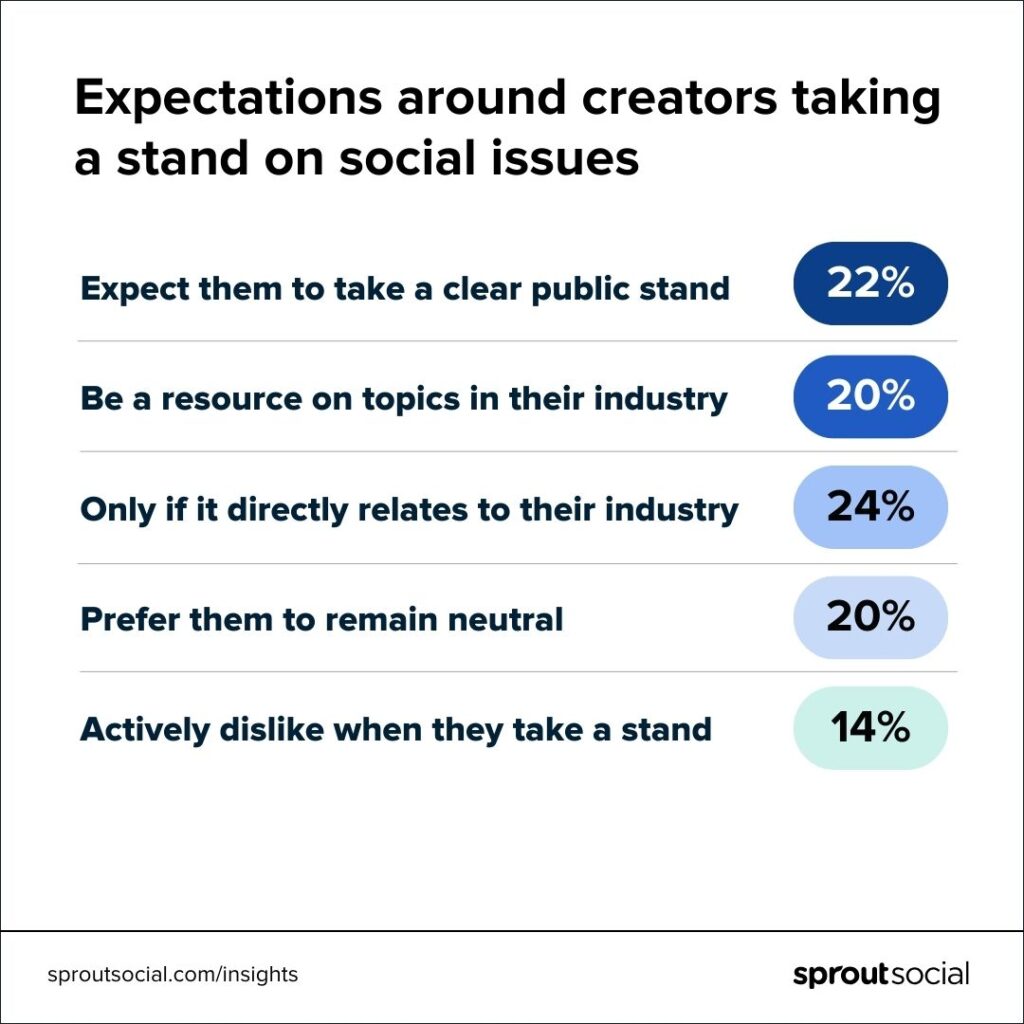
Consumer expectations for influencer activism are also changing. In a 2024 Sprout Pulse Survey, 87% of consumers said influencers should speak out about causes that align with their values. But our Q1 2026 Pulse Survey told a more nuanced story: only 22% of consumers want influencers to share their perspectives on every issue, and 20% don’t want them to voice their political opinion at all.
Similar to brands, 20% of consumers want creators to be a resource for topics in their industry, while 24% only want them to comment if something directly relates to their area of expertise.
Age and political demographic are a factor. Millennials and liberals are most likely to support influencers speaking out.
The bottom line is that any political or social stances your brand (or the influencers you work with) take should feel true to your ethos. Publicity stunts, cheap self-promotion and ill-informed commentary will be sniffed out. Here’s a framework for deciding when an issue is right for your company to address.
A framework for deciding when to take a stand
To be clear, brands don’t need to comment on every global or political issue. Jun Poekert didn’t mince words when he offered his perspective: “I advise most brands that they shouldn’t actively be part of the narrative surrounding global events.”
But, there are a handful of times when you should. For example, if an event directly impacts your community. Read on for the questions to ask before releasing a statement and examples of specific instances that defy best practices.

Assess your brand and industry
There are some industries where participation in global conversations makes sense based on your mission. For example, brands in the nonprofit sector may choose to speak about legislation that harms their communities. When creating political posts, these organizations should center impact over political affiliation, and focus on facts over feelings.
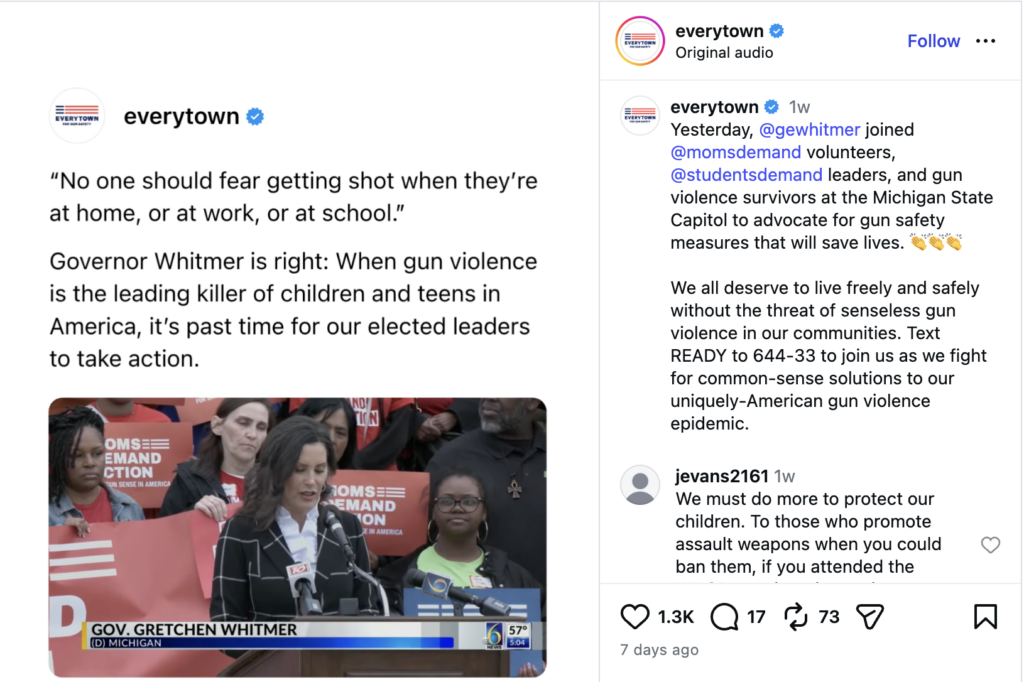
For brands in other industries—like retail, tech or tourism—who don’t have the sway to influence these issues, the general consensus is to stay quiet, unless your audience urges you to speak out. Holding back can be difficult when you have strong personal feelings. But a knee-jerk reaction could repel members of your audience on both sides of an issue.
Jun Poekert warns, “You’re far more likely to cause damage by getting politically involved. If you alienate or agitate your audience, you’re more likely to lose them for a very long time.”
Understand your audience’s expectations through social intelligence
Brands must pay close attention to their audiences. Generally, consumers only want brands to act when a social issue directly concerns the brand’s community, products or services.
“Many brands who have inserted themselves into culturally or politically-charged issues have found themselves in social media takedowns. You will risk receiving magnitudes of social media backlash. Can your business survive that?” Jun Poekert asks.
Jun Poekert explains that social is a source of truth that uncovers brand crises in the making: “Social intelligence tools help you investigate specific topics, keywords and sentiment analysis trends to understand existing conversations and how they involve your brand. This is helpful for catching potential brand crises early. Like beauty brands who have been criticized for having non-inclusive shade ranges.”
The insights offered by social intelligence should go beyond information gathering. You can take learnings from the billions of data points on social and implement them across your organization—from product and R&D to corporate social responsibility.
Unpack the direct impact on people
If your company (including its physical locations, employees, supply chain, etc.) is directly impacted by an event or issue, you should put out a statement and act. Again, centering humans is critical.
“You always want to approach it as supporting people—your customers, employees, communities. Don’t support a specific political party or entity, support people,” Jun Poekert adds.
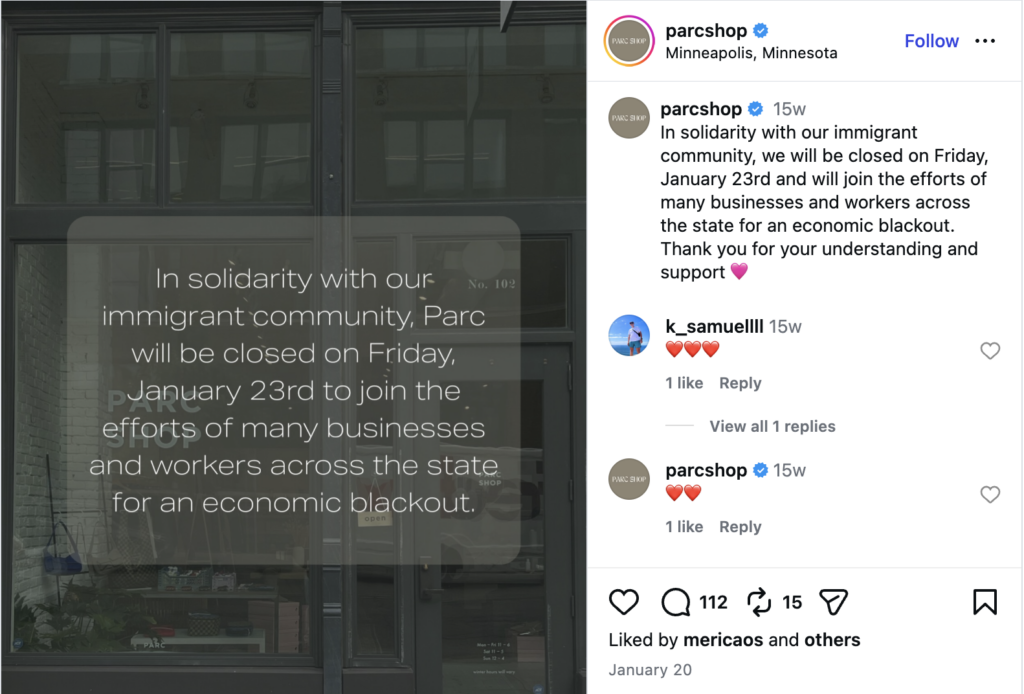
A solid crisis communication plan can help you fine-tune your messaging before disaster strikes and hit the right notes with your audience. Having action plans and statement outlines prepared ahead of time prevents small incidents from spiraling into larger crises.
3 examples of companies taking a stand to learn from
While the framework above can apply to many situations, there is no one-size-fits-all playbook for brand activism. Lean on your mission, values and identity for guidance. Here are three brands to look to for inspiration.
Patagonia: Saving our home planet
Outdoor company Patagonia was named the most respected brand in the US. Everything they do goes back to their mission: “We are in the business to save our home planet.” That extends to their digital channels and social media presence. As Lauren Henshaw, Digital Community and Impact Manager of Patagonia Europe, put it, “We are always asking ourselves: How do we use digital channels in ways that are mission and value-aligned?” For the brand, that includes taking a stand against legislation that harms the Earth and preventing over-consumption.
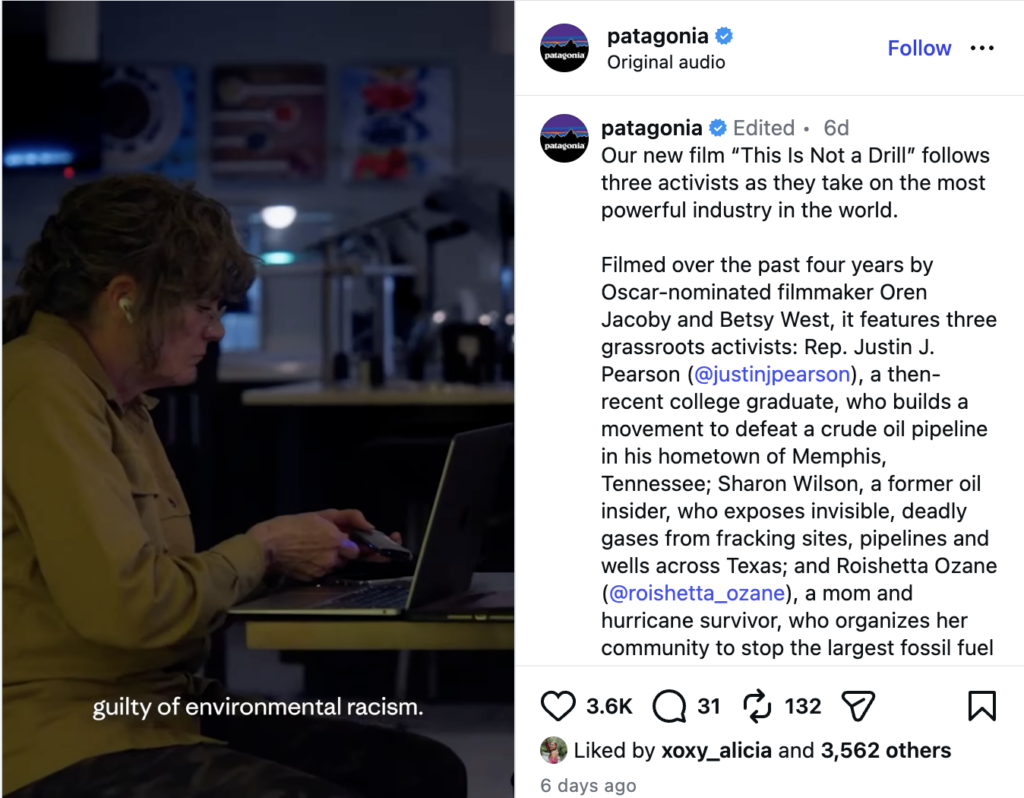
During Sprout’s webinar, How Patagonia Leads from a Foundation of Authenticity and Community, Henshaw explained, “In Patagonia’s community, we are trying to connect people to conscious consumption, activism, and outdoor adventures and sports. Our focus isn’t on ROI. We’re more concerned with the long-term success of something that is immeasurable: Our reputation, credibility and mission to save the home planet.”
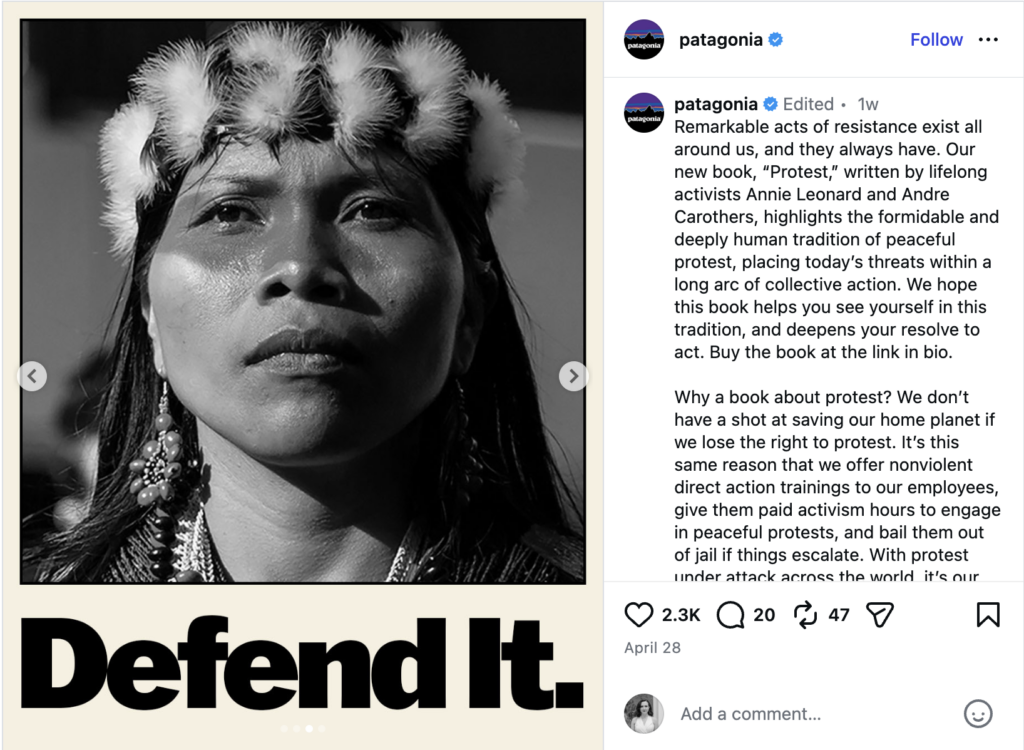
Apply it: With a mission as politically and socially stapled as Patagonia’s, speaking out about environmental justice isn’t an afterthought or greenwashing. Patagonia has a proven track record of grassroots environmental efforts, generous donations, education around public lands and enabling community members to take action.
To go all-in on corporate activism efforts, it’s imperative to do the work that backs up your statements, partner closely with organizations on the frontlines and incorporate your guiding ethos into everything you do.
Dove: Keeping beauty real
Over 20 years ago, Dove launched the revolutionary Real Beauty campaign. The campaign was built around the insight that most women don’t feel beautiful in their skin. It featured a kind of beauty-inclusivity unseen in mainstream media at the time. Plus, none of the women featured in the campaign were digitally retouched.

Fast forward to today, the campaign is still the beating heart of Dove’s brand identity. Never deviating from their original promise, the brand has since updated their Real Beauty Pledge to reflect the new AI landscape. Their new movement, #LetsKeepBeautyReal, firmly takes a stand against AI-generated images by reiterating that real beauty is better than anything a computer could create.
In their new campaign creative, a generative AI tool is prompted to create an image of a beautiful woman, and it unsurprisingly spits out a stereotypically flawless femme. But then, “in a Dove Real Beauty campaign” is added to the prompt—which expands the definition of “beautiful woman” to include different ages, backgrounds, races and lived experiences.
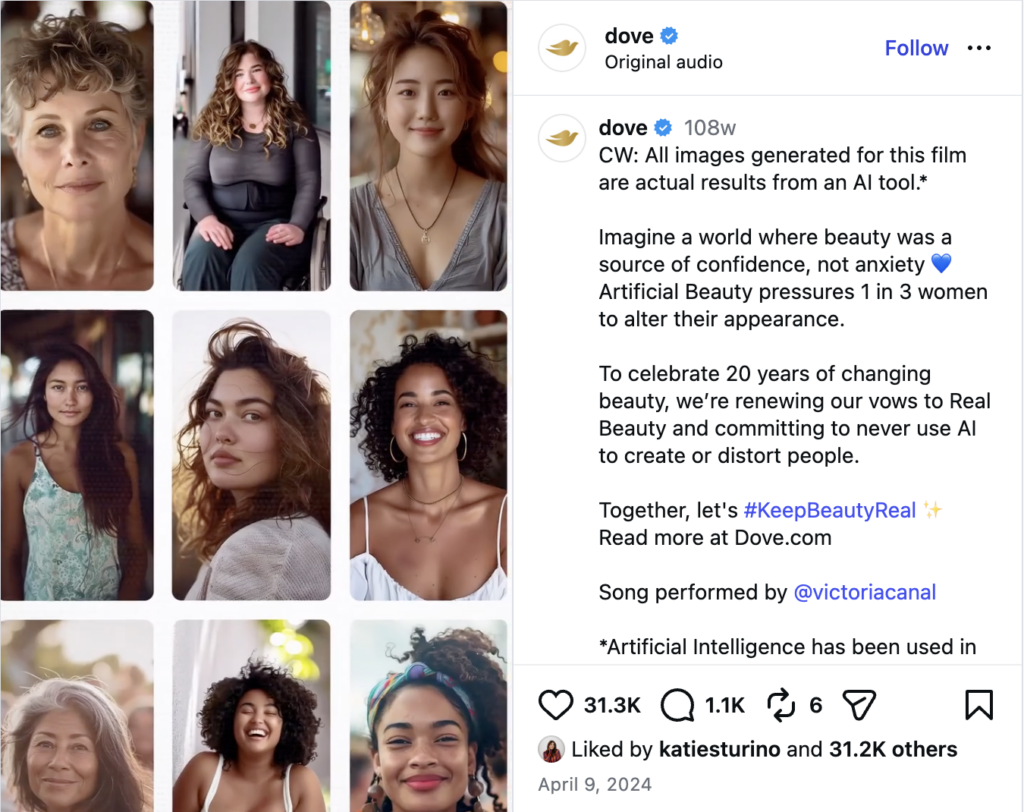
Apply it: When you take a stance on a social or political issue, it needs to have more substance than one viral video. Dove’s decades-long campaign was forged with consistent ad messaging, paired with 20 years of developing school curricula, online resources, public events, policy advocacy and training sessions that reached 35 million women and girls globally.
To create a campaign in Dove’s image, don’t just write one script. Build the blueprint for a message that will echo across your brand’s activations for years. And when the time comes to update and evolve your campaign, take a cue from Dove and assess how the changing macro-environment is impacting your customers.
The Innocence Project: Empowering activism
Nonprofit organization The Innocence Project uses social media to encourage activism that leads to exonerations of the wrongfully incarcerated.
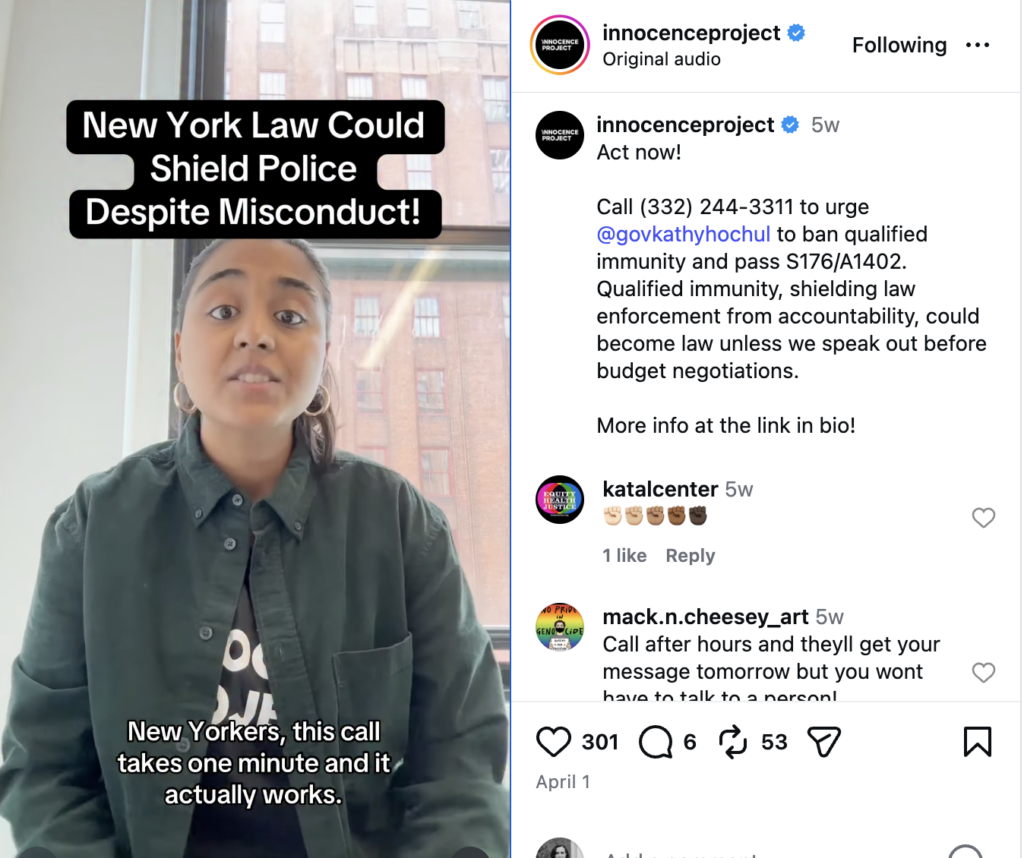
There have been multiple instances where the organization activated their followers to call politicians and encourage them to take innocent people off of death row. The Innocence Project’s followers and influencer partners have played a critical role fostering life-saving connections.
Social isn’t just a distribution channel, it’s at the forefront of The Innocence Project’s overall strategy. It’s where they share the latest news regarding exonerations, encourage followers to make donations, volunteer or call lawmakers, and create massive real-time awareness that saves innocent lives.
Apply it: Nonprofit organizations like The Innocence Project are political by nature. By using hard facts to educate their audience and human-led storytelling, the organization succeeds at amplifying its work and mission, without alienating would-be supporters.
There’s always a place for intentional brand activism
When it comes to addressing social issues, companies must tread thoughtfully—balancing authenticity with audience expectations.
While activism can enhance credibility for some brands, missteps or performative gestures can quickly erode trust. The framework shared in this post provides clear guidance: Focus on issues that directly impact your community, center people, and align your actions with your mission and values.
Ultimately, staying informed through social listening and preparing proactive crisis communication plans ensures your brand remains grounded in purpose and resilient in the face of scrutiny. Taking it a step further, social intelligence helps you take action on those critical insights when and how it best serves your brand and audience.
Looking for step-by-step instructions for implementing sophisticated social intelligence? Consult our social intelligence template to understand conversation at scale.
The post Should companies take a stand on social issues? appeared first on Sprout Social.
from Sprout Social https://ift.tt/3cyoDMI
via IFTTT

No comments:
Post a Comment