Social media marketing isn’t just for connection anymore—it’s your most powerful sales channel.
According to The 2025 Sprout Social Index™, social commerce is blurring the lines between engagement and online shopping, shortening the path to purchase through in-app checkouts and shoppable content. This presents marketers with many opportunities to leverage social media for ecommerce.
In this post, we take a closer look at the social commerce landscape, breaking down best practices and trends to guide your strategy in 2026.
What is social commerce?
Social commerce is the buying and selling of goods or services directly within a social network. It pushes social media beyond product discovery, allowing users to complete the entire purchase journey without ever leaving the app. Shoppers can quickly go from discovery to purchase without leaving their preferred apps.
Leading social media platforms like Facebook, Instagram, Pinterest and TikTok now offer dedicated social commerce tools and digital storefronts, allowing people to discover and buy products without visiting an external website.
Social commerce vs. ecommerce vs. social selling
Understanding the difference between these terms comes down to where the transaction takes place and the intent of the buyer:
- Ecommerce: Encompasses the process of buying and selling goods online across digital channels, including online marketplaces, websites and dedicated retailer apps. It requires users to leave social platforms to complete a purchase.
- Social commerce involves selling directly through a social media platform, with purchases often taking place natively within the app. It keeps the entire buyer journey within the social media ecosystem.
- Social selling:The practice of using social media to build relationships and generate leads. It’s mostly used in B2B industries with longer sales cycles.
Note: As of September 2025, Meta platforms have moved away from the in-app checkout experience. Facebook and Instagram users can discover and browse products on the respective platforms, but checkout happens on your website.
| Feature | Social commerce | Ecommerce | Social selling |
|---|---|---|---|
| Where it happens | Directly within social media platforms | Dedicated websites, apps and marketplaces | Directly within social media platforms |
| Journey starts with | Discovery—customers find products they didn’t know they needed | Intent—customers search for what they want | Interest—customers are curious but not necessarily looking to buy |
| Purchase trigger | Feed content, UGC, creator recommendations, live shopping | Search, reviews, ratings, direct navigation, email | Employee advocacy, client testimonials, comparisons, demos, personalized pitches |
| Checkout location | Inside the social platform (in-app checkout) | Brand website or marketplace | Brand website or sales tools |
| Key formats | Shoppable posts, live shopping, creator content, in-app storefronts | Product pages, ads, email campaigns | Social media posts, social media live broadcasts, direct messages |
| Primary strength | Impulse discovery and social proof at the point of purchase | High-intent buyers ready to purchase | Engaging high-ticket buyers |
How social commerce works: The full-funnel journey
Social commerce turns social media from a place of discovery into a direct point of sale. With in-app shopping tools, decisions happen faster, the path to purchase is shorter and the traditional funnel transforms into a continuous loop.
Here’s what the full-funnel journey looks like with social commerce:
- Discovery: Someone finds your product, typically through a shoppable post in their feed, creator partnership, ad, livestream or AI-driven algorithmic discovery pages like Instagram Explore.
- Consideration: Consumers learn more about the product. They tap a product tag, read comments, watch reviews or send a DM with questions. High-velocity social proof, such as reviews, comments and user-generated content, accelerates this phase.
- Purchase: They buy the product using native checkout powered by biometric or one-tap payments.
- Advocacy/Retention: Customers post their own content featuring your product or recommend it to friends and followers, creating a post-purchase community loop.
7 key elements of social commerce
Social commerce relies on these foundational building blocks to function:
Shoppable content
It uses social media posts with embedded product tags that let users tap to view details and buy. You can find shoppable content in various formats, including carousels, single images and videos.

Source: Facebook
In-app storefronts
Virtual shops within platforms (e.g., Facebook Shop, TikTok Shop, Instagram Shop) allow you to display product catalogs without requiring users to leave the app.
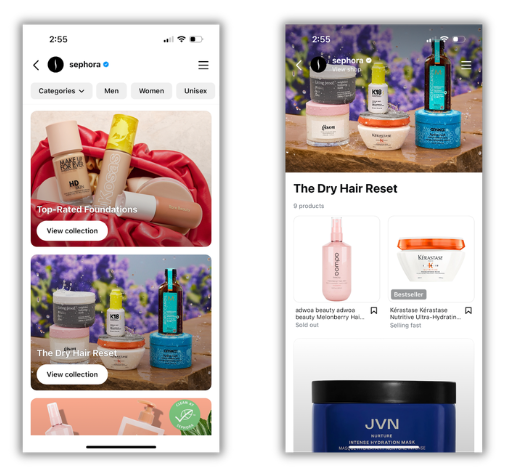
Source: Instagram
Native checkout
Most social commerce platforms let users complete their purchases natively in the app. This eliminates drop-off points caused by redirecting buyers to external sites in the purchase journey.
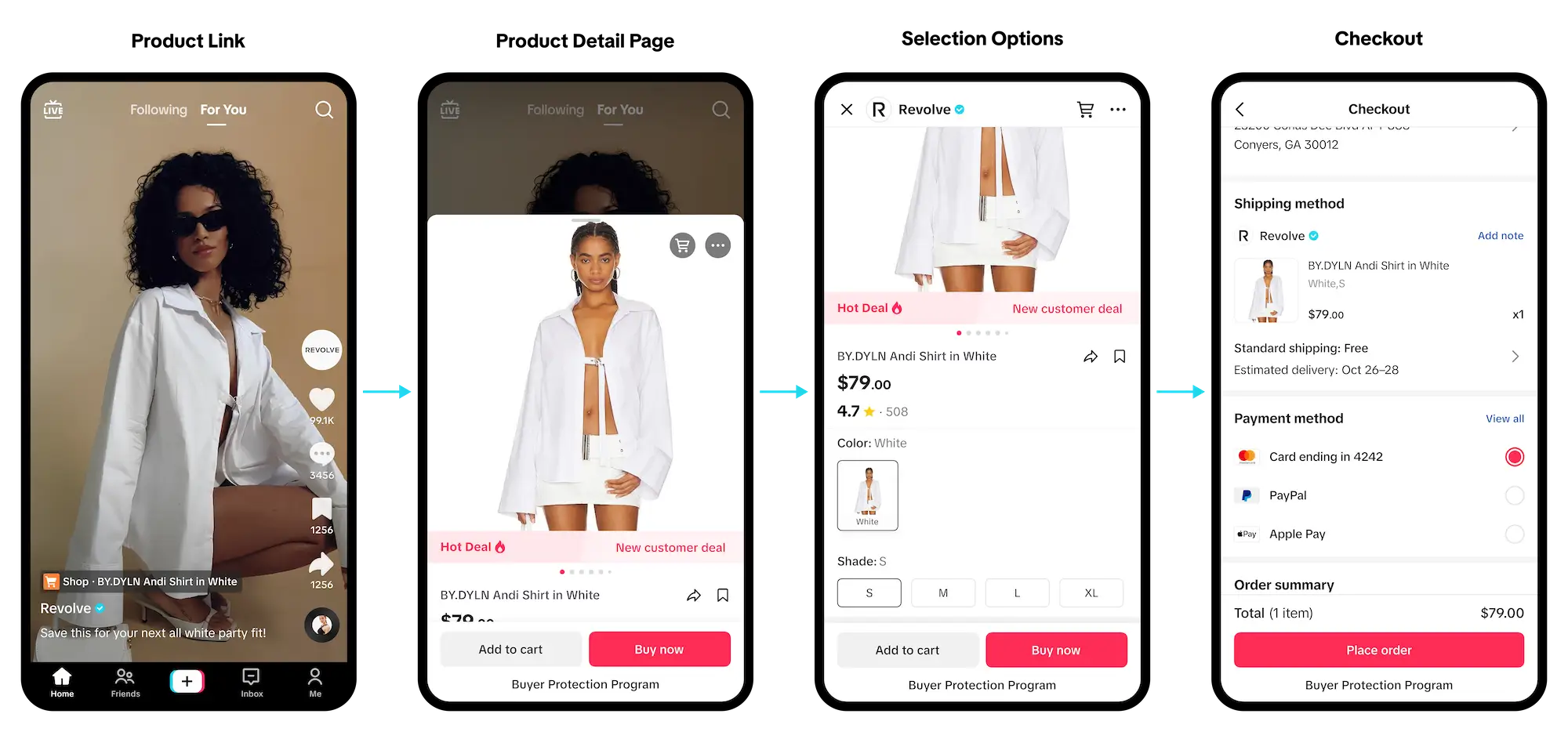
Source: Business Insider
Live shopping
Live shopping allows hosts to feature shoppable product links in real-time video broadcasts. Viewers can purchase instantly while watching the livestream, blending entertainment and demonstration with immediate buying.

Source: TikTok
User-generated content
Social commerce relies on customer-created photos, videos and reviews to build trust and authenticity. This type of content feels genuine rather than promotional, which drives audience engagement.

Source: Instagram
Influencer partnerships
Brands collaborate with creators, including micro- and nano-influencers, to reach targeted audiences through trusted recommendations and drive social commerce sales. This is even more impactful now that platforms like TikTok and Instagram allow creators to create shoppable posts from their accounts. Authenticity matters more than follower count.

Source: Instagram
Conversational AI or commerce
Brands also use direct messages, chatbots and comments to guide customers through purchase decisions. This turns social engagement into personalized shopping assistance.
Top social commerce platforms
As consumer behavior shifts towards discovering and purchasing products directly within social feeds, brands need to know which platforms are best for their strategy. Different platforms offer unique commerce features suited to distinct audiences and content formats.
0Let’s explore the top networks leading the charge.
TikTok Shop
TikTok Shop is the undisputed leader in viral discovery and impulse buying. According to the 2025 Sprout Social Index™, TikTok is the top product discovery platform for Gen Z, with 49% of that cohort turning to the platform before anywhere else—and 55% engaging with brand content there at least once per day.
The platform has robust social shopping tools, making it easy for users to go from discovery to conversion.
TikTok Shop lets you:
- Create a Shop page to showcase your products on your profile and drive purchases directly within the app.
- Create shoppable videos.
- Enable viewers to shop directly on your TikTok LIVE broadcasts.
- Empower creators to earn commissions by promoting your products through affiliate programs.
- Display your products on the Shop tab—a centralized marketplace within TikTok.
- Run ads with shoppable product tags.
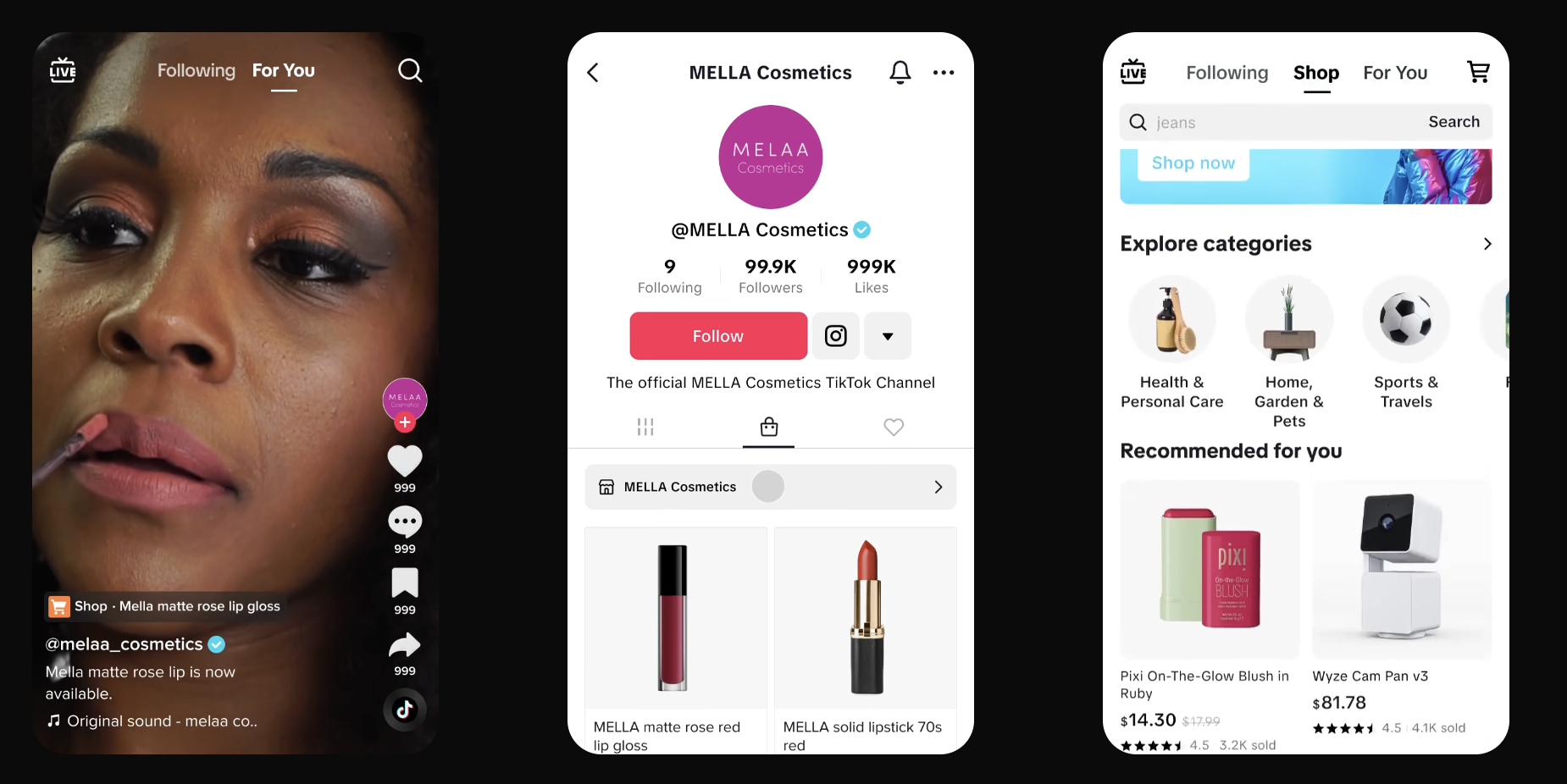
Source: TikTok
Instagram: The standard for aesthetic brands and targeted catalogs
Instagram’s visual engagement, combined with its social commerce capabilities, provides a simple, direct way for people to buy.
With Instagram Shopping, you can:
- Set up an Instagram storefront to showcase your products on your profile.
- Create shoppable content with product tags.
- Collaborate with creators and have them tag promoted products in their content.
- Enable viewers to shop directly on your Instagram livestream sessions.
- Run ads with shoppable product tags.
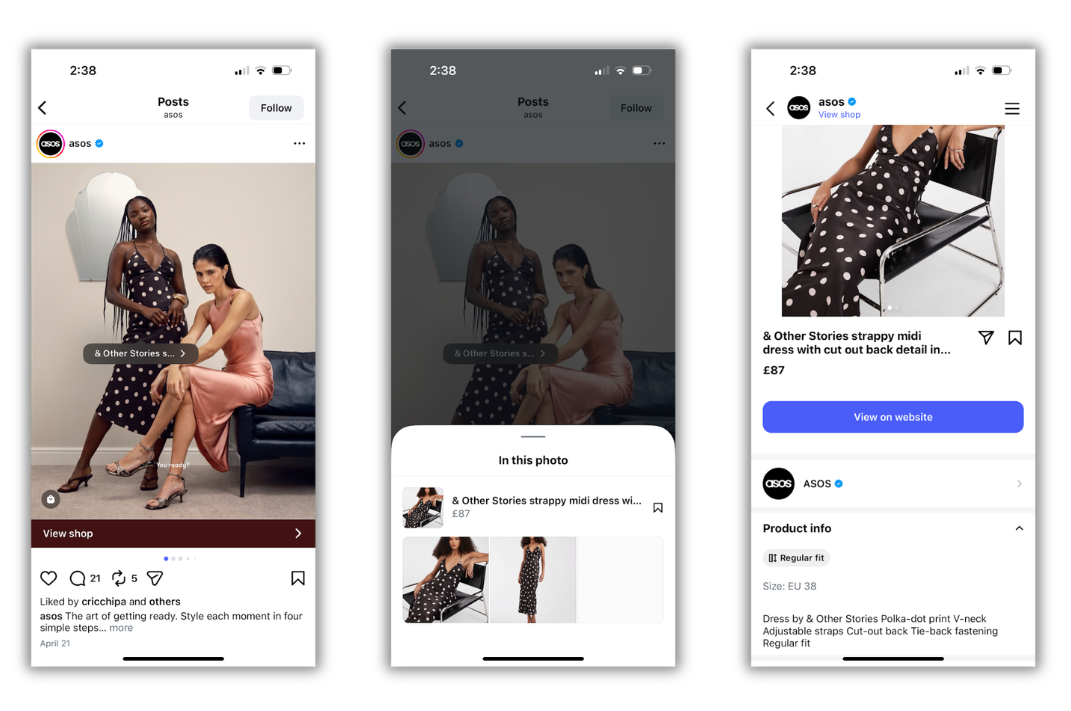
Source: Instagram
Facebook is the #1 network for product discovery, according to the 2025 Sprout Social Index™. Nearly 40% of social users turn to it to find new products. It’s also the top channel for social customer service, with 45% of users seeking support there.
This makes it one of the most effective channels for social commerce.
Facebook Shops let you:
- Set up a storefront to display your products on your page.
- Create shoppable content with product tags.
- Collaborate with creators and have them tag promoted products in their content.
- Enable viewers to shop directly on your Facebook livestream sessions.
- Run ads with shoppable product tags.

Source: Facebook
YouTube Shopping
YouTube is where long-form video content thrives. Brands can build trust and educate audiences through detailed product stories, demos, how-to guides and reviews. This primes audiences to convert, especially with the platform’s social commerce capabilities allowing seamless in-app purchases.
With YouTube Shopping, YouTube creators and brands can:
- Set up a storefront to display their products under a dedicated “Store” tab.
- Tag and highlight products directly in their videos, Shorts and livestreams.
- Use features like Shopping Collections to curate products around specific themes.
- Run ads with shoppable product tags.

Source: YouTube
People visit Pinterest specifically to find ideas, plan and purchase items. It’s a place where users discover new things and seriously consider buying them.
Pinterest Shopping makes it easier for retailers to sell on Pinterest. It lets you:
- Upload your product catalog to your Pinterest business page.
- Tag products in your Pins so people can click on those tags to learn more about them.
- Run ads featuring specific products or entire catalogs.
Note: Product Pins are not direct social commerce tools. Buyers will still get redirected to a product-specific landing page to complete their purchase. However, it simplifies the buying journey as people can get the product info right within Pinterest.

Source: Pinterest
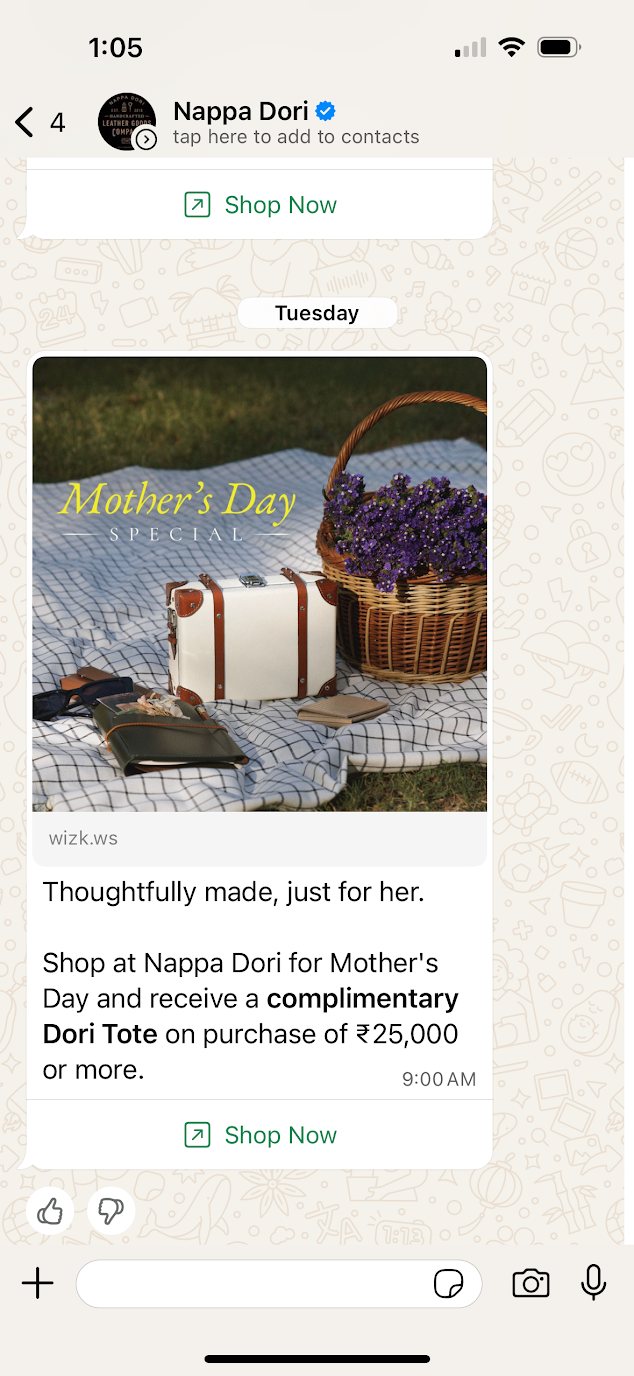
WhatsApp is the perfect platform for direct, personalized 1:1 communication. It’s great for high-touch customer service, nurturing qualified leads and delivering targeted offers or updates right to customers who have opted in. Plus, it helps you build stronger, more private relationships with your customers.
The platform’s ability to facilitate deep, one-on-one consultation makes it a critical touchpoint in the growing landscape of social search for B2B ecommerce, where professional buyers prioritize direct access to experts and technical specifications during their research phase.
WhatsApp lets you:
- Showcase your brand’s offerings directly within the messaging app with product catalogs and collections.
- Let customers browse products, add items to a cart and even complete purchases in-app.
- Manage customer interactions efficiently, whether they are prospects or existing customers, with quick replies, automated messages and contact labels.
Source: WhatsApp
Snapchat: The Gen Z platform for interactive shopping
Snapchat is where curious Gen Z shoppers discover and explore products. The platform dominates Gen Z audiences, reaching 90% of users aged 13 to 24 years.
Snapchat stands out from other social commerce platforms by focusing on Augmented Reality (AR). This appeals to regular Snapchatters, with 81% agreeing that AR would bring the excitement of in-store shopping online.
The platform’s catalog-powered AR Shopping Lenses allow users to try on a product and visualize how it would look on them. This interactive visualization engages shoppers and removes barriers to purchase.

Source: Snapchat
Social commerce trends shaping 2026
Building a successful social commerce strategy involves knowing what’s trending right now and what features are leading the charge. These are the top trends shaping the social commerce landscape.
Live shopping expansion
Live shopping sessions give brands and creators an opportunity to answer questions in real time as they demonstrate products. This real-time interactive element is exactly why the format is gaining momentum across various platforms.
TikTok LIVE Shopping, in particular, sees growing adoption among major brands. For brands like Pop Mart, for instance, about 85% of their TikTok Shop sales in June 2025 came from livestreams. Meanwhile, goPure generated $1 million in revenues through 483 hours of TikTok Live content.
AI-powered personalization
AI product recommendations are getting smarter. Social commerce platforms now deliver curated shopping feeds based on a user’s behavior, including what they watch, Like, save or purchase.
For example, if a user saves a pair of shoes in TikTok Shop, the system will recommend shoes in a similar design.
This makes it easier for users to discover shoppable products they’re most likely interested in. For brands, this means you get your products in front of a highly interested audience, helping you drive sales more easily.
Creator-led commerce growth
As more platforms allow creators to tag shoppable products directly in their posts, the path to purchase shrinks. The result? A massive acceleration in creator-led commerce.
Brands like Beekman 1802 are already feeling the impact, with 60-80% of their TikTok sales volume coming from creator partnerships. Creators and affiliates also account for 80% of TikTok sales volume for Pure Daily Care.
Short-form video shopping
Quick, engaging and visually clear—short-form video offers a convenient way to share product information minus the “boring” details. This draws in audiences while improving product understanding to drive purchase decisions.
With social commerce platforms letting you create shoppable short videos, more brands are leveraging this format to drive in-app sales rather than relying on static images.
Augmented reality experiences
Social commerce platforms like Snapchat are using immersive and interactive AR tools to boost buyer confidence and reduce returns.
This includes AR filters that let shoppers virtually try on makeup, clothing or accessories before buying them. Shoppers can also see 3D representations of products like furniture or home items in their space.
Community-driven purchasing
From customers creating content with your products to nano-influencers authentically advocating for your brand, community drives visibility and trust. Seeing real people recommending your products gives shoppers the confidence to quickly go from discovery to conversion.
Brands are combining community-first social strategies with social commerce to maximize sales. They’re turning UGC into shoppable posts and using reviews to build trust.

Source: Instagram
Social commerce best practices
Selling on social media takes more than just uploading your product catalog or tagging products in your posts. Use these best practices to get started with social commerce.
1. Optimize social storefronts for discovery
Treat your social media storefront as your digital shelf. Make it easy for shoppers to find the products they want and get the info they need to confidently make a purchase.
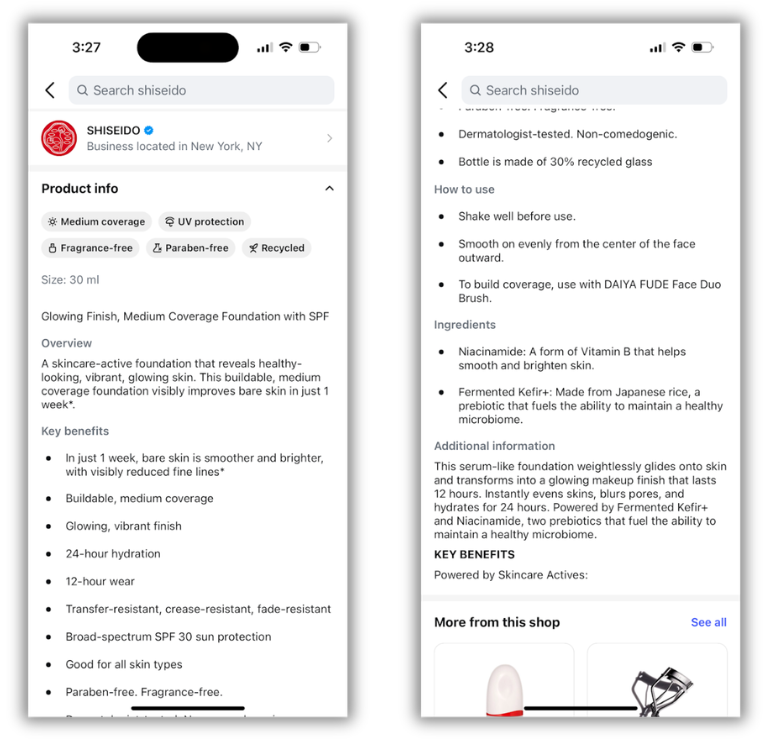
Ensure product catalogs are complete and images are high-quality. Include compelling descriptions with optimized product info. Clearly list details like:
- Benefits
- Features
- Size
- Quantity
- Color
- How to use
- Ingredients
Platforms like Instagram even let you highlight key product details at the top. For instance, you can specify whether the product is fragrance-free, paraben-free, medium coverage, etc.
Source: Instagram
2. Create platform-native shoppable content
Your shoppable content should be professional and high-quality. That means designing content for each platform’s format to display your product exactly as intended. Repurposing traditional ads or cross-posting sometimes affects quality and proportions.
Here are some best practices for creating shoppable content:
- Create high-quality Reels and Stories that showcase your products in use, rather than just standard product shots.
- Tag products naturally within engaging posts, Stories and videos for a more authentic feel.
- Turn UGC into shoppable posts to help build social proof and trust.
- On Pinterest, focus on creating high-quality Pins that are informative and visually appealing—video tutorials are great for this. Make sure your Pins are set up with relevant search keywords (not just hashtags) so people can find them.
- Create themed Boards that match the kinds of projects or lifestyle goals your customers are interested in and feel free to include shoppable Pins where they fit naturally.
- Work with creators who fit your brand to make genuine video reviews and tutorials that show off tagged products from your connected shop.
3. Prioritize native checkout to reduce friction
The more “taps” between discovery and purchase, the higher the drop-off. Close this gap by enabling in-app checkout on platforms that offer the capability. This lets shoppers seamlessly complete their purchases with one-tap payments through saved digital wallets.
4. Scale authenticity with creator-affiliate hybrids
One-off influencer shoutouts bring visibility, but only for a short while. And the partnership seems more transactional than authentic.
But when creators consistently advocate for your brand over the long term, it adds authenticity to their advocacy. Bring them on for long-term affiliate partnerships that allow them to earn commissions from the sales they generate. Encourage them to use product tags in their content, so fans can quickly go from discovering your product to buying it.
5. Deploy AI-powered responsive customer care
Social commerce is conversational. People ask questions before they go through with a purchase. They want to know how a certain product works or if it’s available in a certain color.
Answering those questions eliminates doubt and gives them the confidence to buy.
Monitor and respond to comments, DMs and questions promptly. Use Sprout Social’s unified inbox and automated AI agents to provide 24/7 support.
It’s important to distinguish between basic “chatbots” and Agentic AI. Unlike regular chatbots, Agentic AI can send autonomous replies, check inventory and handle routine inquiries like “Where is my order?” at scale. This allows your human team to focus on high-intent, complex sales while maintaining quality customer experience.
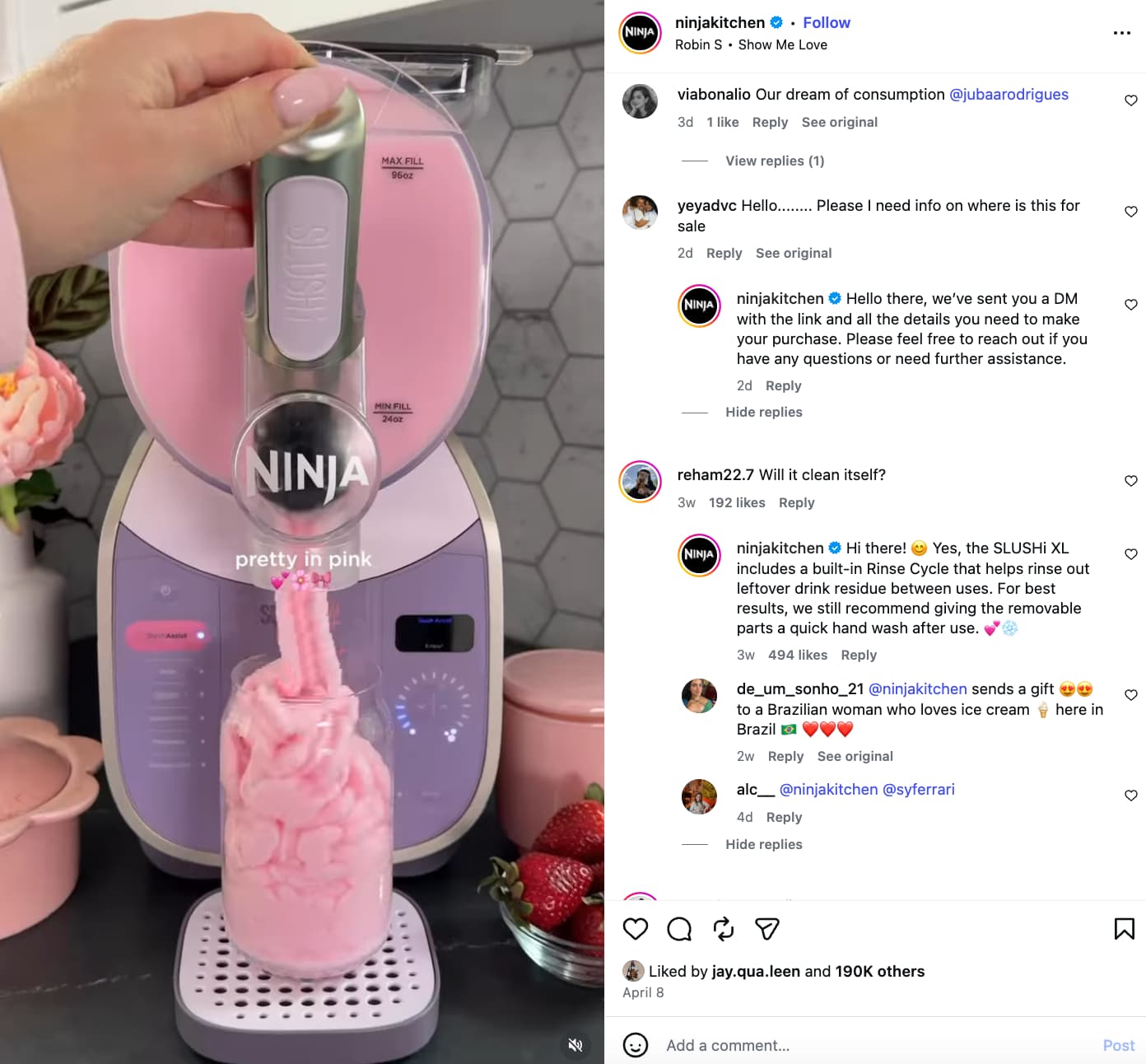
Ninja Kitchen is very responsive to questions about its products. The brand quickly clears up doubts and guides potential buyers, which is key to driving sales.
Source: Instagram
6. Use social listening for real-time inventory and trends
A powerful social commerce strategy anticipates customer demand before it peaks. The best way to do that? Actively listen to your audience.
Track conversations about your brand, competitors and industry to identify product opportunities and customer pain points.
Using Sprout Social’s social listening capabilities allows you to surface actionable insights—like a spike in demand for a specific color or region—helping you make proactive, real-time inventory decisions.
7. Test and iterate with performance data
Is your social commerce strategy working? You might be pouring in time and money into your shoppable posts only to see a handful of sales.
That’s why you need to track what works and optimize your strategy accordingly. Analyze which products, content formats and platforms drive results. Use data to refine your social commerce strategy continuously.
Keep an eye on how many people tapped to view your product details, how many clicked through to your website and how many converted. Are you getting more engagement on specific content formats? Do you see more conversions with reviews vs. demo videos? Do you get more revenue when you push low-ticket products?
Use social media analytics tools like Sprout to monitor how your shoppable posts are performing. Get post-specific insights to identify your most impactful formats and content angles.
3 successful social commerce examples
Check out these three social commerce examples to find inspiration on how to build your own strategy.
1. The Tiny Tassel
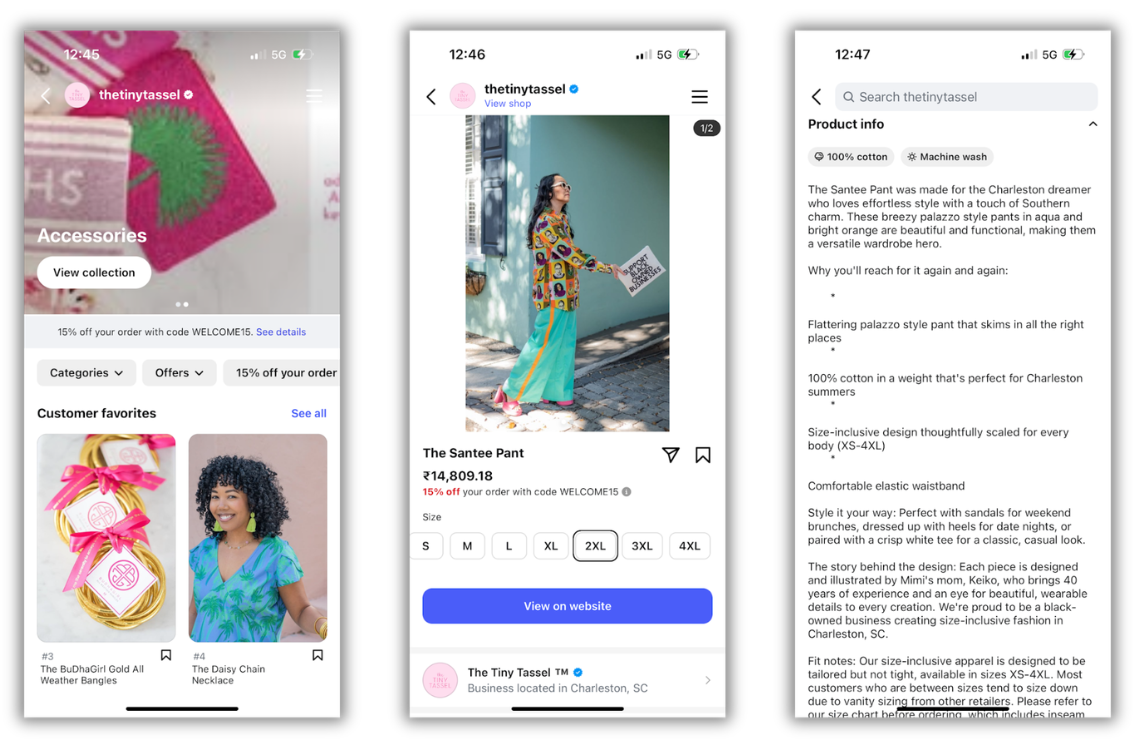
The Tiny Tassel is a retailer specializing in handmade jewelry and apparel. It uses Instagram Shopping features to create informative, Instagram-native product pages. Each listing features detailed product descriptions, customization options, style tips and shipping information.
It also highlights offers and customer favorites in the Shop tab to drive conversions.
Source: Instagram
Brands should follow Tiny Tassel’s lead and post listings that communicate value. This builds trust with potential buyers who are new to your brand, motivating them to make that first purchase.
2. Patagonia
Pinterest boards can serve as product navigation tools for your audience. Take Patagonia’s Pinterest structure: the Product Pin boards mimic its website navigation. This creates a familiar experience for returning audiences. Similarly, new potential customers will enjoy a consistent experience when they click through to the brand’s main site.

Source: Pinterest
Most social commerce platforms offer just enough flexibility to recreate your brand experience. Use these tools to create consistency for your audience.
3. Made by Mitchell
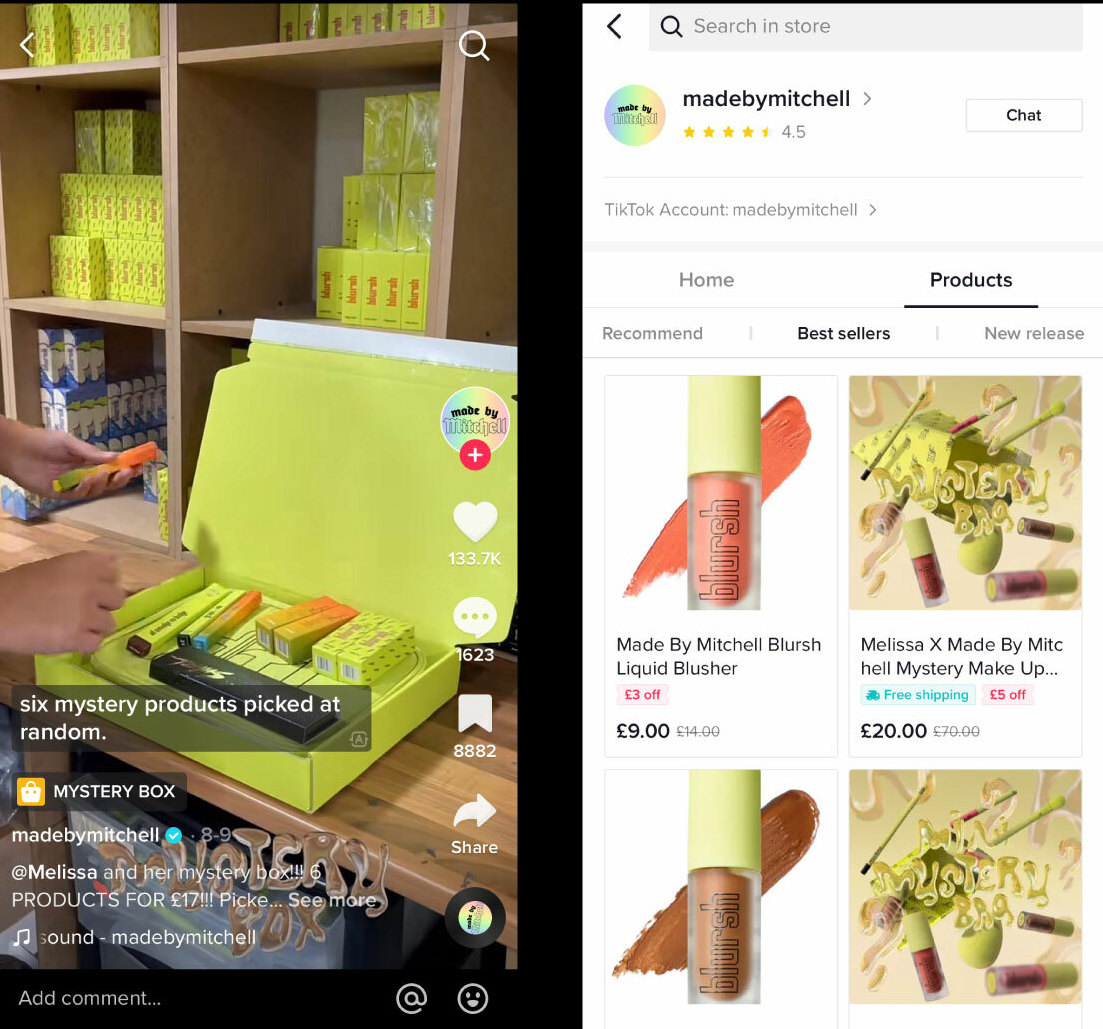
Makeup brand Made by Mitchell introduced a product that was exclusively available on TikTok Shop. The brand took advantage of TikTok’s LIVE shopping feature for its initial launch.
The brand had collaborated with TikTok creator Melissa Jade for this collection. So the two parties had a duel livestream on both their accounts. This attracted 50,000 LIVE views combined and a total of 2.4 million product views. The livestream session even had a 100% sell-out rate.
Brands should follow suit and take full advantage of TikTok’s LIVE shopping feature to engage shoppers in real-time. You can even maximize your reach with influential content creators.
The brand further encouraged sales through mystery beauty bundles. People were buying these mystery bundles on the brand’s TikTok Shop and creating unboxing videos. This helped to build a buzz around the collection and persuaded others to buy their own mystery boxes.
Source: Statuo
5 ways to increase sales on social media using Sprout Social
1. Know your audience
Align your social commerce strategy with your target social audience for maximum engagement. Choose products and messaging based on this specific customer subset instead of repeating what’s on your website.
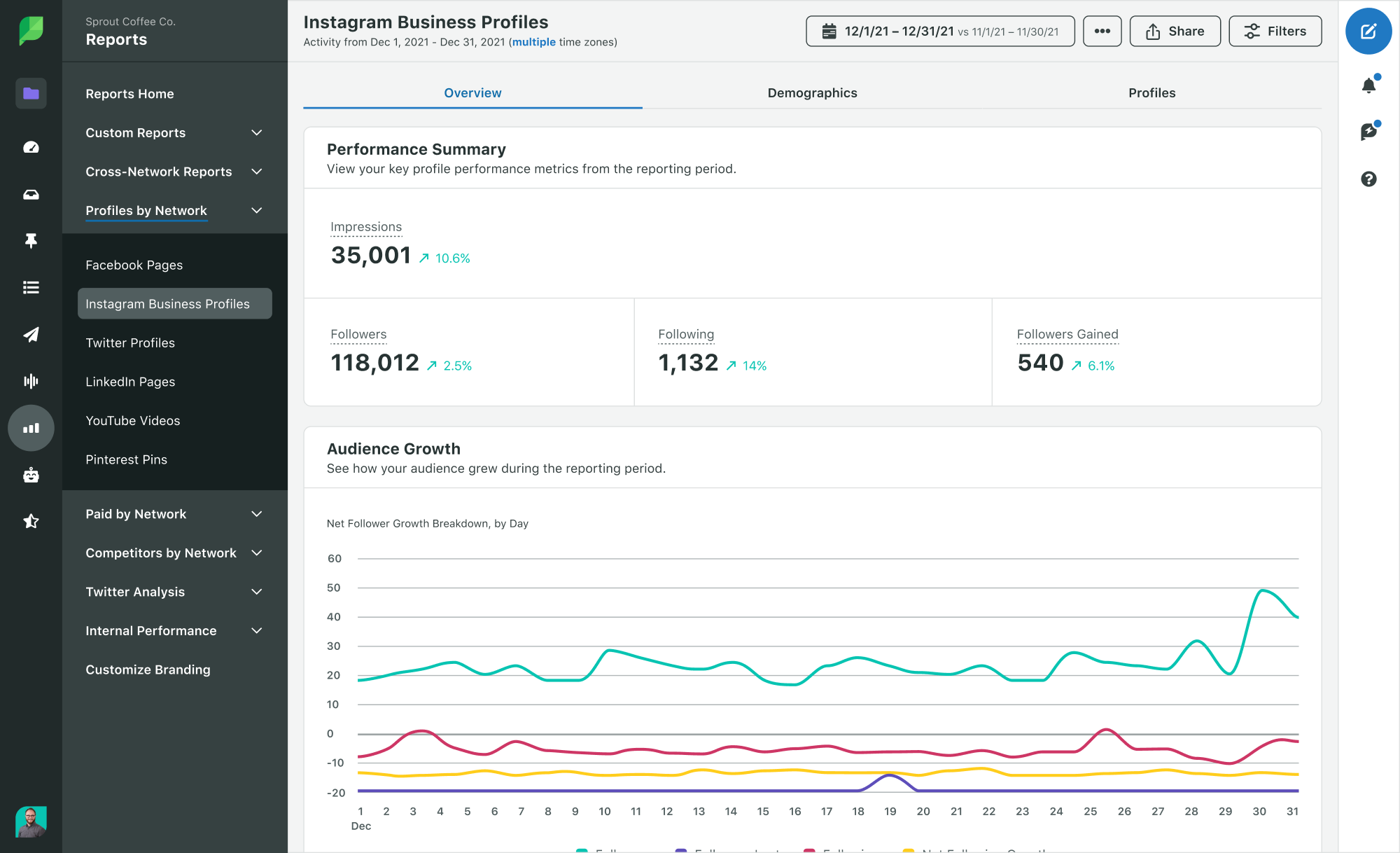
A social media analytics tool can help you keep up with information as your audience grows. Sprout Profile Reports offer follower demographic data to create platform-wise customer personas. Use these in combination with post performance data to make your initial decisions about which products to list and how to position them.
2. Schedule your content
Once you share a listing, schedule some promotional posts to build interest and drive traffic to your new social storefront. This is a great way to share additional product information, like walkthroughs and close-up shots.
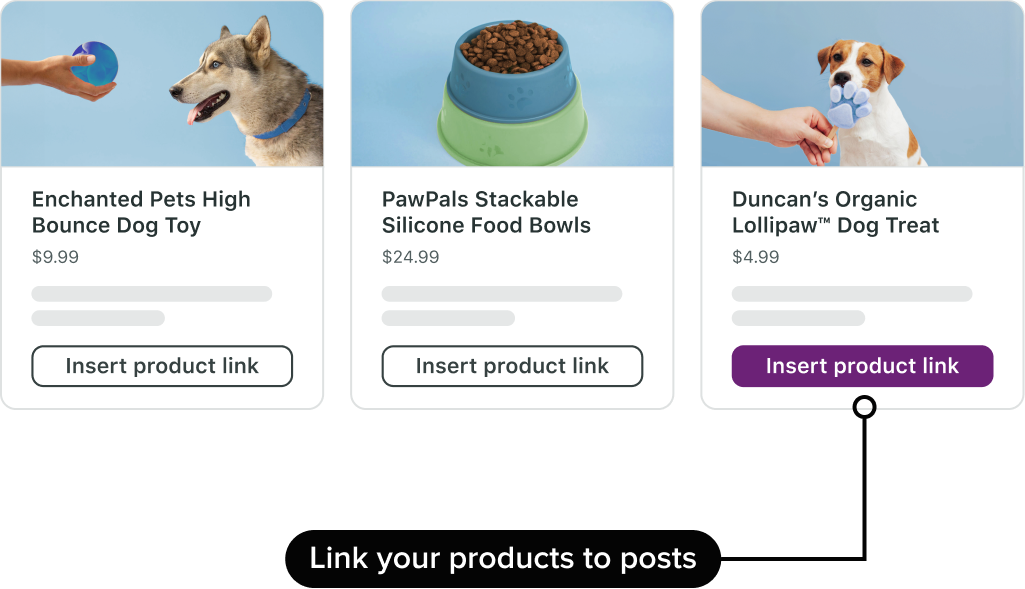
Use Sprout’s built-in social commerce tools to easily add shoppable tags and links to your products while scheduling your content. By adding products to your posts, you can meet customers where they want to shop and streamline their purchase process.
3. Personalize your replies
Asking questions about a product or service is one of the top reasons consumers reach out to brands on social. They may have requests for specific product details, ask about a specific order or want to know which options are available.
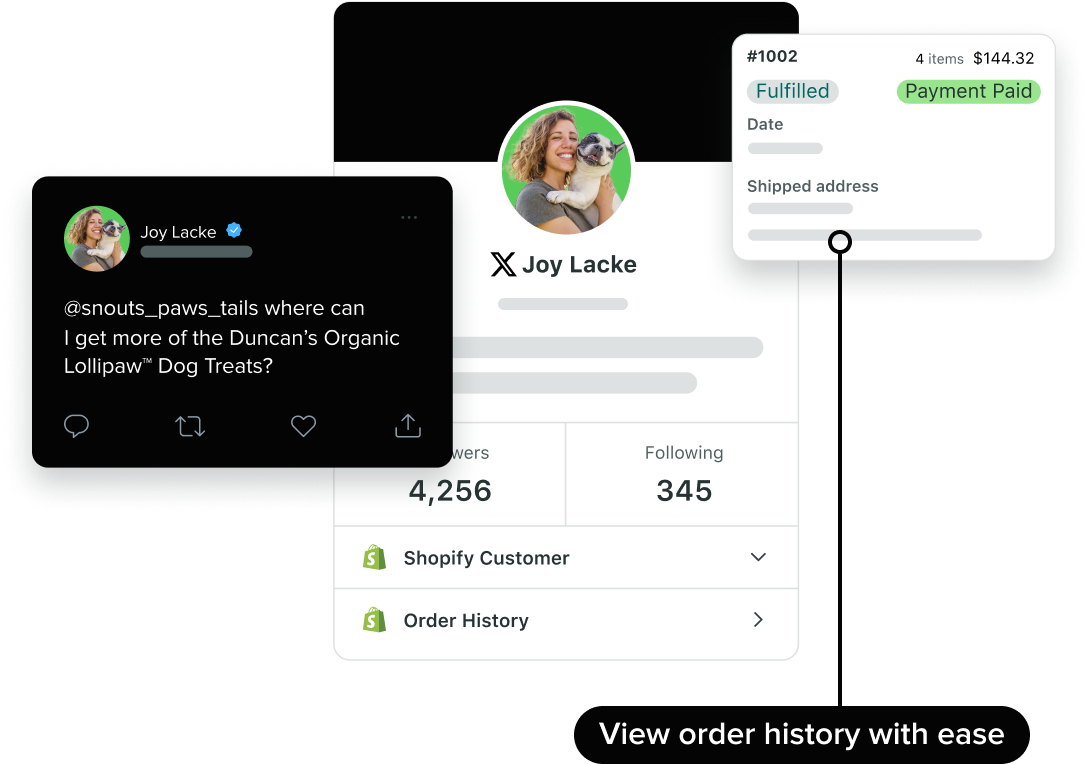
With Sprout, you can manage those questions in a unified Smart Inbox and seamlessly drive conversions for the products you recommend.
It lets you access conversation history and order information, giving you the context you need to personalize your responses. You can even add direct product links to replies using built-in product catalogs from Facebook Shops and Shopify.
4. Learn what works (and do more of it)
As you dip your toe into the world of social commerce, the best thing you can do is measure, measure, measure. Knowing what’s working can help you repeat your success as you scale your strategy. It can even help to illuminate new opportunities you might have otherwise missed.
Monitor your social analytics to manage performance. Remember to categorize your posts in Sprout by tagging them, giving you an in-depth look at what’s working and what’s not. Combine this with UTM parameters and you can dig in, see which posts drove sales and adjust your strategy to optimize your posts. With Sprout, you can schedule report deliveries on a weekly or monthly basis to stay on top of this process.
5. Automate conversations and reduce response times
Failing to provide timely responses is one of the biggest social commerce mistakes. Before people finalize their purchases on your social media storefront, they may need some additional info. It’s your job to ensure that those potential customers get the response they need when they need it.
Sprout lets you automate those conversations with AI agents, so you can provide 24/7 support without needing constant human attention. From answering routine product questions to sharing product recommendations, these AI agents speed up response times and help you close sales.
Starting out with a social commerce strategy
Social media has changed how we connect; social commerce is changing how we buy.
Now that you understand the social commerce landscape, it’s time to turn engagement into revenue. Sprout’s intuitive platform empowers you to drive direct sales from your social media presence. Try it free for 30 days and see the business impact firsthand.
The post What is social commerce? Best practices and trends for 2026 appeared first on Sprout Social.
from Sprout Social https://ift.tt/nbmhyXZ
via IFTTT

No comments:
Post a Comment