Social media isn’t a digital billboard for your brand: It’s a portal to direct connection with your ideal customers and a pathway to powerful insights. From customer care to competitive research to crisis management, the impact of social media extends to every aspect of your business. And social intelligence, the application of social insights to business strategy, has become mission-critical.
According to The 2026 Social Intelligence Report, 80% of marketers say social intelligence is important to the growth of their business.
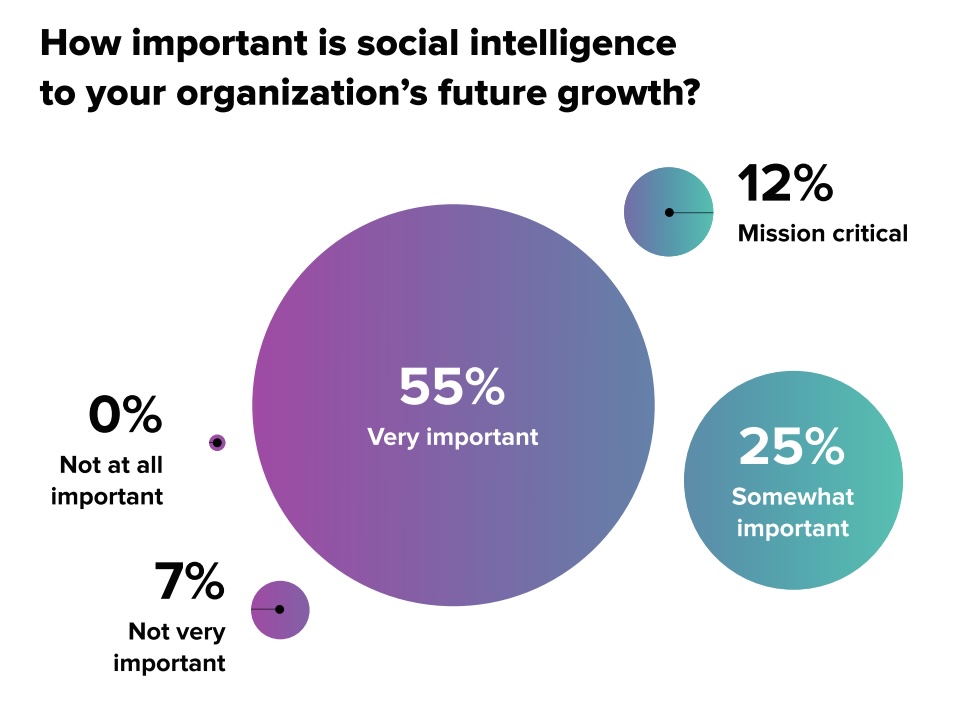
The same report found that four in 10 marketers used social intelligence to improve customer retention, identify a new target audience or market segment, and adjust their campaign strategy in real-time. Looking forward, 71% of marketing directors say social intelligence will become more influential than traditional research in shaping business strategy.
By tapping into the ample benefits and business insights social media offers, you can transform the way your entire company operates, and future-proof your brand.
The 2026 Social Intelligence Report
11 ways social media affects your whole business
Here are 11 ways social media directly impacts businesses at every stage of the customer journey.
1. Improves customer care
Customer service on social media is a non-negotiable part of an omnichannel support strategy. Consumers tag and direct message brands to resolve their issues across platforms, and demand swift thoughtful responses in return. According to The Sprout Social Index™, nearly three-quarters of consumers expect a response on social within 24 hours—a consistent year-over-year finding for three years in a row.

Response rates have serious impacts on customer satisfaction, loyalty and retention. The Index also found that 76% of consumers value how quickly a brand can respond to their needs, while 70% expect a company to provide personalized responses.
Implementing a seamless support strategy enables you to increase the lifetime value of your existing customers and drive revenue growth. Well-orchestrated customer service efforts also deliver valuable insights about your customers’ experience that help your business evolve. Almost half (45%) of marketers said that by using social intelligence cross-functionally, they were able to improve customer retention through proactive engagement, according to The Social Intelligence Report.
But it can be hard for a customer support team to stay on top of multiple social platforms and data sources. By using an AI-powered solution like Social Customer Care by Sprout Social, it’s easier to coordinate across teams so you can tackle the most critical conversations first, and every customer feels heard, supported and valued. Sprout’s AI capabilities enable teams to move faster, such as enhancing responses and highlighting priority messages so your team can focus on the highest-impact interactions.

You can also benchmark and track your support team’s performance to demonstrate their impact on revenue, identify opportunities for growth and capture customer feedback. The Case Management Report provides a holistic view of your team’s social care efforts, including key metrics like Case volume, handle and reply time, and performance benchmarks.

2. Bolsters brand amplification
Almost one-quarter of marketers say underutilizing social insights resulted in losing market share to competitors, according to The Social Intelligence Report. Social media is where consumers go to discover new brands, which makes it a powerful channel for growing awareness.
Brand awareness is the first step toward generating new leads, edging out the competition and driving sales. Tactics like influencer marketing are especially effective, as influencers continue to wield considerable sway. According to The State of Influencer Marketing Report, 92% of marketers say, on average, the reach of sponsored influencer content outperforms organic content on their brand accounts. With the right influencers (and their loyal followers) on your side, you can amplify your brand significantly.
The Sprout Social Influencer Marketing platform finds creators who truly fit your brand, building audience trust. AI helps surface the most topically-relevant influencer matches, so campaigns feel genuine and resonate with your customers’ interests.
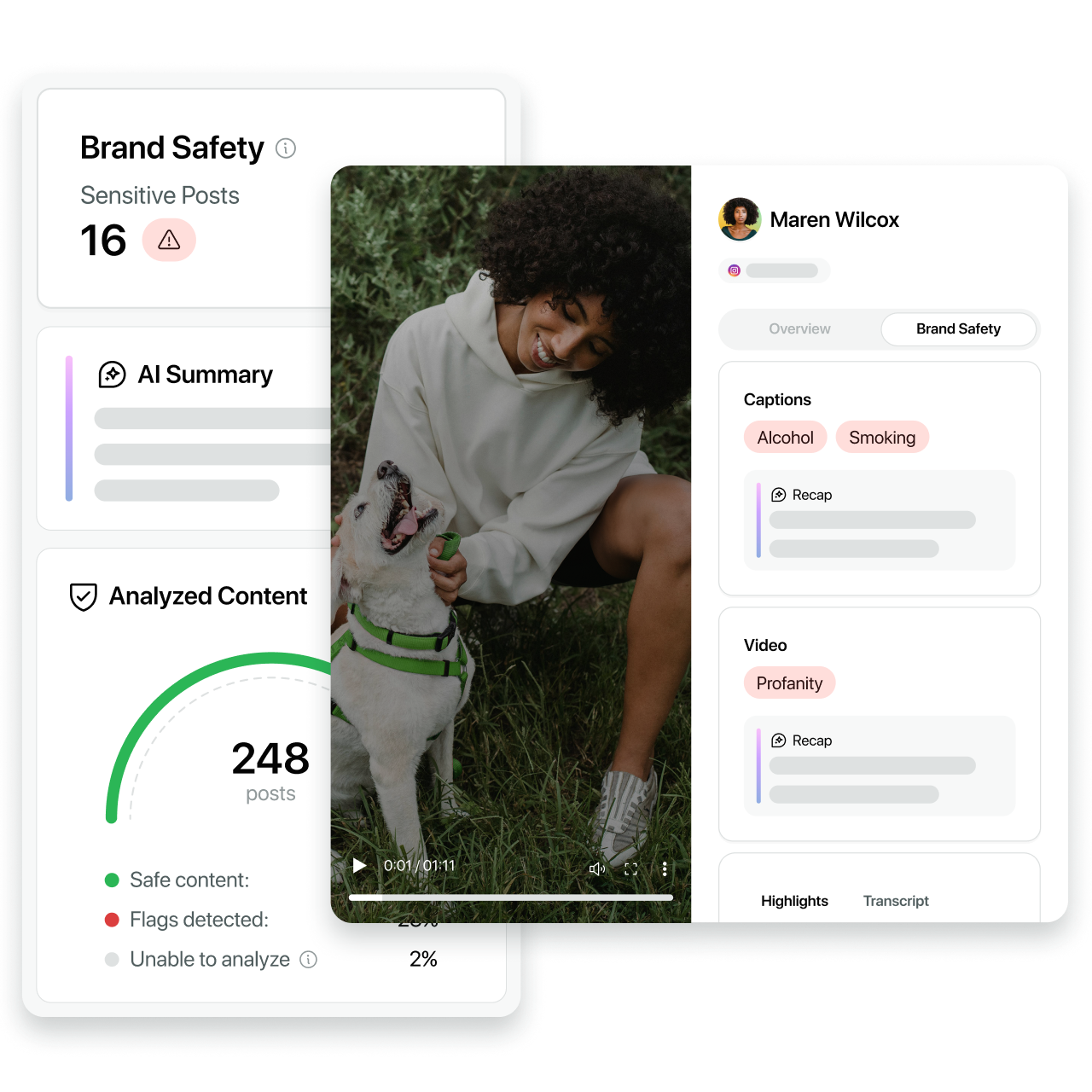
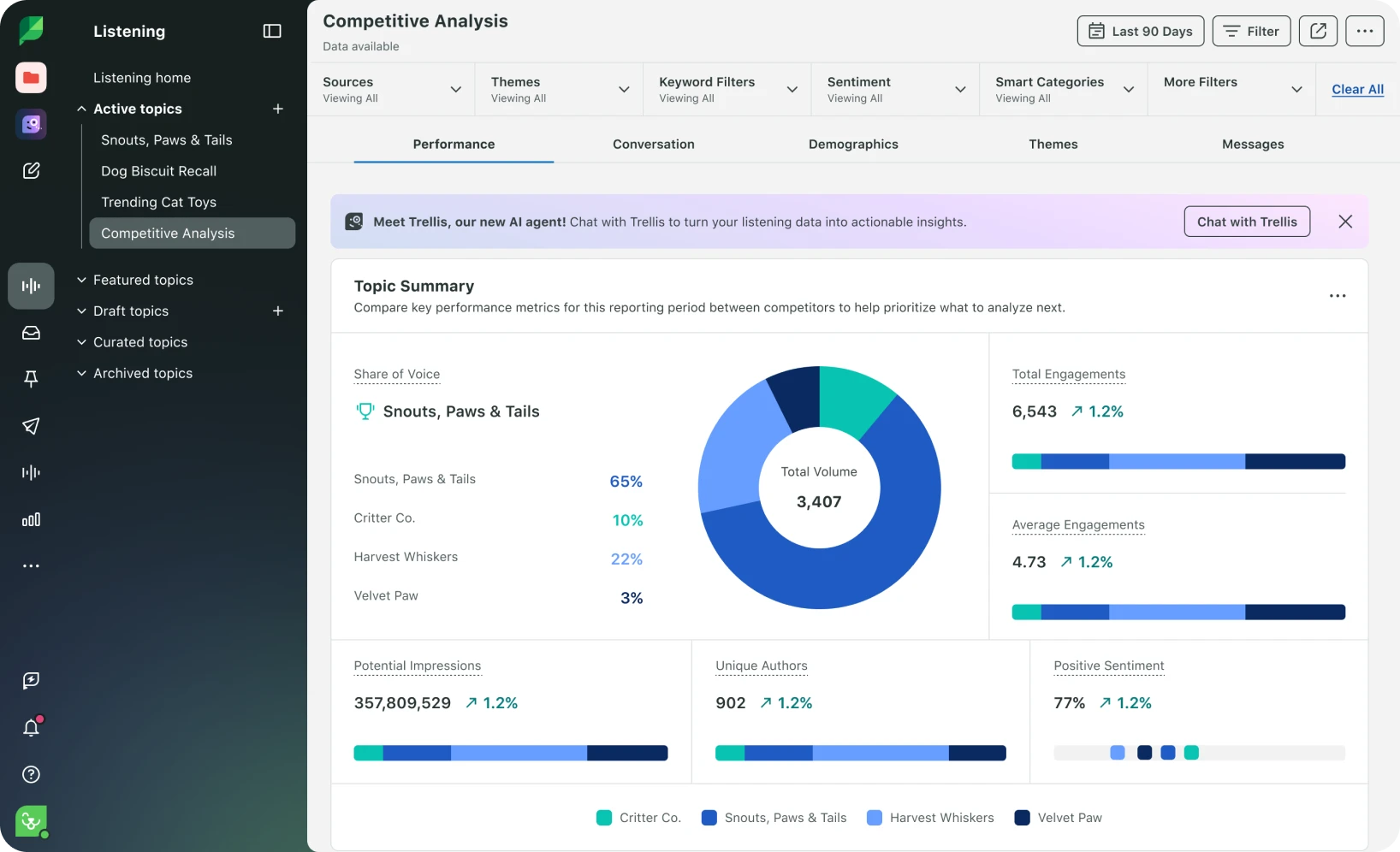
Social media data also serves as a barometer of your current brand awareness, and helps you make business decisions that positively influence your reputation. For example, Sprout’s AI-driven Social Listening solution surfaces insights that reveal how you stack up to your competition via metrics like share of voice, positive sentiment, total engagements and overall conversation volume. These insights are a source of truth that can influence your company-wide competitive strategy, and enable you to make the right calls for your business by precisely decoding sentiment and competitive momentum.

For more tips to distinguish yourself from your competitors on social media, check out our list of 12 proven strategies to increase brand awareness.
3. Maintains cultural relevance
Today’s trend cycle moves fast—fueled by Gen Z’s internet behavior—and social media is where trends are born. Social is the #1 place consumers use to keep up with cultural moments, and 93% agree it’s important for brands to keep up with online culture, according to The Index. From viral moments to emerging creators and niche communities, what happens on social media shapes so much of what we do, say and care about outside of social.
Today’s consumers can spot inauthenticity from a mile away. Whether it’s a perfectly timed meme or a meaningful response to a trending topic, staying in tune with social media culture ensures you’re not just talking at your audience, but thoughtfully interacting with them.
Trends aside, brands that retire or divest from their social media presence are also at risk of irrelevance and being abandoned by their audiences. Social media is the key to building a long-term brand strategy that will help you stay top of mind for years (and decades) to come.
In the face of fierce competition for consumer attention, it’s imperative to tune into conversations happening around your brand and industry. Social listening and predictive media intelligence enable you to tap into and analyze what people are saying about your company, even if you aren’t tagged or mentioned.
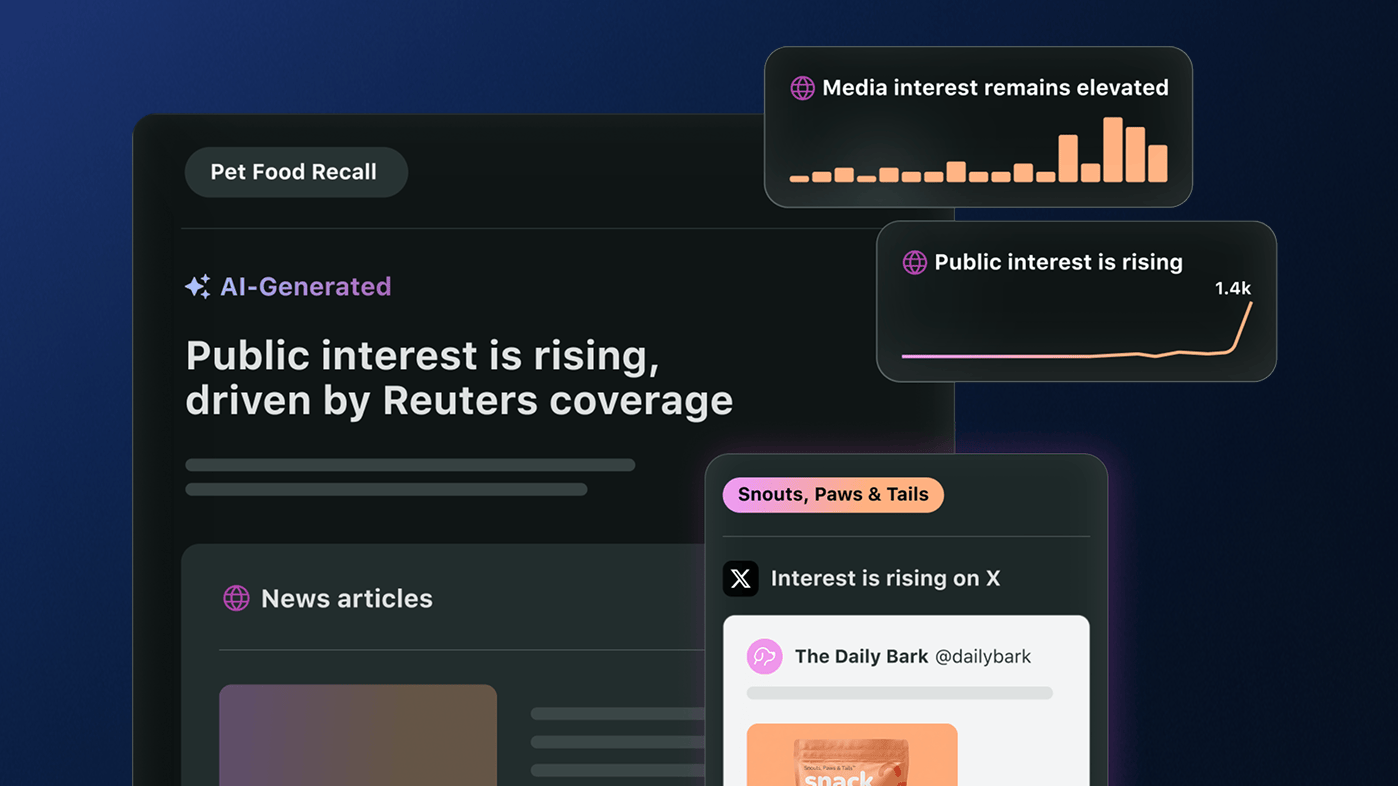
With our AI-powered Social Listening and NewsWhip by Sprout Social solutions, it’s possible to see what’s rising and why it matters, enabling teams across the org to act confidently to strengthen customer trust and engagement with your brand. NewsWhip, specifically, uses predictive monitoring to determine how big a breaking news story could become and who’s dominating the conversation across media publications and social. Using these two solutions together enables brands to stay on the pulse and get ahead.
4. Makes your products and services more discoverable
Most people’s primary instinct when looking for information is still to turn to traditional search engines—but Gen Z is the reason why this is shifting. Social is now the #1 place they search, more so than Google and traditional search engines, per the Q2 2025 Sprout Pulse Survey. And when they do use traditional search engines, social content is appearing in search results more often. YouTube has even become the top citation source for AI search.
Whether they’re looking for product reviews, restaurant recommendations or how-to tutorials, audiences increasingly want answers from real people (and often, in video form). Social networks deliver on both.
This growing inclination to treat social as the new search bar provides new opportunities for brands. For instance, consumers are most likely to say they want brands to publish educational content about products and services in 2026, according to the Q1 2026 Sprout Pulse Survey.
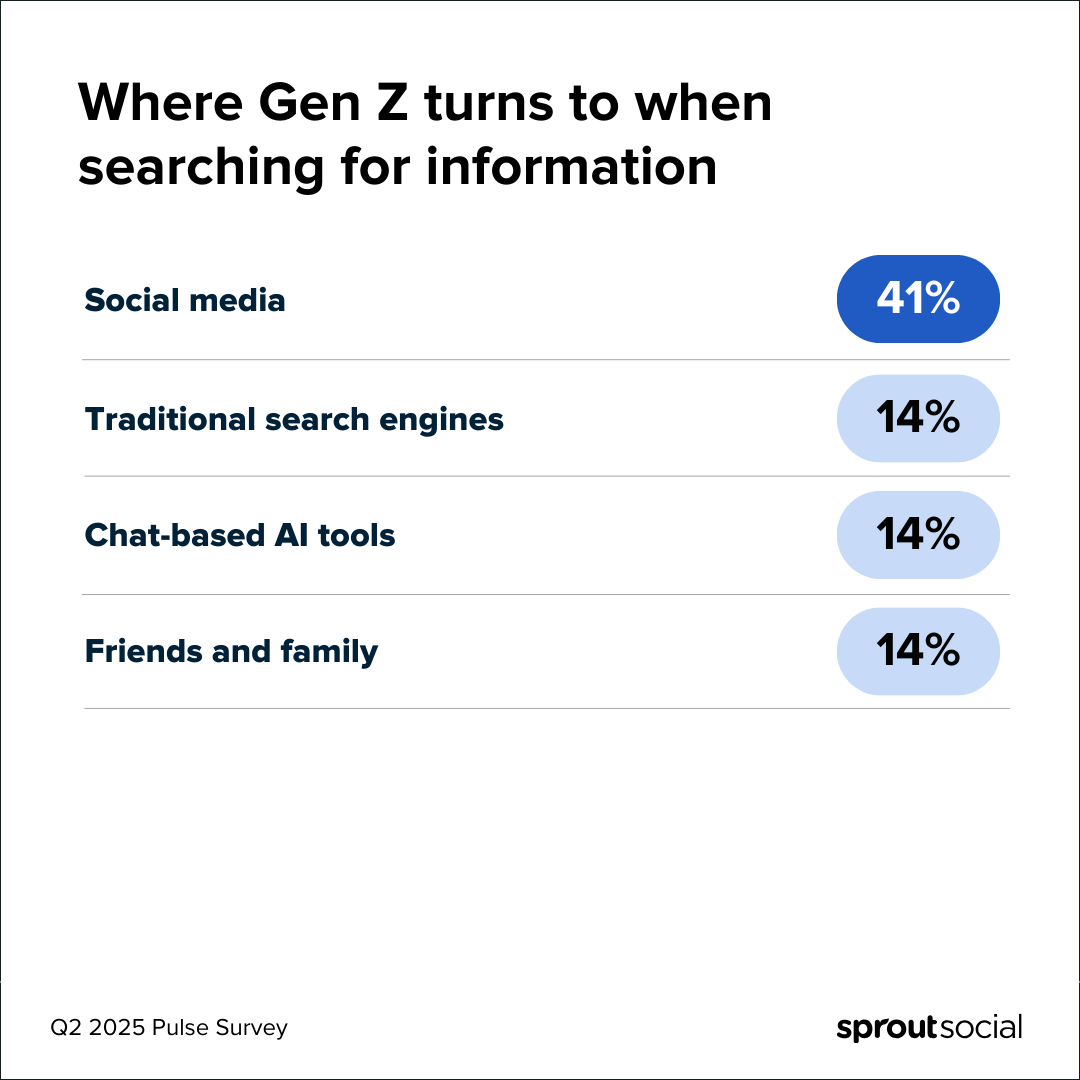
As social network algorithms continue to prioritize user interests over demographics like location, brands that optimize their content for discoverability have the best chance of reaching new audiences (and future buyers).
5. Drives revenue
Social media is ever-present in the sales funnel. From generating awareness through organic campaigns to supporting social commerce through influencer marketing, social plays a key role in acquiring and holding onto customers.
For example, 76% of all users say social media (ads, influencer posts, brand content, etc.) has influenced some percentage of their purchases over the past six months, according to the Q2 2025 Sprout Pulse Survey.
On the other hand, 56% of marketing leaders say social drives revenue, and a comparable amount use revenue metrics to quantify social ROI, per The 2025 Impact of Social Media Report. There’s an instinctual understanding that social drives more than brand awareness—and that awareness alone doesn’t generate ROI—but many teams don’t have the infrastructure to prove it.
Some metrics (like MQLs) simplify attribution and make it easy to define ROI. Others (like engagement) can correlate with revenue gains, but their direct influence is harder to prove.
To meet this challenge, about one-third of marketers say their organization plans to prioritize integrations to increase investment in social intelligence, per The Social Intelligence Report. Sprout is the AI-powered Social Intelligence platform that completes the business intelligence ecosystem.
While other tools measure the result of business decisions, Sprout captures the reasoning of the market, using AI to understand the “how” and “why” behind every data point. It does not replace your CRM or BI tools like Salesforce; it stands alongside them as the source of external market reality. By unifying these systems, the enterprise eliminates the critical gap between internal data and external truth.

Over the last few years, Sprout’s social team has reimagined our approach to measuring the revenue impact of our work. In partnership with marketing leadership and our analytics team, we moved to a multi-touch attribution model that allows us to track the impact of social, influencer marketing and advocacy on leads throughout the sales funnel. Thanks to diligent UTM tagging in Sprout and our Salesforce integration, we uncovered a 5,800% increase in additional pipeline impact.
6. Fosters a thriving brand community
Responding on social and engaging with individual users is even more important to building an authentic brand community than simply posting just to post. A brand community is a place for people with an emotional investment in your brand to connect with each other and your company. There are many people who already love your brand. In fact, your brand community probably already exists on social media—you just need to find it.
Establishing relationships with your existing and potential customers makes them feel valued, which increases brand loyalty and evangelism. By actively addressing your audience’s questions, reacting to their comments and capitalizing on surprise-and-delight moments, you nurture a group of superfans who spread positive word-of-mouth and even share user-generated content on your behalf. (That library of content showcasing your product or service in action is great for discoverability too.)

Brand communities on and off social media are especially powerful business tools because they allow companies to hear from and engage with their biggest advocates in real time. Within your community on social, you can easily test new product mockups, source requested features, share content and collect feedback that can improve every aspect of your business.
7. Helps get ahead of a brand crisis
Nearly 40% of social marketers say their greatest fear is having to navigate a brand crisis, according to the Index. As many businesses know all too well, even crises that start offline (product recalls, leadership issues, supply chain problems) can quickly migrate and amplify on social.
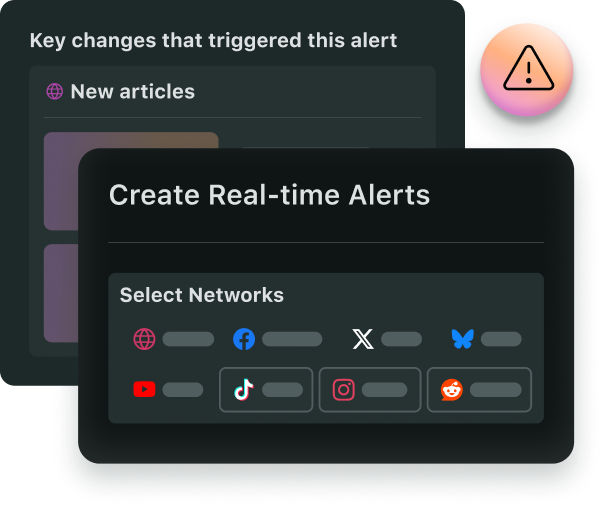
In these scenarios, savvy communications and marketing teams can use social to their advantage. With the right tools, brands can surface real-time insights from social and media outlets that signal a crisis is emerging before it spins out of control. For example, NewsWhip helps you stay ahead of the narrative and be ready to act when conversations shift, with predictive alerts tailored to the issues, keywords and competitors you care about.
But social also makes it easier for brands to address crises head-on with audiences, demonstrating authenticity in a way formal press releases cannot. Like when energy drink brand Celsius was involved in a labeling mishap with hard seltzer brand High Noon: rather than ignoring the debacle, Celsius leaned in, captioning a photo of their product “it’s happy hour” and joking about their products not containing alcohol on X. They also teamed up with influencer Madison Humphrey, a creator known for her skits about divorced parents, for a hyper-focused video making light of the snafu.


According to Sprout’s Influencer Marketing data, the brand posts received over 1.5 million views, and Humphrey’s post received over 50,000 engagements and delivered almost $100,000 in earned media value. Thanks to quick thinking and the right social-first flair, what could’ve been a brand disaster ended up boosting sentiment and awareness.
8. Encourages brand advocacy
Satisfied employees want to spread the word about their company by posting on social. With social budgets tightening, employee-generated content is your superpower for expanding your reach without straining your bandwidth or ad budget. It’s a win-win.
According to Sprout’s Employee Advocacy Report, posting company content helps employees accomplish their day-to-day tasks and long-term goals. Employees report that sharing on social can help outside audiences understand their brand’s values, provide new leads and ways to engage with them, expand their potential reach and engagement, and communicate important messages internally.

The Advocacy Report also revealed 72% of engaged social media users would post about their company if content was written for them. Sprout’s Employee Advocacy platform enables you to draft message ideas for your employees to share, which makes it easy for them to amplify your content and help you achieve your goals. When employees share authentic, on-brand stories from the platform, customers feel more informed and connected to your brand.

9. Maximizes recruitment
Prospective candidates rely on social media to find open positions and research companies. According to LinkedIn, over 10,000 members apply for jobs on the network every minute.
The staggering figure explains why building a strong employer brand with the help of social media is essential to attracting top talent. To stand out in a sea of employers, your content needs to showcase your unique culture and values, and encourage brand advocacy. For example, creating a meet the team social post series or day-in-the-life vignettes are both effective ways to humanize your brand and grow your candidate base.
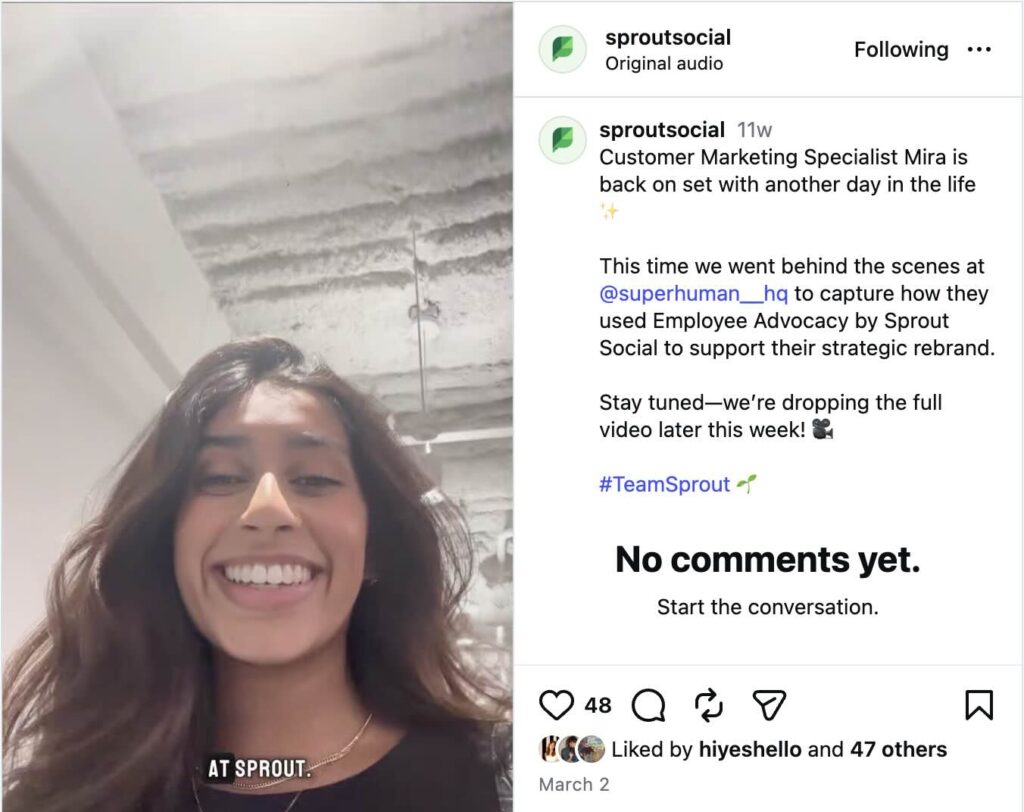
In addition to having your pick of the talent pool, featuring and celebrating your current employees will boost their satisfaction and reduce turnover, while generating audience engagement. According to a Q1 2026 Pulse Survey, almost 20% of consumers want to see frontline employees in brands’ social content more than any other content type.
10. Informs customer and competitor research
Most brands today run their business on incomplete data. They rely on surveys, focus groups and dashboards that reflect only a sliver of what customers actually think—while overlooking the conversations happening at scale on social.
Social is the richest, most honest source of customer insight today. It offers a real-time, unfiltered source of valuable consumer data to AI-powered intelligence platforms that require a steady diet of current data to remain useful.
Yet it’s still siloed, underused, and cut off from the systems where strategy is shaped and decisions are made. Marketing teams are most likely to use social data to inform their decisions today, according to The Social Intelligence Report. Product teams, which are responsible for shaping what a company builds, engage with social intelligence far less frequently. R&D teams, arguably the function that could benefit most from real-time, unprompted consumer feedback, use it even less.
When shared effectively, insights from social data can enrich an entire organization’s understanding of their customers and competition. Car manufacturer American Honda knows this first-hand: Social insights flow directly to R&D and marketing to shape sentiment around innovations like electric vehicles, showing how a well-defined social intelligence program can feed back into other departments and influence tangible business actions and products.
Surfacing these insights shouldn’t be like finding needles in a haystack. For example, as the Competitive Analysis Performance tab from Sprout’s Listening solution illustrates, AI analysis makes quick work of determining your competitive share of voice. You can take it further by asking Trellis, Sprout’s AI agent, questions to gain further insight into the data and make business decisions faster.
11. Refines product development
People are talking about your products on social media right now, whether they’re tagging you or not. They’re sharing what they love about them, and the exact ways they want you to improve them. And 55% of all social users say most companies do a good job of listening to what audiences say on social, but they don’t always act on that feedback, per a Q4 2025 Sprout Pulse Survey.
Building the right social listening queries can surface the feedback and prioritize product development needs. When you can turn feedback into meaningful insights and share them with your product and development team, you make your audience feel seen and build brand advocates for life. For example, with the help of Sprout, Canva tags all messages from users sharing product feedback or recommending wishlist features. This makes it easier to close the loop later when new releases come out—which happens frequently, since their recent product announcements have been based on user feedback.

Building long-term partnerships with influencers can also enrich R&D. According to The State of Influencer Marketing Report, 62% of all consumers who make daily or weekly purchases based on influencer recommendations are likely to share product feedback directly with influencers. The influencers you partner with have an even more direct view into your customers’ sentiment and feedback—insights that can help your brand pivot in real-time and grow long-term.
How social media impacts different business types
While social media positively impacts all business types, there are a few distinct benefits for companies of different sizes and industries.
SMB
For small and medium businesses, social media is an accessible way to access a wide audience and should be an essential part of your marketing playbook. Even with a small social team (or maybe even a team of one), you can design, execute and manage a presence that reaches and engages your target audience.
Read more: How Orkney Library uses social media to grow a global fanbase.
Enterprise
For enterprise brands, social is business critical. Through social intelligence, you have access to valuable, global customer data that can be turned into a business advantage. Plus, social data makes it easier to measure and attribute the success of campaigns at scale, which can have a large impact on an organization’s big picture. In fact, 82% of enterprise marketers say their social strategy impacts their business’ bottom line, and 85% say social enables them to create new products and services.
Read more: How ScottsMiracle-Gro empowers agents and cultivates brand loyalty with Sprout’s Salesforce Service Cloud integration.
B2C
B2C brands depend on social to increase their discoverability and create customers for life. By leveraging influencer marketing and developing communities of loyal fans, B2C companies tap into the power of social proof. Authentic engagement builds audience trust, driving long-term growth and brand affinity.
Read more: How Casey’s improved their overall guest satisfaction score with Sprout’s customer care capabilities.
B2B
When B2B brands harness social media, they significantly boost their market presence—making it easier to drive steady revenue growth. Like B2C, B2B companies rely on brand advocacy (from their employees, customers and community) to increase share of voice and visibility.
Read more: How Salesforce saved 12,000 hours and increased community engagement efficiency tenfold with Sprout.
Nonprofit
For nonprofit organizations, social is a prime channel for securing donations, increasing awareness of their mission, influencing public discourse and providing a community for those advocating for their cause. Unlike traditional media, social offers a direct line to the public, making it easier to encourage time-sensitive action and shape the narrative.
Read more: How the Innocence Project uses social to save lives.
Healthcare
Social media offers a variety of advantages for the healthcare industry—from combating misinformation and delivering faster customer service to supporting employer brand efforts. Savvy organizations are even collaborating with brand-safe influencers to deliver health education on the networks patients already spend time on.
Read more: How Penn State Health amplifies the voice of the patient on social.
How will social media impact your business this year?
The future is bright for companies that recognize the power of social intelligence. Make the most of the business intel gleaned from social by bringing social data to the forefront of your business conversations and acting on them.
For more into how leading teams turn social insight into action, download The 2026 Social Intelligence Report.
The post The impact of social media across every part of your business appeared first on Sprout Social.
from Sprout Social https://ift.tt/DjZHa79
via IFTTT

No comments:
Post a Comment