We’re unpacking how to define the business value of social media. Frankly, if measuring and communicating the value of social was cut-and-dry, every marketer would already be doing it. But there are no easy answers, or one-size-fits-all equations or attribution models.
Only 44% of marketing leaders say their teams are “experts” when it comes to measuring the business value of social, per The 2025 Impact of Social Media Marketing Report. Yet, 80% are reallocating funds from traditional marketing channels to social anyway. There’s an instinctual understanding that social drives business value, but teams still struggle to prove it.
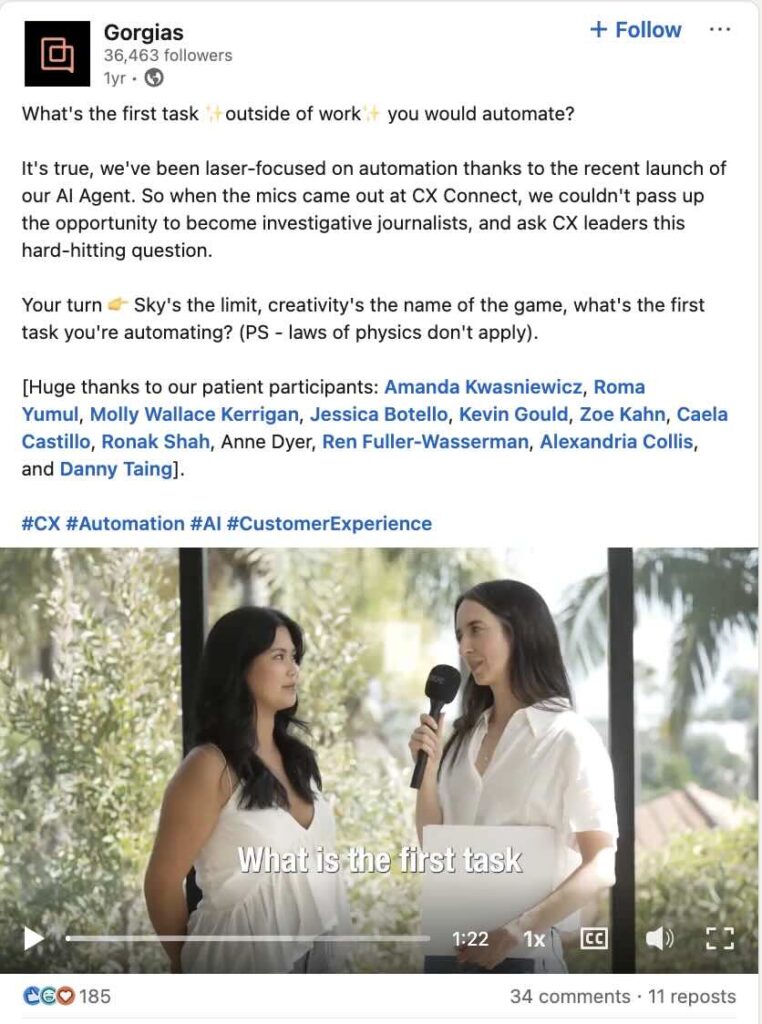
We sat down with Carmen Vicente, Social Media Manager at Gorgias—a conversational AI platform for ecommerce brands—to find out how her team measures the ROI of social. She explained why discovering its true impact can be a moving target (and why that doesn’t have to be a negative thing).

Note: This article was originally published on September 8, 2025. It has been updated with timely data.
The business value of social media, according to marketers
According to the Impact of Social Report, more than two-thirds of marketing leaders are confident that social generates brand awareness. Yet, as we face a tumultuous socioeconomic climate, top of funnel metrics like awareness mean less.
Over half of these leaders believe that social drives customer acquisition, customer loyalty and revenue. Though they aren’t as confident in their team’s ability to tie social to those outcomes.
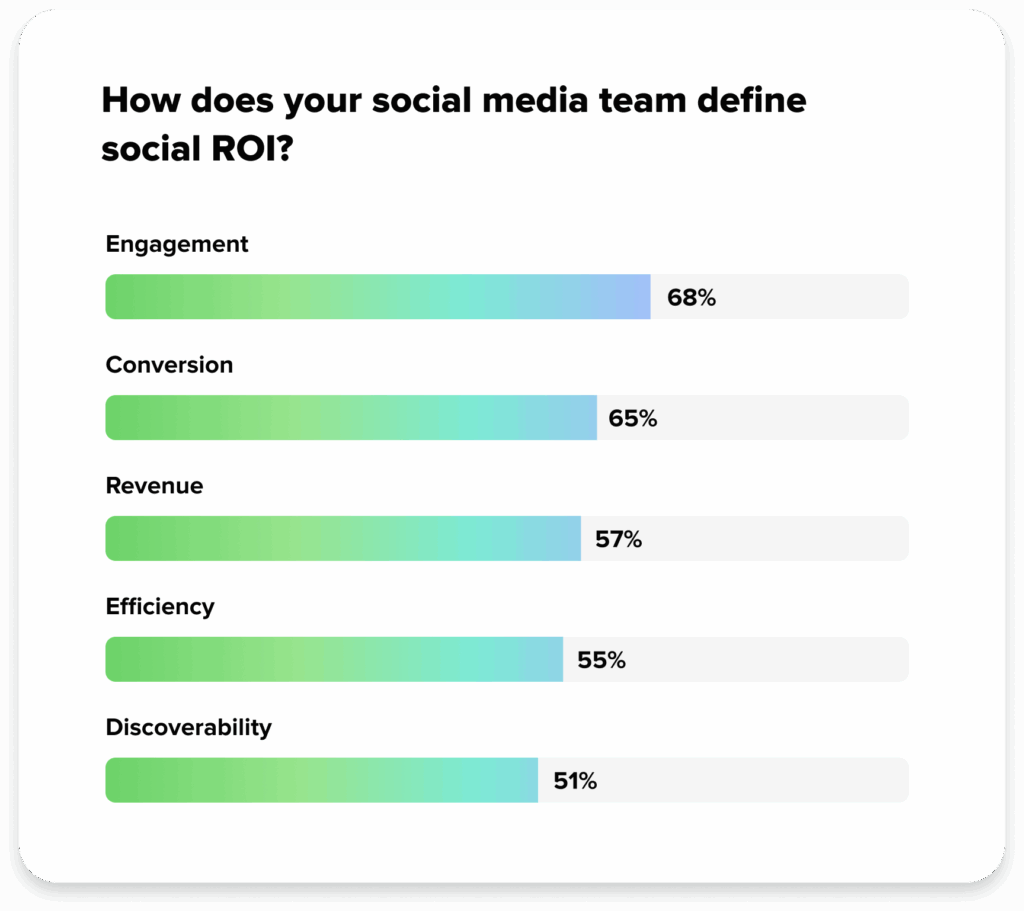
Instead, most leaders define social ROI with engagement (68%) and conversion (65%) metrics. Only 57% tie social impact to revenue.
In Vicente’s experience, how social is measured varies by industry. “As someone who came from the B2C space, my feelings about social ROI have changed quite a bit since I entered B2B. In B2C, much of my reporting was engagement-focused, leaned into emotional storytelling and was based on vibes. In B2B, data is king. If you can’t tie your efforts to revenue, you’re going to struggle contextualizing your impact organization-wide.”

The lack of consensus surrounding how to measure social is unsurprising. But Vicente argues this might work in teams’ favor: “Social media isn’t static. If the way you measure it is, then you likely have a problem. At Gorgias, ROI is an ongoing conversation quarter-to-quarter. We’re always redefining how we want to measure it. When I first joined, our systems for thinking about social ROI were traditional and conventional. Since then, we’ve developed processes that are project-based and tied to marketing deliverables that ladder up to greater business objectives. To successfully measure social, we have to mirror the speed it moves at.”
Social intelligence goes untapped
While marketers conceptually understand that social drives awareness, engagement, conversions and even revenue, many leaders and teams aren’t connecting real-time social intelligence to business value. Social intelligence drives cross-functional business outcomes like improving customer retention, identifying new audience segments, adjusting messaging and strengthening executive decision making.
For example, a customer complaint that surfaces on social could lead to a product fix that positively impacts the bottom line, but only if that data is shared beyond the marketing team.
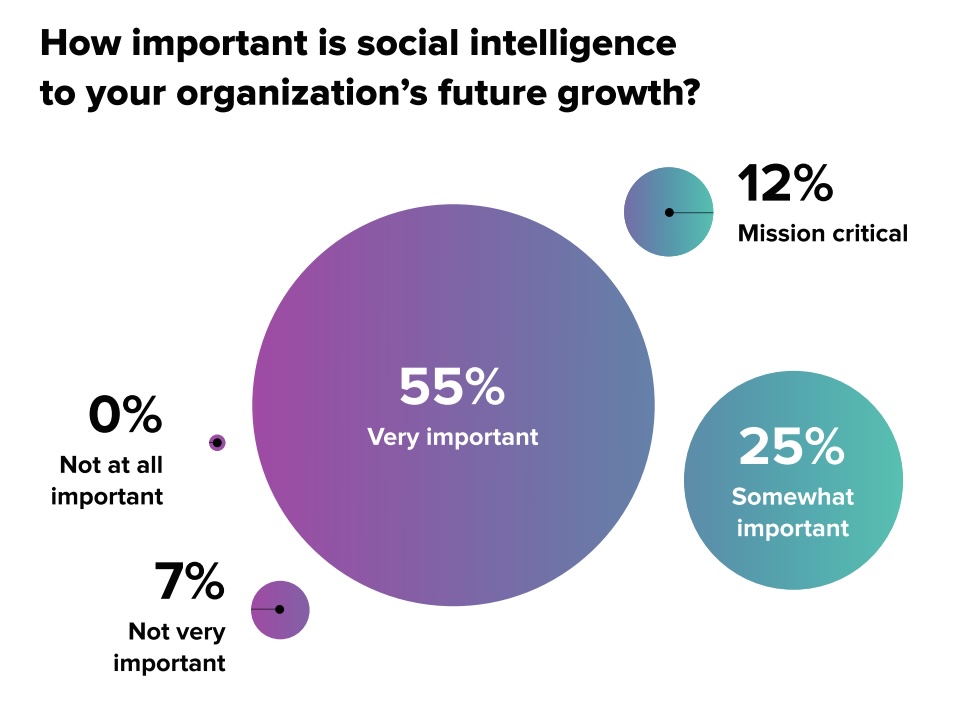
But this disconnect isn’t for a lack of understanding. According to The 2026 Social Intelligence Report, 67% of marketers agree that social intelligence insights are very important or mission-critical to the long-term success of their company.
Yet, only 15% of marketers report ever looking at real-time social intelligence dashboards, and only 18% review insights on a quarterly basis.
Organizations that fail to operationalize social intelligence are underutilizing a valuable data source and operating with a delayed understanding of their market. And in an environment where consumer preferences and competitive dynamics shift daily, that delay is a direct threat to growth.
The challenges of defining the business value of social media
The speed of social is only one aspect that makes its impact hard to measure and value difficult to maximize. The larger challenges lie in shifting closely-held philosophies.
Even as more investment moves to social from traditional channels, leaders still often retrofit social data into conventional measurement systems. But non-linear customer journeys (like the ones driven by social search and community management) can’t be fully captured by old models. And The Social Intelligence Report found that the largest barrier to turning social insights into action is the outdated belief that social is just a communications channel, not a strategic insights function.
“I’m always trying to cram our social successes into frameworks that have existed in SaaS for a long time. That feels like trying to push a square peg into a round hole. That’s not to say these existing frameworks don’t work, but they’re built around sales or partnerships. Social is an amorphous blob that doesn’t always fit neatly into preexisting categories,” says Vicente.
Incompatibility between social media management tools and martech stacks
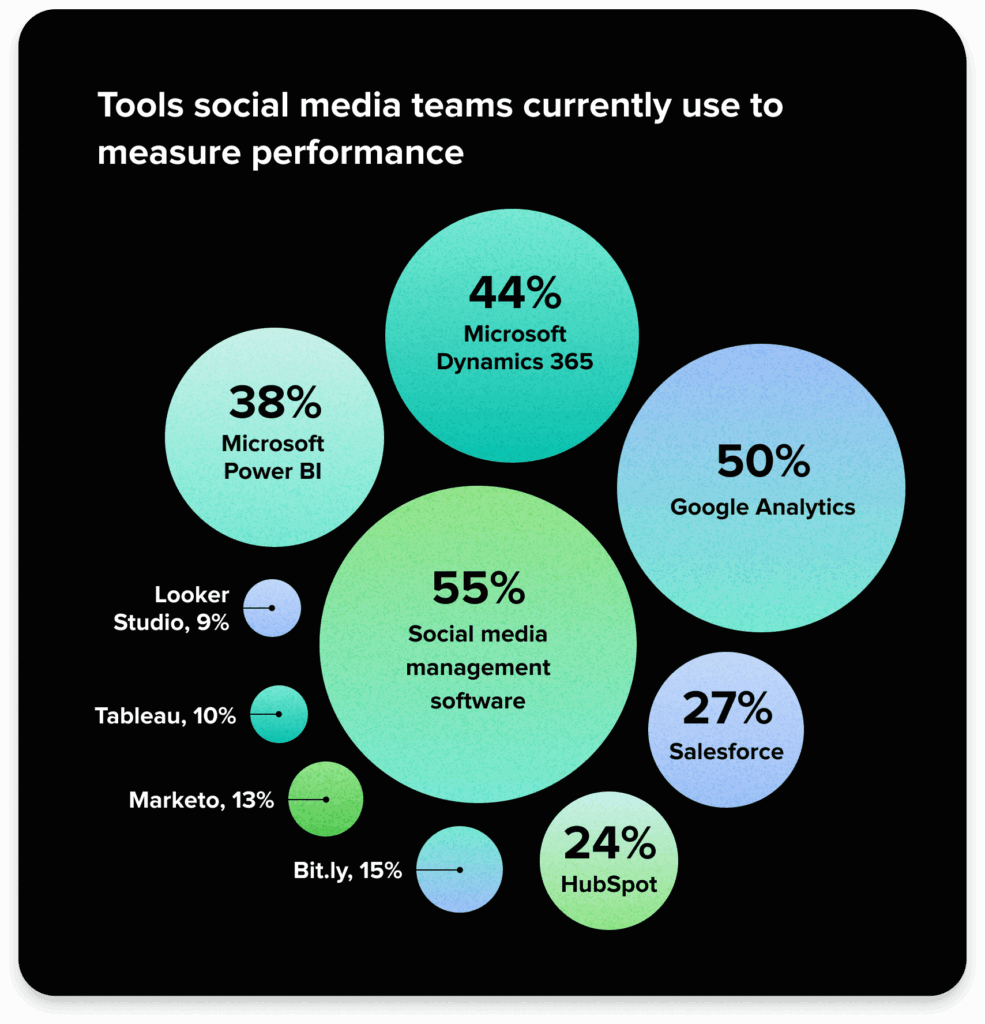
Poor tech integration shoulders much of the blame. Over half of all marketing leaders say incompatibility between their social media management tools and the rest of their marketing tech stack is the #1 reason they aren’t able to understand social’s impact on their business, per the Impact of Social Report. Less than half say their teams embed social data into any CRM software.
And while 91% of marketers at social-first organizations say they allocate a dedicated budget for social intelligence tools and platforms, that’s only true for 57% of marketers at non-social-first companies, per The Social Intelligence Report.
This puts social marketers in a precarious catch-22. They need to develop the skills to share cross-functional insights. But they also need tools that surface compelling data and integrate with other sources, and leaders who ensure this integration is at the top of their analytics’ teams priority list.
Not enough executive support
When executives support social teams and help get analytics infrastructure prioritized, it moves the needle.
Teams who are experts at proving social’s business value are more likely to use social media management tools and cross-functional reporting software, and have their leaders’ confidence in their ability to perform. They’re also less likely to struggle with setting up reliable attribution models.
Vicente experiences this first-hand. “There’s a lot that hinges on how much the C-suite believes in the impact of social. Gorgias’ CMO encourages me to pitch ideas, and we’ve worked together to measure the success of our efforts based on campaigns, projects and other marketing objectives rather than a baseline impression model. Because of that, I’m able to act more creatively and strategically rather than out of fear of falling short of KPIs or making the algorithm gods unhappy.”
Internal knowledge gaps
According to The Social Intelligence Report, marketing is the department most likely to use social insights. But the real value comes from sharing the data with customer experience, product and R&D teams.
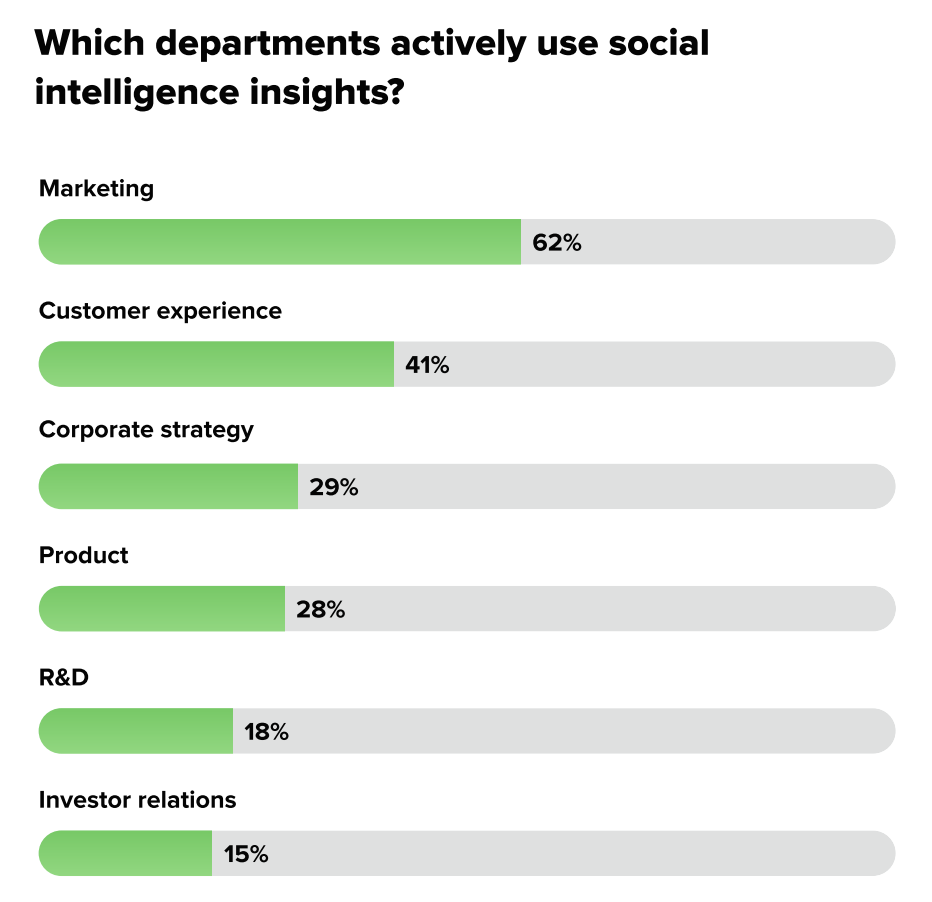
For that to happen, teams need to democratize access to social and share reports that go beyond engagements and conversions.
Of course, you’re not entirely out of the woods once you have data. When sharing insights cross-functionally, social marketers have to translate for internal audiences who don’t always “get” social in a professional sense.
“Inside of the marketing bubble, I feel comfortable speaking in strategic terms about the work I’m doing and the goals of the content team. Outside of marketing, I’m guilty of downplaying social’s importance or the complexity of our strategy because I want to make it seem fun and engaging. As social marketers, we hone storytelling capabilities for our content everyday. We need to leverage those same capabilities when we speak to colleagues and leaders cross-functionally,” adds Vicente.
The challenge of honing internal data storytelling is felt throughout the industry. Practitioners and marketing leaders say communicating performance metrics to internal stakeholders are among the most important skills social teams need, per The Sprout Social Index™.
How doing less (with more intention) translates social into business value
In any conversation about social ROI, there’s a natural impulse to want to do more. But the reality is that many teams are already being pushed to the max, and publishing more for the sake of volume creates less space for analysis and strategy. Most individual contributors on the social team say they spend more than half of their time on operational education vs. strategic insights work.
It’s especially challenging when the call to do more comes from leaders. Per the Impact of Social Report, 71% of Marketing Directors and 69% of CMOs believe their teams must increase their social media publishing volumes if they want to increase business impact. Only half of social media managers agree.
Instead, more dedicated time and resources toward social intelligence could lead to better business decisions and greater value for organizations.
Vicente summed it up poignantly: “When I first started at Gorgias, I was too overzealous about trying to break into new platforms. I wasn’t considering the sage advice to meet your customers where they are. As a social marketer at a B2B company, I wish I had spent more time experimenting on LinkedIn rather than spreading myself too thin by going on a million networks.”
Instead of chasing publishing frequency or trying to find a home for your brand everywhere, identify broader audience truths, and incorporate them into your content and reporting. Help educate leadership that what matters most to audiences isn’t that you’re all over their feed—it’s that you truly understand them.
Even small experiments help make your case
And when you get a feeling in your gut telling you to try something new, start small, test as you go and use data to prove your hunch.
At Gorgias, their biggest ROI unlock is employee advocacy. Vicente explains, “Last year, I ran a beta test comparing content posted on my personal page vs. the brand LinkedIn account. The result was staggering, and affirmed how the LinkedIn algorithm treats personal accounts differently than brand pages. So in Q1 2025, we launched an advocacy program with just 20 team members. By the end of that quarter, we surpassed 1 million impressions and it became our most successful social initiative by far. That was the kind of proof I needed to bring the program company-wide.”
You can use the same beta test framework to make the case for launching a creator program, investing in a video SEO strategy or building social intelligence infrastructure that finds the deeper signals from social media activity. For example, pick one social campaign or initiative and turn it into a social intelligence experiment that you can use as a proof of concept.
Redefining the business value of social media
Defining the business value of social media isn’t about chasing a perfect formula—it’s about building the right framework for your team, your industry and your goals.
As Vicente shared, the most impactful measurement strategies evolve as quickly as social itself. Whether through smaller experiments, regularly redefining ROI or bringing executives into the conversation, progress happens when teams stay flexible and intentional.
The real business value of social comes not from fitting into outdated models, but from proving—through compelling, social-first data storytelling—how it drives loyalty, growth and competitive advantage.
Download The 2026 Social Intelligence Report for more on how you can bridge the intelligence gap and turn real-time social signals into your enterprise’s greatest competitive advantage.
The post The business value of social media is evolving appeared first on Sprout Social.
from Sprout Social https://ift.tt/1vt9WVz
via IFTTT

No comments:
Post a Comment