Want more clicks, signups, and sales from your emails? Add proof that other people already buy from you.
That's social proof, and it works at every stage of your email marketing: on your signup form, in your welcome email, and in every promotional message you send. Below you'll find real social proof examples and exactly where to put them in your emails.
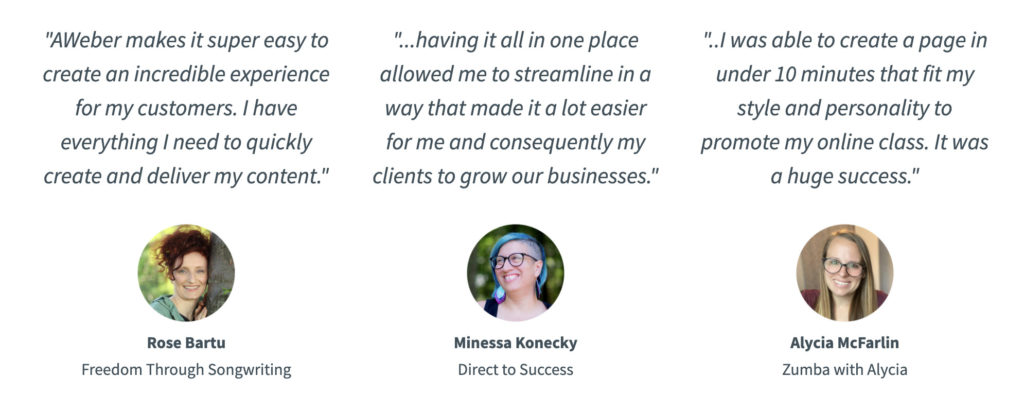
For example, AWeber uses these testimonials from successful customers in order to show the value of our platform and specific ways customers have seen success with it. These testimonials provide online proof that real people with real businesses use and like our tools.
What is social proof in marketing?
Social proof is a psychological phenomenon. It’s actually related to the fear of missing out, or FOMO.
Here’s how it works: When someone is thinking about making a decision — whether it’s a purchase, signing up for an email list, or anything else — they regularly look for advice from others.
Here's why it works. When someone needs a new dentist, they ask a friend. But when they're deciding whether to buy your course, join your newsletter, or try your software, they probably don't know anyone who has. So they look for the next best thing: evidence from strangers. Reviews on Trustpilot. Comments on social media. A number like "trusted by 300,000 creators."
That evidence does the convincing for you. Instead of claiming your product is great, you show that other people already think so.
Social proof statistics worth knowing
- Over 90% of people read at least one review before making a purchase decision.
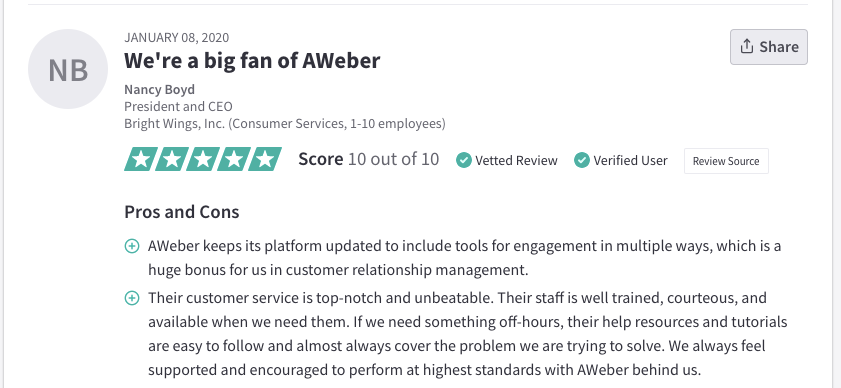
- 83% of people trust reviews more than advertising.
- 56% of people experience FOMO — the fear of missing out on something others are enjoying.
The takeaway: your prospects are already looking for proof. The only question is whether they find it in your emails or have to go hunting for it somewhere you don't control.
Types of social proof
You have more options than you might think. The most common types of social proof are:
1. Customer reviews — from Trustpilot, Google Reviews, Yelp, Amazon, or Facebook. If your business is more than a few months old, you probably already have these.
2. Testimonials — quotes you collect directly from happy customers, ideally with a name, photo, and title.
3. Case studies — a customer's full before-and-after story, told in detail.
4. Customer data — numbers like "join 25,000 subscribers" or "4.8/5 stars from 2,000 reviews."
5. Social media feedback — screenshots of posts, comments, and shoutouts from real users.
6. Expert and influencer endorsements — recommendations from people your audience already trusts.
7. Award and trust badges — industry awards, certifications, security badges, and "best of" lists.
8. User-generated content — photos and videos customers post of themselves using your product.
New business without reviews yet? Start with customer data ("join 500 subscribers") or ask your first happy customers for a one-line testimonial. You don't need hundreds of reviews — you need one credible voice.
How to use social proof in your email marketing
Here are five places to put social proof, in the order your subscribers will encounter them.
1. Add a testimonial next to your signup form
Before anyone reads your emails, they have to subscribe. A testimonial next to your signup form answers the question every visitor silently asks: "Is this worth my inbox?"
Find a review from someone who likes your business — on a review site or social media — and place it directly above or beside your form. This works on a blog, landing page, or website.
The strongest version: a testimonial that specifically describes the value of your emails. Ask one of your most engaged subscribers what they get out of your newsletter, and quote them.
Always include a picture, name, and title. A quote from "Sarah M., founder of a 6-figure Etsy shop" earns more trust than an anonymous one.
Use the AI Signup Form Builder in AWeber to spin up a high-converting form in minutes. Ask the AI to drop your best testimonial right beside it.
2. Put a review in your welcome email
The first email after signup is your best chance to convince a new subscriber to keep opening your emails, move you out of the promotions tab, and engage with your content.
You earned their address, now earn their attention. Add a review or testimonial (a different one than the one next to your signup form) as a section in the middle or end of your welcome email. A third party backing up your claims is more convincing than anything you can say about yourself.
3. Pair every sales pitch with proof
Promotional emails convert better when the pitch comes with evidence.
Say you sell a course on financial stability. Your sales email should explain what the course covers, how long it takes, and who it's for — and then include a review from someone who already took it. Look for a review that names a specific result: "I paid off my student loans eight months after finishing this course" beats "great course!"
Want to go further? Build the entire email around one customer's story. Start with the problem they had, then show how your product solved it. Case study emails are also a gift for anyone who struggles with what to write — let your customers write the email for you.
4. Use trust badges to drive referrals
Referrals are recommendations from friends (the original social proof). Put them to work for your list.
Add a short section to your emails asking subscribers to forward the message to friends or coworkers who'd find it useful. Then back up the ask with authority: if you've won awards or earned certifications in your field, include the badges. Subscribers share content more readily when sharing it makes them look credible.
5. Rescue abandoned carts with proof (and humor)
Someone added your product to their cart and left. An abandoned cart email reminds them — and social proof gives them a reason to come back.
Keep these emails short. Then add one piece of proof: a funny social media post that shouts out your product works especially well here. It catches attention, lowers the pressure, and reminds the prospect that real people love what they almost bought.
Social proof email examples
Want to see what this looks like in practice? Three formats to steal:
- The stat header: open your sales email with one number ("4.9 stars from 1,200 students") before you say anything else.
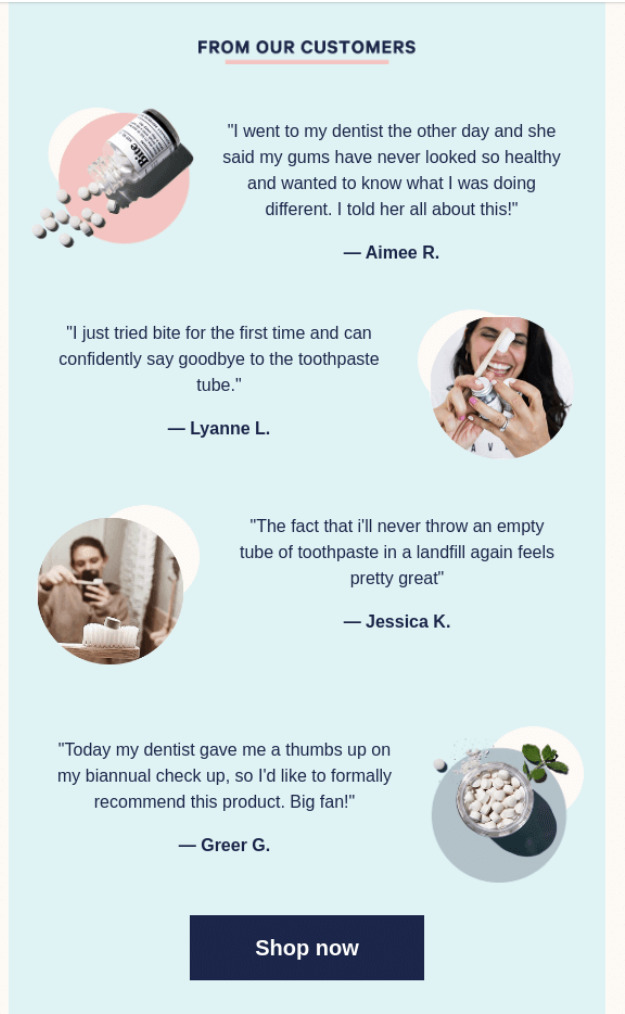
- The testimonial block: a single customer quote with photo, name, and title, dropped between sections of a regular newsletter.
- The all-testimonial email: an entire promotional email made of nothing but customer reviews. No pitch needed — the customers make it for you.
Start adding social proof to your emails
You don't need a big production. Find one good review, put it next to your signup form, and add another to your welcome email. That's a 20-minute job that compounds with every new visitor.
AWeber gives you the signup forms, landing pages, and email templates to do it including layouts with built-in testimonial blocks. Start with AWeber for free for 14-days and put your happiest customers to work.
The post Social Proof Examples: How to Use Them in Your Email Marketing appeared first on AWeber.
from AWeber https://ift.tt/iBESh6Z
via IFTTT

No comments:
Post a Comment