Just like non-verbal cues in face-to-face communication, there’s human emotion weaved into the language your customers are using online. Decoding those emotions and understanding how customers truly feel about your brand is what sentiment analysis is all about.
But tracking sentiment is no piece of cake. We’re talking about analyzing thousands of conversations, brand mentions and reviews spread across multiple websites and platforms—some of them happening in real-time. You need a sentiment analysis tool for the job.
In this post, you’ll find some of the best social media sentiment analysis tools to help you monitor and analyze customer sentiment around your brand.
What is a sentiment analysis tool?
A sentiment analysis tool is software that uses artificial intelligence (AI) to detect and interpret emotions in text data.
Sentiment analysis software leverages natural language processing (NLP) to understand the context behind social media posts, reviews and feedback—much like a human but at a much faster rate and larger scale.
Behind the scenes, algorithms and machine learning models categorize language based on tone, emotional intent and sentiment polarity (how positive, negative or neutral the message is).
This supports brands in understanding how people feel about their products, services or campaigns.
Core functionalities of sentiment analysis tools
Here are some of the core capabilities of a brand sentiment analysis tool:
- Emotion and tone detection: Identifies emotional cues in text based on word choice, syntax, formatting and context.
- Polarity scoring: Classifies feedback into positive, negative or neutral sentiments.
- Text classification: Automatically tags content by topic, urgency or emotion to automate response planning.
- Entity and keyword extraction: Picks up on mentions of products, people or competitors and analyzes the sentiment associated with these keywords.
- Trend detection and segmentation: Tracks changes in brand sentiment over time, across locations or within defined audiences.
- Video and image input: Some advanced software uses AI vision tools and object recognition to analyze visual cues and facial expressions.
- Multilingual analysis: Sentiment tools aren’t limited to one language. They can recognize emotional text across multiple languages and dialects for global customer insights.
Combining these capabilities, social sentiment analysis tools calculate the average sentiment around your brand. Some tools also help you monitor your competitors’ customer sentiment scores.
How sentiment analysis drives smarter marketing
Sentiment analysis tools turn raw text into actionable datasets, giving you a way to quickly spot patterns in how people perceive your brand and what’s driving their reactions.
With these insights in hand, it’s faster to design insight-driven product, customer service and marketing strategies that appeal to your target audience.
For instance, in the context of AI marketing, sentiment analysis tools for social media help businesses gain insight into public perception, identify emerging trends, improve customer care and experience and craft more targeted campaigns that resonate with buyers and drive business growth.
Tools like Sprout Social go even further. By combining AI-powered sentiment detection with social media monitoring and social listening tools, it scans social media platforms for mentions of your brand, products or keywords.
When Sprout Social detects a mention, it analyzes the tone of each message to support you in identifying trends, tracking sentiment and responding to conversations as they happen.
Why sentiment analysis matters
You may know how often people mention your brand. But this information doesn’t tell you the whole story around why they’re mentioning you.
Brand and social media sentiment analysis tools tell you how people feel in their mentions.
Here’s why that’s so important to growing your brand.
Get the full story behind your brand mentions
A single piece of text carries a lot of nuance.
Think about the phrase “Thanks a lot”.
You can say it with genuine enthusiasm—or it can drip with sarcasm.
Now overlay that idea onto product reviews.
Even without outright complaints, reviews may quietly hint at disappointment. Without sentiment analysis, you’re missing subtleties that can damage your reputation.
Brand sentiment analysis tools decode these signals to reveal how people really react to your messaging, product updates or support experiences.
This helps you respond more accurately, fine-tune content and shape strategies that reflect real audience experiences.
Make faster, smarter decisions
On socials, timing is everything.
Sentiment analysis spots emotional cues as they unfold. This gives you the ability to act on the spark before it becomes a wildfire (or a missed opportunity).
If a product update causes confusion or a campaign sparks a wave of unexpected brand love, sentiment data gives you the early signals you need to pivot fast. Stay ahead of potential issues or ride the momentum before your engagement or brand trust takes a hit.
That’s how the Chicago Bulls use Sprout Social‘s sentiment analysis.
Their marketing team understands that fans’ emotions drive sports conversations.
Sprout Social’s sentiment analysis gives these conversations emotional context so they jump into discussions with relevant and timely contributions.
If sentiment dips, they can dig deeper to find out why. If the mood’s electric, they can celebrate alongside fans with real-time reactions.
With sentiment analysis, they’re not just making faster outreach decisions. Their communication is smarter—it feels personal, instead of scripted. This responsiveness keeps the Bulls relatable and relevant to their audience.
Benchmark brand health and audience trust
Brand sentiment is a clear indicator of how people perceive your business, products and customer service.
But it’s not a one-off snapshot. It’s a storyline. Tracking how it evolves reveals shifts in audience trust, uncovering emotional patterns that shape perception.
And when you understand those trends, you can spot changes before they snowball.
It shows you what’s resonating, what’s falling flat and how trust shifts based on your strategies. This adds emotional context to your market research, turning qualitative data into customer insights to act on.
Prioritize customer experience improvements
Sentiment analysis software looks deeper than basic star ratings or one-off complaints. It’s not just about how one customer feels—it shows you how everyone feels.
Classifying text into specific topics, emotions and sentiment scores allows you to pinpoint recurring issues, ineffective touchpoints or standout experiences.
Applications of a sentiment analysis tool
Sentiment analysis tools are revolutionizing how businesses understand and respond to customers. Here are some specific ways brands can benefit from these tools:
- Social listening: Keep an eye on customer opinions and reactions to brands, products, services, campaigns, events and trends on social media.
- Review management: Analyze customer feedback across multiple platforms and respond promptly and empathetically to improve customer satisfaction.
- Competitive analysis: Compare sentiment towards your brand with competitors to understand where you stand in terms of positioning and public perception.
- Brand insights: Gather and interpret data on brand reputation, customer experience, and product strengths and weaknesses to develop a solid brand strategy.
- Opinion mining: Analyze both customer and employee feedback to get a clear picture of your company’s performance and identify areas for improvement.
Top 12 sentiment analysis tools to consider
We have categorized the 12 top sentiment analysis tools into these four categories:
Full stack sentiment analysis tools
These tools can pull information from multiple sources and leverage advanced machine learning models to surface deep audience intent, track historical shifts, and ensure high data integrity across thousands of conversations. They also run on proprietary AI technology, which makes them powerful, flexible and scalable for all kinds of businesses.
1. Sprout Social
Sprout Social offers all-in-one social media management solutions, including AI-powered listening and granular sentiment analysis.
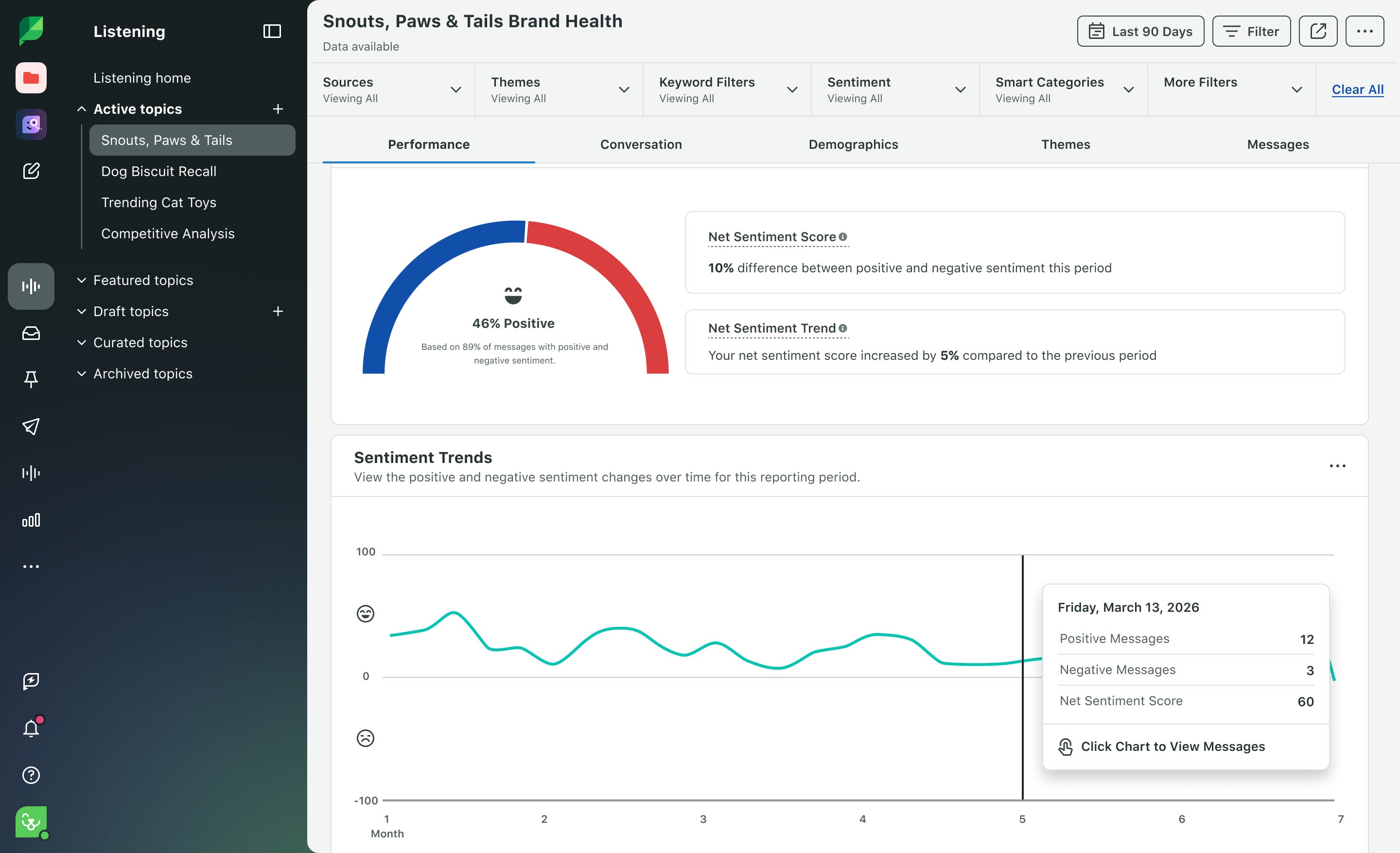
With Sprout Social, you monitor sentiment across platforms at once.
This helps you uncover how people really feel about your brand, content, campaigns or competitors, no matter the language, tone or emoji they use.
Whether you’re tracking a single customer support thread or thousands of conversations across social, reviews and forums, Sprout turns complex data into clear, actionable customer insights.
With the right insights, it’s easier to move fast and meet your audience where they are.
Key sentiment analysis capabilities include:
- AI-powered sentiment detection that captures nuance in text, emojis and complex sentence structures
- Multilingual sentiment analysis that understands and acts on global feedback from a diverse audience
- Listening queries with smart filtering and advanced tagging to isolate the sentiment of specific campaigns, experiences or audiences for faster targeting
- Sentiment scoring over time to benchmark brand sentiment and detect rising issues or positive trends
- Smart Inbox tagging to label incoming messages by sentiment or issue type, streamlining follow-up and support
- Queries by AI Assist, which uses machine learning to suggest keyword combinations and audience segments to track
- Competitor sentiment tracking to spot perception gaps and guide differentiated messaging
- Custom dashboards and reporting to visualize sentiment trends and tie them to business KPIs
- Conversational data exploration via an intuitive AI chat interface to conduct market research, monitor brand health, and identify trending topics without requiring Boolean expertise
- Real-time spike alerts that notify teams of sudden shifts in brand, industry, or competitor volume and sentiment for immediate response
- Proprietary tone and emotional classification that accurately analyzes intent across diverse languages, slang, and emojis using a specialized machine learning model
Sprout Social also automates analysis, listening and supports you in improving your marketing strategies based on audience sentiment.
That means fewer hours digging through mentions—and more time building strategies that hit the mark.
Try Sprout Social 30 days free
2. InMoment
InMoment is a customer experience platform that uses AI to analyze text from multiple sources and translate it into meaningful business intelligence.
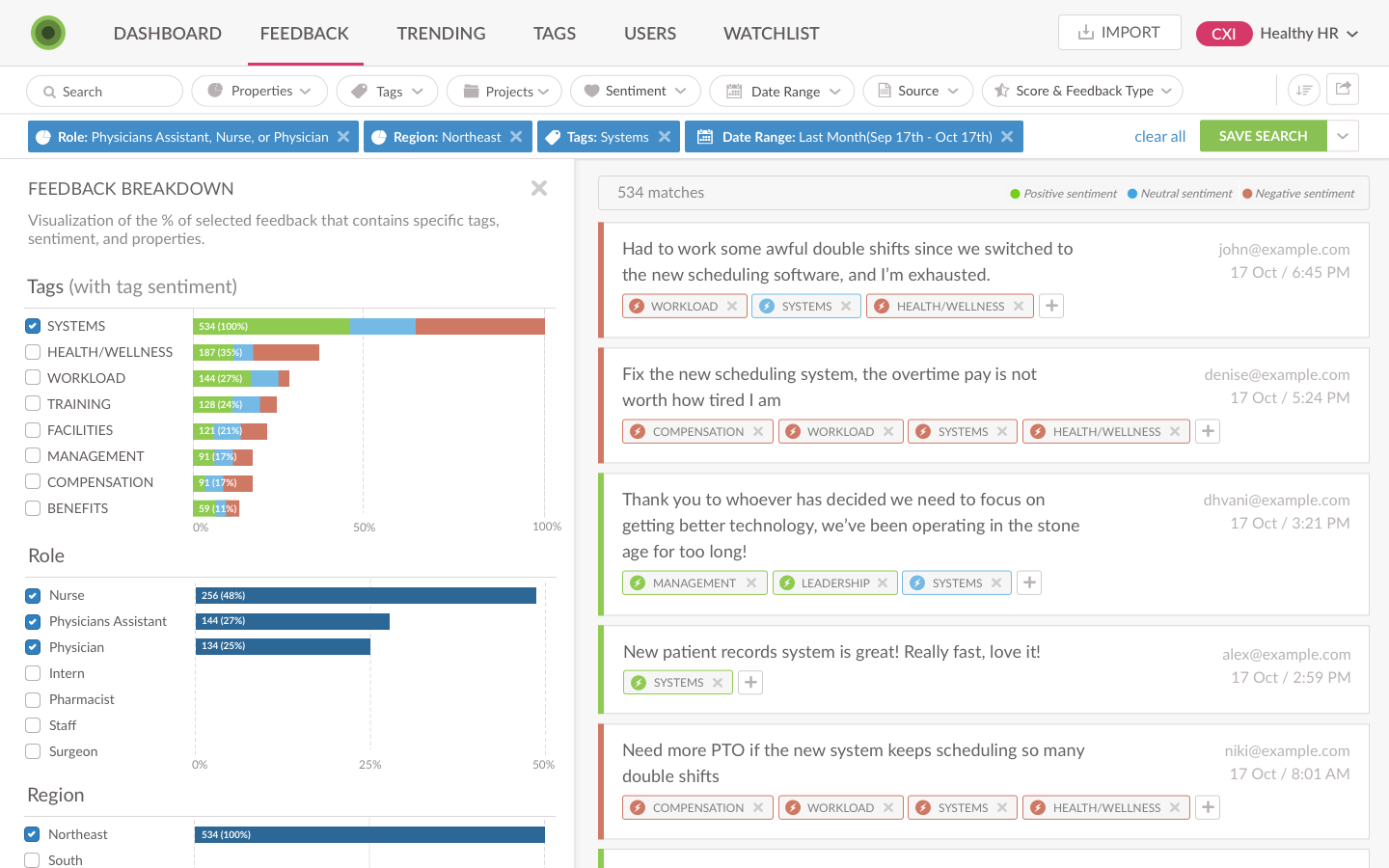
InMoment captures feedback across every channel—surveys, social and voice—and aggregates it into a single source of truth, eliminating data silos and surfacing the intent and emotion behind every customer interaction.
3. Medallia
Medallia‘s experience management platform offers powerful listening features that can pinpoint sentiment in text, speech and even video.

The platform excels in collecting and analyzing real-time feedback from multiple sources, including social media, surveys, reviews, SMS, emails, voice conversations and more.
4. Qualtrics (Clarabridge)
Qualtrics is an experience management platform that offers Text iQ—a sentiment analysis tool that leverages advanced NLP technology to analyze unstructured data from various sources, including social media, surveys and customer support interactions.
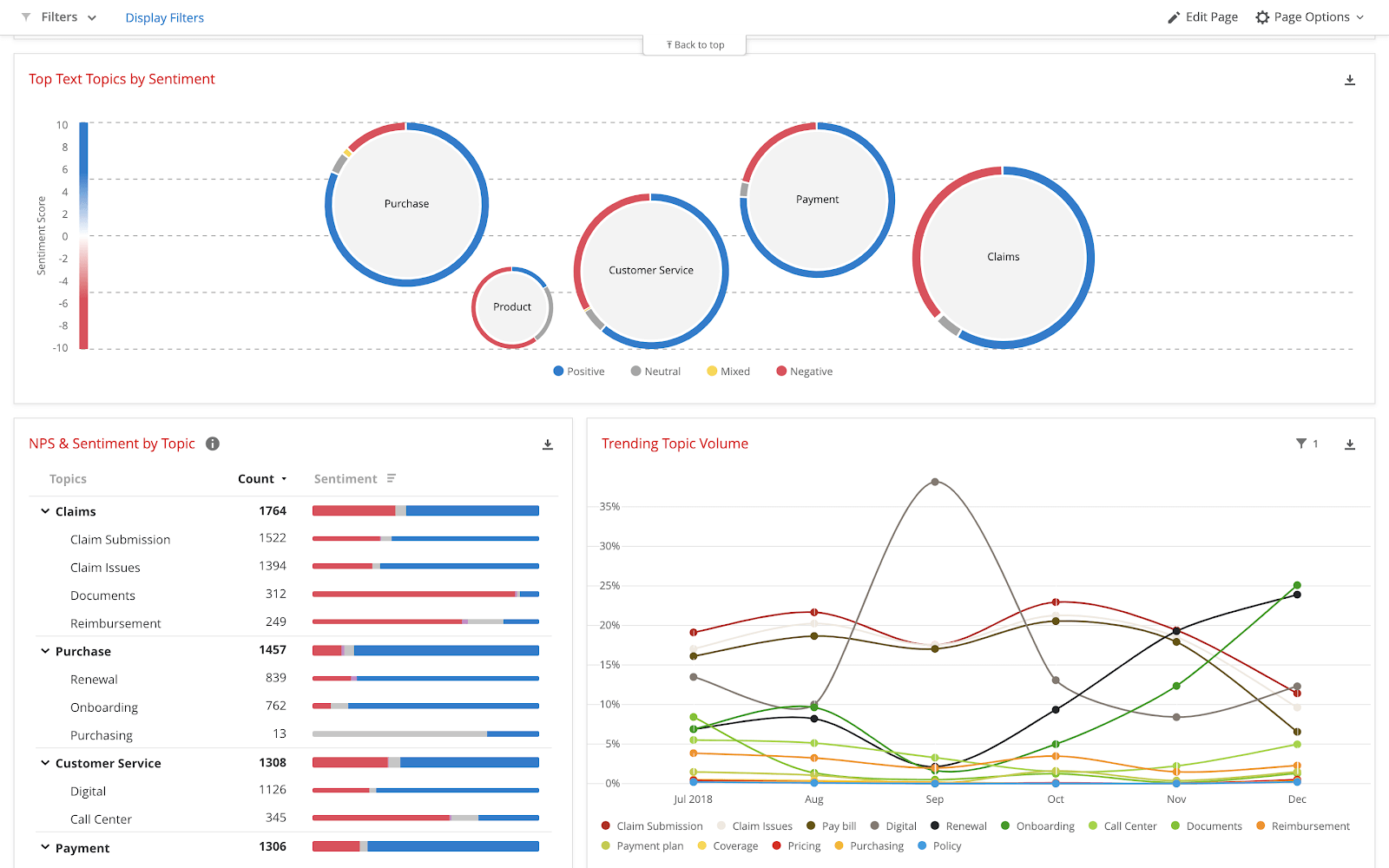
The tool can automatically categorize feedback into themes, making it easier to identify common trends and issues. It can also assign sentiment scores to quantify emotions and analyze text in multiple languages.
5. Chattermill
Chattermill is a unified customer intelligence platform. It uses AI to analyze feedback from surveys, reviews, support conversations and other key customer communications. It merges cross-channel data to give a centralized view of brand sentiment.
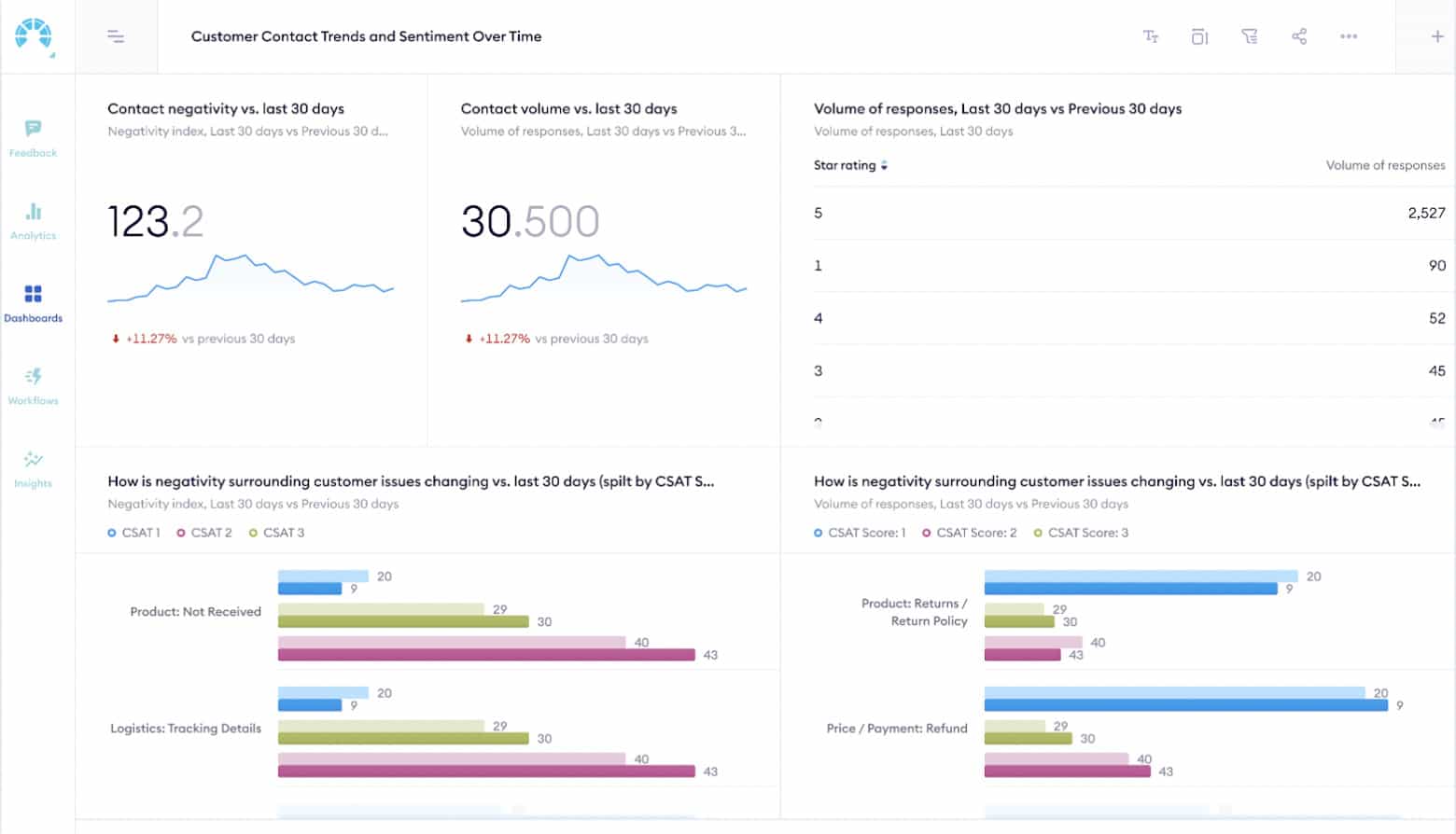
Chattermill also automatically detects emotional tone and classifies responses by theme—recurring topics, categories or subject areas. This helps you see what’s driving satisfaction or frustration across the whole customer journey.
The platform supports multiple languages and integrations, including Zendesk, Salesforce and Slack.
Social media sentiment analysis tools
Focusing specifically on social platforms, these tools are built as dedicated sentiment analysis tools for social media to evaluate metrics, posts, and incoming audience commentary.
6. Brandwatch
Brandwatch offers a suite of tools for social media research and management. Their listening tool helps you analyze sentiment along with tracking brand mentions and conversations across various social media platforms.

Classify sentiment in messages and posts as positive, negative or neutral, track changes in sentiment over time and view the overall sentiment score on your dashboard.
7. Buffer
Buffer offers easy-to-use social media management tools that help with publishing, analyzing performance and engagement.
One of the tool’s features is tagging the sentiment in posts as “negative,” “question” or “product mentions” to help brands sort through conversations as well as plan and prioritize their responses.
8. Agorapulse
Agorapulse is another social media management software that specializes in publishing and organizing your inbox.
It offers basic, keyword-based sentiment tagging. You can manually assign labels like “positive” or “negative” to inbox items, or use the built-in Inbox Assistant to automatically categorize incoming messages when they contain specific terms like “happy,” “great,” “bad,” or “awful.”

Add labels to incoming text or use the Inbox Assistant to automatically categorize items containing specified keywords.
News sentiment analysis tools
These tools specialize in monitoring and analyzing sentiment in news content. They use News APIs to mine data and provide insights into how the media portrays a brand or topic.
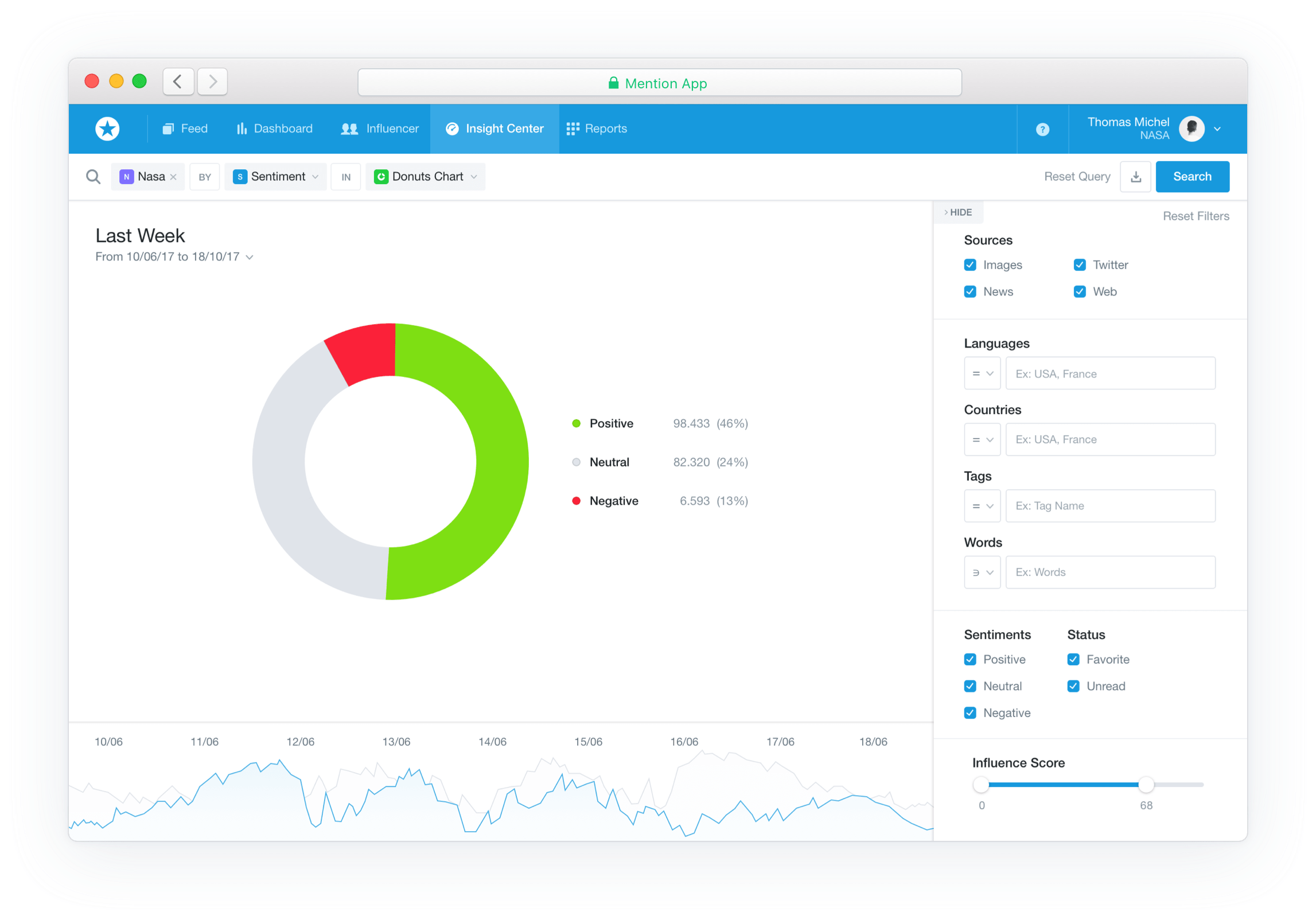
9. Brand24
Brand24 is a real-time media monitoring tool that scans the web—from major news outlets to niche blogs and forums—and delivers automated sentiment data your PR and communications teams can act on immediately.
A key feature is its Volume Chart, which overlays mention spikes with sentiment shifts to reveal the emotional impact of a news breakout as it unfolds, helping teams manage crises and capitalize on positive press faster.
10. Meltwater
Meltwater‘s AI-powered tools help you monitor trends and public opinion about your brand. Their sentiment analysis feature breaks down the tone of news content into positive, negative or neutral using deep-learning technology.

The tool can handle over 100 languages. This makes it versatile and useful for tracking global news sentiment.
Text sentiment analysis tools
These tools run on proprietary AI marketing technology but don’t have a built-in source of data tapped via direct APIs, such as through partnerships with social media or news platforms.
11. Google NLP API
Google NLP API is a text analysis tool designed to extract insights and opinions from various documents, including emails, chats and social media, through entity and sentiment analysis.
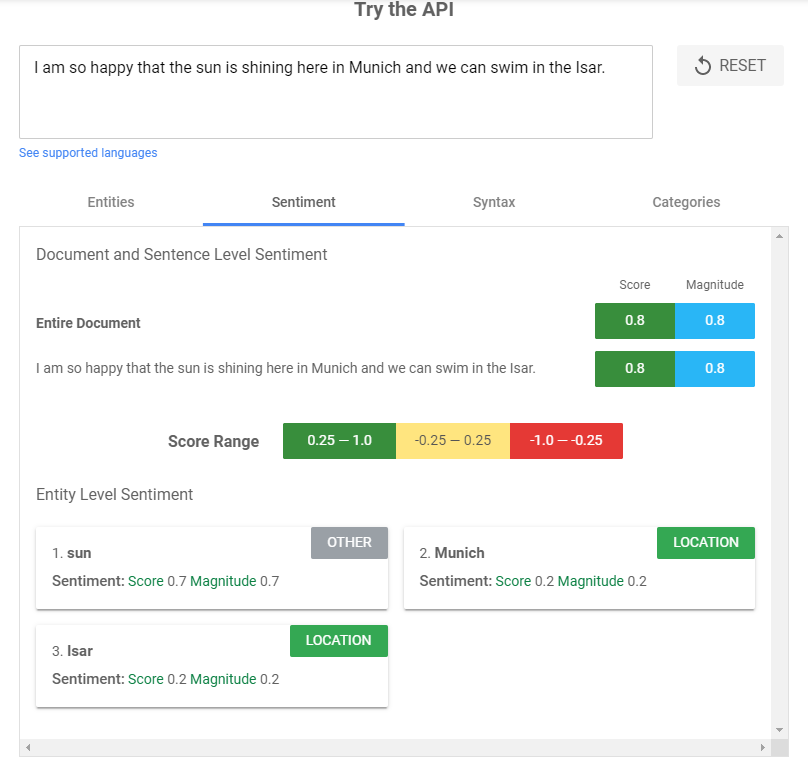
It supports multimedia content by integrating with Speech-to-Text and Vision APIs to analyze audio files and scanned documents. Plus, its Translation API can analyze sentiment across multiple languages.
12. Amazon Comprehend
Amazon’s text analysis tool goes through documents, emails, social media and customer support tickets to uncover insights. It identifies key elements such as phrases, sentiment and topics, and even lets businesses train models to classify documents.

It also supports maintaining data privacy and protects sensitive information by identifying and redacting Personally Identifiable Information (PII).
How to choose the best sentiment analysis tool for your business?
Choosing the best sentiment analysis tool for your business is a strategic decision that impacts your understanding of customer feedback and brand perception. With numerous options available, focusing on key factors will help you find a solution that truly aligns with your specific needs.
Here are the crucial points to consider:
- Define Your Objectives: Start by defining what you aim to achieve. Are you monitoring brand reputation, improving customer service, gaining product insights or something else? Your goals will dictate the required features.
- Accuracy and Nuance: Evaluate the tool’s ability to analyze multiple languages, including sarcasm, irony and contextual subtleties. Look for solutions that offer high accuracy and potentially support aspect-based sentiment analysis for deeper insights.
- Supported Data Sources and Integrations: Ensure the tool processes the types of text data you have (social media, reviews, news sites etc) and integrates with your existing platforms like CRM or marketing automation tools.
- Scalability and Performance: Consider your current and future data volume. The tool should be capable of handling the amount of text you need to analyze, spanning from small batches to massive, real-time data streams.
- Reporting and Visualization: The insights are only useful if they are presented clearly. Look for easy to understand dashboards, intuitive charts and actionable reports that make data easy to understand and share.
- Budget and Support: Balance features with your budget. Also, assess the vendor’s customer support, training resources and overall reputation to ensure a reliable partnership that supports you in driving the best social media return on investment.
Sentiment analysis tools in action: Atlanta Hawks case study
The Atlanta Hawks needed a sophisticated way to understand their social media audience’s sentiment to optimize content and fulfill commitments to corporate partners. Their challenge was to move beyond basic metrics to grasp the emotional reactions and preferences of their predominantly young fan base, especially concerning various content types and major marketing campaigns.
The Hawks integrated Sprout Social, heavily utilizing its Social Listening tool. This enabled them to monitor real-time conversations around their brand, specific content pillars, and large initiatives like jersey launches. Sprout Social’s sentiment analysis capabilities provided a “Sentiment Summary” and “Topic Insights Word Cloud,” allowing them to gauge the emotional tone (positive, negative, neutral) of fan discussions, for instance, noting 99% positive sentiment for a new jersey. Atlanta Hawks’ deep dive into sentiment, coupled with content tagging and A/B testing, helped them identify what truly resonated with their audience.
By leveraging sentiment analysis, the Hawks achieved a more profound understanding of fan reactions. This insight directly contributed to a 127.1% increase in video views and 170.1% Facebook audience growth. The ability to present clear sentiment data in reports, demonstrating tangible fan enthusiasm and engagement, strengthened trust with over 35 corporate partners, allowing for more flexible and impactful content strategies.
Use sentiment analysis tools to make data-driven decisions backed by AI
AI-powered sentiment analysis tools make it incredibly easy for businesses to understand and respond effectively to customer emotions and opinions.
While there are dozens of tools out there, Sprout Social stands out with its proprietary AI and advanced sentiment analysis and listening features. Try it for yourself with a free 30-day trial and transform customer sentiment into decision-ready intelligence for your brand.
The post Top 12 sentiment analysis tools to consider in 2026 appeared first on Sprout Social.
from Sprout Social https://ift.tt/JeySH7x
via IFTTT

No comments:
Post a Comment