Tuesday, 22 December 2020

10 free SEO tools for discoverability

When creating content online, it’s important to have a search engine optimization (SEO) strategy alongside your content strategy. Doing so will ensure your posts are as optimized as possible. SEO tools can help you identify ways to improve the discoverability of your site.

SEO can seem daunting to novices, but there are several free SEO tools are are just as powerful as their paid counterparts.

Here’s a breakdown of 10 of the best free SEO tools and software.

Best free on-page optimization tools

Rank Math Plugin

Rank Math is a WordPress plugin that helps you optimize your website content. It lets you add meta titles, descriptions and structure your data more easily. Simply download and install this plugin to your WordPress website to begin using it.

Benefits

Rank Math gives your content an SEO score for each page. When you indicate what keyword you’re targeting, this plugin suggests ways to increase your ranking for that keyword. You can also identify and fix dead links on your site and redirect URLs to new pages.

Screenshot of the Rank Math WordPress plugin

Yoast SEO Plugin

The Yoast SEO plugin makes it easy to optimize your WordPress site and identify gaps in your content. If your site runs on WordPress, install and activate the Yoast plugin to begin.

Benefits

The Yoast plugin allows you to improve and modify your content in three ways: SEO, readability and social. With Yoast, you can set meta descriptions, titles, canonical URL, and label index/no-index pages and other backend settings on your site. This plugin will assign every post a readability score by measuring sentence and paragraph length and other criteria. And Yoast also has excellent features to help you improve the shareability of your posts on social media. 

Screenshot of Yoast SEO WordPress plugin

Best free keyword research tools

Google Trends

As the name suggests, Google Trends helps you track the popularity of topics and trends in your industry over time. Use this tool to identify current trends and use that information to craft a timely and relevant content marketing strategy.

Benefits

Google Trends gives you a clear picture of how specific trends change over time and how people’s searching patterns around it change. To use Google Trends, start by typing in a keyword. You’ll see the interest in that topic over time, which regions show the most interest, and other keywords people are searching for related to that query. This tool works best when combined with other keywords to show comparisons of trends over time.

Screenshot of Google Trends dashboard for they keywork "football" and its trend ranking over time and by U.S. region

Ahrefs Keyword Generator

Ahrefs’ Keyword Generator is a lite version of Ahrefs full tool and will show you the top 100 related keyword ideas when searching a keyword or phrase. To use this free tool, enter up to 100 keywords or phrases in the search bar. You’ll see a list of the top 100 keywords related to your search as well as their search volume from when the data for that keyword was last updated, and keyword difficulties for the first 10 keywords on the list.

Benefits

This tool gives users a taste of what Ahrefs’ full tool can do and is perfect for people who want to explore some industry keywords. In addition to the keywords, you can also see the top 50 questions related to that keyword.

Screenshot of Ahrefs Keyword Generator and results for the keyword "social media"

Ubersuggest

Ubersuggest is a free SEO tool that helps users generate new keywords and content ideas. This tool will give you a high-level overview of the keyword you’re searching for. It’s a great tool to use when looking for new ways to fill your social media or content calendar because the tool also shows you related long-tail keywords and suggests content ideas based on the keyword.

Benefits

When you do your keyword search, you’ll see the monthly keyword search volume, how competitive it is to rank for, and the average cost per click. The tool will also provide you the average number of backlinks that a site should have to rank for that keyword.

Screenshot of Ubersuggest keyword tool for the keyword "yoga"

Best free SEO tools for analytics

Google Search Console

Google Search Console (GSC), previously known as Google Webmasters, helps you understand how Google crawls and indexes your site. To use the Google Search Console, create an account and add your website as a property within the account. Once you’ve added your domain, verify you’re the site owner before you can access all of its features.

Benefits

There are several features to highlight about Google Search Console, one of which is that it can help you diagnose technical errors on your website. It can also help you understand what keywords or content are ranking for your site.

Screenshot of Google Console dashboard

Bing Webmaster Tools

An often overlooked tool, Bing Webmaster also has a full suite of analytics to help you analyze your website and search analytics. Create your free Bing Webmaster Tools account, add your website and verify your ownership of the site. Then create or upload your sitemaps. Once complete, you’re able to start optimizing your site and its content using Bing Webmaster Tools’ features and suggestions.

Benefits

Bing Webmaster Tools can provide useful keyword research, reporting, and can crawl your website to identify issues. It’s a good way to get a virtual second opinion on your site or find any new information that Google Search Console didn’t reveal.

Screenshot of Bing Webmaster Tools dashboard

Google Analytics

To know if your SEO efforts are working, you need to analyze your site’s findability to see where your traffic is coming from. You may notice a spike in traffic after making post optimizations, but that traffic could be coming from another source like social media. Google Analytics provides you with in-depth details about your website visitors, as well as real-time activity.

With an existing Google account, sign into Google Analytics and connect with your website. To get the most helpful SEO information, pair it with your Google Console account. When you link the two tools, you’ll be able to see the keywords people are using to find your site, identify your click-through-rates on those keywords and more.

Benefits

Google Analytics lets you see how people interact with your website. Using Google Analytics, you’ll be able to see how many people are visiting your site, where your traffic is coming from, how long people are spending on the page and so much more.

Screenshot of Google Analytics

Best free tools for link building

Ahrefs Backlink Checker

Like their Keyword Research tool, Ahrefs Backlink Checker is a free version of their full tool that shows you the top 100 backlinks to any website you search. To use this tool, enter a URL into their search bar and you’ll see the site’s domain rating, the number of backlinks, and the number of referring domains.

Benefits

This free tool is great for some light backlink checking as well as analyzing your competitors. Even though you’re limited to viewing 100 links, it’s still a great place to start. You’ll see the total number of backlinks, links from referring domains, the site’s Domain Rating, and its URL rating.

Screenshot of Ahrefs Backlink Checker homepage

SEM Rush

Similar to the other tools mentioned above, SEM Rush has a free version of their robust tool. Not just for link building, SEM Rush can provide help with keyword research, on-page SEO audits, content optimizations, rank tracking and much more. Create a free account and access these features.

Benefits

The SEM Rush’s Backlink Analysis and Link Building Tool provides you an in-depth look at your backlink profile. The free version limits you to 100 domains in the Link Building Tool but you’ll be able to identify your referring domains and backlinks overtime, including gains and losses, and your backlink authority score. The tool helps you identify areas to improve your link building efforts or where you can gain more visibility online.

Screenshot of SEM Rush's backlink analytics tool

Final thoughts on free SEO tools

While SEO is a crucial part of the content process, it works best when combined with other marketing strategies like content and social media marketing. You’ll get the most out of your optimizations when using both SEO and social monitoring software together. And these free SEO tools help you build a foundation to these strategies.

Throw in some social media keyword search tools and you’ll be able to cast an even broader net to learn more about what your audience wants. For more on how to marry your social media and SEO strategies, check our post on how SEO can inform social media marketing and vice versa.

This post 10 free SEO tools for discoverability originally appeared on Sprout Social.


from Sprout Social https://ift.tt/2gRILjh
via IFTTT

Monday, 21 December 2020

5 steps to creating an inspired hashtag holiday strategy

Each year the amount of national and international hashtag holidays increases. What started as a way to create awareness about various social causes has now expanded to hundreds of holidays honoring relationships, communities, social justice issues and even food.

From #WorldChocolateDay to #WorldMentalHeathDay, it can be difficult to determine what holidays, or awareness days, are relevant for your brand and will resonate with your audience.

Holidays like #NationalDogDay give you a lovely opportunity to connect over shared experiences and the humor of life. But hashtag holidays and awareness days can be more serious, too.

Consumers increasingly want brands to talk about important issues, and that’s another way to connect with your audience. In fact, in Sprout’s #BrandsGetReal report, 67% of consumers believed that brands were effective at driving change when raising awareness of important public issues. A national day or awareness month might be a great starting point to integrate meaningful initiatives into your social strategy.

Here’s our list of the top hashtag holidays for 2021. We’ve compiled them into a Google Calendar with additional holidays and awareness days to add to your own social media calendar.

Read on to learn more about how to listen, strategize and simplify your approach to hashtag holidays.

Getting started

Step 1: Choose relevant hashtags

When it comes to social media, some brands celebrate every holiday, regardless of its relevance to their company. Although it may be fun participate in holiday such as #NationalTacoDay, it might be a misstep for a plant nursery.

Before your brand selects what holidays to highlight on your social channels, remind yourself the purpose of social media. Businesses can leverage these buzzy social moments to foster deeper connections with their customers and communities. While some holidays may attract more likes than others, it’s important to keep in mind that if your approach is not genuine and relevant, the value of that engagement is lost.

Know your brand’s “why”

Some holidays might have people participating on social media that may not fit your target audience. Before your brand decides to partake in a holiday, ask yourself the following questions:

  • Is your brand making a statement or doing something for fun?
  • What is my goal in using this hashtag?
  • What is my follow up plan?

If you can confidently answer these questions, participate in that holiday! If not, you might want to revise if your brand should be participating in it.

Step 2: Use your data to give your audience what they want

As social media marketers, we have to be ahead of our audience’s needs. Take the guesswork out of social media by using listening tools to discover exactly what your audience is talking about.

With Sprout’s Advanced Listening tool, you can get valuable insights on the conversations where a certain hashtag holiday intersects with your brand or product. Additionally, you can listen in on how competitor brands or organizations with similar audiences have approached those days in the past.

Step 3: Report on what is/isn’t working

Now that you’ve narrowed down your audience’s needs and the holidays you want your brand to participate in, measure the relevance of your strategy. You measure the performance of your campaigns and need to do the same in regards to your hashtag holiday strategy.

Sprout’s reporting suite makes interpreting the success of content you made specifically for hashtag holidays simple. You can use Sprout to:

  • Use your best hashtag performance from last year as a basis for your new goals, and measure performance as you go.
  • Inform your monthly and yearly planning with Sprout’s volume analysis and conversation analysis tools. This data will tell you even more about what shifts you might need to make in your approach throughout the year.
  • Store data ahead of time and save ideas for how your brand will celebrate awareness days directly to your content calendar with Sprout’s publishing tools.

Step 4: Acknowledge a holiday in advance

Don’t wait until the day of a holiday to post about your stance on a social justice issue or awareness day that your audience values. Build up to it just like American Express did for Small Business Saturday.

Throughout the month of November, American Express built anticipation for Small Business Saturday by highlighting various businesses on their social media pages. They also have a website dedicated to shopping small that promotes Black-owned businesses and neighborhood champions. AmEx’s campaign is an example of how awareness days/months and campaigns go beyond social. If you have a great idea, make sure you’re talking to other members of your marketing team so you can collaborate on something bigger!

Step 5: Take a stand—if it’s appropriate and relevant to your brand

Awareness days have deeper implications when your brand participates in them. 2020 has been a chaotic year for many, but with the power of social media, many brands have been able to raise awareness for various causes and holidays that did not previously receive mainstream recognition.

One holiday that gained more notoriety this year was Juneteenth, a day that commemorates the ending of slavery in the United States.

Sephora celebrated Juneteenth by doing more than posting a cute graphic on social media. They hosted a live conversation with their Sephora equity partners (Black activists, scholars and partners) to further amplify Black voices. By educating their audience on the history of Juneteenth, they showed their brand’s passion for social equity and helped bring awareness to this holiday.

Ben & Jerry’s has built a reputation for themselves over the years as a brand committed to social activism. This year for Thanksgiving, they encouraged their audience to have open conversations with their families about the origins of the holiday while providing six facts to use when discussing racial justice. Outside of raising awareness, they donate towards various charitable causes and create new flavors inspired by causes they’re committed to.

If your brand supports different causes you can be transparent and post about it on social media, but only if it’s relevant to your brand. For example, you can post about #WorldMentalHealthDay, but it’s different to take a stand on it. If your brand’s goal is to take a firm stand on something, make sure you are backing it up with your actions. If your goal is to just raise awareness, a social media post may suffice.

Take hashtag holidays a step further

We’ve already mentioned that when selecting what holidays to participate in, you must choose wisely. That’s especially true if you’re posting about an awareness day or month representing a social issue. In those cases, you want your brand to focus on the intention of participation, not just make a one off statement or evade year long commitment. According to Sprout’s 2020 Index report, 45% of consumers believed that brands focused on transparency are best in class on social media. Posting about a holiday is just one part of the process. You must put actions behind your words to make a difference to your audience.

There’s still a time and place for holidays such as #NationalDonutDay, but it might not always be worth posting about for your brand. And if you’re taking on a significant and important awareness day like Juneteenth, duplicating your strategy for #NationalDonutDay will not cut it. Know that your audience will sense your intention and gauge what they want to see before you curate your social media calendar.

What’s next?

Now that you have your hashtag holidays and awareness days/months planned out for 2021, it’s time to go celebrate! Remember to stay true to your brand by choosing relevant hashtags that will help your brand foster a deeper connection with your target audience.

Use our Google Calendar with 2021 holidays to keep track of your top holidays and find new ones that inspire you.

What hashtag holidays and awareness days will you participate in? Any learnings from 2020? Tweet us your thoughts @SproutSocial!

This post 5 steps to creating an inspired hashtag holiday strategy originally appeared on Sprout Social.


from Sprout Social https://ift.tt/2QYg8og
via IFTTT

Ring in the New Year with Free, Animated Email Templates

Ring in the new year free animated email templates

So much time and energy goes into strategizing, planning, and executing Black Friday, Cyber Monday, and holiday email promotions. But have you thought about what happens when the gifts are wrapped and shopping is done?

Well, the holidays aren’t quite over just yet. The New Year celebration brings yet another new opportunity to meet your year-end sales goals. 

Plus, running a New Year email campaign can be a great way to connect with your customers and thank them for their patronage this year. 

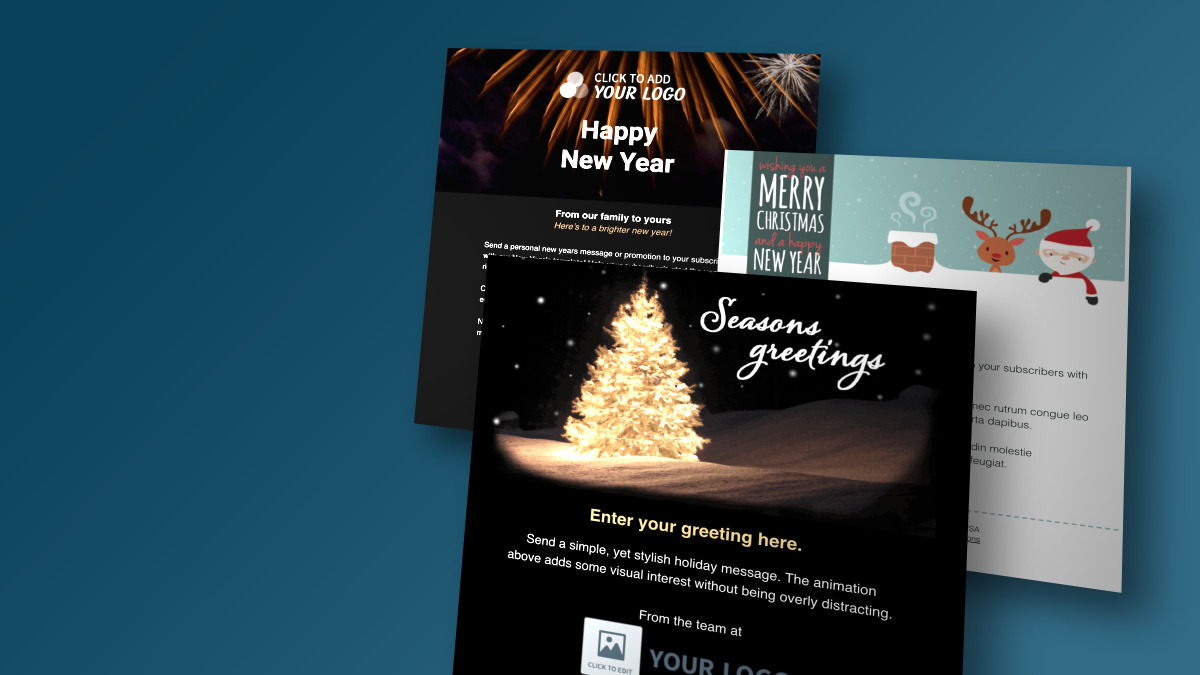
To help you save time this holiday season, AWeber’s design team created email templates with a bit of extra sparkle just for your New Year's email campaigns. Plus, they’re  animated!

Log in to your AWeber account — or get started with a free AWeber account today — to access the templates. 

Examples of New Year’s Email Newsletters 

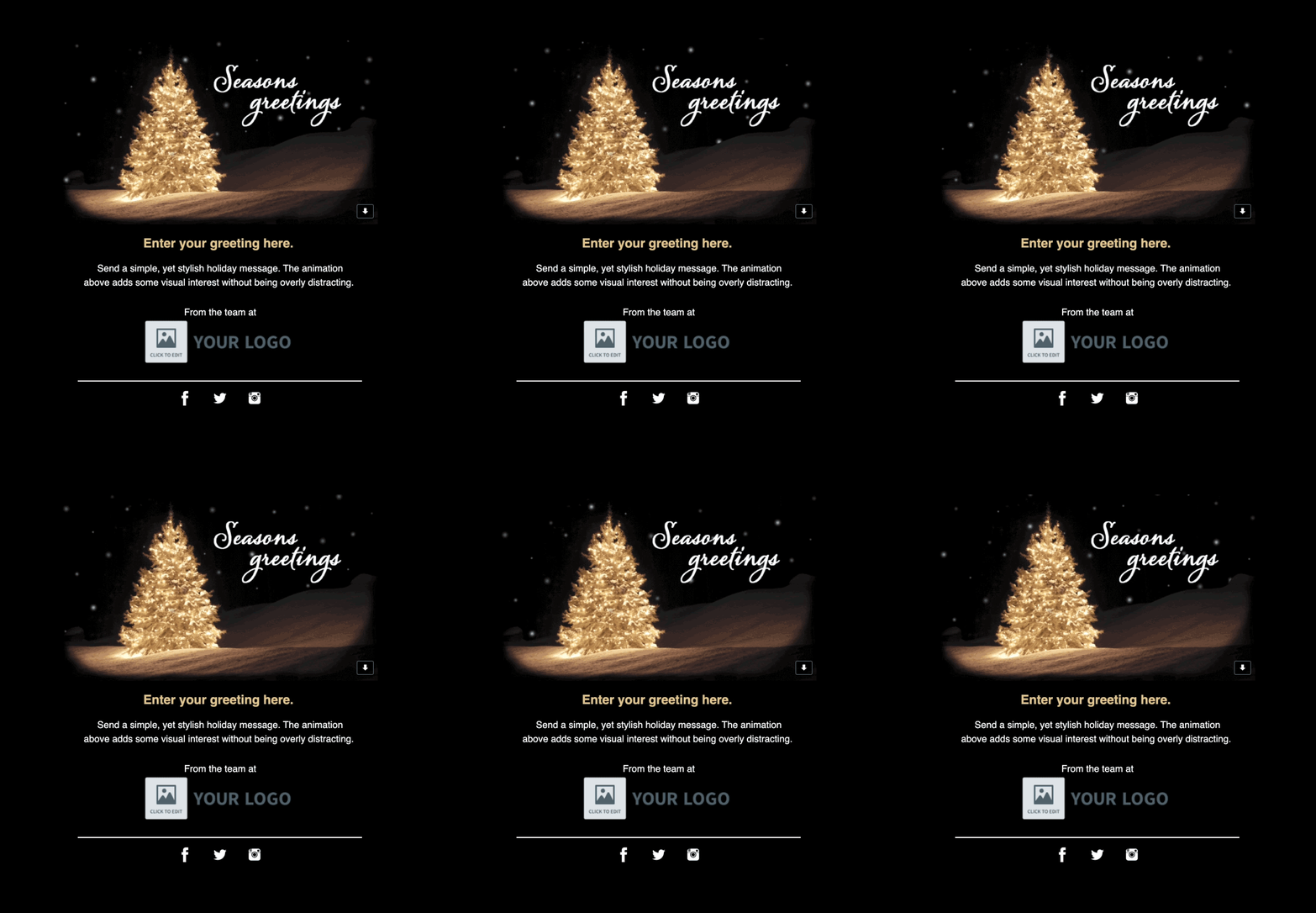
Animated Seasons Greetings

Animation is eye-catching, particularly when combined with fresh, simple graphics. The shimmering tree animation is simple but effective without being overly distracting from your message.

Seasons Greeting email templates with animated snow.
The "Seasons Greetings" template is located in the template gallery under Holiday

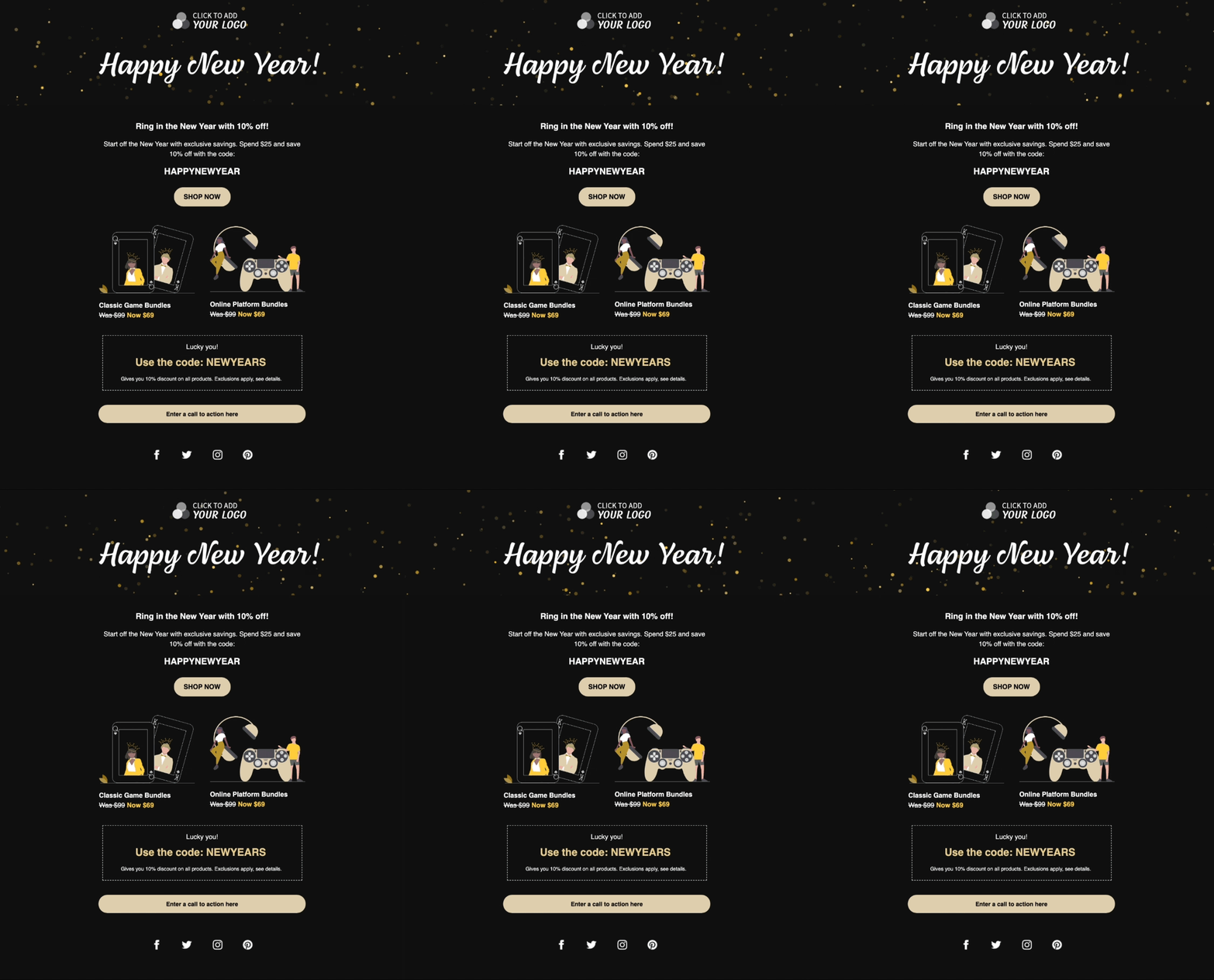
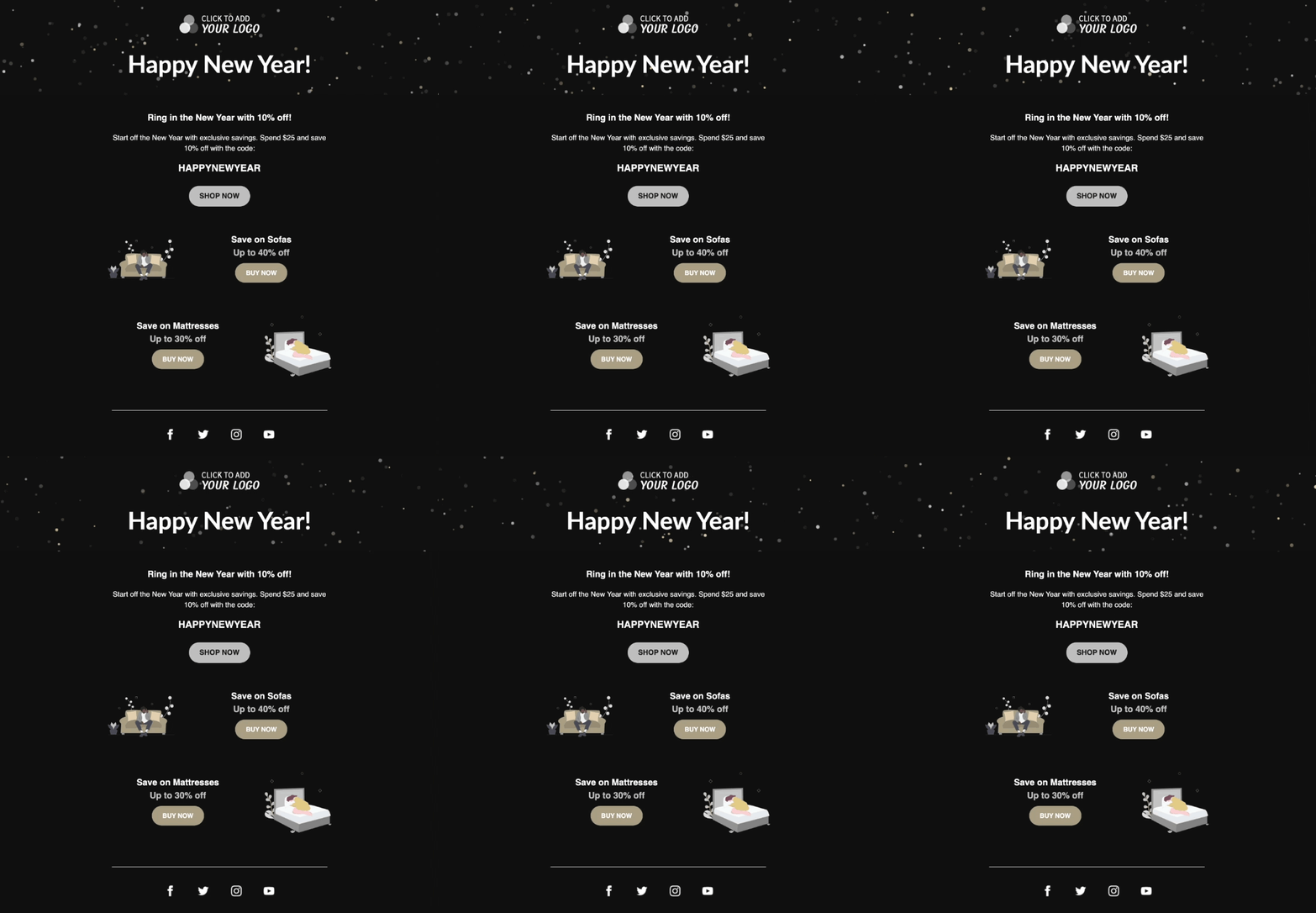
Animated Happy New Year’s

The confetti animation is guaranteed to bring a smile to your subscribers’ faces. In this template, there are two different design options to select from with different font treatments and icon options. Choose whichever version works for your brand. 

Happy New Year’s Fireworks

If animation isn’t your thing, don’t fret. Sometimes, your audience prefers simpler email design (remember to A/B test your messages to uncover what content your audience loves!) 

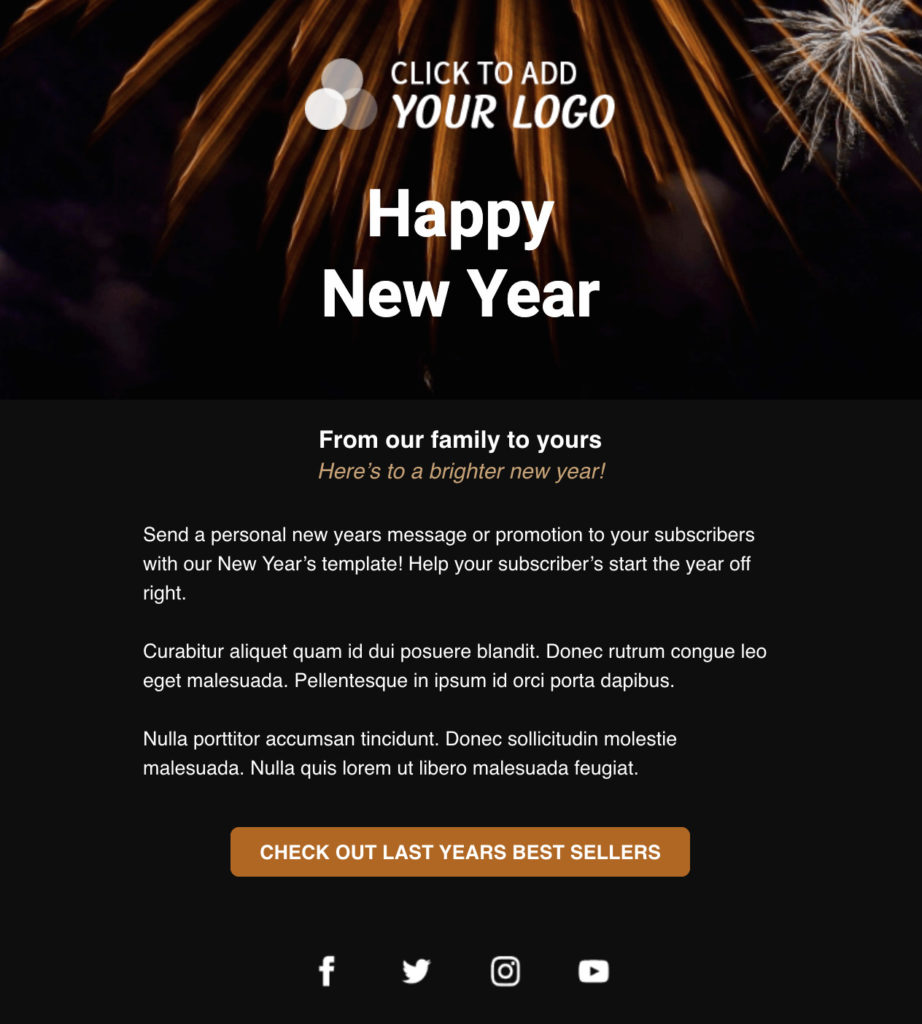
The New Year’s fireworks email complements a clean and crisp, uncluttered layout with eye-catching graphics that will get your reader’s attention.

Happy New Years firework template
The "New Years" template is located in the template gallery under Holiday

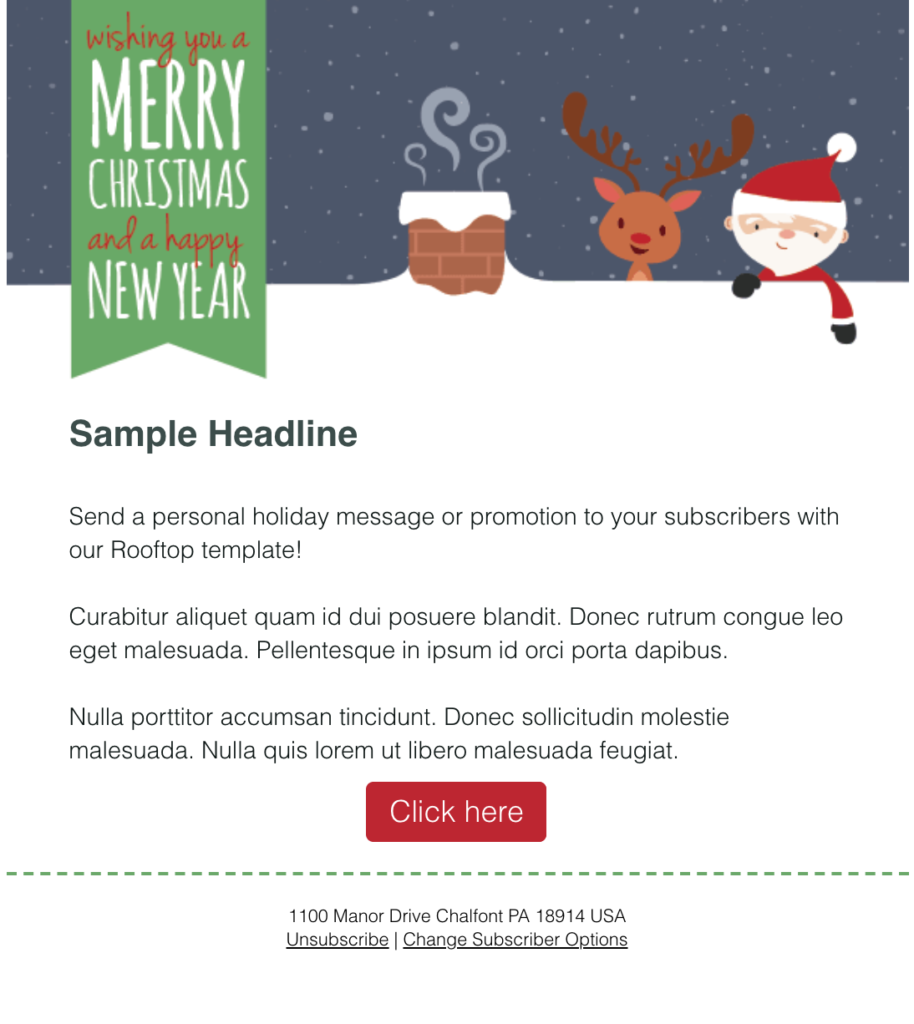
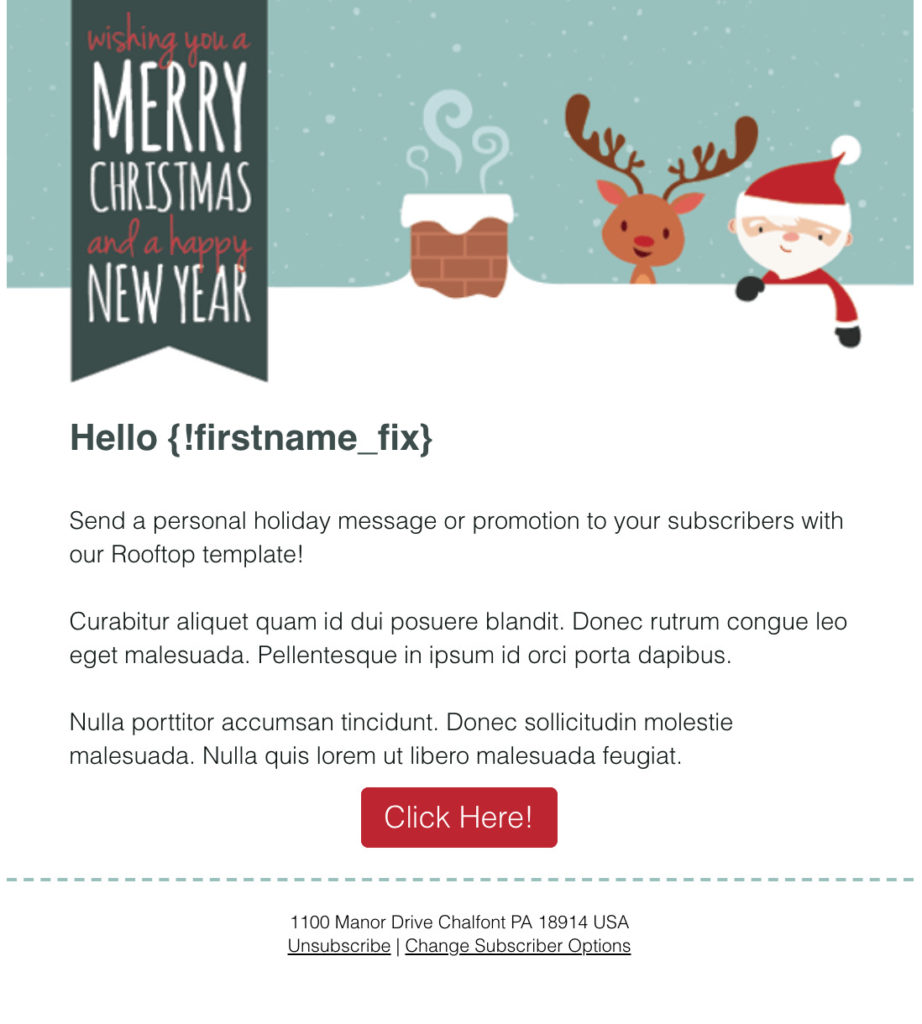
Rooftop Merry Christmas & Happy New Year

It’s not too late to send a holiday message to your audience. The “Wishing You a Merry Christmas and Happy New Year” email template series is festive enough to work for both holidays.  There are two color variations to choose from depending on your preferred color palette. 

Get your New Year's email ready today!

New Year’s emails can be full of glitz and confetti or just a simple, genuine seasonal greeting.  A New Year’s email campaign is a perfect opportunity to connect to your audience, offer a special end of year discount,  and share how much their support has meant to you and your business.

The post Ring in the New Year with Free, Animated Email Templates appeared first on AWeber.


from AWeber https://ift.tt/34u497q
via IFTTT

Thursday, 17 December 2020

Email Automation 101: How To Use Email Marketing Automation

how to use email marketing automation

“Email automation.”

You hear the phrase again and again.

Email automation is powerful stuff, but if you’re new to the email marketing game, you probably have a few questions about it. 

After all, automation can increase leads, conversions, and revenue, and it can save you time. The stats prove it:

Automated email messages average 70.5% higher open rates and 152% higher click-through rates than other marketing messages, according to Epsilon Email Institute.

So, to help you get a better grasp on what it is, why it’s important and how it can help you get the incredible results you want, here’s a quick guide to email automation and how to use it in AWeber.

What is email automation?

Some marketers send every subscriber the same exact message with one-time emails.

The thing is, this generic content isn’t necessarily relevant or valuable to subscribers.

But, with the creation of email automation, messages send themselves. And, they can be segmented and properly timed, which will make them more relevant too.

But how does it do all of that?

Simply put, email automation is when you set up a series of emails to send automatically to subscribers at a specific time.

With it, you can connect with a person at every stage of their buyer journey (a.k.a. the marketing funnel) — from lead to customer to brand advocate. You can build a relationship with an individual over the long term.

And the best part? It runs on autopilot, creating connections and increasing revenue while you work on other aspects of your business.

You can set up a single series automation — where a person subscribes to your list and is automatically sent email 1, then email 2, then email 3, etc. in a sequence.

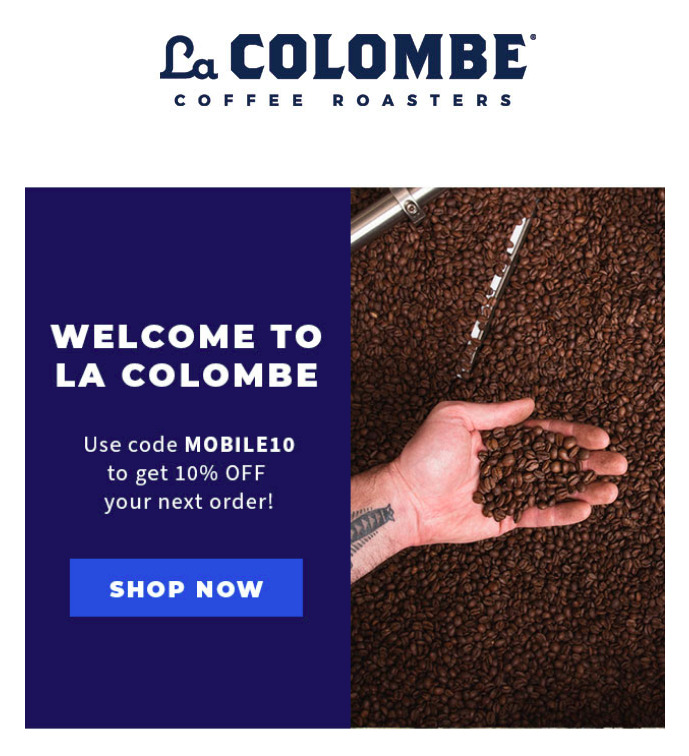
In the example below, La Colombe Coffee Roasters uses email automation to welcome new subscribers after they sign up:

Automated email welcome example

But there’s no limit to how you can use automation. It can be used to trigger emails or email series that send based on almost any action: a newsletter sign up, an eBook download, a purchase, etc.

Why email automation works

1. Email automation gives you a direct line of contact to customers

There are 3.7 billion email users worldwide, and about 27% of them check their emails as soon as they receive a new email notification.

And 66% of online consumers have made a purchase as a result of an email marketing message, a higher conversion rate than messaging through direct mailings or social media.  This means that email gets you better conversions and overall results.

Want some more statistics? We thought you’d never ask. According to VB Insight,

  • 80% of marketers reported increased lead generation with email automation.
  • 77% saw conversion rates rise with email automation.

Simply put, email marketing automation works!

Learn about AWeber’s email automation platform, Campaigns.

2. Email automation helps you send messages your subscribers want

Email marketing automation allows you to segment your list of subscribers based on their interests, purchase history and even actions they take on your site (this is called action-based automation, and I’ll get into this more in depth later in this article).

Want to send an email to all the vegans on your list? The September birthdays? The webinar registrants? The sweatshirt buyers?

You can!

For example, let’s say you’re a fitness trainer. You could then send an automated email based on the skill level of the trainee: beginner, intermediate or expert.

This way, you can send each customer targeted information to fit their individual needs.

And you can do this in AWeber with tags.

When consumers get emails with information that’s relevant to them, they’re more likely to click through your email. Plus, relevant content reduces the risk of your message getting deleted or ending up in the dreaded spam folder.

3. Email marketing automation saves you time

When you’re running a small business, you don’t have time to write and deliver emails to each individual subscriber.

Luckily, email automation can do all that work for you!

With email automation, you can set a schedule for when your emails go out and to whom. And your email marketing platform will send those emails for you at the right time. This gives you more time to craft relevant and effective messaging, which is the key to boosting click-through rates, conversions and overall consumer engagement.

Email automation gives you a unique and convenient way to nurture the connection you have with your audience. And that is the key to maintaining engagement with your subscribers.

Need help figuring out exactly what to write in your emails? We’ve created 45+ email copy templates to solve this problem! Download them now.

Types of automated emails

Now that you know why automation is so important, discover how you can use it.

There are a ton of different types of automated emails series that you can use for your business. Let’s cover some of the most important ones so you can get ideas for your next series.

Automated welcome email series

Your first point of contact after a subscriber signs up to your list …

Your time to make an amazing first impression …

Your chance to get more opens and clicks than any other type of promotional emails …

Yes, your welcome email series is a big deal! But it’s actually one of the easiest automated email campaigns you can send.

Here are some things to include in your welcome series:

  • Thank subscribers for signing up. Try using more than just words ― say it with a gift! Offer free bonus content or a discount.
  • Introduce yourself and your company. How will you solve your subscribers’ needs?
  • Let readers know what kinds of emails they can expect from you in the future.
  • Tell readers how often you’ll be emailing them.
  • Share where they can find you on the web (include social channels, website, blog, etc.)
  • Give them helpful and relevant blog posts they can check out.
  • Ask them to whitelist you. (This will add you to their email address book and can improve email deliverability.)

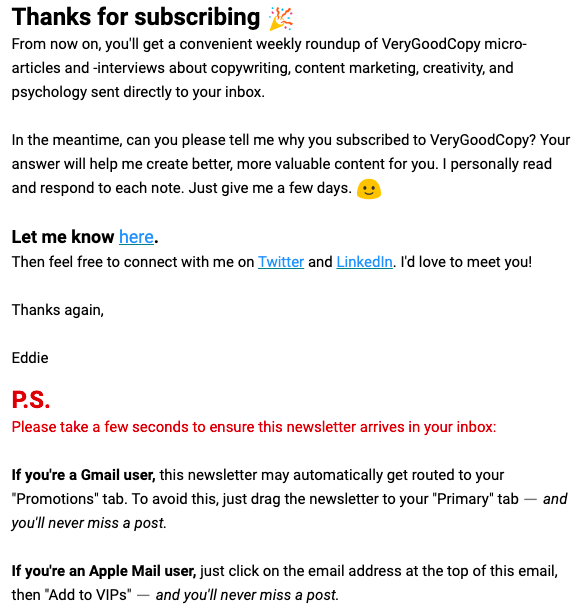
Below is an example of a welcome email that Eddie at ReallyGoodCopy sends to new subscribers, letting them know what to expect and when.

email automation example

Educational email course series

Do you have a ton of experience and wisdom to share about a specific topic?

Are there questions your audience asks that you find yourself answering time and time again?

Consider an email course!

Here’s how you can use automation to set up an email course:

  1. Write a welcome email that delivers the first lesson.
  2. Set a wait time of one or two days between each lesson.
  3. At the end of the course, encourage social sharing to increase course sign ups and continue the cycle.
  4. Ask for feedback so you can deliver more relevant content, resulting in more valuable emails.

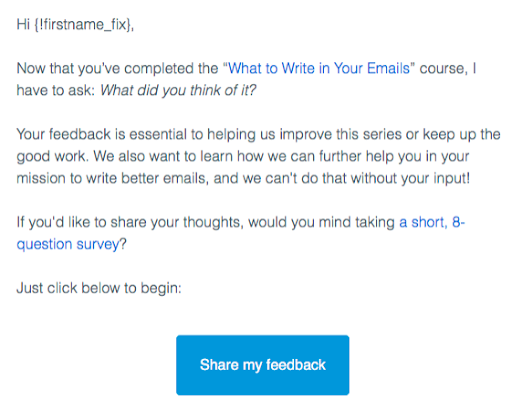
In our What to Write in Your Emails course, we follow this exact pattern. In one of the last emails of the series, we ask subscribers to share feedback in a survey:

automated survey email example

Customer onboarding series

You can send this automated email series to new customers to keep them engaged and encourage them to become repeat buyers.

To inform and convert subscribers into paying customers, include these resources in your series:

  • How to get started
  • Training videos and help-based articles
  • FAQs
  • Information about new products and how they solve problems
  • Exclusive deals that only subscribers can get
  • Educational resources and how they solve problems

Remember, when trying to promote a new product, focus on the value to the buyer.

Advanced action-based email automation

Instead of automatically sending everyone on your list the same series (email 1, email 2, email 3, etc.), each individual subscriber gets to pick which emails they’re sent through various actions they take.

While it’s more advanced than a single automation series, action-based automation can skyrocket engagement and sales. That’s because you are able to target segments of our audience with the exact content they needed. It’s an amazing feeling when you can put a solution right in the hands of your subscribers.

See action-based automation in action: This podcast host uses automation and tagging to let podcast listeners create their own adventure.

Need a way to visualize your email automation? Try an automation map. They’re a handy tool you can use to map out your first automated email series, especially if you plan to use more advanced strategies. 

Start with email marketing automation today

With AWeber, you'll have all the tools you need to create automated email campaigns. We even prebuilt automated email campaigns for you. Check out these pre-written campaigns to save time and market your business 24/7.

The post Email Automation 101: How To Use Email Marketing Automation appeared first on AWeber.


from AWeber https://ift.tt/2wMwGBR
via IFTTT

7 of the easiest ways to increase your social media shares

Social media shares are a valuable currency for brands today.

That’s because shares directly signal which messages, campaigns and images engage your audience the most.

And on the flip side, a lack of shares is often a sign of a lackluster content strategy.

However, getting social media shares is easier said than done when your audience is bombarded with so much content across so many platforms these days.

If you feel like there aren’t enough eyes on your content, we hear you. That’s why we’ve put together a list of seven low-hanging strategies you can roll out ASAP to encourage more shares.

Why do you need to track social shares in the first place?

Before we get into the nitty-gritty, let’s briefly break down why social shares matter.

It’s no secret that interactions related to engagement (e.g., shares, “likes” and comments) are among the most important metrics to track. Perhaps that’s why 48% of social marketers use shares as a way to measure the success of their campaigns.

Some critics consider social media shares to be a vanity metric, though.

And those critics aren’t totally wrong. After all, how many shares a post gets isn’t exactly a measure of its quality. Look no further than celebrity Tweets that get shared around or brand Tweets that go viral.

Sure, we want people to share our content. That said, shares don’t mean much if they don’t have an impact on your business.

For example, let’s say you have a post that results in thousands of shares but no long-term engagement, no new followers and no sales. What’s the point?

But let’s say that the same post results in a few press mentions, tons of traffic and a flood of new customers. That’s a win, obviously.

The takeaway here is that for shares to be a meaningful metric, they need to somehow be tied to your social media goals.

If you’re interested in brand awareness or community engagement, shares are a direct indicator of your success.  Brands should also dig deeper than share numbers to understand why followers decided to engage with a particular post.

8 simple tactics to help you score more social media shares

Now, onto the good stuff!

But first, a quick disclaimer.

Keep in mind that social media algorithms are fickle. There’s no secret or guarantee for getting social shares.

Instead, your end-game should be sticking to the best practices of social promotion while building a foundation of shareable content. Any combination of the tactics below can help and are fair game for just about any business.

1. Prioritize the most shareable content formats (video, images and breaking news)

It’s pretty well-documented that visual content is among the most-shared on social media.

Data from the most recent Sprout Social Index drives this point home, with images (68%) and videos (50%) are among the top spots.

Look no further than the popularity of TikTok and Instagram as proof that bite-sized video content is booming right now.

Heck, the term “viral video” exists because the medium is so share-worthy. Whether it’s a brief tutorial or a mini-commercial for your business, videos are ideal for keeping your followers glued to their screens.

Basic with Babish example of "viral video" or social media shares on Facebook

Meanwhile, infographics and visual representations of data also tend to spread quickly on social media. Because infographics are so easy to digest at a glance and don’t require readers to do much reading, they have much higher sharing potential versus a traditional post.

Remember that social media is still a hotbed of news and “did-you-know” pieces. When in doubt, breaking stories and publishing new information is a safe bet for shares.

2. Craft captions that make your posts more visible

For the sake of getting more social shares and staying in the good graces of any social algorithm, you can’t afford to ignore your captions.

Dropping links and expecting engagement is a surefire way to reduce the reach of your content. Simply dropping links to videos and blog posts to your social feed doesn’t do anything to signal that your post is worth clicking, let alone sharing.

Some quick tips to beef up your social captions to make them more share-worthy include:

  • Implementing a hashtag strategy on networks like Twitter, Instagram and LinkedIn (hint: research says that posts coupled with hashtags receive more reach than those without them)
  • Using appropriate call-to-action phrases in your copy (think: “retweet” or “share this”)
  • Take advantage of character limits in your post, giving you an opportunity to include relevant, searchable terms in your copy (particularly on LinkedIn, Pinterest or Twitter)

For example, coupling your Instagram posts with hashtags instantly more likely to be seen and regrammed.

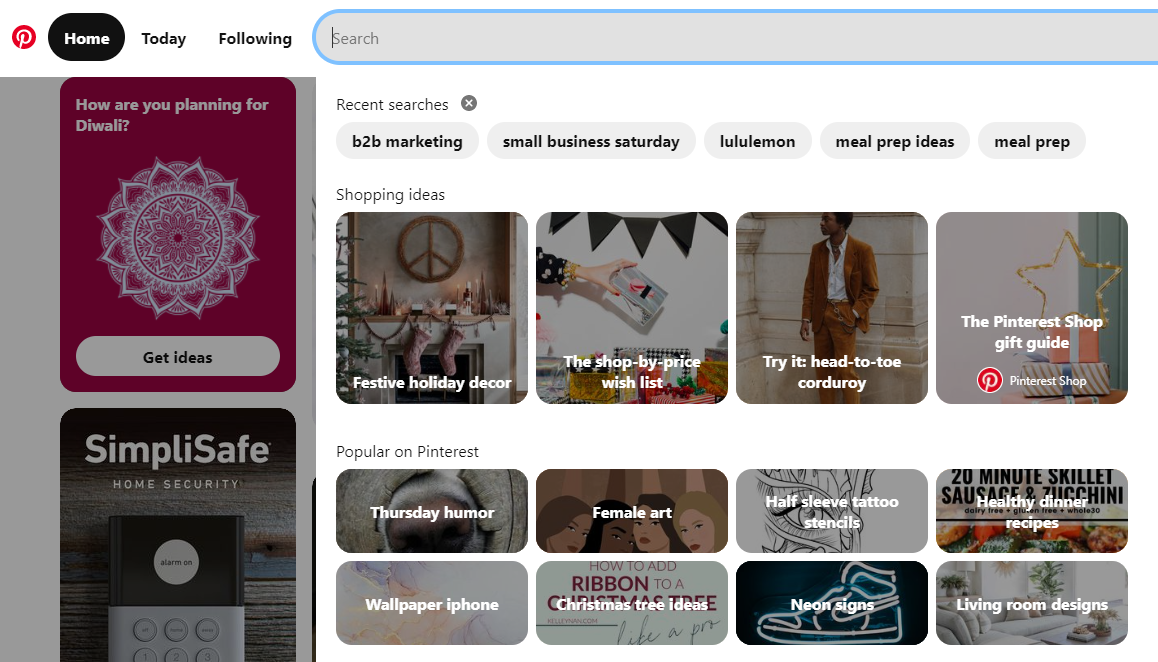
The same rings true for networks like Pinterest where descriptions and tags increase the visibility of your content.

Example of using Pinterest search as a means to boost shares on social media

No, you don’t need to cram your captions with keywords. That said, you should familiarize yourself with character limits on each social network and take advantage of the real estate available to you.

3. Make sure each and every post is mobile-friendly

Fact: the vast majority of social traffic comes from mobile devices.

Thankfully, social platforms do most of the heavy lifting when it comes to mobile optimization. There are some additional steps you can take to ensure that you don’t neglect your mobile audience, including:

  • Double-check that graphics are legible, zoomable and not cut off by image previews (Twitter can be tricky about this sometimes)
  • Include appropriate line breaks and punctuation in your social captions to avoid walls of text or hashtags
  • Add captions to your social videos so they’re accessible to all viewers, including those who have their phones silenced

4. Time your posts to perfection

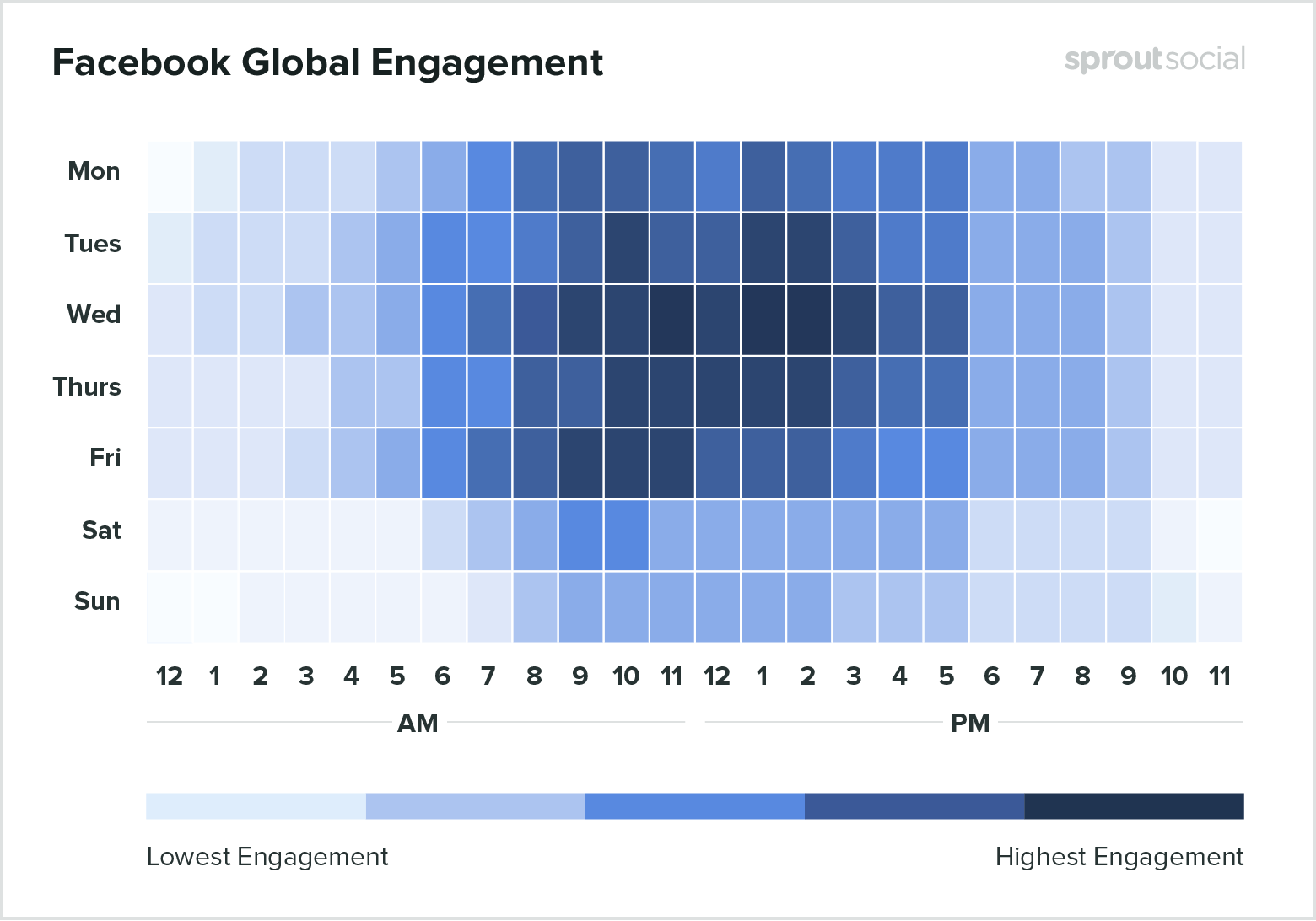
This might be a no-brainer, but make sure that you’re posting your content when your target audience is most engaged.

We actually have an in-depth guide highlighting the best times to post on social media broken down by network and industry.

Heat map of the best times to post on Facebook to get more social media shares

True, there’s no secret timing trick to squeeze extra shares from users via social. That said, publishing content based on when your followers are most active makes sense for maximum visibility.

5. Piggyback on trending topics and content formats

Social media moves quickly, as does its many trends.

Whether it’s trending hashtags or the latest memes, capitalizing on what folks are already talking about is a proven way to score shares.

Trendjacking might be considered low-effort, but doing so certainly help boost brand awareness and showcase your brand’s personality. Just make sure that you read the room and employ humor or trend-based content when it’s appropriate.

6. Publish content that encourages a response (questions and polls)

So much of getting social media shares boils down to driving conversations.

That’s why question-based posts are so popular. Serving as a sort of call-and-response, questions and polls are a prime for shares as a way for followers to bring new people into the conversation.

The beauty of question-based posts is that they don’t require much in terms of creativity and work for pretty much effort. Through frequent questions, you can build a stronger sense of community with your audience while winning more shares as an added bonus.

7. Make social sharing seamless all other marketing channels

Sharing is easy. Like, really easy.

Or at least it should be.

Your job should be to remove as many steps as possible when it comes time for someone to share your content.

That means no copying-and-pasting or manual typing. Ideal, someone should be able to share your content in a single click or tap.

To wrap things up, make sure that you’ve made it easy for people to share your content and access your brand via social.

This means including social share buttons on your blog posts…

Example of social media share buttons on a blog post

…or embedding tweets within your content that readers can share.

Example of in-line social sharing from a blog post

Beyond your website or blog, social share buttons should also be part of your email footer to transform your eager subscribers into dedicated followers.

Example of including social sharing buttons in an email signature

And when in doubt, don’t be afraid just to ask for shares if you’re particularly proud of a piece of content. The “like, share and subscribe” cliche on YouTube exists for a reason (hint: it actually works).

Screenshot of YouTuber including social media handles and asking for social shares

And with that, we wrap up our guide!

Are you happy with how many social media shares you’re getting?

Getting more social shares is a near-universal goal among marketers.

Sticking to the tips above can definitely help. Meanwhile, brands should be willing to experiment with different types of content and analyze what’s working (and what’s not).

Over time, you can define a content strategy that results in consistent shares from your target audience.

And if you want to learn about what shareable content looks like or how to expand your brand’s reach, make sure you familiarize yourself with what today’s social media algorithms are looking for.

This post 7 of the easiest ways to increase your social media shares originally appeared on Sprout Social.


from Sprout Social https://ift.tt/2snLsfQ
via IFTTT

Wednesday, 16 December 2020

Social Spotlight: Why creativity is just the cherry on top for Jeni’s Ice Creams

Overview

To stand out as a brand on social is a simple process for the viewer: First, something pulls them in visually. Then, they connect to it emotionally. Jeni’s Splendid Ice Creams’ whimsical, creative and scroll-stopping visual branding manages to capture viewers in both ways at once.

A few things become clear as you peruse Jeni’s social pages: They have a clear point of view, they put their customers before their advertising and they’re not afraid to go all out to tell a story and spark a connection in people’s feeds.

The social experience they create is informed by the work of everyone at Jeni’s. They involve the broader team in everything they execute, so not only is every aspect of their business represented in the final product, making social a collaborative success is ingrained in their culture.

Let’s take a look at some key ways this ice cream brand scoops people’s hearts on social.

1. They take storytelling to a new level

Just like the traditional retail experience, social feeds can become hectic during the holidays. So when brands say it’s important to stand out this time of year, they mean it. Jeni’s pulled out all the creative stops with their 2020 holiday campaign, highlighting the season’s latest flavors with a mixture of whimsical set design and story.

These Instagram carousel posts create an immersive experience even through the screen, with pints of Jeni’s dressed in wintery settings. But the creativity doesn’t stop at the image you see. They commit to the story by taking it two steps further with creative writing and audio to deliver a complete holiday package per pint. It’s reminiscent of old-school advertising. Think captivating magazine ads with half a page of scene-setting.

Takeaway

Yes, getting creative for the holidays has helped Jeni’s stand out on social during a chaotic time for people’s feeds. But it’s not just the festive visual that stands out, it’s the complete package they’re delivering. They committed to telling a story and weren’t afraid to create a production from scratch to make the content memorable.

Consider how your team can work more cross-functionally—tapping visual designers or your creative team to amp up your next social initiative. Or for a social team that does it all on their own, consider new tools you can use to visually tell a story and tap into similar feelings from your audience.

2. They foster community over advertising

Jeni’s striking social presence isn’t about building an ice cream empire, it’s about building a two-way conversation with its customers. Rather than ad-forward content, the brand takes a creative-forward approach that results in the community becoming all the advertising they need. Sometimes that’s delivered in the form of reposting user-content, sometimes it’s weaving their customer comments, questions and convos into content.

Jeni herself, founder Jeni Britton Bauer, also happens to be vocal on social about the brand’s tight ties to the farms and dairies they source their ingredients from. It’s become part of their brand to use social as a vehicle to be transparent and actively connect growers and consumers in one community.

Takeaway

Putting story first means putting community first. By focusing on people—both behind their brand and in their audience—they’re creating an environment for customers to see themselves in. For Jeni’s and so many other brands in 2020, this social behavior is what helped them thrive through crisis.

Evaluate your current community engagement strategy and seek opportunities to bridge creative content with relationship building.

3. They present a clear point of view

Jeni’s is first and foremost a food brand. But when you’re scrolling through social and stop on an aesthetically pleasing snapshot of someone holding a cone of wildberry lavender ice cream in front of a candy-colored awning, you’re not stopping because of the scoop of ice cream. The brand is visually crafting a lifestyle that you want to fit into.

When a brand takes the time to build a world for their audience and their product to exist in, you as a consumer remember that. From feed to frozen aisle, you’re mentally inserting yourself in the chic social moments they curated as you eye your next pint of Jeni’s at the grocery store.

Takeaway

Jeni’s has crafted a clear visual persona that their customers see, adore and emulate in their own lives. As a result, they not only rely on their own curated content, they also have ample opportunities to repost UGC that fits right into their motif.

Your brand has a clear point of view. Invite your audience to be a part of it by caring about the details of the lifestyle you curate for them on social.

This post Social Spotlight: Why creativity is just the cherry on top for Jeni’s Ice Creams originally appeared on Sprout Social.


from Sprout Social https://ift.tt/37uZ0hz
via IFTTT

Tuesday, 15 December 2020

Haven’t made your New Year’s Resolutions? No worries—you’re not alone

If you’re thinking about giving New Year’s resolutions a hard pass, you’re not the only one.

Social chatter around New Year’s resolutions has been, to be honest, slow to get off the ground in 2020. We used Sprout Social Advanced Listening to learn what was causing this muted response and found only 27,208 messages across Twitter, Instagram, YouTube and Reddit from November 14-December 14. For comparison, one month’s worth of data on Halloween generated 13 million messages across Twitter alone.

There are a couple of factors likely contributing to the dip in conversations surrounding 2021 goal setting. For starters, people are tired. The allostatic load caused by the pandemic, a contentious presidential election and the ongoing fight for social justice has many people feeling stressed and exhausted.

People also have to contend with the unpredictability of 2021. With the future increasingly in flux, there’s a good chance people aren’t making resolutions because they might not be able to keep them.

Brands are always looking for timely trends to jump on, but because of the lingering effects of 2020, marketers will need to adjust their approach to those trends in 2021. Instead of asking what peoples’ goals are, acknowledge the weirdness of this year and let people know it’s okay to skip resolutions this time around. Or offer a distraction by injecting humor into the bleak situation. To learn more about what people have to say (or, in this case, aren’t saying) about New Year’s resolutions, we dug into listening insights. Here’s what we found.

Keep it light on social

A closer look at the New Year’s resolution conversation on Twitter reveals people are finding ways to joke about the upcoming year. Of the 14,664 Tweets we analyzed, 48% of the Tweets had positive sentiment while 37% were neutral and 15% were negative.

Some people pointed out that not having a New Year’s goal for 2020 was the right move…

…while others shared they unexpectedly fulfilled their resolution after all.

One thing we can all agree on is we’ve had plenty of time on our hands this year to crush (or totally ignore) our goals. The word “time” showed up in 1,073 Tweets with varying use cases, with some using the word to indicate too much time spent at home and with family—jokingly, of course.

For brands thinking about jumping on the resolutions bandwagon, don’t be afraid to embrace the absurdity of 2020 and acknowledge now might not be the appropriate time for goal setting. A post about motivation and “new year, new me” could appear insensitive as people deal with disruptions to their holiday plans and stress from the pandemic. It never hurts to check what people are saying online before crafting your post, and consider leaning into humor if your brand feels compelled to say something.

#Goals and #fitness are still in play

That said, some people are still optimistic about 2021, with one YouGov survey revealing 44% of American adults believe 2021 will be a better year for them compared to 2020. And even after a chaotic year, 58% of consumers plan to carry on with making their New Year’s resolutions.

On Twitter, one person shared they are getting a head’s start on their resolutions before the new year.

This optimism is especially prevalent on Instagram, where 5,737 posts contained hashtags like #Goals and #Motivation. Another popular theme on Instagram revolves around working out, with 4,356 Instagram posts containing #Fitness, #Health and #Goals. Given that many fitness trainers and influencers use Instagram for their business, it’s not too surprising to see posts about New Year’s resolution tips dominating the Instagram conversation.

Ready or not, 2021 is almost here

It’s fitting that, after a turbulent year, people are apprehensive about welcoming in a new year. Although chatter around goal-setting is muted, brands can still find a way to acknowledge the transition to 2021. If this past year has taught us anything, it’s that a little humor goes a long way and jokes about resolutions can inject some levity into a person’s timeline.

Of course, resolutions are just one of many traditions that accompany the new year—and it’s unlikely to be the last custom that’s impacted by global events. As you think about the rest of 2021, social listening can help you uncover how people are responding or adjusting certain traditions. If you’re interested in learning what other insights can come from social listening, check out our article on listening for consumer brands or contact us for a free Sprout listening demo today.

This post Haven’t made your New Year’s Resolutions? No worries—you’re not alone originally appeared on Sprout Social.


from Sprout Social https://ift.tt/3ad7taI
via IFTTT