As the poem goes: “Consumers scour social media with care, knowing that the holidays will soon be here.” Or something like that.
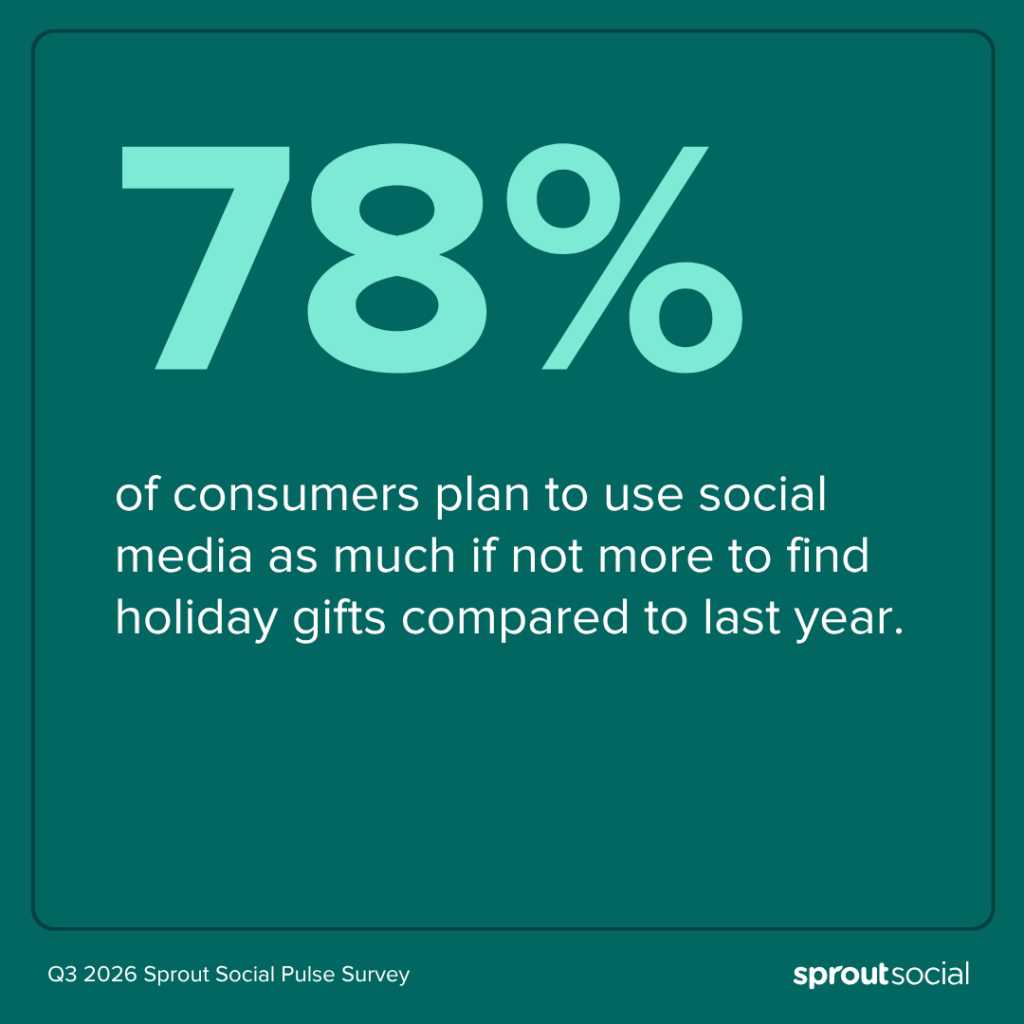
The most wonderful time of the year is fast approaching, and the influence social has on consumer purchasing behavior is undeniable. According to the Q3 2026 Sprout Social Pulse Survey*, more than three quarters (78%) of consumers plan to use social as much if not more to find gifts compared to last year.
Social has evolved into consumers’ favorite holiday marketing resource: a one-stop destination for discovering gifts, finding the latest deals and seeking customer service.
In this article, we’ll uncover key holiday shopping trends on social, including when consumers want brands to kick off their holiday campaigns, where consumers will look for gift ideas, what will make them more likely to buy, and how social media will play a key role in the customer experience.
Early holiday marketing campaigns don’t deter consumers from purchasing
Holiday milestones (and marketing) are starting sooner than ever. Social users celebrated Summerween in June, Starbucks launched their pumpkin spice latte in August and Hallmark even started promoting their online Christmas shop along the same timeline.
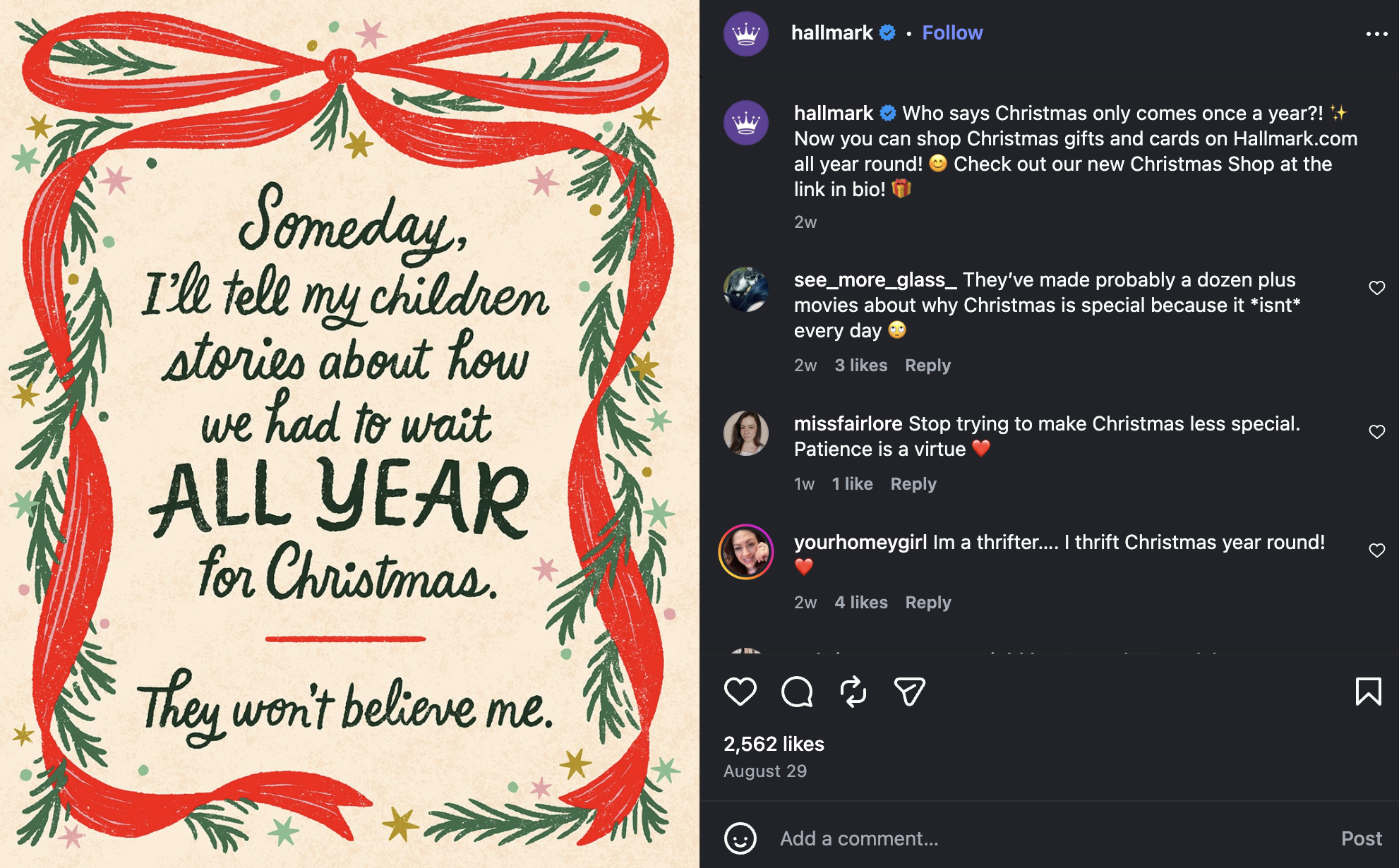
But in 2026, holiday campaigns creeping into the summer months are the opposite of what data shows consumers want: campaigns with a more traditional October start date.
This year, we saw a later shift in when consumers want brands to start their holiday campaigns, with 50% saying brands should start holiday advertising in October. This is a change compared to 2025, where August and September were the preferred months.
Yet even with consumers signaling a preference for later campaigns, that preference isn’t enough to influence actual buying behavior.
In fact, 40% of people said campaigns starting as early as August have no impact on their decision to buy from a company, while nearly 50% said they are either somewhat more likely or much more likely to buy from a brand who advertises as early as August.
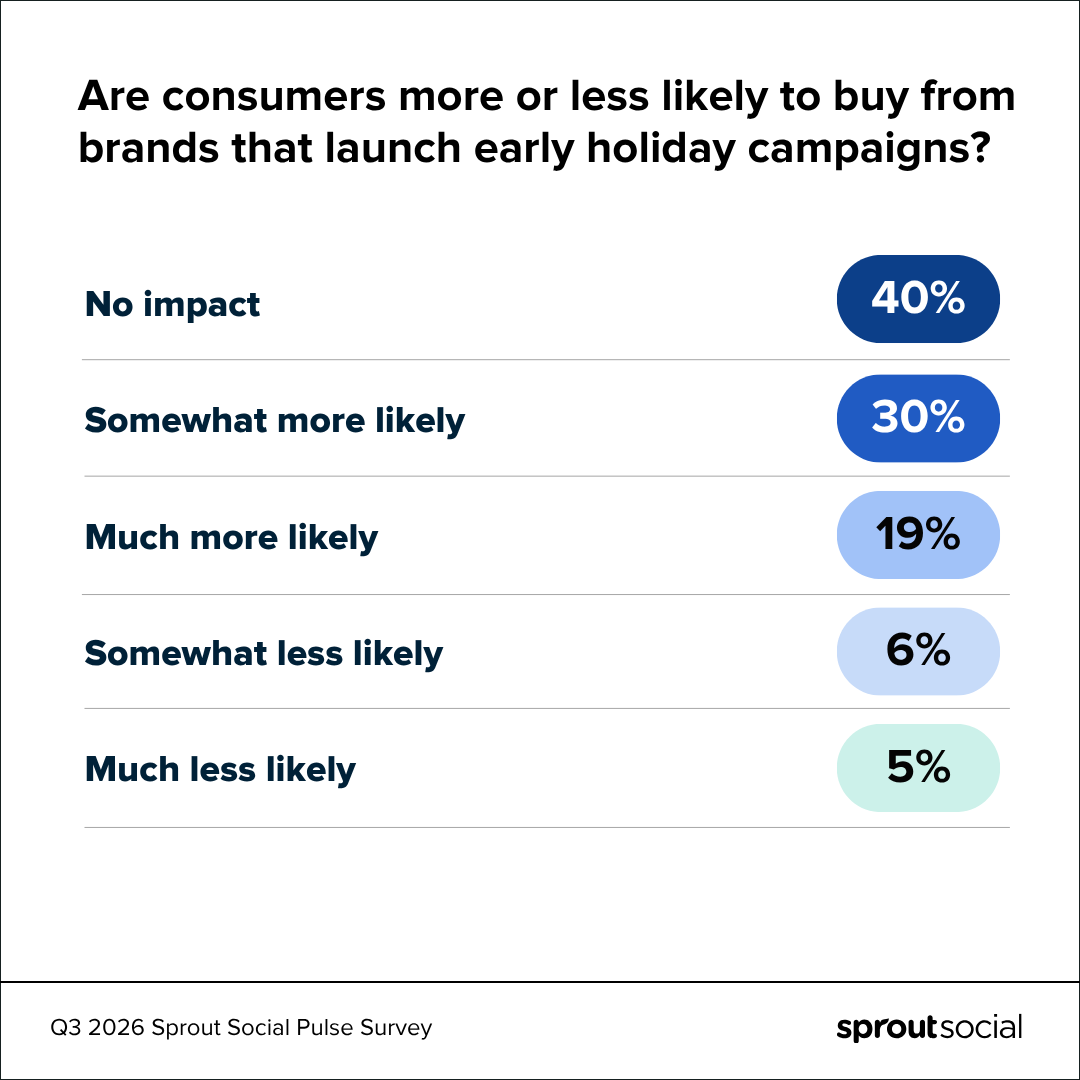
Brand takeaway: Ideal campaign timing isn’t a core motivator for most shoppers. In most cases, posting a holiday message too soon (or too late) isn’t going to determine if people buy from you or not. Instead of focusing on timing, shift attention to your campaign content and what will resonate most with your target audience.
Tariffs and the economy are impacting this year’s holiday shopping habits
While campaign timing preferences don’t translate to buying behavior, tariffs and a tight economy do.
In 2026, consumers plan to shop earlier and spend less due to lower budgets and tariff-related price increases. More than half of people (69%) are concerned about price rises due to tariffs this year, and more than a third (36%) plan to shop earlier to avoid potential future price hikes.
And overall, 56% of consumers plan to reduce their holiday spending due to economic conditions.
What will make consumers more likely to buy?
With less than ideal shopping conditions, what will motivate consumers to make a purchase?
Promo codes are the top tactic for brands to grab consumer attention, with 30% of consumers saying a code, whether from the brand itself or from an influencer campaign, would persuade them to buy, reaffirming how much budget consciousness will define this holiday season. Your campaigns and influencer partnerships need to emphasize value—even more than years past.
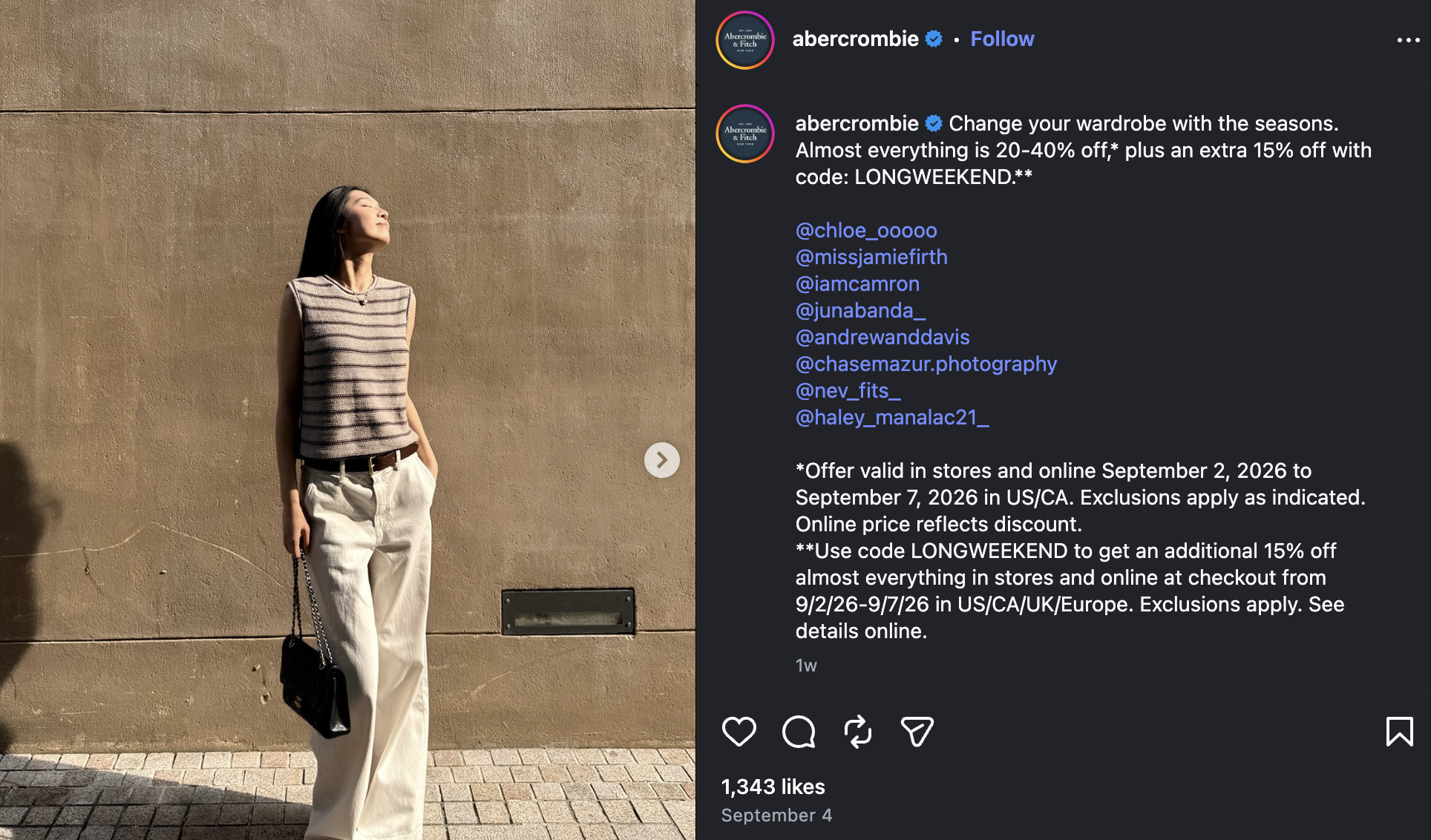
Consumers are also looking for brands to show their products in action (28%) and create original, holiday-specific social media content to grab their attention (23%). This comes as a notable shift from 2025 preferences, where a brand’s customer service and user-generated content were the most influential factors in driving purchase intent.
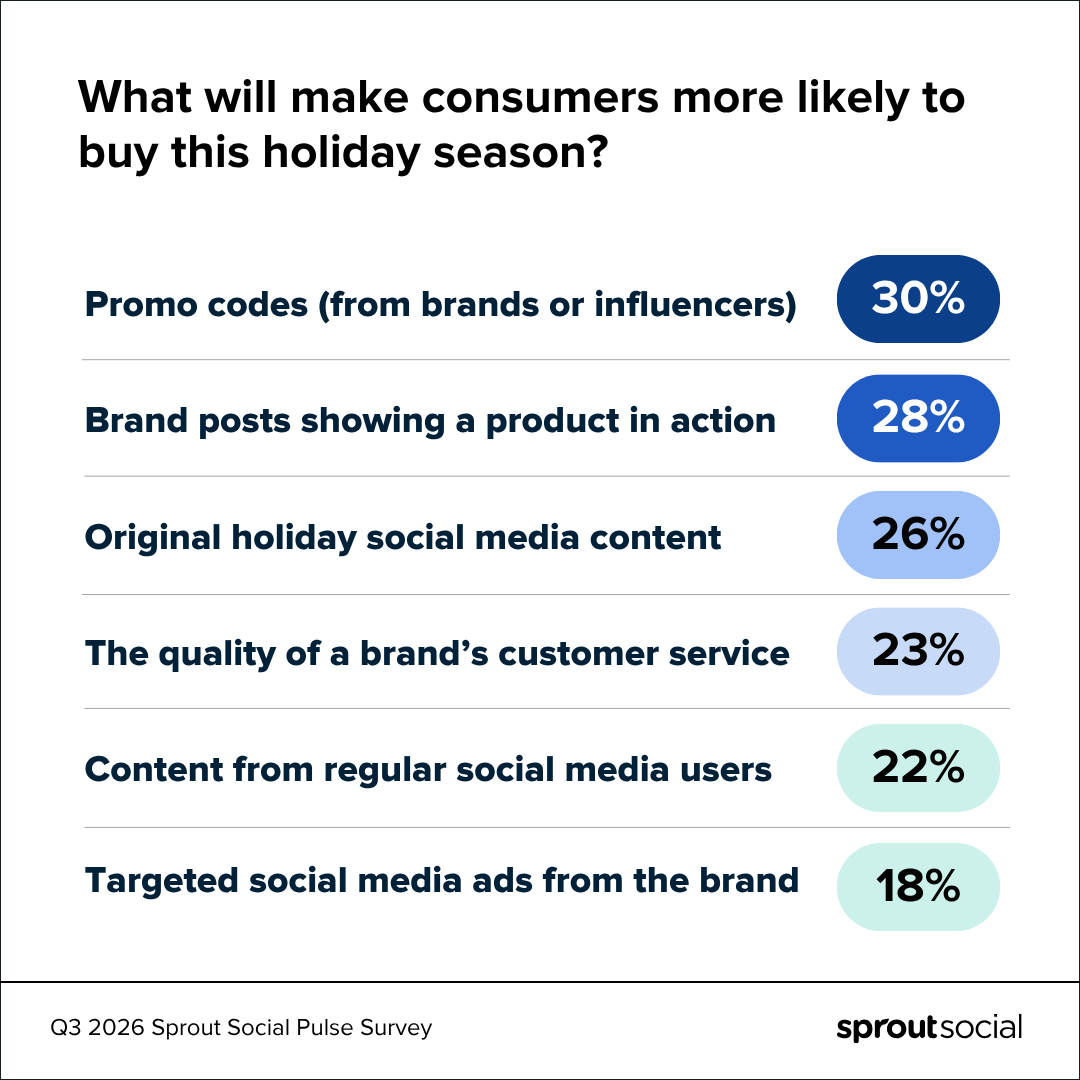
Brand takeaway: The habits of price-conscious consumers are at odds with their preferences—but the wallets win. While consumers might not want their feeds flooded with holiday content in August, tight budgets are forcing shoppers to plan and purchase earlier than years prior. Since we know campaign timing isn’t a leading motivator, lean into what is. This year’s consumers want discounts, to know how your product works and creative holiday content, making 2026 ripe for influencer partnerships that cover all three bases.
Social is a top source for holiday shopping and product discovery
It’s been a few years since we saw the initial surge in people turning to social media as a search engine. And Sprout’s Q2 2026 pulse survey proved that social search is even more popular than traditional search when people look for experiential, highly-visual or peer-led information, with social search acting as the preferred method for seeking out restaurants, bars or things to do (38%), and product reviews or recommendations (30%).
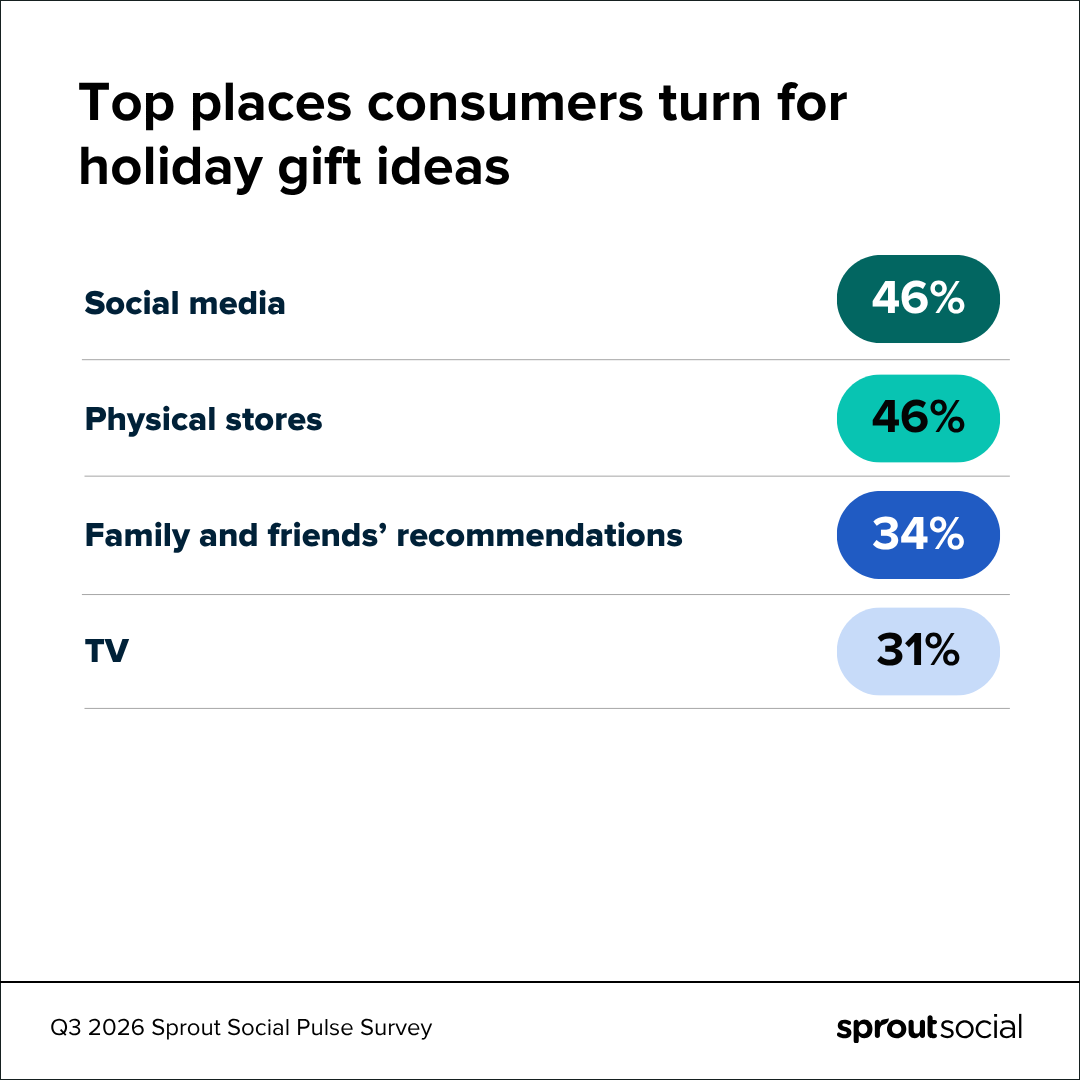
It makes sense that these behaviors translate to the busiest shopping season of the year. In 2026, social media tied for the number one spot for holiday gift discovery, with 46% of consumers turning to social media for gift ideas, exactly the same number that said they would go to physical stores. Social rises to the sole top spot for both Gen Z and Millennials, with at least half of consumers scrolling on social to decide on gifts.
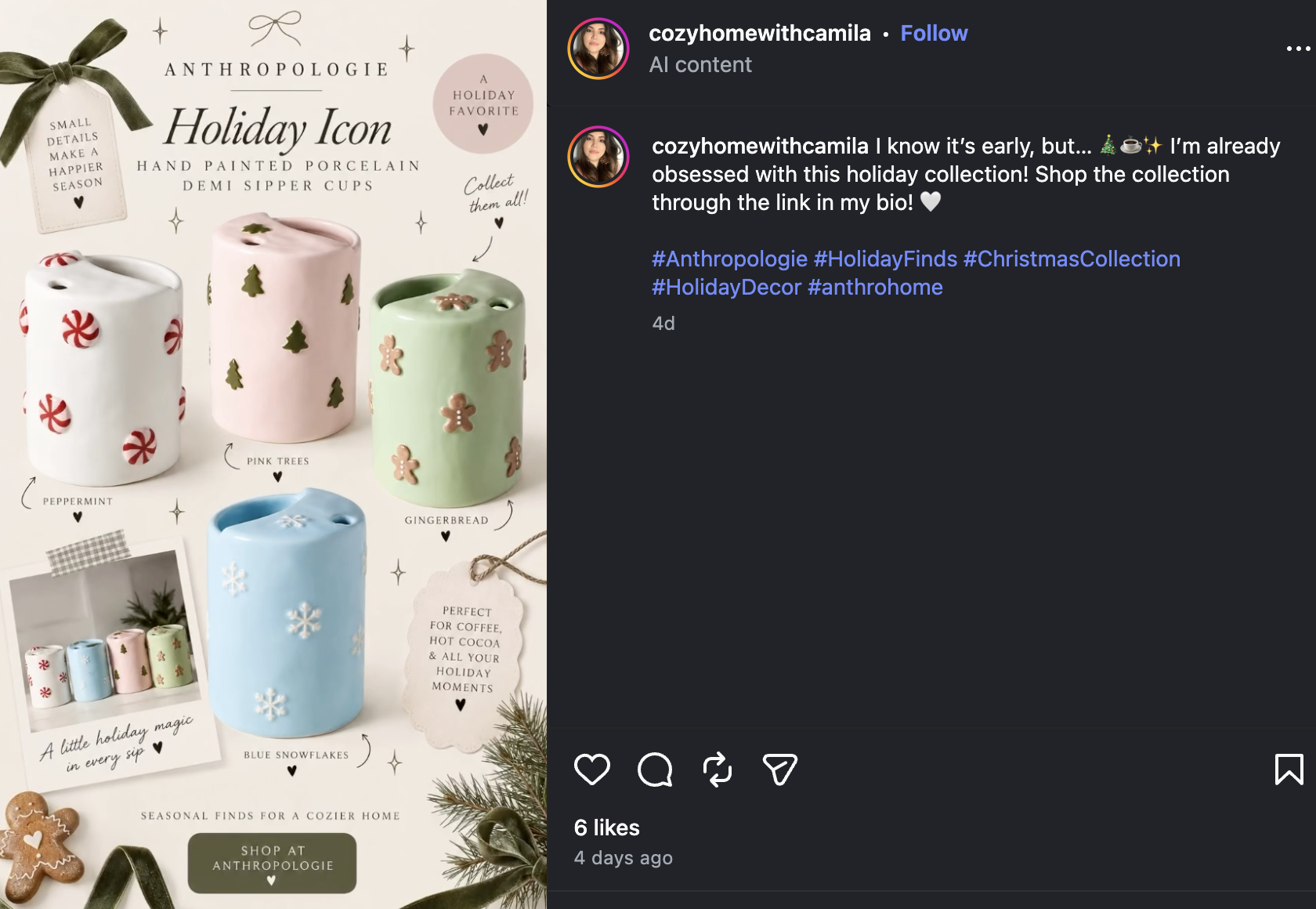
But social’s influence on holiday shopping doesn’t stop at product discovery. Consumers are routinely using social networks to purchase products directly, too. More than half of consumers said they’re open to making purchases directly within a social media app this holiday season, making experiences like TikTok Shop, Facebook Shops and Instagram Checkout all the more appealing for brands to use in holiday promotions.
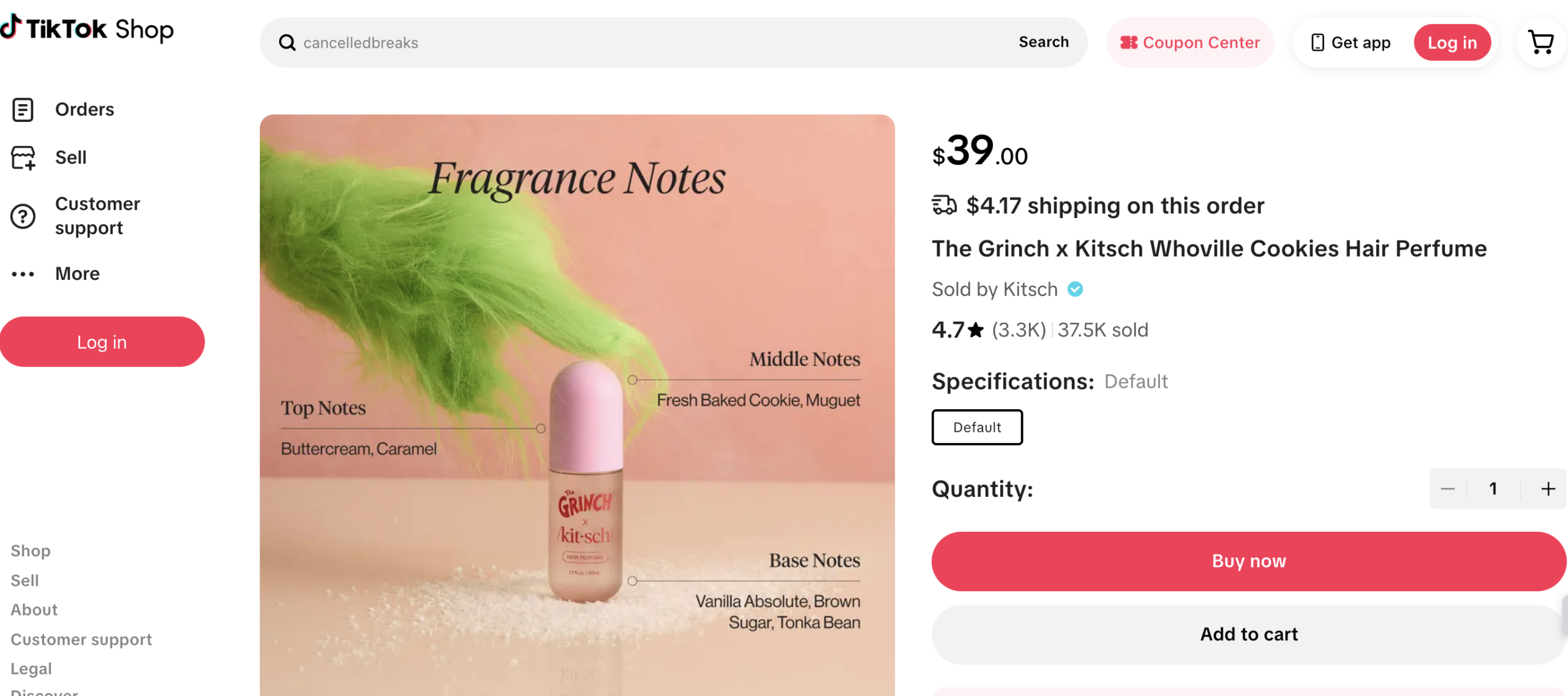
Brand takeaway: With influence on behavior from discovery through purchase, brands can bet on social as a top driver of holiday campaign success. Create full holiday campaign journeys on social media, instilling trust and leading consumers along the whole buyer journey with the least amount of effort for them.
How holiday shopping trends impact customer care
Compared to the 2025 holiday season, 86% of users plan to use social as much if not more to get customer service questions answered.
They are most likely to turn to TikTok (50%), Facebook (46%) and Instagram (44%), while also using X (28%) and WhatsApp (17%). DMs are still the preferred method to reach out to brands for most consumers across generations (55%), but the comment section is also gaining traction, with nearly one-third (31%) saying they’ll reach out in the comments.
When handling customer service on social media, speed is paramount, with 70% of consumers expecting a response from a brand within a day of reaching out. Fast responses paired with high demand for many retailers leaves brands looking for options to address gaps in service. With the holiday rush, many brands are likely to turn to AI to help deal with the influx of customer messages. AI tools can help brands prioritize incoming messages, determine sentiment and even draft initial responses. Luckily, 70% of consumers are at least somewhat comfortable with brands offloading tasks to AI in the name of better customer service. This number rises to 77% for Gen Z.
While fast service is critical, speed doesn’t always mean a better experience. It’s best to use AI to expedite tasks behind the scenes and keep a human in the loop to respond to customers directly, so you can maintain the level of quality and personalization consumers expect.
Brand takeaway: Even with the use of AI, brands still need to make a plan to prioritize personalized, timely customer service during the busy holiday season. Given that 89% of consumers say response time matters to them after they reach out to a brand for help, customer service becomes a core driver of your brand’s reputation. And with the new emergence of consumers taking to the comments section for customer service, your brand has a higher chance of public exposure when something goes awry. Prepare now with a knowledgeable team, self-help resources and FAQs you can post to social media to alleviate social customer service strain before it happens.
Use holiday shopping trends to set your brand up for a happy new year
Consumers are turning to social not just to discover gifts and deals, but to make informed, trusted purchase decisions shaped by friends, family and other users. As tariffs tighten budgets and timelines shift earlier, brands that blend originality, responsiveness and value will stand out. Whether through early promotions, relatable content or seamless service, social media is the foundation of consumers’ holiday shopping experience.
To make your brand more discoverable during the ‘ber months, use this workbook to optimize your content for social search optimization.
*About the data
Unless otherwise noted, all data cited in this article is from a Q3 2026 Pulse Survey of 2,286 consumers in the US, UK and Australia conducted by Panoplai on behalf of Sprout. The survey was conducted online from August 11 to August 18, 2026.
The post 2026 holiday shopping trends: Tariffs, trust and timing appeared first on Sprout Social.
from Sprout Social https://ift.tt/vlAKSMs
via IFTTT

No comments:
Post a Comment