Monday, 5 February 2024

Celebrating Black History Month: Best practices for celebrating on social media and beyond

With budget cuts, resignations and layoffs in diversity, equity and inclusion (DEI) departments, professionals and consumers alike have noticed a trend in companies backtracking on their social justice commitments made in 2020. As more concerns of performative activism arise, consumers are watching to see if those same brands are staying true to their word or if they’ve already moved on and are investing less in their DEI efforts.

Cultural heritage months like Black History Month are a cornerstone to many DEI initiatives for brands. But in a landscape where consumers and professionals alike are skeptical with top companies reneging on their previous commitment, how can brands celebrate Black History Month authentically?

In this article, we’ll explore best practices for honoring Black History Month and feature stand-out brands who champion and celebrate all year long.

What is the purpose of Black History Month?

American historian and scholar Carter G. Woodson founded Negro History Week in the 1920s to celebrate and acknowledge the achievements of Black Americans and others of African descent. In the 1970s, the week expanded into a month and became nationally recognized by President Gerald R. Ford. While it has been expanded upon by many Black figures in history, Black History Month reminds us to reflect and celebrate the contributions of descendants of the African Diaspora.

Black History Month takes place during February in the United States and Canada. The month is recognized throughout October in the United Kingdom and Ireland. Every year, a theme is applied to focus the public’s attention. The 2024 theme is African Americans and the Arts in the US.

DEI as a business best practice

So why should brands be cautious of withdrawing their previous DEI commitments and embrace celebrating cultural heritage months like Black History Month? Cassandra Blackburn, the Director of Diversity, Equity and Inclusion at Sprout Social points to several reasons.

She explains there’s a proven business case around concerted DEI efforts and the value add it brings to an organization. The importance of viewing DEI as a best practice is reflected in a McKinsey & Company report, where executive teams with more diversity by gender and ethnic representation are more likely to outperform financially.

“There were a lot of commitments that were made in 2020 and beyond thinking about the value proposition. The most critical strategy or component of any business is its employees. When you think about the commitments that were made to individual communities and people altogether, taking that away is bad from a business perspective,” she says.

“It’s bad business because you’ve made commitments to people, your most valuable asset. You lose trust from employees once those things are taken away.”

Beyond the lens of 2020, she explains people are the root of DEI, which means the need to value it becomes even more important.

“As humans, we all come with various experiences, all different points of views regardless of skin color, whom you love, etc. The more that company work and employees’ personal lives become more intertwined, the more critical it becomes to acknowledge, respect and do something with the information that you have about people’s personal identities and beliefs,” she says.

She also points to a shift in mentality from new generations that are coming into the organizations now. Younger generations will push the needle and challenge perspectives because they have expectations of the world and organizations.

“As younger generations continue along their careers and we don’t address the needs they have identified, the pressures that businesses are going to feel will magnify, especially as [new generations] ascend into leadership roles and their voices become bigger. If businesses don’t prepare, they are going to face challenges and potentially fail,” she says.

“As an employer, you are bringing in diversity through many layers. The recognition and acknowledgement of diverse communities is so important for employees to feel seen, heard and included in the company culture. It’s also important from an inclusion standpoint because it’s a chance to educate people who are not part of those communities because they also play a role in the workplace experience,” Blackburn says.

“Often in the corporate environment, in the workplace and just the world overall, we can have tunnel vision. We know the experience that we may have had, but we don’t acknowledge the experience that others have had. So when you call out heritage months and celebratory moments, those are very important because we’ve all experienced triumph. It’s about breaking down those blinders and acknowledging the beauty that is the different cultures and communities that make up our world,” she says.

3 best practices for celebrating Black History Month

Here are three best practices for brands to follow while celebrating each year:

1. Recognize Black history 365 days a year

Blackburn says one of the most important best practices is not secluding the awareness to just a singular month, which also applies to all cultural heritage months. Brands need to consider how they’re championing Black people, culture and achievements beyond those 28 days.

“I want brands to know and be cognizant that this is an ongoing celebration. Be intentional about finding ways to acknowledge the celebration, otherwise it could be perceived as performative,” she says.

Recognizing Black History Month means brands need to go beyond marketing messages that preach solidarity but offer little action. If brands are serious about celebrating the Black community, that commitment needs to extend into aspects of the business and become part of the fabric of a brand’s culture. While they might start off with the best of intentions, brands need to consider the impact of their celebrations. Take a moment to recognize your brand’s role in the conversation, question who benefits from your Black History Month ideas and consider how those ideas can become staples in your brand’s culture.

“As brands make plans to celebrate diverse communities through Black History Month and others, it’s important that they approach their campaigns with authenticity, empathy and cultural intelligence,” says Blackburn. “Center your campaign on advancing the mission and purpose of the celebration by seizing the opportunity to honor the accomplishments of the community.”

LinkedIn post from Laurise McMillian, Social Creative Lead at Facebook, talking about the importance of celebrating Black voice year round and not just during Black History month. She says audiences will notice when a brand only features Black and brown people on social media during February.

“Cultural conversations exist beyond the realms of 30 or 31 days so it doesn’t make sense to only create content or launch campaigns around those months when you can talk about these cultures year round. I think one thing [businesses] need to consider, especially as our society grows, is that a lot more brands are moving toward appealing to the Gen Z audience. And Gen Z is more multicultural than ever,” says Jayde Powell, content creator, marketing strategist and host of #CreatorTeaTalk.

She recommends instead of just targeting Black creators during February, brands can start incorporating them into your overall strategy. She says doing this can help maintain authenticity.

“It makes it more than just this cultural heritage moment and actually shows you are a brand that cares about the Black community. You care about Black creators. And when you say you want to work with Black creators you mean that and it’s not just during Black History Month,” she says.

2. Use social data to inform intentional campaigns that align with culture

Review your social media analytics and social listening data to identify ways to specialize campaigns and identify unique opportunities. Talissa Beall, Strategic Services Consultant at Sprout, led several DEI efforts throughout her career in social. She’s also a committee member of Black@, a Sprout community resource group.

She recalls a time where she used social data to identify misalignment between a brand’s actual customers and their organic social media content. For example, her team discovered there was an opportunity to incorporate photo representation that was more closely aligned with their demographics.

“By reviewing social listening and replies, we paid attention to how people were talking about [the brand], paying attention to language as well. We learned there was a disconnect in imagery and the type of content being featured. We learned that people didn’t care for headshots, but preferred seeing diverse people in other ways, such as a hand shot, back of the head or from the neck down. We were intentionally queuing more representation in social content,” she says.

3. Avoid performative activism through ongoing initiatives

To avoid being labeled disingenuous or opportunistic during Black History Month, brands need to prioritize maintaining their commitment to the Black community year round. There are a number of ways to show solidarity:

  • External partnerships: Work with companies, organizations and institutions such as HBCUs that champion diversity and have broad representation to diversity your talent pool and content. Collaborate with third-party DEI vendors to conduct unconscious bias training.
  • Compensation: Compensate your partners, especially when working with content creators. If your company is limited on resources, think outside of the box and focus on adding value in another way. For example, you could donate to a nonprofit organization on their behalf or co-market their content across all social media platforms year round.

Create and nurture partnerships with Black creators

As we discussed above, one of the best ways to celebrate in February and beyond is by amplifying voices within the Black community by collaborating with Black creators. Powell says brands want to work with creators because of what they have to offer whether it’s their personality, interests, unique point of view or how they create content. Just as consumers enjoy purchasing from brands that are authentic and allow them to feel like they can trust them, brands want to work with creators they can trust.

According to The Sprout Social Index™, authentic, non-promotional content ranks as the top content type consumers say they don’t get enough of from brands on social media. Powell says leading with authenticity is one of the best ways to accomplish that trust consumers are seeking.

Infographic from The Sprout Social Index™ showing what consumers don't see enough of from brands on social. Authentic, non-promotional content is ranked as the number one type of content, followed by transparency about business practices and values, product sourcing, educational content and user-generated content and testimonials.

“Often, as creators, we’re the face of the brand. We are the people behind the scenes. So why not infuse who we are into the content that we create? One of those ways to do that is by showing up authentically in who you are,” she says.

Rethink collaboration to achieve authenticity

She recommends brands rethink their approach to establishing connections to help maintain the authenticity consumers seek. She points out that often when we think about relationships between brands and creators, it’s rooted in contract, but human connection makes all the difference.

She explains when she works with brands, she enjoys getting on calls to understand what the brand is trying to accomplish, their end goal and the best way to help them. Seeking this alignment is helpful because what a creator envisions for a brand’s channel or platforms may look different compared to the brand’s perspective.

“I feel like that face time helps them also understand who I am as a person, so they have the knowledge and pretense that this is also going to show up in the content I create—my personality, how I speak, how I write because it’s coming from my brain. It’s my creativity and my creativity is me,” Powell says.

Powell encourages brands to pass the mic to creators during cultural heritage months or cultural moments to center members of the community because that’s sometimes where brands miss the mark. They want to insert their product and services everywhere, but they aren’t a part of or active within the community.

“When it comes to Black, brown, queer, immigrant and plus-sized creators, if you don’t have an authentic, intentional way to step in those communities, leveraging them is a great way to do that because you’re picking people from those communities who already have a connection with your brand. If they don’t have a connection with your brand, there’s an opportunity to educate and showcase why the brand is valuable to them,” Powell says.

LinkedIn post from Jayde Powell sharing a thread featuring Black creators for brands looking to partner during Black History Month and year round.

Expand your dollar into the community 

Powell explains these creator collaborations don’t have to be limited to creating content either. This ranges from nonprofit contributions to bringing in creators as consultants to get a genuine understanding of what cultural conversations are relevant to them.

“Whether you’re a corporation or a small business, if you know these are moments you want to be a part of, look for opportunities to expand your dollar into that community,” Powell says.

Powell emphasizes paying creators in a timely manner and other efforts toward pay equity because of the disparity within the creator economy. When we look at the creator economy as a whole, a large percentage is white.

“Because of this disparity, Black creators are often under-valuing themselves because when you’re not getting as much experience or knowledge into how much you should be charging in a space that’s already convoluted. I think brands also don’t always value Black creators as much as they should,” she says, “There’s that wage gap between Black and brown creators and white creators, but it also comes down to the people that are hiring creators.”

She explains when social media and influencer marketers are working in house to build these cultural heritage campaigns, they often don’t come from those communities so it isn’t always top of mind for them. She points to an example of a time she was working with a brand where a marketer was building an influencer list and it was entirely white, so Powell suggested including more diverse influencers.

“Black people are culture drivers and that’s shown in the creator economy. I’ve seen creators on TikTok who are white predominantly use sounds that were created by Black people and have millions of followers. That’s not to say it’s only Black creators who are creating original content, but that’s something for brands to consider during their research. Who are the true drivers of these trends? Which creators have helped these moments online come to life? You’ll often find that a lot of them are from Black and brown creators,” she says.

She mentions an example that happened on February 1st, 2024.  Content creator @cierralikeseggs called out a mega influencer who replicated her joke in a TikTok video word for word. People on both TikTok and X started calling the influencer out for not giving credit to the original creator. The mega influencer deleted the video in response, but didn’t acknowledge the situation.

A post from Black content creator @cierralikeseggs calling out a mega influencer for plagiarizing her TikTok video on the first day of Black History Month. The original video is located on the left and the replicated version is on the right.
Between these common scenarios and social media marketing teams often being smaller, Powell explains it’s not just one or two people to vet and validate creators—an industry wide shift is needed. So how can brands be part of the trailblazers making that shift? Pay transparency.

“If you’re working with a creator and you know you have a larger budget and they severely undervalue themselves, tell them. For example, if you’re creating an influencer list of five people and each quote $1000, but one person asks for $300, it would be unethical to give them a lower rate when you know you can do more,” she says.

Pay attention to tone

Remember it’s a celebration. Although it’s important to highlight the history of oppression, racism and institutional struggles, there’s power in amplifying joy in Black History Month and other heritage months such as Latinx Heritage Month and Asian American and Pacific Islander Heritage Month.

“I’ve noticed the more I’ve gotten into marketing, the moment we start talking about cultural heritage months, it’s always rooted in oppression. It’s almost as if being Black is synonymous with struggle. But for a lot of us, being Black is a celebration. It’s not always about our persecution or the dark history of our ancestors. Of course that’s part of it and why we’re able to celebrate, but our experience as people on this planet goes beyond oppression,” she says.

A Black History Month post from Refinery29 Unbothered. The post introduce their theme for the month "Exploring Artificial Intelligence While Celebrating Where Our Past, Present and Future Meet," a tribute to the Black community's complex history.

Appeal to the global diaspora

Powell encourages brands to shift their point of view of Black history and culture to include the global African diaspora. As an American citizen born to Jamaican immigrant parents, Powell says that heritage informs a lot of her experience. When we talk about the Black community, that includes people from Africa, Europe, Canada, Latin American, the Caribbean—literally everywhere.

“I think that’s a really missed opportunity for a lot of brands, whether they’re based in the United States or not. When we talk about Black History, it’s immediately around Black Americans. It’s important to get out of the US-centric point of view because the Black experience is global,” she says.

Brands that celebrate year round

Now that we’ve covered the importance of Black History Month and best practices while participating, let’s review some of our favorite brands who do a great job celebrating year round.

Topicals

If you’re looking for inspiration for celebrating year round, look to Black-owned brands like Topicals. In 2023, the brand made waves online through their brand trips. In August, Topicals hosted the first fully BIPOC sponsored brand trip. The influencer trip resulted in 3 million impressions and an increase of 5,000 followers across TikTok and Instagram. In December, #TopicalsGoneToGhana trip highlighted Detty December, a month-long annual celebration featuring music festivals and other events in West Africa. The campaign resulted in their Slick Salve lip balm to be sold out, but the brand used the opportunity to uplift other brands on social media. On Instagram and TikTok, Topicals featured other Black-owned lip balm brands in Sephora.

A TikTok carousel from Topicals featuring Black-owned lip balms people can buy from since their product, Slick Salve, is out of stock.


Topicals’ 2023 Community Impact Report highlights the brand’s support beyond social media. The skincare brand donated $50,000 to nonprofits, provided free therapy to the BIPOC community, donated 2000 products to help individuals experience financial hardship and more. These initiatives were fueled by the Spottie Sphere, an interactive ambassador program open to customers, creators and skincare professionals.


View this post on Instagram


A post shared by TOPICALS (@topicals)

Pinterest

Pinterest has incorporated inclusive features into the platform. For example, users can search by skin tone, hair pattern and body type. Beyond their product, they also have internal initiatives including employee resource groups, called Pinclusion groups. In 2023, they hosted their inaugural Pinclusion Group Leadership Summit.

A search query on Pinterest. There is an option to search by skin tone range.

Target

Blackburn points to Target as one brand she admires for their work in celebrating Black History Month. “Through the African American Business Council, an employee resource group, [Target] developed a recurring campaign called Black Beyond Measure which amplifies success stories and celebrates Blackness. The campaign showcases products from Black-owned businesses (that are carried in their stores year-round), as well as Black entrepreneurs and Black Target team members.”

Target's landing page for Black History Month featuring Black-owned brands.

Ben & Jerry’s

Accountability follows a statement of solidarity, and brands need to be ready to show how they are backing their words up with visible action. Ty Heath, Director of the B2B Institute at LinkedIn, warns consumers are quick to call out brands that talk the talk but don’t walk the walk.

“Saying your brand will do better without action won’t stand up to scrutiny,” said Heath. “While many brands have shown support for social justice issues, building trust requires sustained investment—not only during Black History Month.”

She points to Ben & Jerry’s as one brand that has figured out how to be authentic with their activism. “Ben & Jerry’s has made speaking out against social justice issues part of its DNA. The journey starts with an internal conversation about uncomfortable topics we often avoid. To support your growth, incorporate diverse voices and core values into the fabric of your company’s brand and culture,” she said.

A LinkedIn post from Ben & Jerry's. The post thanks customers for helping them raise $100,000 for the Advancement Project, an organization working to end systemic racism. Ben & Jerry's link out to the organization's website for people to learn more.

Not only do brands like Ben & Jerry’s follow through on their promises; they also take big, bold stands that strive to move the needle on racial equality. The actions a brand takes ripples outside of the organization and can even impact society.

Dove

From representing different body types, hair textures and skin tones in their marketing to their award-winning body positivity campaigns, Dove has centered inclusivity as a part of their brand for years. In terms of supporting Black History Month year round, Dove co-founded a coalition to advance the Creating a Respect and Open World for Natural Hair (CROWN) Act, a law that prohibits racial discrimination based on hair texture and styles such as locs and brands. They’re currently partnering with LinkedIn to create more equitable workplaces for Black women.

A Story on Dove's Instagram highlight dedicated to the CROWN Act. The Story announces the law was passed in Texas and shares a link to Dove's landing page.

“These brands have not always been perfect. DEI is a journey that comes with bumps and bruises. And not everyone will be able to invest millions of dollars, but it’s the smaller commitment, the incorporation of DEI into our values and practices longer term that outweighs any singular campaign or initiative. As an organization, your north star is becoming the most inclusive, diverse and equitable company. That will rain through your social media campaigns, customer engagement and building your brand,” Blackburn says.

Black history is more than a moment

Black History Month social media doesn’t have to stop after February. Cultural heritage months are just the beginning of how brands can show consumers they are prepared to be held accountable for their DEI efforts. Supporting the Black community is an ongoing commitment, with the bulk of the work happening offline.

As brands prepare for their February campaigns, remember that Black history is more than a trend. Approach Black History Month with authenticity and action, but also think about how you can uplift Black communities and culture year round.

Ensure your company efforts are genuine and sustainable by prioritizing diversity, equity and inclusion in all parts of your business operations. To learn more about how to go beyond diversity statements and integrate DEI into your strategies for long-term success, read our article about who really runs the brand account.

The post Celebrating Black History Month: Best practices for celebrating on social media and beyond appeared first on Sprout Social.


from Sprout Social https://ift.tt/ABkh2H6
via IFTTT

Friday, 2 February 2024

12 Facebook publishing tools for your brand in 2024

As part of your Facebook marketing strategy, a consistent publishing schedule is essential. Without the help of social media scheduling tools, that means you have to remember to go online each day (sometimes even multiple times a day) to manually publish your content.

Nowadays, there are much more efficient ways to publish and schedule social media content. If you take advantage of a Facebook publishing tool, you will be empowered to have a tool semi-automate your social media management tasks. With capabilities like batch uploading your posts for the month, creating a weekly or monthly schedule, and built-in tools that make content publication easy, your time will be freed up for tasks that your business needs you to focus on instead.

Throughout this article, we’re going to address three key benefits of using a Facebook publishing tool and introduce you to 12 useful options for your business.

Why you should use a Facebook publishing tool

How can a Facebook publishing tool help you? And why is spending time to discern the right one for your business worth it?

We’ve got three reasons why.

Efficiently schedule your posts ahead of time

Scheduling your Facebook content ahead of time is a much more efficient way to publish your content. Instead of logging in every day to manually publish your content at sporadic times, we recommend batching content tasks together in advance to make your content publishing process most efficient.

Batching is a time management tactic that groups similar tasks together as a way to work on them more quickly and decrease potential distractions. When it comes to your Facebook content, we recommend batching content tasks together like so:

  • Content ideation – Plan a set time for content idea of the posts you plan to create and eventually publish. This step you’ll want to do the furthest in advance so you can set yourself up for the next two stages of the content process.
  • Content creation – After the content ideation is complete, we recommend knocking out the creation of the content you plan to schedule and publish all at once or through a few content creation sessions.
  • Content scheduling – Lastly, once the content is produced, we recommend scheduling those posts in one sitting using a Facebook publishing tool.

If your Facebook content process has more steps than the ones above, you can add those in. But it’s best to focus on each task at once, first creating an entire week’s worth of content, then scheduling that week’s worth of content.

And using a Facebook publishing tool makes scheduling out your content even easier. Some of the tools in our list allow you to set your planned weekly schedule first so that you don’t have to select a date and time manually. Other tools allow you to choose automated optimal times based on your audience.

Streamline your reporting

Most Facebook publishing tools give you access to your posts’ analytics, which provides you with key data for metrics like reach, engagement rate, and more. Use the analytics feature provided through third party Facebook publishing tools to draw insights for your social media reporting. Discover your top-performing posts so you can create more like them. And identify posts that don’t resonate as much with your audience so you can remove them from your strategy.

Facilitates team collaboration

If you work with a team to create and schedule your Facebook content, publishing tools can make the process even easier. Find a tool that facilitates social media collaboration, allowing junior social media managers to create content to then send to senior managers for approval and publication.

Or, have your social media team input the content and captions for each post to then send to the graphic design or video team to add in the assets once they’ve been created.

Looking to improve efficiency, reporting and collaboration amongst your team? Check out the top 12 Facebook publishing tools below to find the perfect option for your business.

1. Sprout Social

Sprout Social sits at the top spot of our list for a reason. Yes, we’re going to toot our own horn. Sprout Social is a comprehensive and easy-to-use Facebook publishing tool—but it’s also so much more than that.

A screenshot of Facebook publishing tool Sprout Social

With Sprout Social, you can get access to Facebook features like:

  • Publishing
  • Reporting and analytics
  • Monitoring
  • Customer service
  • Competitor analysis

But you can also get access to those features and more for every other social media platform you plan to use in your strategy. Take advantage of our publication features while also getting an all-in-one tool that fits all of your social media management needs.

Plus, make Facebook publication as easy and seamless as possible. Input your caption, upload your media, then let Sprout’s AI tool find optimal publication times based on when your audience is most likely to be online.

screenshot of Sprout Social's Facebook publishing tool

Our Facebook publication-specific features include:

  • Optimal posting times
  • Team collaboration tools
  • Visual social media calendar
  • Content suggestions for inspiration
  • URL tracking

Pricing: Starting at $249/month. Sign up for a free 30-day trial today!

2. Social Champ

Social Champ is another social media management tool that works on a number of networks—Facebook, of course, included. With Social Champ, you can add multiple social media accounts to your dashboard and manage your presence on all of them from one place.

A screenshot of the homepage of the Facebook publishing tool Social Champ's website

Facebook scheduling features include:

  • The ability to save and manage hashtags
  • Analytics and reporting
  • Automation
  • A social media inbox
  • The ability to add the first comment to your Facebook post

Pricing: Free forever account option. Paid plans start at $26/month.

3. SocialBee

SocialBee is another Facebook publishing tool with a number of features to offer. Its visually appealing content calendar can help keep your social media team organized each time you schedule another batch of content.

A screenshot of the homepage of the Facebook publishing tool Social Bee's website

SocialBee’s Facebook management features include:

  • Integrations with design and content creation apps
  • Content calendar with scheduling capabilities
  • AI assistant for help creating content
  • Analytics and reporting
  • Social inbox

Pricing: Starting at $24/month.

4. Keyhole

Keyhole is a Facebook publishing and analytics tool focused on helping agencies manage all of their client accounts in one seamless dashboard. Keyhole also has an arsenal of social media management tools, making sure its agency users can easily manage all aspects of their clients’ social media.

A screenshot of the homepage of the Facebook publishing tool Keyhole's website

The Facebook publication tools available in Keyhole’s suite include:

  • Optimal posting times
  • A calendar view for organization
  • Full-scale social media analytics
  • The ability to collaborate with teammates or clients

Pricing: Starting at $79/month.

5. CoSchedule

CoSchedule is another great option for keeping all of your digital content scheduled out and organized. Famous for its calendar view, CoSchedule focuses on helping marketing teams make sure they’re never missing a day of content.

A screenshot of the homepage of the Facebook publishing tool Coschedule's website

Facebook publishing features available with CoSchedule include:

  • An easy-to-use drag-and-drop social calendar
  • The functionality to track social media messages
  • AI social assistant to help writing captions
  • Social message optimizer to help improve your engagement

Pricing: Free account option. Paid plans start at $19/month.

6. Agorapulse

Agorapulse is a social media management tool that supports more social networks than just Facebook, making this a great option for brands with a complex online presence. More than that, Agorapulse boasts additional features that help users offer great social media customer service.

A screenshot of the homepage of the Facebook publishing tool Agorapulse's website

Agorapulse’s Facebook publishing features include:

  • Team collaboration
  • Visually appealing social content calendar
  • Multi-platform publishing
  • UTM tracking
  • Asset management

Pricing: Starting at $49/month.

7. Post Planner

Post Planner is a simple and easy-to-use social media publishing tool. With a name like Post Planner, you can safely assume that the ability to plan out your social media content sits at the core of this tool’s functionality.

A screenshot of the homepage of the Facebook publishing tool Post Planner's website

Post Planner’s Facebook publishing features include:

  • The ability to create multiple posts at once
  • The ability to optimize your posts for each platform’s requirements
  • Post previewing
  • Saved captions
  • Evergreen content recycling

Pricing: Free plan available. Paid plans start at $7/month.

8. eClincher

eClincher is a social media management platform that also has features that assist with local SEO, business listing management and tools for businesses with franchises or multiple locations. That means this is a great option for franchise businesses needing help with more than just social media.

A screenshot of Facebook publishing tool eClincher

eClincher’s Facebook publishing features include:

  • Digital asset library
  • Content curation tools
  • Hashtag management
  • Multi-platform publishing
  • Team collaboration

Pricing: Starting at $65/month.

9. Loomly

Loomly is a social media management platform that also offers team collaboration features, helping its users to collaborate effectively as they implement their social media strategies. Access a number of useful features with a visually appealing interface.

A screenshot of Facebook publishing tool Loomly

Some of the Facebook publishing features that Loomly offers include:

  • Visually appealing content calendar
  • Team notifications and collaboration tools
  • A feed of post ideas to get inspiration
  • Asset management
  • Automated and manual publishing options

Pricing: Starting at $32/month.

10. SocialPilot

SocialPilot is a social media management and analytics tool that can be a great option for organizing, publishing and scheduling your Facebook content. Access collaborative tools, AI features, publishing capabilities and more.

A screenshot of Facebook publishing tool Social Pilot

To help you publish your Facebook content, SocialPilot has features like:

  • An AI assistant to help with your content creation
  • A content library to store your assets
  • Smart scheduling that accounts for different audience time zones
  • Bulk scheduling to make publication even easier

Pricing: Starting at $25.50/month.

11. Iconosquare

Iconosquare is a tool that started years ago as one of the only Instagram analytics tools and has come a long way based on demand to offer a suite of social media management tools for nearly every social media platform.

A screenshot of Facebook publishing tool Iconosquare

The Facebook publishing features that Iconosquare offers include:

  • Image cropping tools
  • Post approval
  • Media library
  • Cross-platform publishing

Pricing: Starting at $49/month.

12. Emplifi

Emplifi is the last option on our list, but still a solid choice for a social media management and publication tool. Emplifi can help you publish and schedule your content, as well as manage your online community, keep an eye on your brand’s reputation and even work with influencers.

A screenshot of Facebook publishing tool Emplifi

With Emplifi, get access to Facebook publishing features like:

  • AI caption composer
  • AI-powered posting time recommendations
  • Post approval workflows
  • Digital asset library
  • Presets, templates and drafts for easy content creation

Pricing: Book a demo to get a customized quote based on your needs.

Find the right Facebook publishing tool for your needs

Ramp up your Facebook marketing strategy by planning ahead and staying organized. One of the best ways to do that is by putting together the perfect arsenal of tools for your needs.

If you’re looking for an all-in-one Facebook publishing tool, give Sprout Social a try. Sign up for a 30-day free trial to test drive our software and see if we have what you need.

The post 12 Facebook publishing tools for your brand in 2024 appeared first on Sprout Social.


from Sprout Social https://ift.tt/39hpEjg
via IFTTT

Thursday, 1 February 2024

11 social media trends you need to know in 2024

You don’t need to be a fortune teller to guess which social media trends are poised to take off in 2024. All you need is data.

Combining performance and consumer preference data can create a vivid picture of the year ahead. We’re not talking about which TikTok sounds will blow up in a few months. We’re talking about what’s driving audience behavioral patterns and where your brand fits in the mix.

In this article, learn about current trends in social media driving the future of social, based on input from social media experts and the data behind the social space.

    1. Video is king…but with a long-form twist
    2. Playful content is the new “brand personality”
    3. The expansion of social commerce remains a trend to watch—and use
    4. SEO is important for social channels too—not just your site
    5. Behind-the-scenes content and reimagined transparency
    6. Authentic content resonates across platforms
    7. The evolution of social teams and titles
    8. The boom of the creator and influencer economy
    9. Personalized customer care is a consumer preference
    10. Marketing and customer care teams use AI regularly…and monitor it closely
    11. Social data is key—beyond the marketing team

Trend 1: Video is king…but with a long-form twist

The popularity of video, specifically short-form video, is bound to end up on a social media trends list every year.

We already know short-form video is one of the best ways to connect with your audience and reach new followers. In fact, most consumers say it’s the most engaging type of in-feed content.

But, plot twist: long-form video has seen a resurgence worth noting.
TikTok has been pushing longer videos—starting with one-minute videos, then 10 and most recently, it started testing 30-minute uploads. It’s even starting to push horizontal videos a la YouTube.

And with the platform reporting that users spend over half of their time on TikTok watching videos that are a minute or longer, these long-form tests have reason behind them.

A Thread post by Matt Navarra sharing an article about how TikTok is encouraging people to post horizontal videos, like YouTube.

Brand takeaway: You still need short-form video as part of your day-to-day social media strategy. But think about how you can bring long-form storytelling into your content.

Trend 2: Playful content is the new “brand personality”

The “edgy” brand voice is taking a back seat to a new brand trend: experimenting with playful content.

Brands have consistently found creative ways to tap into meme culture and the voice of the Internet in a way that fits their voice. And we’ve seen more brands experimenting with their voice and visual content to do so.

Take LinkedIn’s Threads, which have a human voice and cover topics that range from relatable and hilarious, to inspirational and endearing.

A Thread post from LinkedIn that says "coming back from PTO be like:" and contains several blurry images of Slack and a coffee.

And we love the way Auntie Anne’s pretzels has create a strategic, branded social media meme strategy. They create content that riffs on Internet culture, memes and trends while still staying true to their brand colors, tone and image.

A Facebook post by Auntie Anne's riffing on Internet culture. It's a lo fi picture of an Auntie Anne's mall store that has text across it that says, "It will be 2015 in 4 months. Think about that." The post caption says, "Oh, you didn't get the memo? It's time to walk around the mall with a pretzel in hand."

Brand takeaway: Think about how your brand can get playful on social media. You don’t have to do this in a way that breaks your brand’s voice and tone. What trends and meme formats could you adapt to fit your brand’s content?

Trend 3: The expansion of social commerce remains a trend to watch—and use

We’ve all seen the #TikTokMadeMeBuyIt trend…or bought something after seeing it on TikTok or another social platform ourselves.

But this is more than a fleeting trend—social commerce is a continuing trend to watch and consider for your strategy. And platforms like TikTok are pushing for it. TikTok Shop officially launched in the US in late 2023. And they’re already testing ways to make that in-app shopping even easier.

We talked to Social Strategy Director at Mekanism, Jeff MacDonald, about current social trends to watch. And this is one that he flagged. As he puts it, live streaming and interactive shopping experiences are only expected to expand, so this trend is likely here to stay. “Live shopping events, combining entertainment with instant purchasing options, offer an engaging way for brands to connect with consumers. This year will be a test to see if North American audiences will adopt live commerce streams like other audiences have.”

Brand takeaway: If you haven’t experimented with selling on social, now is a great time to test this out. There’s an eager, ready-to-buy audience on social. Give them another way to buy—look into whether opening up shop on TikTok, Facebook or Instagram is right for your brand.

Trend 4: SEO is important for social channels too—not just your site

Recently, I did research on a few places I want to travel and hike this coming summer. I didn’t turn to Google—I searched location hashtags on Instagram.

Don’t underestimate the power of social media platforms as search engines. In 2022, nearly 40% of Gen Z preferred TikTok over Google for searching for information.

This makes optimizing your content for discoverability—both in feed and via search—more important than ever before.

Brand takeaway: Just as you would optimize an article on your blog or a page on your site for SEO, take an optimized approach to your social content. Optimize your posts and profile for maximum discoverability by using the right keywords in your caption, the right hashtags and relevant keywords within your alt text, too.

Trend 5: Behind-the-scenes content and reimagined transparency

The rising audience desire for authentic content lends itself to the need for brands to be more transparent about their business practices on social.

But there’s been an interesting shift. A few years ago, we couldn’t talk about trends in social media without covering the importance of brands speaking up—or getting called out. But in 2023, only a quarter of consumers polled in the Index said the most memorable brands on social spoke out about causes and news aligned with their values.

The Index also found the second biggest thing consumers don’t see enough of from brands on social media is transparency about business practices and values.

I take this to mean that while brands speaking out used to set them apart, now it’s a regular expectation that brands demonstrate transparency and their values as a regular practice.

For example, shoe brand Nisolo regularly creates and posts sustainability “report cards” for their products.

@nisoloshoes

We all value people. We all value the planet. It’s time for our clothes to do the same. #SustainabilityFactsLabel #peopleandplanet

♬ original sound – Nisolo

Brand takeaway: Look for opportunities to provide more transparency about your business, products and practices. You can start as simple as creating behind-the-scenes content of your office, products being made, the people behind your products and your sustainability values. Make sure you have action or proof to back up your statements.

And if questions do arise that your brand should address, use the right tools to stay proactive. Social listening will help you identify rising conversation topics early, enabling you to understand and get ahead of an issue, and identify the changes you need to make.

A screenshot of Sprout's Social Listening solution and the conversation overview that shows what keywords are being used with your brand in conversations.

Trend 6: Authentic content resonates across platforms

Authentic, non-promotional content is the number one thing consumers say they don’t see enough of from brands on social, according to The Sprout Social Index™. We’ve seen the way creator culture has skyrocketed in popularity—and brands featuring authentic voices, from creators to employees, shine against those that don’t.

And it’s crucial for brands to recognize that this trend is here to stay—it’s the new era of social media.

We talked to Flywire Social Media Manager Sam Mackowitz, who believes AI is only driving this desire for more authenticity. “I think people will be yearning for authentic experiences on social media. Don’t get me wrong, AI is fantastic and can help us get places faster, but…that personal aspect is so important and will continue to be in 2024.”

@flywire

How would you describe in 3 emojis? Comment below! #InsideFlywire #polls #companyculture

♬ original sound – Flywire

Brand takeaway: Besides tapping into creators, create more authentic owned content, too. As Mackowitz explains, “At Flywire, the content that performs the best for us is always when it’s showcasing our employees. We’ve had great success showcasing the people behind the payments! Authenticity will soar in 2024.”

Think: playful posts and featuring fellow employees in video content who aren’t camera shy, or a “meet the team” series. Get creative!

An employee advocacy strategy is a stellar way to promote your brand authentically. Using a platform like Employee Advocacy by Sprout Social makes it easier for your employees to discover content and copy suggestions you curate for them to share.

A screenshot of the "Add a New Story" option in Sprout's Employee Advocacy tool.

Trend 7: The evolution of social teams and titles

Is your social team structure based on networks? Then you’re not alone—according to the Index, 64% of social teams are aligned to specific social platforms or networks.

But the reality is, your team structure is constantly running the risk of becoming outdated. As social media evolves, so do the teams and the skills needed to run it successfully. And the emergence of new platforms, like Threads, always brings back the same question: whose responsibility is a new platform when you’re divided by network?

New social media jobs and titles are emerging and evolving rapidly. We talked to Gabby Grahek, Strategic Services Consultant at Sprout and a social media thought leader, about current social trends. “I’m hoping and praying for social specialties on social teams. With organizations continuing to experiment with social, build a budget for these teams and elevate their maturity levels when you can.”

Brand takeaway: Gabby thinks “we’ll see niche social professions develop on corporate teams.” Evaluate your current team structure and identify gaps. This is a great opportunity to take additional ownership over your career path and pitch a new role that fits your skillset. Or, make the case to your manager that you need more headcount to accommodate a new role.

Trend 8: The boom of the creator and influencer economy

Today, it’s the creator and influencer’s world—we’re just posting in it.

In the era of authenticity, creators and influencers lend an authentic, human voice and experience to the social scroll. And their place on brand accounts is only going to become more important to connecting with audiences. In fact, in a Q3 Sprout Pulse Survey of 307 US-based marketers, 8 in 10 social marketers describe influencer marketing as essential to their social strategies.

As Jeff MacDonald mentioned, “The continued dominance of TikTok underscores the shift towards more authentic, unfiltered content. This trend is likely to grow, with users gravitating towards content that feels genuine and relatable. Brands will increasingly leverage creators and influencers who can craft compelling stories and connect with audiences on a personal level.”

Brand takeaway: The rise of creators and influencers and the authentic voice they provide will likely remain on the list of social media trends for years to come. So now is the time to kick off your creator and influencer marketing partnerships and program, if you haven’t already.

As Jeff put it, “Authenticity in content not only enhances engagement but also fosters trust and loyalty among consumers. This trend is very much in line with the human-centric approach to social media, where human creativity and connection are pivotal in crafting brand messages.”

Consider adopting a dedicated creator and influencer management platform, which over half of brands have done according to a Q3 Sprout Pulse Survey. Platforms like Tagger by Sprout Social make managing your influencer partnerships and their impact easier.

Trend 9: Personalized customer care is a consumer preference

The expectations for social media customer service have only gone up. Consumers no longer just want fast responses—70% of them expect personalized responses to their customer service needs, according to the Index.

And 76% of consumers notice and appreciate when companies prioritize customer support—so companies who don’t do so inevitably fall behind.

Brand takeaway: Analyze your role in social customer care: how responsive are you being, and what can you do to scale your efforts?

Some 75% of businesses in the Index say that social customer care will be shared to some degree by marketing and customer service teams. If this is also the case for you, remember that solid customer care is about empowering all teams involved to collaborate and communicate. Ensure that both teams are aligned on social voice and tone, response best practices, canned response use, chat bot updates and more.

Features like Sprout’s Case Management enable teams to seamlessly work together to resolve customer issues, while integrations with platforms like Zendesk and Salesforce enable agents and social team members alike to get more context behind customer interactions, making personalization much easier.

A screenshot of Sprout's Salesforce integration where a customer care case is being managed.

Trend 10: Marketing and customer care teams use AI regularly…and monitor it closely

The use of AI to streamline workflows remains one of the current social media trends that will stretch into this year—and beyond.

According to The 2023 Social Index™, over 80% of marketers have already seen the positive impact of AI on their work. You yourself may be in that group. And beyond scaling content creation and customer care responses, AI will likely play an even larger role as a marketing and customer care tool.

As Jeff MacDonald tells us, “In 2024, we can expect a deeper integration of AI in personalizing user experiences. AI can analyze user data to provide highly tailored content recommendations, enhance customer service with more responsive chatbots, and drive more effective targeted advertising. This trend aligns with the increasing efficiency in content production, as AI tools become more adept at understanding and replicating human-like interactions and creativity.”

A screenshot of Sprout's compose a post window, where Sprout' AI Assist is suggesting 3 AI-generated copy options.

But this year, we forecast that this trend will look a little different. While there’s been a sustained use in AI, we’ve also seen a trend of increased conversations around AI ethics and using it safely.

As Gabby Grahek puts it, “Now that the shock of AI availability is wearing off, I expect companies that have been hesitant to adopt AI tools will develop (strict) adherence and governance policies to start taking advantage of the efficiencies available from the use of AI.”

Brand takeaway: Join the marketers who are using AI to scale their content creation and customer care efforts. But always use it carefully and ethically—create an AI use policy to safeguard your brand and team.

Trend 11: Social data is key—beyond the marketing team

One of the biggest social media myths is that social data is only relevant to social or marketing. On the contrary—social media data has the power to inform every area and team of your organization and improve your entire business, from product, to customer support to PR.

According to the Index, 76% of marketers agree that their team’s social insights inform other departments. And this trend is here to stay. Companies that don’t use social to inform their wider business will undoubtedly fall behind.

Not to mention, getting deep into the data is one of the best ways to identify trends in social media in your owned content.

As social teams become more sophisticated, so will their use of data beyond their team…as long as social teams know how to communicate that data with other departments.

A data visualization from The Sprout Social Index that reads "Marketer's POV on social's business-wide influence." It's a a bar graph, and the tallest bar reads, "76% agree our team's social insights inform other departments."

Brand takeaway: You already know how valuable social data is—this year, demonstrate this to other teams. Download our 2024 Social Media Toolkit for six resources that will help you streamline your strategy and share its impact.

Use these social media trends to keep your strategy one step ahead

We can’t always know when a new platform, content format or trending TikTok sound will bubble up. In fact, they usually surprise us in a drop-everything-and-film-this-content way.

But we can look at the larger social media marketing trends now and use them to build a stronger strategy that sets us up for success. And that creates a solid foundation that not even the advent of a new platform can shake. (Well, maybe a little.)

Keep the trend forecasting going—for more data-backed trends in social media, download The Sprout Social Index™ to bolster your strategy with tips about sharing data with leadership, the metrics that matter most and more.

The post 11 social media trends you need to know in 2024 appeared first on Sprout Social.


from Sprout Social https://ift.tt/Ok8wL2S
via IFTTT

Increase YouTube engagement: 10 ways that actually work

Is your YouTube engagement where you want it to be?

Earning billions of daily views and video searches, YouTube’s popularity speaks for itself.

And like any other type of social media engagement, competition on YouTube is fierce.

For brands big and small, growing a channel and dedicated audience is no small feat. Especially when performance is tied to the ever-changing YouTube algorithm.

The good news is that there are ways to increase your reach and move your video metrics in the right direction.

Below we explain how YouTube engagement is calculated, plus we provide 10 ways to increase your YouTube engagement rate.

What is YouTube engagement?

YouTube engagement refers to the level of activity associated with your channel and videos. This activity includes views, shares, “Likes,” comments and new subscribers. 

YouTube’s native analytics provide metrics to help channels understand how engaged your audience is. From there, you can draw insights to boost engagement. For example, increasing YouTube engagement starts by identifying trends such as the following:

  • Which videos are retaining the most viewers?
  • Where do most of a video’s views come from (ex: YouTube search vs. suggested videos)?
  • Which videos yield the most subscribers?
  • Which videos have the longest video duration?
  • Which videos earning the most comments or likes?
YouTube engagement measured by watch time

Leveraging insights from YouTube analytics can uncover ways to optimize your content and channel’s for further engaging your target audience.  Below is a snapshot of how the platform analyzes unique viewer and engagement for any given video:

YouTube impressions funnel inside YouTube's native analytics platform

You can gather insights around YouTube engagement on both a video and channel-wide basis. You can keep a pulse on your top-performing content on your YouTube Studio dashboard.

General YouTube analytics dashboard

Meanwhile, individual videos can be analyzed further via “Reach, “Engagement” and “Audience.”

individual video engagement on YouTube

Both big-picture and granular data points can clue you in on what videos are doing well. Also, which fell flat and the sorts of content your audience actually wants to see.

What factors impact your YouTube engagement rate?

Like any social algorithm, YouTube’s algorithm ranks content based on a variety of factors. One of these factors is the level of engagement of a video. A video with a higher YouTube engagement rate will likely rank higher on YouTube compared to other videos targeting the same demographic or audience with a lower engagement rate.

Some factors that contribute to a YouTube video’s level of engagement are more impactful than others. Here is a strong list for starters:

  • Account activity. This includes how often you publish videos, respond to comments and engage with other YouTube accounts. Off-platform activity such as traffic from search engines or social networks can help you here, too.
  • Video duration. This includes how long your videos are. Conventional wisdom says that “longer” videos (8-10+ minutes) earn more engagement. That’s because longer watch times result in more time spent on YouTube. There’s obviously exceptions to this, though.
  • Video titles, descriptions and formats. These details help YouTube understand what your content actually is. Likewise, these details help ensure that your videos get suggested across other YouTube channels that serve a similar demographic or audience. This would make it more likely to attract a more highly engaged audience to your videos.
  • Topics and target audience. Simply put, your YouTube engagement is largely dependent on your audience and industry. A SaaS company or niche channel will likely have a lower ceiling of potential viewership. That said, sticking to consistent themes and topics for a specific target audience will set you up for more engagement than making your channel a dumping ground for clips.

This list isn’t the be-all, end-all of YouTube engagement. How users engage with YouTube content formatting will be ever-evolving as the platform changes over time. That said, these are all factors that channels (mostly) have control over at the time of writing.

How to calculate your YouTube engagement rate

Here’s a simplified formula to figure out your engagement rate:

Total interactions / total impressions x 100 = engagement rate percentage

To calculate your YouTube engagement rate, start with your total video interactions. Interactions include views, shares, “Dislikes,” “Likes,” comments, new subscribers, and lost subscribers. If those are too many metrics to count to be relevant to the goals of your YouTube channel, it’s customary to narrow down your interactions to just “Likes,” comments, and shares. These three metrics are considered to be the most valuable metrics to determine engagement on YouTube.

Second, you’ll want to take your total number of interactions and divide it by your total impressions. Google tells us that “Impressions are counted if the thumbnail is shown for more than 1 second and at least 50% of the thumbnail is visible on the screen.”

You can find impressions in the “Reach” tab in YouTube analytics. Lastly, take the total video interactions divided by the total impressions and multiply that total by 100 to get your engagement rate percentage.

10 tips to improve your YouTube engagement rate

Let’s be super clear: there is no secret to succeeding on YouTube.

That said, there are common qualities between the top-performing channels and videos. While you can’t control the algorithm, you can tailor your content for more reach and views.

Below we dig into actionable ways to improve your YouTube engagement rate. These tips are based on recent trends, YouTube’s own best practices and what we’ve seen firsthand.

1. Prioritize platform and community engagement

Marketers love to debate YouTube’s status as a social network.

But the platforms’ ongoing Community features signal how the platform is getting more “social.”

Like any social app, interactions go hand in hand with reach and engagement. This includes:

  • Responding to comments
  • Engaging with other channels and users (via comments and “Likes”)
  • Asking questions of your audience (in your video descriptions or content itself)

Consider that YouTube puts recent comments front-and-center in your analytics dashboard. The platform explicitly encourages timely responses and interactions. In YouTube Studio, you can actually reply to all of your unacknowledged comments without leaving the page.

If nothing else, posting updates via the Community tab ensures that more people see your videos. These posts can serve as a friendly nudge to your subscribers who’d otherwise miss your latest upload.

2. Promote your YouTube content across multiple channels

Content distribution is all the rage right now.

And rightfully so given the legwork it takes to create a YouTube video.

Reposting and cross-promoting your YouTube presence is a smart move. You might be surprised at which social networks or marketing channels result in more eyes on your content.

For example, consider the following ways to funnel more YouTube engagement to your channel:

  • Embed videos on your website (via your homepage, landing pages or blog)
  • Include a link to your YouTube channel in your Linktree or social bios
  • Cross-posting YouTube links on platforms like Reddit, LinkedIn or Pinterest

YouTube actually keeps track of your off-platform traffic in the “External sites or apps” report in every video. Think of this as a sort of stripped down version of a Google Analytics report.

YouTube engagement based on external sources

This report can highlight opportunities to drive YouTube engagement through other channels. Likewise, you can assess whether your YouTube SEO is on point (but more on that later).

3. Create more YouTube Shorts content

The fact that YouTube Shorts is amassing tens of billions of views daily on their own is staggering.

Likewise, it’s all the more reason to experiment with short-form content. Shorts represent YouTube’s response to TikTok and the popularity of “the endless scroll” when it comes to content.

Beyond the potential for engagement, Shorts serve as a way to organize your channel. That is, you can separate your long-form content on your main channel and bite-sized clips.

While this doesn’t guarantee YouTube engagement by default, it does provide more chances to get picked up by the algorithm. Especially YouTube really seems to be favoring Shorts right now.

If you’re new to Shorts, consider the following to kickstart your presence there:

  • Recut long-form videos into short-form content
  • Cross-post vertical video content such as TikToks or Instagram Reels
  • Experiment with smartphone-only video ideas with Shorts

And hey, that last point leads us to our next tip.

4. Experiment with new video ideas

You’ll never know what actually drives engagement on YouTube until you test for yourself.

There’s no shortage of video ideas to fill your content calendar. If you’re in a creative rut or realize that your current video formats aren’t working, try something new. For example:

  • “Versus” content (ex: comparing products, methods to do a task)
  • How-to content and tutorials
  • Review and reaction-style content

All of the above are proven formats that offer a lot of creative freedom. Not to mention they’re like candy to both the YouTube algorithm and Google.

Channels like Pianote publish a wide variety of content that fits into a few specific buckets. For example, they create a combination of lesson videos and gear videos targeting beginner pianists. Needless to say, they’ve found a winning formula primarily through educational content.

example of YouTube SEO from Pianote YouTube channel

You may naturally want to avoid YouTube cliches or anything that borders on clickbait. That said, there’s a reason why many of the most popular channels follow similar formula that includes:

  • Videos geared toward a specific audience (that still has appeal to general views)
  • “Edutainment” that answers questions or piques viewers’ curiosity
  • Longer-form videos that cover topics comprehensively

The takeaway here is to be open-minded to new ideas and test formats for yourself.

5. Create a consistent publishing schedule

Rarely do channels grow when they post at random.

Feeding the YouTube algorithm means sticking to a consistent content calendar. This doesn’t mean sacrificing quality for quantity with your content. YouTube specifically recommends creating Shorts because of their lower time commitment and potential for scale.

For example, you might find a balance posting one “long” video alongside three Shorts weekly. What matters most is sticking to a social media content calendar that’s reasonable long-term.

While there’s a link between YouTube engagement and timing, much data is anecdotal. YouTube Studio actually provides a breakdown of when your specific viewing audience is more active on the app. This can help provide context to the best time to post based on your channel.

graphic representing YouTube audience activity in YouTube Studio's analytics

6. Hook viewers with creative thumbnails

Food for thought: 90% of the top-performing videos on YouTube have custom thumbnails.

Creating an “optimal” thumbnail depends largely on your content and audience. That said, there are best practices that are likewise recommended by YouTube themselves:

  • Make use of colors to catch viewers’ eyes (“dynamic colors” in Google’s words)
  • Use clear text that’s easy to read across multiple devices
  • Feature actual people in your thumbnails to make an emotional connection with viewers
YouTube thumbnail examples

Think of your thumbnail as part of your video’s hook. Random screengrabs are rarely going to excite viewers, especially people who’ve never seen you before.

7. Be strategic with YouTube ads

This is a straightforward tip that may or may not make sense depending on your goals.

That said, running YouTube ads can be an eye-opener for the sake of getting fast data about your audience. For example, you can test different formats, messaging and keyword phrases to see what hits. This serves as a faster way to gather audience data versus waiting for it organically.

8. Take action to improve your YouTube SEO

Paying attention to your YouTube SEO is a low-hanging way to improve your engagement rate.

The platform’s status as a search engine is well-documented, especially as more and more videos pop up in Google results. The goal of YouTube SEO isn’t to spam viewers. Instead, it’s to make small tweaks to your videos to make them more viewer-friendly and easier to find.

YouTube videos showing in Google results

There’s a lot that goes into YouTube SEO, but here are starters to consider:

  • Your video titles (think: “How-to” content pops up in the SERPs all the time)
  • Including keywords in your video descriptions
  • Making use of relevant YouTube hashtags
  • Pointing traffic to your video content from external sources

Like everything else related to YouTube engagement, there’s no silver bullet here. Focus on taking small steps to optimize your content and channel to see what works.

9. Use timestamps to hold your viewers’ attention

If you spend much time in YouTube Studio, you’ll notice how much viewer retention is mentioned.

This metric is key to both YouTube and its algorithm. The more time people spend watching your videos, the more you signal your content as recommend-worthy.

Increasing viewer retention doesn’t require making long-form the only part of your video marketing strategy. Small steps like adding timestamps (which in turn create “Chapters”) on your videos can do the trick.

example of using thumbnails to engage YouTube viewers

Timestamps can help viewers zero in on the exact information that they’re looking for. Most viewers would prefer to skip lengthy intros and get straight to the “meat” of your videos. That’s how timestamps create a better viewer experience and keep viewers from bouncing early.

10. Use the right YouTube management tools

YouTube’s native tools are a treasure trove of insight about your content.

That said, consider that there are other tools that can also elevate your channel faster.

For example, Sprout’s social media management tools can help boost your YouTube presence. Here are just a handful of ways which tie back to the tips above:

  • Easy cross-promote your new YouTube videos across social networks in one platform
  • Discover threads and trends between top-performing videos via in-depth analytics
  • Align your YouTube content with audience conversations via social listening
Sprout Social YouTube engagement features

Are you taking steps to increase your YouTube engagement rate?

Getting consistent engagement on YouTube doesn’t happen by accident.

Doing so requires a strategy and attention to detail.

Following all of the tips above might seem daunting. The reality, though? These best practices become second nature once you see just how much they impact your engagement rate.

Looking for more insights and tips on taking your video marketing presence to the next level?

If you haven’t already, check out our YouTube strategy template to grow your channel faster!

The post Increase YouTube engagement: 10 ways that actually work appeared first on Sprout Social.


from Sprout Social https://ift.tt/AHWw2fx
via IFTTT

BIMI Logo: How to get your brand logo to appear in the inbox

BIMI Logo: How to get your brand logo to appear the inbox

The email inbox is a warzone.

With the average person receiving dozens of emails per day, it’s hardly surprising that only about one in three marketing emails are opened.

All of which means that brands are constantly battling to win the open.

Typically, they focus on the parts of an email that impact open rates: 

  • Subject line
  • Pre-header
  • “From” name

But there’s another, often overlooked, element that can have a huge impact on your email open rate: the identifying logo.

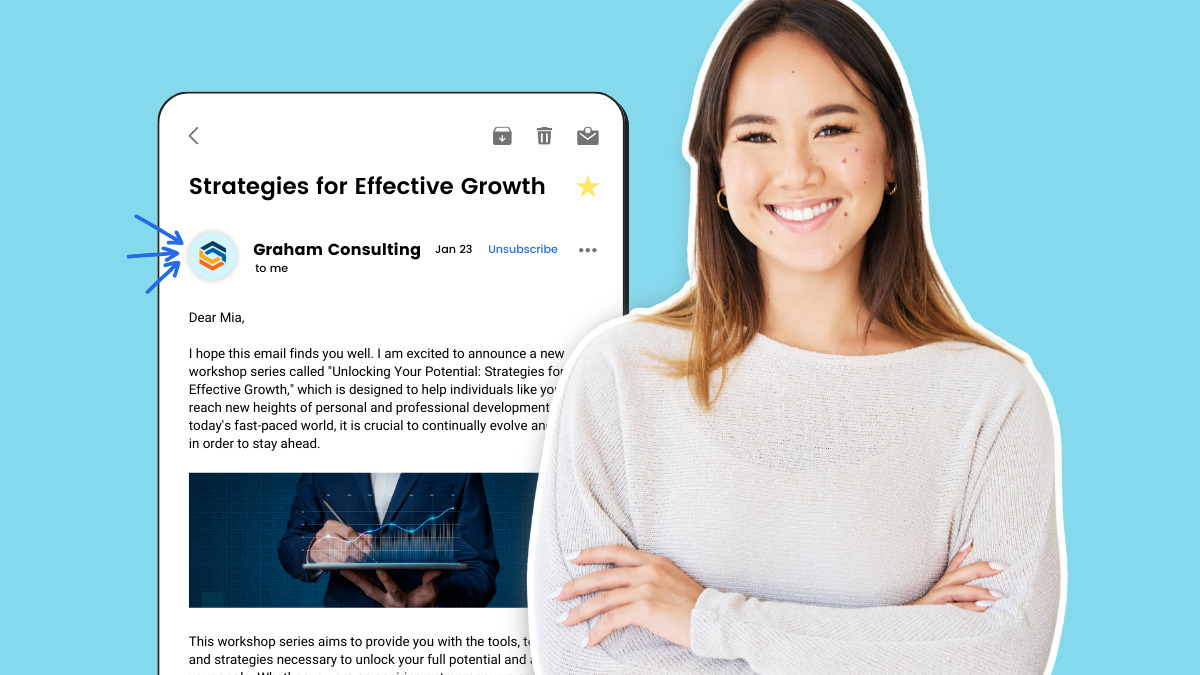
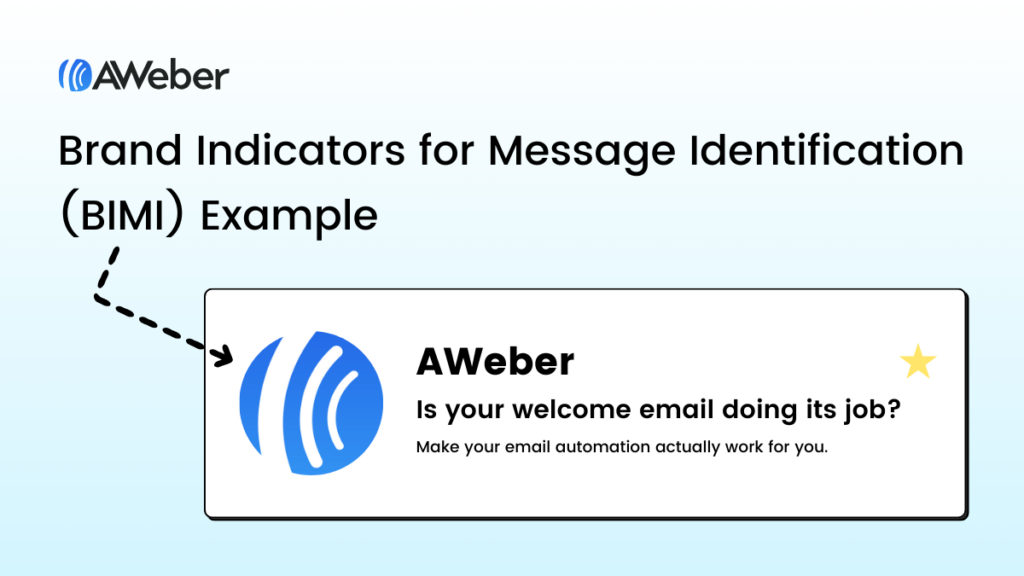
Example of a BIMI logo

It’s possible to display your brand’s logo within the main inbox thanks to an email standard known as Brand Indicators for Message Identification (BIMI).

Read on to learn what BIMI is, how it works, why it’s important, and how to set it up.

What is BIMI?

BIMI is an email standard that allows brands to add their logo to messages sent from their domain.

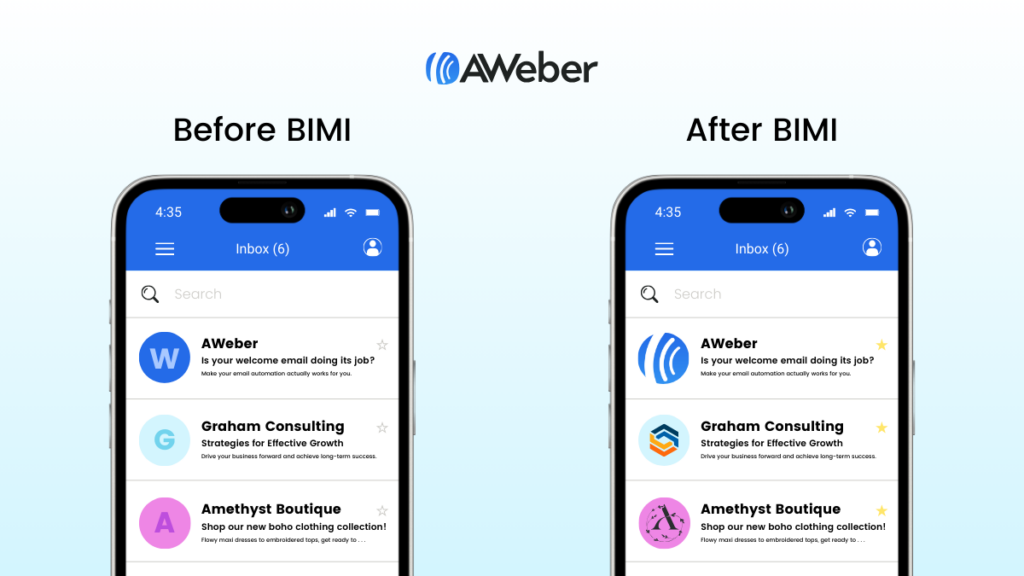
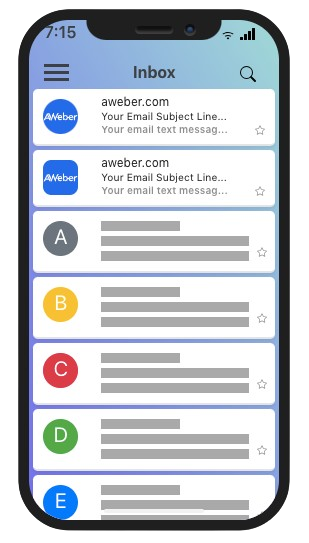
Once you’ve set it up, recipients will see your email logo next to your message in their inbox — provided their email client supports BIMI (more on this later).

example of what your emails would look like with and without BIMI logo

Your BIMI logo can also be displayed within the email message, although the recipient’s email provider — like Apple Mail or Gmail — will determine where, exactly, it shows up.

How does BIMI work?

When you send a marketing email from your brand’s address, the recipient’s email provider (like Gmail or Yahoo) tries to authenticate that your message is legit.

Why? Because they don’t want their users to fall victim to scams from malicious senders imitating your brand.

The authentication process involves checking what’s known as your DNS record, which contains a bunch of information confirming that an email has really been sent by your company, not a scammer.

With BIMI, you can add a URL pointing at your brand’s logo to your DNS record.

That way, the recipient’s email provider will find the link during the authentication process and display your logo alongside your email.

Simple, right?

However, some email providers demand that you fulfill an extra layer of security before they’ll show your logo.

Specifically, they want you to acquire a Verified Mark Certificate (VMC), which confirms that your brand legally owns your logo.

To receive a VMC, your logo must be a registered trademark.

If it is, you can buy a certificate through one of the two BIMI-approved certification authorities, DigiCert and Entrust Datacard, at a cost of around $1,500 per year.

VMCs aren’t a universal requirement — yet.

But many email providers won’t show your BIMI logo without a VMC, so we wouldn’t be surprised if they become compulsory in the not-too-distant future.

What are the benefits of BIMI?

The whole point of BIMI is to let (trusted) email senders control the way their brand is represented in email inboxes.

As such, it offers three main benefits:

Higher inbox visibility

Arguably the biggest reason to implement BIMI is that it helps your emails stand out in a crowded inbox.

This is particularly true given that a significant proportion of brands are yet to implement BIMI.

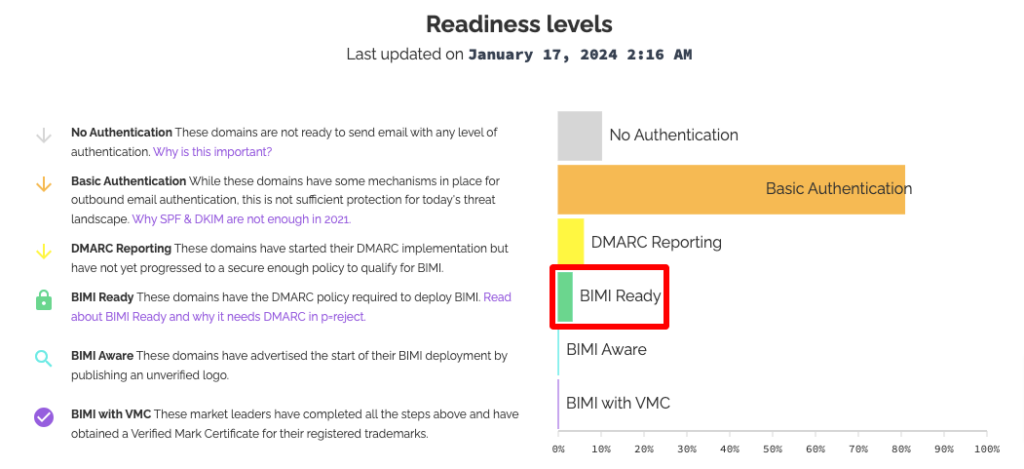
In fact, at time of writing, just 3.2% of 71.7 million apex domains are rated as “BIMI ready”.

image of a BIMI readiness level

With research revealing that adding a BIMI logo increases email open rates by 21%, it’s clearly in your best interests to set up BIMI sooner rather than later.

👉 For more ways to boost your email opens, check out our article: 9 steps this business owner takes to get 40% open rates on her emails.

Greater brand recognition

More good news: even if a recipient doesn’t open your email, there’s still a decent chance they’ll remember seeing your BIMI logo.

That’s right: adding an email logo increases brand recall by 18%.

Again, it’s likely that this benefit will diminish as adoption of BIMI increases.

So the sooner you get started, the better.

Increased confidence and trust in your emails

Another benefit of BIMI is that it makes your emails look more trustworthy.

That’s because you can’t add a BIMI logo unless you pass all the various authentication requirements — which proves that you’re a legit email sender, not a spoofer trying to rip people off.

As consumer awareness of BIMI increases, we can see this benefit becoming even more significant.

It’s not hard to imagine a world in which recipients simply won’t open marketing emails that don’t display an authenticated logo.

Which inbox providers support BIMI?

An estimated 90% of consumer inboxes are compatible with BIMI email logos.

That’s because most of the big email providers now support BIMI — and of those that don’t, several are considering doing so at some point.

Here’s the current state of play:

Currently supports BIMI Considering BIMI
Apple
Cloudmark
Fastmail
Google (Gmail)
La Poste
Onet
Yahoo
Zone
Atmail
BT
Comcast
Qualitia
Seznam
GMX
Yahoo Japan

As the eagle-eyed among you will have noticed, that only leaves one major holdout: Microsoft.

While it’s possible to add a BIMI logo to emails sent via Dynamics 365 Customer Insights - Journeys, other Microsoft email products — like Exchange Online and Outlook — don’t support it.

Will they change their mind as more and more email clients get onboard with BIMI? We’ll just have to wait and see.

How to set up BIMI in 5 steps

Setting up Brand Indicators for Message Identification is a relatively simple process, but it does involve some technical steps and a lot of confusing acronyms.

If you don’t feel comfortable poking around in your authentication records, consider using a third-party service to set up BIMI for your organization.

Here’s how the process works:

Step #1: Set up DKIM and DMARC authentication

As we’ve already noted, to add a BIMI logo to your emails, first you have to prove that you are who you say you are.

That means authenticating your sending domain via two authentication protocols: DKIM and DMARC.

It’s like this:

You can’t display your BIMI logo without DMARC authentication. And you can’t get DMARC authentication without first setting up DKIM records.

If your organization has done email marketing before, you might already have those protocols set up.

If not, or if you want to check, take a look at these guides:

👉 How do I set up DKIM records for my domain?

👉 What is DMARC authentication?

Remember, the whole point of BIMI is to add your logo to emails.

So, naturally, you need a version of your logo that displays correctly across all the different email clients that support BIMI.

Specifically, you need your logo in a format known as SVG Tiny PS.

This process is surprisingly tricky, because you can’t just create an SVG Tiny PS file from scratch — you need to convert it from an existing SVG Tiny 1.2 image.

Fortunately, the BIMI Working Group has built dedicated, downloadable tools for Mac and Windows to handle the conversion process:

Bear in mind there are some guidelines you’ll need to follow when creating your logo:

👍 Do:

  • Choose a square aspect ratio
  • Use a solid background color, as transparent backgrounds may not display correctly
  • Center your logo, as it may be displayed as a circle, a square, or a square with rounded circles, depending on the recipient’s email provider
Different ratios for a BIMI logo in an inbox. Example shows a circle, rounded square, and a square logo

👎 Don’t:

  • Create an image file that exceeds 32 kilobytes in size
  • Add any scripts, animations, or other interactive elements

Once you’ve created a beautiful SVG version of your logo, you’ll need to tinker with some of the file’s attributes and elements to make it BIMI-ready.

This is also tougher than you might imagine because it requires editing XML code in a text editor.

To do it, download your SVG file, right-click on it, and open it with a simple text editor, like Notepad for Windows or TextEdit for Mac. Don’t use Microsoft Word — trust us, it doesn’t work!

In the text file, you’ll need to:

  • Set the file’s “baseProfile” attribute to “tiny-ps” 
  • Set the “version” attribute to “1.2”
  • Add a <title> element that reflects your brand name (e.g. ours is “aweber-brandmark”)
  • Remove any “x=” or “y=” attributes within the <svg> root element

Save your file when you’re done, then upload it to a publicly accessible server — otherwise email providers won’t be able to display it.

Earlier in this article, we explained that a VMC is proof that your brand owns its logo.

Not all mailbox providers require one to display your BIMI logo, but some do — most notably Gmail.

As long as your logo is a registered trademark, you can apply for your VMC through the following certification authorities:

Step #4: Add your BIMI record to your DNS

Next up, you need to add a text record containing your BIMI information to your DNS.

The actual, text-based information is pretty simple.

However, the process of adding it varies by DNS provider, and might require help from your IT team.

Once you’ve figured out how to access your DNS, you’ll need to create a new TXT record within the subdomain default._bimi.

It should contain the following values:

default._bimi.[domain] IN TXT “v=BIMI1; l=[SVG URL]; a=[PEM URL];"

Add your own BIMI information to the parts in square brackets, as follows:

👉 Don’t fancy rounding up all that information yourself? Use this BIMI Generator to do it for you.

Step #5: Check you set everything up properly

Mistakes happen — after all, you’re only human.

So it’s worth checking that you followed all the above steps correctly.

If not, your BIMI logo won’t show up in recipient’s inboxes, so you won’t get the benefits of increased visibility, brand recognition, and trust.

There’s a simple way to make sure you aced your BIMI setup: just wait 24 hours after adding your BIMI record to your DNS, then enter your domain into the BIMI Group’s lookup tool.

It shows you: 

  • Whether your various records are BIMI-compliant
  • How your SVG logo appears in various formats
  • What your logo might look like in recipients’ inboxes
Inbox showing two AWeber emails, one with a round logo, the other with a rounded square logo

Final thoughts

Given Yahoo and Gmail's new authentication and DMARC requirements, many of you have already completed most steps in the BIMI process.

So should you press forward and tick those final few boxes required to display your BIMI logo in the inbox?

Ultimately, that’s up to you.

For the tiniest senders, it’s still a tough sell — especially as major mailbox providers like Gmail and Fastmail require a VMC, which will set you back hundreds of dollars a year.

But if you're "big enough" to justify the price tag and want your emails to stand out in a cluttered inbox, BIMI is an attractive solution.

The post BIMI Logo: How to get your brand logo to appear in the inbox appeared first on AWeber.


from AWeber https://ift.tt/mAfi7yu
via IFTTT