Tuesday, 23 July 2024

5 Steps to create a digital business card for easy follow up

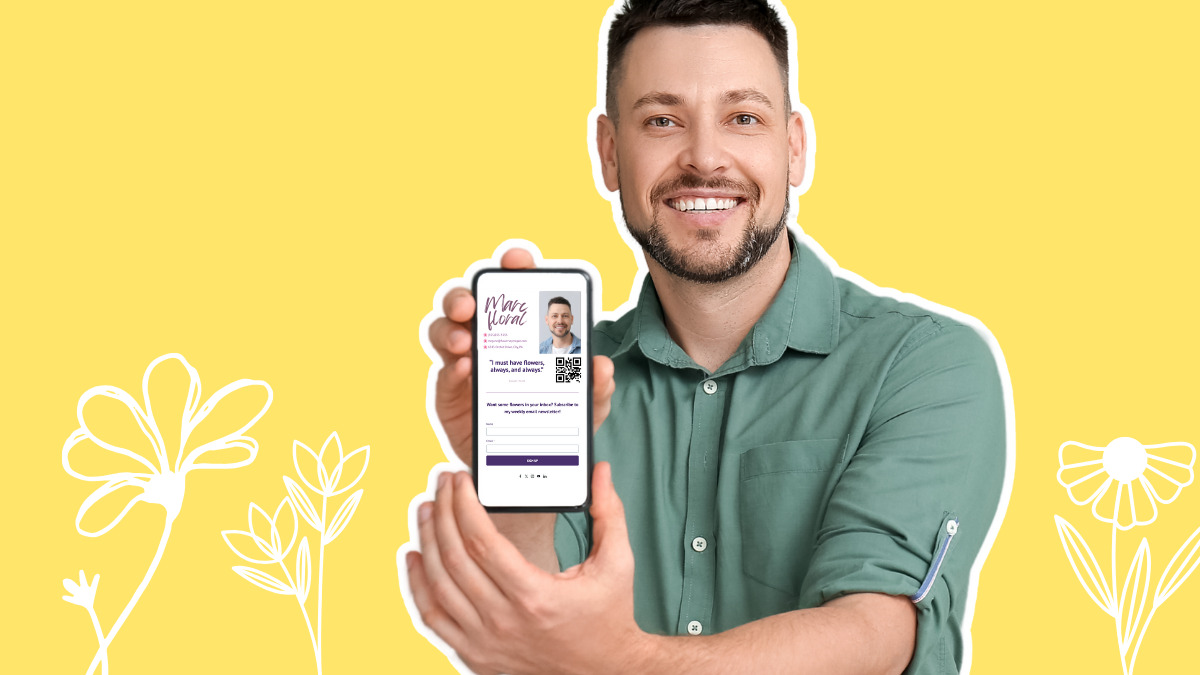
Person showing a digital business card on their phone

Creating a digital business card can be a game-changer for your networking and marketing efforts. With AWeber, you can easily design and share a professional-looking virtual business card. Here’s how:

Step 1: Choose a Digital Business Card App

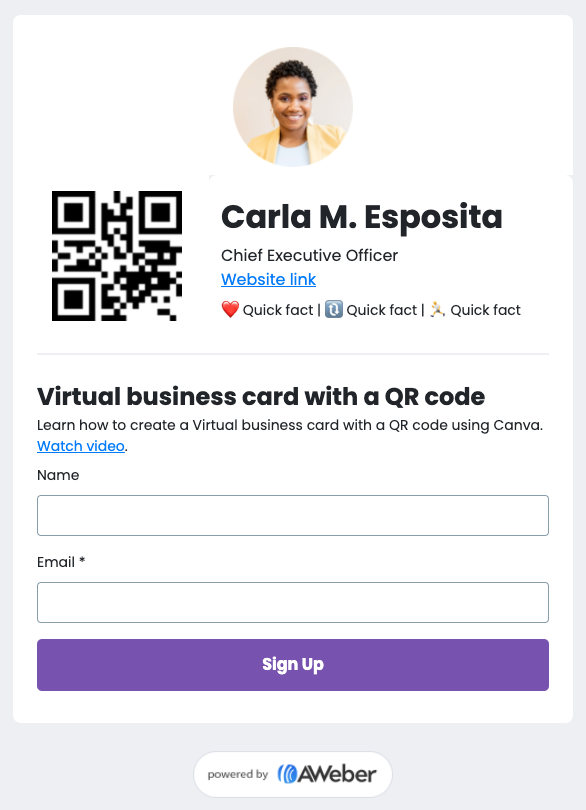
Start by selecting a digital business card app. AWeber offers a free, user-friendly virtual business card template that you can customize directly in your AWeber account.

Virtual business card template in AWeber

Step 2: Customize Your Digital Business Card

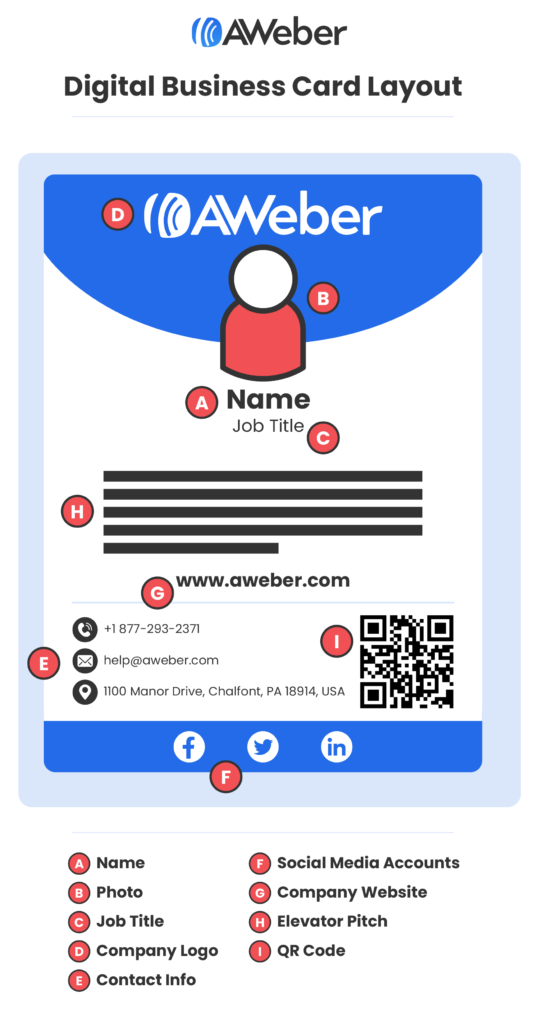
Once you've chosen a platform, fill in your card with essential details:

Upload a photo: Add a personal touch with your image.

Company logo: Insert your brand's logo.

Job title and summary: Clearly state your role and a brief description.

Contact information: Include phone number, email, and other key details.

Social media links: Connect your audience with your Twitter, LinkedIn, Facebook, and other relevant profiles.

Step 3: Add a QR Code

A QR code is essential for easy sharing. You can generate a QR code with Canva. Best of all, AWeber has a direct integration with Canva, so you can even add a custom QR code to your card with a simple drag and drop.

Step 4: Include Key Information

Part of the beauty of digital business cards is that you can include as much (or as little) information as you’d like. 

Here’s the most commonly included information:

  • Name and preferred pronouns
  • Job title and contact information
  • Social media accounts
  • Photo
  • Website URL
  • Elevator pitch
  • Company logo
  • QR code for easy access
Digital business card layout

Step 5: Share Your Digital Business Card

Now that you have a digital business card, it’s time to start sharing it. Here are some of the best ways to get your new virtual card into your potential clients’ hands.

QR code: In-person or on your Zoom virtual background.

Text or email: Send the link directly to new contacts.

Email signature: Embed the link or a screenshot of your card.

Direct link: Share it on social media or via messaging apps.

Benefits of Using Digital Business Cards

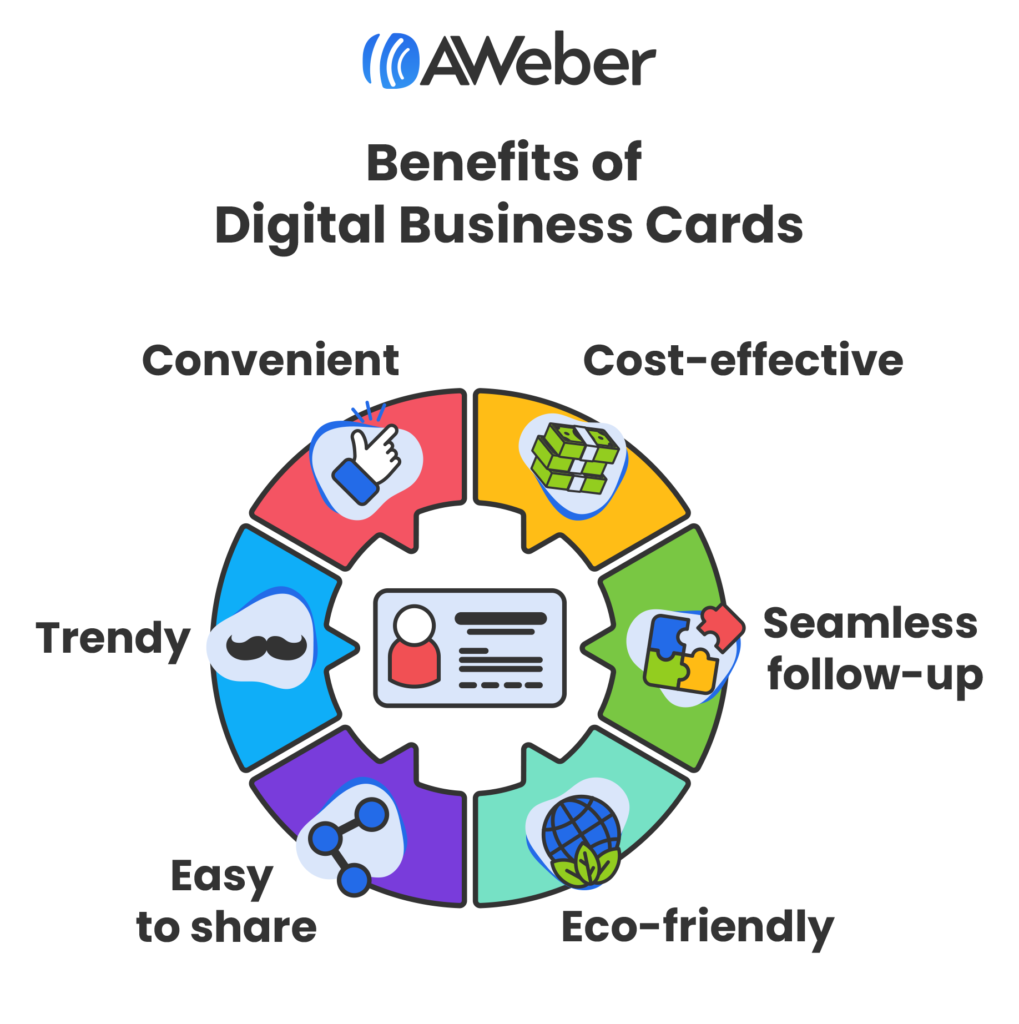
These new cards are quickly becoming “the norm” in the business world, and for good reason. There are many benefits to creating a virtual business card for yourself.

Convenient: Easily accessible on your device, no need for physical cards.

Cost-effective: Free or inexpensive to create and update.

Eco-friendly: Reduces paper waste.

Seamless follow-up: Integrate with your mailing list for automatic follow-ups.

Trendy: Stay up to date with modern networking practices.

Benefits of a digital business card

Get Started Today!

Create your digital business card with AWeber’s virtual business card template and start sharing it effortlessly. Watch this video to see how easy it is to get started!

Frequently asked questions

What is a digital business card?

A digital business card (also known as a virtual business card) is a simple webpage with your contact information —including your name, email, website, socials, calendar link, contact form, and other information pertinent to you and your business.

Like a traditional business card, you use it to share your contact information. However, a digital business card can contain an unlimited amount of information. Plus, it can be interactive and up-to-date on your most recent info.

How Does a Digital Business Card Work?

A digital business card functions as an interactive and easily shareable version of a traditional business card. It can be accessed via a link, QR code, or app and includes comprehensive information like contact info, social media links, and more. Users can quickly and easily share and update their card, so they always present up-to-date information to contacts.

How to Create a Digital Business Card in Canva?

To create a digital business card in Canva, start by signing in to your Canva account and searching for "business card" templates. Choose a template that matches your style and customize it by adding your personal information, logo, and other details. You can also include a QR code. Once that’s done, download your card as a digital file, like a PDF or image.

How to Add a Digital Business Card to an Apple Wallet?

To add a digital business card to Apple Wallet, first create your digital card using a compatible platform or app. Export your card in a format supported by Apple Wallet, usually a PKPass file. Then, open the file on your iPhone, and choose "Add to Wallet." Your digital business card will now be available in the Apple Wallet app for easy sharing and retrieval.

The post 5 Steps to create a digital business card for easy follow up appeared first on AWeber.


from AWeber https://ift.tt/LoqOxQF
via IFTTT

Thursday, 18 July 2024

Post Performance Report: Brands who highlight their employees’ POV

It’s time for another edition of the Post Performance Report (PPR), a series where we showcase social media posts and campaigns inspiring us, and explore what makes them so genius. We unpack how your brand can use these examples to spark your own scroll-stopping ideas—while maximizing your budget and doing more with less.

We recently asked over 1,600 consumers who they wanted to see reflected more in brands’ social content. Their top answer: frontline employees. Not executive leadership, other customers or even social teams. According to Sprout Q4 2023 Pulse Survey data, 48% of respondents want to see the people behind businesses, not just those who run the brand account.

Let’s dive into our lineup of brands who shine the spotlight on their frontline employees, and how you can follow their lead.

Air Canada: Employees bring customer experience to new heights

Air Canada knows their employees are at the heart of every great customer experience. From flight crews who deliver above-and-beyond service to maintenance engineers who guarantee passenger safety, the airline relies on those on the frontlines to be ambassadors for their brand.

On social, they frequently shout out members of their team. Like in this post, where they thank those “behind the wings” who guarantee the safety of their passengers and the airline’s positive reputation.

An Air Canada Instagram post featuring a photo of their aircraft maintenance engineers and a caption about their appreciation for the team

Or this post celebrating National Flight Attendant Day.

An Air Canada Instagram compilation of videos and photos of flight attendants

Another social franchise, “With Class and Care,” features customer experience specialists, flight attendants and more who provide first-class service. In the videos, passengers who were especially grateful for their experiences thank the Air Canada employees who made them possible. Warning: These videos are absolute tear-jerkers, so watch them with care.

An Instagram Reel from Air Canada's With Class and Care series, about their team members who go above and beyond for passengers

These touching posts are ‌among the brand’s top performers. The “With Class and Care” videos ‌garnered over 10 million views, out-performing other recent top-viewed posts by millions. Comments on the posts were overwhelmingly positive, with customers sharing their own memorable Air Canada experiences.

The play: By making meet the team posts a regular part of your strategy—or even developing a unique franchise like Air Canada—you can improve your overall social performance, boost brand awareness and encourage customer advocacy.

Mayo Clinic: Boosting essential workers

As one of the top-ranked medical centers in the US, Mayo Clinic employs 75,000+ essential workers with a wide range of specialties and functions. In their social content, the hospital system puts these employees in front of the camera and explains the day-to-day responsibilities of their many different roles.

Like in this TikTok, where interventional radiology technologists take part in the “I’m a _____, of course I ______” trend. The video gained almost 50,000 views and over 3,000 likes, with one user commenting: “You should do more videos like this to help people figure out if they would like to do this career.”

A TikTok from Mayo Clinic of IR techs explaining their role by using a social media trend

Mayo Clinic even has a Nursing TikTok account, where nurses share day in the life posts like this one.

A TikTok Day in the Life video from Mayo Clinic Nursing

This LinkedIn post explains how NICU transfer nurses play an essential role in caring for preterm babies.

A LinkedIn post from Mayo Clinic that explains the responsibilities of their NICU transport nurses

Social content like this highlights the excellent care Mayo’s employees provide and the care and expertise they offer. Attracting new patients and recruiting more best-in-class healthcare professionals to their team.

The play: Does your audience understand what your frontline employees actually do? Use social to show them. Doing so will increase recognition of your employees’ contributions to customer experience and company success, while underscoring your employer brand and culture. Take a cue from Mayo Clinic and align your posts with the trends and tone of each platform. You can also consider spinning off new profiles to create even deeper connections between your people and audience.

UPS: Delivering the UGC content we need

UPS, the global shipping company, has a long-standing strategy of featuring frontline employees in their content. We even featured them in our January edition of PPR for doing just that. This time, we’re showcasing how they’ve mastered the art of incorporating user-generated content—created by frontline employees and happy customers alike—into their editorial calendar.

At a time when other brands are chastising (or even firing) employees who make positive social content, UPS is a shining example of what to do instead. Like in these TikToks of employees explaining why they love their jobs so much and how proud they are to work for UPS.

A Day in the Life video created by an UPS employee that was reshared by the brand

A TikTok from a UPS driver about a UPS-inspired truck children's toy at Target. The brand reposted it.

Or this TikTok of a happy customer explaining the bond she has with her UPS carrier, and how she always gives him samples of her small business’ products.

A TikTok video by a UPS customer who is a small business owner, and how she shares her new products with her UPS driver out of appreciation

While this content racks up impressions and engagements, it also helps UPS create a competitive advantage on social. According to Sprout Listening data from June 9 to July 9, 2024, UPS has a higher sentiment than their top two competitors while also maintaining 93% share of voice.

The play: Reward your employees for creating positive UGC by reposting it on your channels (with their permission). Not only will your audience find your brand more trustworthy, it will also help you engage employees internally.

Milwaukee Public Library: Employees define the institution’s next chapter

In case you missed it, libraries and, more importantly, librarians are having a well-deserved moment on social. Members of all generations are finding comfort in these “third spaces” thanks to the librarians and other library personnel who champion the institutions on social.

The Milwaukee Public Library is an excellent example of that. In their content, they feature staff members explaining all of the things you can learn in the library in the most endearing (and relevant) way possible. Like this video of an archivist explaining how Milwaukee has changed over time through cemetery maps, transit maps and more. It received hundreds of thousands of likes and hundreds of positive comments. One user commented, “We’ve fallen in love with yet another member of the Milwaukee Public Library.”

An Instagram Reel from Milwaukee Public Library featuring an archivist and the "we let our Gen Z intern edit" trend

Or this video of a library visitor spotting their favorite librarian.

An Instagram Reel from Milwaukee Public Library about someone seeing their favorite librarian in the library

The library’s content featuring their employees has helped them earn critical acclaim. In April 2024, Milwaukee Public Library was nominated for a prestigious Peabody Award for its social media presence. The Peabody committee wrote that Milwaukee Public Library “uses TikTok and Instagram to educate their community on what libraries offer and get young people excited about books at a time when book bans are increasing across the country. Using memes, trending music, and pop culture references, the library’s accounts highlight real library users, librarians and library features in fresh and fun ways.”

The play: Highlighting your frontline employees can reach people’s hearts and minds far beyond your community. And it can certainly reinforce why your institution matters and what it offers to your constituents—even if it is in a light-hearted way.

Shedd Aquarium: Celebrating aquatic allies

While it’s difficult to imagine anything cuter than Wellington the penguin, Chicago’s Shedd Aquarium keeps wholesome vibes alive by delighting audiences with content featuring their animal care teams and volunteers.

Like these photo-ops and selfies illustrate, there are many people responsible for the care of the animals and the maintenance of the aquarium.

An Instagram Carousel featuring Shedd interns and employees taking selfies with the animals

A Shedd Aquarium Instagram Carousel featuring interns during Amphibian Week

In this video, Shedd volunteers explain their roles and responsibilities, and give viewers a look behind the scenes as they feed animals, conduct research and interact with guests.

An Instagram Reel from Shedd Aquarium featuring their volunteers explaining their roles during Volunteer Week

The aquarium relies on volunteers in almost every aspect—including at the aquarium itself and in their conservation efforts. By giving social users a peek “backstage,” it entices more people to volunteer, and enables the program to continue flourishing.

The play: Your current employees and volunteers hold the keys to creating compelling recruitment content. By allowing them to explain in their own words what they do and why they enjoy it, you will create more buzz around your open positions and opportunities.

Media spotlight: Shameless Media’s “Sh-Office”

When you think of “frontline employees” you probably don’t think of media companies. But technically employees who aren’t on-air or in front of the camera still count. Or at least they do in our book for the sake of sharing this example.

Melbourne-based Shameless Media’s “The Sh-Office” is a documentary-style series featuring all of the women who work in the company’s office, including those who typically prefer being off mic. The format of the videos takes inspiration from the legendary show “The Office,” complete with the theme song, contradictory interviews and a bit of satire.

Like in episode 1, where there seems to be a discrepancy about who caused the egregious stain on the new rug.

Episode 1 of the Sh-Office from Shameless Media on Instagram

The media company also frequently shares tiny mic interviews with their staff. Content featuring their team has become a fan favorite, with one user commenting: “I want to binge a full season [of The Sh-Office].” Another added: “If I was going to work in an office, I’d want it to be this one.”

The play: Frontline employee content doesn’t have to be serious. Have fun with it. Put the unique culture of your organization on full display.

Go live from the frontlines

That concludes this month’s installment of the PPR. Stay tuned for next month’s edition, where we’ll feature our lineup of our favorite B2B brands on social right now. In the meantime, remember these key takeaways:

    Post Performance Report Takeaways

    • Make content featuring frontline employees a regular part of your content strategy. Don’t forget that this can include UGC.
    • Your followers want to see what your employees actually do day-to-day. Showing them can improve your recruitment efforts.
    • The best frontline employee content showcases the culture of your brand and the personality of your employees. The more human the better.

Looking for more ways to leverage your employees on social? Check out our guide to creating an employee advocacy influencer plan.

And if you see a social post or campaign that deserves to be highlighted, tag us @sproutsocial and use #PostPerformanceReport to have your idea included in a future article.

The post Post Performance Report: Brands who highlight their employees’ POV appeared first on Sprout Social.


from Sprout Social https://ift.tt/UXvztfy
via IFTTT

Wednesday, 17 July 2024

How to become a social media manager in 2024

If you’ve ever wondered how to become a social media manager, you’re in the right place. Platforms and consumer preferences may change constantly, but there are still core principles that can set the foundation for a thriving career in social media management.

We interviewed four social media managers to ask them why they pursued this career path, what it’s really like behind-the-scenes and how you can land a role (even without any experience). Here’s what they said.

What is a social media manager?

Social media managers are in charge of representing a company across social channels as the voice of the brand. They monitor audience engagement, develop campaigns and create content strategies. They also serve as internal experts, providing organizations with the guidance needed to enhance their online presence with key audiences.

“Social media manager” is often used as an umbrella term for a variety of social media careers, but it’s not the first stop on the journey. Professionals typically work as social media coordinators, specialists or content creators before stepping into a management role.

Why become a social media manager?

Each person’s reason for becoming a social media manager differs depending on their professional goals and personal needs for fulfillment. We spoke with three social media professionals about why they chose this field. Here’s what they had to say.

Create authentic connections

Being at the helm of a brand’s social presence means you have the potential to humanize the company and create authentic connections. That’s what drove Caitlin Pierson, Social Media Specialist at the University of Newcastle, to her role.

“I love how personal and genuine brands can get on social media and the communities they can create. From a young age I saw the power in social, and have wanted to be a part of the industry ever since.”

A Facebook post from The University of Newcastle, Australia, recognizing a professor recently ranked 1st in country in the 2024 World Online Ranking of Best Medicine Scientists.

Work in a dynamic field

Social media’s role in business success is evolving and expanding every day. What was once thought of as another marketing channel is now widely accepted as a platform for customer care, market research and most importantly, direct sales.

For Gabby Barnes, Social Media Manager at Casual Fridays agency, the best thing about her job is seeing social’s impact on her client’s goals.

“As both a user and an insider, it’s evident that awareness is grown, traffic is driven and communities are built through social media more than any other tool.”

Develop transferable skills

Becoming a social media manager also involves developing many transferable skills, including communication, adaptability, attention to detail and problem solving.

Stepping into a social media management role can serve as a launch pad toward marketing leadership positions—including chief marketing officer and social media executive.

What do social media managers do?

No day is typical for a social media manager. Their work spans across platforms and often includes playing many different roles. Here’s a look at the tasks our experts juggle each month.

Content creation

Social media managers play an integral role in developing content for a brand’s social presence. They can write copy, capture photos, record and edit videos—but their role goes far beyond publishing posts.

For example, Raven Gill, Social Media Manager at Communicators Group, a full-service marketing agency, meets with her creative team on a monthly basis to discuss ways their content calendar will deliver on business goals. She also prioritizes staying on the pulse of social trends so she can create timely content that resonates with her audience.

She explains, “I collaborate with our copywriting team to design content calendars every month, but I also create posts as they happen organically.”

As a social media manager, you must master the art of content development and providing creative vision to a larger team.

Community management and engagement

Many social media managers, including Pierson, are responsible for managing their brand’s community. That includes finding opportunities to make loyal superfans feel welcome and appreciated—whether it’s highlighting a post or leaving a friendly comment.

a LinkedIn exchange between Sprout Social, and fan commenting on a recent post.

Social media managers elicit feedback as much as possible because listening to the needs of their community is what’ll keep members engaged.

Social media managers use tools like Sprout Social’s Smart Inbox to stay on top of incoming messages and mentions without getting overwhelmed.

Managing and building influencer partnerships

For social media managers like Barnes, managing influencer and creator partnerships is a core part of their day-to-day responsibilities.

Using influencer and creator-generated content is a prime way to reach your audience, whether you’re looking to nurture existing customers or attract new ones. But forging and maintaining relationships with influencers and creators takes more than just sharing a creative brief and calling it a day. According to the 2024 Influencer Marketing Report, 35% of influencers believe involving influencers in creative and content brainstorming earlier would result in better partnerships.

A data visualization ranking the ways influencers would improve on brand partnerships. The most common answer is to include influencers in creative and content brainstorming earlier.

Social media managers leading these partnerships balance finding creators, hosting meetings, advocating for resources and approving content.

Data analysis

Social media managers know their brand’s posts aren’t just being sent into the void. Achieving social goals depends on people liking and engaging with their content. That’s why they consistently measure their social performance and make real-time adjustments on a regular basis.

Gill says, “On the first of each month I generate reports for most of my clients. I analyze the data and try to provide three recommendations or strategies for the future.”

These efforts can extend beyond monitoring the performance of owned social profiles. Social media managers also use social listening tools to track and analyze the millions of conversations happening on social media daily.

Social listening tools use AI and automation to identify conversational insights around a brand, its competitors, an industry and consumers—all of which are critical for crisis management and brand safety. They also gather vital sentiment analysis data, allowing social teams to manage brand reputation in real-time.

A chart from The Sprout Social Index™ that reads, "Marketers' POV on social's business-wide influence." Below are three vertical rectangles of different heights: the smallest has text on it that reads "43% social teams still feel siloed." The second tallest one reads "65% agree other departments inform our social efforts." And the tallest pillar reads, "76% agree our team's social insights inform other departments."

Both types of social data have large-scale impacts beyond social. It can help improve a product or provide insight into a competitor’s audience. Social media managers must convey how findings on social translate to the big picture.

Reputation management

All of the tasks outlined above contribute to a business’ online reputation. Anything—from a customer question gone unanswered to the wrong influencer partnership—can result in an unintended brand crisis. It’s a social media manager’s responsibility to keep their ear to the ground so businesses can proactively respond to potential threats.

Additionally, even though review sites like Yelp, Google My Business, Glassdoor,‌ and TrustPilot aren’t usually seen as social platforms, social media teams still keep an eye on them. It can be a lot to manage, so many use tools like Sprout Social that combine all their messages from social media and review sites into one place.

Sprout’s review management dashboard, which aggregates reviews from Yelp, Google My Business, Trust Pilot and more into a single, unified stream.

What skills do you need to become a social media manager?

All brands can differ in what they want from a social media manager, so our experts recommend refining these core social media skills to start your career.

Experience developing strategic content

Most social media manager roles require experience creating social content that resonates with a target audience—like this job posting from Notion demonstrates.

A Social Media Manager job listing from Notion. The listing calls for a collaborative self-starter who can partner strategically across functions and develop content.

If you don’t have professional experience, that’s okay. Instead, practice honing your skills on your own personal social media accounts. You can also build on this skill by developing social strategies for brands you admire. Both exercises can help you showcase your abilities while developing a starter portfolio.

Social analytics proficiency

All of our experts agreed social analytics skills are a requirement for social media managers.

For example, in this job description, Intelligentsia is looking for someone with platform-specific analytics experience to fill their social media manager role.

A social media manager job description from Intelligentsia.

You must also be able to understand and interpret how social insights impact your business goals. Knowing which data points matter most is essential. As Barnes says, “It’s easy to get caught up in more visible wins like the number of new followers or getting on the Explore page, but more behind-the-scenes metrics like engagement, clicks or recall are likely more relevant to your goals and what your social media team is spending their efforts trying to improve.”

Improve your analytics skills so you can provide data-driven answers to questions from your colleagues in marketing and beyond.

Effective project management skills

Being able to manage multiple projects simultaneously—while balancing competing priorities—is essential for all social media marketers. The role requires attention to detail, aptitude for solving hard problems, time management skills and flexibility.

Barnes describes, “Being able to juggle multiple relevant tasks and prioritize them effectively is necessary in the day-to-day. The nature of the industry means things can change at a moment’s notice, and you have to prove you can adapt.”

When applying for jobs, identify proof points you can share with future employers to demonstrate your project management skills—from overseeing multiple projects at once to how you organize your day to focus on your most important tasks.

How to become a social media manager

We asked our panel of experts about the steps that made a difference on their path to becoming a social media manager, so you can start your journey off on the right foot.

Step 1: Immerse yourself in social media culture

We asked our LinkedIn community which skills are the most important to become a social media manager. Of the 784 respondents, 44% said understanding social culture was the most critical to success.

A Twitter poll from Sprout Social that asks our community what skills are the most important for becoming a social media manager. The top result was understanding social culture, which 44% respondents agreed with.

There is no training, course or class that can make up for a lack of familiarity with digital culture. To create relevant, engaging content that aligns with consumer preferences, you need to be online.

Don’t take this to mean that you need to spend hours scrolling every social media platform each day. Instead, think about how you can develop a strategic eye during your standard scrolling sessions. What content formats are garnering the most attention? Are there any brands that stand out in your feeds? Why?

Ask yourself these questions to refine your perspective on creating a performance-driven social presence.

Step 2: Maintain an understanding of social media platforms

As social media continues to evolve, new specialties and niches are emerging. You should use that as an opportunity to become a subject matter expert.

For example, while most social media managers are well-versed in the big five platforms—Facebook, Instagram, TikTok, X (formerly known as Twitter) and LinkedIn—becoming an expert in one will help you differentiate. As social media network fragmentation continues to take place, being the first to explore a developing platform can also be a way of cementing your expertise.

You can also specialize in other areas, like creator relations, community management and employee advocacy. Finding your niche will enhance your value as a candidate.

Step 3: Choose an education path

The education requirements needed for social media careers vary by employer. Due to the fast-paced nature of social, many businesses will accept a concrete portfolio of work experience in lieu of a formal degree. That said, a degree in marketing or communications can make it easier to get your foot in the door.

Higher education is no small decision, so it’s important to make the choice that makes the most sense for your goals and budget.

If you decide to pursue a degree, consider colleges with programs taught by active social media professionals, such as West Virginia University. Some schools even offer graduate programs in social media.

If getting a degree doesn’t interest you, focus on gaining real-world experience. Offer your services to local or small businesses by creating custom strategy pitches to get your first clients. You can also volunteer your services to nonprofit organizations, which can build your portfolio while doing good for your community.

Step 4: Strengthen your communication skills

Communication is the foundation of a social media manager’s job. All of our experts cited how important refining communication skills—including social media copywriting and presenting on camera—are to landing a role.

Barnes credits her writing skills for her position.

“I believe being a strong writer is a key skill in most industries, especially social media. I have a background in writing both long and short-form content for a variety of platforms, and with my agency experience, I’m used to switching between different voices and goals on a daily basis.”

To improve your communication skills, practice often, turn to online tools (example: the Hemingway editor) and read and watch a breadth of digital media.

Step 5: Develop an understanding of marketing priorities

From the outside looking in, marketing priorities can seem static—increase brand awareness, drive customer loyalty, so on and so forth. In reality, there are a lot of factors that influence what’s top of mind for marketing professionals.

This year, the rise of AI and challenging market conditions have pushed marketing leaders to focus on scaling efforts with new technologies to boost ROI. Aspiring social media managers in today’s market can separate themselves from the pack by embracing AI tools while demonstrating their understanding of a performance-driven social strategy.

Remember: These priorities aren’t static. Read trade publications like Ad Age and DigiDay to stay up-to-date on what matters to marketers today.

Step 6: Experiment with social media management tools

Most social media management roles will require a familiarity with social media management tools and technology. That can be both the native reporting tools available within social media platforms and third-party tools, like Sprout.

Most platforms offer training resources to help you get acclimated to their reporting tools. For example, Meta Blueprint offers free, self-guided courses to help build marketing skills across Facebook, Messenger, Instagram and WhatsApp.

The homepage of the Meta Blueprint website.

Third-party tools also offer training resources and free trials so you can experiment with professional-grade tools on your own time.

Jumpstart your social media manager career

Prepared with advice from these experts, you’re ready to start working toward a career as a social media manager. Remember: It’s possible to land a role without any experience if you channel your unique expertise, hone the right skills and are willing to keep learning.

If you’re ready to take your first step, try Sprout for free today. Explore our suite of social media management tools to get a first-hand look at what a day in your dream job is like.

The post How to become a social media manager in 2024 appeared first on Sprout Social.


from Sprout Social https://ift.tt/UPFcB9o
via IFTTT

6 Examples of a unique selling proposition and how to write your own

ht-write-unique-selling-proposition_featured

Developing a strong unique selling proposition (USP) is one of the best ways to elevate your marketing efforts. Not only does it help define your overall strategy, but it also makes all your marketing endeavors more effective.

What is a Unique Selling Proposition?

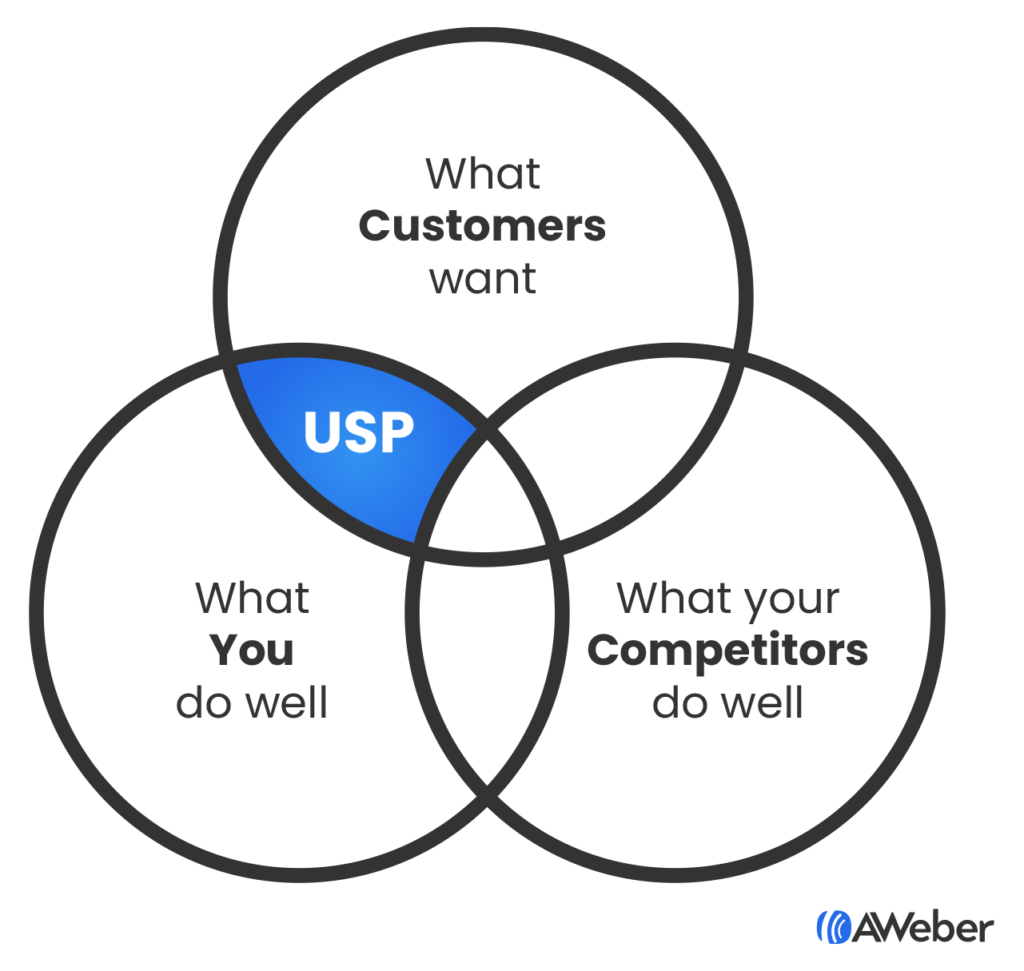
A USP answers two critical questions:

  1. What makes you better or different than your competition?
  2. Why should people buy from you?

Your USP should be a concise sentence or phrase that clearly explains why your business stands out. It’s the essence of what makes your business unique.

Diagram showing unique selling proposition sweet spot between what customers want and what you do well

Characteristics of a strong USP

1. Authentic to your business

Your USP must be rooted in what your business genuinely excels at. It’s not enough to simply claim superiority; your USP should reflect a true strength or focus of your business. 

For instance, if you run a pizza place, claiming "We're the best" isn’t enough. However, if your pizza place is renowned for using organic, locally sourced ingredients, your USP could be "Farm-fresh ingredients in every slice."

This authenticity builds trust with your customers. They need to know that what you promise in your USP is what they will experience. A genuine USP is more sustainable because it aligns with your company’s mission and values.

2. Customer-focused promise

A USP should address your customers’ needs and highlight a key benefit. Whether it’s your exceptional product quality or world-class customer service, your USP should communicate what sets you apart in a way that resonates with your ideal customers. 

For example, if your business prides itself on fast delivery, your USP could be "Hot pizza at your door in 30 minutes or less."

It’s important to understand your customers' pain points and how your business addresses them. A good USP is less about the product and more about the solution it provides. If your unique offering is an exceptional customer experience, make sure that’s evident in your USP.

3. Distinct from competitors

A good USP leverages the principle of positioning, clearly articulating how your business is different from competitors. It highlights your competitive advantage and helps position your company in the minds of potential customers. 

For example, if you own a coffee shop in a crowded market, your USP might be "The original craft coffee experience since 1966."

This distinctiveness is crucial because it helps your business stand out in a crowded marketplace. Your USP should succinctly convey why a customer should choose you over your competitors, emphasizing your unique value proposition.

4. Memorable and concise

Your USP should be short and memorable. It should be a statement that encapsulates your company’s identity and can be reflected in all your marketing and communications. A concise USP is easier for customers to remember and recall, which is essential for brand recognition. 

For instance, Apple's "Think different" is a succinct and memorable USP that encapsulates the brand's innovative spirit.

Finding your USP

To uncover an effective USP, consider the following questions:

What product or service are you selling? 

Clearly define what you offer. If you’re an affiliate, what businesses or products are you promoting? Knowing exactly what you are selling helps in identifying your unique angle.

What unique features and benefits does it offer? 

List out the features and benefits that set your product or service apart. This could include quality, speed, customer service, or unique ingredients.

Who is your target audience? 

Define your ideal customer. Who are they? What are their demographics and psychographics? Knowing your audience helps tailor your USP to their specific needs and desires.

What are their key pain points? 

Identify the main problems your target customers face. Understanding these pain points is crucial as your USP should address how your product or service solves these issues.

How does your product or service address these pain points? 

Explain how your offering specifically alleviates the pain points of your customers. This is where the core of your USP will come from.

Who are your competitors and what are their USPs? 

Research your competitors. What are they claiming as their unique selling points? This knowledge helps you position yourself distinctively.

What do you do better than your competitors? 

Highlight what you excel at compared to others in your industry. This could be better quality, faster service, more personalized attention, etc.

How do you run your business differently? 

Describe any unique processes or methodologies your business employs. This could include sustainable practices, unique supply chains, or innovative technologies.

How do you treat your customers differently? 

Emphasize your customer service approach. Do you offer 24/7 support, personalized follow-ups, or a satisfaction guarantee?

How would you answer a customer who asks, “Why should I buy from you?” 

Craft a direct response to this question. This will help you distill your thoughts into a clear and compelling USP.

Crafting and using your USP

Once you have your answers, distill them into a brief statement that captures what makes you different. This is your USP. Here’s how to implement it effectively:

Make It visible

Don’t just leave your USP in your notebook. Put it everywhere so it stays top of mind. Make it your computer and cellphone background. Frame it on your desk. Sign it at the bottom of your emails. Ensure it’s visible on your website, marketing materials, and even your office space. This constant visibility reinforces your brand’s unique position in the minds of your team and customers.

Live it daily

Even more importantly, live it. Breathe it. Make everything you do and how you do everything embody that USP. Make it as much a focus of your daily work as your mission statement or your business’s financial goals. Your actions should consistently reflect the promises made in your USP, creating a cohesive and authentic brand experience.

Examples of effective USPs

1. Canva: Online Design Made Easy

Canva simplifies design, making it accessible to everyone. Their USP is evident in their user-friendly interface and comprehensive design tools. Canva's promise of ease is reflected in every aspect of their service, from their intuitive drag-and-drop features to their extensive library of templates.

2. Buffer: All-You-Need Social Media Toolkit for Small Businesses

Buffer addresses the pain point of tool overload by providing an all-in-one solution for small businesses. By consolidating multiple functions into one platform, Buffer simplifies social media management, making it more efficient for small business owners. 

Their USP clearly targets a specific audience, ensuring they attract the right customers.

3. Product Hunt: The Best New Products in Tech

Product Hunt’s platform surfaces the best new tools through community voting. Their USP is rooted in their mission to highlight innovation in tech. By allowing users to vote on new products, Product Hunt leverages social proof to validate their selections, making their USP both unique and credible.

4. Nike: Just Do It

Nike's USP centers on the themes of motivation, inspiration, and empowerment. The brand's marketing and product design emphasize the idea that with the right gear, anyone can surpass their goals and unlock their full potential. 

This approach not only highlights the functional benefits of Nike's offerings but also connects with customers on an emotional level, making them feel empowered and inspired to strive for excellence in their athletic endeavors.

5. REI: A Life Outdoors is a Life Well Lived

REI’s USP encapsulates its commitment to the outdoor lifestyle, beyond just selling products. They offer trips, classes, and a vast library of articles about outdoor life. REI’s USP resonates with their audience's passion for the outdoors, positioning them as more than just a retailer but as a lifestyle brand.

6. Peet’s Coffee: The Original Craft Coffee

Peet’s emphasizes its long history and authenticity in the craft coffee movement. Their USP, "The Original Craft Coffee," speaks to their pioneering role in the industry. This not only differentiates them from newer competitors but also appeals to customers who value tradition and quality.

Your turn

A well-defined USP can set your business apart and attract your ideal customers. By answering the right questions and staying true to what makes your business unique, you can craft a USP that not only differentiates you from competitors but also resonates deeply with your target audience. Once crafted, make your USP a central part of your business strategy and daily operations to maximize its impact.

By understanding your strengths, focusing on your customers’ needs, and clearly differentiating yourself from competitors, you can create a USP that drives your marketing success and solidifies your brand’s position in the market. Embrace your uniqueness, communicate it effectively, and let your USP guide your path to business growth and customer loyalty.

The post 6 Examples of a unique selling proposition and how to write your own appeared first on AWeber.


from AWeber https://ift.tt/orBUJ19
via IFTTT

Tuesday, 16 July 2024

Overwhelmed at work? Here’s how to talk to your boss about burnout

It’s a common misconception that social media jobs are glamorous. It’s not as simple as making entertaining videos or snapping photos for Instagram. They have demanding roles that require critical thinking, organization and collaboration. Building an impactful social presence takes time, research and creativity. Then add in unexpected crises, emotionally charged consumer messages and ever-changing trends into the equation—these demands can lead social professionals to reach a breaking point.

Even the people behind the most admired brand accounts can feel inundated. In April 2024, Zaria Parvez, Global Social Media Manager at Duolingo (and the face behind the green owl we all love) announced her leave of absence on TikTok.

In Sprout’s first episode of Enter the Chat, we spoke with Parvez to learn more about her leave of absence and the challenges of balancing social media and mental health.

“A lot of people see Zaria from Duolingo as someone who’s talking on stages around the world and someone who’s doing big things. But I deal with the same burnout anyone else would deal with. I should not be feeling exhausted this early in my career,” she says.

In this article, we’ll explore some of her tips for ‌managing social media burnout. We’ll also share steps for effectively talking to your boss about burnout, with specific prompts to get you started.

What is burnout?

Burnout is a state of emotional, physical and/or psychological exhaustion caused by excessive stress over time. It can occur when you feel constantly overwhelmed, emotionally drained and unable to meet increasing demands. Burnout can happen from work-related stress, but it can also stem from your social life, family and societal issues.

It’s common among people in high-stress, high-performing roles. In a Frontiers in Public Health study, contributing factors to workplace burnout include heavy workload, lack of support and resources, role pressure, employee autonomy, high-intensity interpersonal interactions ‌and demographic variables. Since burnout can manifest itself in different ways, this condition can impact personal well-being and professional performance and satisfaction.

Let’s take a closer look at social media burnout for marketers.

What is social media burnout?

Social media burnout is defined by chronic mental, physical and/or emotional exhaustion formed from unmanaged, work-related stress. There are a mound of factors that contribute to social media burnout. For one, social media practitioners are brands’ gatekeepers, which requires them to wear many hats while juggling various responsibilities. They’re the first to see negative feedback or complaints.

Since social is a catalyst in the 24/7 news cycle, marketers face making tough calls amid global crises and social issues. Interacting with an influx of information daily can lead to compassion fatigue, increased emotional labor and anxiety. Lack of support in the workplace can worsen these symptoms as well, so it’s imperative for leaders to show teams they care.

Symptoms of burnout

Do you feel unable to log off at the end of the day or on weekends? Are you hesitant to take paid time off? Are you constantly checking your phone, afraid to miss a beat on social? Do you feel overwhelmed by your workload?  If so, you might be battling burnout, but you’re not alone.

Social media burnout shows up differently depending on the person, but symptoms can be emotional, behavioral, cognitive and physical. Here’s an overview of some common symptoms:

  • Anxiety or irritability
  • Feeling overwhelmed or empty
  • Physical manifestations such as fatigue, insomnia, headaches or high blood pressure
  • Cynicism and/or resentment
  • Sense of inefficacy or inability to complete tasks
  • Lack of motivation or inspiration
  • Procrastination
  • Isolation and detachment
  • Creative block

How to discuss burnout with your boss

While it can be intimidating talking to your boss about burnout, good can come from being honest with your supervisor about the challenges you face. If you’re feeling overwhelmed at work, a conversation with your manager will help you challenge assumptions, evaluate responsibilities and bring any invisible expectations to light. The conversation won’t be easy, but you can follow these steps to start getting back on track.

1. Relinquish fear and consider the root of your symptoms

Parvez says it was difficult to start the conversation because she had never dealt with mental health issues. She wanted to take ownership of her work as her career skyrocketed, but wasn’t sure how to navigate legacy, tenure and other systems of the corporate world.

“My biggest fear was coming forward because I thought people were going to think I was weak. They’re going to think I’m a young kid who has no idea what they’re doing. But that wasn’t the reaction I received and my peers thanked me for saying something. When you’re creating content, there needs to be a wake up call so you can pivot and change,” she says.

Parez explains there’s power in taking a moment to step back and let go of control because it leads to a better, happier you. Consider the root of your burnout and what behaviors or expectations are worth sharing.

For instance, are you overscheduling yourself? Why do you feel the need to work to the point of burnout? Does your boss know that you’re working late every night? Do they‌ expect you to be able to respond to messages immediately or is that an expectation you put on yourself? Uncover those answers.

Having a vulnerable conversation is an opportunity to set new norms with your manager, like being transparent about your state of mind, feeling comfortable expressing blockers or even saying no when you don’t have the bandwidth. Most managers have been through a period of burnout themselves. In that case, they’ll have empathy for your situation as well as advice.

2. Get the ball rolling: Document your experience

When you address burnout with your manager, you’ll need to get specific and provide context to help them understand what spurred it. Here are a few questions that can help you get to the root of the problem:

  • What are your top priorities right now?
  • What is holding you back from focusing on big picture projects?
  • What is the most mentally draining aspect of your job?
  • What tools or resources do you need to work more effectively?
  • How do existing processes or management styles contribute to burnout?
  • Is personal stress carrying over to work?

With an understanding of what challenge(s) you’re trying to solve, you can start the conversation with your boss more effectively. And prioritization will help you in the long run because you’re able to more easily juggle your tasks.

When you’re ready to talk, it’s best to do it in person or via video call whenever possible, but getting it on your boss’s radar can start in writing with an email. Here are a few ways you can kick it off:

  • I’ve been overwhelmed by the volume of messages I’ve been managing lately. Do you have time to chat about it this week?
  • A lot of our recent projects have been really urgent. In our next one-on-one meeting, could we talk through top priorities?
  • I’ve been putting out a lot of fires on social lately and it’s becoming unsustainable. I would like to share a few examples of my experience recently. Do you have time this week to chat about how we can get ahead of crises?

3. Propose solutions and demonstrate your value

Approach your conversation with some solutions in mind. Think about what “better” will look like for you. Maybe that’s more time to focus on high-impact projects, minimizing working after hours or new resources to manage your workload. Parvez encourages practitioners and especially social team managers to be solution-oriented.

“I think taking ownership as a leader in this [social] space was crucial to showing that it happens to all of us and to normalize the behavior we should nip in the bud. We should be thinking of solutions to make ourselves happier because that’s where true creativity comes from,” she says.

You’re not going to fix burnout in a single conversation, so start with a specific goal for your meeting. It will vary for each individual but here are a few suggestions:

  • Align on priorities and expectations
  • Implement a new or different process
  • Determine where you need more support and identify teammates or external resources, like a temp or contractor, that could help
  • Develop or reorganize timelines
  • Communicate roadblocks

Remember, the focus of your conversation should be on the impact your burnout has on not only you, but your team and business. This is more likely to happen when you can show how burnout directly impacts your productivity, focus at work, the rest of your team and overall marketing goals.

For example, you might say:

  • I’ve been unable to contribute to the business from a strategy perspective because I’ve been focused on execution and responding to inbound messages. If I had more time to hone in on our social data, I could bring really beneficial insights to the rest of the organization.
  • I’ve noticed that the amount of content creation requests has tripled this quarter. Although we’re tracking towards our goals, it’s not sustainable for myself or the team. We’ve been working after hours every day and we’ve been struggling to ideate effectively in our weekly brainstorms. If we limit requests per month, we can create stronger content for our most relevant campaigns.

Illustrating your problem and presenting a solution with impact on top-line goals will pique your boss’s interest and make them invested in your recovery. While you should have an idea of what might fix the problems at hand, the onus isn’t solely on you. Your supervisor should help solidify the proposed solutions. At the end of your conversation, reiterate your plan of action to your manager and clarify any remaining confusion or concerns.

4. Follow through and follow up

Once you learn how to discuss burnout with your boss and enact your agreed-upon plan, understand that immediate relief isn’t guaranteed. Parvez encourages people to maintain a perspective of taking ownership, giving value and having patience on your journey.

“I’m still learning and I don’t have a cheat code. I don’t think any amount of leave would [shape me into a new woman completely]. It’s a perspective of knowing I can accomplish goals and this is what I want to do next,” she says.

When you feel like you’ve had enough time to assess how things are going, set aside time to reflect. What’s changed since you spoke with your boss? What is working and what’s not?

If you’re still struggling after time has passed and the solutions you came up with aren’t providing relief, don’t get down on yourself and accept defeat. You’ve already taken that first step—make it a point to follow up with your manager, continue the conversation and build off what was discussed initially. Together, you can decide how to tweak your original plan of action if it hasn’t been effective. And follow up even if things are working! Your boss will want to know that you’re feeling more productive, supported and revitalized.

Tips to avoid social media burnout

As humans, everyone wants to feel supported, especially in the workplace. Here are 8 tips to help your social media team feel seen and heard—along with a few to keep in your pocket for yourself.

Tip 1: Leave room for creative experimentation

Parvez shares that Duolingo rose to success on TikTok when there was no pressure to build on the platform. She says having space to have creative freedom and experiment not only protects mental health, but it also drives success.

“I get you need to have KPIs and accountability, but I think one of the hardest ​​things for brands to do and for people to understand is that if you take away pressure for a bit—even for a quarter—you will find success in the long run,” she says.

Tip 2: Leave ego behind and create a culture of accountability

Parvez shared a common disconnect: The youngest talent tend to drive most of the highest impact on marketing teams because they understand social. People who understand culture and shape the zeitgeist are typically younger. But this can create opportunities for exploitation.

“Am I empowering you to create more work or am I empowering you also to get rewarded for your work?,” she says.

She says social media managers get excited when their ideas are approved, and since they don’t always get that cosign, it can feel empowering at first. But, she‌ says to be mindful of entering a realm of exploitation where teams are just constantly creating, but not getting rewarded for the impact. Since the lines between empowerment and exploitation can blur fast, she encourages managers to share when they don’t understand what their direct reports are doing because it can create a culture of open conversations.

“Acknowledge the dynamic, taking ownership and letting go of ego speaks volumes,” she says.

Here’s a prompt she shared in the episode to inspire managers:

  • I don’t know about or understand everything that you’re doing and can’t replicate your work. But I can give you feedback and help you make a plan for what’s possible. Tell me what’s needed to make sure you feel safe, healthy and doing things that keep you creatively inspired.

Tip 3: Understand your power and nurture community

Parvez’s biggest tip for professionals? Remember your skills, talent and contributions.

“I think the biggest thing for social media managers to remember is that we drive the most amount of impact on teams. Learning how to own that power and navigate it for your own growth and for others on your team can only help build everybody,” she says.

For example, she says sharing standout examples of successful social content can be used to show leaders who don’t agree or understand that a movement is happening.

“It’s pretty remarkable to see legacy brands now jump into social first marketing as well. We’re each other’s cheerleaders and support. Our teams are small. Finding community within each other is important to push social forward and to show that it can be a big business driver and run the show,” she says.

We’re programmed to crave and seek out connections. That’s the whole point of social, right? If you’re combating burnout, your team and other social media professionals can empathize and support one another. If your company has a smaller social team, or you’re a team of one, look for additional support from industry peers. Or, if you can offer support, consider opening yourself up to others. Continue learning by following your peers on social and expanding your network.

Tip 4: Communicate your social media priorities

Saying “no” is a form of self-care too. Social teams can be small and mighty, but they can’t do everything all the time. This is why communicating your social media marketing priorities is key. Encourage your team to talk about burnout with you and make it clear you’re open to their concerns. You might even need to audit your social strategy and ruthlessly prioritize tasks and goals. Prioritization can keep your team focused on the networks and content types that matter the most to your brand and audience.

Tip 5: Build a response protocol and assess tone before publishing

Customer care is a major part of a successful social strategy and requires time, attention and thoughtful engagement. In The 2023 Sprout Social Index™, we found that 70% of consumers expect a company to provide personalized responses to customer service needs.

When the world can see anything your brand posts, the pressure is on to craft the perfect message and not make a misstep. You might feel anxious when dealing with emotionally charged interactions on social and the scrutiny that comes with it. Avoid some of the stress by creating a response protocol. Document common reasons customers reach out to you on social media, the sentiment behind them and examples of how to respond—plus situations where your brand won’t respond at all. Redirect conversations to direct messages when possible, to minimize additional scrutiny. Legitimate customer concerns should never go unaddressed, but be wary of trolls. If your brand is continually targeted by a specific person using hateful or inappropriate language, consider muting or blocking them if that’s an option for your brand.

Having an approved foundation for sending a response reduces the need to develop a new one each time and prepares your business during a brand, local or global crisis. To avoid additional stress, take a look at any upcoming content, double-check the tone and reassess publishing, if necessary. What started as a well-intentioned post could be misconstrued as opportunistic or insensitive and spark a brand crisis.

Tip 6: Maximize productivity and minimize social media burnout

When you’re passionate about your job, you give it your all. That drive is inspiring, but it’s also important to prioritize healthy routines and recharge.

Here are some productivity tips to help avoid or manage social media burnout:

  • Schedule your strengths. If you know your focus or creativity peaks in the morning, block off time to focus on your priorities.
  • Take a digital detox. Give yourself time and space to disconnect. Your mind (and your eyes) will thank you. L.L. Bean encourages their team to take a social media pause to avoid burnout.
  • Cultivate an immersive hobby that focuses your attention inward. The rise of workism—the belief that work is the centerpiece of one’s identity and purpose—has made it even more important to focus your passions outside of work.
  • Avoid comparison. It’s important to know what your competitors are working on, but envy and over-comparing are self-esteem killers. Focus on doing what’s best for you and your brand.
  • Leverage the tools at your disposal to pick up time-consuming, manual social management tasks.

Tip 7: Clean up, limit time and moderate your personal feeds

It’s a common assumption that long-term, habitual use of social media can take a negative toll, particularly on young people. However, according to a study by Harvard University, findings suggest that as long as people are mindful users of social media, strong social networks are associated with positive mental health and well-being.

In other words, be mindful of how you’re using social media both at work and at home. Set intention for your social media usage by cleaning up your feed, limiting screen time and moderating how you use various networks. Refresh your feed by unfollowing some people, including friends and family. If their content is making you feel sad, anxious, drained or another negative emotion, it’s time to hit the unfollow button. Curate a timeline that aligns with your values and lifestyle—follow accounts that inspire, make you smile or laugh.

At the end of the day, focus on feel-good content—just make sure you aren’t scrolling for hours on end. Instead, try other relaxation methods like pursuing personal creative projects, taking a walk, dancing to a favorite song or meditating. Social media mindfulness is one of the best ways to battle social media burnout, so think about what works best for you.

Tip 8: Advocate for more team resources

Providing resources is a great way to show support because it makes managing workloads easier. Use tools to automate manual tasks or develop processes to streamline your content production. But even the best tools can’t compensate for a team’s narrow bandwidth. Consider advocating for team expansion or developing a network of freelancers you can rely on as needed.

If you’re having these conversations and things aren’t getting better, your boss isn’t as receptive as you’d hoped; you don’t feel psychologically safe at work or you’re in need of more mental health support; here are a few resources that may help:

Get the support you deserve

Even when you feel otherwise, you’re not alone. Burnout is very real and pervasive. As Parvez advises, remember your power, take ownership, seek solutions and continue to seek support from the social media marketing community. Communicating your struggles to your boss is brave, bold and the best way to get back on track.

If managing multiple social media accounts is contributing to your burnout, we think Sprout can help. Sprout can help alleviate some stress by streamlining your processes and improving efficiency so you can empower your social teams. For example, in this guide, we share 31 social media templates to help you ‌lessen your lift and win time back.

The post Overwhelmed at work? Here’s how to talk to your boss about burnout appeared first on Sprout Social.


from Sprout Social https://ift.tt/hQGLjMu
via IFTTT
Monday, 15 July 2024

Social media in Europe: 12 stats to inform your strategy

Managing a social presence across US and European markets is a unique challenge for US-based marketers. Little nuances in platform and communication preferences can quickly become major cultural differences. Simply put, social media in Europe is a lot different from social media in the US.

Despite these differences, you don’t need to add “armchair cultural anthropology” to your ever-growing social media management skills list. You just need to gut-check your strategy against the right data.

To help, we gathered information to help you understand the state of social media in Europe. These statistics will help you tailor your social strategy to the European market and remain on message across the pond and beyond.

Overview of social media trends in Europe

We need to set the stage before we can get into the numbers. European social media usage has evolved over the past few years, creating a new landscape for social media marketers to play in. Here’s what social media marketers need to know about the current state of social media in Europe.

Stricter social media regulations

Under its Digital Services Act (DSA), the European Union is putting more regulatory pressure on social media platforms. The new law aims to safeguard users’ rights. It includes special protections for children and prohibits targeted ads that use personal data like race, ethnicity‌ and political views. The law also requires platforms to mitigate the spread of false information.

Platforms vary in popularity

Different regions have different social media preferences, and Europe is no different. For example, Facebook is the most popular platform in the US and Europe. It holds nearly 80% (79.41%) of the European social media market, compared to less than half (46.57%) of the market share in the US.

Additionally, Americans have more diverse social media preferences, with Pinterest (18.74%), Instagram (13.26%) and X (formerly known as Twitter) (11.57%) holding significant market share. In Europe, Instagram accounts for 7.91% of the market, followed by X at 4.04% and Pinterest at 3.83%.

The European market is quite diverse

While 59% of EU individuals reported using social networks in 2023, the amount varies by country. Denmark had the highest percentage of people using social networks at 91%, followed by Cyprus (83%) and Hungary (81%).

The lowest percentages were in France (44%), Germany (49%)‌ and Italy (53%). Germany particularly stands out considering its Western European neighbors. According to Pew research, about two-thirds or more of people in Belgium, France, Italy, Spain, Sweden and the United Kingdom use social media.

The rise of consumer social sophistication in Europe

Europeans are savvy about the content they see on social media. They pay close attention to the quality and creativity of brands and influencers’ posts. Sprout Social’s Q2 2024 UK Pulse Survey revealed some interesting insights into this trend.

While more DIY, native-feeling content may work in the United States, a whopping 89.% of UK respondents care about how polished and high-budget a brand’s social media posts are. Additionally, UK consumers crave fresh ideas and innovative posts. When we asked what would make them hit the unfollow button, nearly half (44%) of the respondents said they couldn’t stand repetitive or unoriginal content.

Lastly, most UK consumers (63%) find fun, educational content from brands the most entertaining. These statistics show that brands aiming to attract a European audience can strengthen their efforts by increasing production value, getting experimental with social creative‌ and blending entertainment with education to keep their audiences hooked and happy.

Europe’s statistics on social media advertising

What does the European social media landscape really look like? From hiring to overall industry spending and social media use, we rounded up some statistics to help you with your strategy.

1. Thanks to labor and skill shortages, hiring social media talent is a top challenge facing European social media teams today. In a recent survey, nearly two-thirds (63%) of small and medium-sized businesses said they can’t find the talent they need.

2. Social media advertising spending in Europe is projected to reach $33.95 billion in 2024.

3. A recent report found that 60.9% of EU enterprises used social media in 2023, up from 36.8% in 2015. For example, the Swedish accessory brand CAINTÈ has been using TikTok marketing to fuel their growth.

A TikTok video from Swedish acessory brand CAINTÈ, showing a man in a pool wearing a silver watch.

4. The same report revealed that 29.5% of EU enterprises used only one type of social media, 23.3% used two, and 8.1% reported using three types.

The most popular social media platforms in Europe

Over the past years, we’ve seen new platforms emerge, causing US consumer usage to splinter across several options. Social media in Europe is following the same path but with a few notable distinctions.

5. 68.7% of UK consumers use Instagram the most, followed by Facebook and TikTok.

6. In the fourth quarter of 2023, Meta reported that about 308 million European consumers used Facebook daily.

7. In the third quarter of 2023, Spain had the most people in Europe using WhatsApp, with around 91% of its online population on the app. Italy and Portugal were close behind, with about 90.3% of their digital users on WhatsApp. Romania was fourth, with over 88% of its internet users on the app.

What does this mean for marketers? Social media messaging apps like WhatsApp are a great differentiator for brands operating in Europe. While many consumers use the platform to connect with family and friends, research shows they’re more than willing to use it to connect with brands as well. Capitalize on this opportunity by developing a WhatsApp for Business strategy. This will allow you to meet your European audience where they are already waiting for you.

8. TikTok is building momentum in the UK. Close to half (47.8%) of consumers use it frequently.

9. TikTok is more than an entertainment app. Nearly half (46.5%) of UK consumers rely on it for product discovery and over a third (36.3%) use it as a news source.

How emerging technologies will impact social media in Europe

This year, we’ve seen a ton of headlines covering the future of social. For example, marketers are making big bets that this will include artificial intelligence (AI). Our most recent Pulse survey data supports this trend, suggesting that consumers are becoming more receptive to AI, especially for customer care purposes.

10. According to Sprout’s Q1 2024 Pulse Survey, more than a third (38.5%) of UK consumers say they couldn’t distinguish between virtual influencers (like Spain’s Aitana) and human ones.

Aitana is a virtual influencer from Spain. This is an Instagram campaign she did with Revolve.

11. 42.7% of UK respondents say they’d be less likely to engage with AI-generated brand content than human-generated content.

12. Close to three-quarters (73.3%) of respondents would be comfortable with brands using AI to deliver faster customer services on social media.

What does this mean for marketers? With customer expectations at an all-time high, more brands are embracing AI to respond to and personalize messages at scale. For example, Sprout Social’s Enhance by AI Assist feature allows users to customize the tone and length of their replies.

Strategic advice for social media marketing in Europe

So what do all these facts and figures mean for your social media strategy? Here are a few key takeaways to keep in mind.

Understand consumer behavior

European consumers expect high-polish, creativity‌ and value from brand social content. As a brand, this means you’ll need to invest more in both your creative and creative team to make sure you meet your audience’s standards.

Leverage local platforms

Global platforms like Facebook and Instagram are popular, but local preferences vary. For instance, WhatsApp is significantly more popular in Europe for brand interactions than in the US. Developing a strategy that includes local platforms will help you reach your audience more effectively.

Stay informed on cultural differences

Different European countries have their unique ways of communicating and cultural values, which will affect your social media strategy. Ensure you customize your content to respect and reflect these differences for better engagement and results.

For example, humor that works well in the UK might have a different effect in Germany. Tweaking your approach for each audience is key.

Analyze audience social data

Studies and reports will give you insights into broad trends, but the only way to know what your specific audience likes and responds to is to track and measure your content performance. Regularly analyzing this data can help you refine your strategies and better meet the needs of your audience.

Sprout Social Profile Performance report, showing insights like impressions, engagements, video views and engagement rate.

Dig deeper into European social media marketing

This article offers a broad overview of the social media market across Europe, but there’s much more to explore—especially when you get specific.

For example, our guide to influencer marketing in the UK is packed with information on working with influencers in England, Scotland, Wales and Northern Ireland. Learn more about typical rates, how to find the perfect creator for your brand and get tips on building a killer influencer marketing strategy.

Understanding one region’s marketing ins and outs and best practices can set the foundation for global expansion. This knowledge, in turn, will help you create a strategy blueprint to tweak and optimize for other markets.

The post Social media in Europe: 12 stats to inform your strategy appeared first on Sprout Social.


from Sprout Social https://ift.tt/QqrEyYo
via IFTTT