Wednesday, 15 February 2023

Smart steps to content development

Marketing on social media requires understanding content development from beginning to end. This includes knowing what you wish to gain from each piece of content. Whether it’s sales or brand awareness, you’re looking for audience engagement.

So, what is content development? It’s more than creating posts for social media. The content development process requires research. Who are you trying to reach? What do they want? What do they need? And what are your competitors doing? You want your content to be relevant and timely. It should have more value for your audience than your competitors’ content. This is all critical in getting your target audience to engage with your brand.

But what more does content development mean?

This article will explain the steps necessary for content development. We’ll also discuss content development strategy, essential for developing engaging content.

Table of Contents

What does content development mean?

Content development requires research, ideation, production, publishing and promotion of content. This content must align with your goals. Reaching those goals means knowing your audience. When you create content that educates your audience and provides solutions, this will prompt them to engage with you. That is the ultimate goal of content marketing.

A graphic defining content development.

Creating content that keeps your brand in your audience’ minds serves strategic goals.

Screenshot of a Tweet from PVD Plumbing & Repipe sharing a blog post on how to fix a broken toilet.

This plumbing company shared a blog post about ways to fix a toilet on Twitter. They’re aware their audience prefers an at-home solution before calling in professionals. Not only are they addressing a common pain point, but they’re offering a solution and building trust with their audience.

But the backbone of a good social media content strategy is content development.

Start with a content development strategy

A content marketing strategy is essential to the content development process.

A good content development strategy consists of several elements. These include setting goals for your content and knowing your target audience, creating a content calendar to track your posts, and measuring your results.

Your strategy is a living thing. It will continue to evolve as you implement it and measure results.

Set clear goals

What are you trying to accomplish with your content marketing? Do you want to increase your sales, brand awareness or conversions? Your goals will determine the type of content you post. They will also help you when it comes time to measure your results. You will know which metrics to track, such as clicks versus followers or shares and reach.

Understand and appeal to your target audience

Who do you want to reach? Who is your target audience? To understand them better, create a buyer persona. This detailed description of your ideal customer will help you tailor your content to those most likely to consume it. Collect information on demographics, daily activities, pain points, aspirations and buying habits. Also look at which social media they’re using. The more detailed you make the persona, the better you will craft your content. You may want more than one buyer persona depending on your brand’s needs.

Optimize your content to appeal to your audience as well. Is your audience using specific keywords when referring to a product, pain point or your brand? Use these terms in your content to optimize its reach for search engines and readers alike.

Use a content calendar

A content calendar will allow you to see all your planned posts at a glance. When creating a content calendar, you should be able to organize what you’re posting and on which platforms. This is where a social media management tool can streamline this process.

A tool like Sprout Social which features a publishing calendar allows you to organize your social posts across all platforms and profiles. Our ViralPost® feature compiles data from your followers past interactions with your account, letting you know the ideal time to post for the most reach.

Sprout Social Publishing Calendar with a new post draft showcasing optimal send times

Measure results

You’ve clarified your goals and identified your audience. And you’ve optimized your content and organized your posts with a content calendar. Now you are ready to measure your results.

Track metrics corresponding with your goals to determine how well your ideas performed. The results will help you identify which ideas can be improved, discarded or expanded on. Using Sprout’s social media analytics tools will not only speed up the process of finding your most successful and engaging posts, but it will organize it into meaningful, easily digestible reports that you can share with your team.

Having worked through your content strategy development you can move on to ideation.

Research during the content ideation stage

Content ideation in the marketing industry is the process of producing or sourcing topics to be used in future marketing content. The topics are meant to be relevant to your company in the hopes of being part of your content marketing strategy.

Here are some ways to work on your content ideation. Remember that in all instances of ideation, you need to have a place where your ideas are collected.

Identify content gaps

Take a comprehensive, eagle-eye-point-of-view look at all of your content. Do you see anything that could be covered more or is missing? Are there any products or services that you offer that don’t have a lot of content? Finding the gaps in your existing content is an easy way to find new ideas to develop content.

Address customer pain points

Somewhere along the product development process, there was a point where your company checked if the product would solve your current or target customers’ issues. Most companies don’t create a solution for a problem that doesn’t exist. The first part of this is knowing what pain points you solve for new customers. Come up with ideas that describe how you address their pain points and why yours is the best solution out there.

And then for existing customers, determine what their current pain points are. This does not have to be related to your product, but it does have to be relevant for your customers. In thinking about your current customer’s lifestyle and interests, what kind of content can you create that addresses a problem they’re dealing with? Again this goes back to engagement. When your audience sees your brand providing solutions, they are more likely to spend more time with, come back to, save and share your content.

Screenshot of a blog post from Beautyblender about eco-friendly makeup sponges.

Beautyblender was created out of a need for an affordable, easy and portable way to seamlessly blend foundation and makeup together. So, one content idea for new customers could be demonstrating the sponge’s ease of use compared to other products on the market. A content idea based on pain points or current customer concerns could be this blog post on sustainable makeup sponges. It’s related to their products so customers can learn how to this product differentiates them from other eco-friendly makeup sponges.

Another way of sourcing pain points is to just ask. Through social media, your newsletter or focus groups, ask what problems are at the top of your customers’ minds right now. This is also a good time to make use of those Instagram Story question stickers.

Connect with other departments

For fresh ideas, go no further than your own company. The customer service and sales departments often talk to customers and are excellent sources for new ideas to develop content.

Here are some ways to set this up:

  • Schedule one-on-one recurring meetings with department heads or select department representatives to generate new ideas.
  • Schedule a recurring meeting with all the department representatives at one time to collect ideas.
  • Design a form or email address that collects ideas. Let all the relevant people know that it’s there and periodically check for ideas.

Other departments connect with your customers in a different part of the buyer journey and can offer valuable insight on what people are facing. The information can flow both ways too, as the marketing team shouldn’t be operating in a silo.

Use social listening

Another way of sourcing content ideas is to use social listening. In paying attention to your competitors, industry trends and brand sentiment, you’re able to find plenty of sparks that will generate new ideas.

A screenshot of the Conversation Overview in Sprout Social. The image demonstrates the metrics of select keywords and hashtags.

Utilizing a listening tool like the feature that Sprout offers helps you sort through the noise. Maybe you want to see which product type your customers are talking about the most on Twitter. In the above example, social listening produces data for each product to show which is the most popular at that moment.

Have team brainstorming sessions

Sometimes more minds are better than one, and that’s certainly the case when it comes to brainstorming content ideas. Schedule recurring brainstorming sessions or one-off meetings when you’re running low on ideas.

Brainstorming sessions should still have some loose guidelines. While it’s true that no idea is a bad idea, you also don’t want irrelevant ideas. At the beginning of the session, identify the scribe who will be jotting down the ideas, the length of the brainstorming session, any starting questions and how to contribute. Maybe you’re brainstorming around only a few topics. Announcing the questions at the beginning will hopefully weed out the irrelevant ideas. As for contributing, you don’t want people talking over each other. Use raised hands or a round-robin discussion.

Brainstorm during the content development stage

Now that you have generated lots of ideas, it’s time to go through them and identify the ones that will work best for your marketing team. This step toward your content development goals, or production, is when you filter through your ideas to determine which are relevant and flesh out those that are. It’s okay to discard or table ideas that aren’t currently relevant. Some ideas never make it past the development stage for a myriad of reasons. Just like the ideation stage, content development can be a recurring meeting or one-off meetings.

There are many ways to develop your content ideas. Here are just a few.

Identify a campaign or theme

Can you create a marketing campaign around some ideas? Chances are that your ideas can be tied together in some way or other to produce a series. Some examples of these include employee features and scheduled Instagram takeovers.

Is there a topical trend that you’re seeing? You can become part of the conversation with posts relevant to your brand. This is a great way to engage with your audience. Or, you can create the trend yourself.

Sprout Social uses data to tell a story to its audience of social media professionals. Content creators are becoming a big part of the social media story that we surveyed marketers’ to identify their goals when working with creators. This visualization underscores the larger story of the brand and creator relationship, further driving discussion on the topic.

Hyperfocus on a topic

It can be tough to rank high in search results on a common topic. Instead of a generalist approach, go for a specialist one. It might not have as many people searching for it but those who do are more likely to engage in the topic.

Sweetgreen serves healthy meals and is all about local sourcing and sustainability. For this video, the company could’ve chosen to talk about the general category of bread. But instead, they’ve chosen to hyperfocus on the rosemary focaccia that they serve in their LA stores.

Evaluate for relevancy and execution

One of the key parts of content development is sorting through the ideas. Some companies use a scoring system while others prefer to informally go through them. Unlike a brainstorming session, this part is done by those who have a part in the content creation and promotion process.

For each idea, talk through what the content would look like, what it would take to achieve it, any additional budget or time constraints and its tie to your company. Using your marketing funnel and personas, match up where the idea would rest. Perhaps one idea is great, but you already have too much content within the awareness stage. In this instance, you would keep the idea but not continue with its execution yet.
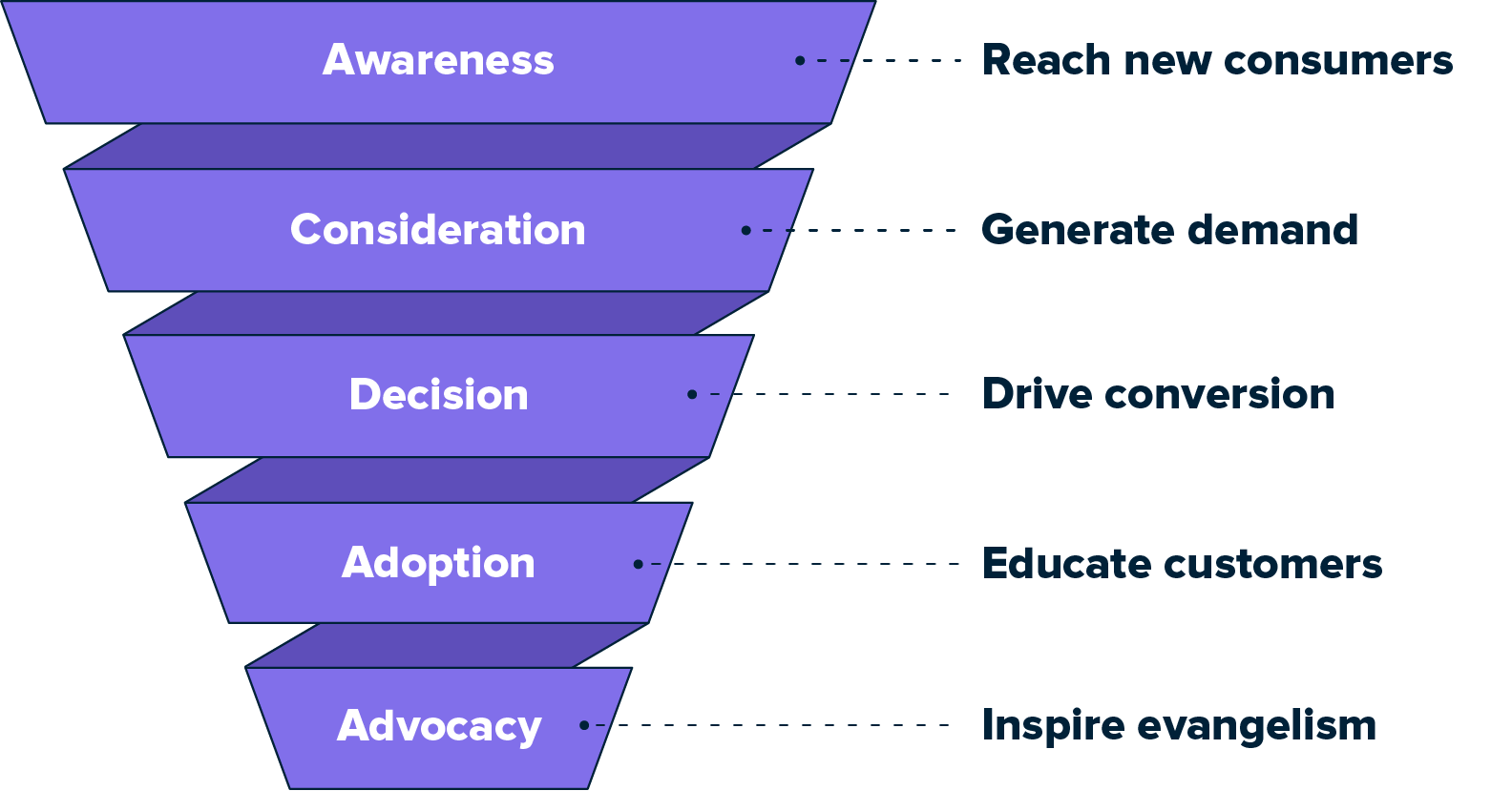
Image of an inbound marketing funnel and their related goals: starting with awareness at the top to reach new consumers and ends with advocacy at the bottom and inspiring evangelism at the bottom.

Execute with content scheduling and promotion

Some content types are locked in by holidays or other dates. In these instances, ideas are sourced and developed with the date in mind. Using a social media calendar can help you keep track of important dates, so they can guide you in your ideation and development stage.

Dates might also limit what content you want to focus on. In the fourth quarter, retail marketing ramps up for the holiday season, and a lot of content is focused around that area. This is obviously not the time to talk about the best summer outfits.

Content creation takes time and part of this content process should take that into account. You may have the best ideas surrounding a holiday but they won’t happen if you don’t plan for how much time it’ll take you to execute and promote them.

Conclusion

So what is content development? It is the research and creation of ideas to develop content that will engage your target audience in a way that will meet your strategic goals. To understand more about what consumers are looking for in a brand, visit our most recent Sprout Social Index™. Once you create content that moves you toward your goals, the next step in the content development process is to publish and promote it. Sprout’s social media publishing features, including Optimal Send Times, Content Library, Content Suggestions and Shared Content Calendar make it easy and save you valuable time.

Content development is the process of sourcing ideas, creating content and measuring results. It is this ongoing process that allows you to hone your social marketing to what works best for your brand.

The post Smart steps to content development appeared first on Sprout Social.


from Sprout Social https://ift.tt/3ANDIpw
via IFTTT

How brands can collaborate with Black creators in 2023

It has been three years since what many media outlets described as “the racial reckoning of 2020.” This was a time when we saw global brands from Sephora to Yelp release social responsibility statements and pledges to commit more resources to diversity, equity and inclusion in all areas of their business.

In 2023, brands continue to be held accountable by their customers—but the bar is higher.

Fifty-three percent of consumers say brands that issue statements in support of racial equality need to follow it up with concrete action, according to an Edelman report. The same research found that 42% of consumers have started or stopped using a brand because of its response to protests against systemic racism and racial injustice.

With their most significant stakeholders keeping an eye on them, many brands have maintained their commitment to combat racial injustice. They have also focused on strengthening their relationship with the Black community by partnering with Black creators and influencers and investing in Black talent to incorporate into their marketing campaigns.

In the process, cultural moments like Black History Month and Juneteenth have become a time of high demand for Black creators. While these celebrations of Black culture are essential, Black creatives are challenging brands to think beyond these moments and collaborate with them year-round. Some brands are leading the charge by creating initiatives and campaigns centered around content creation, storytelling and featuring Black talent.

3 brands working with Black creators beyond Black History Month

1. HOORAE

Late last year, HOORAE—a media company led by Issa Rae—announced its partnership with Walmart: The Black & Unlimited Digital Development Program. Nine Black creators were selected to amplify their content creation efforts by providing them with resources, tools, courses, and access to a network of executives to learn from. Additionally, each creator was offered a $10,000 stipend “to offset pay inequities traditionally experienced by Black creators and help them focus on limitless discovery and creation,” according to the company’s press release.

Since Issa Rae owns the company, it’s not surprising that amplifying Black voices is at the center of her work. That’s always who Issa Rae has been. Remember when she infamously stated that she was “rooting for everybody Black”? She meant that.

While the program is in its early stages, HOORAE and Walmart plan to make Black & Unlimted an ongoing and evolving initiative that will continue to dedicate its resources to Black creators.

2. HBO Max

HBO Max—the streaming service that brings us fan faves like The White Lotus, Euphoria, and House Of The Dragon (also known by Black Twitter as “House of Dragons”) has been dedicated to sharing Black stories on and off their platform. In September 2021, they launched their social-first community initiative: Scene In Black. Like Netflix’s Strong Black Lead, Scene In Black focuses on highlighting the Black talent, creatives and fans from all HBO titles.

Scene In Black also announced their “More Than A Month” campaign with one goal in mind—showcasing why Black stories deserve to be seen and heard beyond Black History Month. Finally, HBO Max became the official sponsor of The Creative Collective NYC’s CultureCon, an annual conference in Los Angeles, New York City, and Atlanta that aims to help Black creatives elevate their social network and make a real mark on culture.

3. TikTok

In November 2020, TikTok began encouraging its consumers to shop Black-owned through its initiative: Support Black Businesses. Building on efforts to relieve Black small-business owners impacted by the COVID-19 pandemic, TikTok invited its users to participate in a #ShopBlack challenge. They asked creators to make videos that spotlight their favorite Black-owned businesses or share their stories as entrepreneurs. On TikTok, the hashtag now has over 97.2 million views.

In January 2021, TikTok introduced its incubator program: TikTok for Black Creatives. According to the press release, this program was designed to “invest in and support emerging Black creators and music artists on TikTok. The three-month program focuses on nurturing and developing 100 talented Black creators and music artists, helping to open doors for them to reach new heights in their careers.” TikTok has previously had issues with Black creators on the platform. Many reported that the company was suppressing their video content, and others also reported not receiving proper credit for viral trends, sounds or dances made by Black creatives. In light of these concerns, creators have stated that this program is a step in the right direction to getting Black TikTok creators equity and visibility on the platform.

How brands can partner with Black creators

Whether you’re building out a creator development program like HOORAE, amplifying Black stories and creatives like HBO Max, or supporting Black-owned businesses like TikTok, the opportunities to collaborate with Black creators are endless.

  • If you’re not sure where to start, look within. Your brand’s Black employees will likely recommend their favorite Black creators and influencers. The best part is that if your organization is committed to actual diversity, equity and inclusion, you’ll find that their recommendations will differ. Sure—everyone will be Black, but they’ll also have different niches, community bases, content types and an array of life experiences. Some Black people are queer. Some Black people have disabilities. Some Black people are immigrants. With this in mind, you’ll be sure to have the chance to collaborate with creators who represent the Black community and beyond.
  • When sharing Black stories, consider the tone. Often, brands tend to go the route of focusing on Black people’s oppression or struggles. While that is a part of many Black creators’ narratives, that doesn’t necessarily define who we are. There is beauty in Black joy, and to celebrate it is to acknowledge and honor it.
  • Prepare your purse. Depending on the ask, you may need to set aside $500 – $2,500 per content creator. Pay transparency is more important than ever, which means creators are talking. Trust me. You don’t want to be the brand that lowballs a well-known creator in their community. That said, many creators, especially Black ones, are often unsure how much they should charge brands. Not only should you set the budget aside, but you should also advocate for the creators you want to work with. If you know that a creator you want to partner with is undervaluing themselves, tell them. That allows for pay equity throughout the entire creator economy and further folds these creators into your community.

Black creativity is what moves culture. If you’re not tapped in, now would be the time to do it.

Want to dig deeper? Read more about why diversity in marketing and social media is non-negotiable. 

The post How brands can collaborate with Black creators in 2023 appeared first on Sprout Social.


from Sprout Social https://ift.tt/PgV1ZYt
via IFTTT

You’re spending too much time writing email

New feature in AWeber - Link Previews

Picture this: you're rushing to meet a deadline to send your newsletter. You’ve got your content written and your audience is waiting to hear from you but the thought of manually dragging-and-dropping multiple images, buttons, and text elements is making your head spin. You need help, and fast.

Look no further. With Link Previews, you have the ability to turn a simple URL into a block of well-designed, linked-up content, a video thumbnail, a cta button, or hyperlinked text, with just a single click.

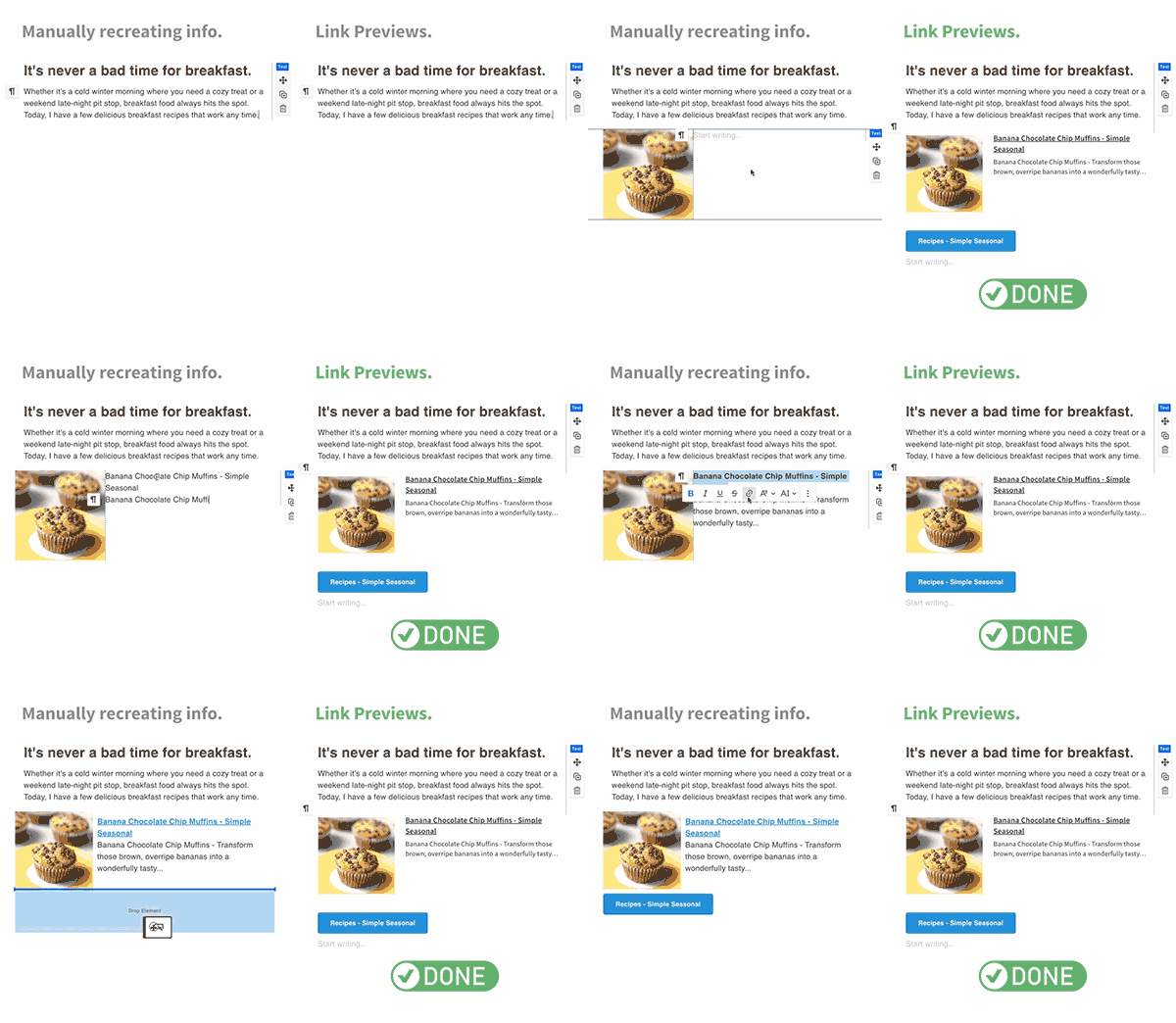
An animation showing a writer pasting a link to a recipe for banana muffins and AWeber automatically turning it into styled content. They then paste a link to all recipes and turn it into a button with a single click.
  1. Save a meaningful amount of time writing your curated newsletter. Curated newsletters are an effective, relatively low-effort way to build an audience in any industry. I go into how I’m doing this myself below in the design space, but here are just a few ideas for how you could do this yourself:
    • Cooking recipes.
    • News about a specific topic, like tech news, or gardening.
    • Helpful YouTube videos for your industry.
    • Word of the day newsletter with links to dictionary.com
  2. Increase click through rate on your sales, onboarding, or instructional videos from Loom or YouTube.
  3. Make your emails look more professional by replacing a URL with it’s page title. Straight URLs in your email can look unprofessional, and even suspicious.

The killer feature for curated newsletters

Link previews are helpful for all sorts of writers and marketers (I include a list of ways you can use them to engage your audience below), but where they really shine is when you’re curating content in a newsletter. As long as you have a strong intro and a list of interesting links, you can create a well-styled newsletter in a matter of minutes.

I have been using link previews to publish a newsletter about curated design inspiration that takes me just a few minutes to write.

Not just faster, better too

The folks at Explorist.life are some of the busiest creators around. They create weekly YouTube videos for hundreds of thousands of subscribers, produce wiring kits and plans, and… oh yeah they turn vans into solar-powered glamping machines. Email is one of their most important tools to keep their audience up to date on new products and videos.

Steph, one of the owners of Explorist.life had this to say about how link previews help them grow YouTube views.

“I absolutely love the way it looks when I post a YouTube link. It looks really nice with the video thumbnail right in the email and the click-through-rate is way higher when I do that.”

Step from Explorist.life

Link previews are smart enough to understand different types of links and turn them into elements that your readers are familiar with.

Link Type Example
YouTube Videos A screenshot of a YouTube video in the AWeber message editor showing that it looks like an embedded video.
Loom Videos A screenshot of a Loom video in the AWeber message editor showing that it looks like an embedded video.
RSS feeds An example of how a link preview shows an RSS Feed
Websites
TikTok Videos Coming soon
Amazon and Walmart affiliate links Coming soon

But did I mention it’s faster? (I’m talking about shaving minutes off your email writing process)

It doesn’t make sense to have to manually recreate information about a website you’re linking to in your newsletter. Copying and pasting page titles, downloading and uploading thumbnails for the site… sheesh.

All this info is already online, shouldn’t your email platform be able to just do it for you?

GIF showing email content being created manually compared to being created with link previews

Well, yes. It should. And now we do. All you have to do is paste your link and we’ll create a styled hyperlink, button, or designed block of content.

Start Right Now - It’s Two-Step Easy!

You can start using link previews right now, just:

  1. Paste or type in a link to a website.
  2. Select how you want the link to be transformed.
Replace URL with its title if you have a minimalist or text-focused newsletter.
Turn into link preview if you want a stylized block of content that includes the site’s image, title, and description.
Turn into button if you want to focus people onpeople in on clicking through to a single link. In general I wouldn’t recommend you have multiple, stacked buttons; but this is great if you have one site in your newsletter you want people clicking through to.

That’s it. Two steps.

Now it’s up to you. Use link previews to make your emails more effective, and save time to do the things you love. And let me know how we can make this even more helpful for you.

The post You’re spending too much time writing email appeared first on AWeber.


from AWeber https://ift.tt/HLg8Kvr
via IFTTT

Monday, 13 February 2023

4 tips for managing customer data end-to-end (and how social media can help)

Collecting and managing customer data is ubiquitous in our digital-forward world. Customer data enables personalized social feeds and customer-centric marketing by making it easy to find your most engaged audience members.

Yet, data breaches and opaque collection practices have also turned customer data into a minefield. To harness the full potential of the data you collect, it’s imperative to demonstrate to your customers that their personal information is in good hands.

In this article, we’re giving you the tools to master customer data management on social media, so you can open up the door to gaining actionable business insights, improving cross-collaboration and delivering more effective sales and marketing strategies.

What is customer data management?

Customer data management (CDM) is the process of lawfully (and ethically) collecting, storing, organizing and protecting customer information for the purpose of gleaning insights that improve a brand and its offerings.

An orange and yellow graphic that reads: What is customer data management (CDM)? The process of lawfully collecting, storing, organizing and protecting customer information for the purpose of gleaning insights that improve a brand and its offerings.

Social and business intelligence data offers companies a wealth of information about their customers. By taking the raw data and distilling it into important insights, you will learn powerful ways to improve customer satisfaction across the board—from your customer care operations to product development. Bottom line: For long-term growth and success, your brand must always find new ways to improve your customers’ experience and optimize your targeting efforts. And you can’t do that without customer data.

Why customer data is one of your most valuable assets

A orange and blue graphic that reads: Customer data helps you: Nurture relationships with customers, provide a better customer experience, establish trust with your customers, build more effective marketing campaigns and create more opportunities for upselling.

Customer data is the root of business intelligence. The good news is your brand already has a wealth of data at your fingertips, and there’s probably more available you haven’t tapped into yet.

Collecting data and understanding your audience at every stage in the customer journey is key to nurturing relationships. It starts with having up-to-date information about your customers (like valid email addresses, their past experiences with your brand and psychographic data) and determining which channels they’re most likely to use (like social media or text). These insights empower you to create a better experience with your brand, which increases customer loyalty, retention and evangelism.

For example, when a customer contacts you on social media about an issue with their order, having their order history, shipping address and past interactions on file will save your team and the customer time, while making the customer feel like you value their business. But remember: You must use customer data effectively and securely store it for people to trust your brand.

We all have brands we’re loyal to. And when they contact us or we see their posts, we’re more likely to engage and get reeled in by their promotions. Customer data helps your brand narrow-in on your ideal target audience with your marketing and sales tactics. With customer data on-hand, you can build more impactful marketing campaigns and create ample opportunities for upselling and cross-selling.

Customer data plays a pivotal role in making informed business decisions across the organization that foster continued growth for your company.

4 tips for managing and sharing customer data org wide

When it comes to data collection, there are infinite things you can learn about your customers. From basic attributes (like name, email address and demographics) to how they interact with your brand online (engagement, cost per click and conversion metrics). You can track their purchasing behavior (order history, average order value, usage) and source attitudinal data (voice of customer, sentiment and psychographics).

With so much rich customer data available, proper management is key. The data you have is only as good as your ability to use it. Here are four tips for managing and sharing customer data at your organization.

A blue and orange graphic that reads: 4 tips for managing and sharing customer. 1. Gather information with customer consent. 2. Invest in management software. 3. Train your team. 4. Regularly backup and update your data.

1. Gather information with customer consent

It’s non-negotiable to be transparent about your data collection process. If you don’t give your customers full visibility into the data you’re collecting and how you’re using it, you will violate their trust and could face legal consequences, including harsh fines and penalties.

Instead, aspire to be a consumer privacy advocate and make your data collection processes customer-centric. When you gather customer data via surveys, website forms, transaction history, tracking cookies and social media analytics, explicitly tell your customers and prospects what you’re using the data for. Only collect the details you absolutely need and use it for the exact purpose(s) you specified. Also be clear on how long you will keep and use the data.

A screenshot of a webpage that reads: How Google uses cookies. The page explains Google's cookie policy and features a video of a woman describing the process.

2. Invest in management software

Housing your customer data in a spreadsheet is both unsafe and inefficient. Improper storage of any kind opens your company up to the risk of a breach or misuse of data. To up-level your customer data management, invest in software that solidifies your security measures and harnesses/manages your data in one place. Having a single source of truth is crucial.

For example, Salesforce CRM software offers layers of security like multi-factor authentication, regulation compliance, user activity tracking and anonymized data to protect your customers (and your business). Sprout Social’s integration with Salesforce enables users to manage all their social customer care requests directly from Service Cloud, while enriching customer CRM profiles with social data. This is a major win for your data security and customer service efforts.

A screenshot of social data from Sprout integrated in the Salesforce platform, which demonstrates how incoming social messages can be linked to existing contacts and cases.

Request a demo of our integration today.

3. Train your team

Managing customer data is only possible if your whole team is on board. Host regular customer data trainings to empower ethical access and usage. Emphasize why customer data is important, how to use it for different business use cases and ways to share important insights across departments.

We recommend creating specific data collection, usage and sharing policies for your company. Make relevant details of your policy public-facing to provide additional transparency to your customers.

A screenshot of Sprout Social's privacy policy from our website. The policy explains how and why we collect and manage customer data.

4. Regularly backup and update your data

To be a good steward of customer data, make sure your data is always current. Perform frequent updates by recycling unresponsive leads, validating customer information and amalgamating duplicates. Regularly delete data you no longer use or that is past its expiration (like we mentioned in step one).

You should also have a customer data backup plan in the event you accidentally lose valuable data due to tech or human error.

How social media fuels your customer data engine

Social media platforms contain an endless supply of consumer data—you just need to know how to analyze it so you can discover actionable insights. Like identifying who your most engaged followers are. Or figuring out what your target audience is saying about your brand when they don’t tag you.

A person’s interactions with a brand on social—from the first time they like a post to the last time they DM a brand—give businesses so much insight into their customer experience and journey. From social data alone, you can learn:

  • Customer demographic and psychographic information
  • Interests and hobbies
  • Other brands they follow
  • What content they engage with
  • Their feelings toward your brand, products and industry

A screenshot of a Twitter exchange between a Sprout user and the Sprout Social Twitter account. In the message, the user raves about a new product feature, and our team responds with gratitude.

Use these findings to create a more holistic view of your customer by infusing social metrics into your consumer data engine.

How Sprout Social can help make managing (and using) customer data easier

With Sprout’s social media management features, it’s easy to collect, manage, analyze and utilize customer data. Our all-in-one social media management platform unlocks the full potential of social customer data to transform not just your marketing strategy—but every area of your organization.

Customer service features

The Smart Inbox unifies all your social messages into a single stream so you can foster relationships and respond to your audience quickly. It helps you visualize all inbound message volume across profiles, find new conversations happening about your brand and respond from one place.

A screenshot of an example Twitter direct message exchange in the Sprout Social platform. In the exchange between the customer and the company, the customer contact information and past experiences appear in the right side bar.

Contact Profile Views within the inbox provide a window into a user’s social media presence. From this view, you can reply, add custom contact information, notes and even see message history between you and your customer—streamlining all customer care actions. If you’re a Salesforce customer, you will be able to see if the user is already a lead or contact.

Listening

Sprout’s Listening tools help brands tap into global social conversation to extract actionable insights, identify industry gaps and improve brand health. Use listening to find and explore actionable audience data like demographics, sentiment, conversation topics, campaign analysis and competitor performance.

A screenshot of a Listening Performance Summary in Sprout's platform. The graphs featured illustrate changes in sentiment trends over time.

Social analytics and dashboards

Sprout’s analytics tools speed up data collection and distribution. Access metrics from owned and paid media like impressions, engagements, audience growth and cost per click. Dashboards—including interactive charts and graphs—reveal trends in customer data, and make it easy to share findings with internal partners and stakeholders.

A screenshot of the Sprout Social Profile Performance Report, which displays impressions, engagements, post link clicks and changes in audience growth.

For example, with Sprout’s Tableau BI Connector, combine the power of social data with your other business channels. The tool enables you to analyze data, create custom metrics and merge different data sources. This seamless and customized view gives you a consolidated source of truth for wider business insights and performance.

A screenshot of a Tableau dashboard populated with Sprout Social data and other marketing data. The dashboard illuminates how social data supports other marketing tactics.

To start collecting, managing and sharing customer data from social media, begin your free 30-day Sprout Social trial today.

Start your free Sprout trial

The post 4 tips for managing customer data end-to-end (and how social media can help) appeared first on Sprout Social.


from Sprout Social https://ift.tt/B9eEbL7
via IFTTT

13 Ecommerce trends you need to know in 2023

Today, it’s easier than ever to shop online with just a few touches on your smartphone. Not only is ecommerce a crowd favorite, but it intersects with the most popular social media trends of 2023.

Analysts predict US ecommerce sales to increase from the current 23% of retail sales to 31% by 2026. Brick and mortar stores aren’t going away, but modern consumers have more items on their shopping list for preferred brands online. Along with choice and convenience, consumers are concerned about price, brands who align with their values—and that’s just the beginning.

Marketers with sophisticated social presences and ecommerce managers need to keep up with the latest ecommerce trends because consumer behavior is constantly evolving. Product launches no longer take place solely in the physical space. The digital one is just as, if not more, important.

Let’s take a look at the top ecommerce trends you need to know about in 2023:

1. Accelerated use of mobile shopping

Mobile commerce is more than simply using your phone to buy items. It includes any purchasing activity (engagement with mobile ads, speaking with sales reps, browsing brands on a smartphone, etc) made on a mobile browser or app. And since mobile shopping intersects with other trending ecommerce features like live stream shopping, augmented reality shopping and in-app purchases, we predict its use will accelerate in 2023.

How to act on this:

  • Consider your current mobile shopping offerings and experiment with trending commerce features.
  • Pay attention to new ecommerce product features to stay ahead.

2. Social commerce continues to grow and evolve

Social commerce reigned supreme in 2022. But consumers’ wants are becoming more complex and they’re more selective with their purchase decisions, especially in a looming economic downturn.

Sprout’s social shopping report found 98% of consumers planned to make at least one purchase through social shopping or influencer commerce in 2022—and this trend isn’t slowing down. If you haven’t already started selling on social media, chances are high that your competitors already are or are planning to.

With the maturing of creator marketing, the natural next step is for platforms to help creators and companies sell to consumers.

Grove Collaborative utilizes Instagram Shop to offer customers a unique browsing experience and the ability to check out within the app. Along with photos, they include tutorial videos to illustrate how to use their products. Users can also send a direct message to Grove Collaborative if they have a question.

A portion of Grove Collaborative's Instagram Shop featuring a product tutorial video, price, description and link to website.

Why make someone leave Instagram if they can just click on a product tag and purchase something in less than a minute? In the buyer journey, it’s one less click for customers and that’s one less chance for them to abandon the cart.

Grove Collaborative's online cart via Instagram Shop.

In our Q1 2023 Sprout Pulse survey, 47% of consumers say they plan to use shopping features within a platform (Instagram Shops, Facebook Shops, TikTok Shopping, etc.).

Infographic stat call out of Q1 2023 Sprout Pulse survey highlighting 47% of consumers say they plan to use a shopping feature within a platform in 2023.

Even across generations, consumers anticipate using in-app shopping features over the next year.

Infographic data list from Q1 2023 Sprout Pulse survey showing age demographics who plan to use shopping features within a platform in 2023: 18-24 (46%), 25-40 (65%), 41-56 (45%), and 57-75 (23%).

How to act on this:

  • Consider implementing new in-app shopping features on social media.
  • Meet your customers where they are. Which social shopping platform or feature do they engage with the most?
  • Reward social shoppers with exclusive in-app discounts and sales.

3. Personalization is a preferred shopping experience

B2C and B2B consumers alike are seeking custom ecommerce experiences and are more likely to remain loyal to retail brands that offer a personalized experience. According to the State of Personalization 2022, almost half  (49%) of consumers say they will likely become a repeat buyer after a personalized shopping experience with a retailer.

Personalization can include product recommendations, offers and discounts and a cohesive retail experience across multiple channels (website, mobile and social). It can also include offering a variety of payment methods. If customers have a preferred payment method and it’s not available, they could easily abandon the website without completing their purchase.

Brands that are expanding their personalization efforts are reaping benefits. According to BCG’s Personalization Maturity Index, retailers that scale advanced personalization capabilities earn on average four times the revenue compared to those with less advanced features.

How to act on this:

  • Scale personalization efforts by offering product recommendations and exclusive offers.
  • Consider offering modern payment methods, like Apple Pay, or buy now, pay later services like Klarna.
  • Prioritize improving customer care across your social media channels.

4. Artificial Intelligence will help brands learn more about shoppers

With the rise of custom shopping experiences, artificial intelligence (AI) is growing quickly. AI can collect data on customers’ shopping behaviors. This can include how a customer shops, their preferences when browsing for a product/service and time of purchase. Brands can use this information to offer a personalized shopping experience.

It’s like your favorite sales associate, but with a techy twist. Instead of your favorite associate, AI can show a new shoe you might like or share details about relevant upcoming sales.

You may be familiar with the science fiction trope of an AI robot learning how to express human emotions. Well, we are not quite there yet—and perhaps we never will be.

But more practical use cases for AI and customer service are emerging. While not every AI scenario goes well, companies have tapped on AI to compose responses for more practical customer care engagements like searching for an item status. Using AI will improve efficiencies as customer paths are projected to become more complex over time.

As a bot learns how to communicate better, brands can also teach them how to provide more complex customer service, along with offering products based on a customer’s moods and preferences.

How to act on this:

  • Research best use cases for AI ecommerce.
  • Experiment with AI tools to get a hands-on learning experience.
  • Pay attention to industry news surrounding artificial intelligence and machine learning.

5. Zero-party data and privacy are on consumers’ minds

While some consumers want a personalized experience, others are concerned about their data and privacy rights. More consumers are aware that ecommerce sites collect data, but they don’t always know how this data will be used or whether the collection puts them at risk. There are mixed sentiments about the benefits of big data and how it impacts personalized shopping experiences.

In light of top companies like Google planning to end the support of third-party cookies in 2023, brands are beginning to adopt zero-party data. Collecting data directly from consenting customers is an attempt to avoid the issues that come with using third-party cookies.

Our Q1 2023 Sprout Pulse survey shows 63% of consumers are concerned about zero-party data while shopping online.

Infographic data list from Q1 2023 Sprout Pulse survey highlighting how consumers are concerned about zero-party data while shopping online: Strongly agree (36%), agree (36%), neither agree nor disagree (28%), disagree (5%), and strongly disagree (3%).

However, our Pulse survey also revealed over half (55%) of consumers are okay with brands using their personal information to deliver relevant content and offers, or if the recommendation aligns with their identity.

Infographic data list from Q1 2023 Sprout Pulse survey question, “I’m okay with brands using my personal information to deliver relevant content and offers, or the recommendation aligns with my identity.” Results go as follows: Strongly agree (26%), agree (29%), neither agree nor disagree (24%), disagree (12%), and strongly disagree (9%).

With the future moving toward zero-party data, marketers will have to learn how to balance the interesting dichotomy between personalization and data/privacy concerns.

How to act on this:

  • Consider adopting zero-party data and collect customer data in-house.
  • Identify and implement the appropriate security and privacy protocols to protect your customer data.
  • Be transparent with customers about how your brand collects, stores and uses their data.

6. AR and VR enhance online shopping experiences

Our Q1 2023 Pulse survey revealed 48% of marketers anticipate using Virtual Reality (VR), Augmented Reality (AR) or Extended Reality (XR) technologies like the metaverse. Some 43% of consumers say VR/AR/XR will play a significant role in how they engage with brands over the next 12 months.

Infographic stat call out from Q1 2023 Sprout Pulse survey that reads 48% of marketers anticipate using Virtual Reality, Augmented Reality or Extended Reality technologies in 2023.

“Try before you buy” takes on a whole new meaning with augmented reality (AR) commerce, which uses 3D mapping to help customers try out products or preview experiences before making a purchase. AR has been a game changer across industries, especially fashion, beauty and home decor because it brings the product/service within the fingertips of customers.  Brands don’t even need brick-and-mortar storefronts to take advantage of AR commerce.

Infographic stat call out from Q1 2023 Sprout Pulse survey that reads 43% of consumers anticipate using Virtual Reality, Augmented Reality or Extended Reality technologies over the next 12 months.

A few advantages of AR ecommerce include:

  • Customers can get a feel for a product without seeing it physically in person
  • Helps customers who don’t have access to a store nearby due to time or proximity
  • Since customers can preview products and experiences without purchasing, their purchase decisions are more informed, leading to fewer returns
  • Offers consumers the ability to test on their own time, making this marketing and sales channel cost-effective

Some examples of AR ecommerce include virtually trying on glasses frames, placing a piece of furniture in a room to see how it’ll look and applying various makeup products to see what compliments your skin tone.

Within its iOS app, Target uses AR to improve the customer shopping experience. Common furniture items are able to be superimposed into customers’ spaces so they can actually picture how they’ll look. If customers are able to see how well a leather armchair fits into their living room, they’re more confident in their purchasing decision and less likely to return the item.

Screen capture of Target's See It in Your Space augmented reality feature. An AR flowerpot rest on a desk.

How to act on this:

  • Consider investing in AR ecommerce features through your brand’s app or an AR app like Snapchat.
  • Showcase how customers can use your brand’s AR offerings on social media.

7. A rise in voice search

In 2023, marketers are using emerging technologies like voice search to level up their social commerce strategies. Many consumers rely on smart speakers and voice assistants to complete daily tasks. Customers can explore a brand’s various collections, choose product sizes and colors and ask questions directly within their shop.

As more people adopt these systems, they will likely start using voice search to make purchases from clothing to food.

According to our Q1 2023 Pulse survey, 25% of respondents say they plan to use voice search in 2023, a 3% increase from 2022.

Infographic stat call out from Q1 2023 Sprout Pulse survey that reads, “25% of consumers say they plan to use voice search in 2023, a three percent increase from 2022.”

How to act on this:

  • Optimize voice search by using traditional search engine optimization and semantic strategy
  • Optimize product/service descriptions for search using natural speech like “who,” “what,” “where,” “why,” “when,” and “how”

8. Businesses focus on optimizing for conversion

In today’s economic landscape, consumers are spending less and less often. According to Shopify’s The Future of Ecommerce + Trends 2022  report, in a survey of global Shopify Plus merchants, 35% have seen shrinking average cart sizes, and 50% are seeing less site traffic and lower conversion rates.

With so many brands embracing multichannel marketing, marketers need to focus on optimizing for conversion on social media and search engine advertising. Gone are the days of identical messaging across traditional channels like billboards and postcards. Today, companies have to craft a cohesive brand presence while curating the appropriate messaging and content across various social channels.

How to act on this:

  • Prioritize customer care across your brand’s channels.
  • Include a call to action link or button in content.
  • Showcase testimonials and reviews across your channels.

9. Subscriptions help retain loyal customers

Brands are adopting subscription models to attract loyal customers while boosting profitability and retention rates. Subscriptions and/or memberships are becoming more popular due to economic instability and inflation.

B2C brands in particular are marketing subscription plans as an opportunity to save money, some even promising lifetime price rates as a registration incentive. Gated membership communities like Fabletics and Lululemon are rising as well. The model leans on FOMO, offering members VIP-style treatment with exclusive access to products, events, etc.

These benefits are so attractive to customers that Lululemon expects 80% of customers to sign up for membership within the next five years, according to Shopify’s The Future of Ecommerce + Trends 2022  report. Lululemon also stands out because of how they promote their subscription and community. The athletic apparel retailer frequently interacts with customers on social, sometimes even surprising and delighting their customers with subscriptions.

How to act on this:

  • Reward subscribers with limited-time offers.
  • Market the benefits of your subscription service.
  • Engage with subscribers online to shape a sense of community.

10. Consumers are choosing brands that align with their beliefs

Consumers want to spend their dollars on brands that align with their beliefs. Our Q1 2023 Pulse survey reveals aligned values are a top priority for many consumers.  They want to spend their dollars on brands that don’t just talk the talk, but walk it too.

Infographic data list from Q1 2023 Sprout Pulse survey question, “When I feel connected to a brand, I am more likely to increase my spending with that brand.” Results go as follows: Strongly agree (26%), agree (29%), neither agree nor disagree (24%), disagree (12%), and strongly disagree (9%).

For example, if an ecommerce brand values environmentalism, they could allow consumers the option to minimize the number of shipments an order is sent in. Beauty and apparel brands that champion diversity, equity and inclusion are expected to feature diverse models and offer inclusive sizing or foundation shades.

Our Pulse survey shows 77% of consumers are more likely to increase their spending with brands they feel connected to, a 57% increase from our 2018 Brands Get Real report.

Infographic stat call out from Q1 2023 Sprout Pulse survey that reads, “77% of consumers are more likely to increase their spending with brands they feel connected to, a 57% increase from 2018.

Our Pulse survey also showed, across generations, consumers are more likely to spend on brands they feel the most connected to.

Infographic data list from Q1 2023 Sprout Pulse survey showing age demographics who agree or strongly agree that when they feel connected to a brand, they are more likely to increase their spending with that brand. Results reads as follows: 18-24 (64%), 25-40 (88%), 41-56 (77%), and 57-75 (73%).

How to act on this:

  • Get creative with how you showcase your brand values.
  • Collaborate with like-minded businesses, content creators and influencers.

11. Consumers are increasingly mindful of sustainability

Staying true to the trend of consumers choosing brands that align with their beliefs, sustainability is becoming an important staple to shoppers. With factors like the environmental implications of fast fashion and emerging technologies like NFTs (which are known for having large carbon footprints), many consumers are becoming more aware of sustainability.

Consumers are looking for sustainable packing, pivoting from plastic and paying attention to brands’ environmental activism efforts.

How to act on this:

  • Evaluate how your brand can embrace sustainable business practices.
  • Consider how your product or service can be more eco-friendly.

12. Livestream shopping

Livestream shopping allows consumers to enjoy the best of social commerce and live streaming. Brands, influencers and creators can promote products/services while interacting with customers in real time. The experience is similar to shopping in a store with associates answering questions, but now it’s from the comfort of home.

Some 49% of consumers plan on watching live streams in 2023, according to our Q1 2023 Sprout Pulse survey.

Infographic stat call out from Q1 2023 Sprout Pulse survey that reads 49% of consumers plan on watching live streams in 2023.

Even traditional television shopping networks like QVC are embracing livestream shopping. Viewers can tune in via Facebook, Youtube and the QVC streaming app.

Screen capture of flowers for sale on QVC's YouTube live stream.

13. Conversational marketing

Imagine a customer starts a conversation with your brand on Facebook Messenger.

With the help of a chatbot or a live agent, the customer can get answers to their questions about your product/service. And they can even complete a purchase without leaving the platform. Conversational commerce is a lot more personalized and interactive on a one-on-one basis.

Our Q1 2023 Sprout Pulse survey reveals, some 26% of marketers plan to use conversational marketing in 2023, a 6% increase from 2022.

Infographic stat call out from Q1 2023 Sprout Pulse survey that reads “26% of marketers plan to use conversational marketing in 2023, a six percent increase from 2022.”

On top of text-based conversational commerce is voice shopping, like we mentioned before. Having a natural conversation with your Amazon Echo or Google Home that leads to a purchase is another example of conversational commerce.

Next steps for marketers

  • Consider optimizing conversational marketing efforts for conversion, like chatbot call to action prompts or using live agents with chatbots.
  • Implement chatbots on your brand’s website and social messaging platforms.

Evolve your emerging social commerce strategy

Keep an eye on these emerging ecommerce trends over the next year. New technology is helping ensure smoother customer journeys and a better brand experience, helping both the customer and the company.

Get ahead of the latest ecommerce trends with our social commerce strategy tool.

The post 13 Ecommerce trends you need to know in 2023 appeared first on Sprout Social.


from Sprout Social https://ift.tt/YBNWjdM
via IFTTT

Thursday, 9 February 2023

The complete guide to personal branding

“You’ve got to build your personal brand.”

Chances are you’ve heard some variation of this advice recently, right?

From marketers to creators, the concept of personal branding is all the rage right now. This makes sense considering that consumers today crave connections and authenticity.

The problem is, branding yourself can be a struggle—especially if you don’t know what your brand voice is.

That’s why we’ve put together this ultimate guide to personal branding to help.

Table of contents:

What is personal branding?

Personal branding is how you present yourself as an individual to your audience.

Think about how corporate branding works. We associate specific feelings, values and expectations with brands we trust. Every company has a story and image.

Well, the same applies to you and your personal brand as well.

“Personal branding” is sometimes synonymous with being an influencer. This does not have to be the case for everyone. 

Your brand should highlight your human side. Voices and personalities set brands (and people!) apart. Branding yourself means aligning your online persona and your real-life one. 

Building your brand is not simply marketing yourself (although that’s part of it). Here are the key pieces of a personal brand:

  • Voice and values. That is, what you say and what you believe. Your brand voice shouldn’t be one-size-fits-all or robotic.
  • Content. What are you promoting to build your following? How are you presenting it?  Whether through entertainment value or education, your content is what attracts your audience.
  • Creativity. You don’t need to be a creative genius to build a personal brand. That said, having some sort of creative trademark can help you stand out from the crowd.
  • Personality. No surprises here! Good news: there is no one-size-fits-all personality type for your brand. Energetic? Laid back? Suit-and-tie? Great! Again, you have to do you.
  • Authenticity. The concept of “creating” a persona is a turn-off for some. Your personal brand shouldn’t be manufactured or made up. Aligning your online persona with who you really are should be seamless. Once you figure out how to do it, your brand will never feel forced.

Why is personal branding important?

Fair question!  Below we break down why personal brand-building is worthwhile.

Standing out from the crowd

The people who’d benefit the most from a personal brand are often focused on building something else. A company, art, you name it.

Like it or not, we’re entering an era where everyone is a content creator. That means that who we are and what we make are often one and the same.

Among the countless creators and marketers out there, growth is daunting. Our audience only has so much attention to give. 

With a compelling brand and consistent content, you give yourself a chance to shine. People don’t grow audiences or garner influence by accident. Both your personal brand and what you create are totally in your control, too.

Relatability and authenticity matter to modern audiences

Recent research says that consumers overwhelmingly trust authentic and relatable brands. Apply the same logic to individuals. This is especially important in an era where “influence” can feel manufactured. 

Making stronger connections with your community

Food for thought: brand alignment with personal values is more important to consumers in 2022 than it was in 2021.

Again, your voice and values are directly tied to your ability to grow your audience. 

Putting your personality front and center attracts like-minded followers. That also means making connections to understand your audience’s needs and challenges. This goes hand in hand with establishing trust and making meaningful connections.

Sprout’s #BrandsGetReal research reflects this phenomenon, too. 91% of people believe that social has the power to connect people.

Examples of successful personal branding

It’s important to note that anyone can build a personal brand (hint: not just celebrities). In fact, employee advocacy and personal branding are becoming intertwined as more employees post on behalf of brands.

Here are a few examples of people who’ve built personal brands across industries:

  • Founders like Sparktoro CEO Rand Fishkin. Rand’s positive demeanor, sense of style and eagerness to educate has helped him build a massive audience over the years. According to Rand himself, personal brands should be a byproduct of building (and not a persona that’s forced).
  • Twitch streamers like Pokimane. Pokimane amassed millions of followers across platforms including Twitter, TikTok, YouTube and Instagram. Her self-aware sense of humor and willingness to interact with fans are her trademarks.
  • Celebrities like Dwayne Johnson. Despite being one of the most famous celebrities in the world, Johnson isn’t afraid to give a peek into his personal life. He regularly replies to fans with personal and vulnerable stories.
The Rock Tweet Personal Branding
  • Politicians like Maxwell Frost. Frost is making a name for himself as the first member of Gen Z in Congress. His candid posts and sense of humor represent a new brand of politician that’s far from the norm.

How to build your personal brand in 5 steps

Now, onto the good stuff!  Brand-building requires conscious effort. Below are five actionable steps you can take to get yours off the ground. 

1. Figure out where your brand currently stands

Building a successful personal brand means having a following. After all, followers validate that what you’re doing is valuable to others.

But this is a sort of chicken-and-egg situation.  You need followers to establish your brand, right? That said, you can’t establish your brand without followers.

So start from square one by asking yourself:

  • Have many followers do you currently have?
  • What communities can serve as the basis for a bigger audience?
  • Where am I most active? Where is my audience most active?
  • What are my goals? Followers, traffic, sales?

To avoid spreading yourself thin, we recommend prioritizing growth on one network at a time. Having a presence is one thing but actively branding yourself on a platform is serious work.

2. Brainstorm ways to provide value to your audience

Again, followers and clout don’t happen by accident.

What value you provide varies depending on your industry and audience. Generally speaking, building a unique personal brand means creating something, well, unique. New ideas and resources. That might be:

  • Educational content (tips, tutorials, how-tos)
  • Personal anecdotes and experiences
  • Ratings and reviews on products or brands relevant to your audience
  • Original artwork or music
  • Fresh perspectives and opinions
  • Motivational content

Heck, it could be all of the above.

In short, you need to create something that highlights your value and influence. People need a reason to follow you. Consistently creating valuable content is how you start.

3. Be consistent when putting yourself out there

Piggybacking on the point above, consistency counts.

Building your brand means maintaining your brand, too. Regularly sharing and creating content is a must-do. You can’t let your account gather cobwebs. This applies to responding to comments from followers, too.

Consistency is arguably the biggest challenge of building a personal brand.

Let’s say you have your audience split across Instagram and TikTok. As noted by how often to post on social media, different networks demand different publishing frequencies. Either way, it’s a lot of pressure to post on a regular basis. This circles but to what we said about spreading yourself thin.

Growing across networks is easier with social publishing tools like Sprout Social. Scheduling and cross-posting means you can publish to multiple networks at once. This means less chaos and no need to bounce between platforms.

Social media publishing Sprout

Consistency also matters when it comes to your personal branding across networks. This is where your creatives like logos and color schemes come into play.

example of consistent personal branding

4. Prioritize trust, authenticity and relatability

Despite popular belief, building a personal brand doesn’t mean having a magnetic personality. You can absolutely be introverted or even “quiet” and still build a valuable brand. 

The key is being relatable and real. That means sharing content and experiences that speak to your audience. This could include challenges you overcame or resources to solve a problem. 

Before posting anything related to your personal brand, always ask yourself:

  • “How does this build trust?”
  • “Am I being real with my audience?”
  • “Who does this post or piece of content speak to?”

If you have confident answers to all of the above, you’re golden.

5. Be conscious about avoiding brand burnout

  • Don’t make personal branding too personal. There’s a fine line between being vulnerable and oversharing. Set boundaries for yourself in terms of what you’re willing to put out there. Branding yourself shouldn’t be uncomfortable.
  • Don’t overdo it. When your brand starts growing, you might feel pressure to post more or create more content. That’s great! Still, don’t sacrifice quality for quantity.
  • Don’t overthink it. We get it: “be yourself” sounds like cliche advice. It still applies, though. That’s because brand authenticity matters and people can tell when you’re faking a persona. You’ll be much happier with the process of brand-building if you stay true to yourself.

How are you building your personal brand?

Listen: there is no rulebook for building your personal brand. That’s because it’s all unique to you.

And hey, that’s good news!

Building a personal brand can feel daunting. Focusing on legitimately helpful content in your own voice is a good place to start.

Sticking to the steps below can help put you on the right track. If you haven’t already, check out our 30-day social media plan to jumpstart your branding journey.

The post The complete guide to personal branding appeared first on Sprout Social.


from Sprout Social https://ift.tt/cGi06zw
via IFTTT