There’ll always be a competitor trying to outperform you. The only way to grow and stay ahead is a keen eye on what your customers are saying about their interests and pain points.
In a world where star ratings can make or break a brand, review analysis is your north star. It gives you deep insights from customer feedback so you can uncover trends, make targeted improvements to your business and build a richer brand management strategy.
To conduct review analysis effectively, you need to focus on the right platforms and choose the right review analysis tool. Only then will you get the most comprehensive view of your audience.
In this article, you’ll find out what review analysis is all about, the tangible business benefits, as well as a step-by-step breakdown of how to build a review management strategy to grow your business.
What is review analysis?
Review analysis is the process of analyzing customer feedback from various sources such as social listening data, review forums, customer service data and surveys to get targeted brand insights. These insights enable you to cut through the noise and understand how customers feel about your business, products and service so you can improve them proactively.
Why should brands carry out review analysis?
Reviews give first-hand information on how to improve your offerings, create better-performing content and build more authentic, meaningful relationships that boost brand loyalty. Let’s take a closer look.
Create more impactful content
Review analysis reveals what type of content resonates the most with your audience, which will help you deliver more relevant social posts for better engagement.
It also gives you an opportunity to insert your brand into the conversations drawing audience’s attention.
Review analytics tools like Sprout analyze content across multiple social channels and profiles simultaneously. This gives you rich, holistic brand insights across key performance indicators (KPIs) to fortify your social strategy, as Benefits Cosmetics found when analyzing this data to learn more about their audience.
Boost sales conversions
Social proof is everything. Think about it—if you want to buy a product or service, the first thing you do is look up reviews to see what other customers are saying about it.
Price may be an important factor but product quality, after-sales service and how competing brands compare, are important too. Review analysis gives you insights into all these factors so you can improve your end-to-end customer journey for higher satisfaction and conversion.
Manage brand reputation
With rising consumer awareness, brands need to make sure they are always fostering a positive brand reputation. Not being proactive can lead to grim repercussions as fast fashion retailers are learning the hard way.
Review analysis guides you toward the things that strengthen and weaken your brand image. These could be product issues, advertising campaigns, customer service or even sensitive issues gaining ground. According to The Sprout Social Index™ 2022, 34% of customers believe it’s important for brands to speak out to remain culturally relevant.
Social listening enables you to track thousands of direct mentions and comments across social networks to identify what’s resonating with your audiences, to build a positive brand perception, like the Atlanta Hawks did, with Sprout.
Improve customer experience
Review analysis is a great way to understand your customers’ emotional triggers so you can prioritize areas you need to improve or nurture.
Don’t hesitate to ask for feedback from your audience. It’s a great way to nurture customer engagement and it gives your brand a more human touch. Here are some tips on how to ask for reviews.
Gain competitive intelligence
Review analytics also provides you with insights on competitor brands, from how your competitors’ social posts are faring, to how you compare on customer satisfaction benchmarks. Competitor analysis tools, like Sprout, aggregate this data into ready-to-use reports for fast insights into your industry position.
Track emerging market trends
Monitoring trending topics on social media, forums like Reddit and review sites like Google My Business (GMB) gives you insights into what’s top-of-mind for customers. Track comments using keywords or hashtags and analyze them in real-time or historically. Doing this will help you future-proof your strategies so you are well-prepared to take on market dynamics.
Top sources of customer review data
Customers leave product and brand reviews on almost all social platforms. What’s important is that you decide which ones are most relevant to your business. Ask: Where do your customers mostly go to express themselves?
To get you started, here are some popular ones, which you can also track with Sprout.
Facebook
Facebook reviews or recommendations are where customers share their experiences with you in detail. These are visible on your business page and appear in the user’s news feeds when they ask for recommendations.
Yelp
Yelp is a popular platform where customers write about their experiences with local businesses, as well as make reservations or purchases.
Google My Business
GMB is another popular platform for local businesses to gain customer feedback. Regularly updating your content and information on the platform also helps your search rankings.
You can directly post to your GMB account using Sprout and simultaneously collect and analyze all your reviews to draw insights.
TripAdvisor
With more than one billion reviews for over eight million businesses, TripAdvisor is a go-to for planning a vacation. You can access this goldmine and draw important audience insights based on keywords, competitors or specific time periods.
This helps you improve customer experience and also get targeted ideas to grow your business.
Glassdoor
Glassdoor lets millions of people get the inside scoop on companies they are interested in working for. Analyzing this data is the best way to measure the success of your employer branding to attract a richer talent pool.
How to analyze online reviews in 4 steps
While you can sift through customer reviews manually, review management tools help you do so quickly and efficiently. They dig into thousands of comments across platforms and social networks simultaneously to find insights that can be easily missed when doing so manually.
Sprout enables you to identify, organize and respond to customer reviews from a number of social channels and other sources including Facebook, Google My Business, Yelp, TripAdvisor and Glassdoor. Let’s check out how you can connect with these platforms to gather data.
1. Connect your review sources
Connect your profiles to Sprout using the connection wizard, which will give you prompts.
For Facebook or Google My Business, you will need company permissions to connect with your page. For TripAdvisor, Sprout automatically looks up your location, but you can do it manually as well.
To connect to Glassdoor, you will need a Glassdoor API key. As with Facebook, you will need admin permissions for this. Click on Obtain Key from Glassdoor Employer Center to get your API key.
You’ll be prompted to verify the key and once you’ve done that, you’ll be connected to your Glassdoor profiles.
2. Filter by date range, profiles, ratings or tags
Once you’ve chosen your sources and gathered the data, you will need to filter them to begin your analysis. You can sort your reviews by date range, profiles, ratings and tags.
You can also search the Smart Inbox by using keywords or phrases to see the number of messages for a certain topic or to find specific reviews. Then, you can tag and export those messages to analyze trends.
Use the following steps: Navigate to the Smart Inbox tab > Click on the search bar at the top of the screen > Type in keyword/phrase > Press Enter.
3. Reply to reviews
With the most relevant reviews at hand, you can reply to them directly through Sprout. You can also assign them to team members for immediate attention through the Smart Inbox.
4. View reports
Sprout’s Reviews Overview Report gives you a comprehensive view of customer feedback, so you can monitor trends based on time periods and key metrics across various parameters. Some of these are:
Performance summary: Compare top-level performance metrics with the previous publishing period.
Average rating: Measure and compare your average rating across networks or for a specific network.
Review volume: See the total number of reviews you received during the reporting time period.
Review volume by rating: Get a breakdown of ratings by volume and network.
Review reply management: See your average reply time over the reporting time period.
Review volume by action: The total volume of actions taken in Sprout based on the review’s date.
Profiles tab: View metrics at the individual profile level.
These reports provide you with an overview of customer sentiments and your brand health, which you can use to amplify your social strategy and other marketing efforts. And because you can delegate action items to team members with clear instructions, it offers much-needed transparency and structure for efficient workflows and data sharing across teams.
Start analyzing your reviews today
Review analysis helps you meet customer demands proactively. It also gives you a comprehensive view of competitor insights and emerging trends that impact your bottom line. Tools like Sprout help you analyze numerous sources at once, layering context onto thousands of customer conversations to draw critical and timely business insights faster.
Get started with a personalized demo to learn how Sprout will help you enrich your customer experience and business strategy with review analysis and more.
Landing pages play a pivotal role in driving successful campaigns, they let you simplify your message while keeping your customer focused on a desired action.
In today's fast-paced digital landscape, where capturing attention and driving conversions is more challenging than ever, the strategic use of landing pages has become a necessity for businesses and marketers alike.
But there are different types of landing pages for different situations. We’ve highlighted the top 12 most impactful landing pages including when to use them.
Webinar landing page
In-person or virtual events — like webinars — are a great way to educate your audience and to get them engaged with your brand. These are no small tasks to put together. A lot of your time and energy is spent on the planning and execution of these events. But without a webinar registration landing page, your hard work will go unnoticed.
The features that your event landing page needs to have are:
Headline with your event name
Sign up form
Copy explaining why someone should attend
Dates and time (make sure to include your time zone)
A webinar landing page is designed to attract and inform people about a webinar. It acts as a virtual invitation, providing details such as the topic, date, time, and speakers.
When to use
This type of landing page is used when you want to inform people of an upcoming webinar and give them an easy way to sign up.
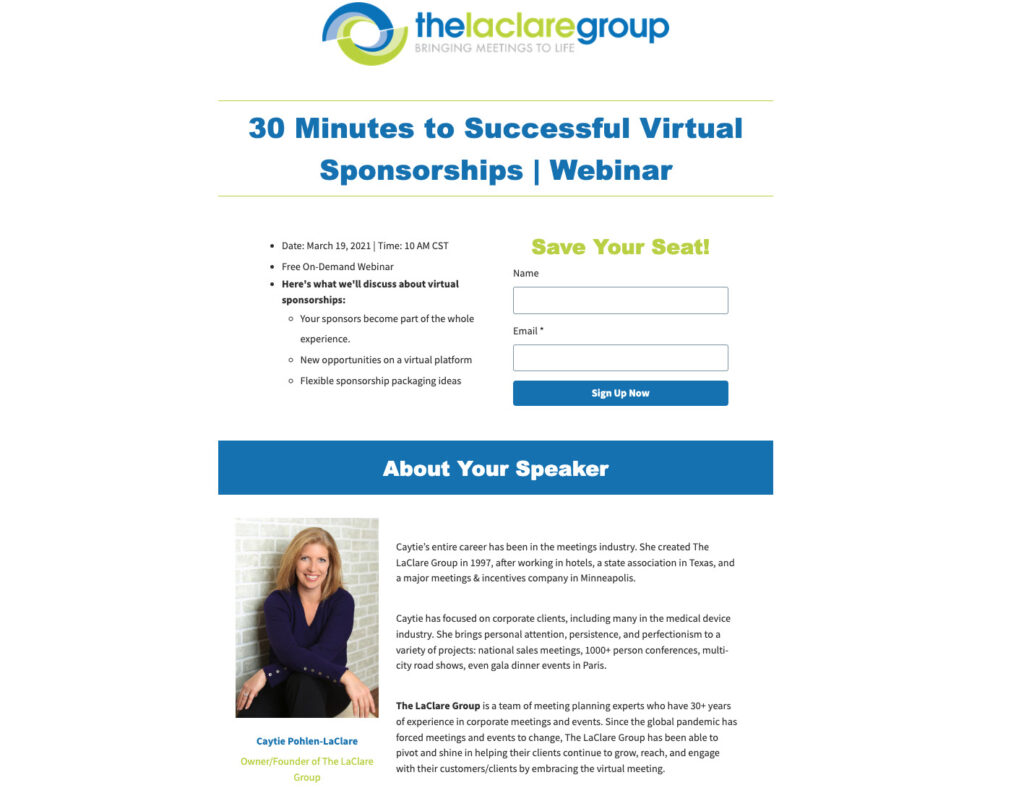
Webinar landing page example
What I like:
The “Save Your Seat” header is a great way to imply there may be limited slots available. This could potentially drive increased sign ups.
The “About Your Speaker” section which helps provide credibility.
The entire landing page will fit within most desktop view ports without having to scroll.
Ebook landing page
An ebook landing page is specifically created to promote and offer an electronic book (ebook). It serves as a destination where people can learn about the ebook's content, benefits, and either purchase or download it.
When to use
Many aspiring entrepreneurs are looking to make money by selling ebooks online. By producing the ebook and selling it online, many business owners are bypassing the traditional publishers, print presses, and distribution centers.
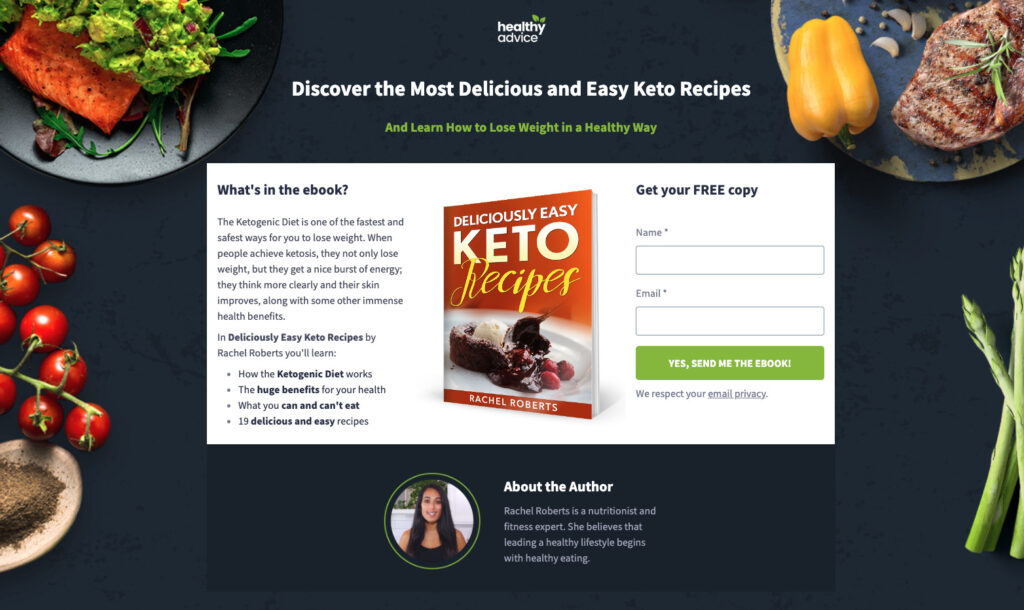
Great explanation for what’s included in the ebook.
Action-oriented call to action - “Yes, Send me the ebook”.
Selling the value of the ebook with a strong headline.
About the author section helps add credibility regarding the contents of the ebook.
Visually appealing landing page background.
Ecommerce landing page
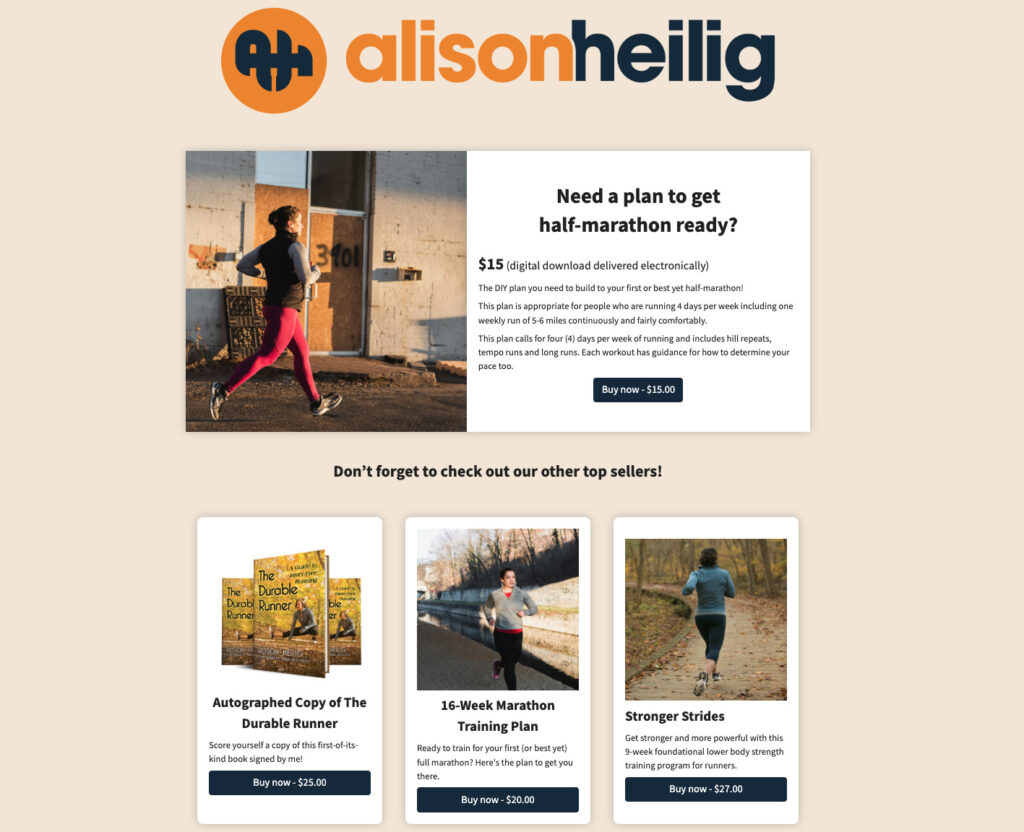
An ecommerce landing page is specifically for selling products online. Think of it as a shop window on the internet, showcasing products, providing descriptions, prices, and a simple way for customers to add items to their shopping cart and complete their purchase.
When to use
Creators who start off selling their products on marketplace shops such as Etsy. But eventually after they build a loyal customer base, they will create an ecommerce landing page to sell their products, eliminating the marketplace’s transaction fees.
Or creators looking to sell digital products. They can send their existing audience to these landing pages to purchase the digital product or they can try to drive new customers through paid advertising.
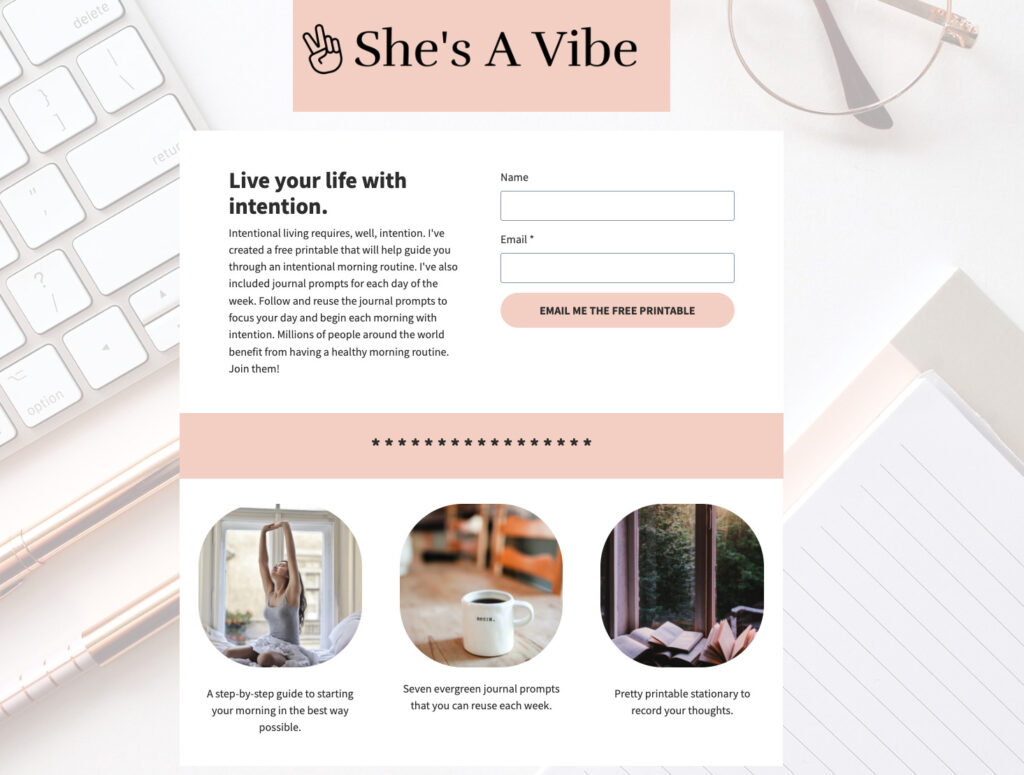
Once you’ve created your incentive, the next step is to build a dedicated landing page to capture that email address. Your communication needs to clearly explain the freemium they will receive and the main benefits of that lead magnet.
After you have their email, you can now begin marketing your product or service.
When to use
This type of landing page is used when you want to increase your email subscribers.
Break out the three main elements that you will receive.
Squeeze page
A squeeze page is a type of landing page that’s used to collect (or “squeeze” hence the name) a visitor’s email address.
Squeeze pages differ from other types of landing pages in that they are usually much shorter and only ask for an email address. Other pages, for example a lead magnet page, may ask for other information such as first and last name.
When to use
When you want to grow your email subscribers.
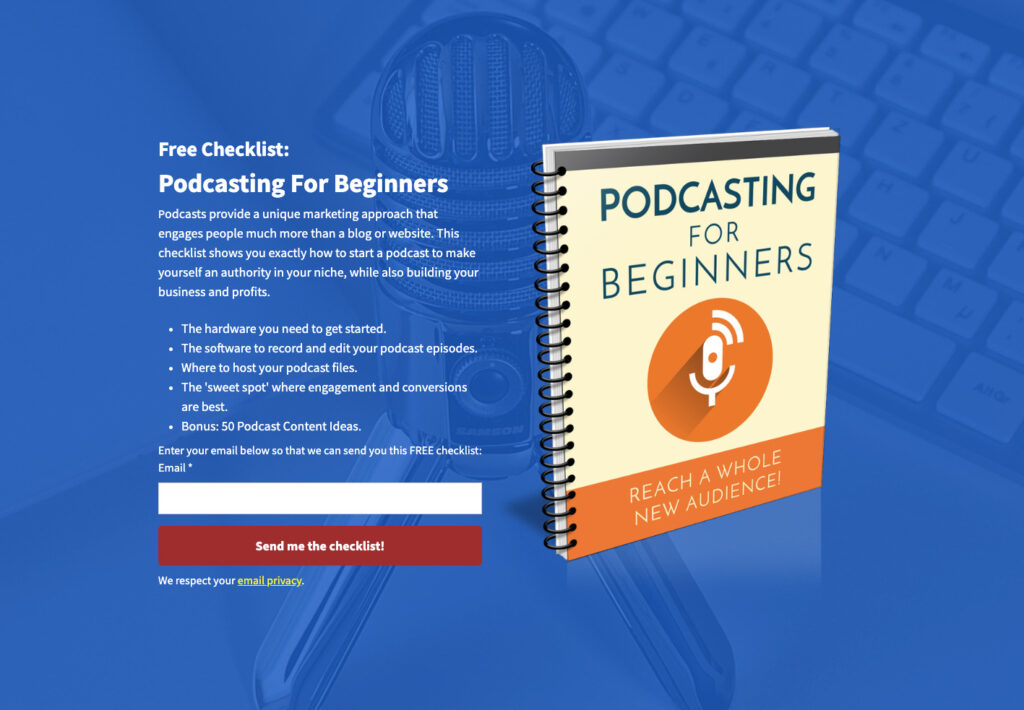
Squeeze page example
While this landing page example could also be considered a lead magnet landing page, this could also be considered a squeeze page do to the single email field request.
What I like:
Bulleted list of what you get with the lead magnet
The red CTA draws your attention to the main action
The background image ties in to the incentive
Podcast landing page
Podcasts have become one of the most popular mediums. In 2013, 10% of the population listened to a podcast monthly, and that number is now 37%.
There are over 48 million podcast episodes. Standing out from the rest becomes a lot easier once you have a landing page to promote your podcast. You can no longer rely on listeners finding your podcast on one of the streaming platforms. To be successful, you can have a summary page for each podcast episode.
When to use
Podcast landing pages are used when you want to promote a single podcast or to collect email addresses so you can communicate future episodes.
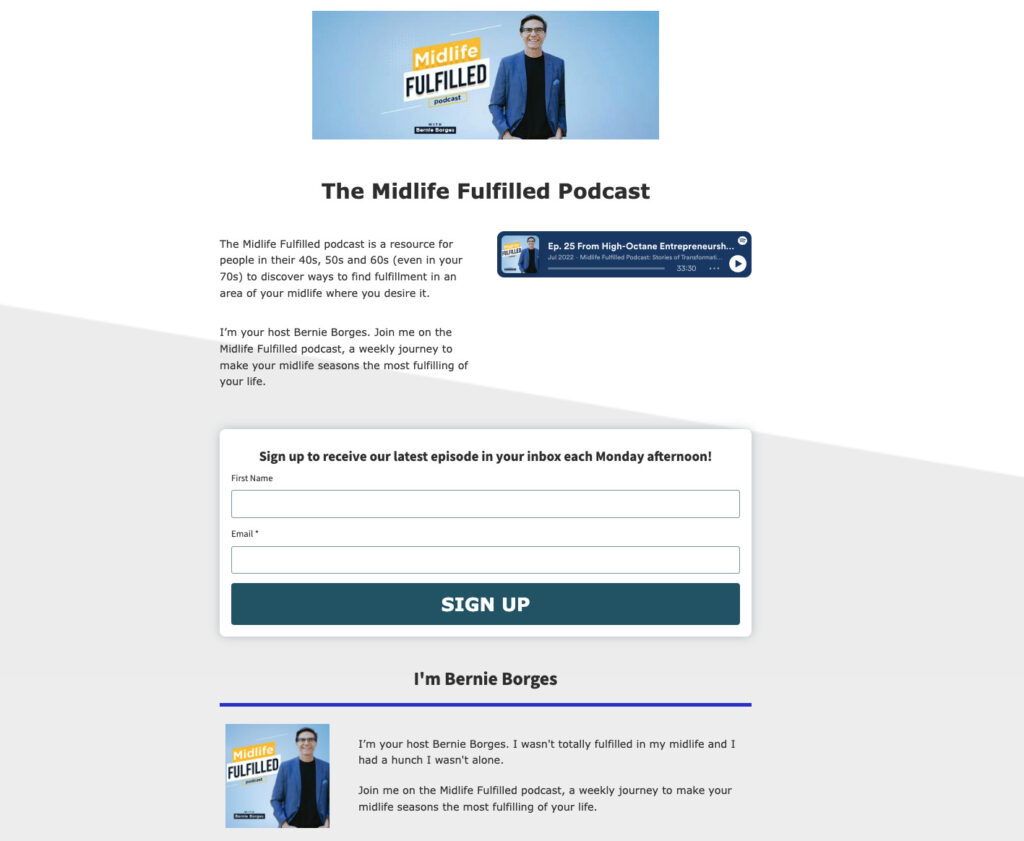
Podcast landing page example
What I like:
Set’s expectations for when someone who signs up will receive emails. This transparency can help convert more visitors.
Embed a podcast episode. This could also help convert more visitors as it gives people who have not heard an episode a chance to listen before providing their email.
PPC landing page
One of the most important things to keep in mind about paid ads is to make your landing page relevant to the keyword being searched.
Imagine a potential customer searching for “best italian restaurants near me” and the page they click is about the best italian food recipes. Not a very good user experience.
And it will certainly be a waste of your money. Given the search term was for ‘best restaurants,’ it’s safe to say they’re not in the mood to cook tonight.
So every keyword topic you want to bid on, you need a relevant landing page for your Google Ads or other search engine.
For PPC (pay per click) ads, making sure your landing page is relevant is not only important from a conversation (or desired action) standpoint, it is also necessary to improve your quality score. A better quality score in Google often leads to lower prices and better ad positioning.
When to use
When you set up a paid ad and need to send your traffic to a targeted landing page that’s specific to the search term.
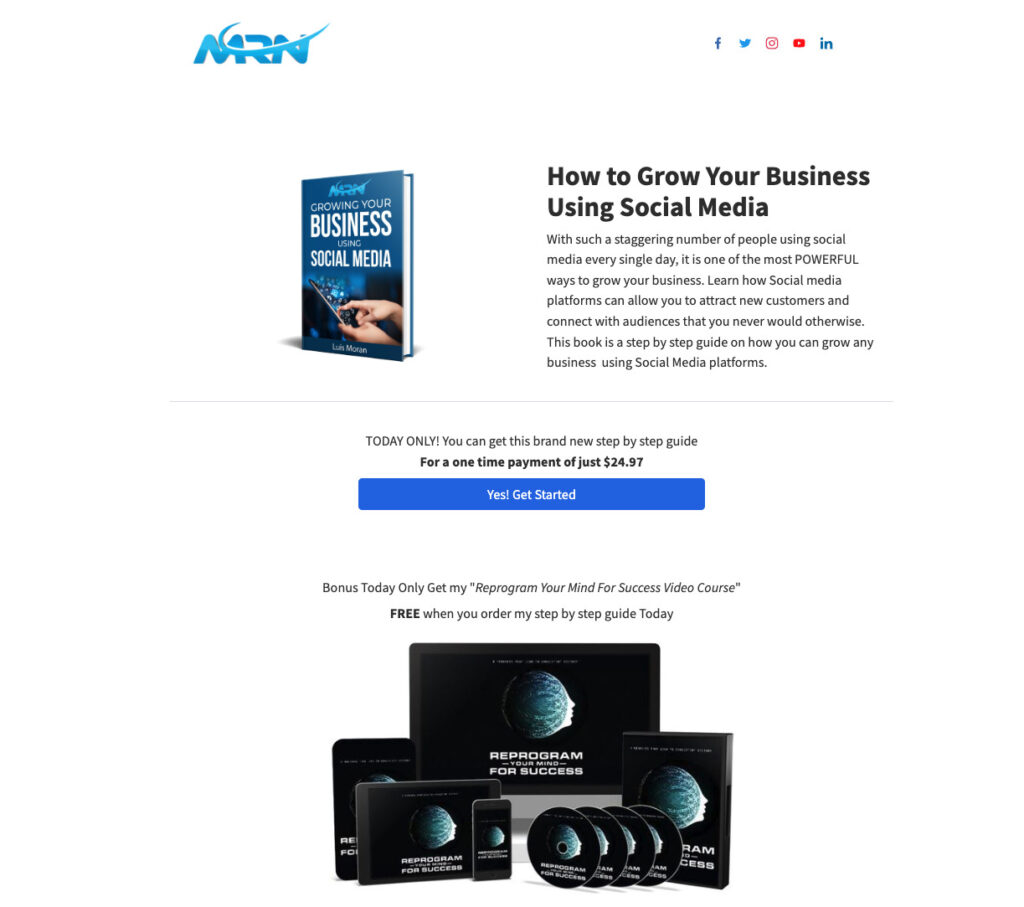
PPC landing page example
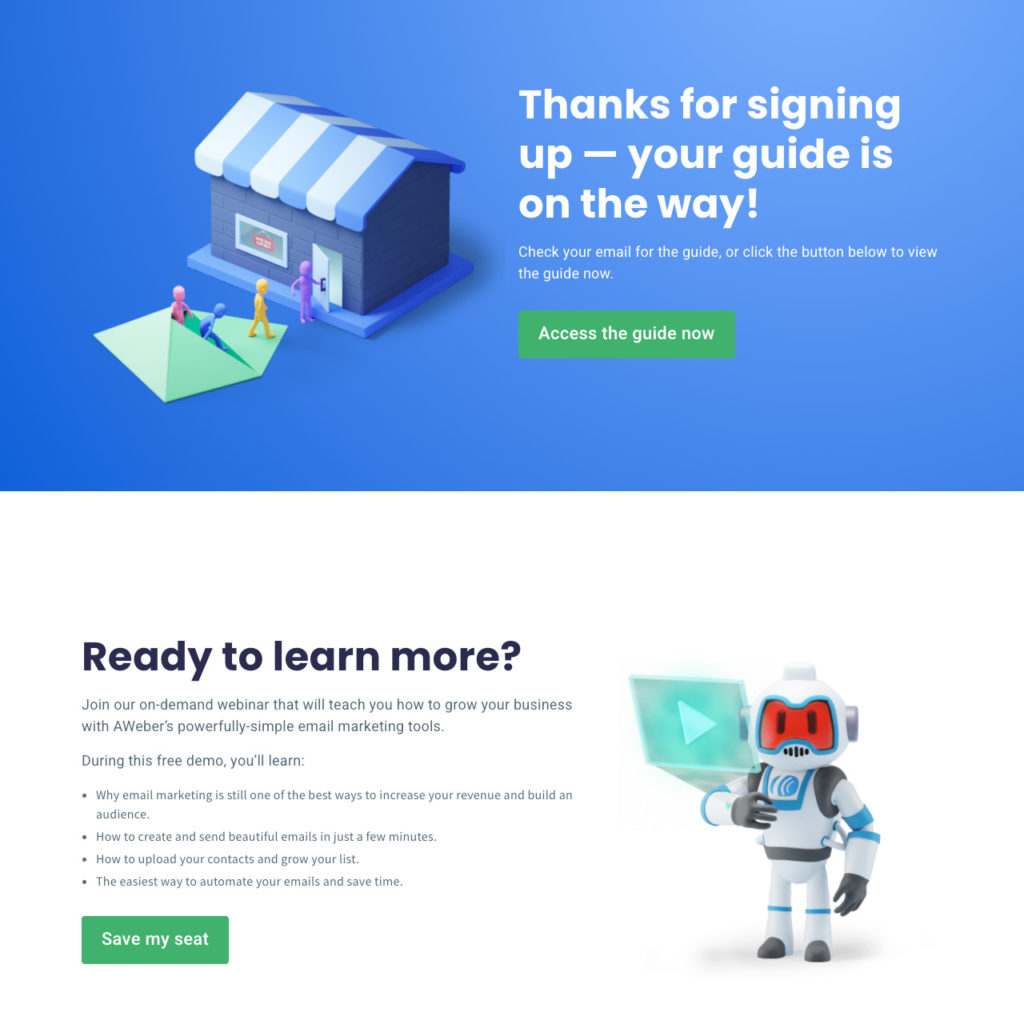
Thank you page
Did you set up a webinar landing page or how about one to capture email addresses? If so, then show your appreciation with a dedicated landing page to thank them for signing up for your event, downloading your lead magnet or purchasing your product.
This page doesn’t need to be complicated. A simple thank you along with next steps, depending on the offer, is all you need.
When to use
A thank you landing page is typically used after a user completes a desired action, such as filling out a form, making a purchase, or subscribing to a newsletter. It serves as a way to express gratitude and provide further instructions or information.
Thank you page example
What I like:
The thank you page is used to fulfill the lead magnet
Offers an upsell for an on-demand webinar
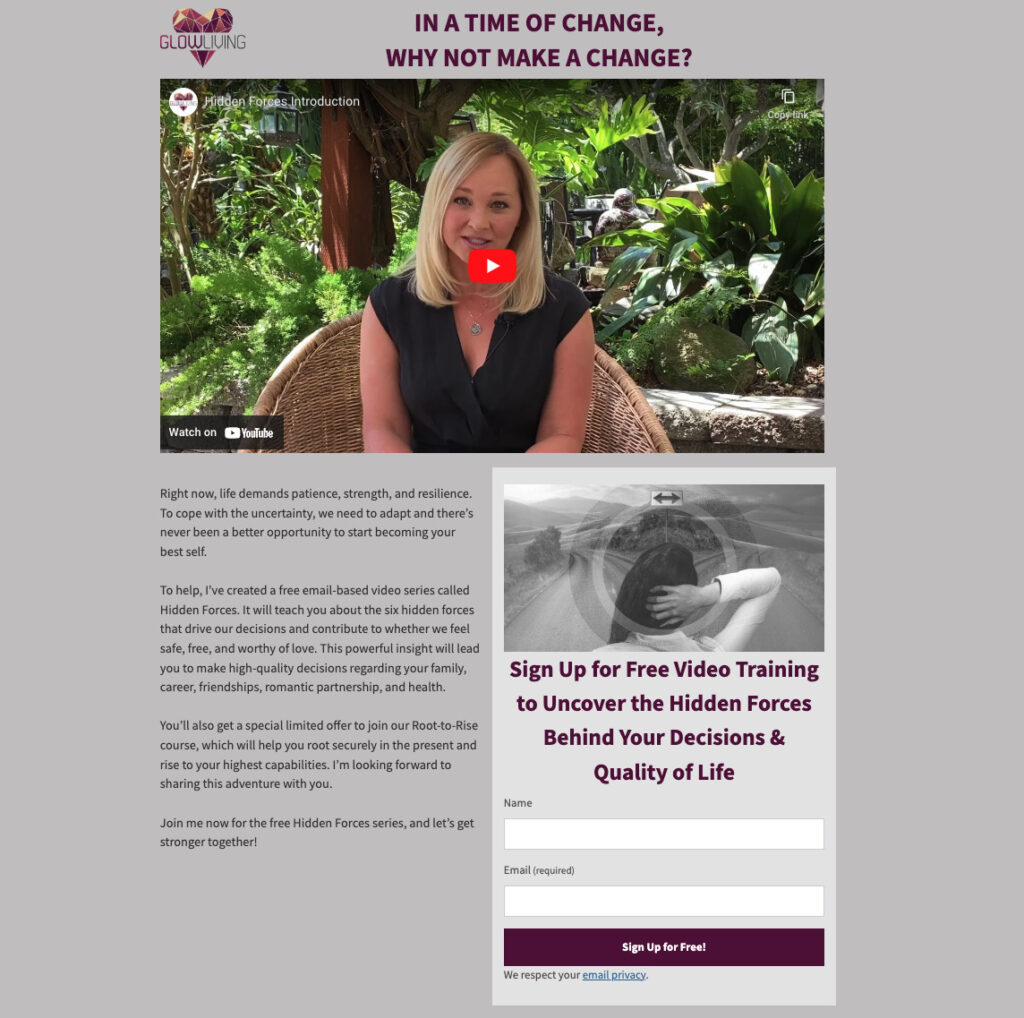
Video landing page
A video landing page is used to add additional value for the page’s main content. It is designed to capture the attention of visitors and highlight information or a message through video format.
When to use
Video landing pages are often used to promote products, services, or events, providing an engaging and visual way to present information.
For example, a company may create a video landing page to showcase a new product, demonstrating its features and benefits through a captivating video presentation.
Video landing page example
What I like:
They show the importance of the video by placing it at the top center of the landing page.
The headline above the call to action adds the benefit for why someone should sign up.
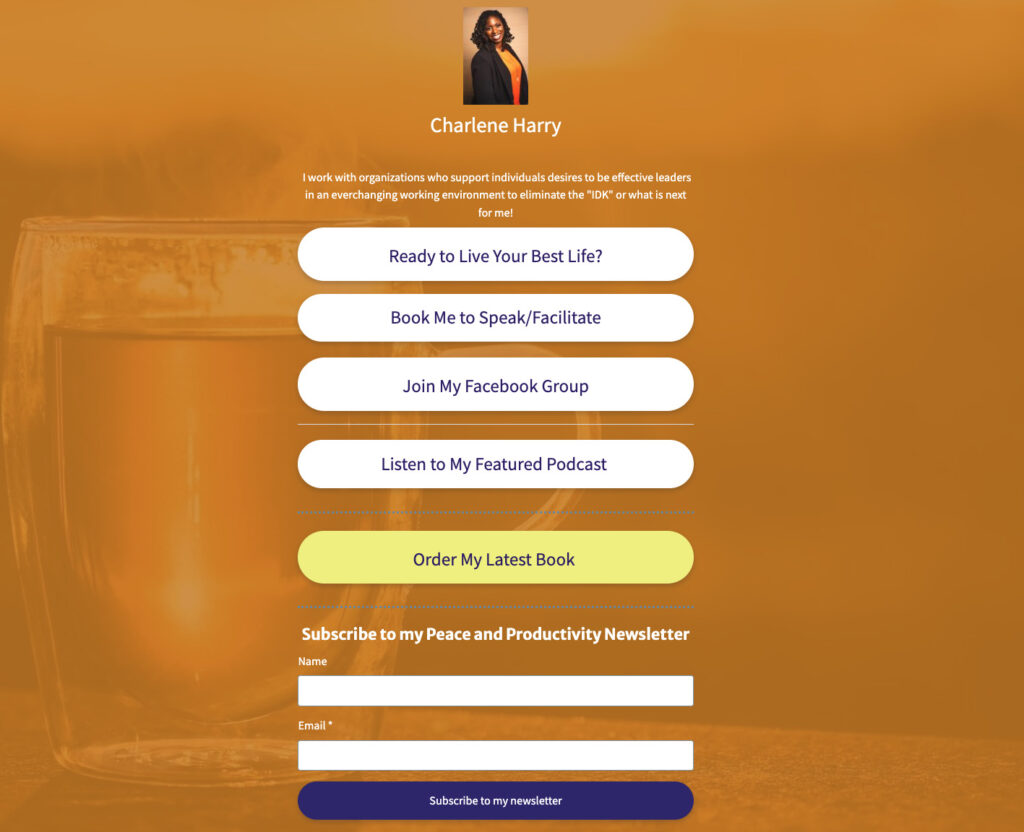
Link-in-bio landing page
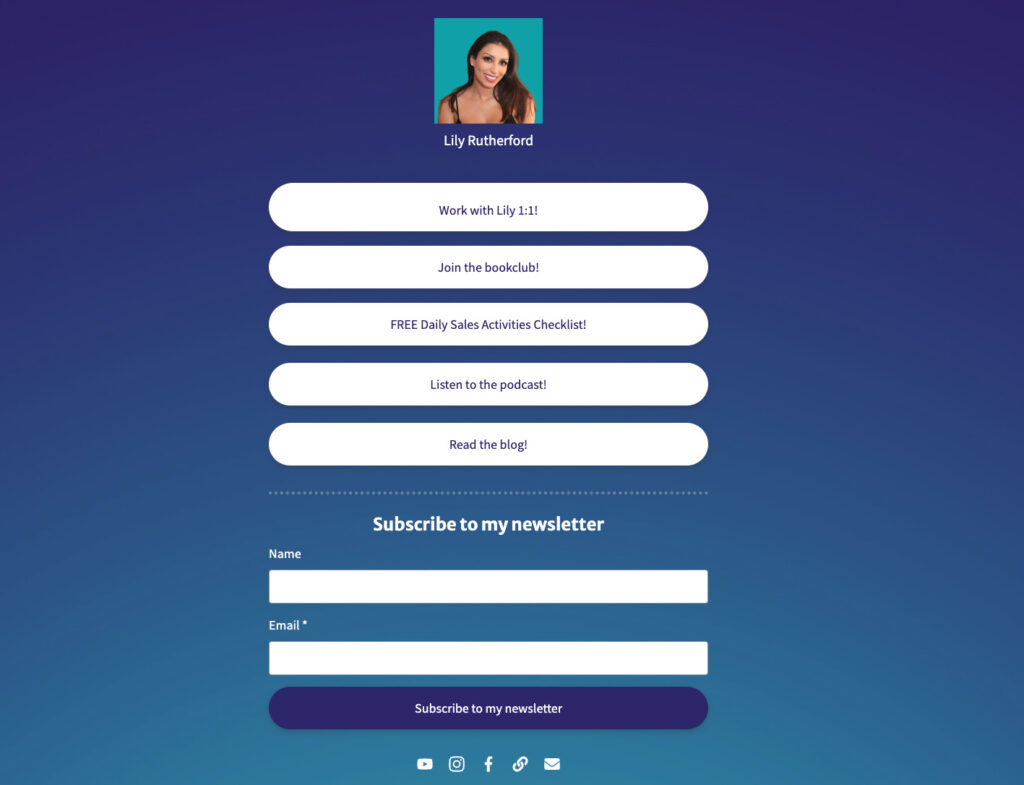
A link-in-bio page, also known as a bio link page, contains a collection of links to various online resources.
It’s most commonly used in the bio section of social media profiles, where users are limited to including just one clickable link. A link-in-bio page serves as a workaround to that limitation, allowing users to provide multiple links to websites, articles, products, or any other relevant content in a single location.
When to use
A link-in-bio page can be used when you need a centralized hub where your followers can easily access and explore different content or destinations that you want to showcase.
Link-in-bio landing page example
What I like:
Link to order her latest book and having this CTA in a different color draws a reader’s attention to this important link.
What I like:
The dark blue background really makes the CTA’s pop.
Pre-launch landing page
A pre-launch landing page is created before the official launch of a product, service, or campaign. It serves as a teaser or preview of what is to come and to generate interest.
The page typically includes a compelling headline, brief description or teaser content, visuals, and a call-to-action encouraging visitors to sign up to receive updates or exclusive access when the product or service becomes available.
When to use:
A pre-launch landing page is used when you want to measure interest level or create excitement about an upcoming launch. It can also be used to collect leads from prospects interested in the new product.
Pre-launch landing page example
What I like:
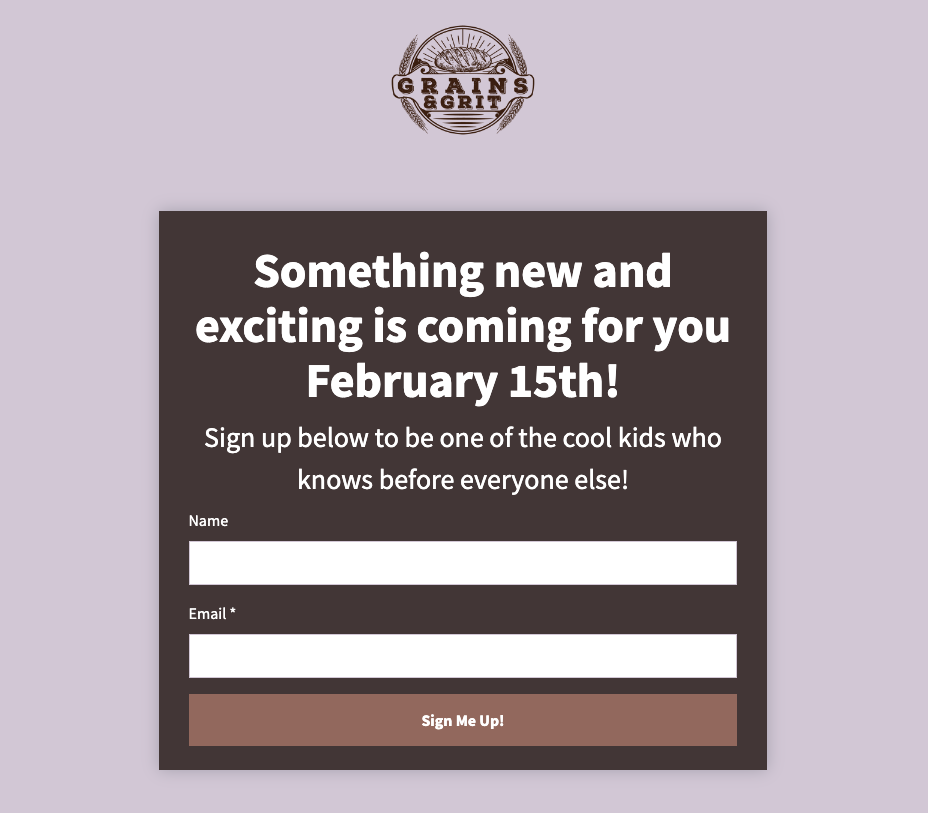
I like how Grains & Grit teases of something coming soon. However this type of landing page will only work with existing customers who are aware of your brand.
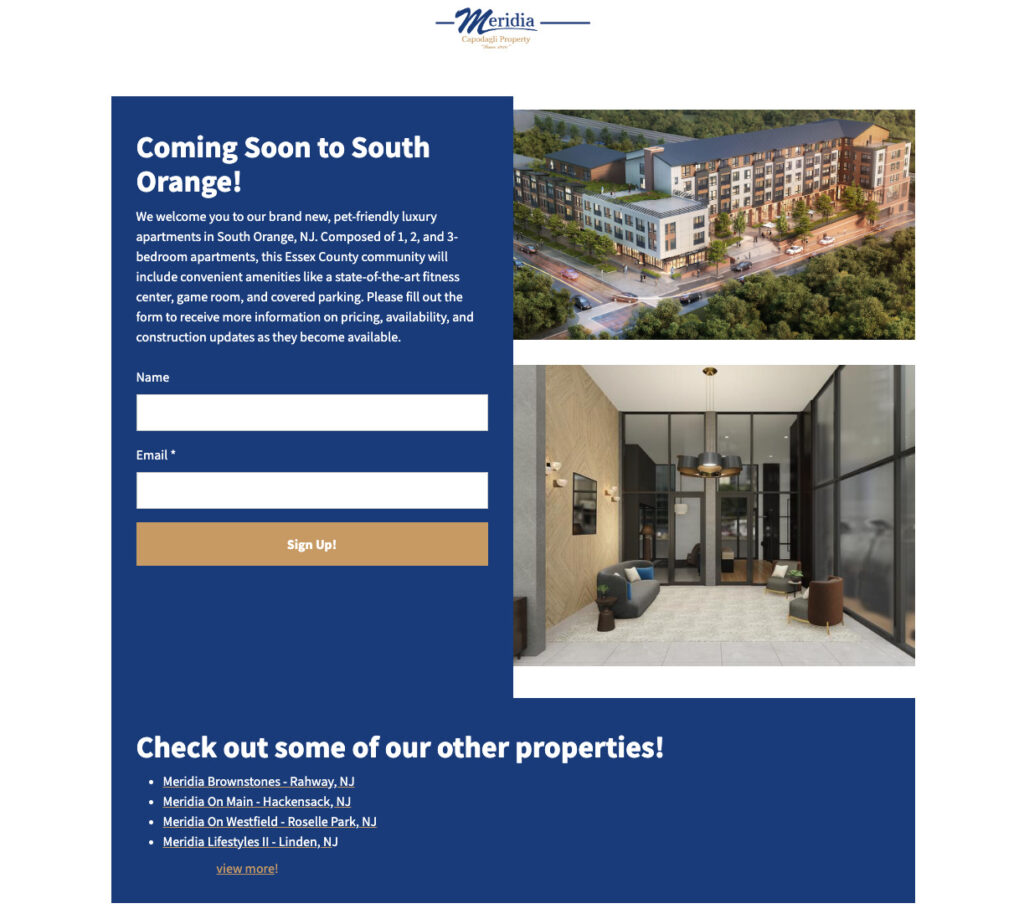
What I like:
The images and description help people get excited about the property.
They offer a cross-sell opportunity allowing visitors to check out other properties.
Facebook landing page
A Facebook landing page is specifically designed to be the initial destination when someone clicks on a call-to-action button or ad within Facebook. It serves as an extension of your Facebook presence, providing additional information, capturing leads, or promoting specific offers or content.
helps you connect and engage with your audience beyond your regular Facebook profile or page.
When to use
A Facebook landing page is used to help you connect and engage with your audience beyond your regular Facebook profile or page.
It should be used when you want to turn your followers into email subscribers. This is important because you never truly own your audience on Facebook. So getting your followers to sign up for your email list opens up a ton of possibilities for when, how, and what you can communicate to them through email.
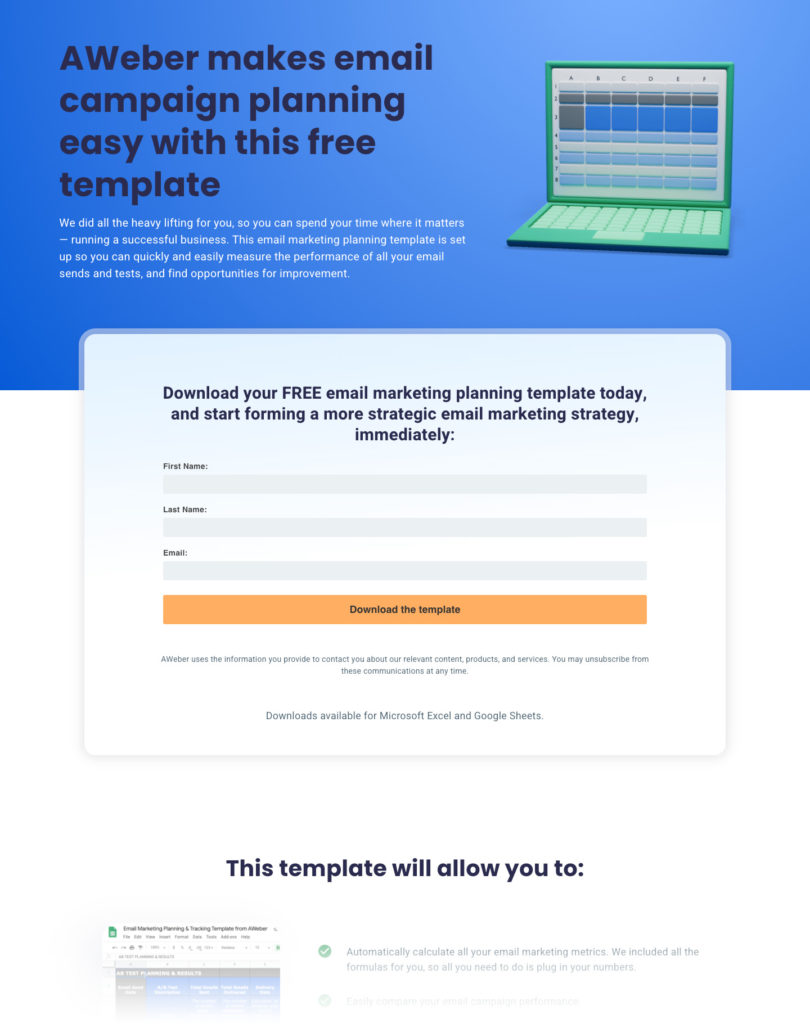
Used an incentive (or lead magnet) to encourage Facebook followers to provide their email.
Provides examples on how the free template can be used to help support email strategy
Other uses
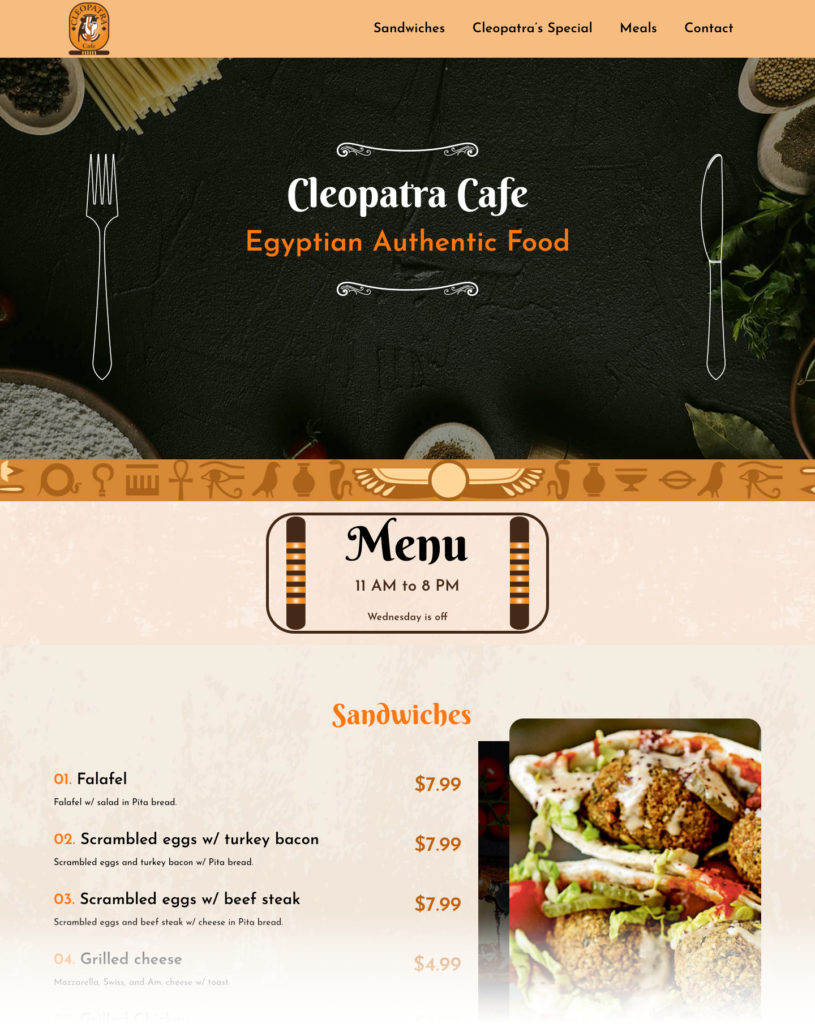
What’s great about a landing page builder is you can pretty much create a dedicated page for anything you can think of. I’ve seen restaurants who don’t have a website use landing pages for their menu, other corporations use them for social media highlights, for a job posting. The uses are only limited by your imagination.
If you’re not sure where to start, log into your AWeber account and begin using one of our customized templates. These drag-and-drop templates let you easily brand and set up your landing pages.
In fact, all but two of the above examples were created using AWeber’s landing page builder.
Enhanced customer satisfaction, high customer engagement, and increased revenue are good reasons to develop an omnichannel customer experience. Still, it takes more than integrating multiple channels to build a successful one.
It takes a strategic approach, continuous optimization, a customer-centric mindset and a well-plannedomnichannel strategyto make it all possible.
This guide introduces the benefits of a successful omnichannel strategy, the challenges of implementing one and best practices for creating an omnichannel experience that delights customers and drives business results.
What you will learn about omnichannel customer experience:
Anomnichannel customer experienceis a fully-integrated approach that revolves around delivering a consistent, seamless, and delightful experience to customers across various sales channels. It is a holistic strategy that integrates every customer touchpoint, whether email, social media, or in-person, to provide the best customer experience.
An omnichannel strategy aims to create a unified and personalized customer experience, regardless of the channels they choose to interact with the business. However, it’s important to note that this form of experience does not replace traditional channels; instead, it combines them into a unified strategy.
How effective is your CX strategy?
To answer the above question, conduct a customer experience (CX) audit of your existing strategy, including:
Document existing strategies:Record and analyze the current approaches that your business is taking to the CX experience across all channels. That includes understanding the goals, processes, and technologies currently being used.
Identify key customer touchpoints: Track your key touchpoints to understand every interaction a customer has with your brand. Analyze each touchpoint to evaluate its strengths, weaknesses, and areas of improvement.
Compare customer ratings:Gather feedback to evaluate the customer’s experience with your product andcustomer service. Collect quantitative data and qualitative data for an extra layer of insights.
Benchmark against competitors:Compare your CX metrics to industry standards to identify if you’re falling short and recognize opportunities to differentiate yourself.
The significance of an integrated customer experience
Creating an integrated customer experience is crucial in today’s digital landscape for numerous reasons, including:
It boosts customer satisfaction, loyalty, and promotes advocacy:Customers who have a great experience across all channels are more likely to remain paying customers. Every positive experience fosters loyalty and encourages customers to become brand advocates.
Optimized Resource Allocation:Implementing an effective omnichannel strategy allows businesses to optimize resource allocation by identifying the most impactful channels to invest the most effort. This helps companies to streamline operations, reduce costs, and increase profit.
Creates a consistent brand experience:An integrated customer experience provides a consistent brand experience for users across every touchpoint, whether chatting with a customer support agent over the phone or visiting a physical store.
Enable teams to pivot quickly and make data-driven decisions:Businesses adopting an integrated experience use analytics and customer behavior data to personalize customer journeys and introduce new features.
Increased revenue by improving customer retention and attracting new customers:When businesses understand customers, it’s easier to address their pain points, anticipate their needs, and build products that meet their expectations.
Unlocking the advantages of an omnichannel approach
Apart from integrating multiple channels to provide a frictionless experience, an omnichannel approach can impact your business in other ways:
1. Create a Seamless customer journey from pre-purchase to post-purchase
Interrupted transitions in the customer journey create friction, frustrate customers, and disrupt their user experience. In an omnichannel experience, customers can easily switch between channels and enjoy continuity, resulting in a more enjoyable journey.
2. High customer retention and loyalty due to accurate segmentation and personalization.
Omnichannel experiences provide a complete picture of the customer across multiple channels so that brands can have a unified view of their interactions and history. Leverage this data to segment customers and create a personalized experience based on their unique needs, preferences, and behaviors.
3. Supports multi-channel engagement within a single interaction
On average,51% of companiesuse at least eight channels to interact with customers, including emails, social media, websites, phones, live chat, and in-store. An omnichannel experience allows consumers to reach out to companies on their preferred channels and receive a quick and helpful response from acustomer serviceexpert.
4. Create a consistent customer experience across any channel to reduce customer effort.
Embracing an omnichannel approach creates a consistent experience across channels. This means customers can trust that they will receive a similar level of service, quality, convenience, and information regardless of the channel they use. This way, it’s easy to eliminate variations in the customer journey, making it an effortless and frictionless experience.
5. Increased revenue due to higher customer engagement, more conversions, and more sales
When customers have a positive experience, they actively interact and engage with the business. This creates more opportunities for brands to create deeper customer connections and build product loyalty.
Omnichannel vs. multichannel: unveiling the key differences
Omnichannel and multichannel are strategies for communicating with customers, with two distinct goals.
The term “omnichannel” translates as “available in all channels,” meaning that a customer can switch between any sales channel, like a website or a physical store, and still get a consistent brand experience. Multichannel means “many channels,” meaning customers can interact with many channels, but their experience isn’t unified.
Omnichannel focuses on the customer and utilizes every available channel to provide a seamless experience, whereas multichannel focuses on the product and uses multiple channels to promote it.
Implementing an omnichannel experience requires data synchronization of customer history and alignment between teams to eliminate channel gaps. On the other hand, multichannels operate independently within their respective silos, sometimes resulting in disjointed touchpoints.
Building a cohesive customer experience across channels
There’s no hard rule for building a cohesive omnichannel customer experience. However, there are practical tips and strategies you can follow to help you build a successful one.
1. Understand your customer’s expectations.
There’s no better place to start with customer experience than to understand your customers’ wants and needs. An omnichannel strategy aims to create a positive experience, and failing to understand the customer will result in a misalignment between a business and its customers.
Depending on your customer base, you may have sufficient data from existing customers to create a comprehensive persona. Otherwise, refer to your preliminary research or contact prospective customers for meaningful insights.
2. Chart the path of the customer journey
Identify the key milestones and touchpoints customers encounter throughout their journey and categorize them based on the stages of the customer journey (pre-purchase to post-purchase). This will help identify where an omnichannel experience can be implemented, such as a live chat pop-up.
Simply put, customer touchpoints are every interaction that a customer has with a brand through a website, social media, or physical stores. Use a visual tool like Miro to organize your data, capture the entire journey (including the stages, touchpoints, emotions, motivations, and pain points), and map the current state of your existing customers.
Once yourcustomer journey mapis complete, analyze it for patterns and trends to identify high friction points, opportunities for personalization, and potential gaps in your marketing or sales funnel.
3. Amplifying insights through customer feedback
Whether good or bad, customer feedback plays a huge role in optimizing your omnichannel customer experience. Listening to what customers say about their experience will help you identify areas for improvement. You can collect customer feedback through the following:
Run user feedback surveys to gather contextual insights from existing customers.
Use asocial listening toollike Sprout Social to capture conversations that people are having about your brand on social media.
Conducting interviews with individual users or focus groups
Analyze customer support tickets and online reviews to get insight into satisfaction levels.
Talk to stakeholders who regularly interact with customers.
4. Harnessing appropriate technologies for success
Managing customer dataacross multiple channels can be challenging, especially if you have a huge customer base or a complex product. This is where businesses must leverage advanced technology.
Integration and automation are at the core of an omnichannel experience. Consider integrating multiple technologies like customer relationship management (CRM) systems, marketing automation tools, omnichannel communication platforms, and data analytics.
CRMs likeSalesforcecan help you store and manage customer data, like contact information, purchase history, and behavior across multiple channels, to personalize your product offerings.
Use automation software to automate and optimize youromnichannel marketingcampaign across different platforms.Chatbotsalso provide instant and automated responses to customers’ queries, so they don’t wait for long.
5. Identifying key stakeholders in the process
Delivering a cohesive omnichannel customer experience becomes easier when all parties are aligned and working towards a similar goal.
By identifying key stakeholders (both internal and external) early on, you can involve them in the planning and implementation to get them on the same page regarding brand image consistency. This can help prevent any issues or delays down the line.
Segment their roles, rights, security, and access so each stakeholder can play their part. Involving stakeholders can help you build buy-in and support for the omnichannel strategy, which can be crucial for success.
6. Optimize your post-purchase experience
After making a purchase, ensure that customers don’t feel alone in figuring out how to use your product. Why not take a step further by optimizing your post-purchase experience?
You can send out personalized recommendations on how to use their new purchase. A great example is Dossier, a perfume brand that sends personalized tips to help customers smell nicer for longer.
Enhancing the omnichannel customer experience
Here’s how to enhance or elevate your omnichannel strategy to create an exceptional customer experience before, during, and after purchasing.
Understand your customers for targeted engagement.
To truly understand your customers, go beyond analyzing data points. Customers have unique likes, intentions, and needs, which vary depending on innovations, seasons, or trends. Actively engage with them.Learn to delight and excite themwithout overwhelming them. Tools like Sprout’ssocial media engagement toolhelp you understand what customers expect from you and how to address them.
Complement yourmarket researchwith data sources. Look throughsocial media analyticsto see how customers use your products or services and what content resonates with them the most.
Learn from industry leaders
It’s one thing to learn about building an omnichannel experience; quite a different ball game to build a successful one. Why not start by learning from industry leaders?
These are companies that have a successful track record of creating seamless experiences across their channels. Take Starbucks, for example. On the surface, they’re like any other coffee shop, but with an immersive omnichannel strategy, they transformed theirbrand into an $80 billion business.
Pick the top 2-3 successful companies in your industry. Study their strategies and approaches to gain insight into their omnichannel’s strengths and weaknesses. For example, how do they interact with their audience on social media? This will help you know what to capitalize on and what common pitfalls to avoid.
Enhance mobile capabilities
At least85% of time spent on smartphonesis spent using apps. Many customers interact with brands through smartphones, so businesses must optimize their mobile capabilities. This covers your apps’ functionality, performance, responsiveness, design, and security.
By enhancing mobile capabilities, brands can leverage mobile-specific features for more personalization. Features like location-based offers and push notifications can deliver personalized and contextually relevant content to users, enhancing the omnichannel experience.
Secure support
Providing an omnichannel experience with the right customer support increases the effectiveness of your strategy. When customers encounter an issue, like a bug, make it easy to resolve by providing user-friendly support channels.
Looking to create omnichannel support? Here are some ideas to help you:
Create a knowledge base to help customers find answers to questions, guides, or troubleshooting instructions.
Use cutting-edge technologies likechatbotsto give personalized responses.
Provide email support so customers can send their queries and receive personalized responses.
Live chat with a customer service rep
Create an online community where customers can ask questions and get help from a company rep or other members.
Phone chat, sms messaging, or video chat.
Streamline response times
Fast response time is an important attribute of an effective omnichannel strategy. Based on ourSprout Social Index, we found that 59% of customers expect a fast response to their queries within two hours.
Streamlining response times can help:
Reduce wait time and distribute support volume to prevent individual channels from getting bombarded with tickets.
Alert customer service agents of customers’ intentions and previous actions for a faster resolution time.
Using a tool like Sprout’s Smart Inbox, customer care teams can manage incoming messages from multiple platforms, prioritize responses, and access important customer data, all in one place.
Evaluate content for consistent messaging
Maintaining consistent messaging across all channels helps reinforce your brand identity, so anyone who comes across an ad, a social post, or a landing page understands your product.
Every channel has unique features and limitations, and each caters to a diverse audience that consumes content in varying formats. You want to keep your messaging consistent across each channel but not identical to avoid redundancy.
A good example is how Starbucks adapts its content to fit the context of its social channels when introducing the Java Mint Frappuccino. Their Instagram post comes with a short video and an even shorter copy to introduce the flavor excitingly.
Their content is much longer on Facebook because the audience reads more content. Each flavor is introduced with colorful emojis alongside images to match the flavor.
So, how do you evaluate content for consistent messaging? One way is to create acontent calendarto monitor content regularly. Sprout’s content calendar includes tools that help you curate yoursocial media calendarand collaborate with teams outside of marketing.
Extend omnichannel strategies offline
Your omnichannel strategy must extend beyond online channels for customers to have a fully immersive experience. Someone should be able to start their shopping experience online and pick up where they left off when interacting with your physical store.
Even with different channels, offline extensions allow channel integrations so customers can transition smoothly between touchpoints without losing context. By expanding your omnichannel strategies offline, you broaden your reach, tap into a larger audience, and reach customers who don’t have an active online presence.
Transform In-Store Experiences
Unlike online shopping, an in-store experience is more personal and emotional for customers. Elevate your customers’ shopping experience by combining decorative and visual elements, including the right colors, layouts, lighting, and music.
More importantly, provide great customer service. As soon as a customer walks into your store, let them easily find a company rep that can answer their questions and help them find what they’re looking for. When brands provide great service, happy customers will spread the word.
Select Channels Strategically
Truth is, you can choose to start building an omnichannel experience on all channels, but that would require a huge commitment. Surviving on every channel is almost impossible, so pick one and build from there. Dig intosocial analyticsto identify the social channel with the highest engagement and optimize it.
Sprout’s audience listening tool can also help you research the type of content your audience is consuming, what your competitors are doing, and, most importantly, how you can do better.
Maintain consistency across the customer journey
To remain consistent, you need clear policies and values that your brand must be known for. Document this in abrand-style guideto get every team on the same page and present a unified vision of your company to the public.
Some components of your brand style guide include the mission statement, typography, color palette, and common vocabulary. Go into the tiniest details. For example, if your brand is known for sustainability, it must reflect your choice of materials or color. Also, organize training sessions to help your staff understand your style guide. Every employee must understand what the brand stands for and their role in protecting it.
Examples of successful omnichannel experiences
Now that we’ve gone through the basics of an omnichannel customer experience, let’s look at some examples of successful omnichannel experiences.
Apple’s integrated omnichannel experience
Apple’s first approach to building a great product is delivering a world-class customer experience. This includes building a seamless digital-physical experience, so customers have the same retail encounter in the US, UK, or anywhere in the world
What they do well:
Great in-store experience with highly-trained sales specialists armed with their IPads and ready to help. Their expertise makes it easy for customers to build trust in the brand.
Embrace an omnichannel retail strategy so customers can pre-order a new product online before it launch and reserve it for pick-up at a local store.
Remain consistent and true to the Apple identity: clean, smooth, and techy.
Create an immersive ecosystem so customers can easily connect their devices or switch to a new one.
Finding the right pair of frames for your glasses is a miserable experience, but Warby Parker is changing that experience for users. The company has a unique omnichannel retail experience that allows customers to shop for eyewear both online and in-store.
Customers can start personalizing their experience by browsing glasses on the website, choosing five frames, and trying on each frame at home with the Home Try-On program for five days. Their in-store experience is optimized to promote social interaction between customers while shopping.
Warby Parker also invests in virtual try-ons with augmented reality (AR) technology and vision testing technology so customers can find glasses that fit, and book prescription check-ups, and eye exams from the app.
Mbank personalized omnichannel experience
Mbak is a leading digital bank that offers a seamless and personalized omnichannel experience to its customers. Omnichannel means that customers can interact with the bank through multiple channels, such as in-person, social media, or their mobile app.
Mbank focuses on personalization. They focus on collecting customer data in one place to track their interactions across all channels. For example, they use data to understand customers’ preferences and behaviors and tailor their products accordingly.
They also constantly adopt new technologies like artificial intelligence, machine learning, blockchain, biometrics, and other emerging technologies to offer smart and secure solutions to their customers.
Embrace the power of omnichannel to serve every customer
Ultimately, we’re designing experiences for people. It’s almost impossible to do that if we don’t understand their needs, expectations, and where they’re coming from. Designing a great omnichannel experience is all about collecting customer data and leveraging this data to build a seamless customer experience for your business.
Get started with a freeSprout Social trialto discover how we can help you develop your omnichannel experience through our comprehensive dashboard.