Some businesses seem to hit their marketing goals effortlessly. The reason is usually simple: they use landing pages.
High-converting landing pages fuel growth faster than almost any other tool. If you're not using them, you're leaving conversions on the table.
This guide provides a crystal-clear explanation (with plenty of examples!) so you will never again wonder what the term “landing page” means.
To better understand the real impact of landing pages, I connected with more than 50 businesses to find out whether or not they actually work. I’ve shared many of their stories and insights, plus a few priceless tips, in the guide below.
Everything you need to know about landing pages
What is a landing page?
Landing page vs. website: What’s the difference?
Why landing pages matter: Experts weigh in on the benefits
How do landing pages work?
What makes a high-converting landing page?
Landing page FAQs
What is a landing page?
A landing page is where a visitor “lands” after clicking a call-to-action (CTA) link on a search engine results page, ad, email, blog post, or social media content.
Landing pages encourage visitors to take one specific action: subscribe to a newsletter, schedule a consultation, purchase a product, or sign up for a service. That simplicity is what makes them so effective.
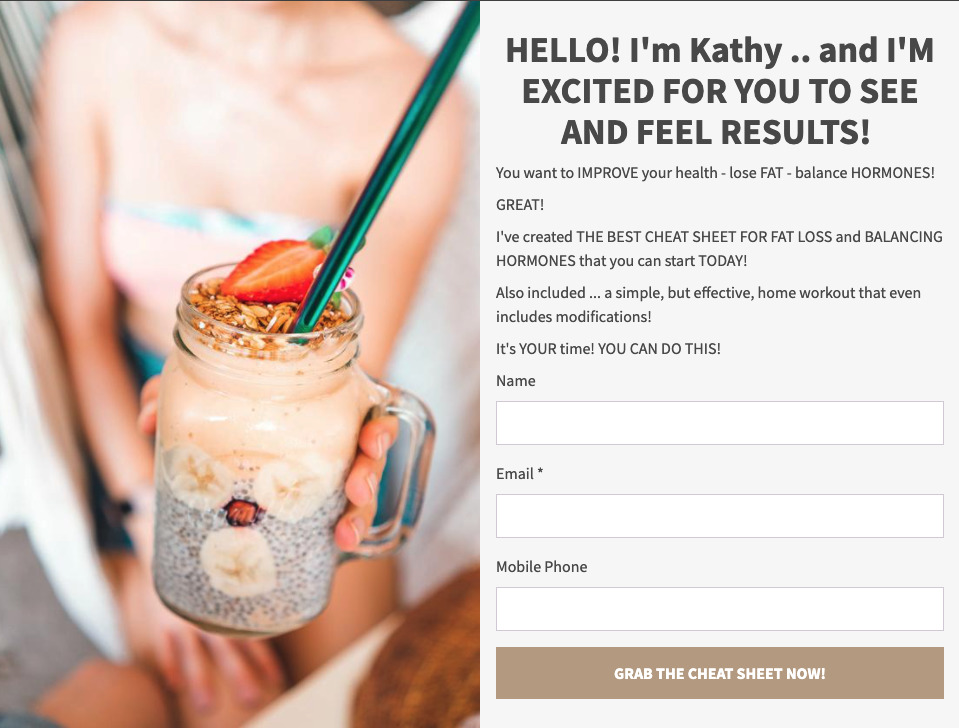
For example, Dreams Travel Consulting uses a landing page to offer a free guide on Disney World Luxury vacations in exchange for visitors sharing their email address. One offer. One form. One goal.
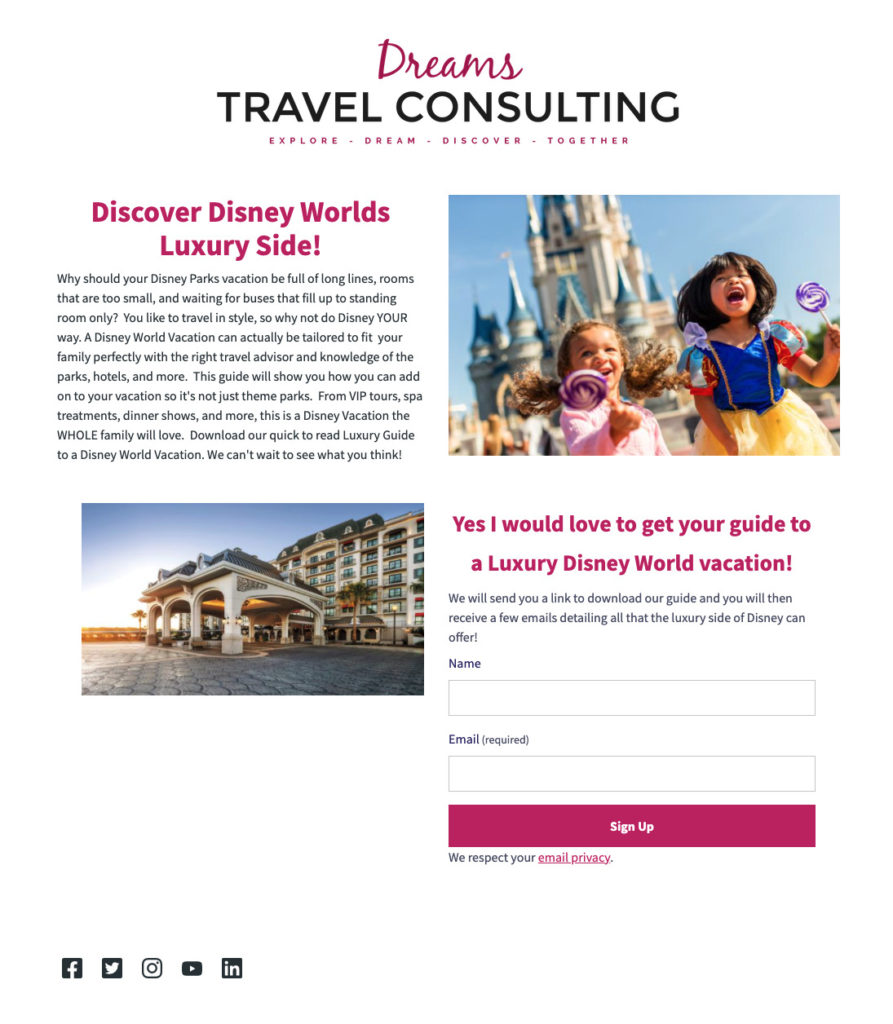
There are many kinds of landing pages, so design and content can vary dramatically depending on the goal, audience, and brand. Some are short: just a headline and a form. Others scroll for pages with detailed copy, images, and testimonials. What they all share is a single conversion objective.
What is a conversion on a landing page?
On a landing page, a "conversion" refers to the action you want a visitor to take.
Types of actions include:
- Subscribe to your marketing emails or newsletter
- Sign up for a subscription service or free trial
- Create an account with your company
- Download an ebook or whitepaper in exchange for their contact information
- Schedule a consultation
- Try a free demo
- Make a sale
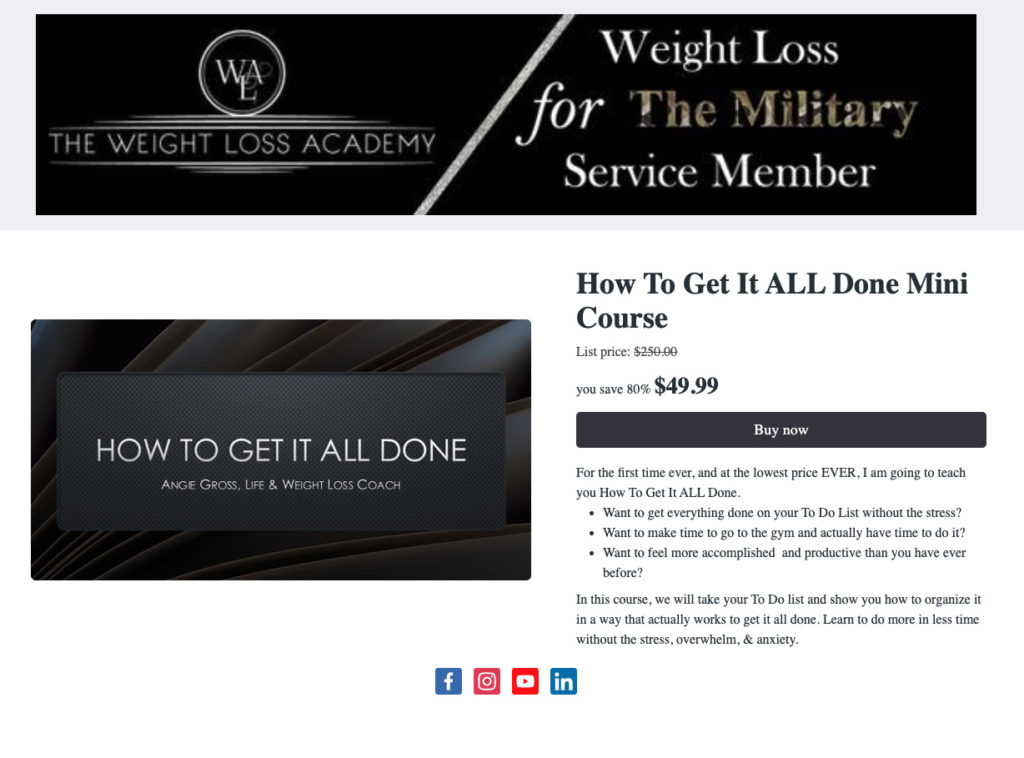
In the example below, The Weight Loss Academy landing page has one CTA “Buy now.” So every time someone clicks on the CTA button and completes a purchase, it’s counted as a conversion.
What’s the difference between a landing page and a website page?
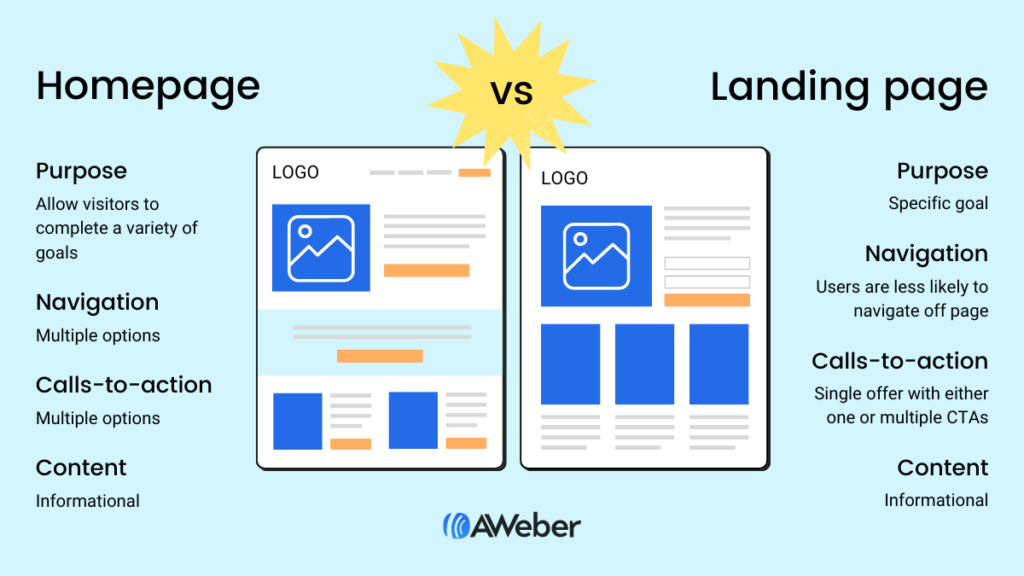
Websites provide as many links and pages as needed to answer visitor questions and guide them toward purchasing a product or service. It helps visitors find the information they need.
Landing pages guide visitors to take one single action. And are often laser-focused on that one specific goal and contain a single call-to-action link.
Think of it this way: your website is a continent; it has many pages that are all connected together and it’s easy to navigate from one corner of your website to another.
Now think of your landing page as an island off the coast of that continent. It stands alone and does not connect to your continent.
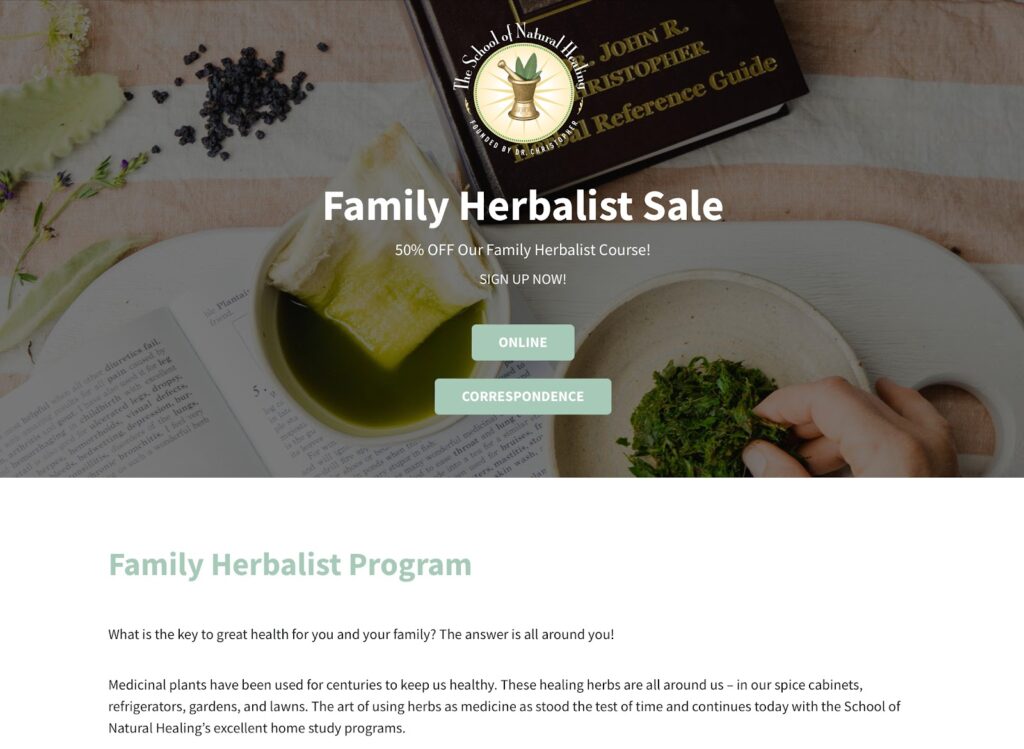
For example, The School of Natural Healing is a good example. Their website has a full navigation menu and links to dozens of courses.

Their landing page for the Family Herbalist Course has one objective: sell that course. Nothing else on the page competes for attention.
Should you create a landing page or a website page?
Do you want a visitor to do one thing and stay focused on a simple task? Or do you want them to explore and learn about you?
- Do one thing: you need a landing page.
- Explore and learn: you want a website.
Hosting your landing page offsite, on a dedicated marketing platform, is a great option for people who:
- Don’t want to tackle the design challenges required to remove all website elements (such as site navigation and sidebars) that could distract from the page’s conversion rate.
- Are looking for enhanced landing page optimization (such as faster page load speeds) and more targeted analytics for running tests and experiments.
- Do not have a website but still want to drive leads, conversions, and sales. You don’t need a website to have a landing page. This is a good option for people like creators and solopreneurs who are just starting out.
Where are landing pages published?
Landing pages are sometimes hosted on company websites, but many people publish them on a dedicated marketing platform like AWeber instead. This removes the design work required to strip out navigation menus and sidebars, and gives you faster load speeds and better analytics out of the box.
It's also a great option if you don't have a website yet. You don't need one. Creators and solopreneurs use standalone landing pages to grow their email list and sell products from day one.
Why landing pages matter: Experts weigh in on the benefits
Landing pages can help you generate far more leads, conversions, and sales than website pages.
But the benefits don’t stop there. Landing pages also help to:
- Simplify the customer journey.
- Improve your data collection and analysis.
- Segment and personalize your marketing content.
- Improve PPC campaigns.
- Launch low-cost marketing campaigns that produce an excellent ROI.
I asked business owners across multiple industries why landing pages matter to them. A few answers stood out.
How businesses benefit from landing pages
I connected with several business owners, marketers, and agencies across multiple industries to find out why landing pages matter to them.
Ling CEO Simon Bacher credits landing pages with driving over 10 million app downloads, saying they've been essential for showcasing his product's unique value and driving traffic to the platform.

“Landing pages have drastically improved our conversion rates, resulting in over 10 million downloads of our app.
Simon Bacher
Ling
In the example below, Ling App uses its landing page to highlight the immersive language learning approach that differentiates its service from other educational apps.

MeasureSchool's Aleksa Filipovic points to the focus a landing page creates. "The good thing about landing pages is that they are designed with only one goal in mind. That allows you to personalize the page for your target audience as much as possible."

“Landing pages (along with other efforts) have helped us build up our email list with active email subscribers resulting in a newsletter with 15k readers and a 50% open rate.”
Aleksa Filipovic
MeasureSchool
Sarah Blocksidge, Marketing Director at Sixth City Marketing, uses industry-specific landing pages to target different verticals: dentists, law firms, contractors. "With industry-focused landing pages, you can get super granular in your content and create unique, helpful content that not only ranks well, but converts well too."

“Landing pages have tremendously helped our business because they allow you to zero in on a specific, niche offering. “
Sarah Blocksidge
Sixth City Marketing
What can you do with landing pages?
Established businesses with websites use landing pages to drive conversions for nearly any type of marketing campaign.
For small businesses and solo-run businesses that don't have a website yet, landing pages can be especially powerful. They provide a cost-effective way to build traffic, generate sales, and grow an email list, without needing a full website.
How do landing pages work?
Landing pages guide visitors along the marketing funnel through a 4-step process: Click, land, action, and conversion.
1 - Click: Someone clicks a CTA link in an ad, email, blog post, or social media content and gets sent to your landing page.
2 - Land: They arrive at a page built around one offer. No navigation. No distractions.
3 - Action: The page presents a clear CTA: Buy Now, Subscribe, Enroll, or Schedule a Consultation. It makes it easy to respond.
4 - Conversion: The visitor takes the desired action. That's a conversion.
What makes a high-converting lead generation landing page?
The most popular type of landing page is the lead generation page. Its purpose is to capture visitor information in exchange for something of value, like an ebook, template, or white paper.
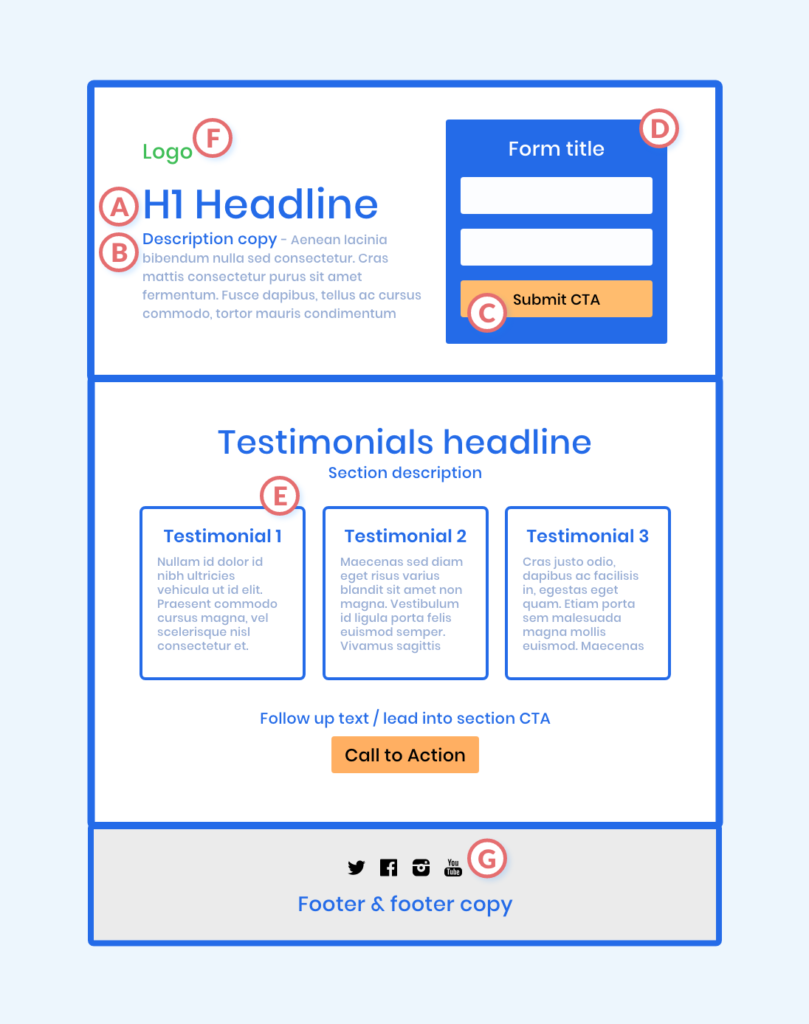
Basic elements of a high-converting lead generation page
Successful lead generation pages have a few things in common:
A - A compelling headline that encourages people to sign up.
B - Focused copywriting that describes your offer and benefits in as few words as possible.
C - One clear call to action.
D - A sign-up form to capture subscriber information.
E - Social proof: Testimonials, review ratings, or customer logos.
F - Consistent branding so the page feels like a natural extension of your business.
G - Social media buttons to encourage subscribers to find out more about you and engage with you further
Tips to create a landing page that converts
#1 - Write for your reader, not your brand: Challenge yourself to use the word "you" more than "we" or "I." The best landing page copy makes your audience feel seen, like you understand their problem perfectly.
#2 - Use proven templates: Templates can help you save time and money by offering writing prompts that help you successfully communicate your value.
For example, AWeber has a large selection of templates that let you create custom, professional landing pages in minutes. No design experience needed.
#3 - Remove every distraction. Navigation menus and sidebars give visitors a way out. Take them off the page. The only link on a landing page should be your CTA.
#4 - Include one (and only one!) linked call-to-action. On longer landing pages, feel free to repeat the CTA frequently.
#5 - Remove distractions: Navigation menus and sidebars can distract your visitors from the page’s main purpose. Rather than encouraging them to browse your site, use your landing page to guide them toward your conversion goal.
#6 - Include social proof: If possible, include customer recommendations or another type of trust-building content on your landing page.
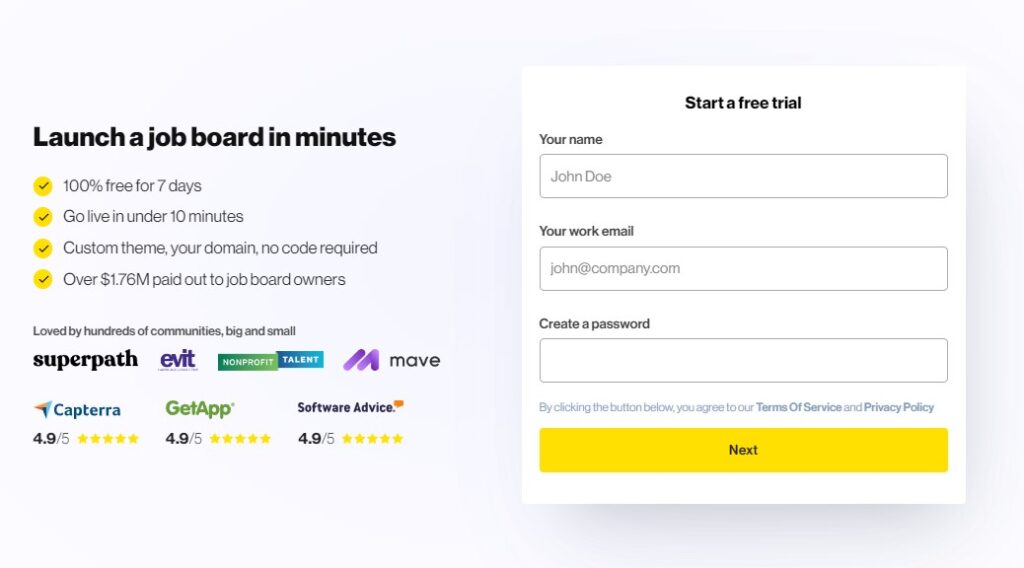
Hanna Feltges, Growth Marketer at Niceboard, found that adding reviews, customer logos, and star ratings to their landing pages increased free trial signups by around 20%. You don't need big brand names. Even a few genuine customer quotes will do.
In the example below, Niceboard includes the logos of businesses they’ve worked with as social proof.
#7 - Test, analyze, and optimize: Experiment with different versions of your landing page to learn what works best for your audience.

“I believe that the most important thing with landing pages is not just to design and publish the page and leave it at that. You have to keep testing and optimizing - yes even if it's just for a freebie!”
Helen Garfield
Owner, Creatives Desk
Landing page FAQs
Do I need a landing page?
If you want to grow your email list, sell a product, promote an event, or generate leads: yes. Landing pages are more effective than website pages for these goals because they remove distractions and keep visitors focused on a single offer.
Do I need a website if I use landing pages?
No. You can build and host a landing page through a platform like AWeber and promote it through social media, email, or paid ads. No website required.
How long does it take to create a landing page?
How long it takes to create your page depends on what you’re promoting and what type of landing page you need.
You can create a lead generation landing page for email subscriptions in minutes using a landing page builder with templates, on a platform like AWeber.
More complex landing pages, that you build without a template, can take anywhere from 2 - 10 days depending on the length of the page and what type of information and media you include.
How much does a landing page cost?
You can create professional landing pages for free with a user-friendly landing page builder and design templates.
If you hire someone to create a landing page for you, expect to pay between $300 - $2,000 per landing page. Rates vary quite a bit, and your costs may be more or less than that.
Most business owners agree that landing pages are worth the investment. But growing companies can’t always afford the high price tags that go along with good designers and copywriters.
The good news is that you can build effective, professional landing pages with little to no budget at all. How? Use an email marketing platform that includes a landing page builder, templates, and hosting like AWeber.
Do I need design experience to build my own landing page?
If you use a comprehensive program to build your page, then you may need some experience to build it in a way that looks professional.
However, if you use a beginner-friendly landing page builder with a template, you can create a landing page in minutes -- even if you have absolutely no design experience.
How many landing pages should I have?
You can have as many landing pages as you need to promote your company’s different offerings.
However, if you’re new to landing pages, it’s best to start with one and focus your efforts on driving conversions.
You can also use different versions of the same landing pages to experiment and see what design and writing work best for your audience.
How do I drive traffic to my landing pages?
You can drive traffic to your landing pages by placing a link in your social media content, blog content, email marketing or newsletter, or paid ads.
Getting started with landing pages
Landing pages are one of the most effective tools a small business can use. And one of the most accessible. You don't need a website, a designer, or a big budget to get started.
At AWeber, we make it easy for you to build landing pages with a drag-and-drop landing page builder plus a wide selection of templates to get you started. And your pages will work hand-in-hand with our email marketing tools, which let you segment and personalize all your campaigns.
Open an AWeber account today and begin building a professional landing page for your business now!
The post What is a landing page? Definition, examples, and how they work appeared first on AWeber.
from AWeber https://ift.tt/4kwP1Ut
via IFTTT

No comments:
Post a Comment