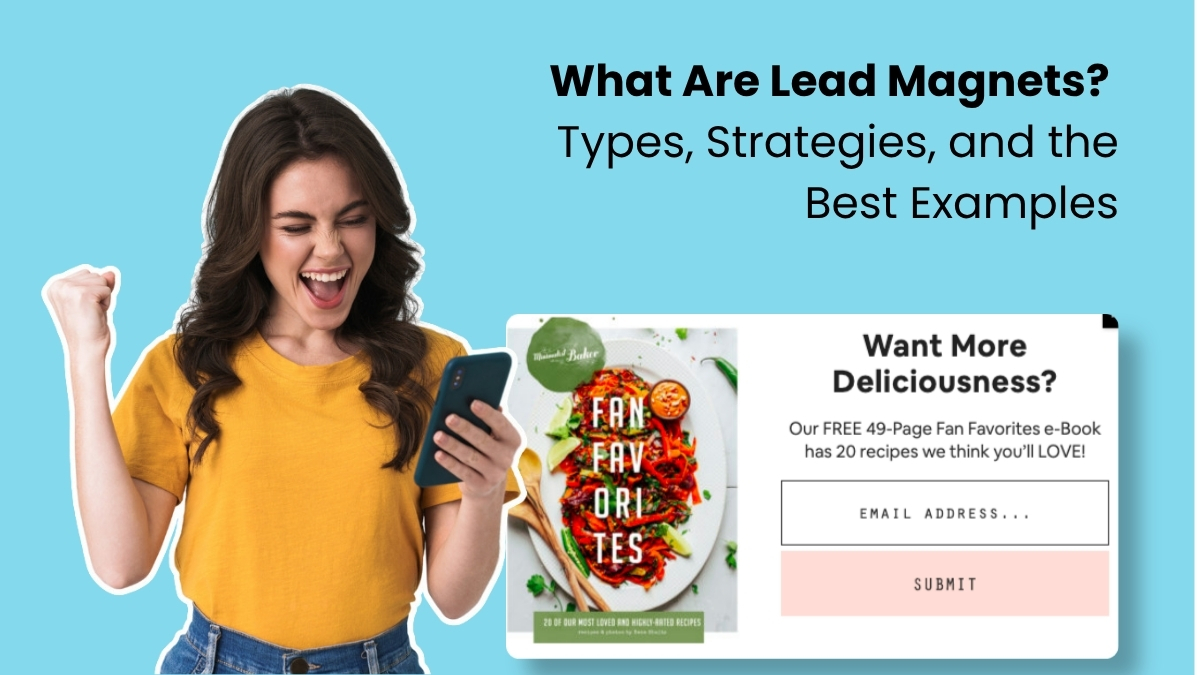
A lead magnet is a free resource you offer in exchange for someone's email address. It is the entry point to your email list and the primary tool small businesses use to turn website visitors into subscribers.
Building an email list is easier when you give people a specific reason to sign up. Lead magnets do that work. You offer something genuinely useful, and in return you get permission to stay in touch. Done well, that exchange starts a relationship that can turn a first-time visitor into a long-term customer.
What are lead magnets? In simple terms, a lead magnet is a free resource or offer, like a PDF guide, checklist, or online workshop, specifically designed to provide value in exchange for someone's email address. The goal is to attract and qualify potential customers for your business.
Why lead magnets work
The psychology is straightforward. When you offer immediate, clear value—something genuinely helpful or exclusive—people are far more willing to share their email address. And when your lead magnet matches your audience’s needs or solves a specific problem, you build trust and position your brand as an authority.
According to recent data, 96% of website visitors aren’t ready to make a purchase right away. This makes lead magnets crucial for starting the relationship on the right foot.
Here’s what makes the best lead magnets successful:
- They solve a real, relevant problem for your target audience
- They’re delivered immediately (like a download or quick video)
- They’re easy to consume and provide tangible value
Types of lead magnets (with real-world examples)
Different lead magnet formats work better for different businesses and audiences. Here are six of the most effective ones you will see in practice.
1. Checklists and cheat sheets
An ultra-actionable list, like "The Ultimate Email Launch Checklist," gives readers a quick win and is easy to scan. These are fantastic for almost any industry. For example, a fitness brand might offer a “7-Day Meal Prep Cheat Sheet.”
2. Ebooks and guides
An in-depth downloadable PDF helps your audience understand or solve a specific issue. For instance, a SaaS company could offer "A Beginner's Guide to Email Automation." Ebooks and guides signal authority and are often evergreen resources that can be shared widely.
3. Webinars and workshops
Live or recorded web events are high-value, especially when you share expert insights or practical tips. A digital marketing coach might host a "Free Email Marketing Workshop" and collect leads during sign-up.
4. Free trials and demos
Offering limited-time access to a service removes risk and lets users experience value first-hand. For example, AWeber’s email marketing free trial allows users to test out features before buying.
5. Templates and swipe files
Ready-made frameworks (email templates, blog post outlines, social media calendars) save your audience time. A freelance copywriter could provide “5 Email Swipe Files for Growing Newsletter Engagement.”
6. Quizzes and assessments
Interactive quizzes both entertain and educate, while helping you segment leads. A fitness coach might use a “What’s Your Fitness Personality?” quiz to deliver custom workout tips at the end—and collect emails in the process.
Need some additional inspiration, check out these additional lead magnet ideas to grow your email list.
The best lead magnets: what sets them apart
The best lead magnets aren’t just clever; they’re laser-focused on your ideal customer’s biggest challenges. They clearly demonstrate how your expertise solves those challenges or fulfills a need.
What do top-performing lead magnets examples have in common?
- Relevance: They directly relate to the product or next step you want your lead to take.
- Simplicity: No one wants to jump through hoops—clear instructions and easy downloads work best.
- Immediacy: People want instant gratification. The faster someone receives your lead magnet, the better your chances of building trust.
Best examples of lead magnets (that you can borrow)
- Content Upgrade: Add a downloadable resource to your blog post, like “Download This 10-Point Blog Post Checklist.” This doubles as a way to boost content engagement and grow your list.
- Email Course: Offer a free multi-day email course, such as “5 Days to Better Subject Lines.” Subscribers sign up and receive 1 actionable lesson per day via email.
- Resource Library: Give access to a vault of templates, guides, or scripts after sign-up. This works well for creative businesses; for example, a designer might share a “Design Resources Toolkit.”
- Exclusive Discounts: Great for ecommerce, offering a “15% off your first order” coupon in exchange for an email.
How to create a high-converting lead magnet
Let’s put this all together into a repeatable process:
- Understand your audience: What problems keep them up at night? What quick wins do they crave?
- Choose the right format: Use one of the types of lead magnets discussed above that fits your offer and audience preferences.
- Make it actionable: Focus on immediate value. A "5-Minute Social Media Plan" works better than a generic ebook.
- Design a clear delivery system: Use an email service provider like AWeber to automate and personalize delivery so leads get access instantly.
- Promote it strategically: Add opt-in forms to high-traffic pages, use popups, or share links on social media where your ideal audience hangs out.
A launch formula might look like this: Write a brief, compelling headline for your offer, create a simple landing page with an embedded signup form, and follow up with an introductory email and the promised lead magnet. Track downloads and measure conversion rates to see what's working best.
Lead magnet optimization: advanced tips
Want to level up? Personalize your lead magnets based on audience segments. For example, if your blog covers both small business and enterprise topics, offer relevant resources to each segment when they sign up for your list.
Test different offers, images, headlines, and delivery methods. A/B testing lead magnets can increase signup conversion rates by up to 30%.
Finally, always deliver on your promise. If you provide high-quality content up front, subscribers will be more receptive to your newsletters and future offers down the road. And that’s how you turn a curious reader into a long-term fan—or customer.
Lead magnets aren’t “nice to have”—they’re essential if you want to consistently attract, nurture, and convert leads online. Whether you choose a downloadable checklist, a creative quiz, or an in-depth workshop, the goal is to offer real value before asking for anything in return. Once you master this, you’ll find your email list and your business growing faster than ever before. For hands-on tips about building your first lead magnet, check out this step-by-step guide.
Frequently asked questions about lead magnets
What is a lead magnet?
A lead magnet is a free resource you offer in exchange for someone's email address. It is the entry point to your email list. Common formats include checklists, templates, ebooks, quizzes, free email courses, and discount offers. The best lead magnets solve one specific problem for one specific type of person and deliver the result immediately.
What is the best type of lead magnet for a small business?
The best lead magnet is the one that answers the question your ideal subscriber asks most often before they are ready to buy. For most small businesses that means a template or short email course tied to a specific outcome, not a broad resource guide.
The format matters less than the fit. A one-page template that solves exactly the right problem will outperform a polished 20-page ebook on a topic your audience does not urgently need.
Do lead magnets still work?
Yes. Lead magnets still work when they are specific enough to earn the address. Generic lead magnets, like broad ebooks or vague resource guides, have declining conversion rates because audiences have seen too many of them. Specific, outcome-based lead magnets that solve one clear problem for one type of person continue to convert reliably.
How do I deliver a lead magnet automatically?
Set up a welcome automation in your email platform that triggers immediately when someone submits your opt-in form. The automation sends a single email with the lead magnet as an attachment or a download link.
What should I send after someone downloads my lead magnet?
After delivering the lead magnet, send a short follow-up sequence over the next week. Email two shows them how to use the resource. Email three shares a related result or example. Email four introduces what you offer as the natural next step. This sequence is what converts a download into a customer relationship.
Lead magnets are one of the most reliable tools a small business has for turning website visitors into email subscribers. Pick one format, build it well, and set up the delivery automation. Then watch who signs up and what they do next. That data will tell you exactly what to build second. For step-by-step guidance on creating your first lead magnet, check out this guide.
Keep reading:
- How to Improve Your Email Open Rates as a Small Business
- How to Create a Welcome Email Series for Your Small Business
- How to Create a Lead Magnet in Less Than a Day
- The 16 Best Lead Magnets for Increasing Email Subscribers
The post What Are Lead Magnets? Types, Strategies, and the Best Examples appeared first on AWeber.
from AWeber https://ift.tt/VIEJ1qX
via IFTTT

No comments:
Post a Comment